





































Overview
Éditions Delcourt is a French publishing house founded in 1986 by Guy Delcourt, specializing in comics in particularly diverse forms: Franco-Belgian series, graphic novels, children’s publishing, American comics, manga, historical stories, science fiction, fantasy, humor, reportage and popular science.
This diversity has become one of the publishing house’s main characteristics.
Delcourt is not identified with a single universe in the way some specialized publishers are. Its catalogue brings together Sillage, De cape et de crocs, Donjon, Les Légendaires, Les Blagues de Toto, Walking Dead, and works by Guy Delisle, Marc-Antoine Mathieu, Lewis Trondheim, Joann Sfar, Marion Montaigne, Chloé Cruchaudet and Chris Ware.
Its history begins after Guy Delcourt’s work in comics journalism.
A journalist with a passion for cinema, fantasy, science fiction and comics, he notably worked for Pilote, becoming its editor-in-chief in 1985.
At the beginning of 1986, after leaving Dargaud, he created his own publishing house.
The context was far from ideal.
French comics were going through a difficult period and several major magazines that had structured the sector were losing influence or disappearing.
Delcourt nevertheless began building its catalogue around a new generation of creators.
The first publications remained modest, but La Bande à Renaud, a collective album adapting several Renaud songs into comics, became an important success as early as October 1986 and exceeded 100,000 copies sold.
This first result gave the young publishing house the means to continue its development.
Very early on, Guy Delcourt showed particular interest in science fiction, fantasy and adventure stories.
Aquablue, created by Thierry Cailleteau and Olivier Vatine and published from 1988 onward, became one of the publishing house’s first major science-fiction series.
The catalogue then grew with works by a generation of creators whom Delcourt sometimes supported from their beginnings.
De cape et de crocs by Alain Ayroles and Jean-Luc Masbou appeared in 1995.
Sillage, created by Jean-David Morvan and Philippe Buchet, began in 1998 and developed a vast science-fiction universe around Nävis.
That same year, Donjon began, a project by Lewis Trondheim and Joann Sfar that parodied heroic fantasy while building an extremely extensive universe through several series, periods and artists.
This period established a lasting feature of Delcourt: the publishing house could welcome both long-running adventure series and more experimental projects or works strongly shaped by their creators.
Children’s publishing simultaneously became another important focus.
During the 1990s, Delcourt developed an offering that sought to avoid the idea of imposing a single visual style on younger readers.
This direction later produced several popular successes.
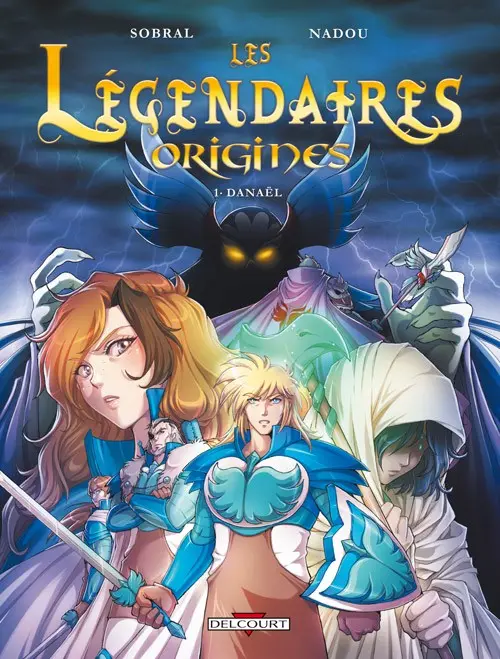
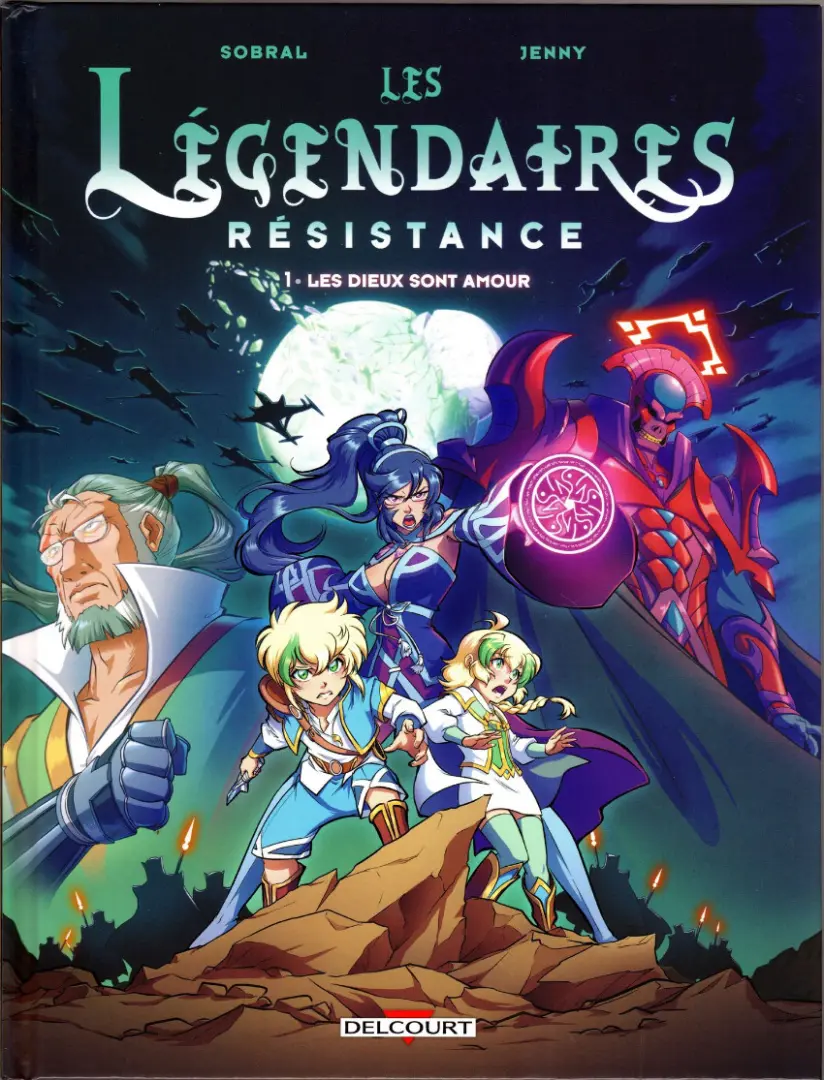
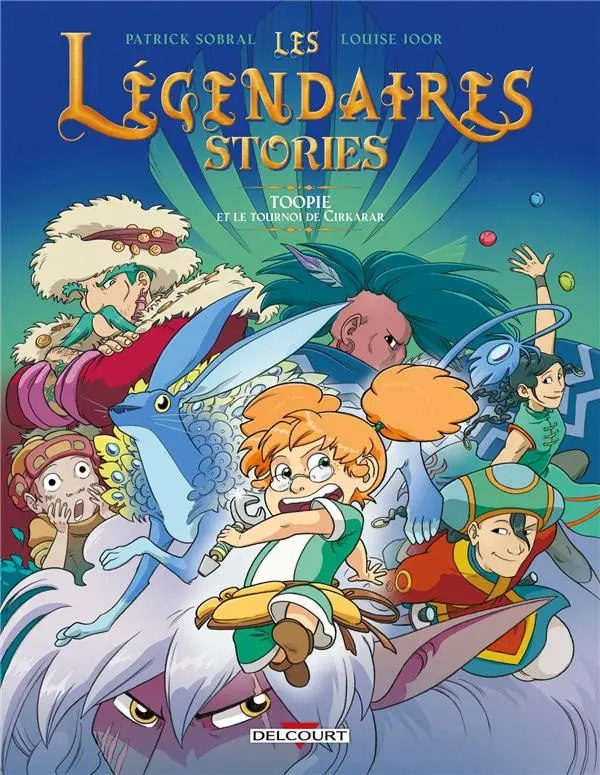
Les Blagues de Toto and especially Les Légendaires by Patrick Sobral, launched in 2004, became major series in its catalogue.
Delcourt’s development also involved the French publication of foreign comics.
The publishing house built a significant activity around American comics, which it obviously does not create itself but for which it acquires French publishing rights from the relevant publishers and rights holders.
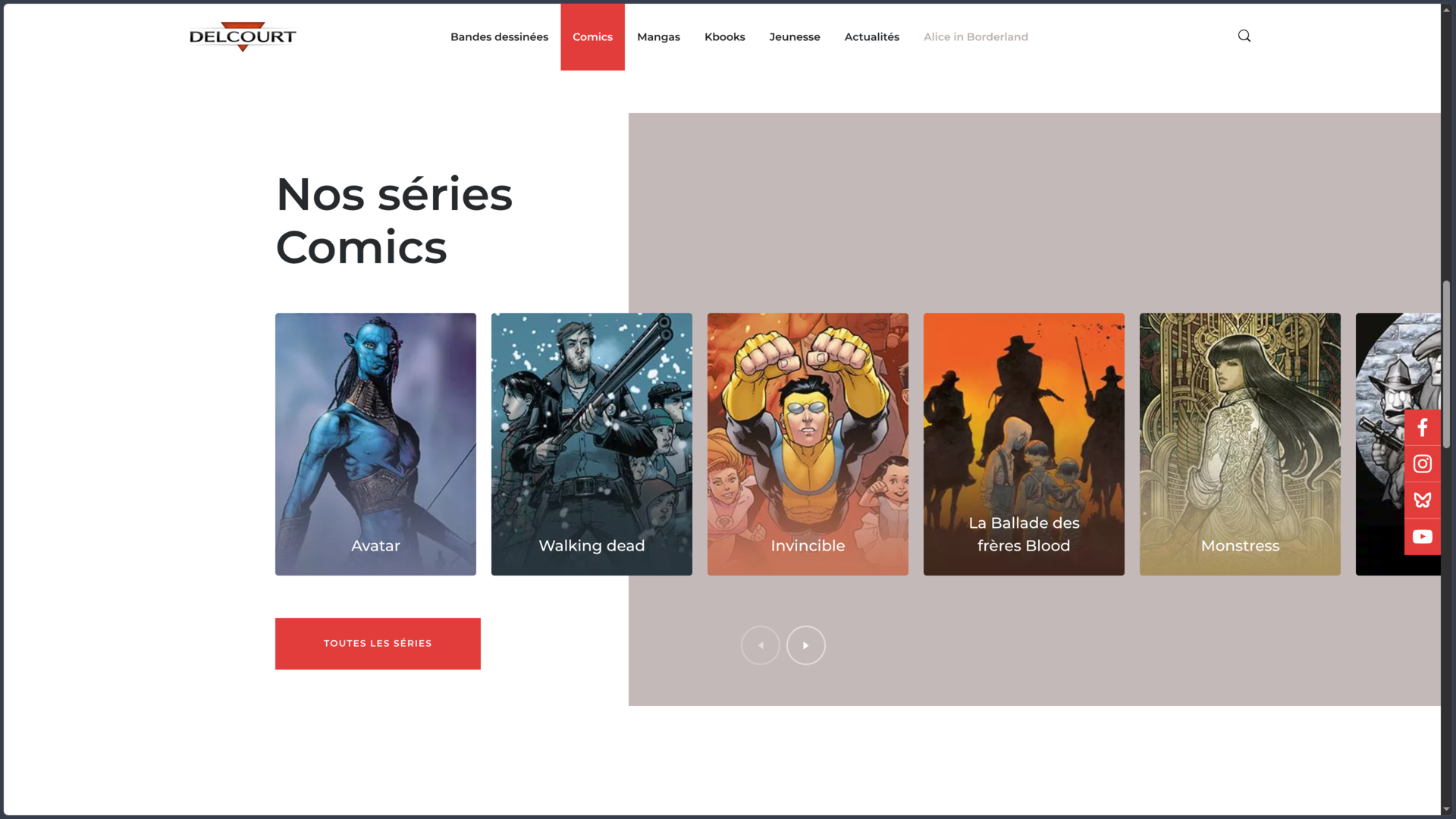
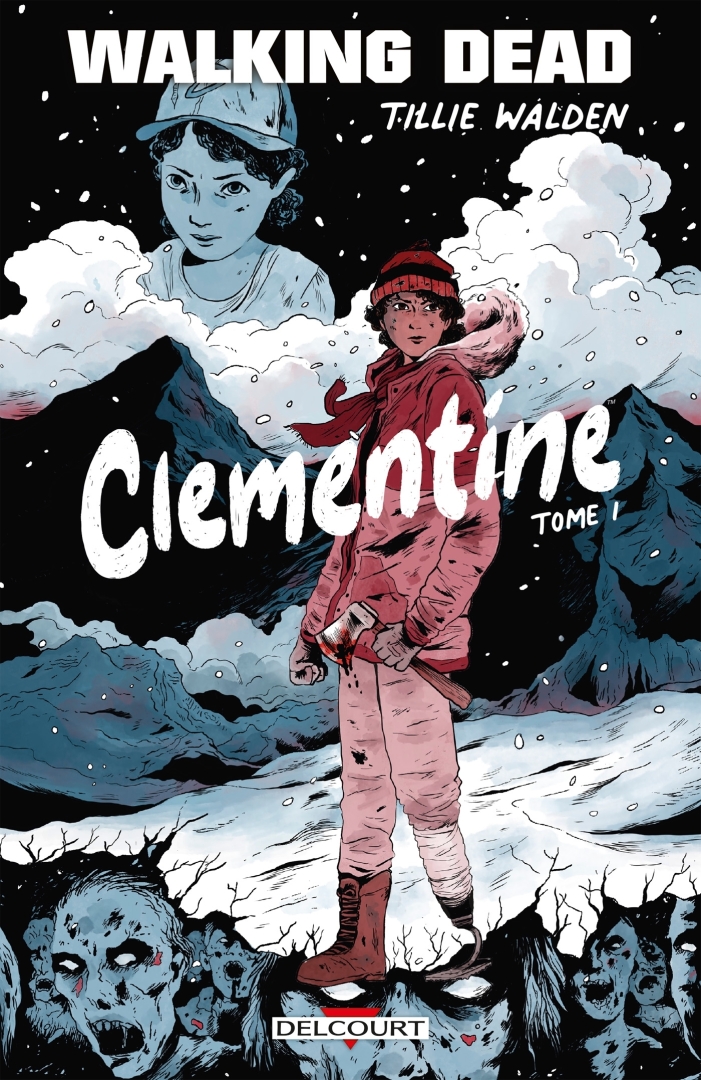
The most emblematic example is Walking Dead by Robert Kirkman, whose French publication Delcourt took over in 2007 within its Contrebande collection.
The series became one of the publishing house’s greatest comics successes.
This activity should not be confused with original production: Walking Dead remains an American creation originally published by Image Comics; Delcourt handles its French edition.
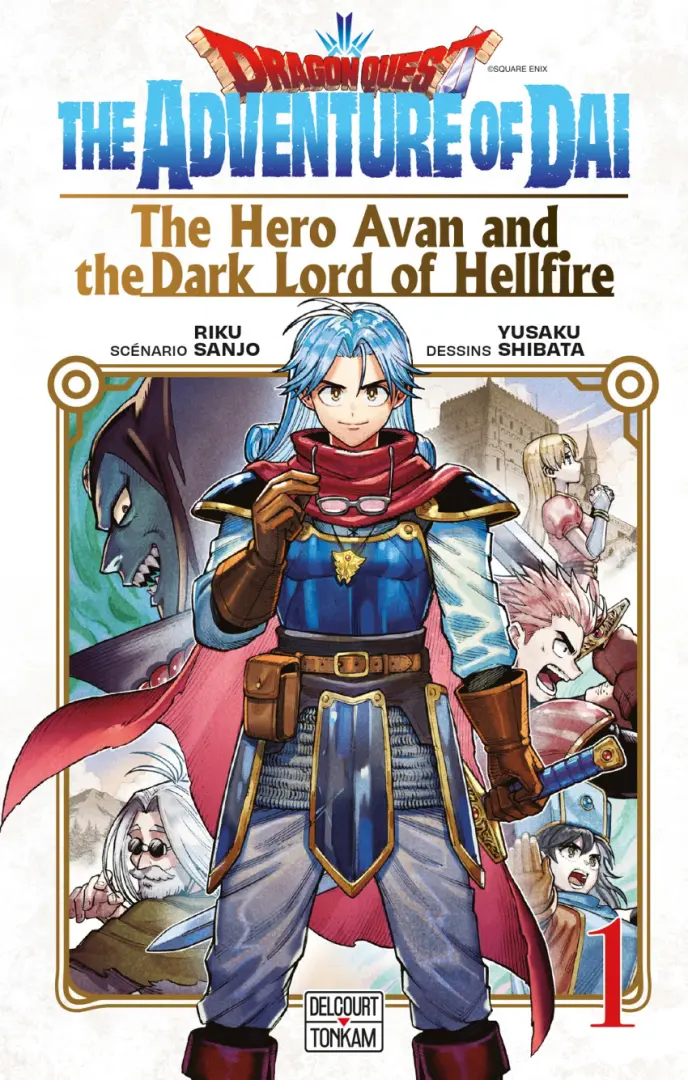
Manga also entered the publishing house’s environment, notably through the acquisition of Tonkam in 2005.
Tonkam, a historic manga publisher in France, retained an identifiable identity within the group.
The later development of manga, Delcourt/Tonkam and the group’s different labels demonstrates Delcourt’s expansion into the major international traditions of comics publishing.
The publishing house did not, however, abandon auteur-driven projects.
Works such as Jerusalem: Chronicles from the Holy City by Guy Delisle, which received the Fauve d’or at Angoulême in 2012, and Come Prima by Alfred extended a line of graphic novels, personal narratives, testimonies and creations that do not follow the traditional series model.
This coexistence between mainstream success and auteur comics is now a central feature of the catalogue.
The company simultaneously evolved into a group.
In 2003, Delcourt partnered with Éditions Soleil to create Delsol Diffusion, a structure specializing in the commercial distribution of comics.
In 2005, Delcourt acquired Tonkam.
In 2011, the publishing house acquired Éditions Soleil, founded by Mourad Boudjellal.
In 2017, the legal structures of Delcourt and Soleil merged to form Groupe Delcourt.
This evolution requires an important distinction for PANACHES CULTURE.
Éditions Delcourt refers to the historic publishing house and editorial brand.
Groupe Delcourt refers to the broader economic organization that now notably includes Delcourt, Soleil, Tonkam and Kbooks, along with various activities in literature, children’s publishing, training and distribution.
A comic published by Soleil should therefore not be attributed to Delcourt simply because both brands belong to the same group.
The same logic applies to Tonkam and Kbooks.
In January 2025, Groupe Delcourt joined Editis.
The group nevertheless retained its organization, brands and editorial autonomy, with Guy Delcourt as founding chairman.
In 2026, Groupe Delcourt presents itself as the third-largest French comics publisher, with around 730 new releases per year and nearly 145 employees based between Paris and Toulon.
Éditions Delcourt remains at the heart of this organization.
The publishing house currently presents a generalist catalogue structured across numerous comics, manga, American comics, Kbooks and children’s collections.
Forty years after its foundation, Delcourt therefore remains identifiable less through a specific genre than through its ability to bring together major popular series, long-running imaginative universes, foreign comics, children’s creations and auteur works.
History
1985-1986: from Pilote to the creation of a new publishing house
Before becoming a publisher, Guy Delcourt worked as a journalist.
After an initial professional experience in finance in the United States, he turned toward cinema, fantasy and comics.
Back in France, he contributed to several publications and notably joined Pilote.
In 1985, he became the magazine’s editor-in-chief.
The period was difficult for comics publishing.
The major magazines that had structured the Franco-Belgian market for several decades were losing influence while direct album publication was becoming increasingly important.
At the beginning of 1986, Guy Delcourt left Dargaud and decided to create his own publishing house.
He was 28 years old.
The company was initially called Guy Delcourt Productions.
1986: the first albums and La Bande à Renaud
The publishing house’s beginnings remained directly connected to creators Guy Delcourt had met in the Pilote environment.
Among the first were Thierry Cailleteau and Olivier Vatine.
Their album Galères balnéaires, collecting stories from the adventures of Fred and Bob originally published in Pilote, was among Delcourt’s very first releases.
But the first genuine commercial success arrived a few months later.
In October 1986, Delcourt published La Bande à Renaud.
The concept consisted of adapting various Renaud songs into comics.
A large collective of creators took part in the project, including André Juillard, François Boucq, Frank Margerin, Ted Benoit, Laurent Vicomte and Olivier Vatine.
The album exceeded 100,000 copies sold.
For a publishing house that had only just been created, this success provided decisive financial stability and visibility.
It also revealed a principle that Guy Delcourt would continue exploring: creating links between comics and other cultural fields such as music, cinema, literature, painting and reportage.
1988: Aquablue establishes science fiction
In 1988, Thierry Cailleteau and Olivier Vatine launched Aquablue.
The science-fiction series follows Nao and gradually develops a universe combining space adventure, ecology, colonialism and political conflict.
It became one of the publishing house’s first major original-fiction successes.
Aquablue also illustrates Delcourt’s early interest in large-scale spectacle and visually ambitious universes.
Science fiction and fantasy quickly took an important place in several collections.
This direction distinguished the young publishing house at a time when it was still building its position against historical publishers.
Discovering a new generation of creators
Guy Delcourt simultaneously developed a search for new talent.
His time teaching at the Angoulême School of Fine Arts notably allowed him to meet a generation of creators including Alain Ayroles, Jean-Luc Masbou, Turf, Mazan, Claire Wendling and Stéphane Servain.
They obviously did not all develop the same universes.
This diversity became precisely one of the publishing house’s goals.
Delcourt sought less to impose a visual school than to build collections able to welcome different sensibilities.
Marc-Antoine Mathieu, Lewis Trondheim, Joann Sfar and many other creators also gradually joined its environment.
The 1990s: structuring imaginative fiction and children’s publishing
During the 1990s, Delcourt consolidated its position through several collections and series.
Science fiction, fantasy and adventure occupied an important position.
The publishing house notably developed collections capable of making these universes clearly identifiable in bookstores.
But children’s publishing also gained importance.
Guy Delcourt wanted to offer younger readers comics varied enough not to be reduced to a single visual or narrative style.
This policy prepared several successes that would appear during the following decade.
1995: De cape et de crocs combines adventure and literature
In 1995, Delcourt published the first volume of De cape et de crocs, written by Alain Ayroles and drawn by Jean-Luc Masbou.
The series notably features a Gascon fox and a Spanish wolf in an adventure combining swashbuckling, comedy, fantasy and literary references.
Molière, Cyrano, the Roman de Renart, La Fontaine and adventure stories all nourish its writing.
The series clearly illustrates one of Delcourt’s directions: using popular genres without opposing them to more literary writing or particularly elaborate artwork.
1998: Sillage opens a vast science-fiction universe
In 1998, Sillage by Jean-David Morvan and Philippe Buchet joined the catalogue.
The series follows Nävis, a young human integrated into a gigantic space convoy bringing together thousands of alien species.
The story combines adventure, political conflict, social questions, cultural diversity and the heroine’s search for her origins.
Sillage became one of Delcourt’s longest-running science-fiction series.
Its longevity demonstrates the publishing house’s ability to support universes for several decades without necessarily changing their fundamental editorial identity.
1998: Donjon turns the series into a field of experimentation
That same year, Donjon began, created by Lewis Trondheim and Joann Sfar.
The project starts as a parody of heroic fantasy and role-playing games but quickly becomes much broader.
Several series follow different periods in the history of the same universe: Donjon Zénith, Potron-Minet, Crépuscule, Parade, Monsters and later other branches.
Artists can change from one album to another.
The numbering itself plays with the chronology of the world.
Delcourt thus supports a project combining popular series, humor, narrative experimentation and collective creation.
Donjon illustrates another way of building a shared universe beyond a simple linear sequence of albums.
The 2000s: children’s publishing becomes a major sector
At the beginning of the 2000s, several children’s titles achieved major success.
Les Blagues de Toto established itself durably among younger readers.
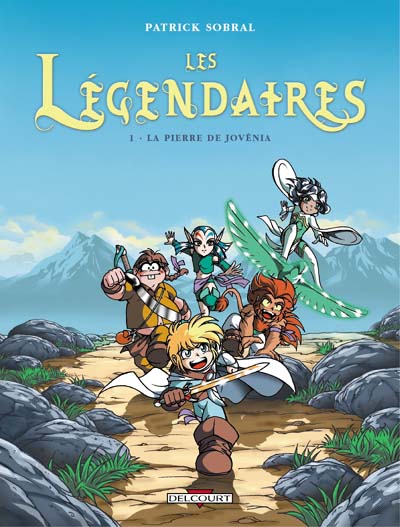
In 2004, Patrick Sobral published the first volume of Les Légendaires, La Pierre de Jovénia.
The series combines fantasy, adventure, humor and the progression of a group of heroes physically returned to childhood after a magical catastrophe.
It quickly became one of the major children’s franchises in the Delcourt catalogue.
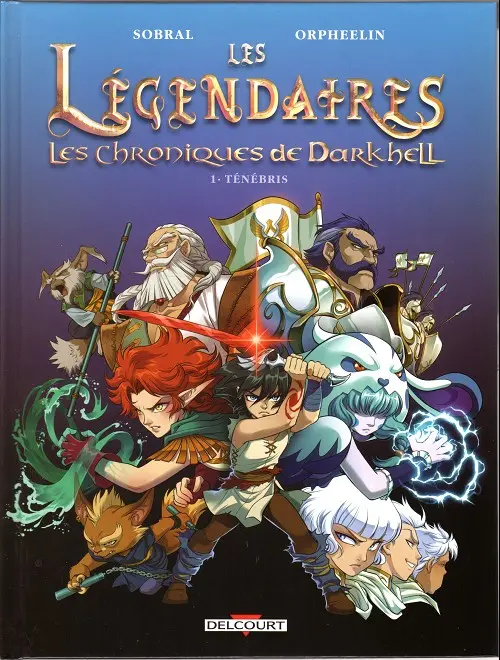
The universe later expanded beyond the main series through several cycles and derivative productions.
This success confirmed that children’s publishing was no longer a peripheral activity but a genuine pillar of the publishing house.
2003: creating Delsol Diffusion with Soleil
In 2003, Delcourt and Éditions Soleil jointly created Delsol Diffusion.
The two publishing houses were still independent at the time.
Their goal was to pool part of the commercial distribution of their catalogues and establish a structure specializing in comics.
Delsol later expanded by welcoming other publishers.
The creation of this structure marked the first important stage in the rapprochement between Delcourt and Soleil, eight years before the latter’s acquisition.
2005: acquiring Tonkam strengthens manga
In 2005, Delcourt acquired Tonkam.
Founded well before this transaction, Tonkam was one of the publishers that had helped establish manga in France.
Its acquisition brought specialized expertise and a catalogue in Japanese publishing to the group.
This operation must nevertheless be understood correctly.
Works historically published by Tonkam do not retroactively become Delcourt publications.
Tonkam has its own publishing history.
Its integration mainly allowed the future Groupe Delcourt to permanently strengthen its presence in manga.
2007: Walking Dead becomes a major comics success
Delcourt had long developed an activity translating and publishing American comics in French.
In 2007, the publishing house took over the French publication of The Walking Dead by Robert Kirkman, originally published in the United States by Image Comics.
Delcourt’s first volume, Passé décomposé, collected the opening issues of the series.
The work subsequently experienced considerable growth, reinforced by its television adaptation.
Walking Dead became one of the most emblematic titles in Delcourt’s comics activity.
Its success also demonstrates the publisher’s ability to release foreign creations in France through an edition adapted to the French-speaking market.
Delcourt nevertheless remains the French publisher of the work, not its original creator or owner.
Graphic novels, reportage and comics about reality
While the major series developed, Delcourt also strengthened its graphic-novel catalogue.
The publishing house notably publishes works by Guy Delisle.
In Chroniques de Jérusalem, the creator recounts his experience of a year spent in the city with his family and observes daily life, politics, religion and territorial organization.
The album received the Fauve d’or for Best Album at Angoulême in 2012.
Other creators such as Chloé Cruchaudet, Marion Montaigne, Alfred and Marc-Antoine Mathieu contribute to this diversity.
Through them, Delcourt publishes autobiography, reportage, science communication, contemporary fiction and formal experimentation.
The publishing house therefore does not oppose popular series and auteur comics.
Both models coexist within the same catalogue.
2011: Delcourt acquires Soleil
In 2011, Éditions Delcourt acquired Éditions Soleil.
The transaction considerably changed the scale of the group.
Soleil notably brought Lanfeust de Troy, Trolls de Troy, its fantasy universes, manga activity and numerous other major series.
The Soleil brand was nevertheless retained.
Delcourt did not transform its catalogue into a simple internal collection under its own name.
This decision allowed both editorial identities to remain distinct.
For PANACHES CULTURE, this separation remains essential: Lanfeust de Troy is a Soleil publication and not a Delcourt publication, even though both publishing houses now belong to the same group.
2014: creating a Comics Academy
In 2014, Groupe Delcourt partnered with Groupe Brassart to create a Comics Academy in Paris.
The objective was to support young talent in acquiring the skills required for a career as a comics creator.
The Academy later became fully integrated into Groupe Delcourt.
This initiative in a way extends the importance Guy Delcourt had placed on discovering young creators since the publishing house’s earliest years.
2017: Delcourt and Soleil legally become Groupe Delcourt
In 2017, a legal restructuring brought the two major publishing houses even closer together.
The entities Éditions Delcourt and Éditions Soleil merged to form Groupe Delcourt.
This merger did not eliminate their editorial identities.
New publications continued to be identified as Delcourt or Soleil according to their catalogue.
The distinction between legal company and editorial brand therefore became particularly important.
Éditions Delcourt continues to exist as an active publishing house even though the legal structure now carries the broader organization of the group.
2021: Kbooks and webtoon
In 2021, Groupe Delcourt developed a new activity connected to Korean webtoons.
The Verytoon platform and the Kbooks label supported this development.
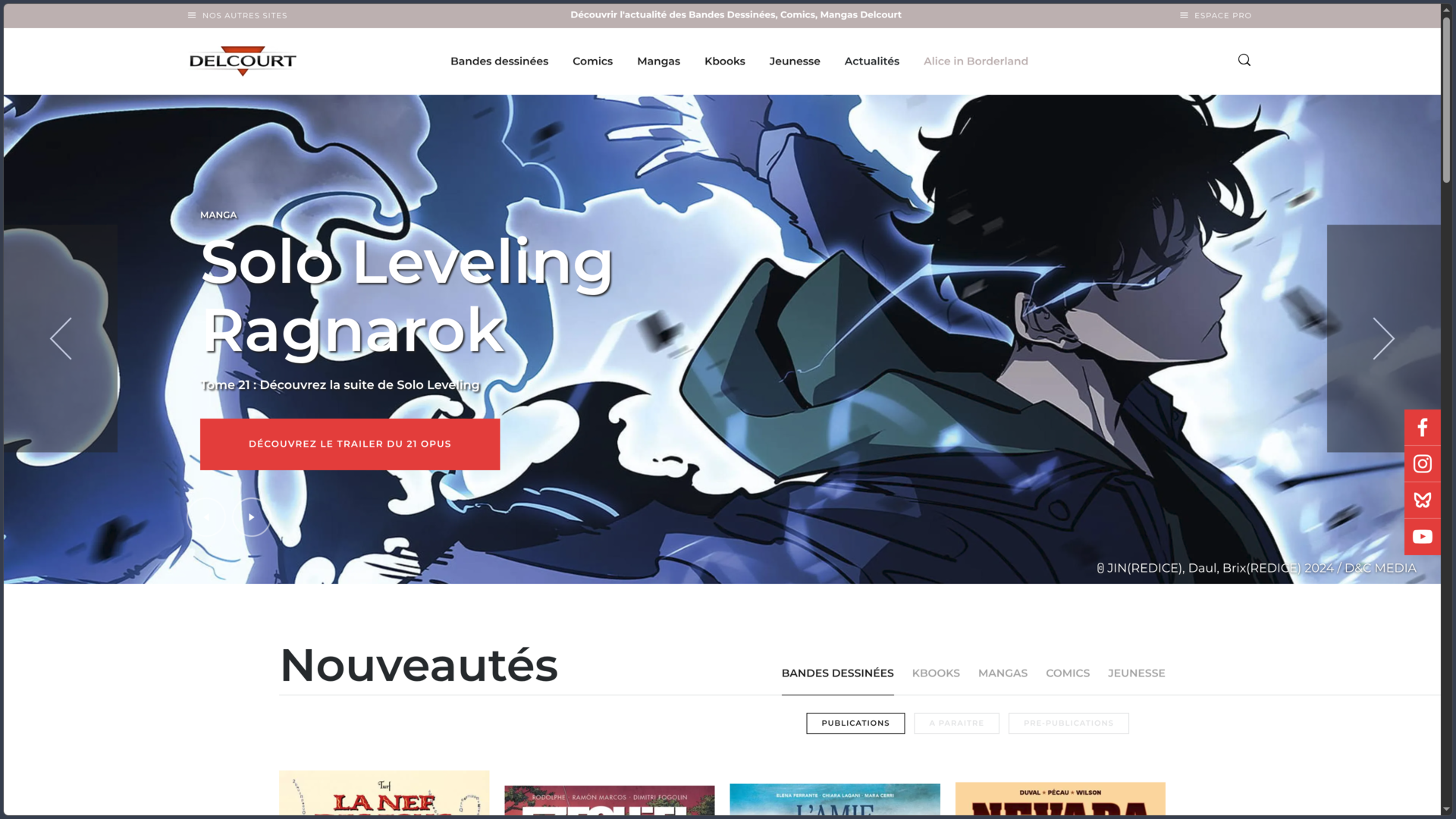
Solo Leveling quickly became one of the emblematic titles of this activity.
The arrival of webtoon added another graphic tradition to the group after Franco-Belgian comics, American comics and Japanese manga.
Here again, Kbooks has its own identity and should not be confused with Éditions Delcourt when precisely attributing a work.
2025: Groupe Delcourt joins Editis
In January 2025, Groupe Delcourt joined Editis.
The transaction ended nearly forty years during which Guy Delcourt had been the reference shareholder of a largely independent group.
Groupe Delcourt’s identity and operational autonomy were maintained.
Guy Delcourt remains founding chairman.
Anne-France Hubau-Nicolas serves as managing director.
Delcourt thus entered a much larger publishing group without losing the brand structure built over several decades.
Delcourt in 2026
In 2026, Groupe Delcourt is the third-largest French comics publisher.
It brings together around 145 employees, mainly in Paris and Toulon, and publishes around 730 new releases per year across all of its activities.
But these figures describe the group, not only the Delcourt brand.
Éditions Delcourt has its own catalogue.
The current institutional presentation attributes to it 31 comics collections, 5 manga collections, 5 Kbooks collections, 2 American comics collections and 1 children’s collection.
The catalogue still brings together Walking Dead, Les Légendaires and Les Blagues de Toto with creators such as François Bourgeon, Chloé Cruchaudet, Guy Delisle, Marc-Antoine Mathieu, Marion Montaigne, Lewis Trondheim, Chris Ware and Zep.
This diversity probably remains the best summary of the publishing house forty years after its creation.
What sets it apart
Building a generalist publishing house without imposing a single visual identity
Delcourt developed without seeking to create a uniform visual identity.
Sillage does not look like Donjon.
Les Légendaires does not resemble the works of Guy Delisle.
Walking Dead belongs to yet another graphic tradition.
This diversity is deliberate.
Collections and editorial lines provide coherence to different projects without imposing the same drawing or storytelling approach on every creator.
The Delcourt brand is therefore defined more by the breadth of its editorial policy than by an immediately recognizable visual style.
Investing very early in imaginative fiction
Science fiction, fantasy and supernatural fiction occupy an important place from the earliest years.
Aquablue, De cape et de crocs, Sillage and Donjon demonstrate different ways of using imaginative fiction.
Some rely on large continuing adventures.
Others use genre conventions to engage with literature, humor or narrative experimentation.
This lasting presence gives Delcourt significant experience in building long-running series and universes.
Making the discovery of new creators a historical driving force
Delcourt’s youth in 1986 forced the publishing house to find creators who were not already all tied to the major historical publishers.
This constraint gradually became a strength.
Guy Delcourt met and supported a generation of creators, several of whom would build major bodies of work.
The Angoulême School of Fine Arts notably played a role in these encounters.
This search for new talent subsequently remained present through collections, editorial projects and the Comics Academy.
Not opposing popular series and auteur comics
The Delcourt catalogue can welcome Les Légendaires and Chroniques de Jérusalem without trying to force them into the same model.
A major children’s series can build several dozen albums and a vast universe.
A graphic novel can function as a complete, personal and independent work.
A popular-science book can use drawing as a tool for transmission.
This coexistence allows Delcourt to reach very different audiences while remaining focused on the narrative possibilities of images and comics.
Integrating several international comics traditions
Delcourt gradually developed beyond Franco-Belgian comics alone.
American comics occupy an important place, with Walking Dead as a major example.
The acquisition of Tonkam strengthens manga.
The development of Kbooks later opens the group to Korean webtoons.
Each sector requires different skills: rights acquisition, translation, adaptation, manufacturing, relationships with foreign publishers and understanding of specific formats.
This international diversity has become a structural component of the Delcourt environment.
Growing through acquisitions without erasing acquired brands
Delcourt’s evolution into a group did not happen only through the growth of its historical catalogue.
The acquisition of Tonkam in 2005 and then Soleil in 2011 profoundly changed its scale.
But the brands were not simply eliminated.
Soleil continues to be Soleil.
Tonkam remains identifiable.
Kbooks has its own identity.
This logic allows the group to bring together several publishing cultures without presenting all of their works as Delcourt publications.
For PANACHES CULTURE, this distinction prevents confusion between economic ownership and editorial attribution.
Controlling part of the specialized distribution chain
The creation of Delsol Diffusion with Soleil in 2003 is another important characteristic.
Delcourt does not work only on selecting and producing books.
The group also developed a tool specialized in marketing them to bookstores.
Delsol later distributes works from numerous other publishers.
This capability gives the group direct knowledge of how comics circulate through points of sale and complements its purely editorial activity.
Remaining an identifiable publishing house within a much larger group
Since 2025, Delcourt’s hierarchy has included several levels.
Éditions Delcourt is the publishing house.
Groupe Delcourt brings together Delcourt, Soleil, Tonkam, Kbooks and other activities.
Editis now owns Groupe Delcourt.
These three levels are not interchangeable.
A work published by Soleil or Kbooks is not a Delcourt work.
Conversely, a series carrying the Delcourt logo should continue to be linked to Éditions Delcourt even though the company now belongs to Editis.
This precision is essential for maintaining a coherent cultural map.
Good to know
- Éditions Delcourt was founded in 1986 by Guy Delcourt, after his time as editor-in-chief of Pilote.
- Among its very first publications was Galères balnéaires by Thierry Cailleteau and Olivier Vatine; La Bande à Renaud, published in October 1986, became its first major success with more than 100,000 copies sold.
- Aquablue began at Delcourt in 1988 and helped establish science fiction and imaginative storytelling very early in the publishing house’s identity.
- De cape et de crocs began in 1995, while Sillage and Donjon both appeared in 1998 and became three important bodies of work in the catalogue.
- Children’s publishing gradually became a pillar with notably Les Blagues de Toto and later Les Légendaires, whose first album appeared in 2004.
- Delcourt and Soleil jointly created Delsol Diffusion in 2003, eight years before Delcourt acquired Soleil.
- Delcourt acquired Tonkam in 2005, considerably strengthening its manga activity; Tonkam nevertheless retains its own history and editorial identity.
- Walking Dead has been published by Delcourt in France since 2007 within the Contrebande collection; Delcourt is its French publisher, while Robert Kirkman’s work originated with Image Comics.
- Chroniques de Jérusalem by Guy Delisle, published by Delcourt, received the Fauve d’or for Best Album at the Angoulême Festival in 2012.
- Delcourt acquired Éditions Soleil in 2011, then the Delcourt and Soleil legal structures merged in 2017 to form Groupe Delcourt without eliminating their distinct editorial brands.
- The group developed Kbooks in 2021 around Korean webtoons, notably with Solo Leveling; Kbooks remains a brand distinct from Delcourt.
- Since January 2025, Groupe Delcourt has belonged to Editis; Éditions Delcourt remains an active and distinct publishing house within this organization, while Guy Delcourt continues as founding chairman of the group.