
Presentation
Today, the name FromSoftware almost immediately evokes Dark Souls, Bloodborne, Sekiro, or Elden Ring. Yet the studio's history began long before the Souls — and even before video games.
Founded on November 1, 1986 in Tokyo, the company initially developed professional software. It entered gaming in 1994 with King's Field, a first-person 3D RPG released on PlayStation. Three years later, Armored Core opened another essential line, devoted to mechs, their customization, and an idea that would often return: understanding systems matters as much as reacting quickly.
When Demon's Souls appeared in 2009, several sensibilities long present at FromSoftware came together: hostile worlds, careful exploration, partially explained rules, the importance of space, and progression built as much by the player's experience as by his character's statistics.
Dark Souls then turned this method into a worldwide influence. Bloodborne, Sekiro, and Elden Ring, however, proved that the studio does not protect an immobile formula. It speeds up combat, removes certain freedoms, massively opens exploration, or returns to Armored Core without trying to turn each production into a new Dark Souls.
Difficulty remains the most visible element of its public image, but it does not really sum up its work.
FromSoftware's games are above all about learning.
Learn an adversary. Understand a place. Discover a rule no one took the time to explain. Accept that a first interpretation was wrong, then come back with more knowledge.
At FromSoftware, the player rarely moves forward because the game gives him the answer. He moves forward because he eventually understands the question.
History
1986-1997: video games arrive after the company
FromSoftware was founded in 1986 in Tokyo and initially worked on business software.
The turn to video games came in 1994 with King's Field, released on the original PlayStation. This real-time RPG already had a sensibility that would resurface later: careful exploration, oppressive spaces, and a world little concerned with the player's immediate comfort.
King's Field is not a draft of Dark Souls. It rather shows that a certain relationship with space, danger, and opacity exists very early in the studio's work.
In 1997, Armored Core opened a second path. The player has to build his mech from parts, weapons, and characteristics involving different trade-offs.
Combat therefore begins before the mission.
This importance given to preparation and to understanding systems becomes another lasting thread of FromSoftware.
Years of experimentation before the Souls
Over the following years, FromSoftware produced games in several genres, continued Armored Core, and worked around various licenses and platforms.
Not everything became a major franchise.
This period is nonetheless essential because it prevents telling the studio's story as a straight line inevitably leading to Dark Souls. FromSoftware accumulates ideas, methods, and sensibilities before several of them converge in a particularly strong way.
This convergence came with Demon's Souls.
2009-2011: learning becomes the heart of the system
Demon's Souls was released in 2009 under the direction of Hidetaka Miyazaki.
Death there has a particular function. It is not just the failure of an attempt: it conveys information. The player learns the position of an enemy, the rhythm of an attack, the structure of a place, or the weakness of his own strategy.
When he returns, the world is almost identical.
The player, however, has changed.
Dark Souls, released in 2011, consolidated this philosophy in a new universe. Difficulty remains important, but it mainly serves to give weight to understanding and to the sense of accomplishment.
The world also participates in this learning. Shortcuts gradually reveal the true geography of places. A door opened after several hours can show that two areas thought to be far apart are almost side by side.
The player therefore progresses not only in power.
He progresses in knowledge.
The game's success gradually installed the term "Souls-like" and gave the studio an influence that goes far beyond its own franchises.
Bloodborne and Sekiro: moving the formula to reveal what matters
The success of Dark Souls could have led FromSoftware to endlessly repeat the same structure.
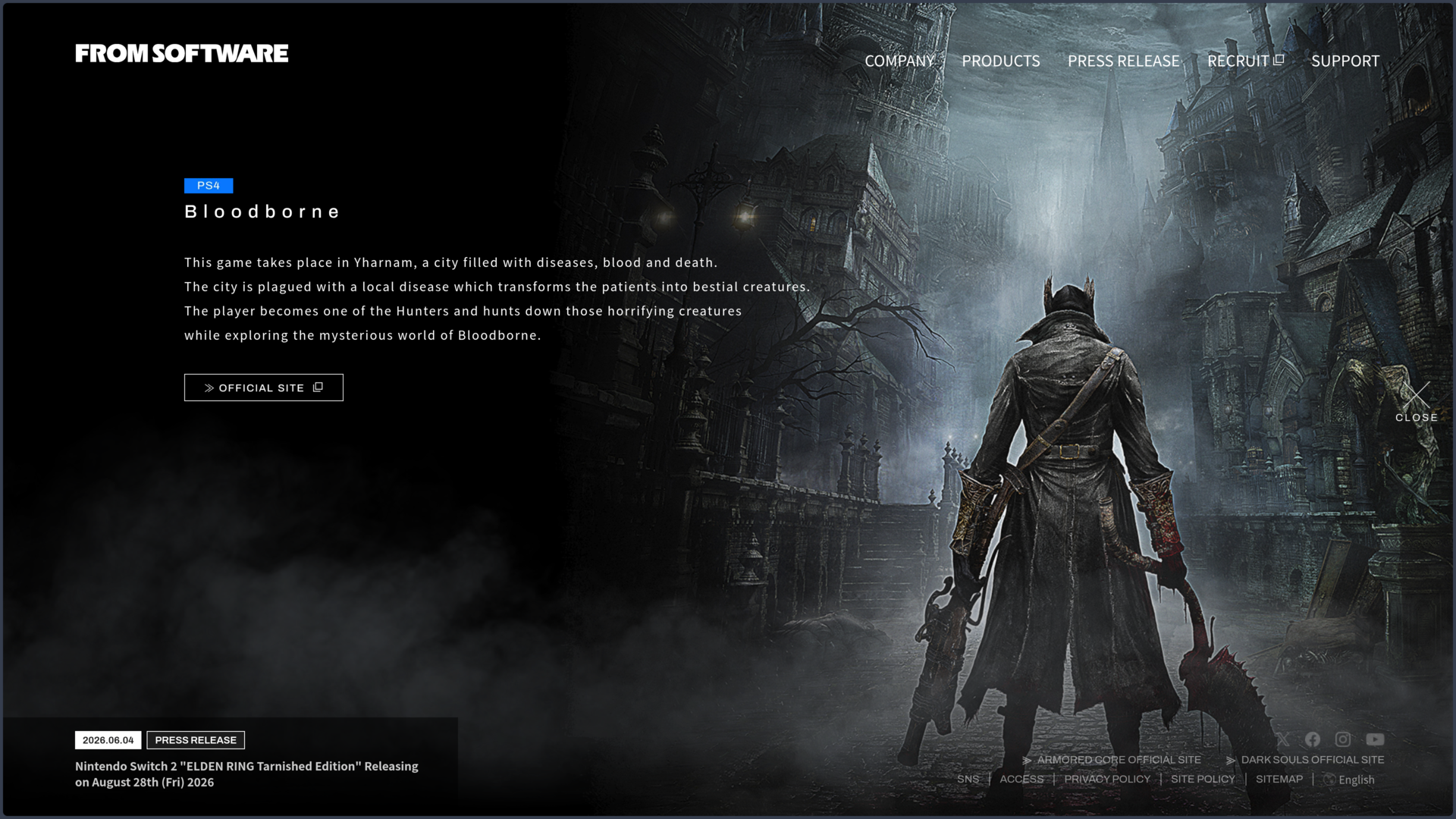
Bloodborne, in 2015, showed another direction. Combat becomes faster and encourages more aggression. The gothic universe also changes the tone.
The player recognizes several principles from the studio without being able to use exactly the same reflexes.
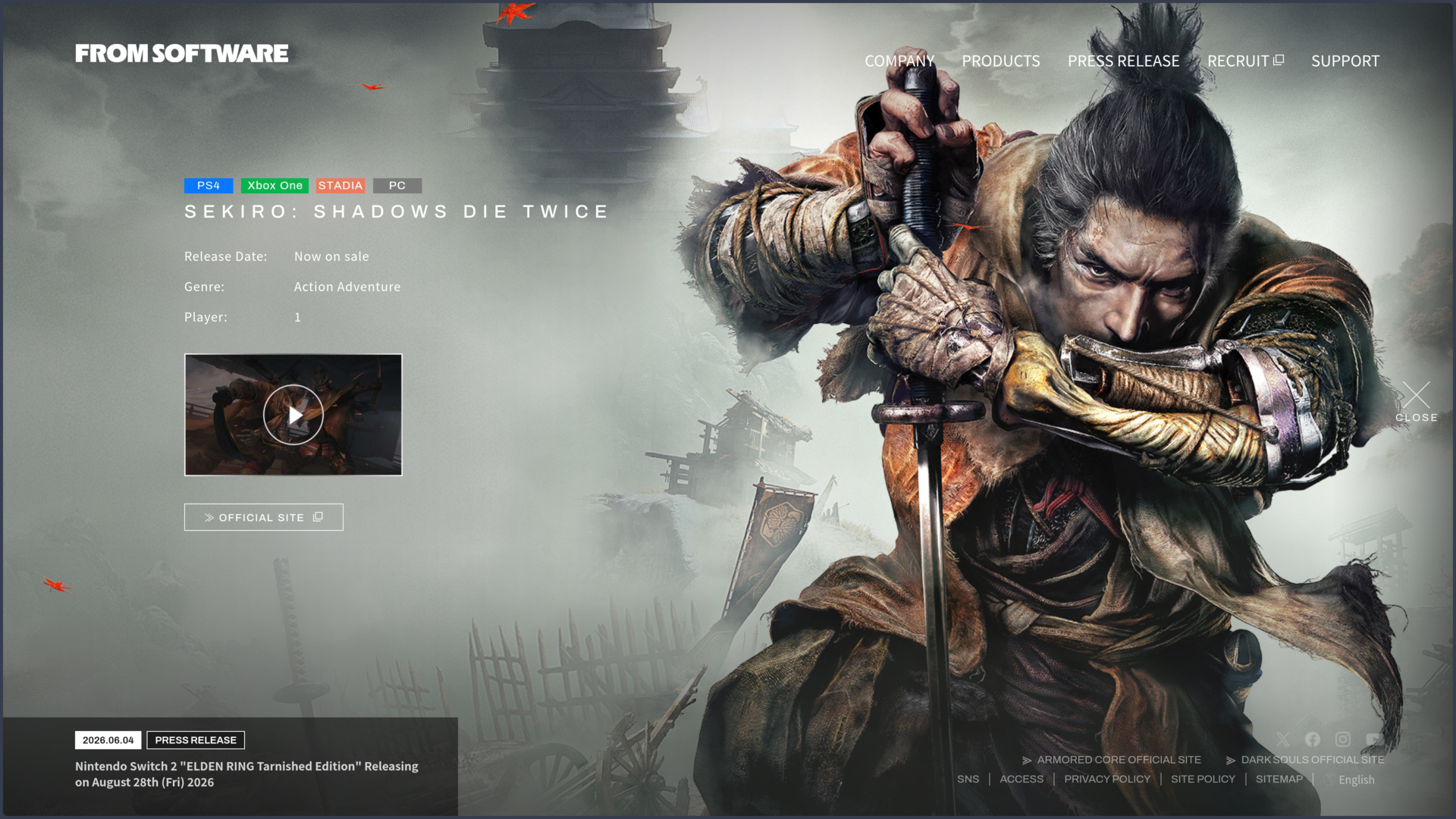
Sekiro: Shadows Die Twice, released in 2019, went even further. Character build freedom recedes, the protagonist is defined, and combat focuses more on rhythm, posture, and sword duels.
FromSoftware therefore removes some possibilities to deepen another form of learning.
These games show that the studio's identity does not depend on a precise catalog of mechanics. It lies more in the way it organizes friction, observation, and progressive mastery.
Elden Ring: opening the world without removing the demand
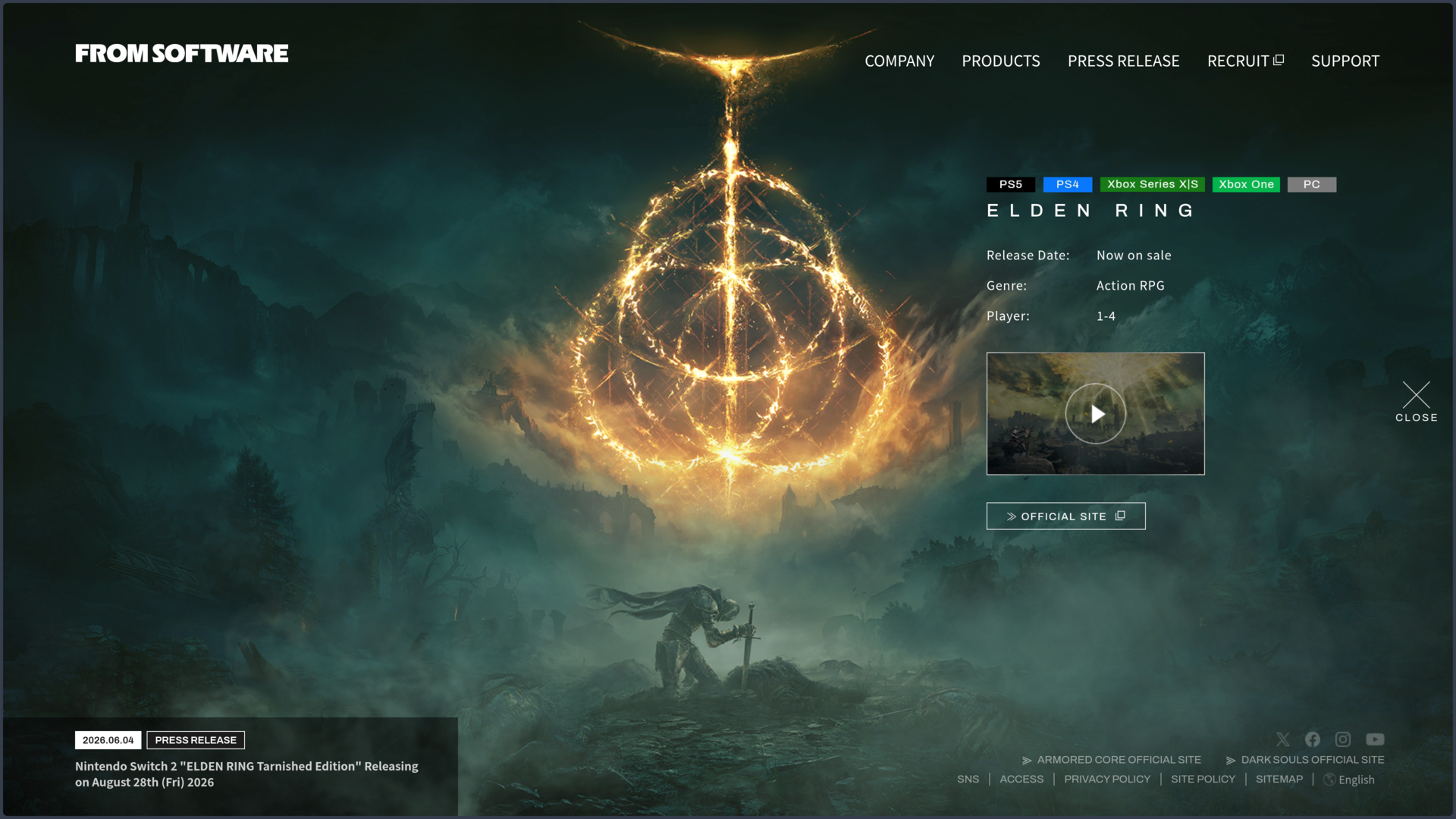
With Elden Ring in 2022, FromSoftware mainly changed the scale of space.
The open world gives the player many more options when an obstacle seems too difficult. He can explore another region, discover new equipment, or come back later with more experience.
This freedom profoundly changes the relationship with difficulty.
In a more enclosed level, a boss can become a wall. In Elden Ring, that wall can sometimes simply be walked around for several hours.
The game thus keeps the studio's demand while offering more paths to meet it.
The result gives FromSoftware a new scale of audience and confirms that its philosophy can reach a global public without removing all friction.
Armored Core VI: returning to an old identity
In 2023, FromSoftware returned to its historical series with Armored Core VI: Fires of Rubicon.
The project is important because it reminds us that the studio's history still does not reduce to the Souls.
The game naturally benefits from part of the know-how accumulated in combat and boss design, but keeps the identity of Armored Core around mech customization and missions.
FromSoftware can therefore return to its past without simply applying the formula that made it world-famous to an old franchise.
An identity strong enough to be moved
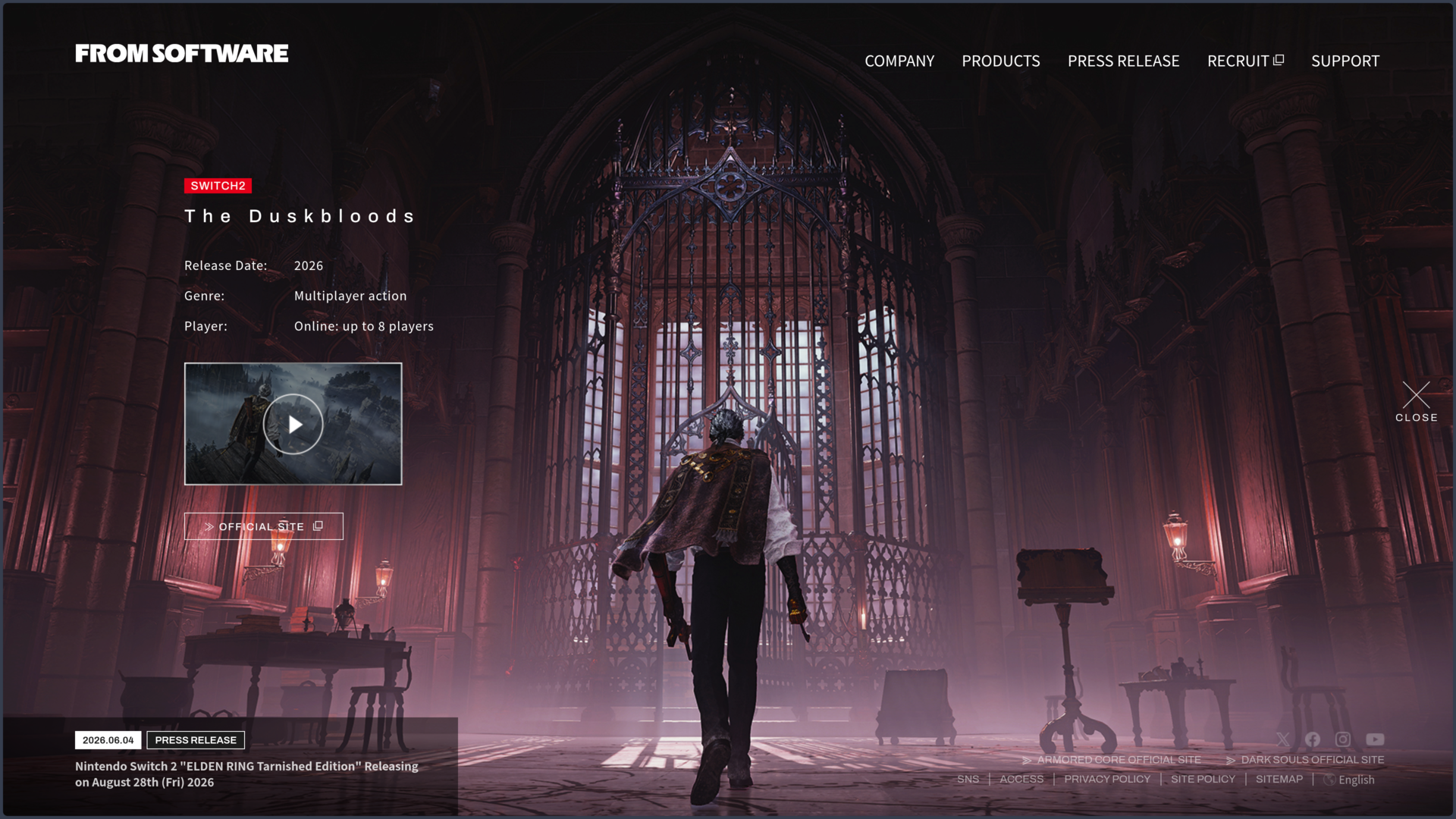
The more recent projects around Elden Ring or multiplayer show that FromSoftware continues to explore other structures.
The most important piece of information is not the detail of each announced production.
It lies in what the studio seems to refuse to let its own influence become a prison.
After creating a vocabulary adopted by a large part of the industry, FromSoftware must now continue to evolve its rules enough to remain itself without simply reproducing the image the public already has of it.
What Sets It Apart
Turning failure into knowledge
Difficulty is so associated with FromSoftware that it sometimes ends up masking its usefulness.
A boss first seems chaotic. Then an attack becomes recognizable. The player understands when to dodge, what distance to keep, or why his previous strategy was failing.
Victory therefore does not only reward a statistic increase.
It often rewards a newly acquired understanding.
This logic transforms failure. Dying can become an attempt that conveys information. Frustration obviously exists when the balance works poorly, but in the best cases failure is directly part of the learning process.
FromSoftware does not just ask the character to progress.
It asks the player to progress with him.
Making mystery an activity
The same trust placed in the player appears in the storytelling.
FromSoftware's worlds rarely explain everything directly. Part of their story passes through architecture, the description of an object, a few phrases, or the position of a body in a setting.
The player receives fragments and must then try to understand how they connect.
This method gives mystery an active function. Understanding the universe becomes something one does, not just something one listens to.
The discussions, interpretations, and theories produced by players naturally extend this approach.
The story is not fully assembled before being handed to the public.
Also learning space
FromSoftware's level design often turns geography into knowledge.
A shortcut does not only serve to shorten a trip. It reveals the relationship between two areas. A door opened or an elevator discovered can suddenly make readable a space thought to be much larger or more disorderly.
The world becomes simpler because the player understands it better.
This idea links very different productions, from King's Field to Dark Souls or Elden Ring: exploring means progressively replacing the unknown with a mental map.
Protecting a philosophy rather than a formula
Bloodborne speeds up combat.
Sekiro reduces build freedom.
Elden Ring massively opens exploration.
Armored Core VI returns to a franchise with different rules.
These variations show that FromSoftware does not need to keep exactly the same camera, the same progression, or the same combat system to remain recognizable.
What survives more is a certain trust in the player's ability to observe, experiment, and learn.
FromSoftware protects a philosophy more than a formula.
This is probably what allows it to keep evolving despite the immense influence of the Souls.
Good to Know
- FromSoftware was founded on November 1, 1986 and initially developed professional software.
- The company entered video games with King's Field on PlayStation in 1994.
- Armored Core began in 1997 and constitutes one of the studio's great historical lines.
- Demon's Souls was released in 2009, before Dark Souls in 2011.
- Hidetaka Miyazaki became one of the studio's main creative figures and now holds its presidency.
- FromSoftware joined the Kadokawa group in 2014.
- Bloodborne, Sekiro, and then Elden Ring each moved certain principles associated with the Souls instead of exactly reproducing the same formula.
- Elden Ring was released in 2022 and gave the studio a new scale of audience.
- Armored Core VI: Fires of Rubicon was released in 2023 and marked the return of a franchise born long before the Souls.
- FromSoftware is headquartered in Tokyo and has an office in Fukuoka opened in 2015.