Presentation
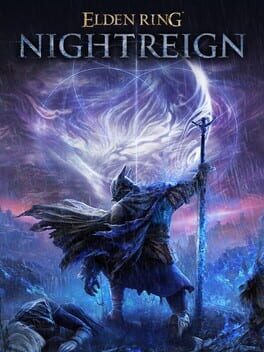
Developed by FromSoftware and published by Bandai Namco Entertainment, Elden Ring Nightreign was released on May 30, 2025 under the direction of Junya Ishizaki, who had notably served as Battle Director on Elden Ring. The game retains part of the foundations of the 2022 action RPG but reorganizes them around short expeditions, predefined characters and cooperation as a central element.
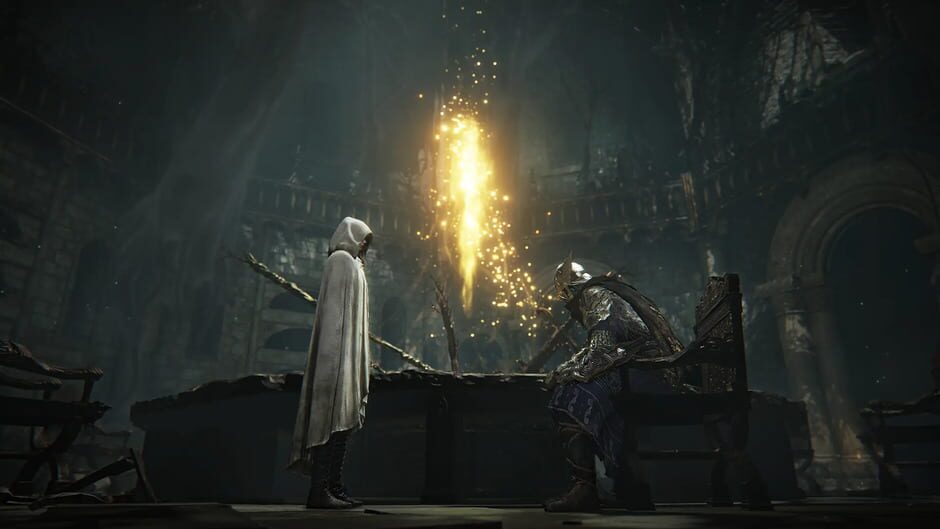
Nightreign is neither an Elden Ring expansion nor a direct continuation of its story. FromSoftware presents it as a standalone adventure set in a parallel universe. Roundtable Hold returns as the main hub, while expeditions take place in Limveld, a separate region whose structure and encounters change between sessions.
Every run follows a three-day cycle. Players have limited time to explore, fight, gather equipment and improve their character before night falls. A boss must be defeated at the end of each of the first two days, while the third leads to the chosen Nightlord.
This structure is reinforced by the Night's Tide, which progressively reduces the accessible area. The team must constantly choose between continuing exploration, fighting an enemy that may provide a valuable reward or moving toward safety before the Night catches up. Knowledge of the map must therefore be combined with continuous time management.
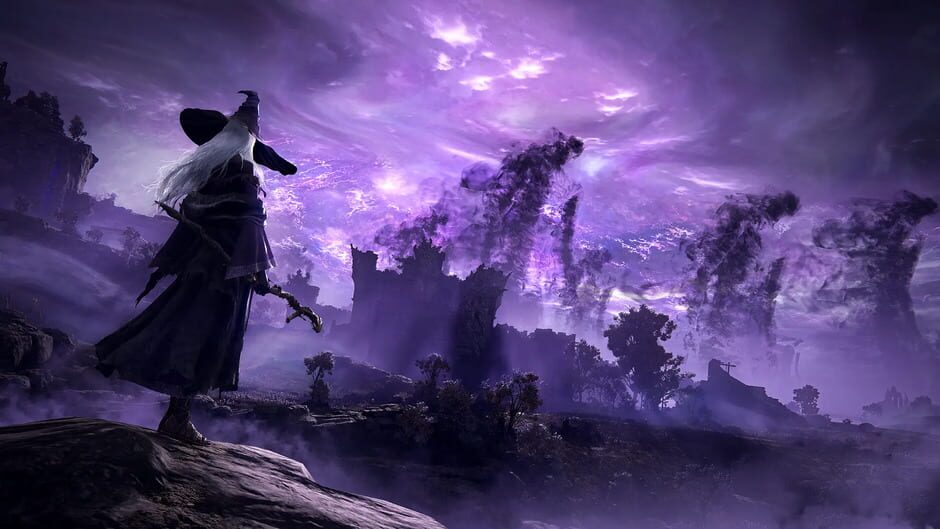
The base game features eight Nightfarers, each designed as a complete archetype rather than a freely constructed class. Every character possesses distinct attributes, a passive ability, a Character Skill and an Ultimate Art. Some specialize in close combat, while others emphasize ranged attacks, magic, defense or group support.
Nightfarers begin every expedition at level 1. Enemies provide runes that can be spent at Sites of Grace to gain levels rapidly during the session. These levels are temporary, however: every new expedition starts again from the beginning, requiring players to rebuild their strength according to the opportunities they encounter.
Weapons and rewards found throughout Limveld directly contribute to this process. Weapon type, properties and various passive effects can shift the priorities of a run. Players must therefore adapt quickly to the equipment available rather than reproduce exactly the same predetermined build as they might in a traditional RPG.
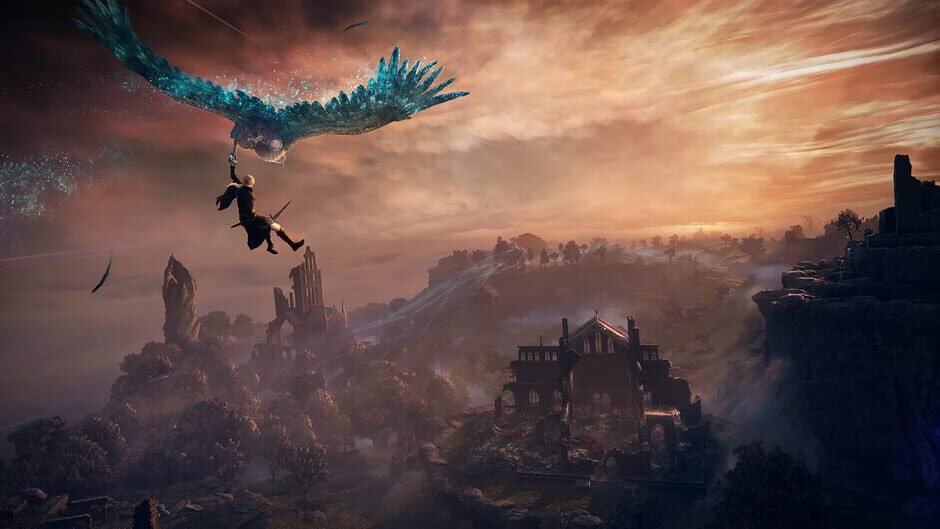
Exploration itself is considerably faster than in Elden Ring. Nightfarers have movement designed for the limited duration of expeditions, can quickly clear certain obstacles and climb walls. This increased mobility makes it possible to cover large sections of Limveld within minutes and efficiently connect battles, camps, forts, churches and other points of interest.
Limveld retains a recognizable general layout, but many elements change between sessions. The position of certain points of interest, equipment, enemies and bosses can vary, while Shifting Earth events can transform sections of the map more dramatically. No expedition therefore reproduces the previous one exactly.
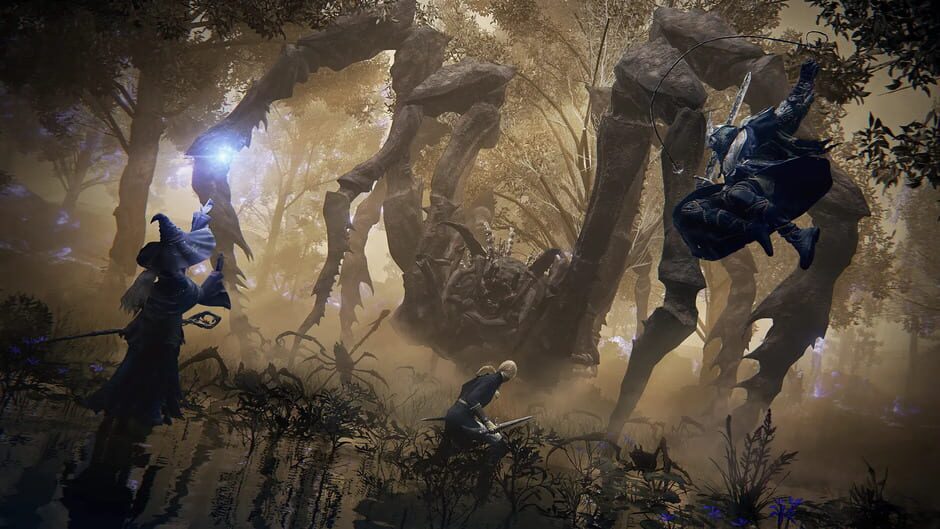
Cooperation remains at the heart of the system. Nightreign was originally designed around three-player teams, whose abilities can create particularly effective synergies. Downed allies can also be revived by their partners during combat, making positioning and mutual support directly connected to the survival of the group.
The game can nevertheless be played solo, with adjusted balancing, and FromSoftware added Duo Expeditions in July 2025. The number of participants can now be selected before departure, allowing expeditions with one, two or three players depending on the desired experience.
Between runs, Roundtable Hold houses the persistent progression systems. Relics earned through expeditions can be equipped to modify certain Nightfarer characteristics on future attempts, while Remembrances gradually develop their individual stories. Nightreign therefore combines relatively light permanent progression with a complete rebuilding of power during every session.
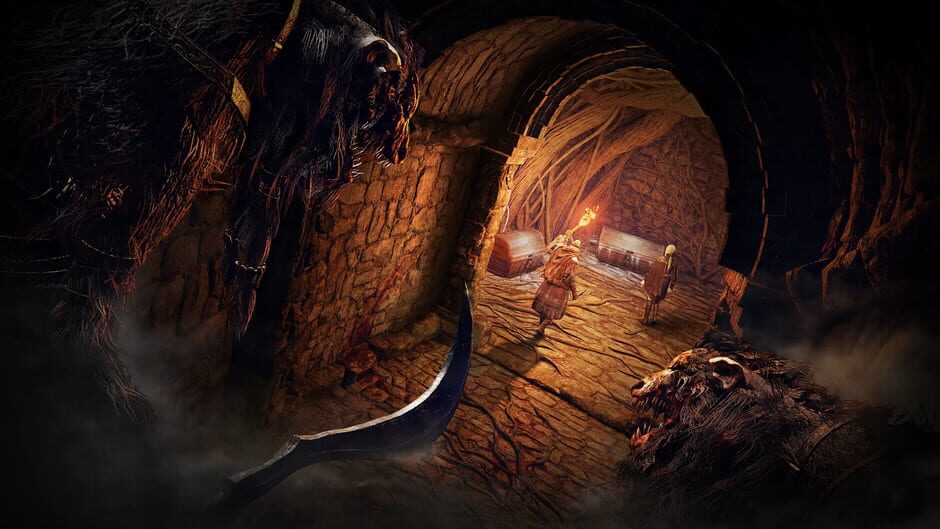
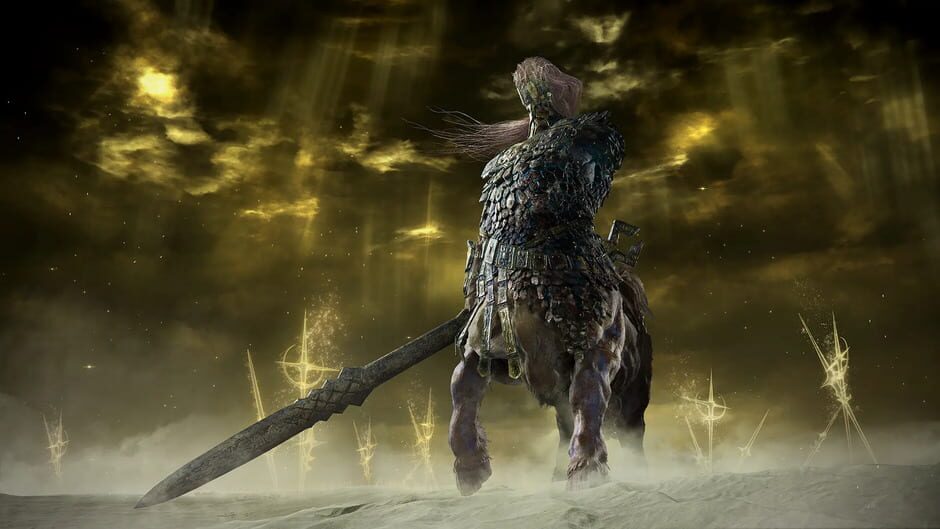
Encounters culminate with the Nightlords, but Nightreign also reuses creatures and bosses from Elden Ring alongside selected enemies originating from other FromSoftware games. This gives the game a distinctive structure: familiar encounters are placed inside a much faster system where preparation must be completed within a few dozen minutes before the final battle.
What to remember
- A standalone adventure parallel to Elden Ring, centered on Limveld and Roundtable Hold rather than continuing the original story directly.
- Expeditions organized around a three-day cycle, combining exploration and rapid character growth during the day with a boss encounter at the end of each night.
- Eight Nightfarers in the base game, each with their own attributes, passive ability, Character Skill and Ultimate Art.
- Progression restarting at level 1 for every expedition, requiring players to use runes, weapons and effects found in the field to quickly assemble an effective build.
- A map whose encounters and various elements change between runs, combined with the Night's Tide progressively reducing the playable area.
- An experience designed around three-player cooperation but also playable solo or as a duo, with permanent Relic progression and individual stories developed through Remembrances.
Conclusion
Elden Ring Nightreign does not attempt to reproduce the structure of Elden Ring on a smaller scale. FromSoftware takes its combat system, part of its enemy roster and several elements of its universe and places them inside a loop where every decision has to be made much more quickly.
The three-day cycle gives the game its particular identity. Exploring a fortress, pursuing a field boss or searching for a better weapon can significantly strengthen the team, but every detour consumes limited time before the Night's Tide closes in. Preparing for the final encounter therefore becomes as important as executing it.
The Nightfarers reinforce this transformation. Rather than freely developing a Tarnished across dozens of hours, players select a character with an already identifiable role and must use their abilities in cooperation with the rest of the team. Temporary weapons and levels then create the variation unique to each expedition.
Persistent progression nevertheless prevents sessions from being completely disconnected. Relics allow players to prepare for later attempts, while Remembrances gradually develop the characters between battles. Roundtable Hold therefore becomes the link between repeated expeditions and the game's narrative component.
By transforming Elden Ring into a session-based cooperative survival action RPG, Nightreign represents one of the most substantial variations on FromSoftware's recent formula. It retains demanding combat and boss-reading skills but now combines them with time management, improvisation and team synergy.
Good to know
- Elden Ring Nightreign was developed by FromSoftware and published by Bandai Namco Entertainment.
- Junya Ishizaki serves as Director; he had previously worked as Battle Director on Elden Ring and Shadow of the Erdtree.
- The game was released on May 30, 2025 for PlayStation 4, PlayStation 5, Xbox One, Xbox Series X|S and Windows through Steam.
- Nightreign is a standalone adventure set in a universe parallel to the events of Elden Ring and is not a direct sequel to the 2022 game.
- The base game features eight Nightfarers and was primarily designed around three-player cooperative expeditions while also offering solo play.
- Update 1.02 on July 31, 2025 officially added Duo Expeditions with balancing adjusted to the number of participants.
- The Forsaken Hollows, released on December 4, 2025, adds two additional Nightfarers, Scholar and Undertaker, alongside new bosses and a new Shifting Earth environment.
```