Overview
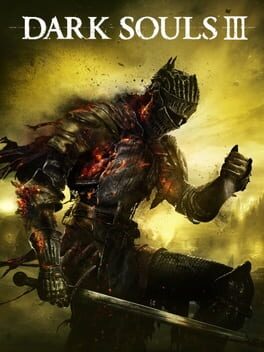
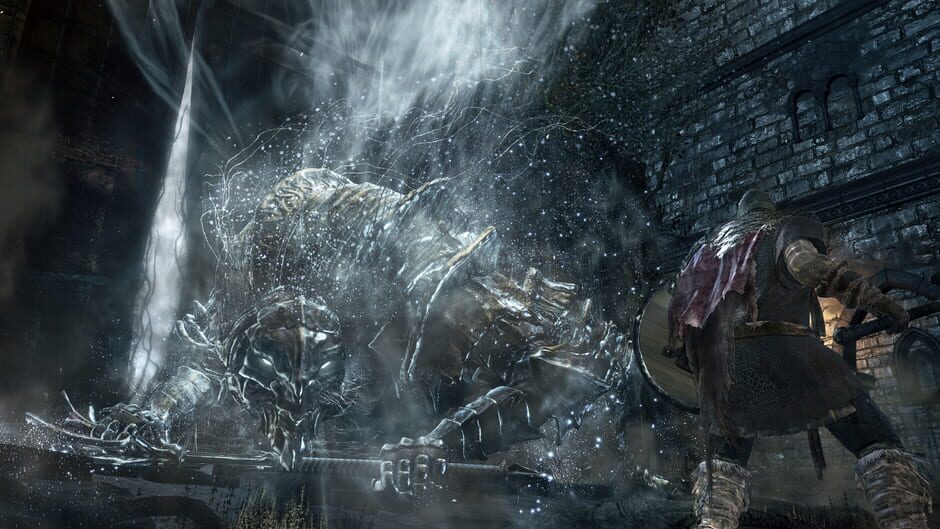
Dark Souls III takes the series to Lothric, a kingdom where the gradual fading of the First Flame accompanies a world already deeply marked by previous cycles. Exploration, stamina-based combat, losing souls upon death and learning enemy behavior remain at the heart of the experience, but several new systems change how a character is built and used.
Developed by FromSoftware and published by Bandai Namco Entertainment and FromSoftware, the game was released on March 24, 2016. The listed platforms are PlayStation 4, Xbox One and PC. The associated genres are action, adventure, fantasy and RPG. The specified modes are Single player, Multiplayer and Co-operative.
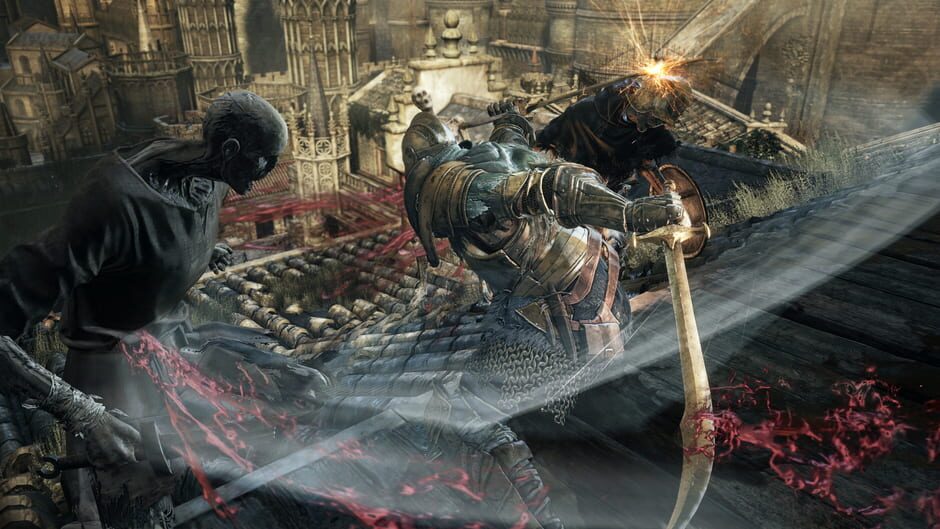
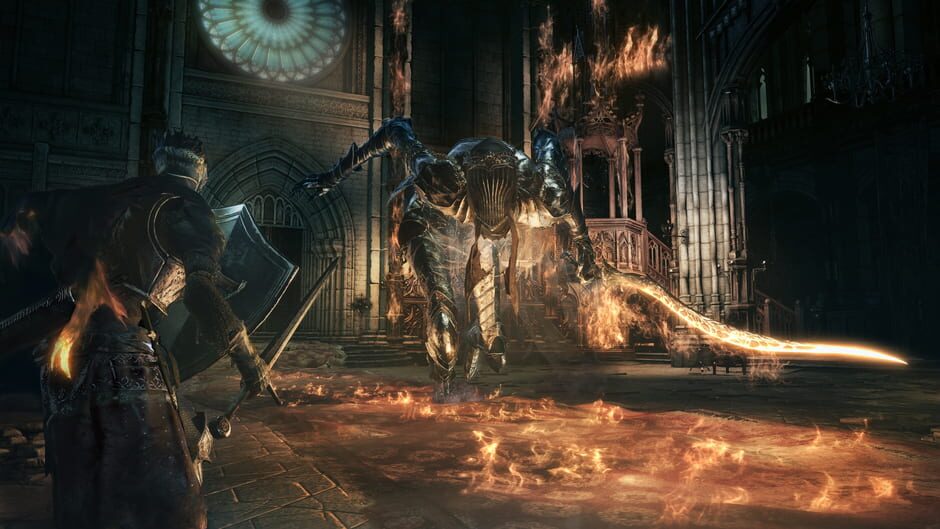
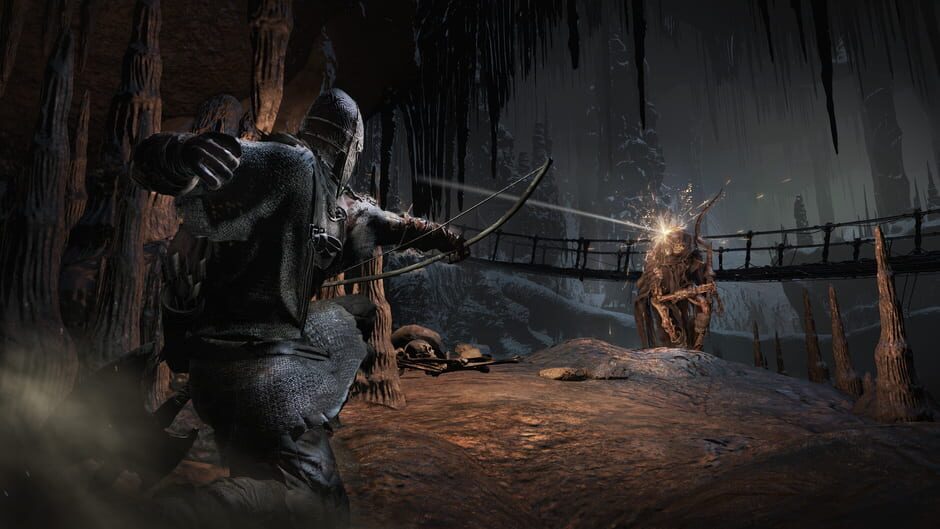
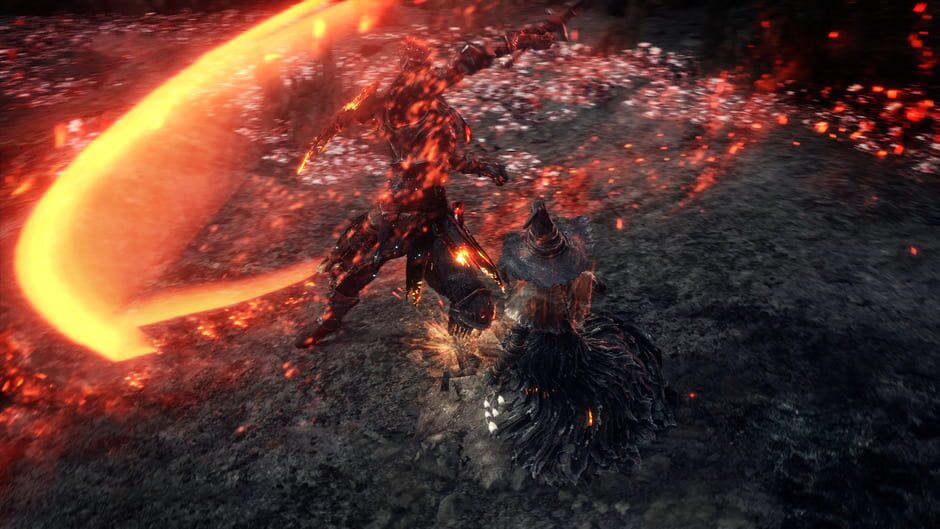
Combat retains stamina management for attacks, dodges, blocks and various actions, but weapons now feature Weapon Arts, or weapon skills. These equipment-specific techniques allow special moves to be performed, certain stances to be adopted, weapons to be temporarily enhanced or attacks to be used beyond their standard movesets.
These skills introduce Focus Points, or FP, represented by a gauge separate from health and stamina. FP are also used to cast sorceries, miracles and pyromancies, placing weapon techniques and magic around the same resource.
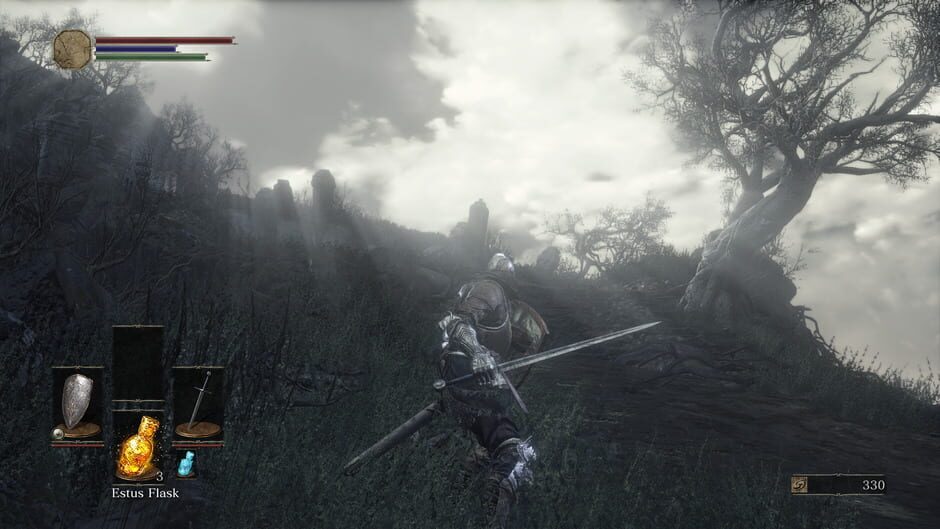
This structure directly changes Estus management. The standard flask restores health, while the Ashen Estus Flask restores FP. The total number of available uses can be divided between the two flask types, requiring the player to adjust the balance depending on whether the character relies more heavily on physical attacks, Weapon Arts or magic.
Customization also involves weapon upgrading and infusion. Different gems can alter the properties and affinity of a piece of equipment in order to adapt it to the character’s developed stats or the desired damage type.
Character progression takes place from Firelink Shrine, which acts as a central hub. Accumulated souls can be used there to improve stats through the Fire Keeper, while Blacksmith Andre notably handles weapons and the allocation of Estus Flask uses.
Bonfires continue to structure exploration. They restore the main resources, respawn most ordinary enemies and serve as fast-travel points. Discovering them therefore gradually secures movement across the different regions of Lothric.
The world retains a structure made of connected regions, side passages and shortcuts. Opening a door, activating an elevator or discovering a lateral route can permanently shorten a journey and reconnect different parts of the same area.
Death follows the principle established by the previous games: carried souls are dropped at the place of death and can be recovered by returning there. Dying a second time before retrieving them causes them to disappear, maintaining tension between prolonged exploration and securing accumulated progress.
Dark Souls III adds the Ember state to this logic. Using an Ember restores the character and temporarily increases maximum health. This state also plays a role in online interactions by notably allowing certain summon signs to appear, while also exposing the player to invasions.
Multiplayer therefore remains directly integrated into the adventure. Players can be summoned cooperatively to explore an area or face a boss, while others can invade the host’s world. Messages and traces left by the community also continue to appear during exploration.
Covenants give certain online interactions an additional function. The chosen allegiance can orient the character toward cooperation, territorial defense or different forms of player-versus-player combat, while granting specific rewards tied to these activities.
The narrative remains fragmented across dialogue, item descriptions, environments and architecture. Lothric contains numerous remnants and references to previous cycles, but the story still requires the player to connect the encountered information rather than relying on continuous exposition.
Dark Souls III therefore combines familiar foundations with a new approach to resource management. Stamina, FP, Estus, Embers and equipment must be considered together, while Weapon Arts give many weapons an additional special function beyond their traditional attack set.
Key takeaways
- The adventure takes place mainly in the kingdom of Lothric, as the First Flame fades.
- Combat retains stamina management, dodging, blocking and positioning.
- Weapon Arts give weapons and certain equipment special techniques.
- Focus Points (FP) are used for Weapon Arts as well as different forms of magic.
- Available uses can be divided between standard Estus for health and Ashen Estus for FP.
- The Ember state temporarily increases maximum health and affects multiplayer functions.
- Souls lost upon death can be recovered before a second death.
- Cooperation, invasions, messages and Covenants remain directly integrated into progression.
Conclusion
Dark Souls III retains a combat system in which knowledge of enemy behavior, stamina management and timing remain essential, but Weapon Arts add a new layer specific to each piece of equipment. A weapon is therefore defined not only by its standard attacks, but also by the particular technique it can provide.
The introduction of FP connects this evolution to magic and Estus. The player must now decide how to divide part of their recovery resources between health and special abilities, while the Ember state directly links character survival to cooperation and invasion possibilities.
Lothric also retains the series’ progression through areas, bonfires and shortcuts while using Firelink Shrine as the center of character development. Combat, equipment, exploration and online features therefore remain integrated into the same journey.
Good to know
- Dark Souls III was released on March 24, 2016.
- The game was developed by FromSoftware.
- Bandai Namco Entertainment and FromSoftware are listed as publishers.
- The listed platforms are PlayStation 4, Xbox One and PC.
- The associated genres are action, adventure, fantasy and RPG.
- The specified modes are Single player, Multiplayer and Co-operative.
- Weapon Arts notably use Focus Points to trigger equipment-specific techniques.
- Resource management notably combines stamina, FP, standard Estus, Ashen Estus and the Ember state.