Graphic novel

Alix's Travels — Albums

Log in to track your progress

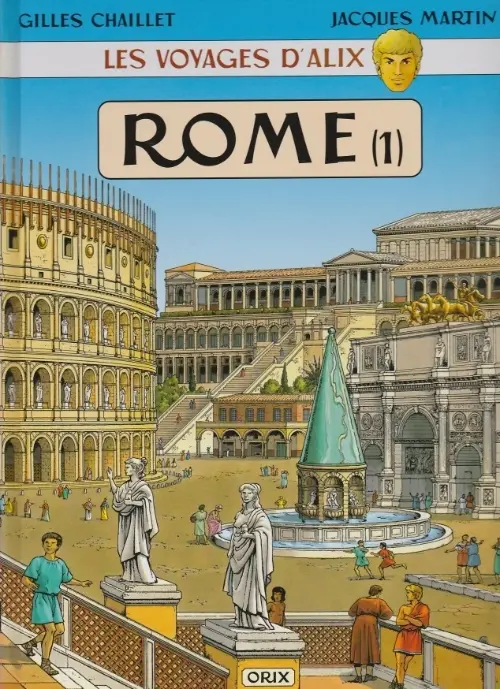
Volume 1 — Rome (1) (1996 edition)

Volume 1 — Rome (1) (1996 edition)

9782205044201 · 1996-09-01

Travelling with Alix is sharing his passion for discovery and reliving the history of antiquity, as a great adventure to the present. It is to explore, through strong and true images, sites and monuments, cities and countryside. It is to meet people like they lived in Athens, Rome or Karnak, thousands of years ago.

Volume 2 — Egypt (1) (1996 edition)

Volume 2 — Egypt (1) (1996 edition)

9782205044171 · 1996-09-01

Travelling with Alix is sharing his passion for discovery and reliving the history of antiquity, as a great adventure to the present. It is to explore, through strong and true images, sites and monuments, cities and countryside. It is to meet people like they lived in Athens, Rome or Karnak, thousands of years ago.

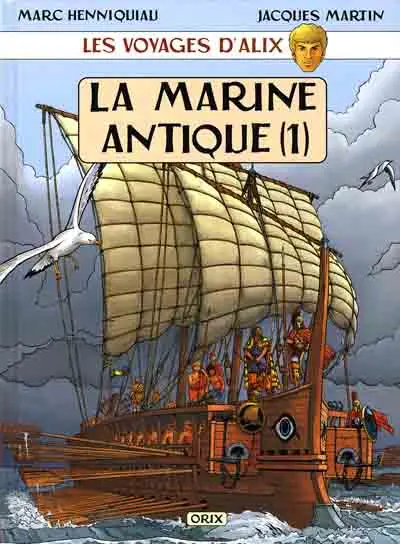
Volume 3 — The Ancient Navy (1)

Volume 3 — The Ancient Navy (1)

9782205044812 · 1997-04-01

Starting from the Tigris and Euphrates valleys inhabited by the Assyrians and Persians, then from the jagged coasts of Greece, and finally from the Carthaginian and Roman centers, men never stopped sailing. The navy is unsuspectedly inventive: here we set sail in the company of daring merchants, warriors and explorers.

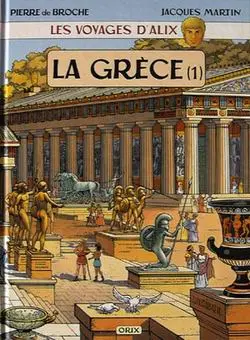
Volume 4 — Greece (1) (1997 edition)

Volume 4 — Greece (1) (1997 edition)

9782205044188 · 1997-02-01

Who today visits the prestigious ruins of the great Greek archaeological sites, hardly imagine their brilliant majesty in the days of the splendour of Delos, Dellphes or Olympia. Here reconstruct the monuments and return the color, here are the costumes and the men returned to life.

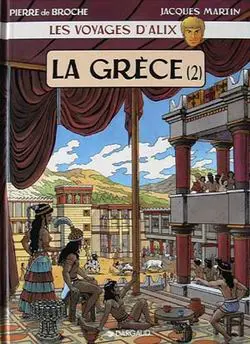
Volume 5 — Greece (2) (1998 edition)

Volume 5 — Greece (2) (1998 edition)

9782205044195 · 1998-06-01

Who today visits the prestigious ruins of the great Greek archaeological sites, hardly imagine their brilliant majesty in the days of the splendour of Delos, Dellphes or Olympia. Here reconstruct the monuments and return the color, here are the costumes and the men returned to life.

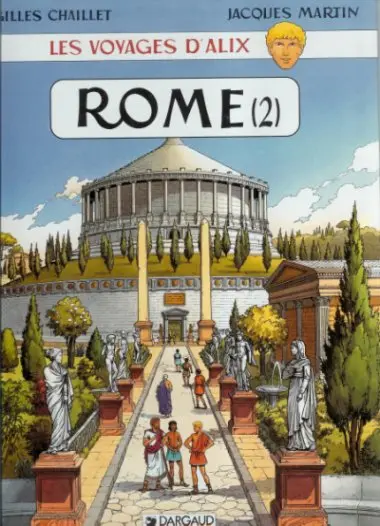
Volume 6 — Rome (2) (1999 edition)

Volume 6 — Rome (2) (1999 edition)

9782205049435 · 1999-10-01

Travelling with Alix is sharing his passion for discovery and reliving the history of antiquity, as a great adventure to the present.

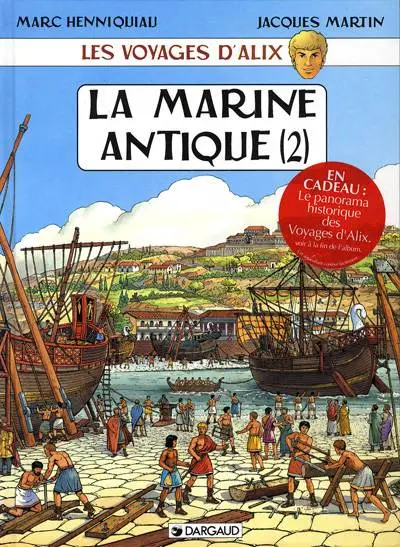
Volume 7 — The Ancient Navy (2)

Volume 7 — The Ancient Navy (2)

9782205046342 · 1999-04-01

Starting from the Tigris and Euphrates valleys inhabited by the Assyrians and Persians, then from the jagged coasts of Greece, and finally from the Carthaginian and Roman centers, men never stopped sailing. The navy is unsuspectedly inventive: here we set sail in the company of daring merchants, warriors and explorers.

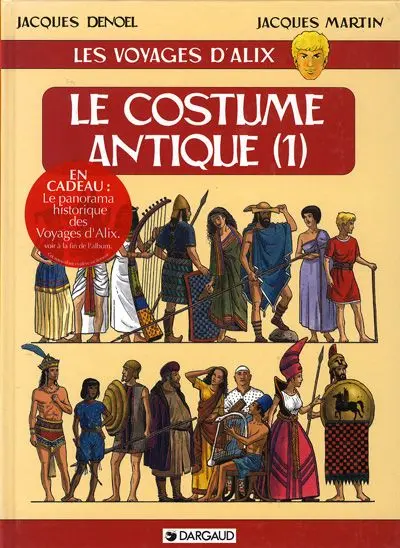
Volume 8 — The Ancient Costume (1)

Volume 8 — The Ancient Costume (1)

9782205046960 · 1999-03-01

In creating Alix's stories, documentation has always been an essential element. From the most reliable sources, this volume traces the evolution of all the costumes worn by the different populations of antiquity. The variety of fabrics, weapons and jewelry resurrected.

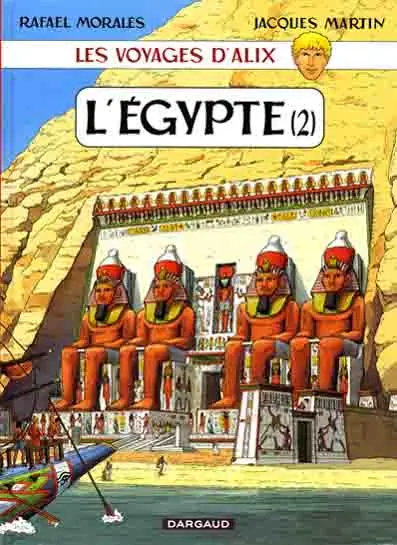
Volume 9 — Egypt (2)

Volume 9 — Egypt (2)

9782205045994 · 2000-02-01

Abu simbel,Edfou,Esna,... The authors offer us, through current photographs and colorful reconstitutions of temples, statues, costumes and elements of architecture, a fabulous journey into the heart of the incomparable civilization of the Pharaohs.

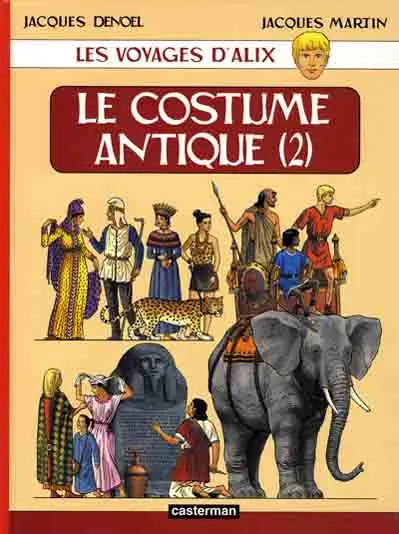
Volume 10 — The Ancient Costume (2)

Volume 10 — The Ancient Costume (2)

9782203329195 · 2000-08-01

With Alix, Jacques Martin has built an original and unique work, a true reference for lovers of the history of Antiquity. In this volume of Alix's travels, he invites us to discover the time at which the adventures of his young hero take place. The ancient world is here approached in an original way, since it is through his dress habits and his costume that the author describes. The historical rigor of this work makes it an indispensable complement to the wise readers of Alix, but also a valuable guide for the feruses of Antiquity. In the next album, Alix will show us the city of Carthage.

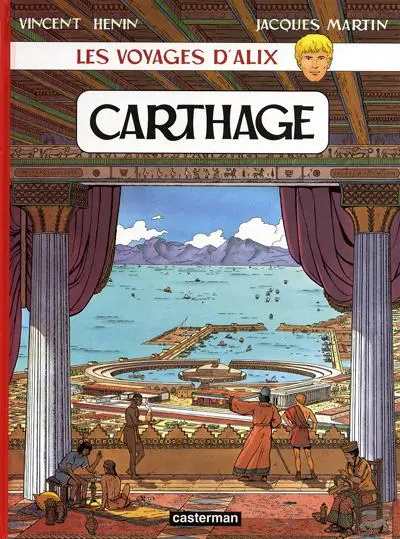
Volume 11 — Carthage

Volume 11 — Carthage

9782203329201 · 2000-10-01

The foundation of Carthage is attributed to Elissa, daughter of the king of Tyre. According to legend, it called the city "Qart Hadasht", which meant "new city" in Phoenician. It was in 814 BC. Thus the history of this mythical city began, repeatedly conquered, destroyed and rebuilt. It is said of the inhabitants of this merchant port that they were very religious. It is even believed that they worshipped the terrible god Moloch and that in case of serious threat, the Carthaginians immolated their children... Also inscribed in history as the object of three Punic wars, the city was finally crushed by the Romans in 146 BC and conquered by the Vandals and then the Byzantines.

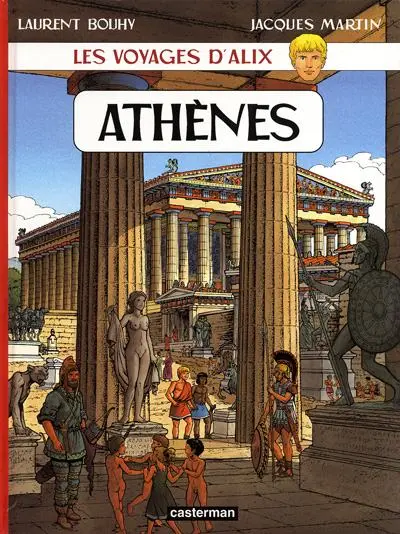
Volume 12 — Athens

Volume 12 — Athens

9782203329232 · 2001-11-01

Travelling with Alix is sharing his passion for discovery and reliving the history of antiquity, as a great adventure to the present. It is to explore, through strong and true images, sites and monuments, cities and countryside. It is to meet people like they lived in Athens, Rome or Karnak, thousands of years ago.

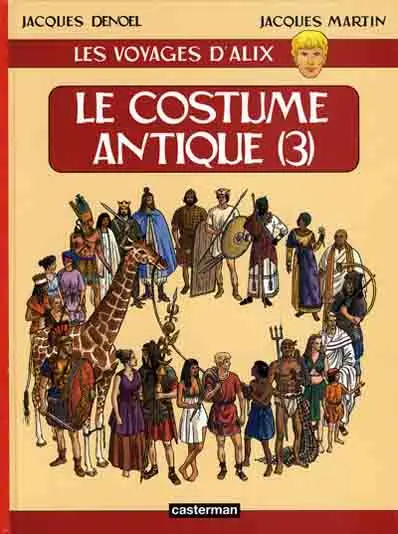
Volume 13 — The Ancient Costume (3)

Volume 13 — The Ancient Costume (3)

9782203329249 · 2002-01-01

With Alix, Jacques Martin has built an original and unique work, a true reference for lovers of the history of Antiquity. In the series of the "Antique Costume", the contemporary world of Alix is approached in an original way, since it is through his dress habits and his costume that the author describes him. More particularly in this third volume, Alix travels among the ancient traditional peoples, such as the Romans who are very present throughout this volume, and continues his journey among the Egyptians of the lower epoch, the Ptolemaic era and the Roman period. Alix meets local populations, for example the Gallo-Romans, but also civilizations less known to the general public, such as Meroe, Napata, but also the Sassanides, the Cypriots and many others.

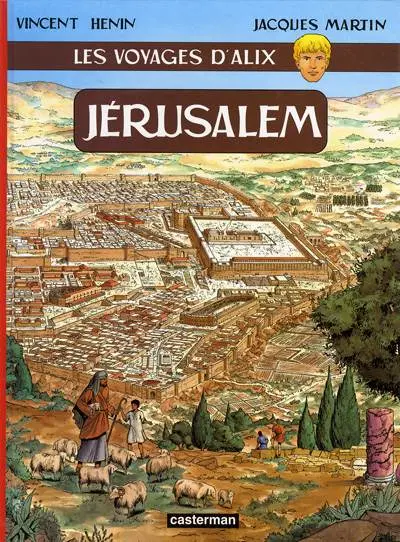
Volume 14 — Jerusalem

Volume 14 — Jerusalem

9782203329256 · 2002-03-01

About the year 1000 BC, King David invested the small city of Jebu, located at the crossroads of important trade routes, by entering through the tunnel that fed the old water. The monarch concentrated in "Yerushalaim" (the city of peace) the political power and worship of Yahweh. Due to lack of time and money, he could not build a temple to house the Ark of Covenant. It was his son, Solomon, who offered a temple to the city and his god. Herod the Great re-established him, to make him one of the most beautiful sacred places in the ancient world, and marked the land with remarkable buildings: the fortresses of Massada and Herodion, the city of Caesarea and the palace of Jericho. At his death, the Roman procurators ruled the land, and their lack of respect for the Jewish customs led to rebellion and war against the occupier. Jerusalem and his temple were destroyed in 70 AD. Only 960 were re-declared and the first-dead were made. The first-deeds. The first-deeds. The first-deeds. The first-deeds. The first-deeds. The first-deeds. The first-deeds.

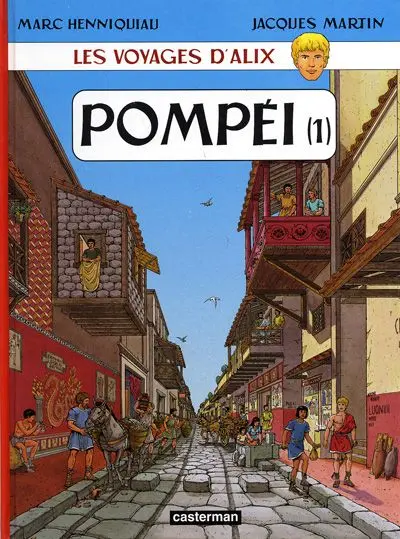
Volume 15 — Pompeii (1)

Volume 15 — Pompeii (1)

9782203329225 · 2002-09-01

This book is the first part of a collection of archaeological and historical reconstructions of the Pompei and Herculanum region. This collection will include at least two volumes and will, we hope, point out one of the largest open-air museum existing in the world. In this album, Alix will lead the reader into a rich and full of life, shortly before its partial destruction by the eruption of Vesuvius which, paradoxically, preserved under ashes, much more remains than the greater part of the ancient cities that had more to suffer from the destructions made by men, than by earthquakes as dreadful as the sudden awakening of a volcano that an unfortunate breath projected on this agglomeration. In reality, it was not so much more refined and luxurious than many others, but it was forgotten by the gods, for our greater knowledge.

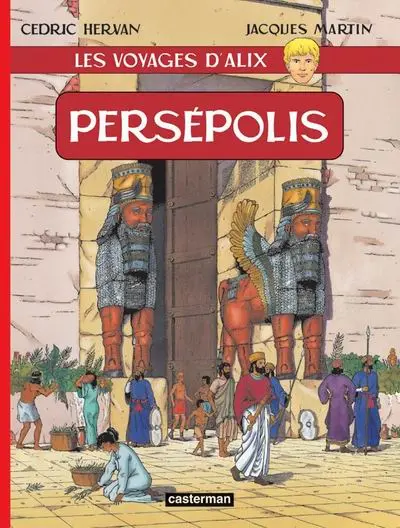
Volume 16 — Persepolis

Volume 16 — Persepolis

9782203329270 · 2003-04-01

In 515 B.C., Darius, fabulous Persian monarch, returned victorious from one of his many war campaigns, his power was strong and installed. He was the undisputed leader of the largest empire from antiquity to the conquest of Alexander the Great. It was at this moment that he made the decision to build at the foot of Mount Kuh-I-Rhamat, the mountain of mercy, a magnificent architectural ensemble, symbol of the all-power of the Persian Empire, Persepolis. Revisit one of the most prestigious vestiges that history had left us, through a faithful reconstruction, carried out in the framework of a captivating work of the fabulous collection of the "Voyages of Alix".

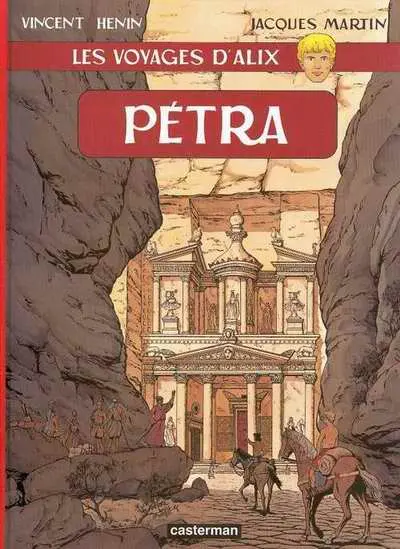
Volume 17 — Petra

Volume 17 — Petra

9782203329294 · 2003-11-01

Several hypotheses flowed about the name of this city which in Greek meant "stone, rock" and in Arabic "cut, cut" because the city was entirely carved into the red rock and saffron of the circus of Wadi Mousa. Nor is it known with accuracy the origin of the Nabatean people, founder of Petra and many other cities in the Middle East. Established mainly in desert regions, the Nabateans turned to trade in order to compensate for the lack of natural resources: the transport of myrrh. Incenses and spices allowed them to enrich themselves and to provide for their needs. They traced many commercial routes ensuring their control of the traffic of this region. Their wealth, which was ever increasing, ended up attracting the other powers of the time: Greeks, Seleucids, Hasmoneans. On 22 March 106, Trajan annexed the city, which from then on became part of the Provincia Arabia. Then it was the Byzantines and Ottomans who let the second part of the century slide into the second century.

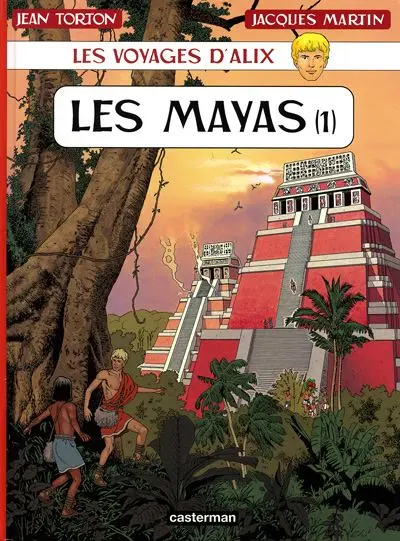
Volume 18 — The Maya (1)

Volume 18 — The Maya (1)

9782203329317 · 2004-05-01

The Maya: people of Central America, founder of a civilization that spread over a part of Mexico in Guatemala and west of Honduras. Creator of the 365-day solar calendar, the development of architecture and pyramids, a hieroglyphic writing, they experienced their peaks from 250 to 950 AD. In this album, we enter the heart of the cities of Copan, Tikal, El Tajin, Palenque.

Volume 19 — The Etruscans (1)

Volume 19 — The Etruscans (1)

9782203329300 · 2004-03-01

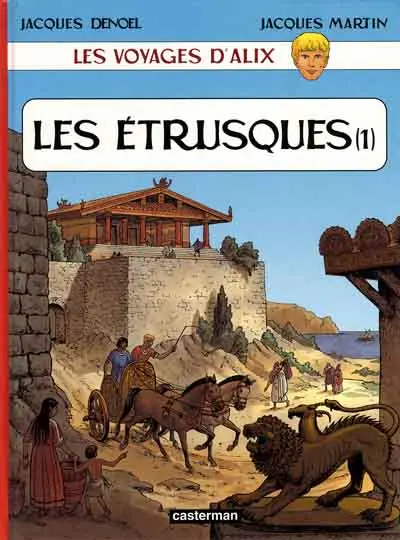
The Etruscans: ancient people established in Etruria, currently Tuscany (North of Italy), one of the most important civilizations (7th B.C.) founder of the city of Rome. Very soon they developed trade on the sea as on land competing with the Greeks and Carthage, but driven out of Rome in 509 B.C. defeated by the Greeks, repulsed from Campania by the Samnites and from Northern Italy by the Gauls, they were submitted by the Romans in 350 B.C.

Volume 20 — The Olympic Games

Volume 20 — The Olympic Games

9782203329355 · 2004-06-01

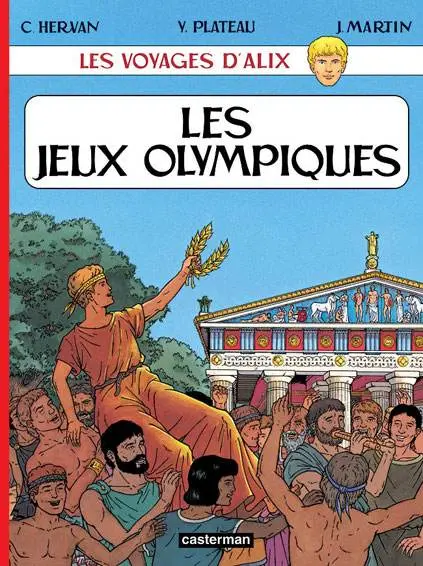
Created around the 8th century B.C., the Games of Olympy were one of the lasting institutions of ancient Greece. This volume of the Voyages d'Alix restores its places, disciplines and spirit, with the concern for the documentary precision dear to Jacques Martin. This new edition benefits from a new cover, a new model and a new dossier in two parts: a comparison of the ancient games and the current games on the one hand, and a reference by Pierre de Coubertin on the other.On the occasion of the 2012 Olympic Games in London, the book is prefaced by the President of the International Olympic Committee (I.C.O.), Jacques Rogge.

Volume 21 — The Maya (2)

Volume 21 — The Maya (2)

9782203329386 · 2005-03-01

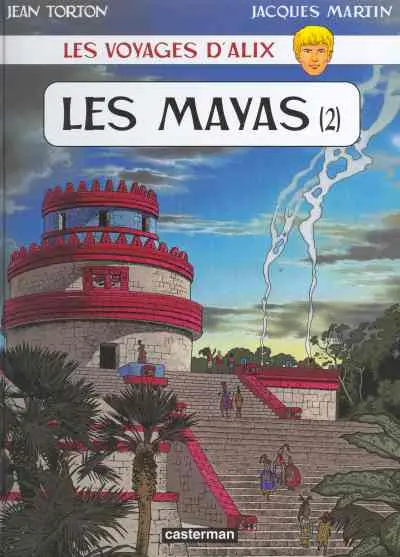
The Maya: people of Central America, founder of a civilization that spread over a part of Mexico in Guatemala and west of Honduras. Creator of the 365-day solar calendar, the development of architecture and pyramids, of a hieroglyphic writing, they experienced their apogees from 250 to 950 after Jesus Christ. In this album, Alix guides us in Chichen Itza, postclassical city of Yucatan which acquired its fame thanks to its two cenotes and El Castillo, the main pyramid, anthem in honor of the sun. We follow Alix in Mayapan, a city surrounded by a wall of more than 9 km and in Tulum places where the first Spaniards landed. We enter the center of the cities of Copan, Tikal, El Tajin, Palenque.

Volume 22 — The Aztecs

Volume 22 — The Aztecs

9782203329409 · 2005-09-01

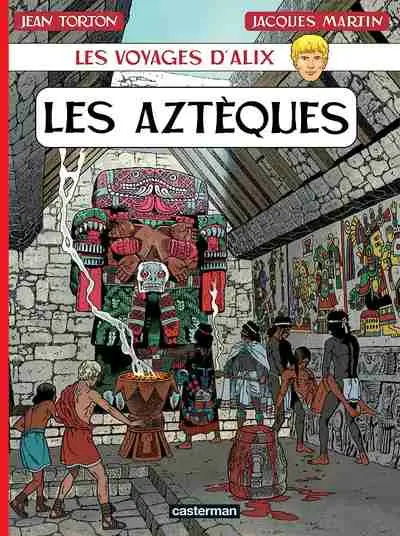
This time, Alix leads us among several peoples, including the Zapotecs and the Toltecs, before discovering the Aztecs, from their creations to their destruction by Cortés in 1521. This Native American people founded a prosperous empire in Mexico by creating the city of Tenochtitlan and Tlatelolco and eventually merged and became, later: Mexico City. They are also known for their religions, one of which was the ritual practices of human sacrifices and trade which were based mainly on the culture of but.

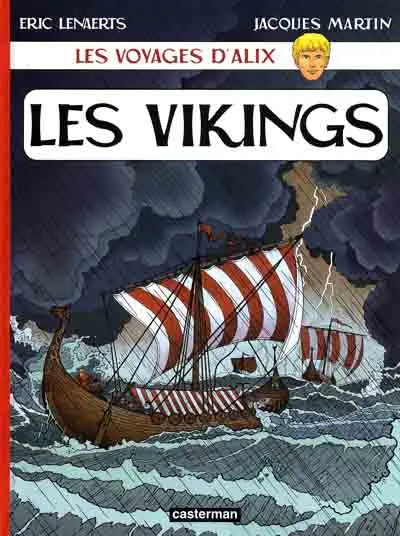
Volume 23 — Vikings

Volume 23 — Vikings

9782203329379 · 2006-03-01

They lived for a long time unaware of the rest of the peoples of Europe. Yet they, among others, pushed the so-called barbaric tribes to search for new territories. This was what caused the shock with the Roman Empire. The Vikings, generic name covering several peoples, felt irremediably attracted to the South, its wealth, its resources. They were living on the Dordogne, where they gave birth to troglodytic groups trying to escape from them. Large navigators, they certainly reached the eastern coast of North America, in their strain. Alix discovered the Vikings as they began their expansion and the period they conquered. The opportunity to meet a harsh but original civilization, suffering from multiple received ideas and negative legends that did not resist archaeological discoveries and the judgment of history.

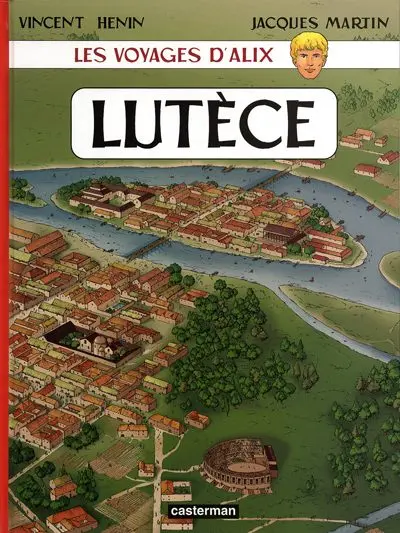
Volume 24 — Lutece

Volume 24 — Lutece

9782203329331 · 2006-05-01

From the age of Bronze to the beginning of the fourth century C.E., when it received its present name from Paris, it is a piece of the history of Lutece that is told and shown to us. It is also the evocation of Roman colonization, the development of a unique geographical site, the urban evolution marked by the progress made by the conquerors: the forum and its religious and secular buildings, the theatre, the amphitheater, the thermal baths and the aqueduct. A whole page of the economic and monumental development of Paris is reconstructed through numerous drawings and texts.

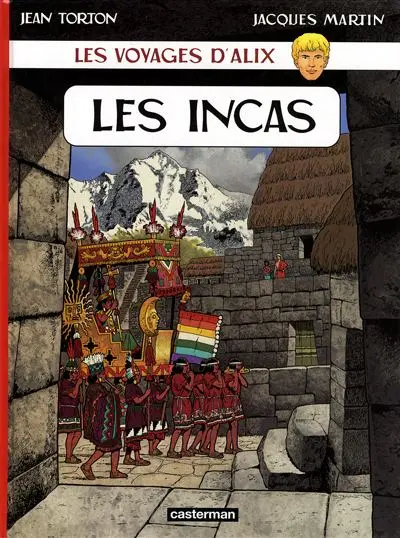
Volume 25 — The Incas

Volume 25 — The Incas

9782203329430 · 2006-09-01

They thought they were safe, within their vertiginous mountains, defended on all sides by steep passages and a whole system of ingenious defenses! But how could they suspect that one day they would be invaded by scrap-covered beings with the power to kill remotely with fire sticks? The game of war proved to be completely unequal. It must be said that the Indians were served by their myths that thought they would see the arrival of the white gods: the Viracochas. The Conquistadors took a low hand over all the riches of this civilization, accumulated over the centuries, especially the gold that was known to be particularly greedy. Fortunately, a huge part of the Inca treasures had the time to be hidden by the Indians in places so lost that no one had yet found them.

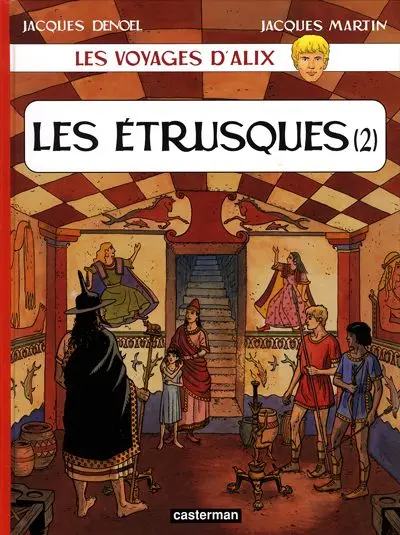
Volume 26 — The Etruscans (2)

Volume 26 — The Etruscans (2)

9782203329362 · 2007-04-01

Following the fascinating portrait of this ancient people established in Etruria, currently Tuscany, in the North of Italy, who gave birth to one of the most important civilizations of the ancient world, founder of the city of Rome in the 7th century BC. The Etruscans developed trade on the sea as well as on land, competing with the Greeks and the Carthaginians. But, driven out of Rome in 509 BC, defeated by the Greeks, returned from Campania by the Samnites and from Northern Italy by the Gauls, they were submitted by the Romans in 350 BC.

Volume 27 — China

Volume 27 — China

9782203329324 · 2008-05-01

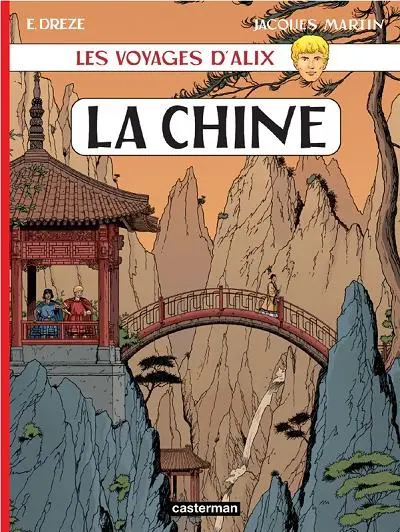
China, this country on another dimension, where life and thought differ from the rest of the world, remains one of the most fascinating and exciting civilizations of Antiquity. Despite the multiple invasions she suffered, her memory and very elaborate writing were constantly perpetuated. For 3,500 years, it developed a unique culture that still shines today. It is to discover this always surprising world that this new volume of VOYAGES D'ALIX invites us. Daily life, religion, philosophy, great political and military figures: a beautiful journey against the course of History, meeting the Chinese at the time of the T'sin and Han dynasties.

Volume 28 — Alexander the Conqueror (1)

Volume 28 — Alexander the Conqueror (1)

9782203329393 · 2009-02-11

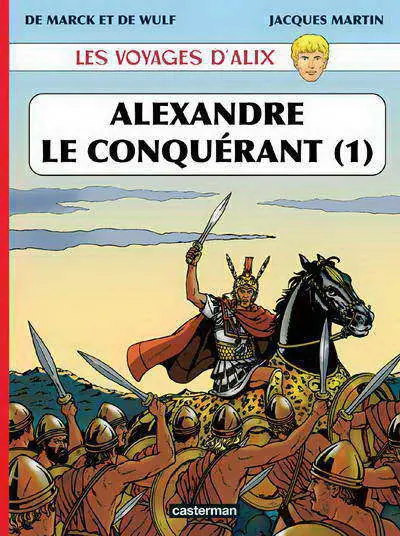
This album, with Alix, traces the exceptional existence of one of the most famous men in the ancient world, whom his personality and destiny designate as one of the major characters in human history: Alexander King of Macedonia. He is particularly interested in the conquests of Alexander the Great, following the expansion of the possessions of the young king, an inspired strategist: the mastery of Greece first, then the Persian defeat in Asia minor and the progression to the east and south, to the conquest of new lands: Syria, Palestine, Egypt, etc. A unique epic, told in a very detailed way, with the support of a very rich iconography.

Volume 29 — Egypt (3)

Volume 29 — Egypt (3)

9782203329287 · 2009-04-01

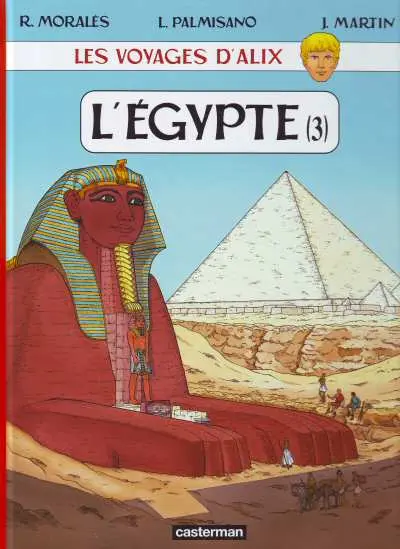
In this third volume, we continue our exploration of the land of the Pharaohs by starting from Thebes, with two temples on the west bank, that of the tombs. These are the funerary temples or millions of years of Seti I, in Gourna and Ramses II, better known as Ramesseum, famous for its immense broken colossus and astronomical reliefs. Then we descend the Nile to the north to reach Dendera and his temple of Hathor of Greco-Roman period, one of the best preserved in the country, masterpiece of Egyptian architecture. Then we present the temple of Seti 1 in Abydos, dedicated mainly to Osiris by the father of Ramses II. Further north, in Middle Egypt, is the city of Akhetaton, or Tell-el-Amarna, the city of the famous Pharaoh Akhenaton. Then, back again with the reconstruction of the Djoser funerary complex dominated by the degree pyramid of Saqqara, the first stone architecture created by architect Imhotep around 2700 BC. J.C. The last site visited will be the Giza plateau, with the great pyramids of Khéops, Khéphren and Mykerinos and the sphinx. Here, we will present the archaeological hypotheses of the construction of the pyramids, with as illustration two boards of comics showing the different stages. The album ends with two boards featuring costumes and architectural elements related to the sites presented.
Volume 30 — Lugdunum

Volume 30 — Lugdunum

9782203329348 · 2009-09-09

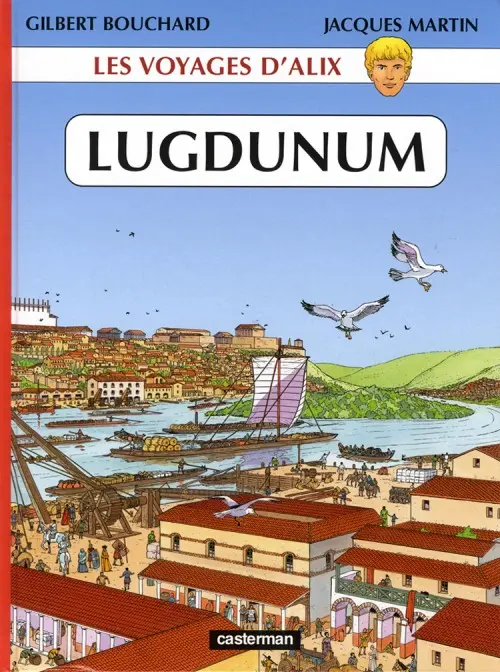
Lugdunum, today the city of Lyon, was founded in 43 BC. After the assassination of Caesar, the generals of his army rebelled against the Senate. The latter, to occupy Generals Plancus and Lépide who commanded in Gaul, asked them to found a colony on the hill overlooking the confluence of the Rhône and the Saône, it was also a question of sheltering the Roman citizens expelled from Vienna by the Allobroges and to put a garrison of legionaries to supervise the Gauls. The inhabitants of the Roman colonies were Roman citizens: merchants, soldiers, boatmen organized in corporations.

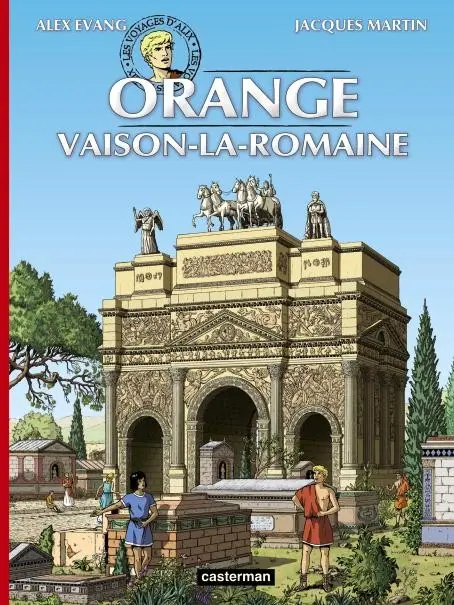
Volume 31 — Orange - Roman Vaison-la-Romane

Volume 31 — Orange - Roman Vaison-la-Romane

9782203034099 · 2010-04-21

Orange, In the Rhône Valley in ProvenceFounded in 40 BC by the veterans of the Second Gallic Legion of Caesar,Orange is a Roman colony named Arausio. It is experiencing a great boom under the reign of the Emperor Augustus during which the theatre is erected. The city is built during centuries of monuments typical of Roman urban civilization: The ancient theatre, the Arc-de-Triomphe, the temples, the hemicycle, the wall of enclosure, the aqueduct,... Vaison-La-Romane between the Rhone Valley and the Mont VentouxAt the arrival of the Romans, Vaison is the capital of the Voconces, a people of Celtic origin ally of the Romans. Romanization of the region is all the easier as the city of "Vasio" enjoys the status of a federated city that gives it many advantages and a privileged relationship with Rome, which makes it one of the richest cities of the Narbonese Gaul.
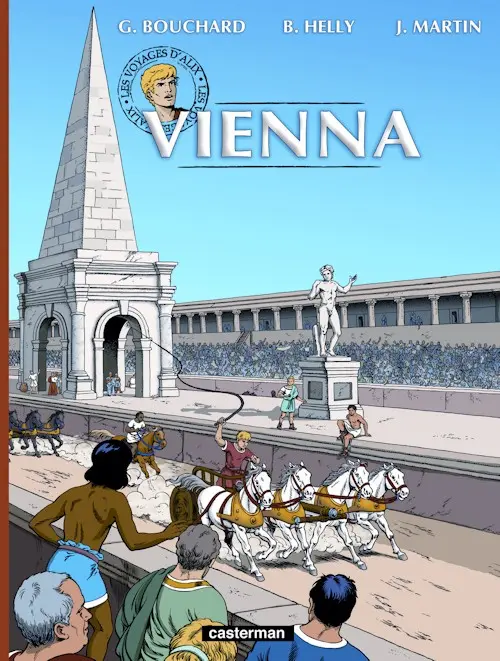
Volume 32 — Vienna

Volume 32 — Vienna

9782203015920 · 2011-03-09

A rich video tour in the ancient city of Vienna, the capital of the Gallic people of the Allobroges. Vienna is today, with Lyon, the city that concentrates the most important Gallic-Roman heritage, including many architectural remains in good condition of conservation. Precisely and alive, Gilbert Bouchard's work reconstructs all the details of everyday life in Vienna during the Alix period.
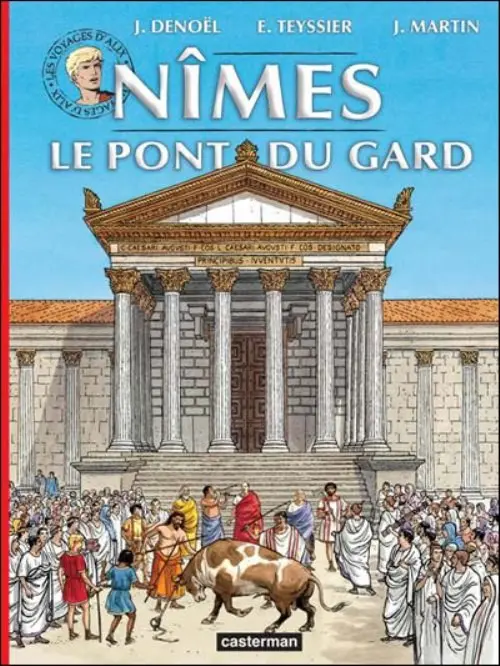
Volume 33 — Nîmes - The Pont du Gard

Volume 33 — Nîmes - The Pont du Gard

9782203034105 · 2010-04-14

A return to images on these two exceptional sites, known throughout the world as masterpieces of urbanism and architecture of ancient Rome. In support of the remarkable work of illustration carried out here by the cartoonist Jacques Denoël, we find the sense of detail and the documentary requirement, always very detailed, that the faithful of Jacques Martin are familiar with.
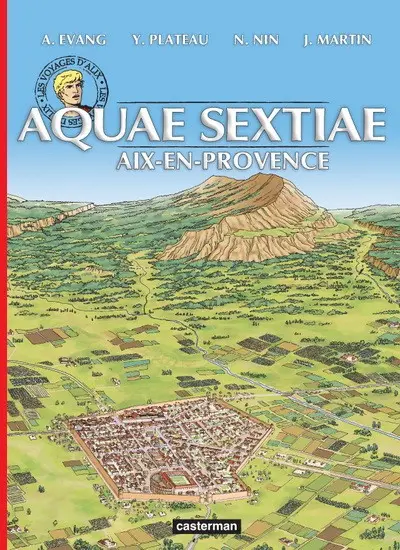
Volume 34 — Aquae-Sextiae (Aix-en-Provence)

Volume 34 — Aquae-Sextiae (Aix-en-Provence)

9782203057708 · 2013-05-02

In the wake of the great ancient cities of the Gallo-Roman space already travelled in the footsteps of Alix (Lugdunum, Vienna, Orange/Vaison-la-Romane...), here is another major step in the southern part of what was, at the time of Alix: Aquae-Sextiae, which is now known as Aix-en-Provence. From the gates of the city and its public spaces to the stalls and private houses, Nuria Nin, the current chief curator of the Heritage of the Municipality of Aix, invites the faithful of Alix to a deep rediscovery of the city, put in images by Yves Plateau, Alex Evang and Jérôme Presti. A route that should benefit from strong local media coverage, the Marseille-Provence ensemble, which includes the territory of Aix-en-Provence, having been designated "European Capital of Culture" in 2013.

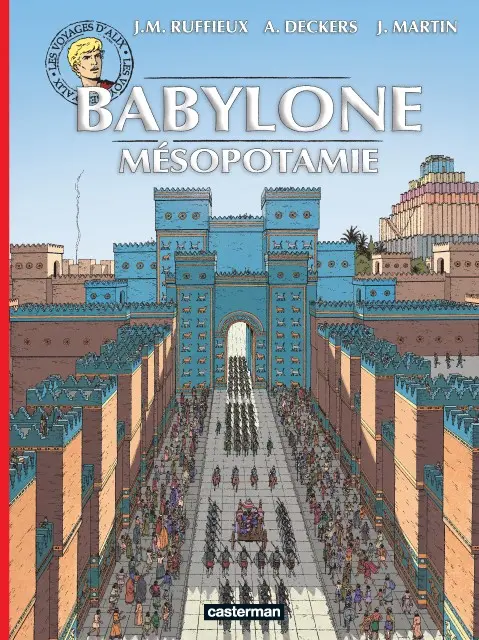
Volume 35 — Babylon - Mesopotamia

Volume 35 — Babylon - Mesopotamia

9782203058217 · 2013-08-28

According to Herodotus, Greek historian of the fifth century B.C., Babylon "exceeded in splendor any other city of the world known." She would have housed the mythical Tower of Babel, as well as the fabulous hanging gardens that ancient men considered one of the seven wonders of the world... It is to the discovery of this legendary city that we invite this very rich work, in the footsteps of the ancient hero of Jacques Martin. The fascinating life of Babylonian kings, like Nebuchodonosor, the architectural richness and intensity of religious life are traced under the brush of Jean-Marie Ruffieux with an impressive luxury of detail. Besides Babylon, the cities of Khorsabad, Nineveh and Assur are also at the summary of the album. A dive into time to enjoy without restraint.

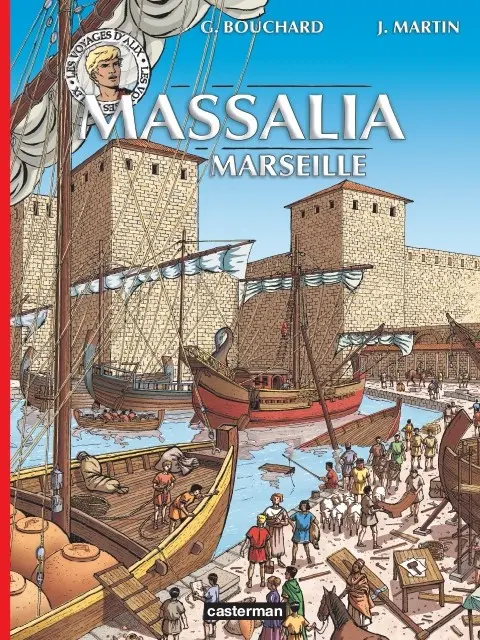
Volume 36 — Massalia (Marseille)

Volume 36 — Massalia (Marseille)

9782203047778 · 2013-11-27

Founded more than 2000 years ago, Massalia is designated "European Capital of Culture" 2013. In the wake of the great ancient cities of the Gallo-Roman space already travelled in the footsteps of Alix (Lugdunum, Vienna, Orange / Vaison-la-Romane...), here, echoing the exploration of Aquaæ-Sextiæ (Aix en Provence), another major stage of the Mediterranean Gaul: Massilia, founded more than 2000 years ago. The large port is here covered step by step in its most spectacular dimensions as the most picturesque, under the enthusiastic and inspired leadership of Gilbert Bouchard. A route that should benefit from a strong local media coverage, the Marseille-Provence ensemble, which includes the territory of Aix-en-Provence, having been designated "European Capital of Culture" in 2013.

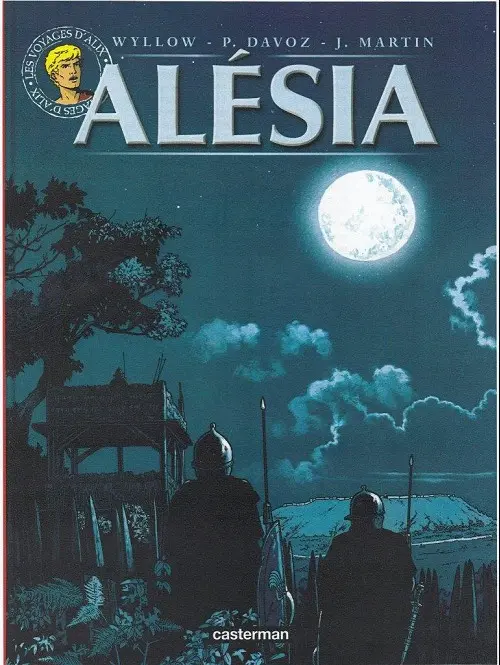
Volume 37 — Alesia

Volume 37 — Alesia

9782203025448 · 2014-08-20

Inspired by Jacques Martin, a striking evocation of one of the founding events of the history of Gaul. In 52 B.C., Gaul is in full boiling. The aim of the Gauls was to attract Caesar's legions to the fortress of Alésia and there, finally, to engage the decisive battle that will lead to the destruction of the enemy once and for all. In the Celtic imagination, Alésia, the "city of the Mandubians", is both a military lock and a sacred symbol: to inflict a decisive defeat on the Romans in such a place can only be a guarantee of a radiant future for the Gaulish cause, an attack on freedom. But unfortunately for Vercingétorix and his allies, Caesar's strategy of binding at the foot of the fortress will turn against them and the siege of Alésia's famous events will return to the character of a military party.

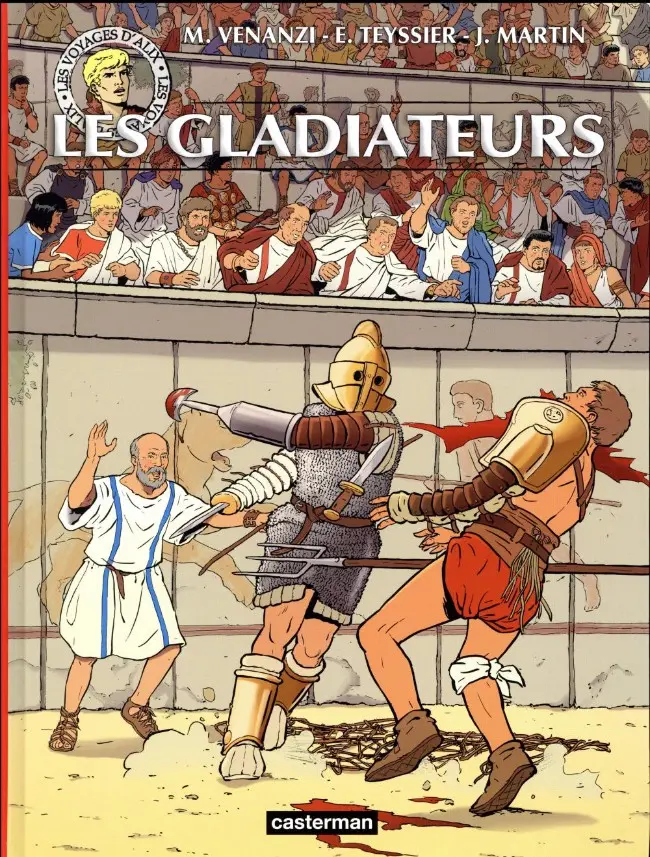
Volume 38 — Gladiators

Volume 38 — Gladiators

9782203120792 · 2017-11-22

To discover, following Alix and Enak, the gladiators of ancient Rome, their weapons, their preparation for battle, the great Roman arenas, or the circus games.

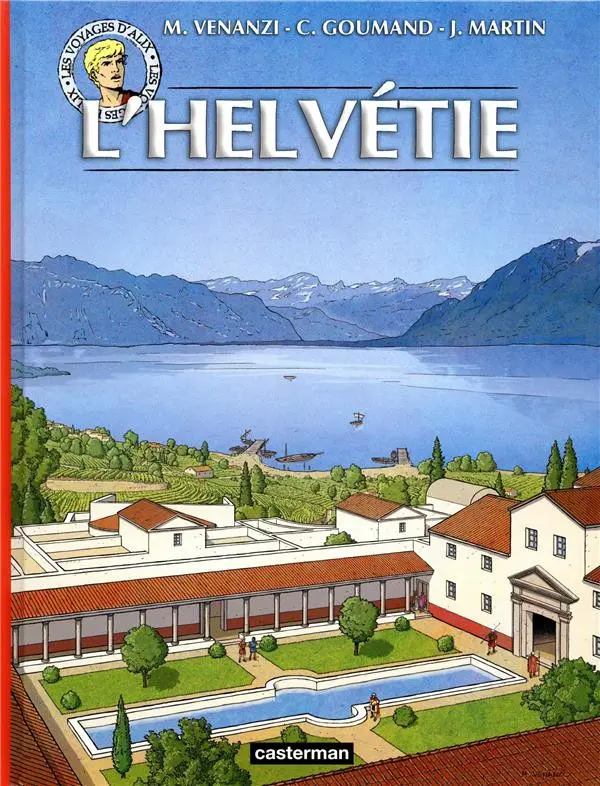
Volume 40 — The Helvetia

Volume 40 — The Helvetia

9782203085046 · 2019-11-27

In a richly documented album where photographs, drawings and texts of specialists are found, we discover the ancient Helvetia, this territory that will become contemporary Switzerland. Alix will discover the various peoples who occupied it and the famous battles, but also the colony that Julius Caesar founded there, its oppidums and its architectural riches, the high places that made the history of this region.