
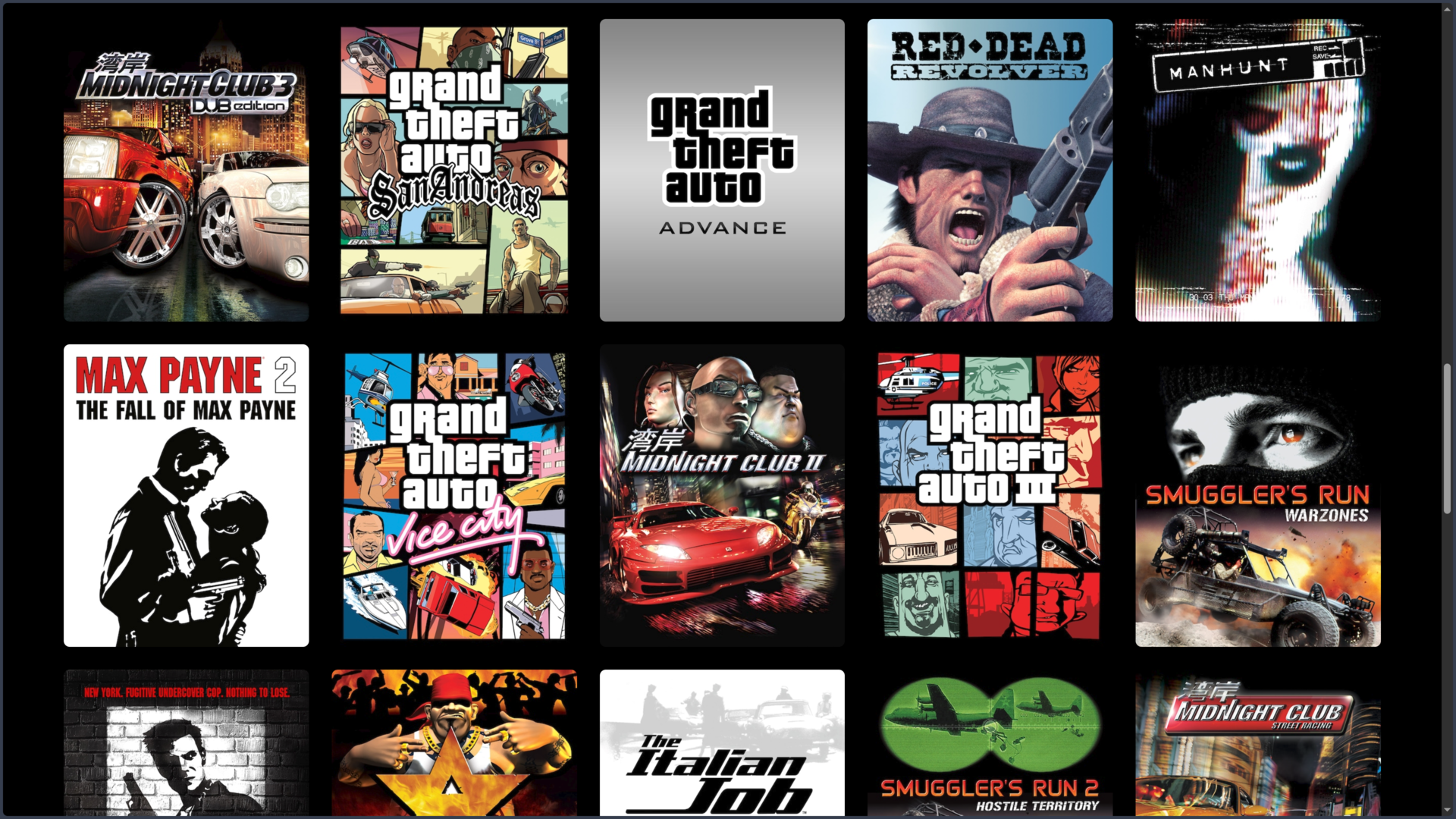
Overview

Rockstar Games is an American video game development and publishing label founded in 1998 and based in New York. Rockstar officially presents itself as a wholly owned subsidiary of Take-Two Interactive Software, while Rockstar Games, Inc. is currently headquartered at 622 Broadway in Manhattan.

The word “Rockstar,” however, can be confusing.

It refers to a publishing brand.

A New York company.

A group of development studios.

And, in some credits, a collective team called Rockstar Studios that brings together the work of several offices on a single production.

This organization explains why PANACHES CULTURE classifies Rockstar Games as editeur_jeu rather than as a single studio. The official pages for Grand Theft Auto III, for example, identify Rockstar North as the developer, while Rockstar Games presents Table Tennis was developed by Rockstar San Diego, and Max Payne 3 or Red Dead Redemption 2 are credited to Rockstar Studios.

Rockstar therefore operates less like one team than like a distributed production culture.

Yet that culture has an extremely recognizable direction.

The label is especially associated with worlds detailed enough to suggest that they continue to exist when the player is not looking at them. A Rockstar city is generally not designed as a simple backdrop linking missions together. Traffic, pedestrians, radio, shops, weather, wildlife, ambient dialogue, side activities and events all contribute to the impression of an autonomous space.

This approach is particularly visible in Grand Theft Auto and Red Dead Redemption, but it also runs through productions as different as Bully, Midnight Club, Max Payne 3, The Warriors and L.A. Noire. Take-Two still cites these series and games as the works that built Rockstar’s reputation around complex, living worlds.

Rockstar itself claims a cultural ambition that goes beyond commercial success. In 2023, for the company’s twenty-fifth anniversary, Sam Houser recalled that Rockstar was founded in 1998 around the idea that video games could become as culturally essential as other forms of entertainment.

That idea illuminates much of its history.

Rockstar does not simply try to build effective game systems.

Its major productions use cinema, music, television, advertising, popular culture and social history as raw materials. The radio stations in Grand Theft Auto combine music, fake programming, commercials and satire. Red Dead Redemption works with the mythology of the western while telling the story of its disappearance. L.A. Noire draws on film noir. Max Payne twists the crime thriller and action cinema.

But Rockstar does not simply copy other media.

Its most characteristic project consists of bringing them into a space where the player can move freely.

This combination of highly controlled staging and very loosely controlled freedom becomes one of the label’s most productive paradoxes.

The player can follow a precisely written scene.

Then leave.

Steal a car.

Take the wrong turn.

Listen to the radio.

Watch a conversation.

Trigger an absurd accident.

And then return to the story.

Rockstar builds part of its identity within this friction between author and player.

Today, that history continues across several generations of productions. Grand Theft Auto Online still receives new updates in 2026, the roleplay community built around FiveM and RedM is now officially part of Rockstar through Cfx.re, Rockstar Australia joined the network in 2025, and Grand Theft Auto VI is scheduled for release on November 19, 2026 for PlayStation 5 and Xbox Series X|S.

History

Before Rockstar: Grand Theft Auto already exists

The history of Rockstar Games does not begin with the creation of Grand Theft Auto.

The first game in the series predates the official foundation of the label. Rockstar’s catalog now places the release of Grand Theft Auto in 1998, while Take-Two’s own archives recall that the project had been initiated within the BMG Interactive environment before Rockstar was born.

That earlier origin matters.

Rockstar therefore does not invent its identity from a blank page.

It inherits an already provocative idea: placing the player on the side of the criminal and building a city as a relatively open playground for action.

The first Grand Theft Auto still looks very different from what the series would become.

Top-down view.

Schematic cities.

Missions structured around crime.

Aggressive humor.

Freedom of movement.

The fundamental principles are already there.

But they are still waiting for technology and staging capable of turning them into a world.

1998: Rockstar Games is founded

Rockstar officially dates its creation to 1998.

Twenty-five years later, Sam Houser would summarize the founding intention as the conviction that video games could become an essential part of popular culture, comparable to the other major entertainment media.

That ambition helps explain the choice of name.

“Rockstar” does not sound like the traditional name of a software company.

It evokes music.

An attitude.

An image.

A brand culture.

From its earliest years, the company therefore tries to present its games as objects of popular culture rather than as mere software.

That marketing strategy could have remained superficial if the games had not followed.

They quickly would.

New York becomes the center of the label, not the only place where games are made

Rockstar Games, Inc. is established in New York, where the company remains headquartered. Development, however, has never been entirely concentrated in that city.

The organization gradually grows around teams spread across several countries.

Scotland.

England.

United States.

Canada.

India.

And, more recently, Australia.

Rockstar’s careers site currently identifies Rockstar Australia, Dundee, India, Leeds, Lincoln, London, New England, New York, North, San Diego and Toronto among its locations.

This geography becomes a particular strength.

Rockstar can preserve centralized editorial direction while developing a much more international production culture.

The name on the box remains simple.

The organization behind it gradually becomes complex.

2001: Grand Theft Auto III changes the scale of the project

On October 22, 2001, Grand Theft Auto III launches and becomes the moment when the Grand Theft Auto idea truly takes on its modern form. Rockstar itself describes the game as the first to express its desire to build a fully 3D, detailed and immersive open world combining freedom, nonlinear gameplay, cinematic storytelling and radio stations.

Liberty City is no longer merely a grid for movement.

It becomes a place.

The player watches traffic.

Pedestrians react.

Cars have their own radios.

Neighborhoods feel distinct.

The story uses scenes rendered in-engine.

The city gives the impression of existing outside the current mission.

Looking back, part of this structure now seems almost obvious.

Yet Rockstar itself would later recall that the team had to solve many problems without the open-world standards that exist today: NPC dialogue, real-time staging, protagonist behavior and mission organization.

The success of GTA III therefore does not simply provide a franchise.

It provides a grammar.

The open world becomes a language rather than a feature

Open spaces already existed in video games before Grand Theft Auto III.

Rockstar did not invent them.

What it helped popularize was a particularly powerful combination: urban world, scripted missions, free movement, vehicles, radio, side activities and the constant possibility of diverting the game away from its immediate objective.

Rockstar itself now regards GTA III as a work that opened a new path for the genre and transformed Grand Theft Auto into a cultural phenomenon.

That combination creates a sensation that will become essential to the label’s productions.

The player always has something else to do.

Even when doing nothing planned.

The journey between two missions therefore becomes almost as important as the missions themselves.

2002: Vice City understands that an era can become a character

One year later, Grand Theft Auto: Vice City takes the structure of GTA III and moves it into a world inspired by the 1980s.

Rockstar itself describes this second installment as an expansion of immersion, detail and humor, set in a tropical city saturated with neon and excess.

The shift is culturally significant.

A Rockstar city must no longer simply function.

It must possess an era.

Music.

Clothing.

Architecture.

Advertising.

Cars.

Television.

Language.

Rockstar understands that the open world can absorb an entire cultural imagination.

The map then becomes almost a machine for circulating references.

2002: Angel Studios becomes Rockstar San Diego

The same period sees Rockstar consolidate its development network.

Take-Two announces the acquisition of Angel Studios in 2002, immediately renaming it Rockstar San Diego.

The acquisition will have lasting importance.

Rockstar San Diego will notably work on Midnight Club, Red Dead Revolver, Red Dead Redemption and the group’s technology.

The model starts to become clearer.

Rockstar does not simply buy games.

It gradually turns certain partners into teams that directly carry its identity.

The starred R becomes a shared banner.

2004: San Andreas turns a city into a territory

With Grand Theft Auto: San Andreas, Rockstar expands the scale again.

The game no longer confines itself to one large city. Rockstar now recalls that the episode features three different cities and their surrounding regions, while adding new systems around the character and environment.

Space changes in nature.

It is no longer only about learning the streets of one city.

You have to cross highways.

Countryside.

Deserts.

Small towns.

Industrial zones.

The idea of a “world” genuinely begins to exceed that of a “map.”

Travel becomes part of the experience.

2004-2006: Rockstar does not want to be only GTA

The success of Grand Theft Auto could easily have trapped the label.

Rockstar nevertheless multiplies projects.

Red Dead Revolver, developed by Rockstar San Diego, launches in 2004 and establishes the first milestone of what will become the Red Dead series.

The Warriors then adapts Walter Hill’s cult film.

Bully moves systems of movement, relationships and missions into a boarding school.

Midnight Club explores urban driving.

In 2006, Rockstar Games presents Table Tennis pushes the contrast even further: no crime, no enormous city, simply a racket sport treated with considerable attention to animation, physics and feel. The title is developed by Rockstar San Diego.

This catalog shows that a creative identity does not necessarily have to correspond to a single subject.

Rockstar can change genre while retaining its obsession with detail, presentation and physical sensation.

Technology gradually becomes a shared culture

As the studios multiply, Rockstar also develops its own tools.

The Rockstar Advanced Game Engine, usually known by its acronym RAGE, becomes a shared and evolving technological foundation. Communications around Max Payne 3 notably describe a new iteration of the engine linked with the physics and animation technologies used to produce its cinematic action.

An internal engine has a cultural consequence.

The studios no longer share only a logo.

They gradually share part of their infrastructure as well.

Rendering.

Physics.

Animation.

Tools.

Streaming.

World systems.

This foundation makes it easier for expertise to circulate between projects.

It also helps make the term “Rockstar Studios” increasingly credible as a collective signature.

2005: San Andreas runs into the limits of provocation

Rockstar’s history also has its crises.

In 2005, the discovery of disabled content nicknamed Hot Coffee in Grand Theft Auto: San Andreas triggers an ESRB investigation. The organization temporarily revokes the game’s M rating and replaces it with an AO rating after confirming the presence on the discs of sexual content inaccessible during normal play but activatable through modification.

The affair does not remain confined to the specialist press.

The Federal Trade Commission becomes involved as well. In 2006, Take-Two and Rockstar agree to a settlement concerning, among other things, how content relevant to game ratings must be disclosed to rating organizations. The FTC states that the rating change and product returns caused significant costs for Take-Two.

The crisis reveals an important limit in Rockstar culture.

Provocation can function as artistic or marketing language.

But as soon as it intersects with rating systems, distribution and regulation, it also becomes an industrial responsibility.

2008: Grand Theft Auto IV seeks density rather than size alone

Grand Theft Auto IV marks the main series’ entry into a new technical generation.

Liberty City returns, but the ambition is no longer simply to enlarge the map.

Rockstar greatly increases the density of behavior, physics, animation and staging, while giving Niko Bellic a story much more explicitly centered on immigration, violence and the contradiction between the American promise and reality.

The evolution anticipates a tendency that will culminate with Red Dead Redemption 2.

The Rockstar world becomes less interested in impressing solely through scale.

It increasingly seeks to impress through the number of details that appear useless — until their accumulation produces an impression of reality.

2008: Rockstar New England joins the network

That same year, Rockstar acquires Mad Doc Software, which becomes Rockstar New England. Take-Two’s archives preserve the acquisition among its transactions from the period.

Rockstar therefore continues building its model through integration.

An experienced partner or studio joins the network.

Its local identity survives in its geographic name.

But the Rockstar banner provides a common culture.

This organization will become particularly visible in productions credited directly to “Rockstar Studios.”

2010: Red Dead Redemption gives the open world a different rhythm

Red Dead Redemption launches in May 2010 and profoundly changes the place of the Red Dead series.

John Marston’s West does not use urban density as its primary engine.

It uses space.

Distance.

Animals.

Isolated towns.

Changes in landscape.

The honor and fame systems also alter the way the world reacts to the player’s behavior. Rockstar now describes a world made up of three large territories, populated by more than thirty animal species and structured around honor, fame and hunting systems.

The result shows that the Rockstar formula does not have to be urban.

What matters is the sense that the world follows its own logic.

In Liberty City, that comes through traffic and neighborhoods.

In Red Dead Redemption, it comes through distance, wildlife and a frontier slowly disappearing.

Red Dead understands that the western can tell the story of its own disappearance

The decision to set Red Dead Redemption at the beginning of the twentieth century is particularly revealing.

Rockstar is not simply trying to replay the classic western.

John Marston’s world is already too late.

Institutions are advancing.

Technologies are changing.

Outlaws are becoming relics.

Rockstar’s current site itself describes Blackwater as a rapidly modernizing city and places the game’s weapons within a period of technological transition.

That position gives the game a tone different from a simple cowboy fantasy.

The player inhabits a world that already knows it is dying.

The western becomes a story about modernization.

2011: L.A. Noire shows another form of collaboration

L.A. Noire represents a different case in Rockstar’s history.

The project is originally developed with Team Bondi, Brendan McNamara’s Australian studio. Rockstar supports the production and publishing, while the relationship with that team will continue years later through Video Games Deluxe. In 2025, Rockstar explicitly recalls that this collaboration began with L.A. Noire.

The work explores postwar Los Angeles through investigations, interrogations and crime scenes.

The open city still exists.

But it no longer serves mainly as a playground for chaos.

It also becomes an investigative space.

This ability to shift the purpose of the city matters.

The same structural principle can support very different fantasies.

2012: Max Payne 3 materializes Rockstar Studios

Max Payne 3 launches in 2012.

The official site credits its development to Rockstar Studios, while Rockstar at the time describes the project as a collaboration between several of its worldwide teams.

The name marks an important evolution.

Studios no longer work only on “their” game.

Productions can mobilize several offices simultaneously.

The network itself becomes a team.

For Max Payne 3, this collaboration combines storytelling, animation, Euphoria technology, Bullet Time and a new version of RAGE within a production that has to respect the identity previously created by Remedy without simply copying the first two games.

Rockstar therefore learns how to inherit a work it did not create alone.

2013: Grand Theft Auto V concentrates decades of learning

Grand Theft Auto V launches in 2013 and moves the series to Los Santos and Blaine County.

Rockstar presents the world at the time as the largest and most living it has built so far, within a reinterpretation of Southern California.

The game also introduces three main protagonists — Michael, Franklin and Trevor — between whom the player can switch.

The system is not simply a way to multiply characters.

It allows the same world to be viewed from several social positions.

Wealth and frustration.

Youth and aging.

Professional crime and chaos.

City and outskirts.

Rockstar uses the open-world structure to construct several perspectives on the same territory.

Los Santos becomes satire built through accumulation

The satire of Grand Theft Auto does not rest only on its story.

It runs through fictional brands.

Radio.

Parodic social networks.

Advertising.

Television shows.

Billboards.

Websites.

Conversations.

Character habits.

Rockstar turns the environment into a huge system of cultural commentary.

The caricature works because it is everywhere.

A slogan glimpsed for two seconds can be as revealing as a scripted scene.

The world therefore produces a form of peripheral storytelling.

The player can ignore it.

But it continues to exist.

October 2013: GTA Online changes Rockstar’s relationship with time

On October 1, 2013, Grand Theft Auto Online officially opens. Rockstar presents the project as something new for the company: a persistent multiplayer world intended to evolve over time, partly in response to what players choose to do.

The idea radically changes the label’s traditional temporality.

A Rockstar game had previously had mainly a release date.

GTA Online has a history after release.

New missions.

Vehicles.

Heists.

Properties.

Activities.

Economies.

Social spaces.

Creative tools.

Production no longer stops when the disc reaches the store.

It becomes continuous.

The open world becomes a service without ceasing to be a place

From its first months, Rockstar adds updates intended to evolve GTA Online. The label explains that it wants to maintain a flexible world capable of regularly receiving new content.

The transformation is probably one of the most important in its industrial history.

The open world is no longer designed only as a space the player explores.

It has to become a platform to which the player can return for years.

This new constraint changes design.

A neighborhood has to be able to receive new activities.

An economy has to be adjusted.

Vehicles need to retain value.

Players themselves gradually become producers of situations.

GTA V crosses several hardware generations

Rockstar later brings Grand Theft Auto V to PlayStation 4, Xbox One and PC with new technical improvements and a GTA Online capable of supporting more players.

The process continues across later generations.

That longevity changes the relationship between catalog and novelty.

Historically, a new console often called for a new installment.

With GTA V, Rockstar discovers that one world can continue to evolve technically and commercially across several hardware cycles.

The game becomes almost an infrastructure.

This situation naturally contributes to lengthening the interval before the next numbered installment.

2015: the Rockstar Editor turns the player into a director

The PC version of Grand Theft Auto V notably introduces the Rockstar Editor, allowing players to capture, edit and share sequences created in GTA V and GTA Online. Its Director Mode provides access to characters, animals, cameras and various staging tools.

The principle pushes an existing tendency further.

Players no longer simply explore the world.

They can use it as a set.

The game simultaneously becomes a work and a tool for producing images.

Machinima.

Clips.

Stunts.

Short films.

Captures.

The open world becomes material for a second layer of creation that no longer belongs entirely to Rockstar.

2018: Red Dead Redemption 2 turns the Rockstar network into a collective author

Red Dead Redemption 2 launches on October 26, 2018 and is officially credited to Rockstar Studios. Rockstar presents it as its first game built from the beginning for the PlayStation 4 / Xbox One generation.

That collective signature matters.

The project can no longer be easily reduced to Rockstar San Diego or Rockstar North.

The entire network now participates in a single production.

The result pushes the living-world approach very far.

Wildlife.

Weather.

Animation.

Contextual interactions.

Economy.

Camp.

Horses.

Towns.

Conversations.

Daily work.

The world does not simply try to provide many actions.

It tries to make every activity feel physically weighted.

Arthur Morgan allows the world to be told through contradiction

Red Dead Redemption 2 takes place in 1899, before the events of the first Red Dead Redemption. Arthur Morgan belongs to Dutch van der Linde’s gang as the Wild West gradually enters its final phase.

The narrative structure therefore relies on implicit knowledge.

The player knows this way of life has no future.

The characters are still trying to believe in it.

Rockstar uses that contradiction to connect system and story.

The more the player learns how to live in this world, the more doomed the world becomes.

Mastery then creates a strange form of nostalgia before the adventure is even over.

Detail stops being decoration and becomes behavior

Much of Red Dead Redemption 2’s reputation comes from its accumulation of details.

The interesting question, however, is not how many there are.

It is what they do.

An animal can belong to an ecosystem.

Weather changes a scene.

A character remembers an interaction.

A horse has its own reactions.

A small town changes atmosphere depending on the moment.

When enough details react, the scenery begins to resemble a system.

Rockstar realism therefore works less as photographic research than as behavioral coherence.

The world feels alive because several things appear capable of happening without waiting for the player.

2019: Rockstar now has its own gateway on PC

In 2019, Rockstar launches the Rockstar Games Launcher on PC. Its games are therefore no longer distributed only through stores and platforms owned by others. The official catalog and Newswire gradually integrate this new distribution layer.

The step may seem less cultural than a new game.

Yet it changes the relationship between publisher and player.

Account.

Library.

Purchase.

Download.

Online services.

Updates.

The label also becomes a platform for accessing its own catalog.

2021: older GTA games become a preservation problem in their own right

In 2021, Rockstar celebrates the twentieth anniversary of Grand Theft Auto III with Grand Theft Auto: The Trilogy – The Definitive Edition, bringing together GTA III, Vice City and San Andreas in modernized versions adapted by Grove Street Games.

The project is a reminder that maintaining video game heritage is not a neutral operation.

Modernize controls.

Change lighting.

Rework textures.

Alter some models.

Adapt interfaces.

Every correction can bring the work closer to contemporary habits.

It can also move the experience away from what players associate with the original game.

The catalog therefore becomes a responsibility.

A classic is not merely something to sell again.

It is something whose transmission has to be decided.

2021: Rockstar also turns its musical history into an activity outside games

Music has accompanied Grand Theft Auto for a long time through its radio stations and selections.

In 2021, Rockstar takes a new step by creating CircoLoco Records with CircoLoco. Rockstar explicitly presents the initiative as an extension of its work with artists, GTA radio stations and the digital clubs of GTA Online into a real music label.

The evolution has an almost circular logic.

Rockstar had used real music to build fictional worlds.

Its fictional worlds then become influential enough to participate directly in the circulation of real music.

The game medium no longer simply borrows from culture.

It can itself become cultural infrastructure.

2023: Cfx.re brings community roleplay into Rockstar

In August 2023, Rockstar announces that Cfx.re, the team behind FiveM and RedM, is officially joining the company. Rockstar explicitly acknowledges the importance roleplay servers have taken in the ways communities have extended Grand Theft Auto V and Red Dead Redemption 2.

The acquisition has particular significance.

For a long time, community modifications existed in an area relatively outside the official operations of major publishers.

Here, Rockstar directly integrates the team responsible for one of the main community infrastructures built around its games.

The boundary between developer and community becomes more porous.

The player is no longer only a consumer.

They can administer.

Create rules.

Build a server.

Invent a job.

Play a character for hundreds of hours.

The Rockstar world becomes a social theater.

Roleplay reveals what players had found in GTA before Rockstar itself

GTA Online had already turned Los Santos into a multiplayer space.

Roleplay pushes the idea further.

Players sometimes reduce the violence.

Create jobs.

Administrations.

Police departments.

Courts.

Businesses.

Persistent characters.

The point is no longer necessarily to “win.”

It is to live a role within the world.

Rockstar had built a city allowing many actions.

Communities discover that it can also allow many social situations.

Integrating Cfx.re therefore amounts to recognizing that the value of an open world can be discovered by those who inhabit it after its creation.

2023: twenty-five years allow Rockstar to define its own history

In November 2023, Sam Houser publishes a message for the twenty-fifth anniversary of Rockstar Games.

He does not summarize that history through sales.

Nor by the number of games.

He returns to the cultural idea from 1998: helping make video games a form of entertainment as important as the others.

The wording is interesting after a quarter of a century.

Grand Theft Auto has become a massive property.

Red Dead has considerable critical recognition.

Rockstar games are cited in cinema, music, media and politics.

The company can therefore reread its initial ambition in light of what actually happened.

The gesture is inevitably institutional.

But it accurately reveals how Rockstar prefers to tell its own history.

Not only as a company that sells a great deal.

As a company that wanted video games to matter culturally.

2025: Rockstar Australia expands the network again

In March 2025, Rockstar announces the acquisition of Video Games Deluxe, a Sydney studio that will become Rockstar Australia. The team had already collaborated with Rockstar on newer versions of L.A. Noire, L.A. Noire: The VR Case Files and improvements to Grand Theft Auto: The Trilogy – The Definitive Edition.

The operation follows a model already visible elsewhere in the company’s history.

A long collaboration comes before integration.

The partner knows the methods.

The tools.

The catalog.

The relationship.

Rockstar then turns that proximity into direct membership of the network.

The company therefore sometimes grows less through creation from nothing than through the gradual absorption of collaborations that have already proven themselves.

2025-2026: Red Dead Redemption also becomes multiplatform heritage

The first Red Dead Redemption gains a new life on PC in 2024 and then on more modern platforms in 2025, including PlayStation 5, Xbox Series, Nintendo Switch 2, mobile devices and Netflix. Rockstar’s current site now presents the game and Undead Nightmare as a package available across a very broad range of systems.

This evolution parallels that of the older Grand Theft Auto games.

Rockstar’s catalog has become old enough that it has to be managed as heritage.

The question is no longer simply how to build the next world.

Access to previous worlds must also be maintained.

2026: GTA Online still operates as an active world

Thirteen years after launch, GTA Online still receives new activities in 2026. Rockstar’s Newswire documents new heists, community missions, vehicles and events during the summer.

That longevity would have been difficult to imagine at the launch of GTA III.

A single digital space now crosses several console generations and more than a decade of Internet culture.

It accumulates layers of content.

Habits.

Communities.

Memories.

The open world becomes almost a digital historic city.

New players arrive in an environment that already possesses its own past.

2026: Grand Theft Auto VI must open the next period

As of August 10, 2026, Rockstar’s next major milestone is Grand Theft Auto VI, scheduled for November 19, 2026 on PlayStation 5 and Xbox Series X|S. Take-Two again confirmed this date in its August 7, 2026 results, while pre-orders have been open since June 25.

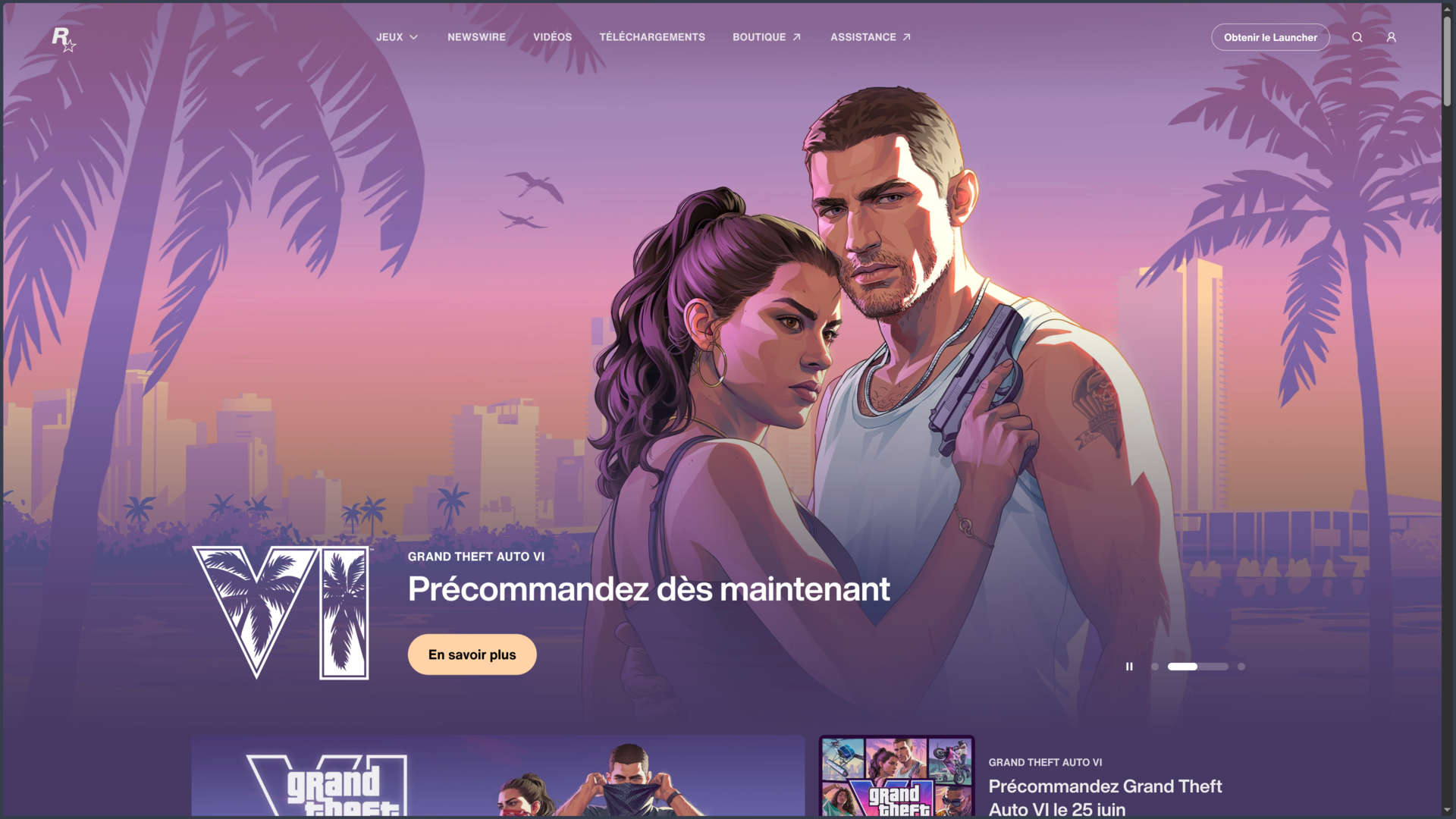
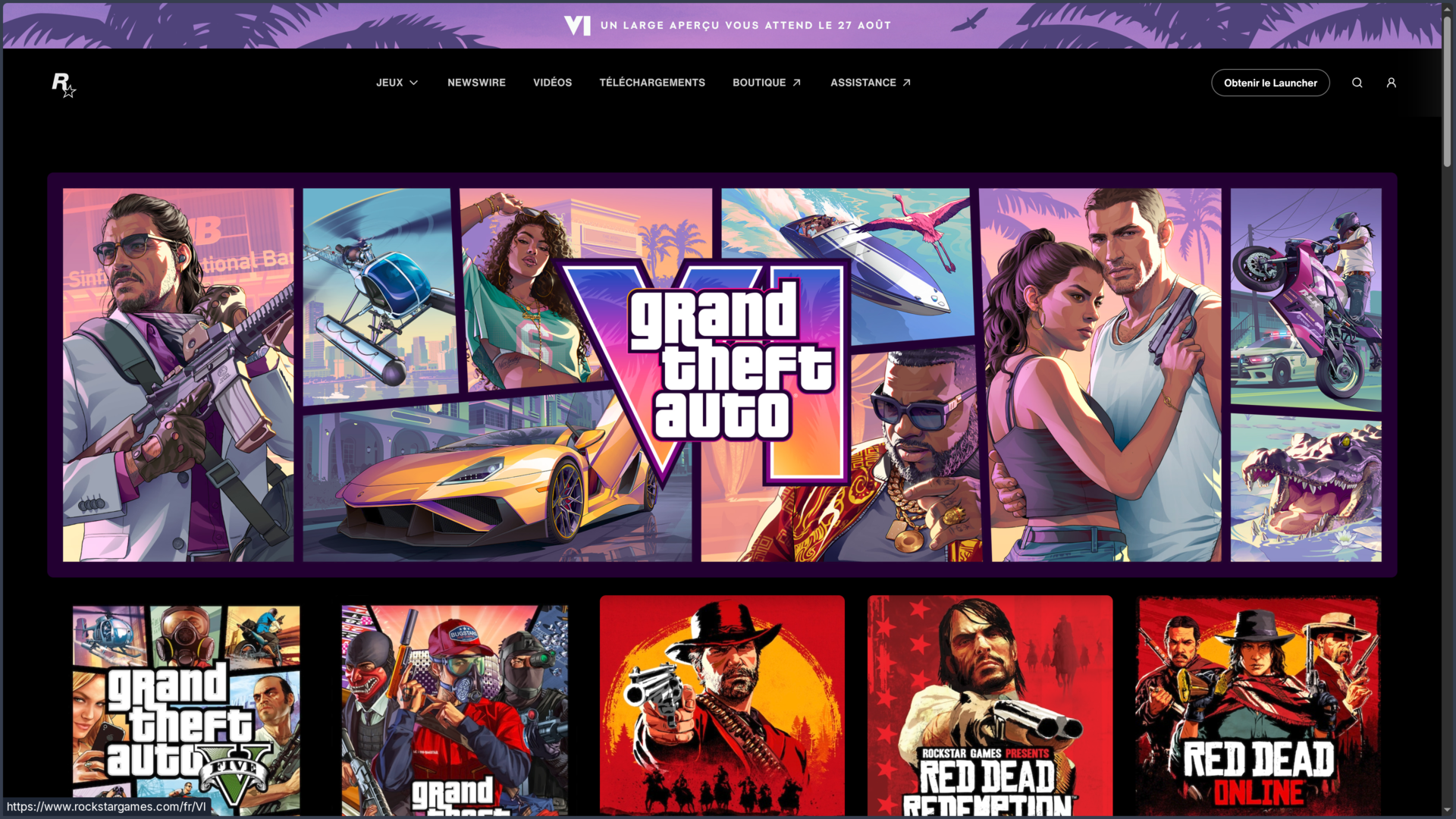
The game returns the series to Vice City and the fictional state of Leonida, notably around Jason and Lucia. Rockstar and Take-Two present it as a new evolution of their approach to narrative, immersive open-world design.

The situation is unusual.

The previous numbered installment dates back to 2013.

In between, GTA Online transformed the series.

Roleplay transformed how it is used.

Platforms changed.

Technical standards changed.

Audience expectations changed.

GTA VI therefore cannot simply be “bigger.”

It has to answer thirteen years during which its predecessor continued evolving without it.

Today: Rockstar has become the network its logo once concealed

Rockstar’s careers site now shows a global organization bringing together teams in North America, the United Kingdom, India and Australia. Openings are spread across Rockstar Australia, Dundee, India, Leeds, Lincoln, London, New England, New York, North, San Diego and Toronto.

The paradox is almost perfect.

To the public, Rockstar has one of the simplest logos in video games.

An R.

A star.

Behind that symbol, however, exists a distributed organization made up of studios, technical teams, online services, publishing, localization, security, data and creative infrastructure.

The simplicity of the logo hides the complexity of production.

That is probably the best way to understand Rockstar today.

It is no longer simply “the studio that makes GTA.”

It is a collective machine designed to build very few worlds, but demand an enormous amount from them.

What sets it apart

A label that culturally resembles an author

Rockstar Games is legally and industrially a label made up of several entities.

Yet the public often speaks of a “Rockstar game” as if it came from a single author.

That perception is not entirely wrong.

Rockstar North, San Diego, Toronto and the other teams possess their own histories, but their productions share enough editorial, technological and narrative choices to form a common signature.

The paradox is interesting.

The more collective the organization becomes, the more singular the brand appears.

The open world is not a map, but an accumulation of systems

A large map does not automatically create a believable world.

Rockstar works more through accumulation.

Traffic.

Wildlife.

Weather.

Physics.

Animations.

Radio.

Economy.

NPC reactions.

Activities.

Dialogue.

Architecture.

Objects.

The player does not necessarily notice every system.

They notice the combination.

This method explains why a street without a mission can still feel deliberately built.

Content does not begin only when an icon appears on the map.

The journey can matter as much as the destination

In many games, moving between objectives is dead time to be reduced.

Rockstar often builds the opposite experience.

The journey allows you to listen to the radio.

Meet someone.

Discover an event.

Watch the weather.

Change vehicle.

Get lost.

Cause an accident.

See an animal.

The world becomes interesting when the line between two missions produces gameplay of its own.

That philosophy explains why environments occupy such a central place in the label’s identity.

Radio turns space into culture

Grand Theft Auto’s radio stations are among Rockstar’s most characteristic systems.

They perform several functions at once.

Music.

Historical atmosphere.

Satire.

Exposition.

Fictional advertising.

Humor.

Rhythm during travel.

Rockstar gradually pushed this relationship with music far enough to create CircoLoco Records with CircoLoco in 2021, explicitly presenting it as an extension of its work around music and the social spaces of GTA Online.

The soundtrack is therefore not decoration added after the game is built.

It is part of how the world is inhabited.

Satire hides in details the player can ignore

Grand Theft Auto obviously contains deliberately excessive characters.

But much of its satire is peripheral.

An advertisement.

A website.

A radio program.

A brand.

A street conversation.

A billboard.

A slogan.

The structure is perfectly suited to the open world.

Rockstar can multiply commentary without forcing the player to hear all of it.

The world remains readable at face value.

But anyone who takes the time to look discovers another layer.

Satire becomes environmental.

Rockstar often prefers to caricature a culture rather than reproduce a city

Liberty City is not New York.

Los Santos is not Los Angeles.

Vice City is not Miami.

These cities borrow heavily from reality, but their goal is not documentary reproduction.

They compress.

Move.

Exaggerate.

Merge several references.

A real city contains too much repetition, emptiness and useless distance to be directly turned into a game space.

Rockstar therefore builds a cultural version of a place rather than a metric copy.

The player recognizes an idea of Los Angeles.

Not Los Angeles down to the centimeter.

Rockstar realism accepts absurdity

Rockstar productions can devote enormous effort to physics, animation and world behavior.

That does not mean they aim for perfectly serious simulation.

Grand Theft Auto can place a believable city next to a completely absurd situation.

Red Dead can build an animal with detailed behavior and then allow the player to cause an improbable disaster seconds later.

That coexistence is essential.

Realism gives weight to absurdity.

The more coherent the world appears, the funnier or more spectacular its improvised destruction becomes.

A Rockstar mission controls, then the world lets go

Rockstar games live in permanent tension between two forms of design.

The scripted mission wants to control pacing.

Place characters.

Trigger dialogue.

Organize action.

The open world wants to let the player go somewhere else.

That contradiction can sometimes make certain missions highly restrictive.

But it also produces the label’s narrative signature.

Rockstar alternates between precise staging and systemic freedom.

The game breathes between the two.

Characters exist because they also live between missions

Michael, Franklin, Trevor, Arthur Morgan and John Marston are strongly written characters.

But their presence does not depend only on cutscenes.

The player spends time with them while traveling.

Watches them in ordinary animations.

Hears their reactions.

Sees their relationship to places.

In GTA V, switching characters can even reveal what each person is doing when the player is not controlling them.

The open world therefore gives characterization something cinema does not easily possess.

Useless time.

And that useless time can become extremely valuable.

Rockstar Studios turns several teams into one signature

The official credits for Max Payne 3 and Red Dead Redemption 2 use Rockstar Studios as developer.

That designation summarizes the modern organization of the label.

An artist can work in one country.

A programmer in another.

Tools can be developed somewhere else.

Animation in another structure.

The final game brings all those contributions together under one identity.

This distributed production distinguishes Rockstar from a studio whose entire skill set remains concentrated in one building.

The world is centralized in vision.

Not necessarily in geography.

Internal technology preserves memory between games

RAGE contributes to this continuity.

Internal technology can accumulate solutions developed across several productions.

Animation.

Physics.

Streaming.

Rendering.

Tools.

Each project therefore does not have to start entirely from zero.

Rockstar’s communications around Max Payne 3 explicitly document the use of a new iteration of the Rockstar Advanced Game Engine within a project built across several studios.

Technology then acts as a form of collective memory.

Skills survive the game that originally required them.

Detail becomes truly useful when it creates an illusion of causality

A visual detail impresses once.

A behavioral detail can impress repeatedly.

The real power of Rockstar worlds often comes from the impression that events have causes.

An animal runs away.

A witness reacts.

Police arrive.

A car blocks the road.

Another accident happens.

The player is not necessarily aware of the separate systems.

They perceive a chain.

That sense of causality transforms partial simulation into the impression of a living world.

Rockstar releases rarely, but concentrates enormously

As productions grow, Rockstar releases fewer major new games than it did in the early 2000s.

That scarcity does not mean inactivity.

GTA Online constantly receives content.

Older games are adapted to new platforms.

Infrastructure evolves.

Studios join the network.

But major new single-player games become more widely spaced.

The model gradually concentrates enormous resources on a few properties capable of lasting for a long time afterward.

This strategy naturally increases anticipation.

It also increases risk.

When a game takes many years to arrive, it can no longer easily be perceived as an ordinary production.

Additional time is publicly part of the finishing philosophy

Rockstar has postponed games several times while explaining that it prefers to have the time needed to finish them properly.

In 2010, the label already justified a small delay to Red Dead Redemption through its desire to prioritize final quality. Red Dead Redemption 2 was also delayed before its 2018 release.

GTA VI follows the same scheduling logic today: initially announced for 2025, then planned for May 2026, it is now set for November 19, 2026.

Delays obviously do not guarantee quality.

They do show, however, that Rockstar has long been willing to treat the date as a variable rather than an always-immutable boundary.

GTA Online turned a game publisher into a world operator

Before 2013, Rockstar mainly made works with a release and a content cycle.

GTA Online changes that relationship.

The same world has to be maintained.

Moderated.

Secured.

Expanded.

Balanced.

Monetized.

Updated.

Rockstar therefore has to develop skills closer to those of a service operator.

Its current careers site also shows many roles in online services, data, security and platforms distributed across several studios in the network.

The virtual world becomes permanent infrastructure.

Cfx.re recognizes that the community can invent a stronger use than the intended one

The arrival of Cfx.re inside Rockstar in 2023 is especially revealing.

FiveM and RedM allowed communities to create servers and forms of roleplay that were not simply new missions imagined by Rockstar.

They changed the meaning of the world itself.

Rockstar explicitly acknowledges that these communities had found new ways to extend GTA V and Red Dead Redemption 2.

The acquisition therefore says something unusual.

A publisher can look at what players have built with its work and decide that this invention deserves to enter the company itself.

The brand can expand without making all of its studios invisible

Rockstar possesses an extremely strong identity.

Yet the names Rockstar North, Rockstar San Diego, Rockstar Toronto and Rockstar New England continue to exist.

The label has not completely erased the geography of its teams.

The result creates two levels.

A global Rockstar identity.

A local history for the studios.

That distinction is especially important for PANACHES CULTURE, because works need to be connected to the actual development teams without losing the existence of the label that coordinates them.

The catalog is broader than GTA and Red Dead

The enormous success of Grand Theft Auto and Red Dead can create the impression that Rockstar has produced only two families of games.

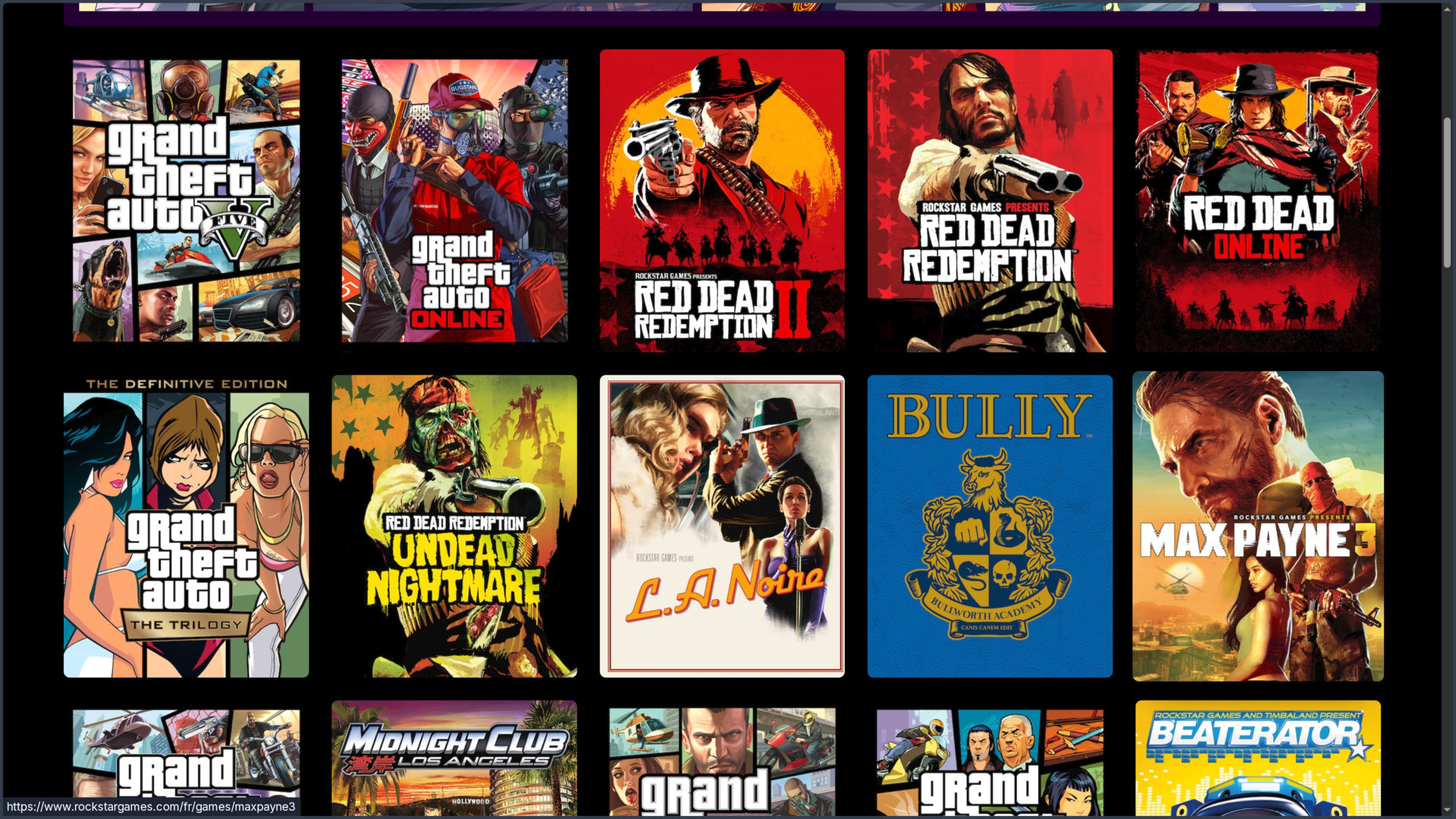
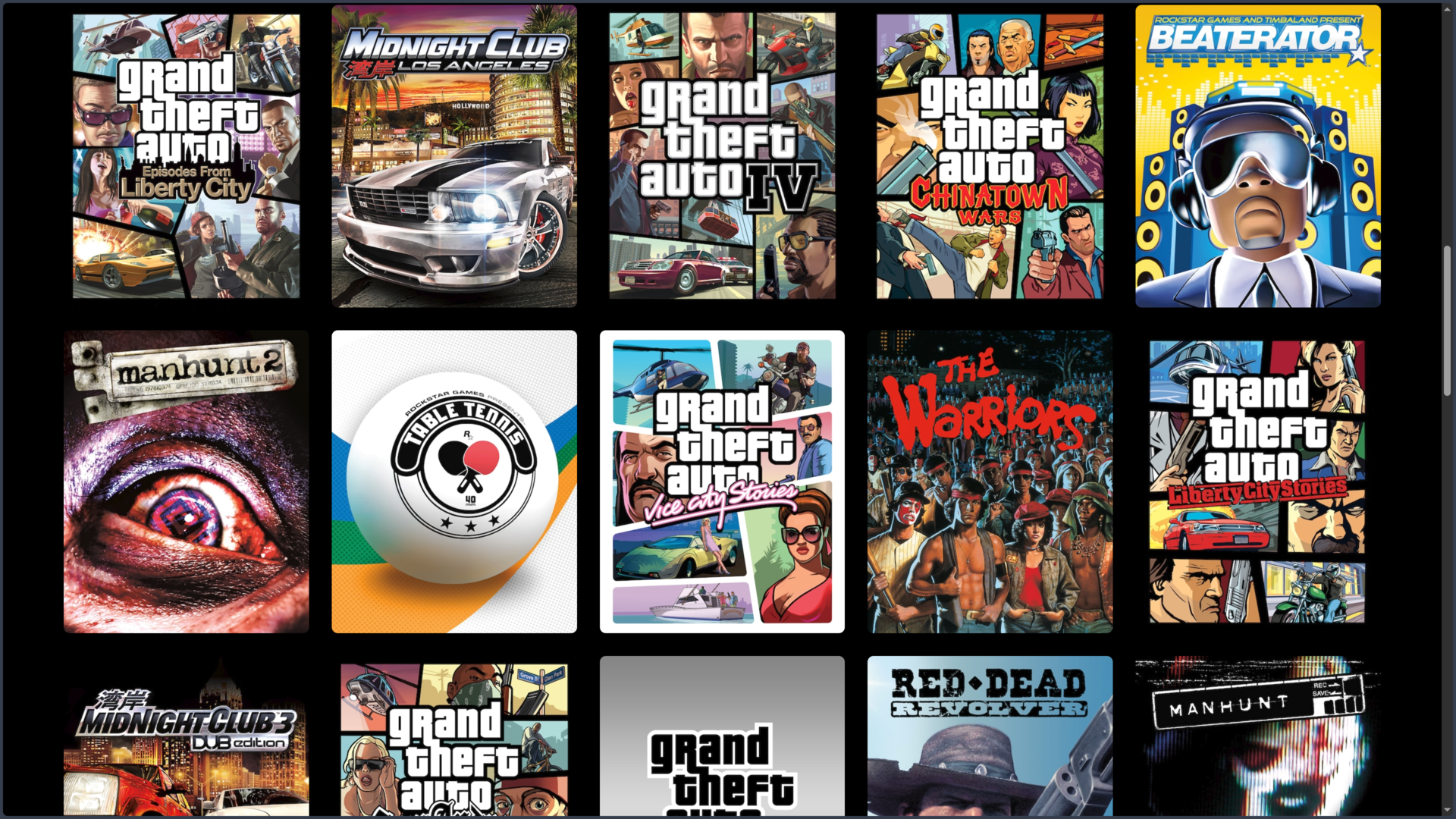
Its history nevertheless includes Bully, Midnight Club, The Warriors, L.A. Noire, Max Payne 3, Manhunt, Table Tennis and other productions. Take-Two still cites several of these works when presenting Rockstar’s cultural legacy.

That variety matters.

It shows that the Rockstar signature has been tested across more genres than its two currently dominant franchises.

Racing.

Crime thriller.

Action.

Western.

School life.

Sport.

Urban crime.

The modern concentration of the catalog is therefore an evolution.

Not its original state.

Provocation is only effective when it serves an observation

Grand Theft Auto has often been publicly framed through its violence and controversies.

But the lasting distinctiveness of the series probably does not come simply from allowing forbidden actions.

Thousands of games do that.

What makes GTA more interesting is the way that freedom is placed inside cities obsessed with money, celebrity, consumption, politics, television, status and social contradiction.

Provocation then works as a tool of caricature.

When reduced to shock, it ages quickly.

When it reveals something about the culture it exaggerates, it can survive much longer.

Music is not a layer added after the world

Rockstar explicitly treats music as a fundamental part of its identity. The announcement of CircoLoco Records recalls the role of underground artists, Grand Theft Auto radio stations, digital clubs and spaces for musical discovery within its games.

This approach explains why driving without an objective can still feel like a complete activity.

The road provides movement.

The city provides the image.

The radio provides rhythm.

The player then creates their own montage.

Rockstar therefore sometimes uses music less as accompaniment than as a tool for personal staging.

Heritage gradually becomes as important as novelty

Rockstar is now approaching three decades of history.

Its first major 3D games already belong to several earlier technological generations.

GTA re-releases.

The return of Red Dead Redemption on PC and new consoles.

The management of L.A. Noire.

GTA+ catalogs.

The Rockstar Games Launcher.

All these initiatives raise the same question.

How do you maintain a game when the hardware for which it was designed disappears?

Preservation is no longer a subject outside Rockstar.

It becomes part of its work as a publisher.

GTA VI arrives with a problem more complex than simply surpassing GTA V

In June 2026, Take-Two states that the entire Grand Theft Auto series has surpassed 470 million units distributed worldwide.

The next installment therefore does not merely succeed a successful game.

It succeeds an ecosystem that has crossed thirteen years of Internet culture, streaming, GTA Online, community creations, roleplay and several generations of hardware.

The challenge is not only quantitative.

A larger map would not be enough.

More vehicles would not be enough.

More details would not be enough.

GTA VI has to discover what a new Rockstar world means today when the previous one never really stopped living.

Good to know

  • Rockstar Games was founded in 1998. The company officially claims this date and celebrated its twenty-fifth anniversary in 2023.
  • The entry uses editeur_jeu, because Rockstar Games officially describes itself as a label and coordinates several development studios.
  • Rockstar Games, Inc. is based in New York, at 622 Broadway, New York, NY 10012.
  • Rockstar Games is a wholly owned subsidiary of Take-Two Interactive Software.
  • Sam Houser is officially identified as a founder of Rockstar Games and still signed the company’s twenty-fifth anniversary message in 2023.
  • Rockstar says it was founded around the idea that video games could become as culturally essential as other forms of entertainment.
  • The first Grand Theft Auto predates the official foundation of Rockstar Games. Rockstar’s catalog dates the first work to 1998, while Take-Two recalls that the project had begun within the BMG Interactive environment.
  • Grand Theft Auto III launched on October 22, 2001 and was developed by Rockstar North. Rockstar considers it the game that established its modern approach to the 3D open world.
  • Take-Two acquired Angel Studios in 2002 and renamed it Rockstar San Diego.
  • Red Dead Revolver launched in 2004 and was developed by Rockstar San Diego.
  • In 2005, the Hot Coffee affair caused the ESRB to withdraw the M rating from Grand Theft Auto: San Andreas, temporarily replacing it with an Adults Only rating before a corrected version was released.
  • Take-Two and Rockstar reached a settlement with the Federal Trade Commission in 2006 concerning disclosure of content relevant to game ratings.
  • Rockstar Games presents Table Tennis launched in 2006 and was developed by Rockstar San Diego.
  • Rockstar acquired Mad Doc Software in 2008, which became Rockstar New England.
  • Red Dead Redemption launched in May 2010 and notably developed wildlife, hunting, honor and fame systems within its open world.
  • Max Payne 3 launched in 2012 and is credited to Rockstar Studios, with Rockstar describing it as a collaboration between several of the company’s worldwide teams.
  • The Rockstar Advanced Game Engine, or RAGE, is Rockstar’s internal technology, used and developed across several productions.
  • Grand Theft Auto V launched in 2013, built around a reinterpretation of Southern California and Los Santos.
  • Grand Theft Auto Online officially opened on October 1, 2013. Rockstar presented it as a living multiplayer world intended to evolve over time.
  • Grand Theft Auto V was later brought to several console generations and PC, while GTA Online continued evolving alongside it.
  • The Rockstar Editor was introduced with GTA V on PC in 2015, allowing players to capture and edit their own sequences.
  • Red Dead Redemption 2 launched on October 26, 2018 and is credited to Rockstar Studios.
  • The Rockstar Games Launcher appeared in 2019 as the label’s own PC platform.
  • CircoLoco Records was created in 2021 by Rockstar Games and CircoLoco, extending beyond games the musical work historically associated with Grand Theft Auto.
  • Cfx.re officially joined Rockstar Games in August 2023. The team develops the FiveM and RedM roleplay platforms.
  • Video Games Deluxe joined Rockstar in 2025 and became Rockstar Australia.
  • Rockstar’s current network includes locations in Australia, Scotland, India, England, the United States and Canada, notably Rockstar Australia, Dundee, India, Leeds, Lincoln, London, New England, New York, North, San Diego and Toronto.
  • The Grand Theft Auto series surpassed 470 million units distributed worldwide according to Take-Two in June 2026.
  • GTA Online still receives new updates in 2026, more than twelve years after launch.
  • Grand Theft Auto VI is currently scheduled for November 19, 2026 on PlayStation 5 and Xbox Series X|S. Take-Two again confirmed this date on August 7, 2026.
  • Pre-orders for Grand Theft Auto VI have been open since June 25, 2026.
  • GTA VI takes place notably in Vice City and the fictional state of Leonida, around Jason and Lucia.