Presentation
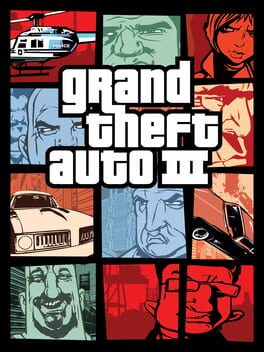
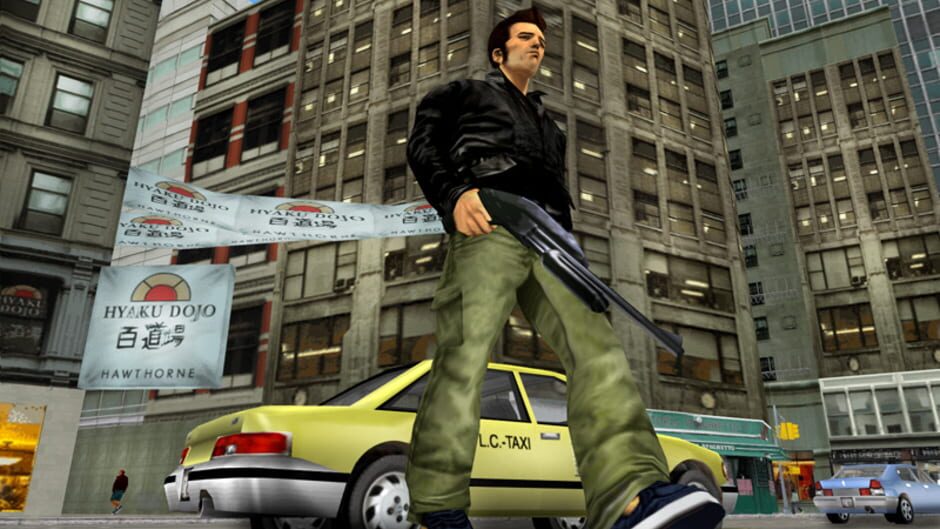
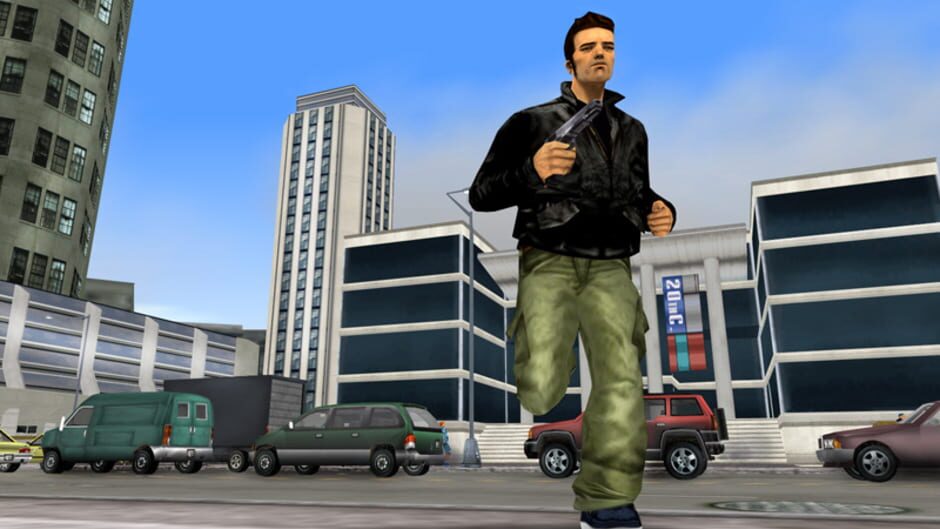
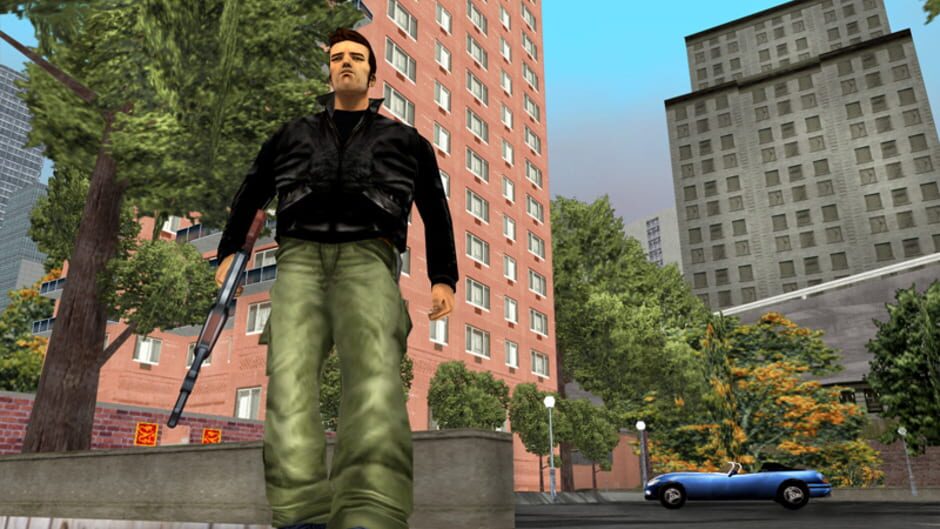
Grand Theft Auto III represents the decisive transition of the series into a fully three-dimensional open world. Liberty City becomes a continuous space that can be explored by car or on foot, with missions integrated directly into a city where traffic, pedestrians, police and activities continue to exist outside the main storyline. Rockstar would later describe this entry as the starting point for its approach to immersive and detailed 3D open worlds.
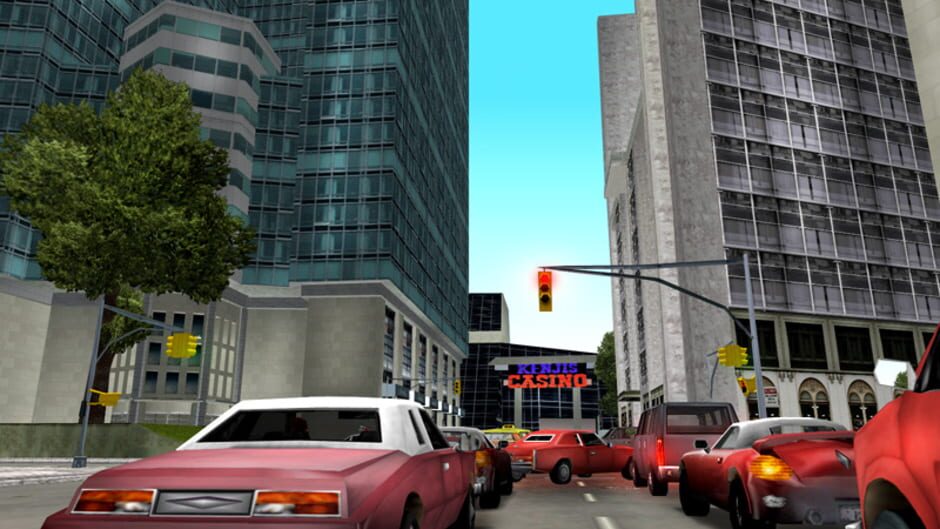
The city is divided into three major areas that gradually become accessible: Portland, Staunton Island and Shoreside Vale. Portland concentrates docks, industrial districts and Mafia influence; Staunton offers a denser urban center with skyscrapers and commercial areas; Shoreside Vale combines suburbs, infrastructure and more distant locations. The gradual opening of bridges and tunnels directly accompanies Claude’s progression through Liberty City’s criminal hierarchy.
This structure offers an unusual degree of freedom for its time. Once a mission begins, the player can choose a route, switch vehicles along the way or exploit parts of the city to reach the objective. Outside missions, Liberty City can be explored without any particular destination, simply to provoke the police, search for a vehicle or discover different neighborhoods.
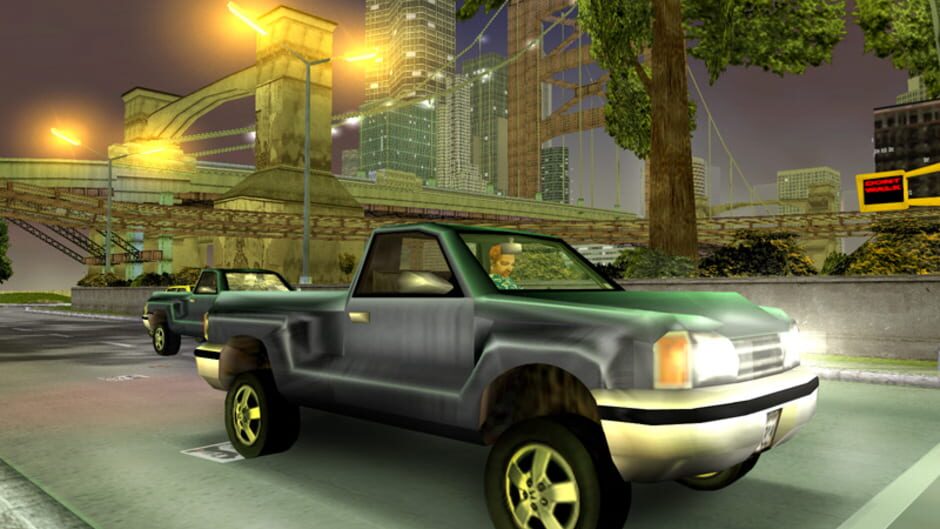
Driving forms the core of movement. Sports cars, sedans, taxis, police vehicles, ambulances, trucks and many other categories handle differently enough to change the feel of pursuits and journeys. Visible damage and the ability to immediately abandon one vehicle for another also give escapes after missions or police encounters their own rhythm.
The wanted system contributes strongly to these improvised situations. Crimes progressively increase the level of police response, bringing stronger law-enforcement forces into the pursuit. Escaping the police, changing cars or reaching a Pay ’n’ Spray therefore becomes a small survival system capable of extending a mission well beyond its original objective.
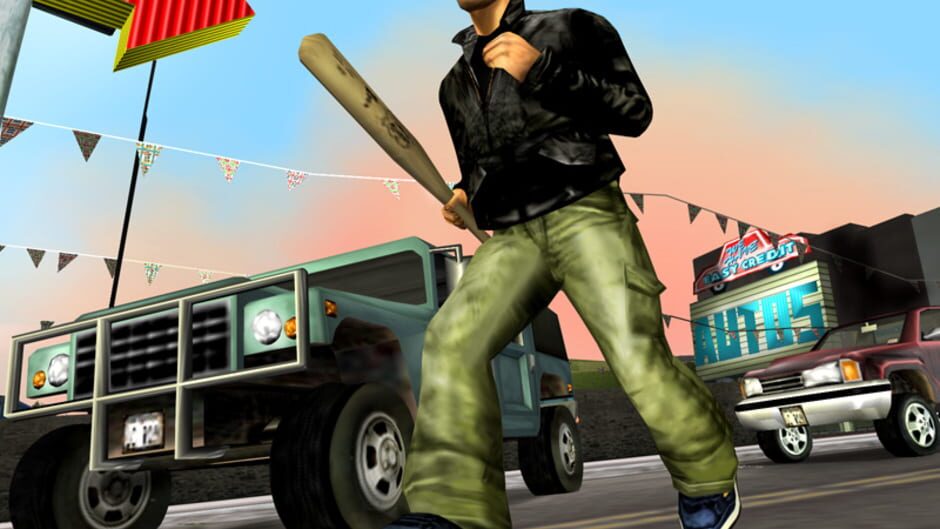
Combat includes melee weapons, pistols, rifles, submachine guns, explosives and heavy weapons, but remains far more rudimentary than in later entries. Aiming and movement can lack flexibility, especially in enclosed spaces. GTA III nevertheless establishes the basic combination of driving and on-foot action that Vice City and San Andreas would quickly expand.
Claude himself remains silent. The game therefore does not define its protagonist through long conversations or an explicitly expressed personality. He functions more as an intermediary capable of moving from one organization to another, while the characters who employ him provide much of the story’s tone and personality.
This choice places Liberty City at the forefront. Luigi Goterelli, Joey Leone, Toni Cipriani, Salvatore Leone, Maria, Asuka Kasen, Ray Machowski and Donald Love represent different sides of a city dominated by organized crime, trafficking, economic interests and corruption. Claude never belongs permanently to any of these structures and mainly advances by taking advantage of the opportunities placed in front of him.
The story remains more functional than those of Vice City, San Andreas or GTA IV, but that simplicity fits the structure of the game. Missions gradually introduce the neighborhoods, organizations and possibilities of the open world. Catalina’s betrayal provides a clear central thread without constantly imposing an urgency that would prevent the player from leaving the campaign behind for a while.
Side activities extend this freedom. Certain vehicles trigger their own missions: taxis allow the player to transport passengers, ambulances require injured people to be rescued, fire trucks are used to extinguish fires and police vehicles allow criminals to be pursued. Hidden packages, rampages, unique jumps and other objectives also encourage a more detailed understanding of Liberty City’s geography.
Radio stations already play a major role in the identity of the series. Different stations offer music, hosts, advertisements and satirical programs that accompany travel through the city. They allow Rockstar to develop humor and social caricature without interrupting exploration, a method that would later become inseparable from Grand Theft Auto.
The city now appears more limited than those of its successors: Claude cannot swim, interiors are rare, several missions rely on relatively simple structures and some controls have aged considerably. The historical importance of the game, however, lies less in the number of available systems than in the way they are brought together within a coherent and freely explorable environment.
This combination establishes much of the vocabulary the series would retain: an open city, mission-givers distributed across the map, immediately accessible vehicles, a wanted level, radio stations, side activities and geographical progression. Vice City would later strengthen the protagonist’s personality and economic takeover, while San Andreas would greatly expand the geography and progression systems.
What to remember
- The first main Grand Theft Auto built around a large fully 3D open world.
- Liberty City is divided between Portland, Staunton Island and Shoreside Vale, which gradually open during the campaign.
- Claude, a silent protagonist, searches for Catalina after being betrayed and left for dead during a robbery.
- A structure built around driving, gunfights and missions performed for several competing criminal organizations.
- A wanted system that increases the police response according to the crimes committed by the player.
- Side activities including taxi, ambulance, firefighter and vigilante missions, alongside collectibles and challenges.
- Radio stations already strongly develop the music, humor and satire that become characteristic of the series.
- A 3D open-world formula that becomes the foundation for Vice City, San Andreas and much of the franchise’s later development.
Conclusion
Grand Theft Auto III appears far more stripped down when viewed after its many sequels. Liberty City is smaller, Claude has almost no direct characterization, and the possibilities for combat, movement and customization remain limited. That simplicity, however, makes it easier to see exactly what the game establishes.
Its essential contribution comes from the relationship between an open city and a series of systems autonomous enough to create unexpected situations. A mission can turn into a police chase, force the player to abandon a damaged car and then end on foot in a neighborhood they had never planned to visit. Much of the enjoyment comes precisely from what happens between objectives.
Liberty City gives that freedom a readable structure. The gradual opening of its three areas creates a sense of progression, while the different criminal organizations allow Claude to move through several environments without requiring a long personal rise to power. The city itself is more central than its protagonist.
The technical limitations are now very visible, particularly in aiming, some movement and the most rigid missions. Later entries would quickly improve almost every one of these aspects. They would nevertheless keep the general architecture established here rather than replace it.
That foundation gives Grand Theft Auto III its particular place in the series. It has neither the cultural personality of Vice City, the scale of San Andreas nor the narrative density of GTA IV. What it does establish is the framework in which those games can exist: a city open enough that driving without an objective, provoking an unexpected event or simply choosing a different route already becomes part of the game.
Good to know
- Grand Theft Auto III was first released on October 22, 2001, for PlayStation 2.
- The game was originally created by DMA Design in Scotland, the studio that later became Rockstar North.
- The story follows Claude, a silent protagonist whose first name is never spoken during the GTA III campaign.
- Liberty City is structured around three major areas: Portland, Staunton Island and Shoreside Vale.
- Catalina, Claude’s former partner, serves as the main antagonistic thread throughout the story.
- The game was later adapted for PC, Xbox and several mobile platforms.
- Grand Theft Auto III – The Definitive Edition is included in Grand Theft Auto: The Trilogy – The Definitive Edition, released on November 11, 2021, alongside Grand Theft Auto: Vice City and Grand Theft Auto: San Andreas.