
Overview
Pika Édition is a French publishing house specializing in manga, founded in January 2000 by Alain Kahn and Pierre Valls. Its history is directly connected to that of the first generation of publishers that helped establish manga permanently in French bookstores.
The publishing house did not start from scratch.
Before Pika, Alain Kahn headed Média Système Édition, a company notably known for the video game magazine Player One. The company later developed Manga Player, one of the first French magazines devoted to manga serialization, as well as a label under which works such as Card Captor Sakura and 3x3 Eyes were published.
When Pika Édition was created in 2000, part of this catalogue was taken over. Volume 11 of 3x3 Eyes thus became the first manga published under the new brand, while Card Captor Sakura continued its publication at Pika.
This continuity allowed the publishing house to enter the market with initial experience in Japanese publishing, relationships with rights holders and knowledge of a readership that was still developing.
The early 2000s quickly established several important series.
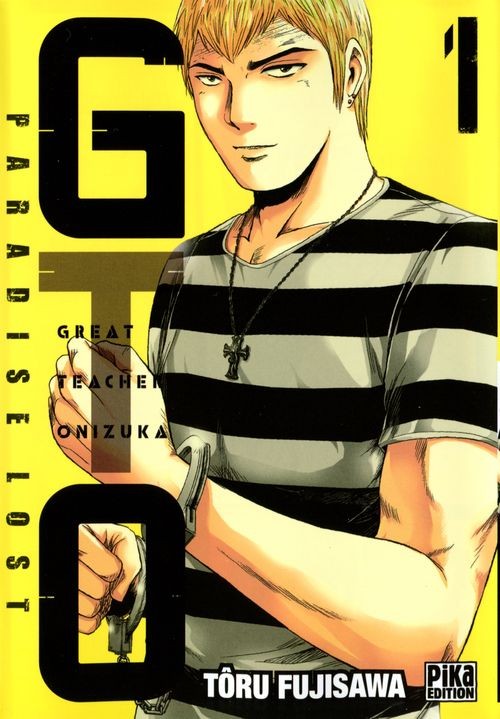
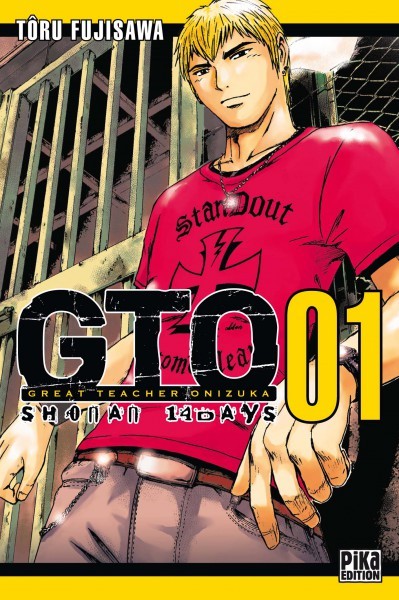
GTO by Tôru Fujisawa arrived in 2001 and became one of the publishing house’s emblematic titles.
Love Hina by Ken Akamatsu subsequently exceeded one million copies sold in France.
Works by the CLAMP collective, including Card Captor Sakura, Tsubasa Reservoir Chronicle and xxxHolic, also occupied a lasting place in the catalogue.
The publishing house continued developing with series belonging to very different genres: action, romance, fantasy, science fiction, humor, sport, thriller and historical storytelling.
This diversity was one of Pika’s principles from the beginning.
The publishing house does not seek to associate its identity with a single editorial category. The Pika Shônen, Pika Shôjo and Pika Seinen collections help structure different proposals without reducing the catalogue to a single audience.
Over the years, several new series became central.
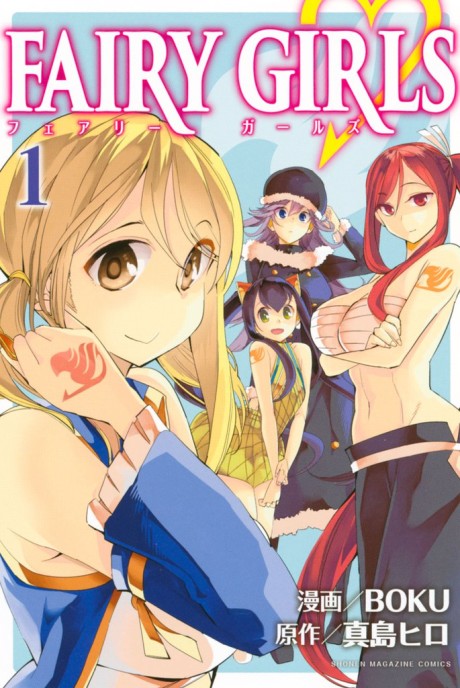
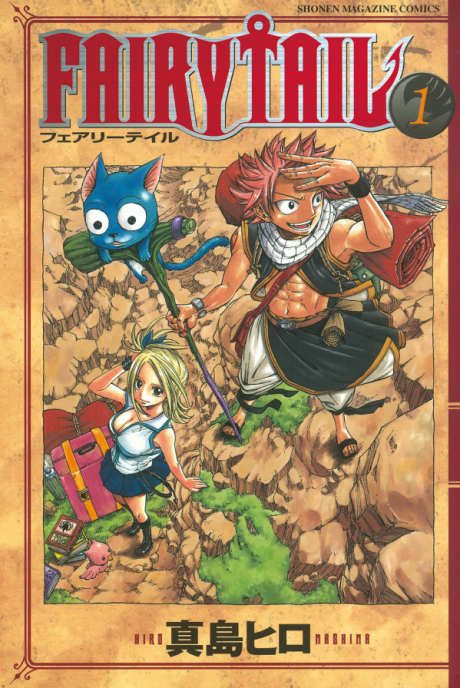
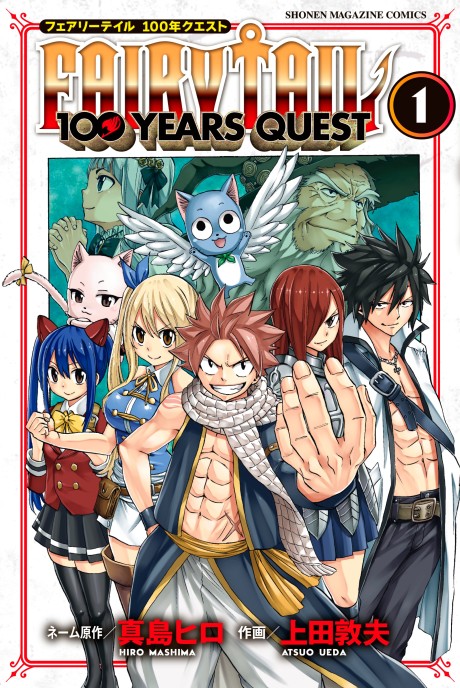
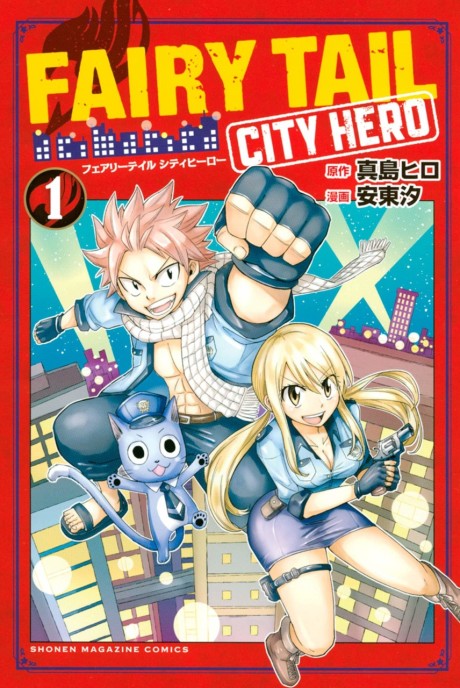
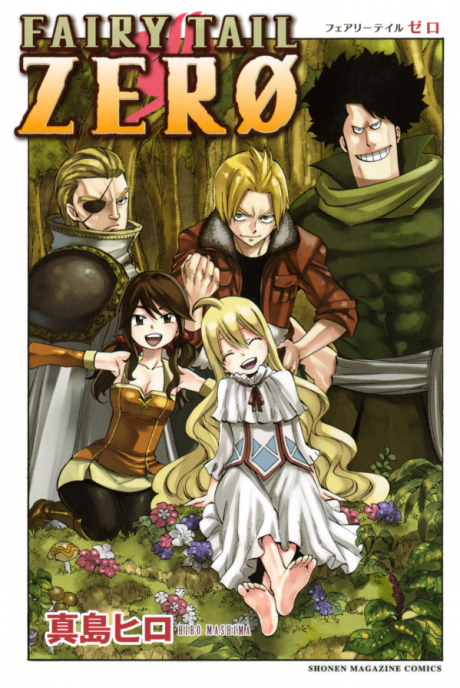
Fairy Tail by Hiro Mashima began publication in France in 2008 and established itself as one of the greatest successes in Pika’s history.
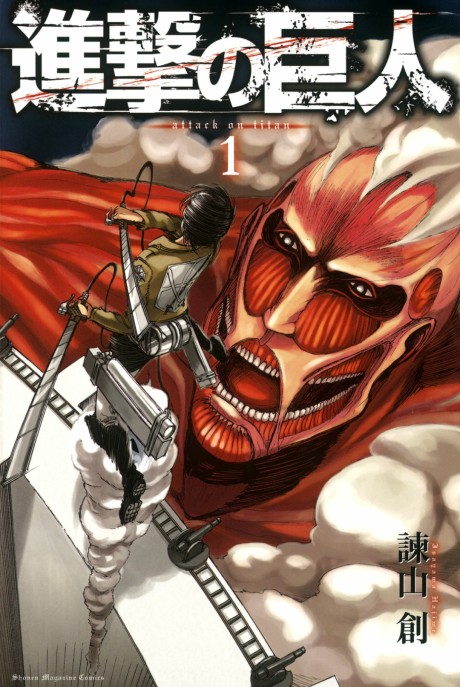
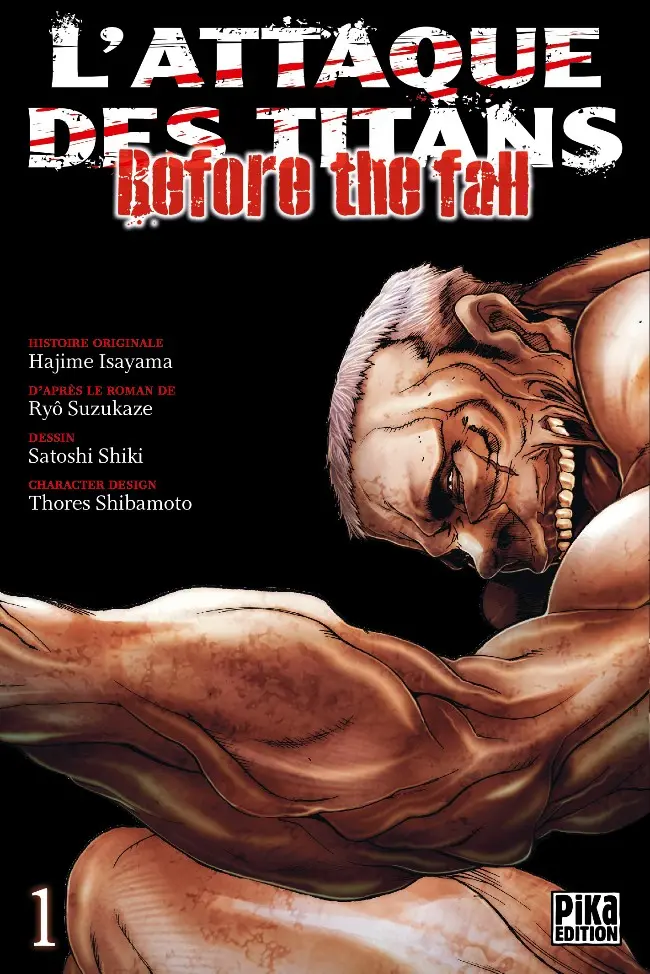
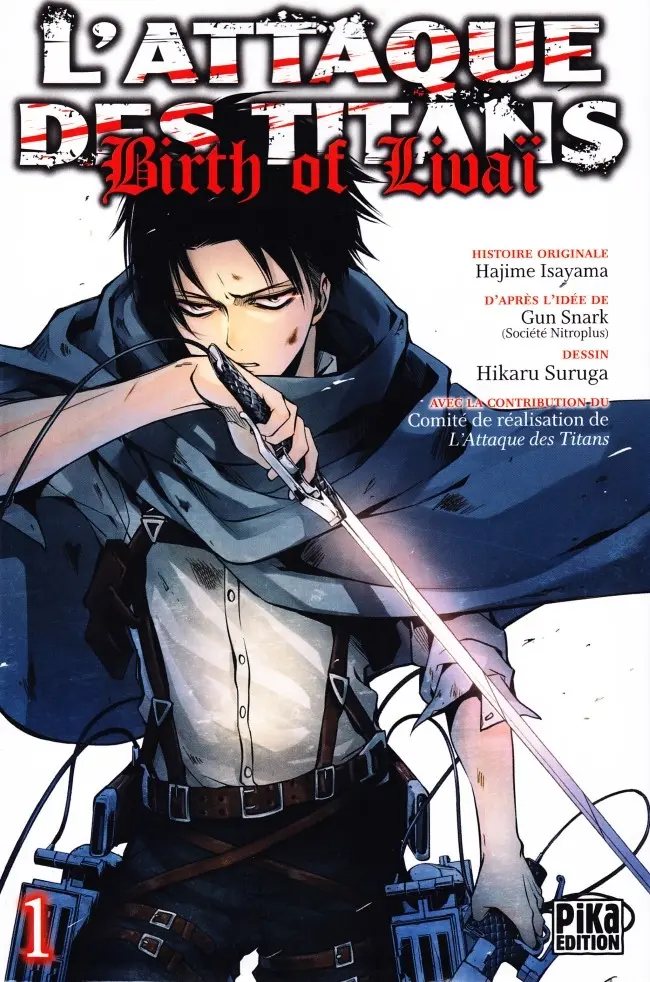
Attack on Titan by Hajime Isayama joined the catalogue in 2013 and contributed to a new period of strong manga growth in France.
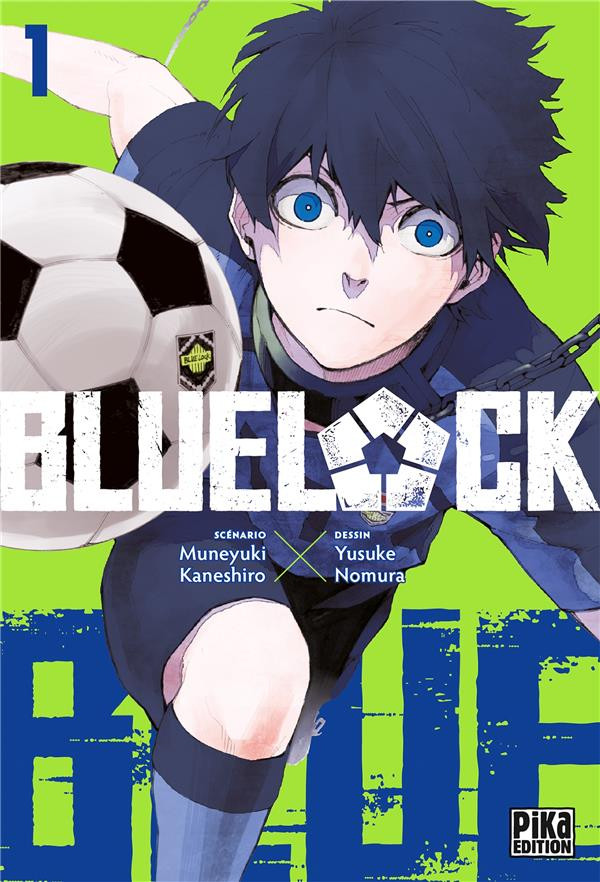
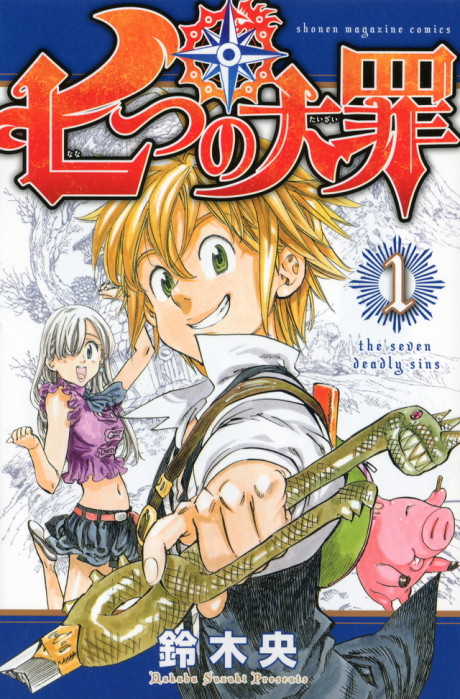
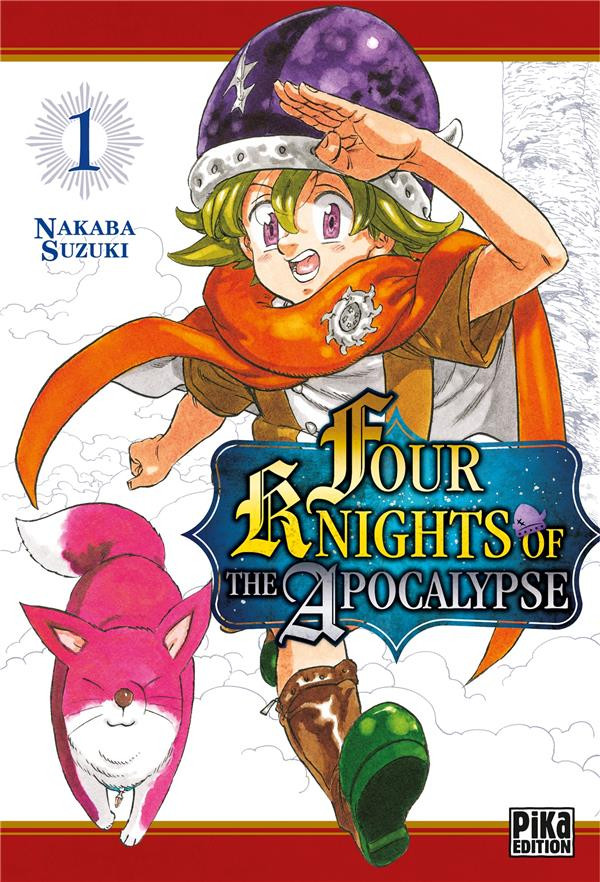
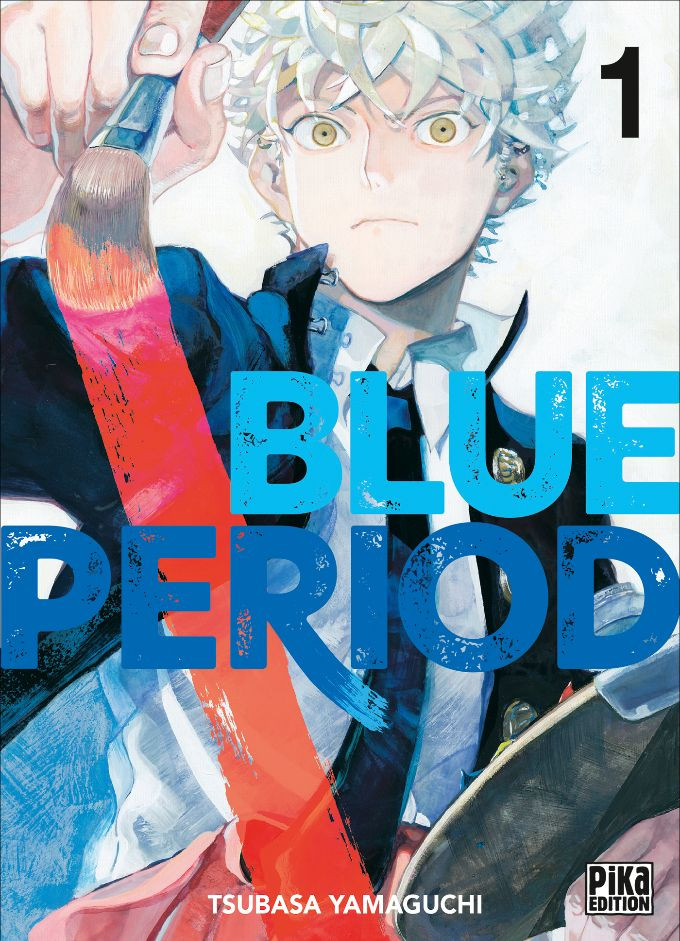
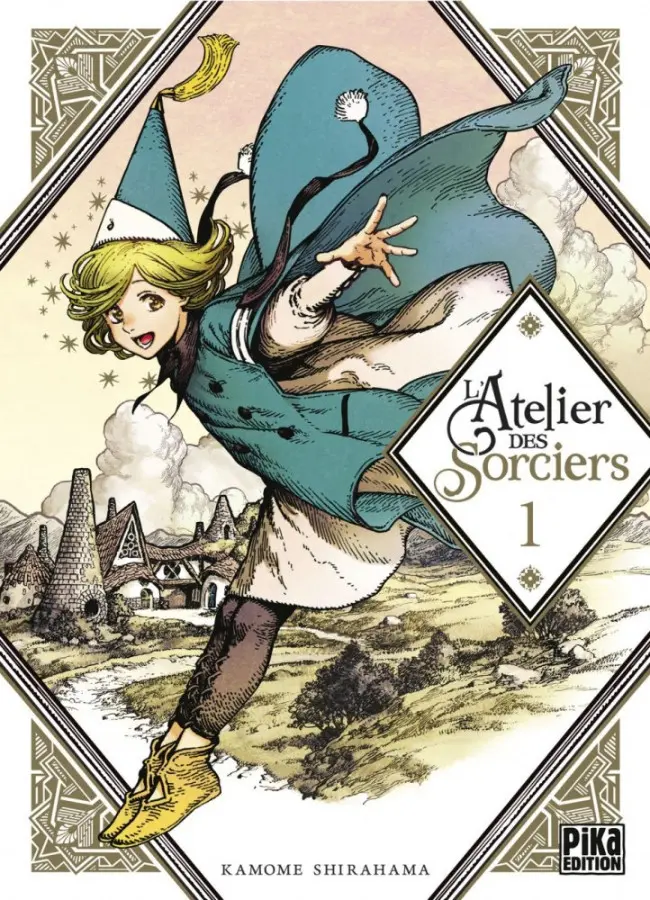
Seven Deadly Sins, To Your Eternity, Witch Hat Atelier, Blue Period, Blue Lock, Gokurakugai and other series subsequently extended this ability to renew the catalogue.
Pika is not limited, however, to acquiring Japanese rights.
The publishing house also played an early role in the development of what would often be called French manga.
The most important example is Dreamland by Reno Lemaire.
Serialized in the magazine Shônen Collection and then published in volumes from the mid-2000s onward, the series adopts the narrative codes and format of manga while being entirely created in France.
Pika now presents Dreamland as the longest-running French manga series it has published. Its trajectory became established enough for the work itself to later be exported and published in Japan.
This approach distinguishes Pika from a publishing house limited to translating foreign works: it can also support French-speaking creators working within a graphic and narrative language inspired by manga.
Its editorial scope has also expanded.
The Pika Roman brand has since 2016 made it possible to publish novels connected to certain Japanese universes or imaginative fiction, with for example works related to Attack on Titan, Another and Your Name.
The Pika Graphic collection offers another approach to Asian comics.
In 2022, the publishing house created Pika Masterpiece, a heritage collection intended to highlight important works in manga history through particularly carefully designed editions.
In 2024, Pika Wavetoon expanded the catalogue further with Korean webtoons published in print format, notably Omniscient Reader’s Viewpoint.
Pika also develops a major children’s focus through nobi nobi !, a publishing house specializing in manga and children’s books integrated into its environment in 2016. This brand has its own catalogue and should not be confused with collections published directly under the Pika Édition name.
The publishing house now belongs to Hachette Livre.
This affiliation gives it access to a vast distribution and logistics environment, but Pika retains its own editorial identity, catalogue, brands and relationships with Japanese publishers.
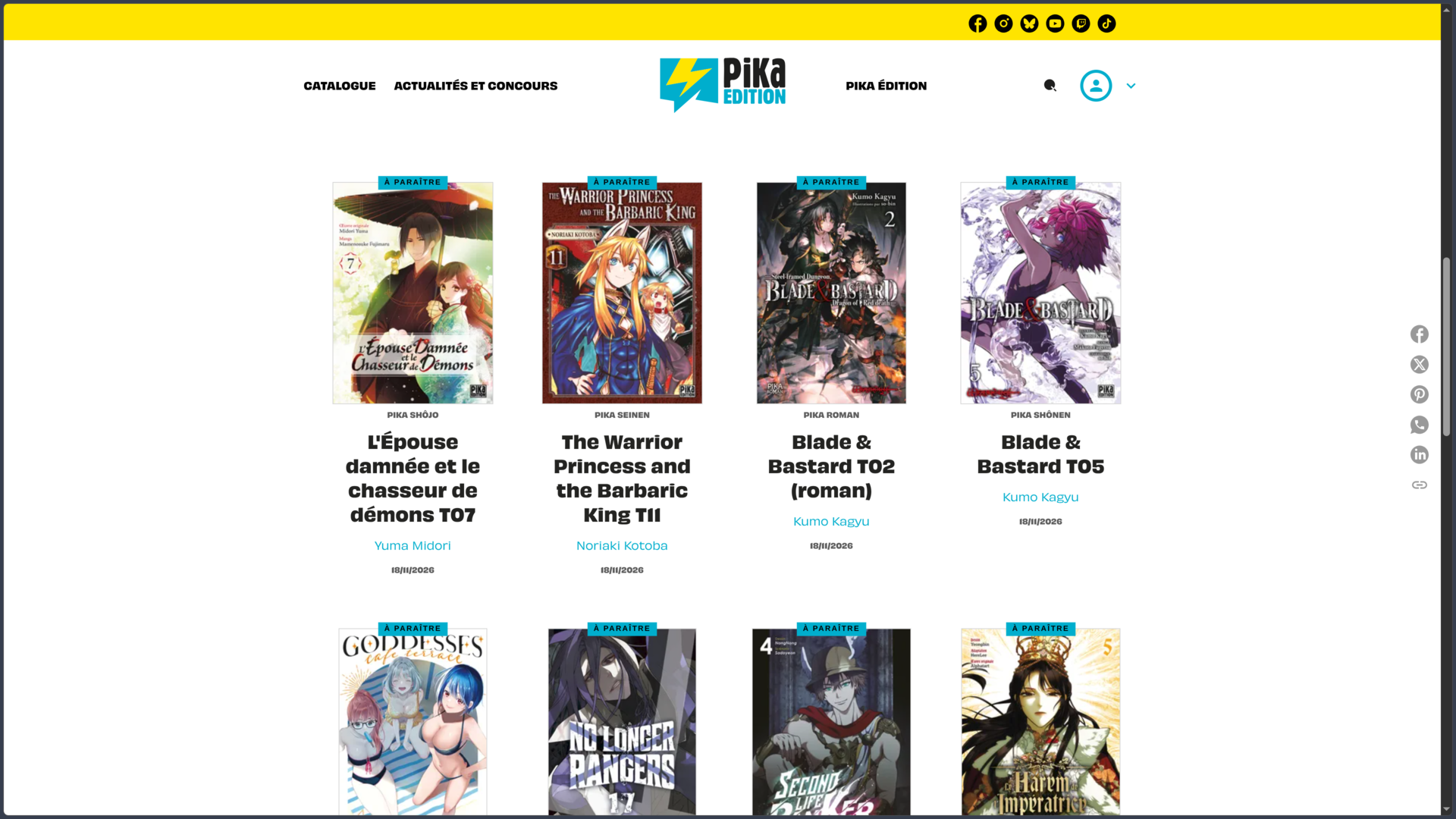
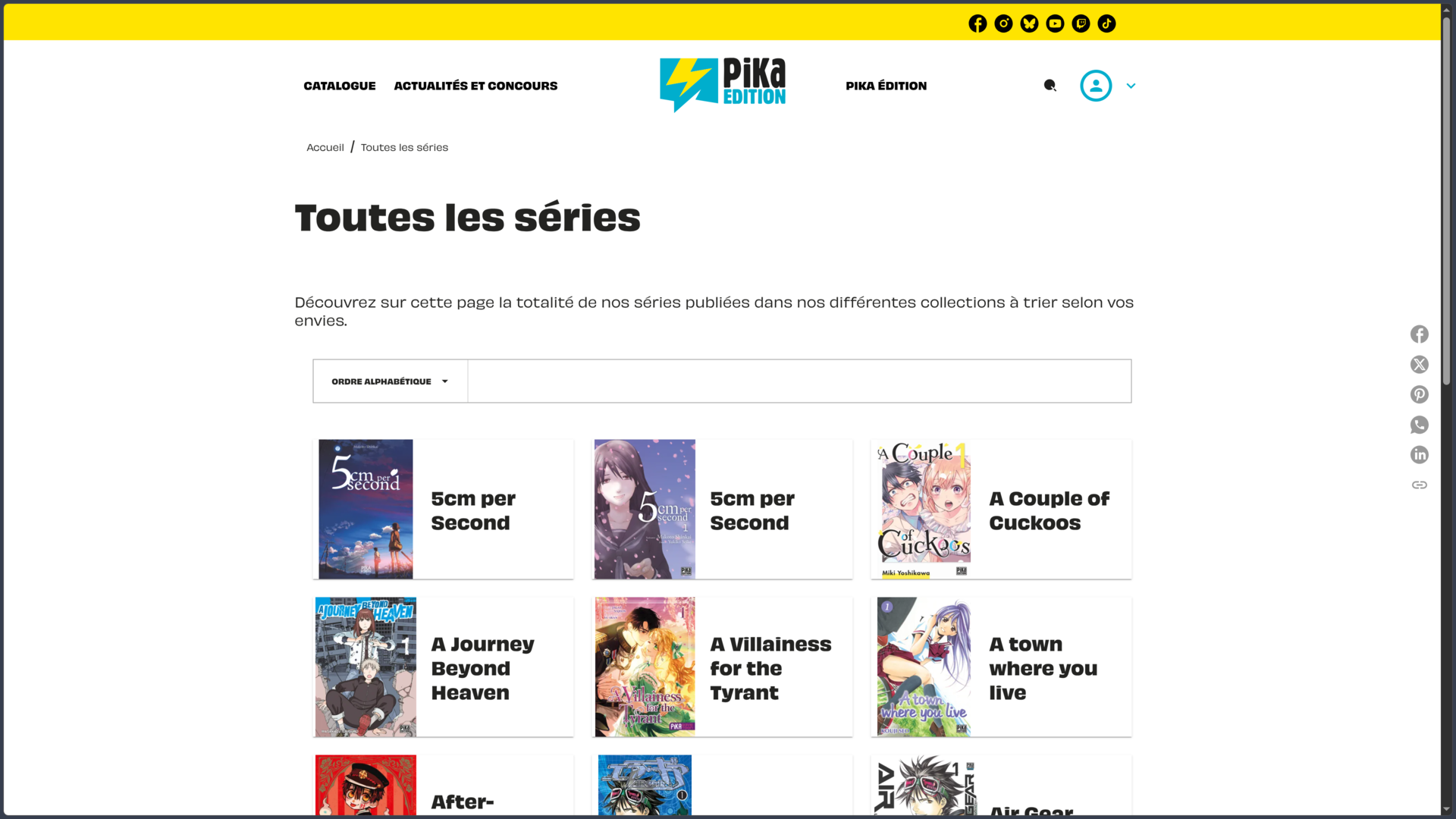
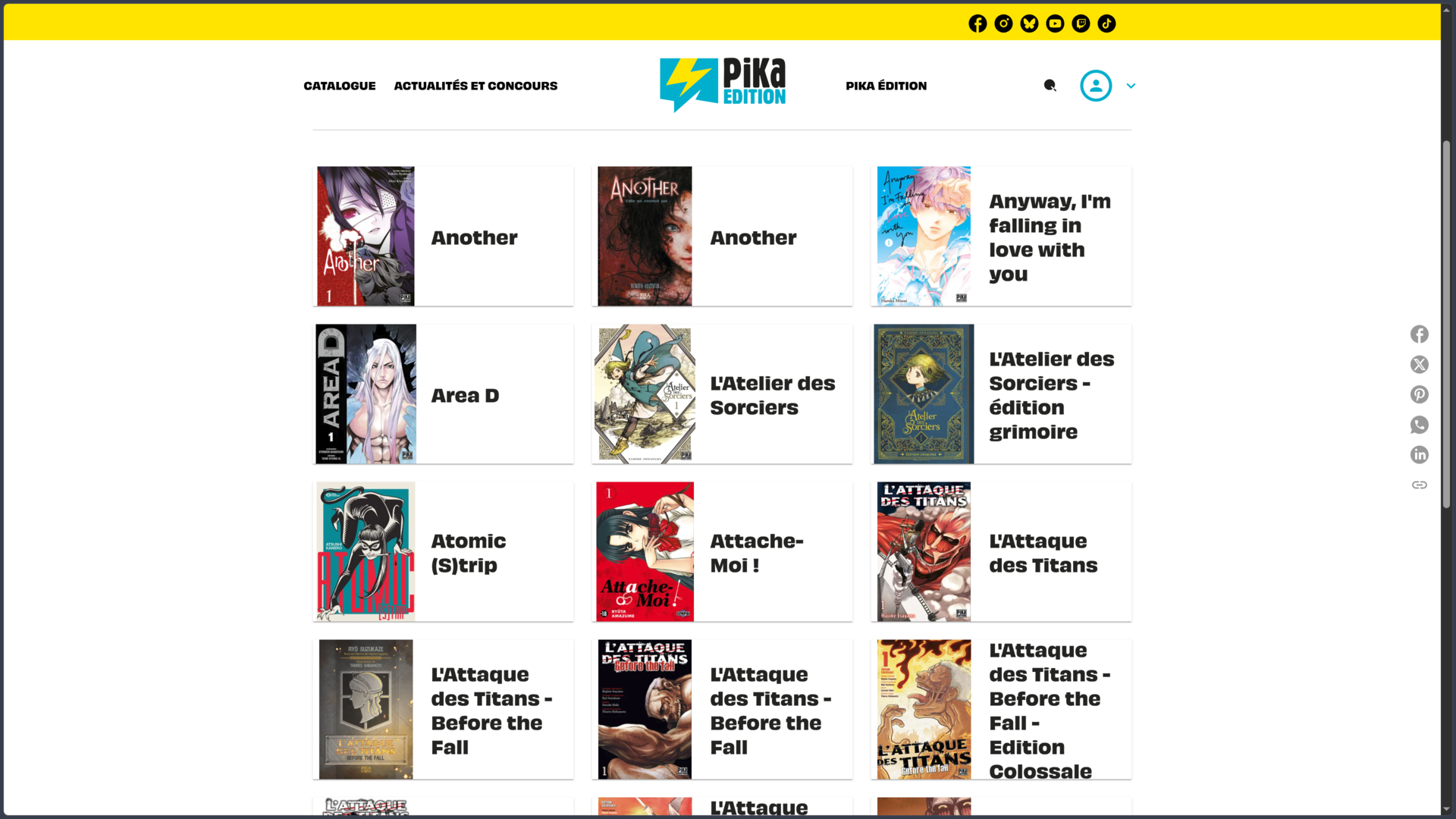
In 2026, the publishing house’s official website presents a catalogue of more than 2,000 titles and over 350 new releases per year, placing Pika among the major players in manga publishing in France.
Its headquarters are located in Vanves, in the Immeuble Louis Hachette.
More than twenty-five years after its creation, Pika therefore represents several successive developments in the French market: the transition of manga from specialist press to bookstores, the growth of major Japanese series, the emergence of French creations in manga format, the development of digital publishing and simulpub, the construction of an editorial heritage and the arrival of Korean webtoons.
History
Before Pika: Player One, Manga Player and the first manga
Pika’s origins go back to the activity of Média Système Édition, often abbreviated as MSE.
Alain Kahn’s company is notably known for Player One, a magazine devoted to video games launched in the early 1990s.
In a context where video games, Japanese animation and manga were beginning to reach a shared audience in France, MSE gradually became interested in Japanese publishing.
This development led to the creation of Manga Player.
The magazine participated in manga serialization in France and made it possible to test a model similar to that of Japanese magazines: regularly offering chapters before their publication as collected volumes.
At the same time, MSE published manga under the Manga Player label.
These notably included Card Captor Sakura by CLAMP and 3x3 Eyes by Yuzo Takada.
This first experience forms the true foundation of Pika.
2000: Alain Kahn and Pierre Valls found Pika Édition
In January 2000, Alain Kahn and Pierre Valls created Pika Édition.
The name comes from the Japanese onomatopoeia pika pika, used to evoke something that shines or sparkles, with an electrical dimension.
Part of the series previously published under Manga Player was transferred to the new publishing house.
Volume 11 of 3x3 Eyes was the first volume published under the Pika brand.
Card Captor Sakura also continued its publication.
Pika therefore immediately began operating as a publishing house almost entirely devoted to manga, at a time when such positioning was still relatively uncommon in France.
2001-2002: GTO and Love Hina establish the publishing house
The first years quickly brought several major successes.
In 2001, Pika published GTO by Tôru Fujisawa.
The series follows Eikichi Onizuka, a former delinquent determined to become a teacher, and combines comedy, criticism of the school system, action and teenage trajectories.
It became one of the titles most durably associated with the Pika catalogue.
The publishing house would later offer several successive editions, demonstrating its ability to keep a work alive long after its first publication.
The same period welcomed Ah! My Goddess and Dragon Head.
In 2002, Love Hina by Ken Akamatsu became the first Pika title to exceed one million copies sold.
These series already showed that manga readership in France was not limited to a single formula.
Romantic comedy, school stories, action, fantasy and thriller all found their place within the same catalogue.
2003-2005: Shônen Collection adopts the serialization model
In January 2003, Pika launched Shônen Collection.
The monthly magazine directly adopted the serialization principle used by Japanese publishers.
Readers could follow several series chapter by chapter before their release in collected volumes.
GetBackers, Tsubasa Reservoir Chronicle and Air Gear were among the works published in the magazine.
This experiment also allowed Pika to test new creations.
It was in Shônen Collection that Reno Lemaire’s early work around Dreamland appeared.
The magazine ended in 2005 after around thirty issues, as its economic model did not allow publication to continue sustainably.
But its importance went beyond its lifespan.
It created a direct connection between the Japanese serialization model and the search for new forms of creation in France.
Dreamland and the emergence of manga created in France
Dreamland occupies a special place in Pika’s history.
Created by Reno Lemaire, the series adopts a format, narrative rhythm and several visual codes associated with manga while being produced by a French creator.
Pika presents it as the first French manga published in a 130 x 180 mm manga format.
After serialization, the series was published in collected volumes in the mid-2000s and became a long-running work.
This approach was still unusual.
French manga was neither an established editorial category nor a clearly identified bookstore segment at the time.
Pika therefore no longer simply imported a Japanese publishing model: the publishing house began supporting local creations capable of appropriating it.
Over the years, Dreamland became the longest-running French manga series published by the house.
Its export to Japan later represented an important symbolic reversal: a French work inspired by manga eventually came to be published on the Japanese market.
Fairy Tail opens a new period of growth
In 2008, Pika began the French publication of Fairy Tail by Hiro Mashima.
The series quickly established itself as one of the major shōnen titles of its generation.
Its universe of wizard guilds, large cast of characters and focus on the bonds between members of Fairy Tail allowed it to build a loyal readership across many volumes.
The franchise took on a considerable place in the Pika catalogue.
It led to limited editions, derivative works, spin-off series and new productions connected to Hiro Mashima’s universe.
Pika later supported other works by the creator, notably Edens Zero.
This long-term relationship with certain mangaka became an important feature of the publishing house.
The catalogue does not rely solely on the one-off acquisition of a title: some collaborations extend across several series and several generations of readers.
Joining Hachette Livre
As Pika grew, its organization also changed.
The publishing house moved closer to Hachette Livre from 2007 onward and joined the group around 2007-2008.
Institutional communications do not all date this integration in exactly the same way: Pika and several group presentations refer to a rapprochement in 2007, while Hachette’s corporate timeline records Pika’s entry into the group in 2008.
The development itself is nevertheless clear.
Pika became a Hachette Livre publishing house while retaining its specialization, catalogue and identity.
This integration notably allowed it to rely on the group’s distribution and logistics structures as the number of publications increased.
2011: the digital catalogue begins to take shape
Pika began developing digital reading relatively early.
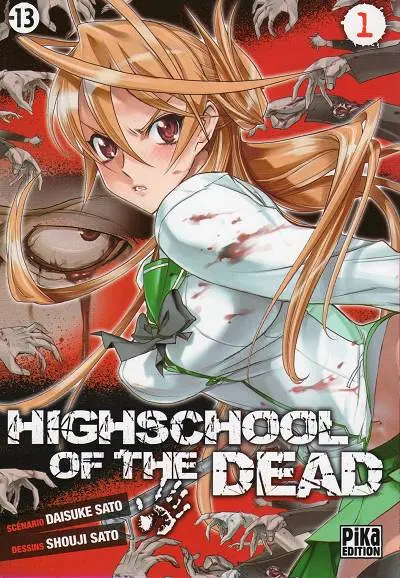
In November 2011, the first ebook marketed by the publishing house arrived in digital bookstores with volume 1 of the color edition of Highschool of the Dead.
Digital publishing then took on an increasing role.
It made it possible to offer new releases in several formats, but also to keep certain works accessible when they were no longer available in print.
This evolution prepared for an even more significant transformation: gradually bringing French publication closer to the Japanese release rhythm.
2012-2013: Sailor Moon, then Attack on Titan
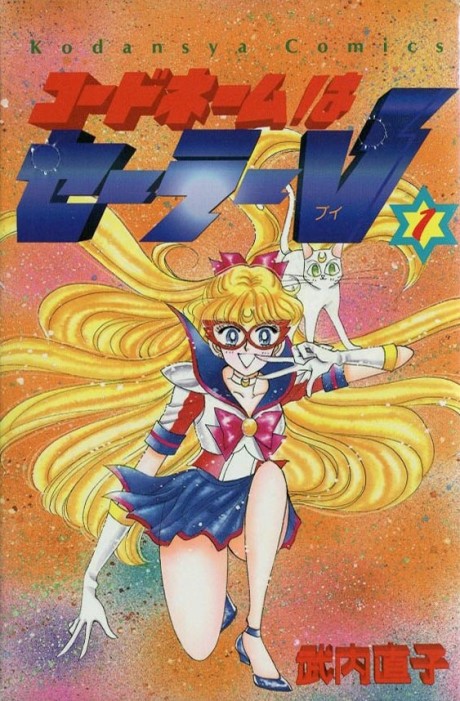
In 2012, Pika published a new French edition of Pretty Guardian Sailor Moon by Naoko Takeuchi.
The series allowed the publishing house to add one of the major historical works of shōjo and the magical girl phenomenon to its catalogue.
The following year marked an even more important turning point with Attack on Titan by Hajime Isayama.
Published in France from 2013, the manga achieved considerable success.
Its universe of cities protected by walls, its Titans and the gradual transformation of its narrative allowed the series to quickly exceed its apparent starting point.
The work became one of Pika’s major franchises throughout the 2010s.
It also contributed to the development of novels, special editions and derivative publications.
2015: bringing French publication closer to Japan with simulpub
In March 2015, Pika began developing simulpub, or simultaneous digital publication.
The principle consists of making certain chapters available in French on a date close to, or even simultaneous with, their Japanese publication.
Attack on Titan was among the first major series involved.
Other titles followed, such as UQ Holder! and Edens Zero.
In 2017, To Your Eternity was even offered in simulpub from its first Japanese chapter, several months before the French publication of the first printed volume.
This development responds to several transformations in readership.
The internet allows readers to follow Japanese releases almost instantly.
French publishing schedules can therefore no longer always operate with delays of several years.
Simulpub seeks to bring the two markets legally closer together while preserving translation and editorial control.
2016: developing Pika Roman and integrating nobi nobi !
The year 2016 marked significant diversification.
Pika launched Pika Roman, a collection devoted to novels from the worlds of manga, Japanese pop culture and imaginative fiction.
The first titles notably included Another and Attack on Titan - Lost Girls.
Your Name. by Makoto Shinkai later joined the collection.
This extension allowed Pika to support certain properties beyond their manga adaptations.
That same year, the children’s manga publishing house nobi nobi ! joined Pika’s environment.
Its catalogue subsequently developed around manga for children, original children’s works and adaptations of properties such as Star Wars and Miraculous.
The Genki collection also allowed the brand to offer titles for an older readership, notably Horimiya.
nobi nobi ! nevertheless retains its own name and identity.
A work published under this brand should be attributed to nobi nobi ! and not automatically to Pika’s main catalogue.
Expanding original creation with H2T
Pika also develops its activity around original French-language creation.
Éditions H2T, specialized since 2016 in digital and print publication of original works inspired by manga categories, joined Pika’s environment.
Its catalogue includes works belonging to shōnen, shōjo, seinen and josei, as well as projects closer to comics or graphic novels.
This integration extends the logic initiated with Dreamland: manga is no longer viewed solely as a catalogue imported from Japan, but also as a language that can be used by creators from other countries.
A new generation: Witch Hat Atelier, Blue Period and Blue Lock
The end of the 2010s and beginning of the 2020s allowed Pika to renew part of its major series.
Witch Hat Atelier by Kamome Shirahama joined the French catalogue in 2018.
Its artwork, magical universe and approach to creation allowed it to reach an audience beyond traditional editorial categories.
Blue Period by Tsubasa Yamaguchi, meanwhile, addresses artistic learning, work, doubt and entrance examinations for art schools.
In 2021, Blue Lock by Muneyuki Kaneshiro and Yusuke Nomura combined football, individual competition and a structure close to a battle royale.
These works demonstrate the evolution of the market.
Major franchises no longer necessarily rely on the same codes as the successes of the 2000s, but Pika continues building its catalogue around series capable of reaching very different audiences.
2022: Pika Masterpiece organizes a manga heritage
After more than twenty years of activity, Pika now has enough perspective to work on more than new releases alone.
In 2022, the publishing house created Pika Masterpiece.
The collection is intended to host works considered important in manga history through particularly carefully produced heritage editions.
This development is significant.
Manga published in France now has its own editorial history.
Certain series can be rediscovered by a new generation in forms different from their first French editions.
Pika thus becomes both a publisher of new releases and a manager of heritage.
2024: Pika Wavetoon opens the catalogue to Korean webtoons
In 2024, Pika launched Pika Wavetoon.
The label is devoted to print publication of Korean webtoons.
Omniscient Reader’s Viewpoint became one of the titles highlighted at its launch.
This creation marks a new geographic and formal expansion.
Pika had historically been built around Japanese manga and French works inspired by it.
The development of webtoon involves another publishing tradition, born primarily from vertical digital reading on smartphones.
Print publication therefore also requires work to adapt the original format.
2025: twenty-five years and more than two thousand titles
In 2025, Pika celebrated its 25th anniversary.
Hachette then presented the publishing house as one of the historical players that helped establish manga in France.
Its journey can be followed through several generations of series: Card Captor Sakura, GTO, Love Hina, Dreamland, Fairy Tail, Sailor Moon, Attack on Titan, Seven Deadly Sins, Witch Hat Atelier and then Blue Lock.
The catalogue now exceeds 2,000 titles and the publishing house releases more than 350 new titles per year.
This growth does not represent only a quantitative increase.
It shows how much the work of a contemporary manga publisher has expanded: rights acquisition, translation, manufacturing, digital publishing, simultaneous release with Japan, collector editions, heritage reissues, French creation, children’s publishing, novels and now webtoons.
What sets it apart
Being born directly from France’s first manga culture
Pika was not created by a major generalist publishing house deciding late in the market’s development to open a manga department.
Its origins run through Player One, Manga Player and the first French experiments with serialization.
This lineage gives it a history directly connected to the emergence of manga culture among French audiences in the 1990s.
When Pika appeared in 2000, the market already existed but was still far from its current maturity.
The publishing house therefore participated in transforming manga from a product still often associated with specialist magazines, animation and fan communities into a permanent sector of French bookstores.
Maintaining a deliberately generalist catalogue
Pika also stands out through the breadth of genres it publishes.
The publishing house is not built solely around action shōnen.
GTO, Card Captor Sakura, Love Hina, Fairy Tail, Attack on Titan, Sailor Moon, Blue Period, Witch Hat Atelier and Blue Lock do not respond to the same expectations.
This diversity allows the publishing house to accompany changes in the tastes of a readership that has itself expanded considerably.
The shōnen, shōjo and seinen categories remain useful for organizing part of the catalogue, but they are no longer enough to explain all of its diversity.
Supporting series across several generations of editions
Some Pika titles have existed in its catalogue for more than twenty years.
The publishing house does not simply publish their first volumes and then move on to new releases.
GTO, Card Captor Sakura, Sailor Moon and other series can receive several reissues, new formats or presentations.
Limited and collector editions developed around Fairy Tail, Attack on Titan, Seven Deadly Sins and Witch Hat Atelier also extend the relationship with readers.
With Pika Masterpiece, this logic becomes explicitly heritage-focused.
A manga work can now be treated as a classic whose edition, translation, format and production deserve to be reworked.
Not limiting manga to Japanese creators
One of Pika’s most distinctive traits remains its early investment in French creation inspired by manga.
Dreamland is the main example.
At the time of its beginnings, the idea that a French creator could sustainably publish a series in manga format did not yet have the legitimacy it can have today.
The longevity of Reno Lemaire’s work shows that this boundary between geographic origin and graphic language can be crossed.
The arrival of H2T extends this approach with other original creations.
Pika therefore operates both as a French publisher of Japanese manga and as a supporter of original works using manga codes.
Adapting publishing rhythms to new uses
Pika has regularly experimented with different ways of bringing its publications closer to reading habits.
Shônen Collection adopted the Japanese serialization model in the early 2000s.
Digital publishing appeared from 2011 onward.
Simulpub then brought certain chapters closer to their Japanese release from 2015.
Limited and collector editions simultaneously gave printed books an additional dimension.
Finally, Pika Wavetoon adapts to print works originally designed for vertical digital reading.
These transformations show that the profession no longer consists only of translating and then printing Japanese volumes.
It also requires thinking about the rhythm, medium and format through which readers discover works.
Expanding its territory without losing manga as its center
Pika now publishes more than traditional Japanese manga.
Pika Roman explores novels.
Pika Graphic opens the catalogue to other forms of Asian comics.
nobi nobi ! develops a children’s environment.
Pika Masterpiece works with heritage.
Pika Wavetoon welcomes Korean webtoons.
These extensions nevertheless remain organized around the same cultural environment.
The publishing house is not becoming a generalist literature publisher.
Its identity continues to rest primarily on manga, its readers, its creators, related forms and the publishing cultures surrounding it.
Belonging to Hachette Livre while remaining a specialized publishing house
Pika is part of a publishing group much broader than its own catalogue.
Hachette Livre publishes literature, children’s books, education, practical books, tourism and many other fields.
Pika nevertheless retains its status as a specialized publishing house.
Its legal notices still identify Pika Edition as the publishing company, and the Pika, Pika Edition and Pika Wavetoon brands are its own.
This distinction is important for PANACHES CULTURE.
A work published by another Hachette group publishing house should not be attributed to Pika.
Conversely, manga published in France by Pika should be linked to this publishing house even when their distribution and logistics use Hachette’s broader infrastructure.
Good to know
- Pika Édition was founded in January 2000 by Alain Kahn and Pierre Valls as a continuation of Média Système Édition and its manga activities.
- The name Pika comes from the Japanese onomatopoeia pika pika, associated with something bright or sparkling.
- The first volume published under the Pika brand was volume 11 of 3x3 Eyes, whose publication had begun under the Manga Player label.
- Card Captor Sakura was also among the series transferred when the publishing house was created, before GTO became one of its first major successes in 2001.
- Love Hina was the first Pika title to exceed one million copies sold in France.
- Pika published Shônen Collection from 2003 to 2005, a monthly serialization magazine inspired by the operating model of Japanese publishers.
- Dreamland by Reno Lemaire emerged from this environment before becoming the longest-running French manga series published by Pika and later being exported to Japan.
- Fairy Tail, published by Pika from 2008 onward, then Attack on Titan from 2013, are among the franchises that most strongly shaped the recent history of the publishing house.
- Pika launched its first digital catalogue in 2011 and then began simulpub in 2015 to bring certain French chapters closer to their Japanese publication.
- In 2016, Pika developed Pika Roman and integrated the children’s manga publishing house nobi nobi ! into its environment, while the latter retained its own editorial identity.
- Pika Masterpiece was created in 2022 for heritage editions, while Pika Wavetoon launched in 2024 to publish Korean webtoons in print format.
- Pika now belongs to Hachette Livre, is headquartered in Vanves and in 2026 presents a catalogue of more than 2,000 titles with over 350 new releases per year.