
Overview
Warner Bros. Games is the Warner Bros. division dedicated to video games. Based in Burbank, California, it operates as a publisher, developer, licensor and distributor across consoles, PC and mobile, both for productions developed by its own studios and for games created with external partners.
The modern entity was created in 2004 under the name Warner Bros. Interactive Entertainment, alongside the WB Games brand intended for its publishing activities. It gradually adopted the Warner Bros. Games name in the early 2020s, but its general principle remained the same: building a video game business capable of using Warner group properties while developing its own franchises and working with licenses belonging to other companies.
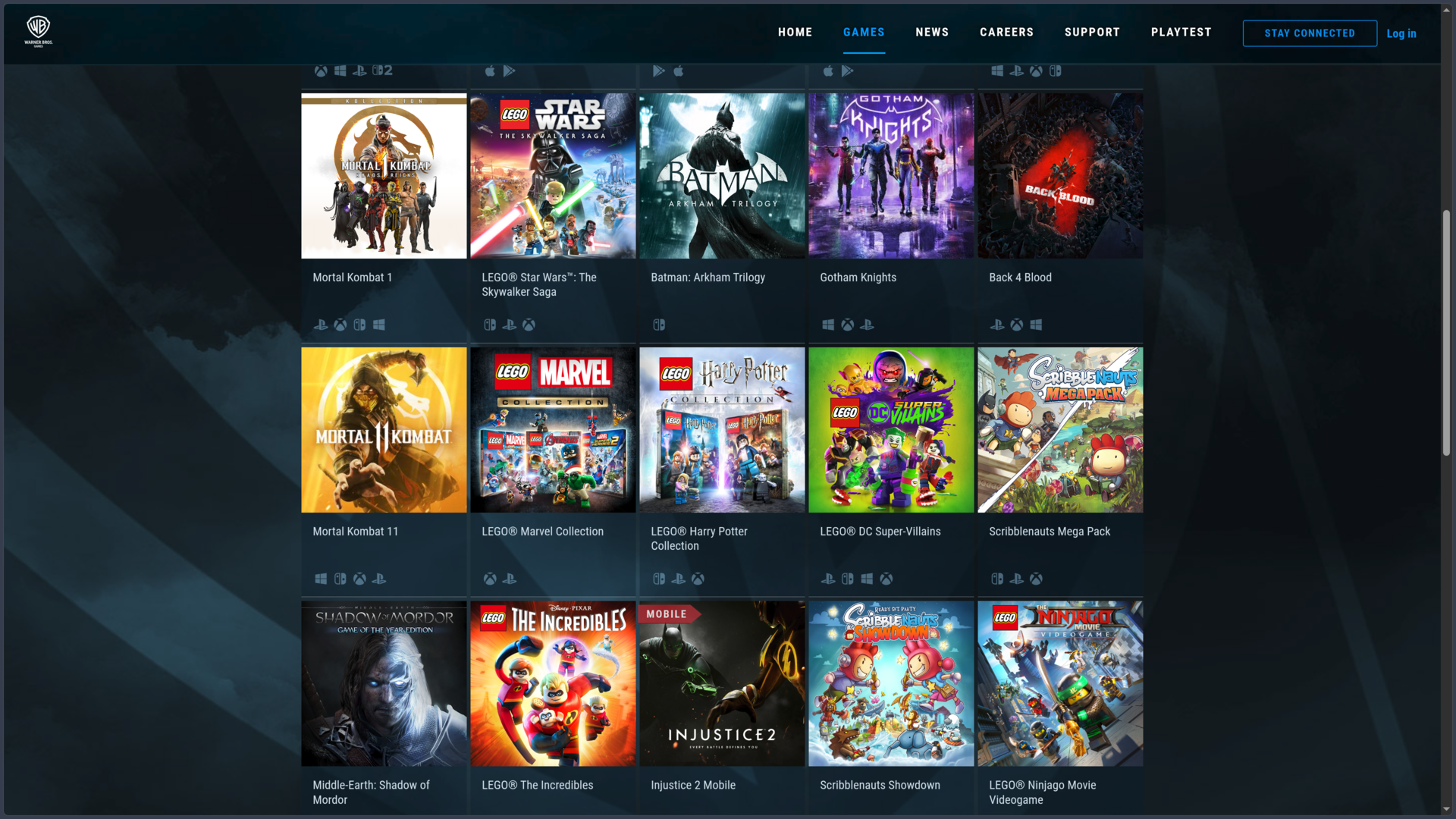
This position gives it a particularly cross-disciplinary catalogue. Warner Bros. Games can publish a DC game developed by Rocksteady or WB Games Montréal, a Mortal Kombat designed by NetherRealm Studios, a Harry Potter production under the Portkey Games label, a LEGO game developed by TT Games or a Game of Thrones title produced by its Boston team.
However, these works do not all follow the same ownership model.
Mortal Kombat has belonged to Warner Bros. since the acquisition of a significant portion of Midway Games’ assets in 2009.
DC characters, including Batman, Superman and Wonder Woman, belong to the Warner Bros. ecosystem and can move between film, television, animation, comics and games.
Harry Potter productions use the Wizarding World within the rights held and operated by Warner Bros., with the Portkey Games label dedicated to video game experiences in this universe.
LEGO games, by contrast, rely on partnerships with The LEGO Group and, depending on the production, with other license owners such as Lucasfilm, Marvel or DC.
This variety makes it essential to distinguish between publisher, development studio and intellectual property owner. Batman: Arkham Knight is developed by Rocksteady Studios and published by Warner Bros. Games. Hogwarts Legacy is developed by Avalanche Software and published under the Portkey Games label. Modern Mortal Kombat games are developed by NetherRealm Studios. LEGO productions are primarily associated with TT Games.
Warner Bros. Games has precisely the studio network needed to combine these different approaches. NetherRealm Studios, Rocksteady Studios, TT Games, Avalanche Software, WB Games Montréal and WB Games Boston are among the teams that have played or continue to play a major role in this organization. Other structures handle technical, mobile or support functions.
The publisher has also experienced major changes within its network. Monolith Productions, the first major studio acquired by Warner Bros. Interactive Entertainment, was closed in 2025 along with Player First Games and WB Games San Diego. This restructuring followed several productions with mixed results and further refocused investment around four groups considered priorities: Harry Potter, Mortal Kombat, DC and Game of Thrones.
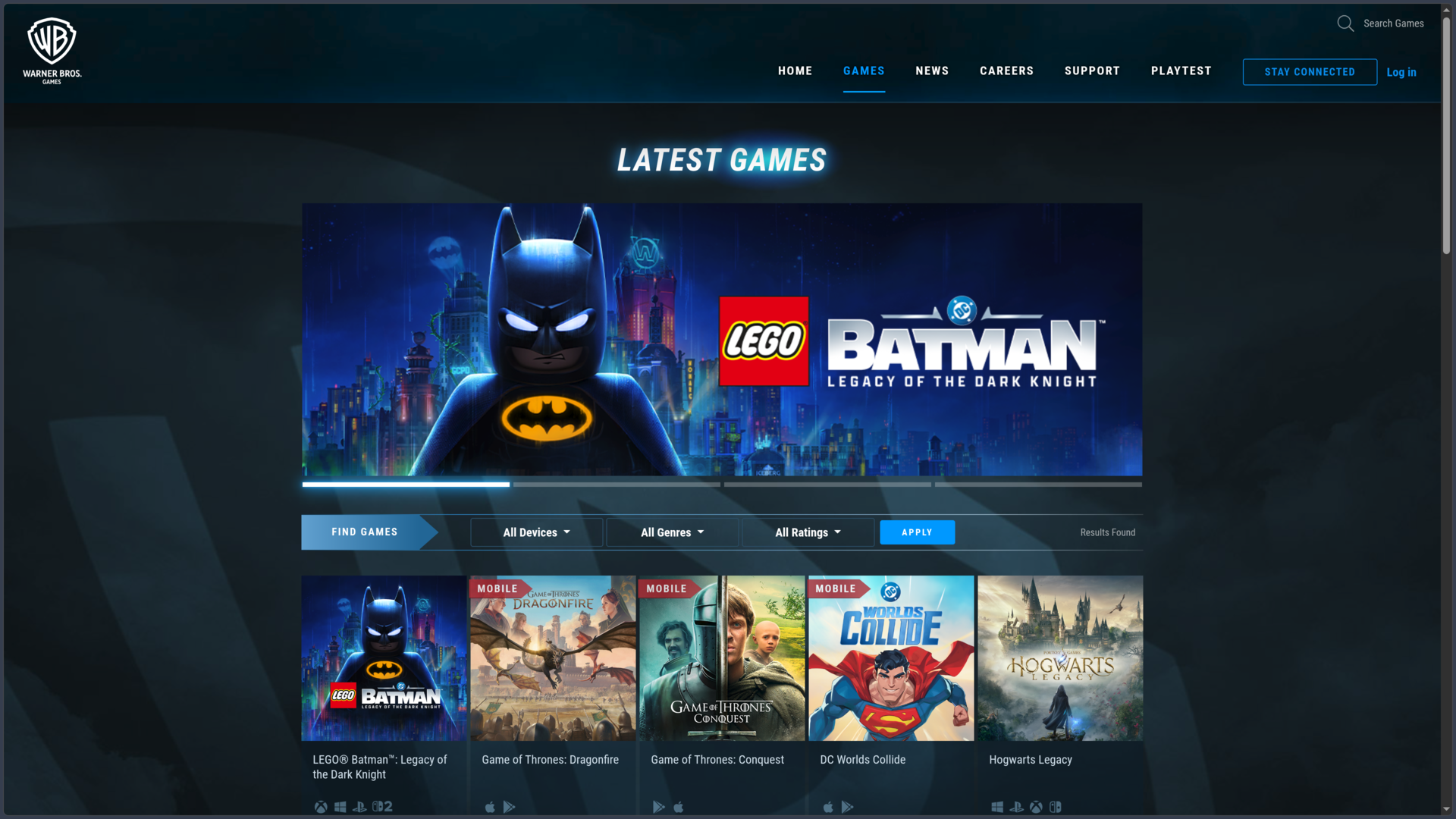
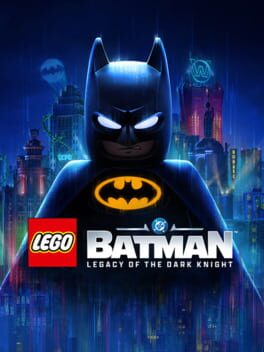
In 2026, this direction can be seen in the productions highlighted by the publisher. TT Games develops LEGO Batman: Legacy of the Dark Knight, published by Warner Bros. Games around Batman and the LEGO license, while WB Games Boston develops the mobile game Game of Thrones: Dragonfire.
Warner Bros. Games therefore remains a publisher deeply connected to the audiovisual and cultural properties of its group, but its history cannot be reduced to adapting films. Mortal Kombat, the Batman: Arkham series, LEGO games, Middle-earth: Shadow of Mordor, Hogwarts Legacy and Scribblenauts demonstrate several very different ways of transforming existing or acquired properties into lasting video game franchises.
History
2004: creating a true video game division
Warner Bros. had been licensing properties for video games long before 2004, notably through Warner Bros. Consumer Products and agreements with various publishers.
But in the early 2000s, the group decided to strengthen its direct involvement in the industry.
In January 2004, the creation of Warner Bros. Interactive Entertainment was announced, accompanied by the WB Games brand under which its productions would be published.
This structure marked an important evolution. Warner Bros. no longer wanted only to license its characters and universes to external companies. The group sought to develop genuine publishing expertise capable of selecting projects, managing their production and gradually building its own development teams.
That same year, Warner Bros. acquired Monolith Productions, an American studio founded in 1994.
Monolith therefore became one of the first internal foundations of this new activity.
The acquisition was significant: rather than relying exclusively on contracted developers, Warner began directly integrating creators capable of producing games for its catalogue.
Gradually building a studio network
The strategy took on a new dimension with the acquisition of TT Games in 2007.
The British group had already established itself through the success of LEGO games, particularly LEGO Star Wars.
Its integration gave Warner Bros. a team specialized in a very particular form of adaptation: taking well-known universes and rebuilding them through LEGO aesthetics, humor and mechanics.
This activity became extremely long-lasting.
LEGO games gradually covered Batman, Harry Potter, The Lord of the Rings, Jurassic World, Marvel, DC and Star Wars depending on available licensing agreements.
TT Games thus demonstrated one of the future strengths of Warner Bros. Games: working with highly recognizable properties without necessarily treating them as simple reproductions of films or television series.
2009: the acquisition of Midway assets changes the scale of the catalogue
In 2009, the bankruptcy of Midway Games presented Warner Bros. with a decisive opportunity.
Warner Bros. Entertainment acquired a large portion of Midway’s American assets, including the Mortal Kombat franchise, several historic properties and the Chicago studio associated with development of the series.
This transaction gave Warner a video game franchise that did not depend on a film or television adaptation.
Mortal Kombat already had its own history, characters and a community built since the arcade era of the early 1990s.
The Chicago team later became NetherRealm Studios, led by Ed Boon.
Starting with Mortal Kombat in 2011, NetherRealm rebuilt the series around a new continuity while simultaneously developing Injustice, a fighting game using DC characters.
The relationship between Warner Bros. Games, NetherRealm and DC therefore allowed a specific gameplay expertise — fighting games — to move between a property born in video games and one originating in comics.
Batman: Arkham establishes Warner among major AAA publishers
The same period strongly transformed the image of Warner Bros. Games thanks to Batman: Arkham Asylum, developed by Rocksteady Studios and released in 2009.
The game demonstrated that a superhero license could become the foundation of a genuine gameplay proposition rather than simply an adaptation accompanying the release of a film.
Exploration, stealth, close combat and work on the Batman universe gave the project its own identity.
Warner Bros. then acquired Rocksteady in 2010.
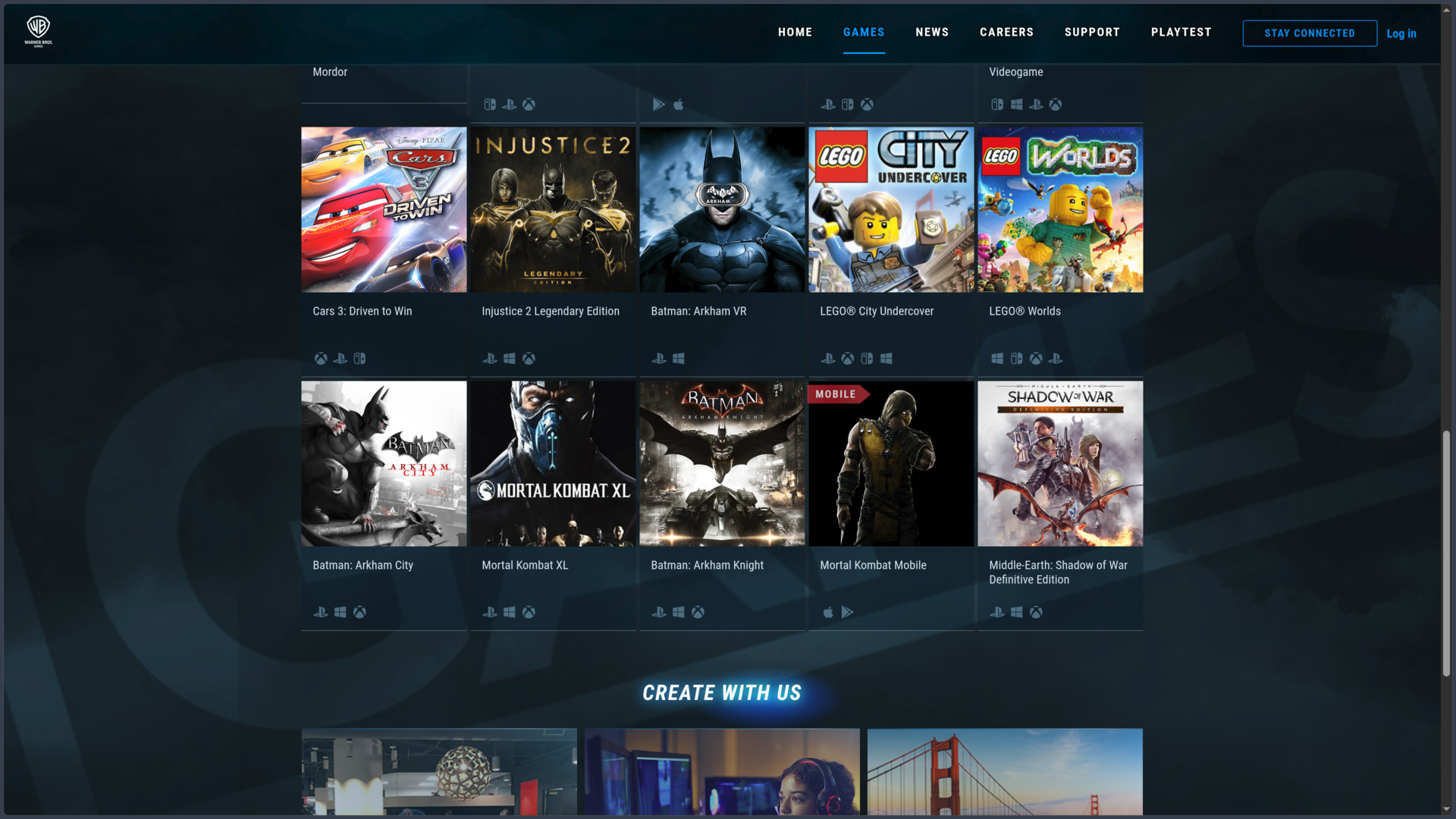
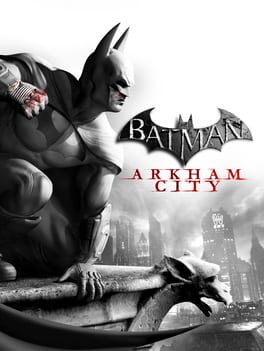
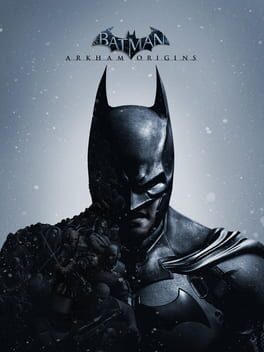
Batman: Arkham City expanded the formula in 2011, while WB Games Montréal developed Batman: Arkham Origins in 2013. Rocksteady then concluded its main trilogy with Batman: Arkham Knight in 2015.
The series became one of the pillars of the catalogue and broadly influenced how superhero games could be designed.
It also demonstrated how the Warner network operates: the same property can be used by several studios while retaining shared publishing oversight.
Mortal Kombat, DC and LEGO games consolidate the model
During the 2010s, Warner Bros. Games built a significant part of its visibility around three major families.
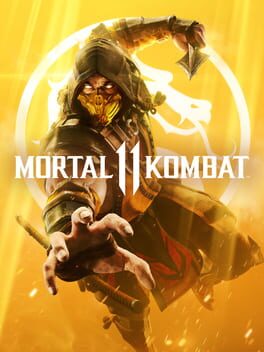
The first relied on Mortal Kombat and NetherRealm’s fighting games. Mortal Kombat X, Injustice 2, Mortal Kombat 11 and then Mortal Kombat 1 extended this activity.
The second used DC properties, with Batman as the central figure but also heroes and villains brought together in Injustice or various mobile productions.
The third relied on TT Games and LEGO, whose adaptations covered both franchises belonging to Warner and universes originating from other groups.
This final category particularly demonstrates that Warner Bros. Games is not simply a tool for exploiting its own properties.
The publisher can build a catalogue from complex partnerships in which the developer, publisher, LEGO brand and owner of the adapted universe are four distinct parties.
Monolith and Middle-earth: treating a license as a system
Monolith Productions simultaneously developed Middle-earth: Shadow of Mordor, released in 2014.
The game uses the Middle-earth universe but develops an original adventure and, above all, the Nemesis System, which generates relationships between the player and different enemies within a dynamic hierarchy.
Middle-earth: Shadow of War extended this approach in 2017.
These productions illustrate another way Warner Bros. Games can use a license: the existing material provides the world and part of its identity, but the developer must create a gameplay system strong enough to exist independently of simple brand recognition.
Monolith therefore became one of the most distinctive studios in Warner’s network for several years before its closure in 2025.
Portkey Games and the major return of the Wizarding World
In 2017, Warner Bros. Games created Portkey Games, a label specifically dedicated to games inspired by the Wizarding World.
The label is not itself a development studio.
It serves as a publishing framework for different teams working within the Harry Potter universe.
This organization notably produced mobile experiences before taking on an entirely different scale with Hogwarts Legacy.
Developed by Avalanche Software, which had joined Warner Bros. Games after the closure of Disney Infinity, Hogwarts Legacy was released in 2023.
The game offers an open-world adventure set long before the events of the Harry Potter novels and allows players to embody their own Hogwarts student.
Its commercial success gave the franchise a particularly important position in Warner Bros. Games’ strategy.
The operation of Portkey Games once again highlights the difference between a publishing label and a studio: Avalanche Software develops Hogwarts Legacy, while Warner Bros. Games publishes it under the Portkey Games label.
2022: joining Warner Bros. Discovery
In April 2022, the merger of WarnerMedia and Discovery created Warner Bros. Discovery.
The gaming activities joined the new organization alongside the rest of Warner’s properties.
This integration further increased the potential importance of connections between video games, cinema, television, HBO and DC, but it also occurred during a period when the economics of AAA production became more difficult.
Warner Bros. Games continued to operate several models: solo productions, mobile games, multiplayer, licensed projects and games designed to run for several years.
The results, however, became highly uneven.
Hogwarts Legacy established itself as a major success in 2023, while Suicide Squad: Kill the Justice League, developed by Rocksteady and released in 2024, did not meet expected performance.
The free-to-play fighting game MultiVersus, developed by Player First Games, also followed a difficult trajectory despite Warner Bros. Games acquiring the studio in 2024.
These differences led to a major strategic review.
2025: closing three studios and refocusing investment
In February 2025, Warner Bros. Games announced the closure of Monolith Productions, Player First Games and WB Games San Diego.
The Wonder Woman project developed by Monolith was also cancelled.
The decision marked a significant break.
Monolith had been one of the first studios integrated into the division in 2004 and had notably developed F.E.A.R., the Middle-earth: Shadow games and their Nemesis System.
Warner Bros. Games then explained that it wanted to focus its investments more heavily around its essential properties: Harry Potter, Mortal Kombat, DC and Game of Thrones.
This refocusing does not mean that all other licenses disappear, but it provides a clearer indication of the universes around which the group intends to organize its major investments.
The departure of David Haddad, who had led the division for more than a decade, also accompanied this period of transformation.
2026: returning to core franchises through several production models
In 2026, Warner Bros. Games’ strategy remains visible through very different productions.
LEGO Batman: Legacy of the Dark Knight, developed by TT Games and published in May, combines several of the publisher’s historic strengths: DC, Batman, the partnership with LEGO and an internal studio specialized in this license for many years.
The project also demonstrates that Warner Bros. Games continues to invest in large productions intended for consoles and PC.
At the same time, Game of Thrones: Dragonfire, developed by Warner Bros. Games Boston and launched in June, represents the other side of its activity with a Free-to-Play strategy game designed for mobile.
The Boston studio has worked on this universe for several years, notably with Game of Thrones: Conquest.
These two productions illustrate the contemporary structure of the publisher: the same company can use its major properties through AAA games, partner licenses and mobile experiences designed to be supported over the long term.
In August 2026, Warner Bros. Games remains part of Warner Bros. Discovery. The group is the subject of a proposed acquisition by Paramount Skydance, but this transaction has not yet been finalized. The company’s future structure should therefore not be presented as already effective.
What sets it apart
Turning a catalogue of film, television and comics into playable properties
Warner Bros. Games has a rare advantage for a publisher: access to an enormous collection of properties from several media.
DC, Batman, Harry Potter and Game of Thrones can become games without Warner needing to build their recognition from scratch.
But having a famous license does not automatically guarantee a good game.
The publisher’s most important productions show precisely that success comes when the property finds an appropriate mechanical translation.
Batman: Arkham builds its identity around combat, stealth and Batman’s mobility.
Hogwarts Legacy turns Hogwarts and its surroundings into an exploration space.
Injustice adapts DC characters to the language of fighting games developed by NetherRealm.
Warner Bros. Games’ role therefore consists less of reproducing the original works than of finding studios capable of transforming them into coherent interactive experiences.
Owning its studios while preserving a distinct identity for each one
Warner Bros. Games operates as an integrated publisher, but its studios are not simply anonymous teams executing the same formula.
NetherRealm Studios specializes in fighting games.
Rocksteady Studios is associated with the Batman: Arkham series and its approach to third-person action.
TT Games has specific expertise in LEGO games.
Avalanche Software develops large-scale adventures around established licenses.
WB Games Boston works particularly on mobile games and persistent experiences.
This specialization allows the publisher to match a property with the team whose expertise best suits the project.
It also makes the distinction between Warner Bros. Games and its studios essential within PANACHES CULTURE: the publisher should not be presented as the direct developer of every work in its catalogue.
Mixing internal properties, acquired franchises and partner licenses
Warner’s catalogue relies on several levels of ownership.
Mortal Kombat entered the company through the acquisition of Midway assets.
DC characters belong to the same Warner Bros. group but historically originate from comics.
Harry Potter productions rely on exploitation rights to the Wizarding World and are grouped under Portkey Games.
LEGO games require partnerships with The LEGO Group and sometimes a third license owner.
This diversity requires Warner Bros. Games to master both management of internal properties and collaboration with external partners.
It explains why two games published under the same logo can have completely different legal and creative structures.
Using labels to organize certain universes
Portkey Games illustrates another distinctive aspect of the publisher.
Rather than assigning an entire property to a single studio, Warner Bros. Games can create a label serving as a framework for several productions developed by different teams.
The label guarantees that they belong to the same publishing universe without becoming the developer of the games itself.
This logic makes it possible to multiply formats — console, PC or mobile — while maintaining a recognizable identity around a franchise.
Making AAA, mobile and long-running games coexist
Warner Bros. Games is not exclusively a publisher of large solo adventures.
Its catalogue also includes competitive fighting games, mobile productions, Free-to-Play experiences and titles receiving additional content for several years.
Mortal Kombat notably relies on a strong competitive dimension and additional content.
WB Games Boston productions make greater use of mobile strategy mechanics and persistent progression.
The major games from TT Games or Avalanche Software remain closer to the traditional Premium model.
This coexistence allows Warner to use the same property in several ways depending on the intended audience and platform.
A strategy now refocused on a few major franchises
The 2025 restructuring nevertheless marks an important evolution.
After accumulating studios and properties for nearly two decades, Warner Bros. Games reduced its network and identified Harry Potter, Mortal Kombat, DC and Game of Thrones as its main investment priorities.
This concentration corresponds to a model more strongly based on franchises capable of existing simultaneously across several media and several generations of games.
The productions of 2026 show that this refocusing does not impose a single type of gameplay. Batman can return through an open-world LEGO adventure while Game of Thrones simultaneously develops as a mobile strategy game.
The common factor lies more in the strength of the properties used and in the Warner network’s ability to associate them with specialized studios.
Good to know
- Warner Bros. Games was created in January 2004 under the name Warner Bros. Interactive Entertainment, accompanied by the WB Games brand.
- The publisher is based in Burbank, California, and operates across consoles, PC and mobile platforms.
- Monolith Productions was one of the first major studios acquired by the division in 2004; Warner Bros. Games closed the studio in 2025.
- Warner Bros. acquired TT Games in 2007, giving the group a major player in LEGO video game adaptations.
- In 2009, Warner Bros. acquired a significant portion of Midway Games’ assets, including the Mortal Kombat franchise and its Chicago development team.
- This team became NetherRealm Studios, developer of the modern Mortal Kombat and Injustice series.
- Rocksteady Studios joined Warner Bros. in 2010 following the success of Batman: Arkham Asylum and developed several of the main installments in the Arkham series.
- Portkey Games, created in 2017, is a Warner Bros. Games label dedicated to Wizarding World video game experiences; it should not be confused with a development studio.
- Hogwarts Legacy is developed by Avalanche Software and published by Warner Bros. Games under the Portkey Games label.
- In 2025, Warner Bros. Games closed Monolith Productions, Player First Games and WB Games San Diego and refocused its investments around Harry Potter, Mortal Kombat, DC and Game of Thrones.
- In 2026, LEGO Batman: Legacy of the Dark Knight is developed by TT Games while Game of Thrones: Dragonfire is developed by WB Games Boston, with both published by Warner Bros. Games.
- In August 2026, Warner Bros. Games remains an activity of Warner Bros. Discovery; the proposed acquisition of the group by Paramount Skydance is still in progress and should not be presented as finalized.