Presentation
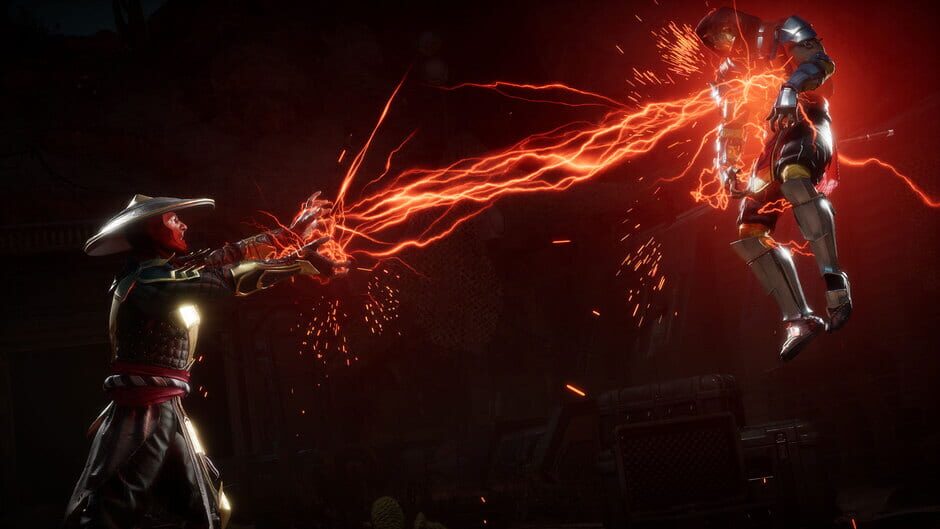
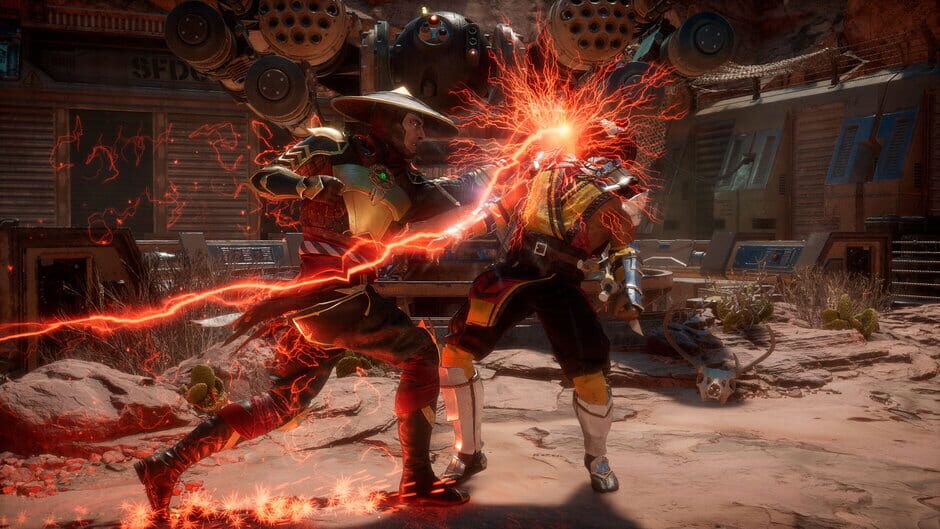
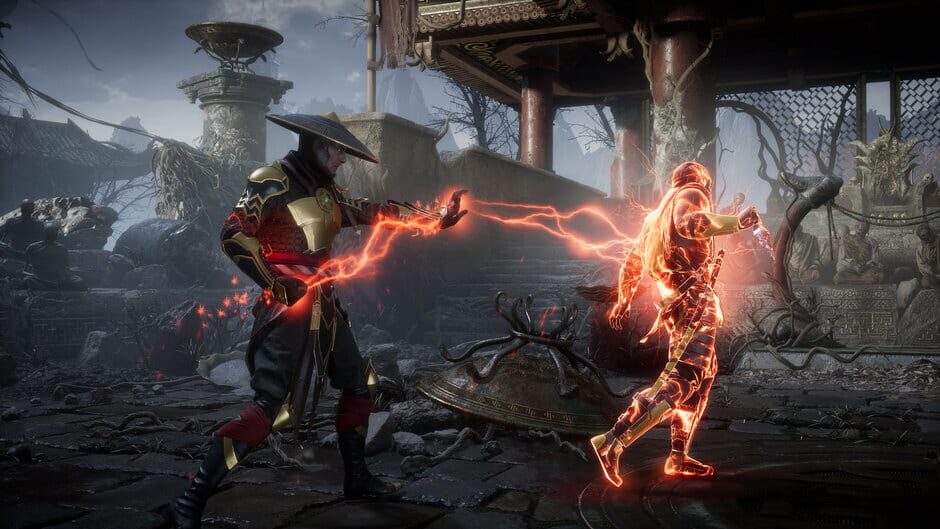
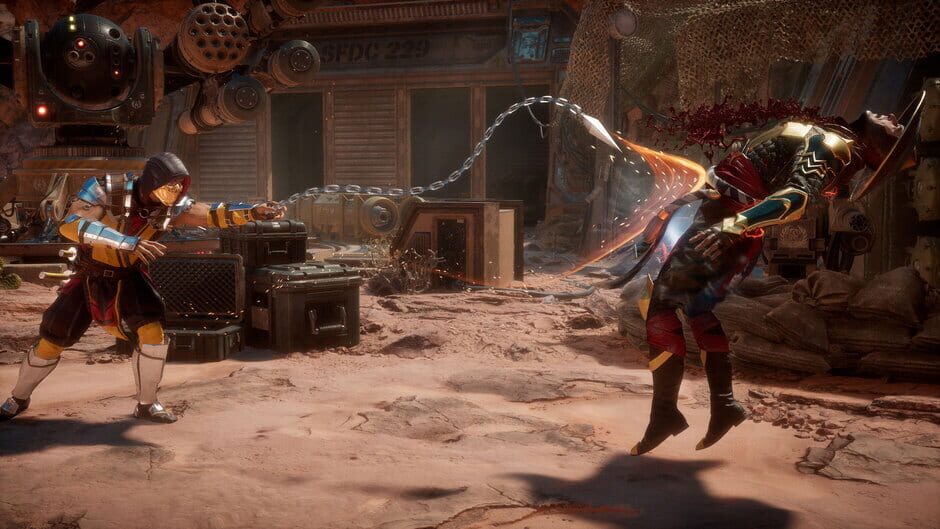
Mortal Kombat 11 continues the two-dimensional fighting system used by NetherRealm since the 2011 reboot, but noticeably slows the pace compared with Mortal Kombat X. Movement and exchanges place greater emphasis on spacing, normal attacks, defensive openings and the ability to punish mistakes.
Resource management is divided between offensive and defensive gauges that regenerate automatically. They power different attack extensions or defensive options and prevent every decision from depending on a single shared meter. The player must therefore consider separately the resources needed to extend offense and those they want to preserve for protection.
Fatal Blows replace X-Rays as the major cinematic attack available during combat. They become accessible once a character has lost a large portion of their health and can inflict significant damage if they connect. Their presence creates a particular threat late in a round without requiring the player to first fill a special gauge.
Krushing Blows also use spectacular sequences but depend on precise conditions tied to specific attacks. Punishing a move, completing a particular sequence or fulfilling a character-specific requirement can trigger these enhanced versions. Their use therefore requires more anticipation than simply amplifying a special move.
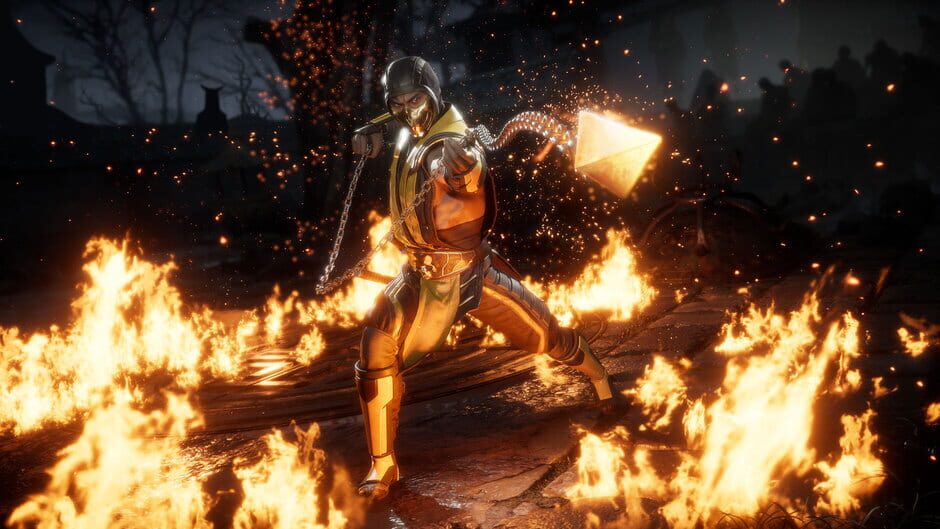
The fighters retain strongly defined identities. Scorpion plays around his spear, teleportation and mid-range pressure, Sub-Zero relies on his ice techniques, while Johnny Cage, Kitana, Kabal, Jade and Baraka develop very different approaches. Newcomers Geras, Cetrion and Kollector introduce powers tied to time, the elements or multiple weapons.
The Custom Character Variation System allows part of each fighter’s equipment, appearance and abilities to be modified. Skins, Gear pieces, intros, taunts, Brutalities and other rewards provide different presentations for the same character, while the selection of certain abilities changes gameplay more directly.
This customization is largely fed by the many solo modes. Klassic Towers retain a structure close to traditional arcade play, while Towers of Time offer rotating sets of battles with special conditions, specific opponents and modifiers capable of drastically changing an encounter.
These modifiers can introduce projectiles, environmental hazards or outside assistance. They sometimes move Towers of Time away from the balance of traditional competitive fighting and closer to a space focused on progression, rewards and experimentation with equipment.
The Krypt returns in a much more exploratory form. The player explores Shang Tsung’s Island in third person, revisits several locations associated with the history of the series, solves a few mechanisms and uses different currencies to open chests or access new areas. It functions as a separate space mainly dedicated to obtaining customization items and various rewards.
Multiplayer retains local and online fights, joined notably by the Kombat League with its seasons and competitive progression. The depth of the system depends heavily on character knowledge, spacing, defensive timing and the ability to recognize situations where an opponent can be punished.
The cinematic campaign remains one of the game’s major components. As in previous NetherRealm productions, it alternates cutscenes with chapters devoted to different playable characters. This time, the temporal collision allows several generations of the series to meet and lets certain figures directly confront their own past.
Johnny Cage, for example, meets a younger version of himself still dominated by his arrogance, while several characters discover what they will become or what they will lose. This gives time travel a purpose beyond simply bringing back old fighters and allows the game to revisit the evolution of the timeline that began with Mortal Kombat in 2011.
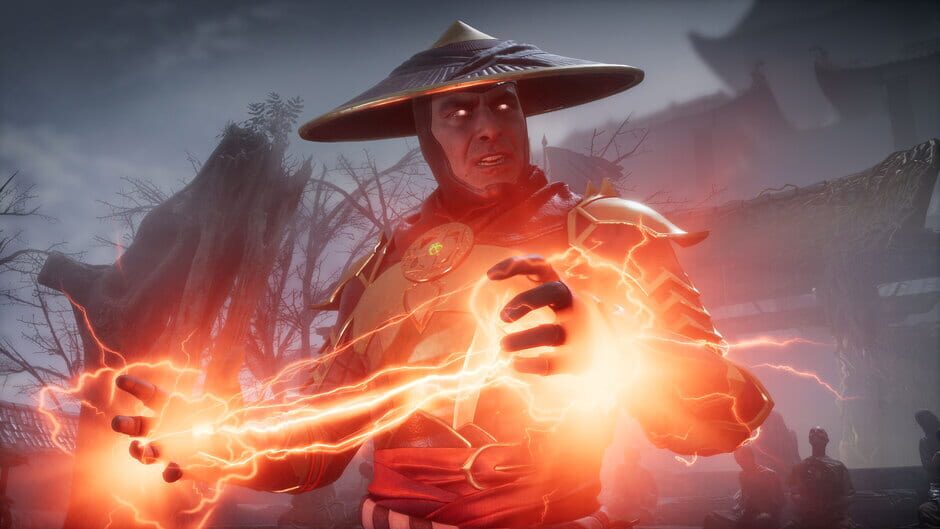
Kronika occupies a particular position in this story. She is not simply another antagonist seeking to conquer a realm: her control over time allows the game to place the entire NetherRealm trilogy within a succession of cycles she has attempted to control. The conflict between Raiden and Liu Kang in particular becomes a central element of that manipulation.
Violence naturally remains an essential part of the visual identity. Fatalities and Brutalities continue the tradition of extremely detailed dismemberment and bodily destruction, while Fatal Blows and Krushing Blows use slow motion, internal views and close-ups to make impacts deliberately excessive.
With Aftermath, NetherRealm directly extends the campaign of a Mortal Kombat game through a story expansion for the first time. Shang Tsung, Fujin and Nightwolf become essential to restoring time after the confrontation with Kronika, while Sheeva and RoboCop also join the roster through the expansion. The story mainly exploits the difficulty of trusting Shang Tsung when he becomes indispensable to Liu Kang’s plan.
What to remember
- A direct sequel to Mortal Kombat X built around Kronika, Keeper of Time, who seeks to rewrite the history of the realms.
- The collision of several eras allows past and present versions of many fighters to meet.
- A more measured fighting system than Mortal Kombat X, with greater emphasis on spacing, openings and defensive management.
- Fatal Blows serve as powerful comeback attacks late in a fight, while Krushing Blows reward specific conditions.
- The Custom Character Variation System allows the appearance and part of each fighter’s abilities to be customized.
- Towers of Time expand solo play through rotating challenges, modifiers and rewards.
- The Krypt turns Shang Tsung’s Island into an explorable space dedicated to discovering numerous unlockables.
- The Aftermath expansion directly continues the campaign with Shang Tsung, Fujin and Nightwolf at the center of a new struggle to control history.
Conclusion
Mortal Kombat 11 uses time travel to bring together several eras of the series, but its main interest comes from the confrontation between the characters and their own history. Johnny Cage observes the arrogance of his younger self, Kitana encounters an Outworld still dominated by Shao Kahn, and Raiden eventually realizes that his conflict with Liu Kang is part of a cycle far older than their recent disagreements.
This structure allows NetherRealm to conclude the timeline begun with the 2011 reboot while revisiting several of its transformations. Liu Kang’s progression from champion to revenant and then to divinity becomes especially important, gradually shifting the center of power once occupied by Raiden.
Combat adopts a more deliberate pace than in the previous entry. Fatal Blows and Krushing Blows preserve the spectacular violence expected from the series, but much of each fight depends more heavily on spacing, knowledge of the opponent’s attacks and decisions made outside long offensive combos.
The amount of content gives the game another dimension. Campaign, Towers, Towers of Time, Krypt, customization and online competition provide very different motivations. This abundance is accompanied, however, by a heavy presence of reward systems, currencies and unlockables that can make progression more complicated than it needs to be.
Aftermath ultimately completes this period by refusing to end the story with the first confrontation against Kronika. Shang Tsung’s return turns the reconstruction of time into another game of manipulation and prepares the shift in universe that follows. Mortal Kombat 11 therefore becomes both the culmination of the trilogy opened in 2011 and the transition point toward the new timeline later developed by Mortal Kombat 1.
Good to know
- Mortal Kombat 11 was developed by NetherRealm Studios and published by Warner Bros. Interactive Entertainment.
- The game was released on April 23, 2019, for PlayStation 4, Xbox One, Nintendo Switch and PC.
- The story takes place after Mortal Kombat X and introduces Kronika, Keeper of Time and the first female boss in the history of the series.
- Geras, Cetrion and Kollector are among the new fighters introduced in this entry.
- The first Kombat Pack adds Shang Tsung, Nightwolf, Sindel, Terminator T-800, Joker and Spawn.
- Mortal Kombat 11: Aftermath was released on May 26, 2020, and is the first narrative expansion in the history of the franchise; it notably adds Fujin, Sheeva and RoboCop.
- Mortal Kombat 11 Ultimate includes the base game, Aftermath, the first Kombat Pack and Kombat Pack 2, the latter adding Mileena, Rain and Rambo.
- Optimized PlayStation 5 and Xbox Series X|S versions arrived with Mortal Kombat 11 Ultimate in November 2020.