Overview
Ryû ga Gotoku Studio, often shortened to RGG Studio, is an internal SEGA development team based in Japan. Its current identity appeared in 2011, but it continues the work of SEGA development teams that had already spent several years around Toshihiro Nagoshi and the Ryû ga Gotoku series, known internationally first as Yakuza and later Like a Dragon.
The studio is therefore not an independent company comparable to an external developer acquired by SEGA. It belongs directly to the Japanese publisher’s development organization and today operates around the RGG Studio Business Unit, integrated into SEGA’s first development division.
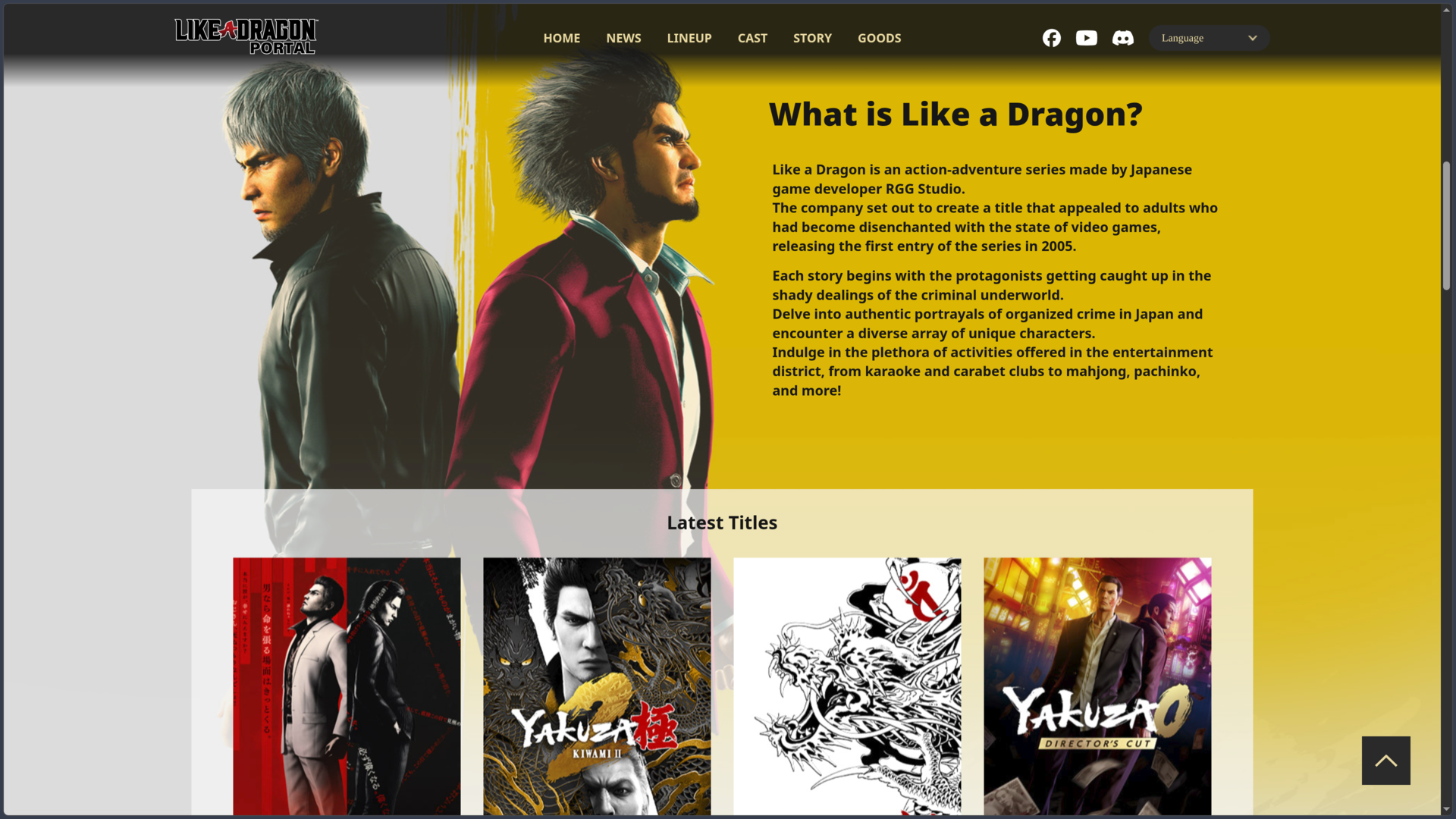
Its history remains above all connected to Like a Dragon.
The first Ryû ga Gotoku was released in 2005, before the RGG Studio label was formally created. From the beginning, the series was built around a relatively unusual idea: creating entertainment aimed primarily at an adult audience, telling highly dramatic crime stories inside condensed but detailed representations of contemporary Japanese districts.
Kamurocho, inspired by Kabukichō in Tokyo, quickly became one of the clearest symbols of this approach.
Rather than building enormous worlds, the team favors relatively compact urban spaces that are repeatedly reused and enriched from one installment to the next. Restaurants, bars, arcades, shops, activities and side stories gradually give these cities a continuity rarely found in series that completely change setting with every game.
This method also allows the studio to mix very different tones.
The main story may deal with struggles between criminal organizations, corruption, family or power, while a few streets away the player can sing karaoke, help a stranger through a side story or spend time in an arcade.
This contrast between serious drama and sometimes absurd everyday life has become one of RGG Studio’s most recognizable signatures.
The studio initially developed the series around Kazuma Kiryu, before gradually expanding its universe.
With Yakuza: Like a Dragon, Ichiban Kasuga became a new major protagonist and the main series temporarily moved away from its traditional action combat in favor of a turn-based RPG system. Like a Dragon: Infinite Wealth continued this direction while expanding the setting beyond Japan.
RGG Studio simultaneously maintains a branch more focused on action through Judgment and Lost Judgment.
These games take place in the same urban universe but follow detective Takayuki Yagami and place greater emphasis on investigation, legal suspense and real-time combat. They allow the studio to explore another perspective without depending directly on the protagonists of Like a Dragon.
The studio’s technical identity has also evolved.
For Yakuza 6: The Song of Life, the team developed the Dragon Engine, designed to deeply modernize environments, animation, physical interactions and the continuity between streets and buildings.
The engine then became an important foundation for Yakuza Kiwami 2, Judgment, Lost Judgment and several Like a Dragon titles.
This technology is not used systematically, however. RGG Studio can turn to other engines when a project calls for it, as with Unreal Engine for Like a Dragon: Ishin!.
A major change came in 2021 with the departure of Toshihiro Nagoshi, a key historical figure within the team since the origins of Yakuza, along with several collaborators.
Leadership then passed to Masayoshi Yokoyama, a writer and producer who had been at SEGA since 1999 and involved in the series since its first installment.
This transition did not create a break with the studio’s identity.
RGG Studio continued Like a Dragon at a sustained pace with Like a Dragon Gaiden, Infinite Wealth and later Pirate Yakuza in Hawaii, while beginning to expand its scope more clearly.
By 2026, this evolution had become particularly visible.
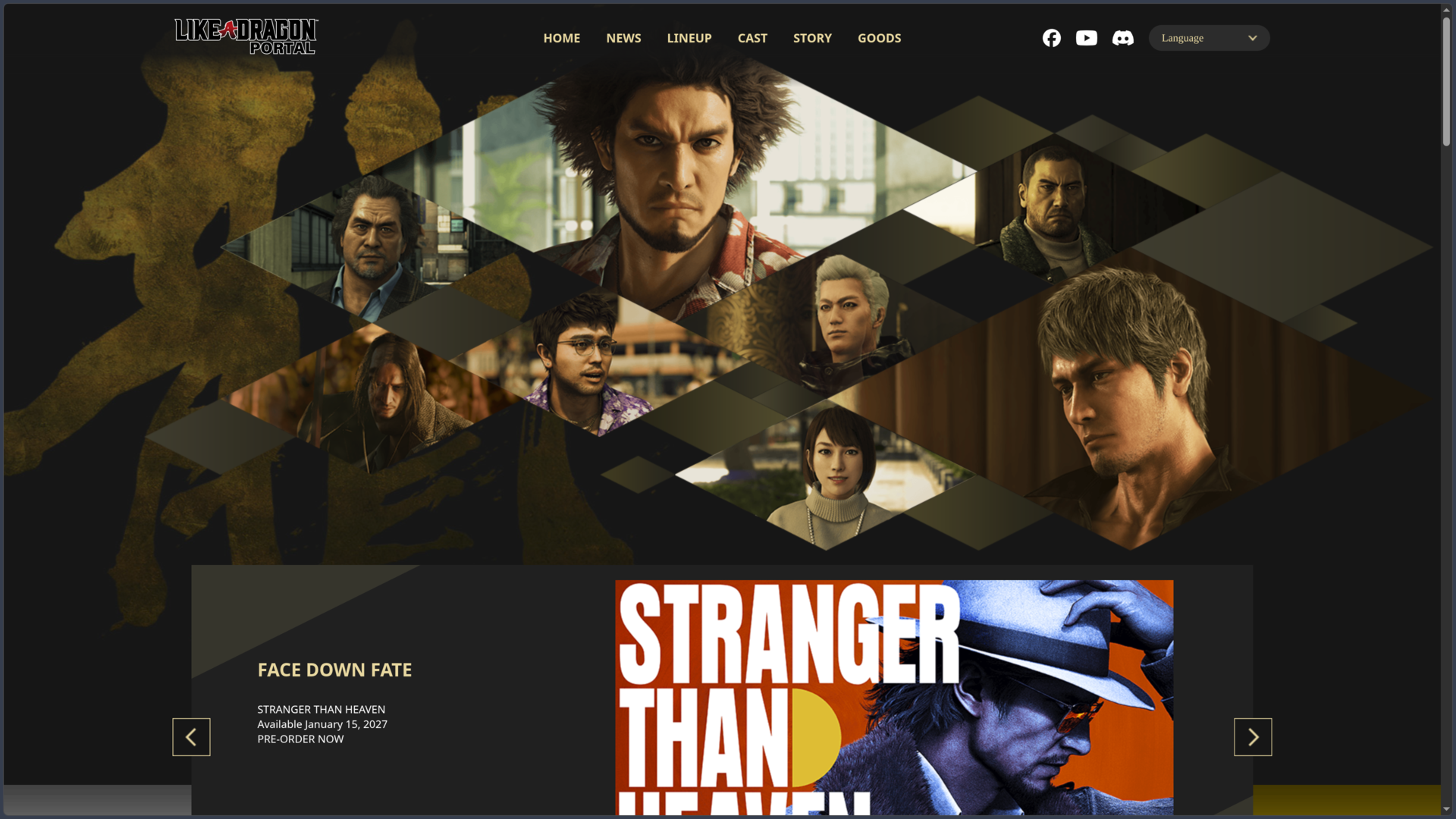
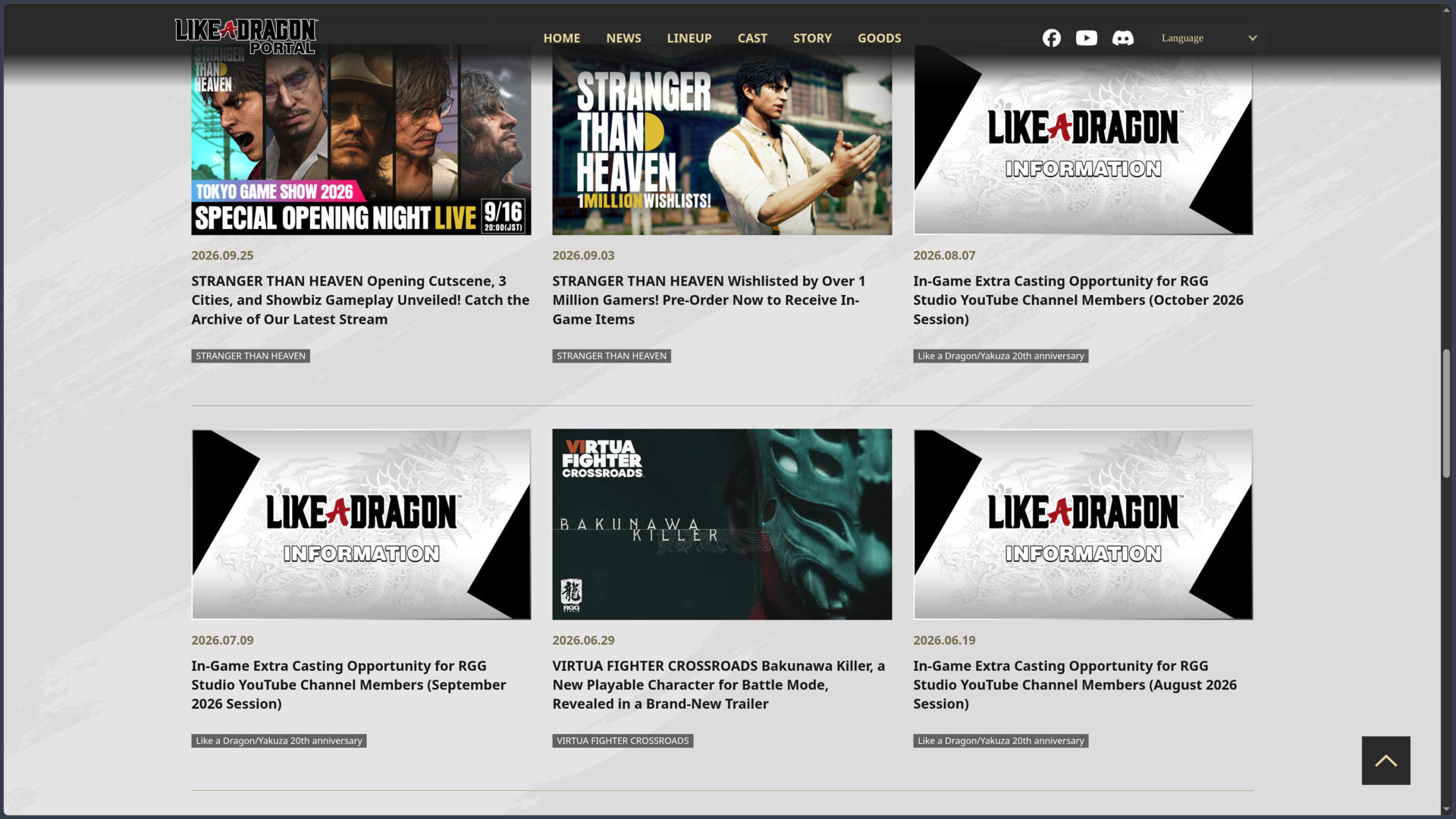
The studio is developing Stranger Than Heaven, a new action-adventure property whose story spans several decades, as well as Virtua Fighter Crossroads, a major new installment in one of SEGA’s historic series.
RGG Studio is therefore beginning to become more than simply “the Yakuza studio,” while retaining methods refined over twenty years: strongly written characters, dense cities, cinematic staging and a constant proximity between main story and everyday life.
History
Before 2011 — The SEGA teams behind Yakuza
The history of RGG Studio begins before the label itself existed.
Toshihiro Nagoshi spent many years working across different internal SEGA structures, particularly around Amusement Vision, after contributing to productions such as Daytona USA and Super Monkey Ball.
These teams went through several reorganizations as SEGA transformed its internal structure.
It was in this context that Ryû ga Gotoku was developed and released in Japan in 2005.
The project aimed to create a game for an adult audience and portray part of contemporary Japan through a crime story centered on Kazuma Kiryu.
The game’s success gave rise to a regular series and to a team that became increasingly identifiable within SEGA.
2011-2015 — The birth of Ryû ga Gotoku Studio
On August 31, 2011, SEGA officially established the Ryû ga Gotoku Studio identity.
The name came directly from the series that had become its main project.
The first title associated with this new identity was not a Yakuza game, however, but Binary Domain, a science-fiction shooter released in 2012.
The studio continued its main series in parallel with Yakuza 5, while also experimenting with historical settings through productions such as Ryû ga Gotoku Ishin!.
Yakuza 0, released in Japan in 2015, returned to the 1980s and told a story set before the first installments.
This period consolidated the studio’s working method: regularly reusing familiar cities and systems while building new stories and activities around them.
2016-2020 — Dragon Engine, Judgment and the transformation of Like a Dragon
With Yakuza 6: The Song of Life, the studio went through one of its most important technical transitions.
The team abandoned much of its older technological foundation to develop the Dragon Engine.
This change required rebuilding many elements accumulated over previous installments, but made it possible to create more continuous cities and improve animation, physics and environmental density.
The engine was then reused and expanded across several productions.
In 2018, RGG Studio launched Judgment in Japan, a new series set in the same urban universe as Yakuza but centered on a criminal and legal investigation.
The most radical change arrived with Yakuza: Like a Dragon.
The game introduced Ichiban Kasuga as a new main protagonist and replaced the action combat of the main series with a turn-based RPG system.
RGG Studio demonstrated that a series built for fifteen years around one hero and one type of combat could change profoundly without abandoning its universe.
2021-2025 — New leadership without breaking with the past
In 2021, Toshihiro Nagoshi and Daisuke Sato left SEGA.
Masayoshi Yokoyama then became the main head of RGG Studio.
The leadership change came at a time when many of the studio’s current senior figures already had long experience within the team.
The studio continued Judgment with Lost Judgment and developed several Like a Dragon projects in different formats.
Like a Dragon: Ishin! modernized a historical installment, Like a Dragon Gaiden: The Man Who Erased His Name returned to action combat and Like a Dragon: Infinite Wealth continued the RPG structure built around Ichiban Kasuga.
In 2025, Like a Dragon: Pirate Yakuza in Hawaii once again demonstrated the flexibility of this organization with an adventure centered on Goro Majima and a real-time combat system.
This rapid succession of projects became a defining characteristic of the studio in itself.
RGG Studio builds on technologies, environments and methods already developed in order to release new games regularly without rebuilding every element from scratch.
2026 and beyond — Gradually moving beyond the Like a Dragon universe
As Like a Dragon approaches its twentieth anniversary, RGG Studio is expanding its activity more clearly.
Stranger Than Heaven is a new intellectual property independent from Yakuza and Judgment.
The project retains several traits associated with the studio — adult characters, close-range combat, detailed cities and cinematic storytelling — while developing a new universe whose story stretches across several decades.
Its release is announced for January 2027.
RGG Studio is also working on Virtua Fighter Crossroads, planned for 2027.
Taking on such a historic SEGA fighting series represents a significant evolution: the studio is now applying its narrative and technical experience to a franchise it did not create.
This diversification does not mean the abandonment of Like a Dragon.
It instead shows that, after two decades devoted mainly to one universe, RGG Studio is beginning to use its methods to build several parallel creative pillars.
What sets it apart
Building dense cities rather than gigantic worlds
RGG Studio has long favored relatively concentrated urban spaces.
Kamurocho is the clearest example.
The district returns across many installments, but its appeal comes precisely from that repetition: shops, buildings and characters gradually change, giving players the feeling of knowing a place that evolves over time.
The studio therefore often prefers to deepen a few streets rather than multiply the number of kilometers on a map.
Constantly mixing drama and everyday life
The tonal difference between the main story and side activities is deliberate.
A story may deal with murder, organized crime or family conflict, then immediately give way to a lighter activity or absurd situation.
This contrast is not simply comic relief.
It allows the studio to portray its protagonists outside dramatic situations and gives its cities a life beyond the crime story alone.
Reusing intelligently to produce quickly
RGG Studio maintains a particularly regular production rhythm.
This is partly based on its ability to reuse cities, technology, animations and systems, then adapt them according to the needs of each project.
The same environment can therefore support several very different stories without every game being built as an entirely isolated production.
This method allows the studio to invest more heavily in new stories, characters and activities while retaining a technical base it already understands.
Evolving its series without preserving a single formula
Like a Dragon moved from an action game to a turn-based RPG with Ichiban Kasuga.
Judgment retains more real-time combat while adding an identity centered on investigation.
Stranger Than Heaven develops a new universe, while Virtua Fighter Crossroads applies the studio’s experience to fighting games.
RGG Studio therefore maintains a highly recognizable identity without depending on a single gameplay system.
What connects its productions lies more in staging, characters, locations and the way it tells human stories than in one specific mechanic.
Good to know
- Ryû ga Gotoku Studio was officially established under this identity on August 31, 2011, but it continues the work of internal SEGA teams already responsible for the first Yakuza games.
- The studio is an internal SEGA structure, not an independent company acquired by the publisher.
- Its name comes from Ryû ga Gotoku, the Japanese title of the series known in the West first as Yakuza and later Like a Dragon.
- Toshihiro Nagoshi was the main historical figure behind the creation of the studio and the series until his departure from SEGA in 2021.
- The studio is now led by Masayoshi Yokoyama, who has been involved with Yakuza since the first installment and a producer on the series since 2010.
- RGG Studio notably develops the Like a Dragon / Yakuza and Judgment series.
- Its team is also behind the Dragon Engine, used since Yakuza 6 across many of the studio’s productions.
- In 2026, its activity extends beyond Like a Dragon with Stranger Than Heaven and Virtua Fighter Crossroads, both planned for 2027.