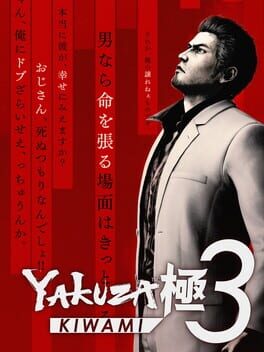
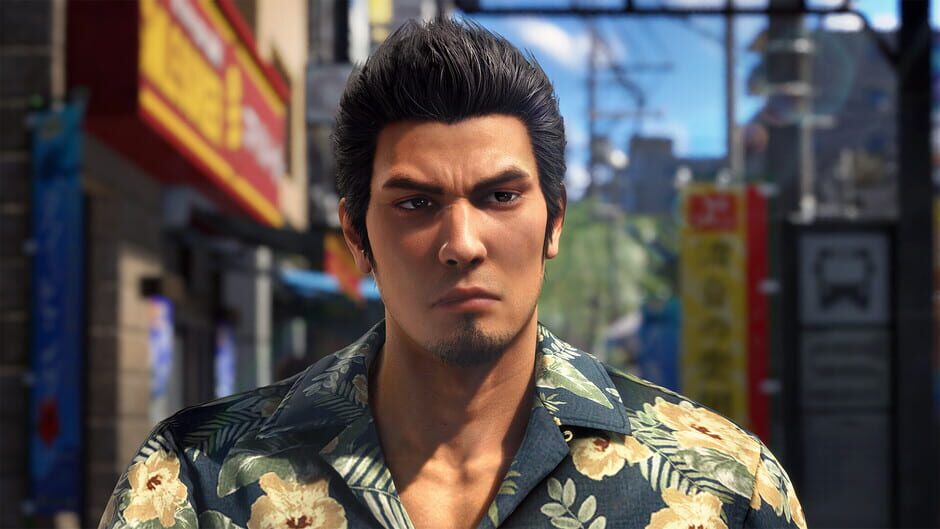
After the conflict with the Omi Alliance, Kazuma Kiryu leaves the Tojo Clan and entrusts its future to Daigo Dojima. Together with Haruka, he settles in Okinawa to run Morning Glory, an orphanage connected to his adoptive father Shintaro Kazama, where he hopes to offer a peaceful life to the children in his care. That tranquility is threatened, however, when a government tourism development project places the orphanage's land at the center of competing interests. As Kiryu tries to protect his new family, tensions within the Tojo Clan and a conspiracy involving Okinawa, Tokyo and the political world force him back into a criminal underworld he thought he had left behind.
Video game
2026
Action
Adventure
Drama
RPG
Hack and slash
Open world
Yakuza Kiwami 3
- Deep Silver Publisher
- Ryû ga Gotoku Studio Developer
- SEGA Publisher
Kiryu wanted to protect a family far from the yakuza. Okinawa will nevertheless draw him back into a much larger conflict.
Details
- Type
- Video game
- Release
- 2026-02-12
- Genres
- Action, Adventure, Drama, RPG, Hack and slash, Open world
- Platforms
- PlayStation 5, PlayStation 4, Xbox Series, PC, Nintendo Switch 2
- Game modes
- Single player
Synopsis
Yakuza Kiwami 3

Trailer
Watch the trailer
Overview
Presentation
Yakuza Kiwami 3 is a complete reconstruction of Yakuza 3, originally released in 2009. The game retains Kazuma Kiryu's story following the events of Yakuza Kiwami 2, while extensively modernizing its presentation, combat and side activities, and adding new scenes designed to further develop certain characters and elements of the story.
After leaving the Tojo Clan, Kiryu settles in Okinawa with Haruka and becomes the caretaker of the Morning Glory orphanage. This new life forms an essential part of the adventure. The orphanage is no longer presented merely as a narrative setting: everyday activities and relationships with the children become full progression and character-development systems.
Players can therefore cook, maintain a vegetable garden, help with homework, sew, fish or catch insects. These activities allow Kiryu to grow into his role as a surrogate father and gradually unlock new possibilities. Bonds with the children also provide access to dedicated substories, focusing on their difficulties, dreams and everyday lives.
The other side of the journey brings Kiryu back into the criminal world. The interests surrounding Morning Glory's land, tensions within the Tojo Clan and political struggles gradually carry the story from Okinawa to Kamurocho, Tokyo. The game therefore preserves the contrast between a more intimate everyday life and the large-scale conflicts characteristic of the series.
The combat system has been completely reworked around two distinct styles that Kiryu can use depending on the situation.
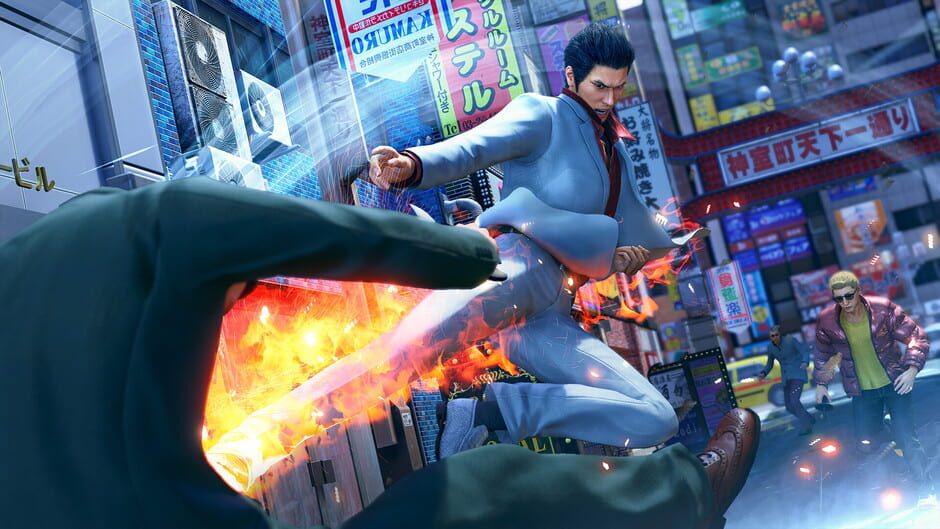
The Dragon of Dojima: Kiwami style represents an evolution of Kiryu's iconic fighting style. It emphasizes unarmed strikes, throws, the use of environmental objects and a wide range of offensive techniques. The game gives him one of the broadest attack sets in the series, with new Heat Actions supplementing several techniques inherited from the original game.
The Ryukyu style takes a very different approach based on Okinawan martial arts and traditional weapons. Its core stance notably uses the tinbe and rochin, pairing a shield with a short spear, alongside several other weapons such as sai, tonfa, nunchaku, eiku, tekko, nichogama and surujin.
These weapons do not function merely as equipment picked up temporarily. They are directly integrated into Ryukyu-style combos and allow attacks, defense and special techniques to flow into one another. The tinbe can notably protect Kiryu from certain gunfire, while different weapons help keep enemies at range or extend combos.
Both styles feature numerous Heat Actions, the series' signature contextual attacks that make use of enemy positioning, the environment or available weapons. Some Ryukyu-style techniques can be triggered directly after standard combos in order to maintain combat momentum.
Kiryu also gains access to Dragon Boost, a temporary state activated after filling a gauge. In the Dragon of Dojima style, it notably strengthens throws and physical attacks. In the Ryukyu style, it allows the traditional weapons to be used in much more spectacular ways and unlocks powerful finishing moves.
Outside combat, Downtown Ryukyu serves as Okinawa's main urban area. Shops, restaurants, encounters and side activities sit alongside the main missions and the many substories characteristic of the series. Kamurocho also returns as the second major urban environment.
The remake also introduces new large-scale activities. Bad Boy Dragon places Kiryu in charge of a group tasked with defending Okinawa against rival gangs. Players recruit members, build their team, improve equipment and take part in group battles.
Some sequences notably involve traveling by motorcycle through enemy territory. Motorcycles and group outfits can also be customized, giving this activity its own progression alongside the main adventure.
More traditional series activities remain present through various minigames, leisure activities and side encounters spread across Okinawa and Tokyo. Karaoke and other diversions provide breaks from the main conflicts and contribute to the everyday atmosphere of both cities.
The overall experience therefore preserves the distinctive balance of Yakuza 3 between Kiryu's protective role toward the children of Morning Glory and his status as the Dragon of Dojima, repeatedly forcing him back into combat whenever those he considers family are threatened.
Key points
- A complete remake of Yakuza 3, not a simple remaster.
- The return of Kazuma Kiryu as the main protagonist.
- A story mainly divided between Okinawa and Kamurocho.
- The Morning Glory orphanage plays a central role in both story and gameplay.
- New scenes further develop the story and certain characters.
- Two combat styles for Kiryu: Dragon of Dojima: Kiwami and Ryukyu style.
- Dragon of Dojima emphasizes unarmed strikes, throws and environmental objects.
- Ryukyu style uses eight weapons inspired by Okinawan martial traditions.
- Numerous Heat Actions unique to the two approaches.
- Dragon Boost temporarily enhances Kiryu's abilities.
- Morning Glory Life allows players to cook, garden, help with homework, fish and catch insects.
- Bonds with the children unlock their own substories.
- Bad Boy Dragon features recruitment, team management and group battles in Okinawa.
- The return of the series' many side activities and minigames.
- The commercial release also includes Dark Ties, a separate adventure focused on Yoshitaka Mine.
Conclusion
Yakuza Kiwami 3 rebuilds Yakuza 3 by expanding precisely the two dimensions that define this entry: the violence of Kiryu's past and his desire to build a family life away from the yakuza world.
The new Morning Glory systems give more space to his everyday life with the children, where the original game mainly used these moments to develop its story. Cooking, gardening, homework and individual stories now turn the orphanage into a genuine gameplay component.
At the same time, the new combat system greatly expands Kiryu's possibilities. Dragon of Dojima: Kiwami develops his traditional style, while Ryukyu style introduces a more technical approach built around Okinawan weapons. The two sides therefore reflect the two worlds Kiryu moves between throughout the story.
The remake ultimately preserves the narrative core of Yakuza 3 while adding a structure and mechanics designed around the modern standards of the series.
Good to know
Yakuza Kiwami 3 was developed by Ryu Ga Gotoku Studio and published by SEGA.
The game was released on February 12, 2026 for PlayStation 4, PlayStation 5, Xbox Series X|S, Nintendo Switch 2 and PC via Steam.
It is a complete remake of Yakuza 3, originally released in 2009 for PlayStation 3. It should therefore not be confused with Yakuza 3 Remastered, which mainly modernized the presentation and performance of the original game without rebuilding it to the same extent.
The release is marketed under the title Yakuza Kiwami 3 & Dark Ties and actually contains two distinct experiences.
Yakuza Kiwami 3 rebuilds Kazuma Kiryu's adventure.
Dark Ties is a new standalone story centered on Yoshitaka Mine, one of the major antagonists of Yakuza 3. It notably follows his path from his career as the head of a company to his entry into the yakuza world.
Dark Ties also has its own combat system, built around techniques inspired by shoot boxing, as well as its own side activities. It is therefore not simply an extra chapter inserted into Kiryu's campaign.
The remake adds new narrative scenes, rebuilds Okinawa and Tokyo with modern production values and expands several activities that were much more limited in the original version.
The Dragon of Dojima: Kiwami style is presented as the ultimate evolution of Kiryu's iconic fighting style, while the Ryukyu style uses eight weapons inspired by traditional Okinawan martial arts.
This entry focuses on Yakuza Kiwami 3 and Kazuma Kiryu's campaign. Dark Ties is treated as a separate adventure included in the same product and can therefore be referenced independently in PANACHES if its catalog distinguishes autonomous works or campaigns.