Overview

Deep Silver is a video game publishing label created in 2002 by Koch Media, the Austrian-German group that became PLAION in 2022. PLAION now presents this creation as a precise stage in its own history: after adding video game distribution to its activities from 1996 onward, Koch Media established its internal Deep Silver publishing division in 2002.

This origin immediately helps explain what Deep Silver is — and what it is not.

Deep Silver is not a development studio comparable to Dambuster Studios, Volition, Warhorse Studios or 4A Games. Its role is that of a publisher: financing or supporting productions, organizing their commercialization, managing properties, working with different developers and placing certain games within a shared catalog. PLAION still describes Deep Silver today as its flagship publishing label.

The brand itself is not a legally independent company either. The legal notices on the Deep Silver website refer to PLAION GmbH, based in Höfen, Austria, and specify that Deep Silver and PLAION are registered trademarks of PLAION GmbH. For PANACHES CULTURE, pays: "Autriche" therefore corresponds to the label’s current legal affiliation, even though its operations are international and the history of Koch Media was built very early between Austria, Germany and many other territories.

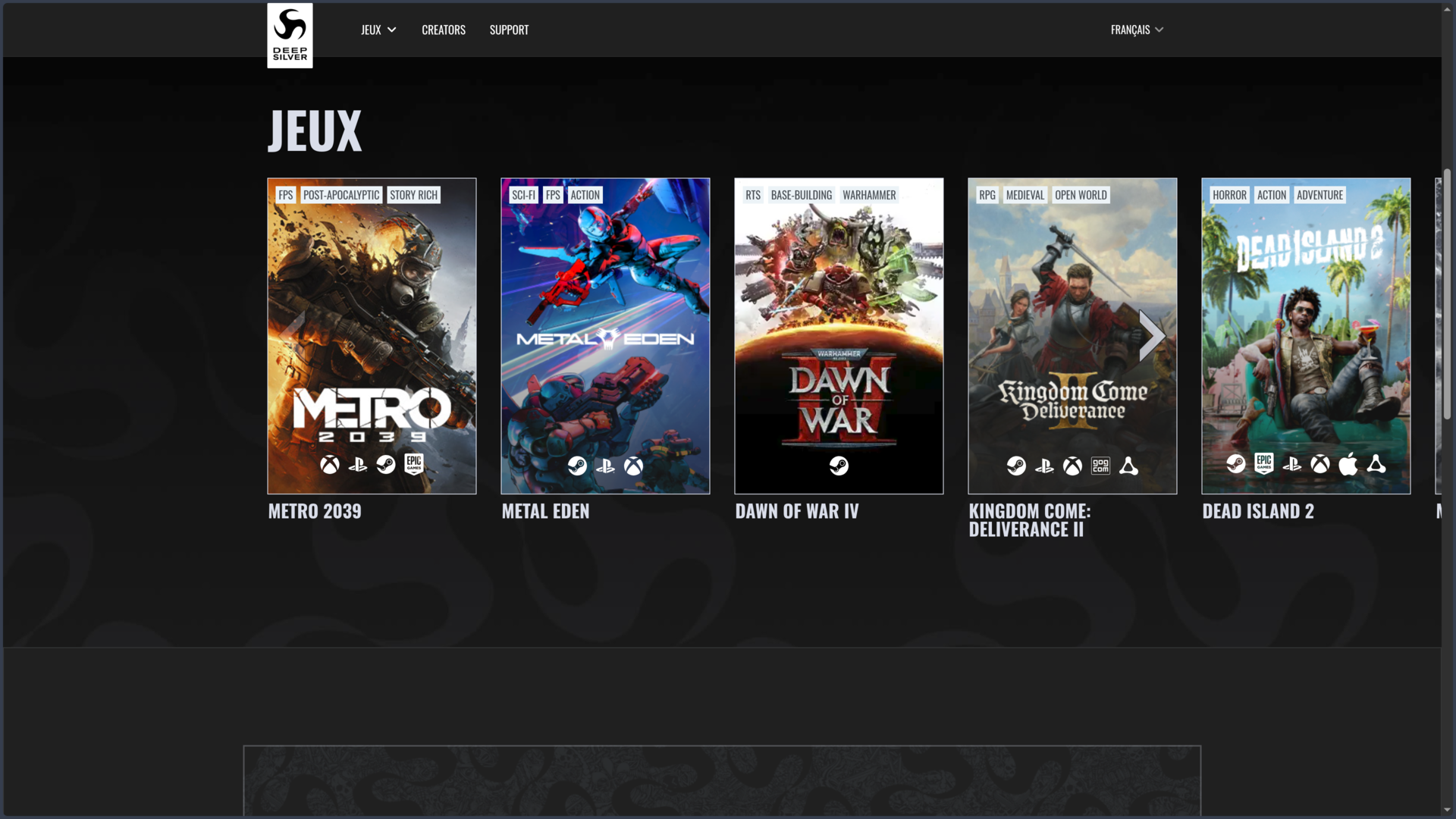
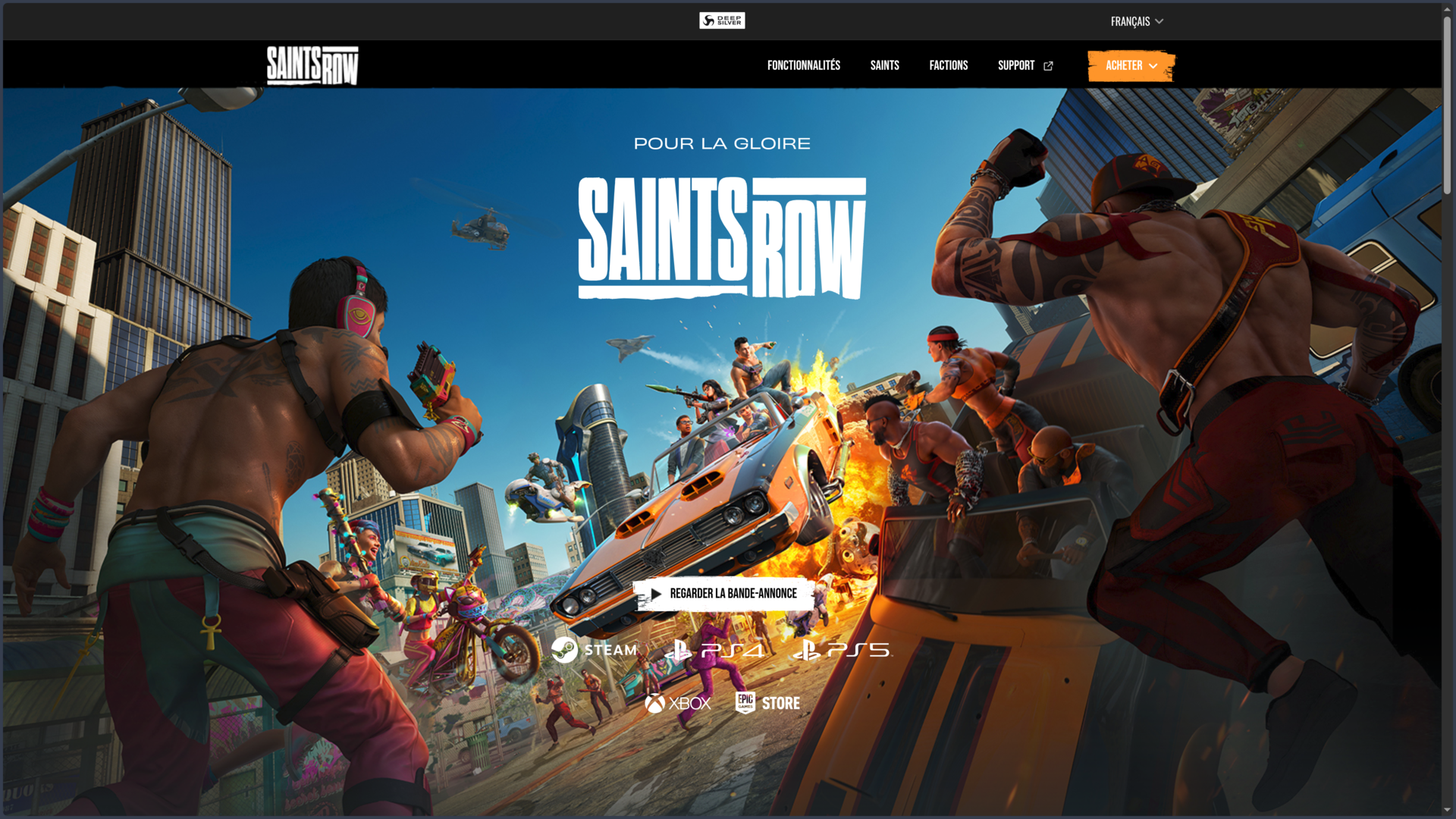
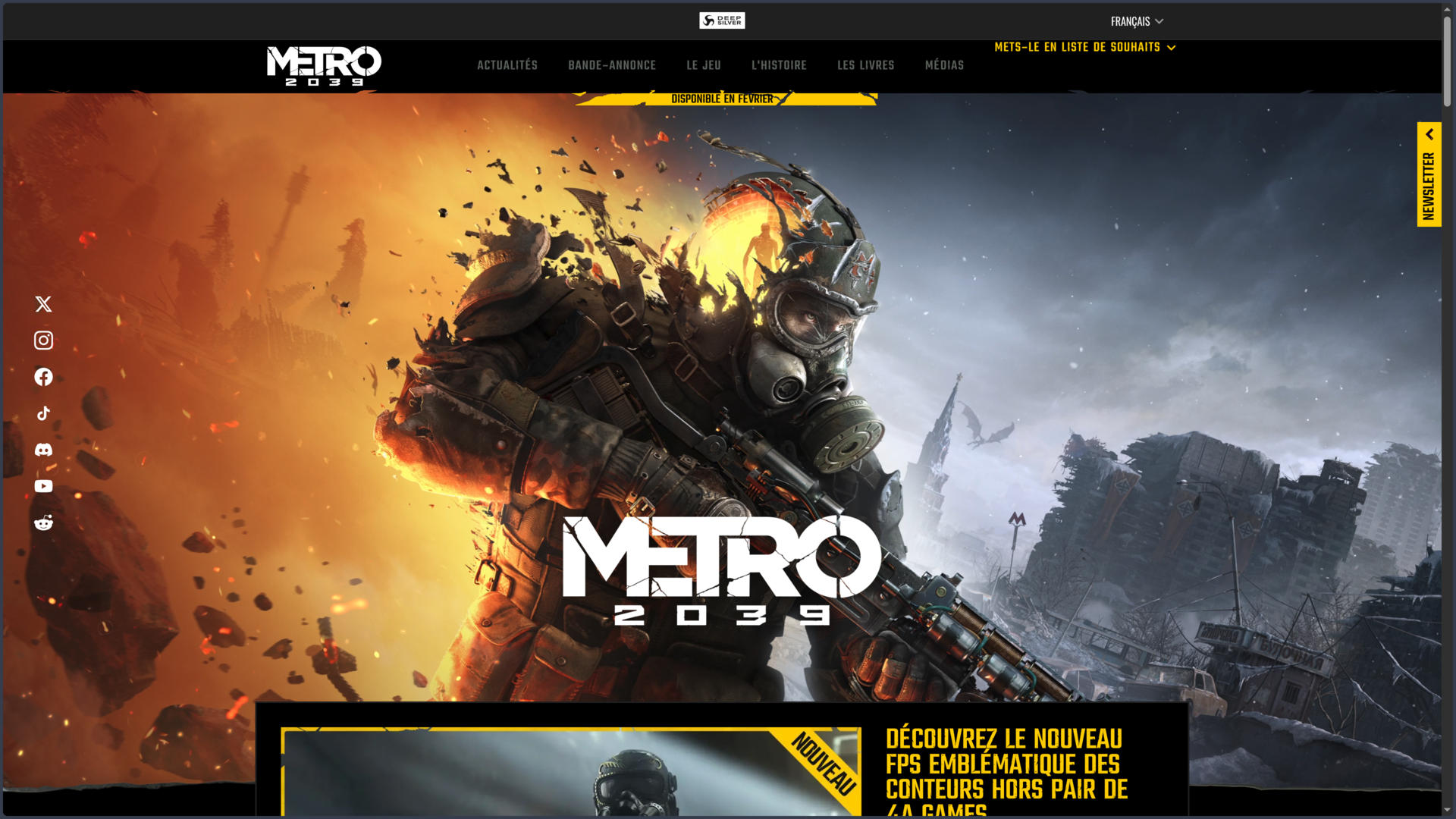
The Deep Silver catalog does not possess the genre unity one might find in a specialized studio. It moves from the criminal open world of Saints Row to the post-apocalypse of Metro, from the zombie slaughter of Dead Island to the historical medieval RPG of Kingdom Come: Deliverance. This diversity does not prevent the label from presenting these universes today as the main landmarks of its identity. Its own website summarizes Deep Silver as the home of worlds ranging from the post-apocalyptic Moscow of Metro to the twisted paradises of Dead Island and the medieval landscapes of Kingdom Come: Deliverance.

That description reveals something important.

Deep Silver identifies itself less through one precise gameplay mechanic than through its ability to carry worlds recognizable enough to survive several installments, teams and generations of hardware.

This is particularly clear with Dead Island. The first game is developed by Techland, while Dead Island 2 is ultimately developed by Dambuster Studios. The identity of the property therefore survives a change of developer without leaving the Deep Silver catalog.

Metro follows a different logic: the series remains deeply linked to 4A Games, while Deep Silver handles its publishing and historically held rights associated with its exploitation. In 2018, during the acquisition of Koch Media, the future Embracer Group described Deep Silver as holding, among other things, Dead Island, Saints Row and an exclusive license for Metro.

Kingdom Come: Deliverance adds yet another model. Its developer, Warhorse Studios, itself becomes a Koch Media group company in 2019, while the games continue to be published under the Deep Silver label. The official Kingdom Come: Deliverance II page still clearly distinguishes Warhorse as owner of the property and developer, and Deep Silver as publisher.

Deep Silver therefore becomes culturally interesting precisely because it is not the sole author of what it publishes.

Its history is that of a creative and industrial intermediary.

Studios make the games.

The label supports them, markets them, sometimes maintains their properties and builds continuity between productions that may be separated by years, changes of team or corporate restructurings.

History

1994-2002: before Deep Silver, there is Koch Media

The history of Deep Silver begins before the label exists.

Koch Media is founded in 1994 by Franz Koch and Klemens Kundratitz. The company begins in music and software distribution before rapidly expanding from Austria into Germany, the United Kingdom, Switzerland and Italy. From 1996, it adds video game distribution to its activities.

This background in distribution is fundamental.

Koch Media first learns how to move other people’s products.

Which markets to target.

How to place software on store shelves.

How to work with partners.

How to manage several territories.

Publishing comes afterward.

The difference matters: distribution mainly means helping an existing work reach its audience. Publishing means beginning to intervene much earlier in its trajectory, sometimes from financing, production or positioning onward.

In 2002, Koch Media decides precisely to add this second capability.

2002: Koch Media creates Deep Silver

PLAION explicitly dates the creation of Deep Silver to 2002. The label becomes Koch Media’s video game publishing division.

This date is retained for annee_creation.

Some older commercial presentations from Deep Silver state that it had published more than 200 games “since 2003,” corresponding to the beginning of its visible publishing activity across various catalogs, but PLAION’s current official history clearly places the establishment of the division in 2002.

That one-year difference illustrates a common problem when telling the story of a brand: should the date refer to the moment it is created or the moment its catalog actually begins to materialize?

For PANACHES CULTURE, the official founding of the label is the most coherent reference.

The early years build a catalog before building icons

Deep Silver does not begin immediately with the franchises that define its image today.

During the 2000s, the label publishes many games and gradually accumulates a catalog covering adventure, action, RPGs and productions of very different scales. Series such as Sacred, Secret Files and Risen belong to this early period and continue to appear in older official presentations of the label.

This phase is less spectacular than the arrival of Dead Island or Saints Row, but it builds an essential skill.

Deep Silver learns how to be a publisher.

A label is not formed only through its successes.

It is also built through more modest launches, partnerships, local versions, marketing campaigns and projects that will never become worldwide franchises.

By 2018, Embracer would state that Deep Silver had already published more than 200 games since 2002.

2008: Deep Silver establishes itself directly in the United States

By 2008, Deep Silver has a US structure, Deep Silver Inc., while Koch Media continues its international expansion, notably in Spain.

This stage changes the reach of the label.

A European publisher can distribute a game in the United States through partners.

Having a local structure, however, makes it possible to be much more directly involved in commercialization, press relations, platforms and work with North American studios.

A few years later, this presence becomes particularly important when Koch Media acquires Volition, the American studio associated with Saints Row.

Risen and the European RPG find a place in the catalog

At the end of the 2000s, Risen becomes one of the series associated with Deep Silver. In 2018, the group still lists the franchise among the properties characteristic of the label’s catalog.

This relationship with the European RPG is interesting because it foreshadows a lasting dimension of Deep Silver.

The label does not look only for productions capable of reproducing major American trends.

It also works with European studios possessing highly particular sensibilities.

This inclination will later reappear with Warhorse Studios and Kingdom Come: Deliverance, another RPG deeply rooted in a European development culture.

2011: Dead Island changes the visibility of the label

Dead Island appears in 2011 and becomes one of the properties that will define Deep Silver most durably. In 2025, the official website was still celebrating the fourteen years since the first journey to Banoi.

The original game is associated with Polish studio Techland, something confirmed notably by the sequel Dead Island Riptide, announced in 2012 by Deep Silver as being developed by Techland.

The concept possesses immediately understandable commercial force: a tropical paradise presented as a holiday destination becomes a space filled with the undead.

The image works before the systems even need explaining.

Sun.

Beaches.

Hotels.

Blood.

Zombies.

But behind the visual contrast, Dead Island also combines melee combat, RPG progression, scavenging and cooperative play.

The franchise therefore gives Deep Silver something more valuable than a simple success.

It gives the publisher an identifiable property.

A publishing property can survive its first developer

The story of Dead Island then becomes much more complex.

Techland remains connected to the early entries, but Dead Island 2 goes through a long development journey before ultimately being completed by Dambuster Studios and released in April 2023. Official PLAION documents explicitly identify Dambuster as developer and Deep Silver as publisher.

This passage is particularly useful for understanding the difference between studio and publisher.

A studio is strongly tied to the people who physically make the game.

A publishing property can continue while those people change.

Deep Silver therefore has to preserve enough continuity for audiences to still recognize Dead Island, while allowing a new developer to rebuild much of the way the game actually works.

The identity is no longer contained within one team.

It has to be transmitted.

2013: Volition joins Koch Media

In 2013, Koch Media acquires Volition, the American studio historically associated with Saints Row. PLAION still includes this acquisition in its official timeline.

From this period onward, Saints Row becomes one of the most visible properties in the Deep Silver portfolio. In 2018, the group’s financial documentation explicitly lists Saints Row among the label’s main properties, alongside Dead Island, Metro, Risen and Homefront.

The operation changes Deep Silver’s scale.

The label no longer works only with partner developers.

It is also surrounded by studios belonging to the same group.

That does not mean Deep Silver and Volition become a single entity.

Volition develops.

Deep Silver publishes.

Corporate proximity reduces the distance between them, but the roles remain different.

Saints Row brings another conception of the open world

Saints Row considerably broadens the identity of the Deep Silver catalog.

The series is built around an urban open world, crime, customization and an increasing taste for exaggeration. Its tone differs radically from the darkness of Metro or the historical seriousness of Kingdom Come. Yet Deep Silver can make these productions coexist because its identity does not depend on one single tone.

The label instead becomes a home for franchises.

That logic is still visible on its current website, which continues to present Saints Row alongside Dead Island, Metro and Kingdom Come.

2013-2014: Metro becomes durably associated with Deep Silver

The first decade of Metro begins with another publisher, but Deep Silver quickly becomes associated with the series in the early 2010s. Metro: Last Light and then Metro Redux appear in its catalog, and by 2018 group documents describe Deep Silver as holding an exclusive license for Metro.

This property introduces another type of relationship.

Deep Silver is not the creator of the literary universe.

Nor is it 4A Games, the studio developing the main games.

Its role lies in the publishing exploitation of this video game adaptation.

A publisher’s success can therefore sometimes depend on its ability to maintain a coherent triangle between an original property, a development studio and a global market.

Metro shows that a label can be recognizable without standardizing its games

The world of Metro has an identity radically different from Saints Row.

Destroyed Moscow.

Underground survival.

Radiation.

Limited resources.

Horror.

Silence.

Deep Silver does not try to force this series into the tone of another property in its catalog.

That lack of standardization becomes a strength.

A publisher does not need to impose the same interface, progression system or humor on all of its productions.

Coherence can come from the way it selects, positions and supports different worlds.

2014: Metro Redux maintains a work rather than letting it disappear

Metro Redux brings together and modernizes the early games in the series for new platforms. Deep Silver still lists it today in its product history.

This kind of project becomes increasingly important for modern publishing.

A franchise no longer exists only at the moment a new numbered installment launches.

Remasters, new platforms, complete editions and upgrades can keep older games accessible for years.

The catalog stops being a succession of launches.

It becomes an active heritage.

Wasteland 2 shows Deep Silver as publisher without exclusive ownership

Deep Silver also publishes works it does not necessarily own. In 2018, Embracer notably lists Wasteland 2 among the titles published by the label.

This model is essential.

A publisher can invest in a project, handle its commercialization and help distribute it without automatically becoming owner of the intellectual property.

The video game industry operates through many combinations of contracts.

Developer-owned property.

Publisher-owned property.

Licensing.

Co-publishing.

Distribution.

Regional partnership.

The presence of a Deep Silver logo on a box is therefore never enough by itself to determine who owns the work.

2015: Dambuster Studios joins the ecosystem

PLAION dates the creation of Dambuster Studios in Nottingham under that identity to 2015.

The studio carries a history inherited from earlier structures, but under this new name Dambuster becomes a development team within the group.

It first works notably on Homefront: The Revolution, before becoming, several years later, the studio responsible for completing Dead Island 2.

This evolution shows the usefulness of an internal studio network.

A property can encounter difficulties.

A project can change direction.

The group can then reassign expertise and rebuild a production around another team.

This capability obviously does not guarantee success.

It does, however, provide more options than a publisher with no internal development capacity at all.

Fishlabs adds another history to the network

Koch Media also integrates Fishlabs, the Hamburg studio historically known for the Galaxy on Fire series. PLAION places this step in 2013 in its history.

For several years, group presentations directly associate Volition, Fishlabs and Dambuster with the Deep Silver network. In 2018, all three are still described as internal studios.

This period explains why the name Deep Silver has sometimes been used ambiguously.

It can refer to the label.

Historically, it has also appeared in the names of certain studios.

But a publishing label and a production studio do not perform the same function.

PANACHES CULTURE therefore separates them when their creative trajectories justify it.

Homefront reminds us that acquiring a property does not guarantee success

The Deep Silver portfolio also includes Homefront. In 2018, the group lists it among the IP associated with the label, while acknowledging that some recent productions, including Homefront and Agents of Mayhem, had produced results below expectations and significant write-downs.

This passage is useful because the history of a publisher should not become a catalog of victories.

Owning a known franchise.

Financing a large project.

Having a studio.

Running a global campaign.

None of these elements guarantees the outcome.

Publishing is also a business of risk.

Some decisions work.

Others cost a great deal.

And the decisions that follow are often influenced by the mistakes that came before.

2018: Kingdom Come: Deliverance brings another kind of RPG

In 2018, Deep Silver publishes Kingdom Come: Deliverance, developed by Czech studio Warhorse Studios. In its first report after the acquisition of Koch Media, the THQ Nordic group directly cites the launch of Kingdom Come: Deliverance among Deep Silver’s important contributions.

The game represents almost the opposite of a traditional fantasy RPG.

Its ambition is to use medieval Bohemia as a setting as credibly as possible, with particular attention to society, combat, locations and character progression.

For Deep Silver, the property broadens the catalog again.

Zombies.

Post-apocalypse.

Urban crime.

Fantasy.

Now medieval history.

The label clearly does not build its identity around genre.

2018: Deep Silver changes group without changing its name

On February 14, 2018, THQ Nordic AB acquires Koch Media GmbH for €121 million. The transaction therefore includes Deep Silver, Koch Media’s studios and several important catalog properties.

The buyer explains at the time that Koch Media will continue operating as a distinct entity within the group.

That decision is significant.

Deep Silver does not disappear behind THQ Nordic.

The two brands coexist.

One reason is simple: they already possess distinct catalogs and commercial identities.

Bringing companies together does not necessarily mean merging their brands.

In an industry where names accumulate trust, memory and sometimes entire communities, removing a label can destroy part of the value the acquisition was intended to obtain.

The future Embracer becomes a house of houses

The group that acquires Koch Media later takes the name Embracer Group.

Deep Silver therefore finds itself within a much larger organization gradually bringing together many publishers, studios and properties. PLAION still forms one of Embracer’s operative groups today, with Deep Silver among its publishing labels.

This structure creates several layers that have to be distinguished.

Embracer Group is the parent group.

PLAION is one of its operative groups.

Deep Silver is a PLAION publishing label.

Dambuster, Warhorse and other teams are development studios.

A work can therefore pass through four organizational levels before even reaching the player.

2019: Metro Exodus takes the series into more open spaces

Metro Exodus launches in 2019 and still appears among the central productions on the current Deep Silver site.

Developed by 4A Games, it considerably broadens the formula of the series by regularly leaving the Metro tunnels for larger outdoor environments.

For the publisher, this evolution raises a classic franchise question.

How much can change before a series stops being itself?

Metro Exodus preserves the atmosphere, survival elements and post-apocalyptic world, but shifts part of the experience toward travel and exploration across much more open regions.

Continuity therefore does not necessarily come from exactly repeating the previous levels.

It can come from themes, atmosphere and a way of inhabiting the world.

Metro Exodus’s Epic exclusivity reminds us that publishing also concerns storefronts

The PC release of Metro Exodus also illustrates a less artistic but essential part of publishing.

In January 2019, the group confirms that the digital PC version of the game will be distributed exclusively through the Epic Games Store at launch. The statement specifies that this strategy comes from Koch Media and its Deep Silver label.

A publisher therefore does not decide only the cover art or advertising.

It can negotiate platforms.

Distribution channels.

Commercial agreements.

Dates.

Editions.

These decisions directly influence how the public accesses a work — and can sometimes provoke as much discussion as the game itself.

2019: Warhorse Studios joins the group

PLAION states that it acquired Warhorse Studios in 2019.

The relationship around Kingdom Come then changes in nature.

The first game had been published through a publisher-studio partnership.

The developer now belongs to the same group.

That can potentially make long-term investment easier, but it still does not turn Deep Silver into the developer.

Warhorse retains its own creative identity.

Deep Silver remains the publishing label.

The distinction becomes even more visible with the sequel.

A good label does not need to put its name ahead of the studio

In communication around Kingdom Come: Deliverance II, the name Warhorse Studios remains central. The legal notices on the site explicitly state that the Kingdom Come: Deliverance property belongs to Warhorse Studios and that the game is published by Deep Silver.

That distinction matters.

The role of a publisher is not necessarily to erase the developer behind its own brand.

In some cases, the best strategy is precisely to let the studio become visible.

A property then carries several signatures.

The creative signature of the developer.

The industrial signature of the publisher.

2022: Koch Media becomes PLAION, Deep Silver remains Deep Silver

On August 4, 2022, Koch Media announces that all of its companies will adopt the name PLAION. The change comes with a new visual identity intended to reflect an organization that has become more international and diversified.

Deep Silver does not disappear in this transformation.

On the contrary, PLAION continues to use it as one of its principal labels. Today, Embracer states that PLAION has three game publishing labels: Deep Silver, Milestone and Vertigo Games.

This continuity is revealing.

Koch Media was the name of the company.

Deep Silver was already a name oriented toward games and players.

When the company changes its corporate identity, there is therefore no need to throw away a label that still performs its function.

A brand can be more stable than the company carrying it

Between 2002 and today, Deep Silver passes through several configurations.

Koch Media division.

International expansion.

Network of internal studios.

Acquisition by THQ Nordic AB.

Integration into Embracer.

Transformation of Koch Media into PLAION.

Yet the Deep Silver name remains.

It is one of the interesting paradoxes of cultural industries.

The company above a brand can change owner and name.

The brand visible to the public can remain almost intact.

Cultural continuity is therefore not always aligned with legal continuity.

2023: Dead Island 2 launches after an extraordinarily long development history

On April 21, 2023, Dead Island 2 finally launches, developed by Dambuster Studios. Three days later, Deep Silver and Dambuster announce more than one million copies sold.

The release carries particular symbolic weight.

The project had passed through several phases and production changes before arriving at Dambuster.

In many companies, a development this complicated eventually gets abandoned.

Deep Silver instead chooses to keep the property alive until it finds a configuration capable of completing the game.

That does not mean every long-running production should be saved.

It shows that a publisher can sometimes judge that a franchise still has enough value to justify several successive rebuilds.

Dambuster turns an inherited constraint into its own identity

The Dead Island 2 completed by Dambuster preserves the general promise of the franchise — zombies, violence, dark humor and cooperative slaughter — while moving the action to Los Angeles and building its own dismemberment system.

PLAION notably presents Dambuster as the developer of the game, Deep Silver as the publishing label, and highlights the F.L.E.S.H. technology created by the studio for its physical interactions with zombies.

The relationship illustrates what it means to take over a franchise.

Enough has to remain for the result to be recognizable.

But a studio also has to be able to add something of its own.

Otherwise, it is only restoring a formula.

Dead Island becomes a property capable of continuing beyond its return

In 2025, Deep Silver celebrates fourteen years of Dead Island and states that more than twenty million “Slayers” have now played Dead Island 2. Dambuster also discusses the continuation of the universe.

That figure should not be confused with twenty million copies sold: the official wording clearly refers to players, which includes different ways of accessing the game.

The distinction may seem small.

It is nevertheless essential in an industry where sales, subscriptions, unique players, downloads and registered users can measure very different things.

2024: Metro also explores virtual reality

PLAION’s official support site lists Metro Awakening among Deep Silver games available in 2024 on SteamVR, Meta Quest and PlayStation VR2.

The arrival of virtual reality shows that a property can change medium without immediately abandoning its identity.

The challenge is no longer only to produce “the next numbered installment.”

A franchise can also explore other perspectives, other developers or other devices.

The publisher then becomes the guardian of a space broader than the main series alone.

2025: Kingdom Come: Deliverance II confirms a relationship that has become long-term

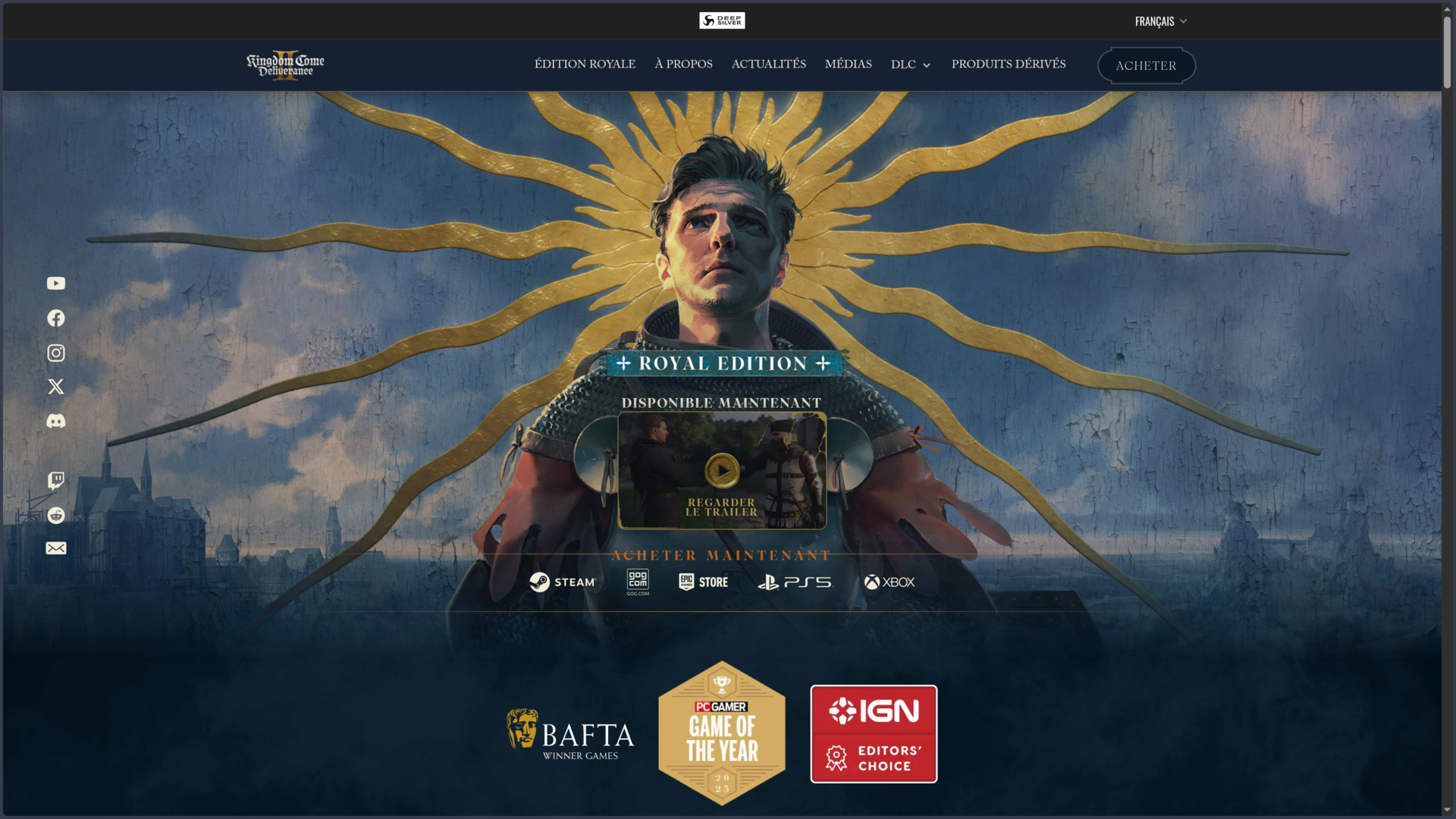
Kingdom Come: Deliverance II launches on February 4, 2025. The game is developed by Warhorse Studios and published by Deep Silver.

The relationship is now very different from that surrounding the first episode.

Warhorse has belonged to PLAION since 2019.

The property has become established.

The first game could be maintained and improved for several years.

The sequel can therefore be conceived within a much longer relationship between studio and publisher.

The result shows another side of Deep Silver than Dead Island.

No chaotic development taken over midway.

No change of studio.

Instead, continuity built around a team the group chooses to support over several years.

The current catalog remains deliberately heterogeneous

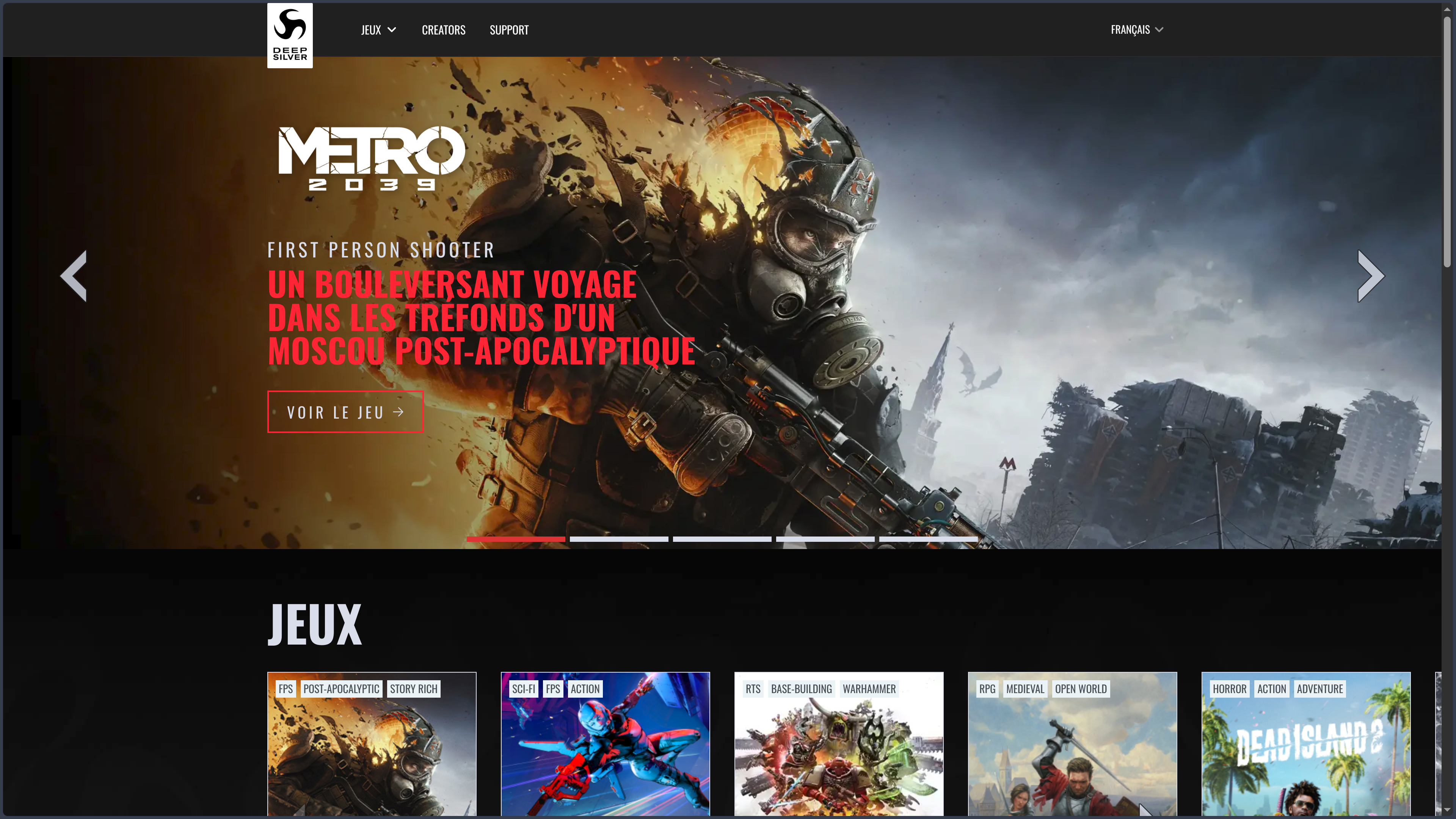
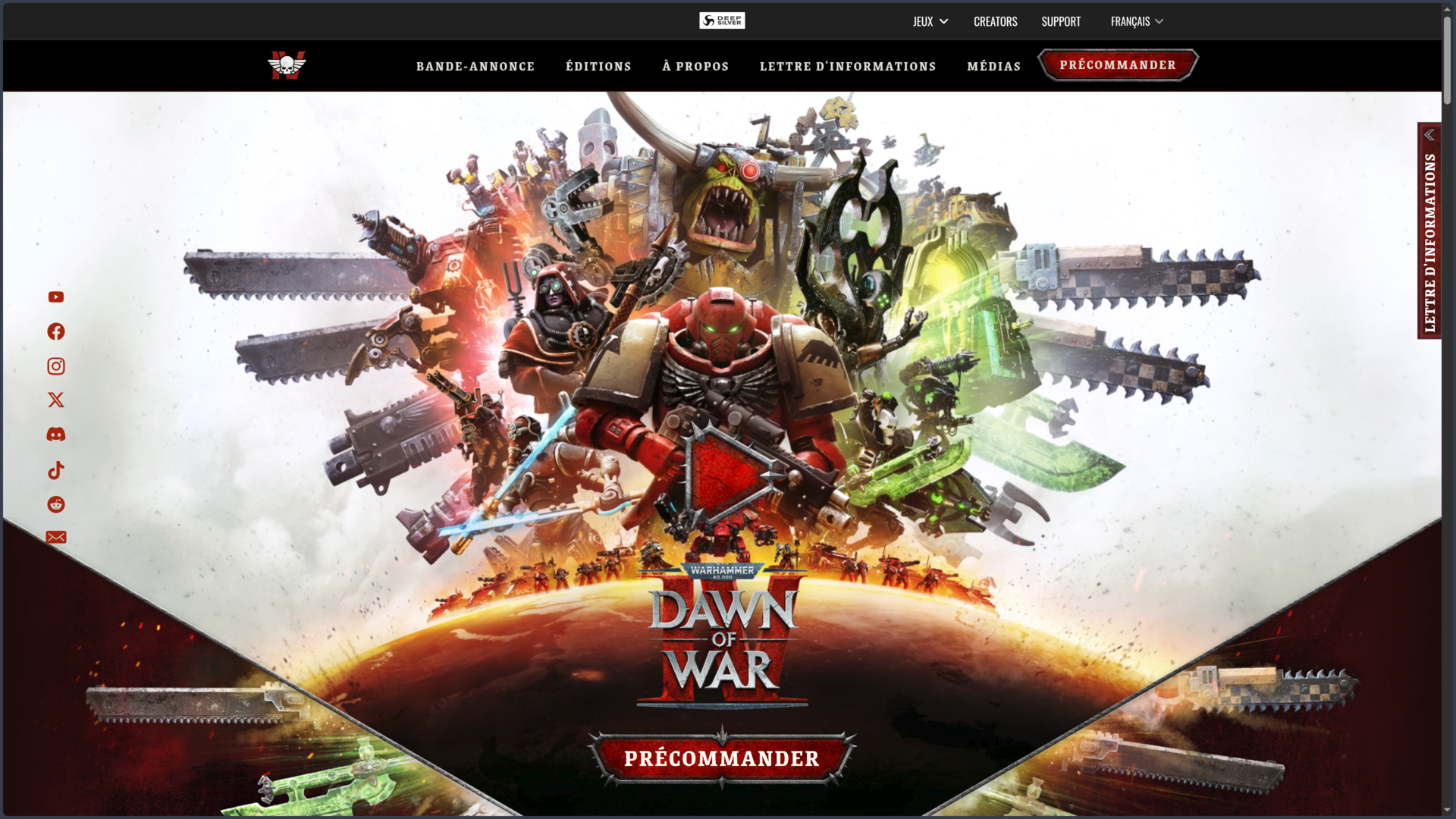
In 2026, the Deep Silver website highlights productions such as Kingdom Come: Deliverance II, Dead Island 2, Metro Exodus, Saints Row, Metal Eden, Dawn of War IV and a new Metro 2039 project.

The list confirms that the brand remains unconfined to a single formula.

Historical RPG.

Horror action.

Post-apocalyptic FPS.

Urban open world.

Science fiction.

Strategy.

Deep Silver functions more as a major-production publishing signature than as one precise school of game design.

Today: the label remains at the center of PLAION

PLAION now operates an international network of studios, publishing teams, distribution structures and partners. Embracer describes the group as having several development studios and three game publishing labels, including Deep Silver.

Deep Silver remains officially presented as PLAION’s flagship publishing label.

Its role has nevertheless evolved since 2002.

Originally, it allowed a European distributor to become a publisher in its own right.

Two decades later, it sits at the center of a network where properties, internal studios, external partners, digital platforms and international structures are much more deeply intertwined.

The logo stayed.

The system behind it became much larger.

What sets it apart

Deep Silver is a publisher before it is an aesthetic

It would be difficult to look at Saints Row, Metro Exodus, Dead Island 2 and Kingdom Come: Deliverance II without their logos and immediately conclude that they all come from the same publishing house.

Their art direction differs.

Their tone differs.

Their rhythm differs.

Their studios differ.

That is precisely what characterizes Deep Silver.

The brand does not impose one single aesthetic.

It builds coherence through a portfolio of properties and partners.

The catalog becomes the signature.

A franchise and a developer are not the same thing

Dead Island makes this distinction particularly clear.

Techland develops the early entries associated with the property.

Dambuster develops Dead Island 2.

Yet the franchise remains immediately recognizable as Dead Island.

That means part of its identity exists beyond the studio that created it.

A publisher working over the long term has to learn how to identify that part.

What can change?

What has to remain?

Which tone truly belongs to the property?

Which mechanics can be rebuilt?

These questions become essential when a franchise changes hands.

Owning a studio does not mean absorbing its identity

Warhorse Studios belongs to PLAION, but Kingdom Come: Deliverance II is still presented as a Warhorse creation published by Deep Silver.

The distinction seems obvious.

It is not always.

A large group could choose to systematically place its own brand in the foreground.

Deep Silver instead functions more as a publishing layer that can remain visible without preventing the developer from retaining its own reputation.

For a cultural map, that distinction is indispensable.

The company that finances or owns is not automatically the one that creates directly.

A property can move through several industrial models

The Deep Silver portfolio brings together very different situations.

An external partner studio.

A studio belonging to the same group.

A license.

A directly controlled property.

An international collaboration.

A production taken over after difficult development.

This mixture reveals that publishing is not one single contractual model.

Two games carrying the same Deep Silver logo may have been produced under completely different conditions.

Coherence therefore has to be built despite that diversity.

Europe is not only a market, but a source of creation

Deep Silver was born within a group founded in Austria and has long been deeply rooted in the European video game network. PLAION later built structures in many countries, while its catalog developed with German, British, Czech, Polish, Ukrainian, American and other studios.

This European origin matters.

For a long time, much of the most visible international publishing was dominated by very large American or Japanese groups.

Deep Silver helps demonstrate that a publisher born from European distribution can gradually build its own global portfolio.

A label can grow through distribution before growing through properties

The trajectory of Koch Media is unusual when compared with that of a publisher born directly around a studio.

The company begins with distribution.

Then learns publishing.

Then builds a network of studios.

Then acquires properties.

Then joins an even larger group.

Each stage uses the previous one.

Knowledge of markets helps publishing.

Publishing helps identify franchises.

Franchises justify certain investments in studios.

Studios allow greater production security.

Deep Silver is therefore also the product of a gradual move up the video game value chain.

The publisher’s role begins long before advertising

Publishing is sometimes reduced to communication and distribution.

The history of Deep Silver shows a much broader role.

Choosing projects.

Financing.

Signing partners.

Buying or exploiting properties.

Maintaining a development.

Creating or acquiring studios.

Deciding on a platform strategy.

Organizing a worldwide launch.

Continuing to sell and update a work years after release.

The advertising campaign is only the visible part.

Much of the publishing work begins while the public still has no idea the game exists.

Maintaining a property during a crisis can become a skill

Dead Island 2 is probably the most spectacular example.

The project passes through a long history before ending up at Dambuster Studios and actually reaching the market in 2023.

Persistence alone is not a virtue.

A project can become a money pit simply because nobody is willing to stop it.

But in this specific case, the publisher eventually ends up with a team, direction and technology capable of producing a commercially important release.

Being able to distinguish a recoverable project from one that should be abandoned is among the most difficult decisions in publishing.

A brand can survive several corporate reorganizations

Deep Silver is born within Koch Media.

Koch Media is acquired by THQ Nordic AB.

The group becomes Embracer.

Koch Media becomes PLAION.

Deep Silver remains Deep Silver.

This continuity shows why cultural brands should not be confused with the legal structures surrounding them.

The public may have a relationship with a label that is much more stable than its relationship with the parent company.

Changing the company above does not automatically reset the cultural history below.

The label can carry a universe without being its sole author

Metro illustrates this idea particularly well.

The universe comes from Dmitry Glukhovsky’s novels.

The main games are developed by 4A Games.

Deep Silver publishes several entries and historically held the associated video game exploitation license.

Attributing Metro simply to “Deep Silver” would therefore be incomplete.

Saying Deep Silver plays no role would be equally false.

A modern cultural work can result from several layers of authorship, licensing, production and publishing.

PANACHES CULTURE should precisely make those relationships visible without flattening them.

The catalog can be coherent without being homogeneous

Deep Silver does not publish only dark games.

It does not publish only RPGs.

It does not publish only open worlds.

It does not publish only European productions.

Its coherence comes more from seeking properties strong enough to be identifiable and sustainable over time.

Dead Island immediately has its zombie paradise.

Metro has its Russian apocalypse.

Saints Row has its urban chaos.

Kingdom Come has its medieval reconstruction.

Very different games can therefore share a publisher because each possesses a cultural territory strong enough to stand on its own.

Intellectual property becomes a memory to maintain

Deep Silver and the groups surrounding it have long maintained catalogs through sequels, remasters, new platforms, expanded editions and revivals.

This transforms the publisher’s role.

It is no longer simply about finding the next game.

It is also about deciding what happens to those that already exist.

Which title deserves a modern version?

Which franchise can return?

Which property should change studio?

Which one should remain silent?

The catalog gradually becomes a collection of decisions about memory.

Digital services also change the direct relationship with players

Deep Silver currently operates an account platform allowing players, among other things, to connect certain games, obtain rewards, view statistics and access different services. PLAION states that this platform is powered by PROS technology.

This kind of service shows another transformation of publishing.

In the era of the physical box, much of the relationship ended after the sale.

Today, a label can maintain a direct connection with the player for years.

Account.

Statistics.

DLC.

Rewards.

Updates.

Support.

The product becomes a service without necessarily ceasing to be a purchased work.

Deep Silver is not PLAION, even though Deep Silver belongs to PLAION

The distinction may sound administrative, but it prevents many errors.

PLAION develops, publishes and distributes different kinds of content and owns several game labels as well as other entertainment activities.

Deep Silver is one of its publishing labels.

A game published by PLAION is therefore not automatically a Deep Silver game.

Conversely, Deep Silver should not be described as the whole of PLAION.

This difference is exactly comparable to the distinction PANACHES CULTURE must preserve between a group, publisher, studio and work.

The success of a publisher is read across several decades

A studio can be defined by a few extraordinary works.

For a publisher, the reading is different.

Some games succeed.

Others fail.

Studios close.

Partners leave.

Franchises change.

Owners acquire the company.

Deep Silver passes through more than two decades of these kinds of movements while preserving an identity clear enough that PLAION still presents it today as its flagship publishing label.

Its distinctiveness therefore does not rest on a gameplay formula.

It rests on an ability to keep worlds alive through industrial changes that might otherwise have interrupted them.

Good to know

  • Deep Silver is a video game publishing label created in 2002 by Koch Media. PLAION explicitly retains this date in its official history.
  • The PANACHES CULTURE entry uses editeur_jeu, because Deep Silver is primarily a publishing label rather than a development studio. PLAION currently describes it as its flagship publishing label.
  • Deep Silver is not currently an independent legal company. Deep Silver is a registered trademark of PLAION GmbH.
  • The country retained is Austria, because PLAION GmbH, the legal entity currently carrying the brand, is registered in Höfen, Austria.
  • Koch Media was founded in 1994 by Franz Koch and Klemens Kundratitz, before adding video game distribution to its activities in 1996.
  • Deep Silver was created in 2002 as Koch Media’s video game publishing division.
  • By 2008, Deep Silver had a US structure, Deep Silver Inc., supporting Koch Media’s international expansion.
  • Deep Silver had already published more than 200 games by 2018, according to documentation released during the acquisition of Koch Media.
  • Properties historically associated with the label include Dead Island, Saints Row, Risen and Homefront, while Deep Silver notably held an exclusive license for Metro at the time of the Koch Media acquisition in 2018.
  • The first Dead Island dates back to 2011. The early games in this branch are associated with Techland, while Dead Island 2 was developed by Dambuster Studios.
  • Koch Media acquired Volition in 2013. The studio is historically associated with the Saints Row series.
  • Fishlabs also joined the Koch Media organization in 2013.
  • Dambuster Studios was established under that identity in 2015 and would later become the developer of Dead Island 2.
  • Deep Silver also publishes games developed by external partners, such as Wasteland 2, listed among its published productions in group documentation.
  • Kingdom Come: Deliverance was published under the Deep Silver label in 2018.
  • On February 14, 2018, THQ Nordic AB acquired Koch Media GmbH, and therefore Deep Silver, for €121 million.
  • Warhorse Studios was acquired by Koch Media in 2019.
  • Metro Exodus launched in 2019 and remains one of the productions highlighted by Deep Silver today.
  • In August 2022, Koch Media officially became PLAION. The parent company’s name change did not make Deep Silver disappear.
  • Dead Island 2 launched on April 21, 2023, developed by Dambuster Studios; more than one million copies were sold during its first three days according to PLAION.
  • Metro Awakening appeared in the Deep Silver catalog in 2024 across the main virtual-reality platforms.
  • Kingdom Come: Deliverance II launched on February 4, 2025. The game was developed by Warhorse Studios and published by Deep Silver.
  • Deep Silver currently continues to highlight Metro, Dead Island, Kingdom Come: Deliverance and Saints Row among its main worlds.
  • PLAION currently owns several game publishing labels, including Deep Silver, Milestone and Vertigo Games.
  • PLAION belongs to Embracer Group, of which it forms one of the operative groups.
  • The current Deep Silver website and contracts are legally operated by PLAION GmbH.
  • Deep Silver also currently operates a player account platform, notably allowing users to connect certain games, view statistics or obtain rewards.