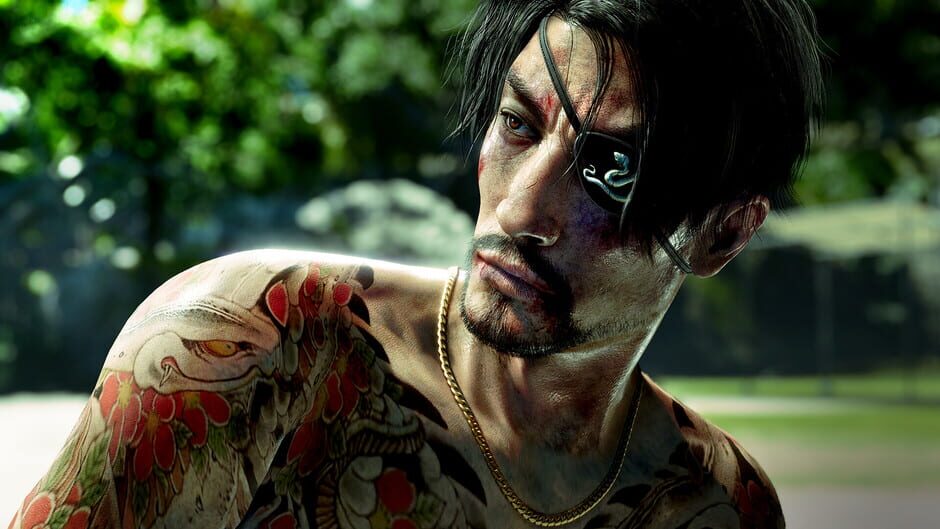
Six months after the events that led him to fight alongside Kiryu, Goro Majima washes ashore on Rich Island, a small Pacific island, with no memory of his identity or past. Taken in by Noah Rich, a young boy who dreams of seeing the world, Majima has only two clues to who he is: the tattoo on his back and the dagger he was carrying. After a turbulent encounter with pirates, Majima takes control of a ship and sets sail with Noah in search of his lost memories. Their journey carries them across the waters of Hawaii, where criminal crews, treasure hunters and the inhabitants of the strange pirate haven of Madlantis compete for a legendary fortune hidden for two centuries.

Video game
2025
Action
Adventure
RPG
Hack and slash
Like a Dragon: Pirate Yakuza in Hawaii
- Ryû ga Gotoku Studio Developer
- SEGA Publisher
Amnesiac and now a pirate captain, Goro Majima sets sail across Hawaii in search of his past and a legendary treasure.
Details
- Type
- Video game
- Release
- 2025-02-21
- Genres
- Action, Adventure, RPG, Hack and slash
- Platforms
- PlayStation 5, PlayStation 4, Xbox Series, Xbox One, PC
- Engine
- Dragon Engine
- Game modes
- Single player
Synopsis
Like a Dragon: Pirate Yakuza in Hawaii
Trailer
Watch the trailer
Overview
Presentation
Like a Dragon: Pirate Yakuza in Hawaii places Goro Majima at the center of an adventure entirely focused on his character. Set several months after Like a Dragon: Infinite Wealth, the game begins when the former yakuza washes ashore on Rich Island with no memories, unable even to remember his own name.
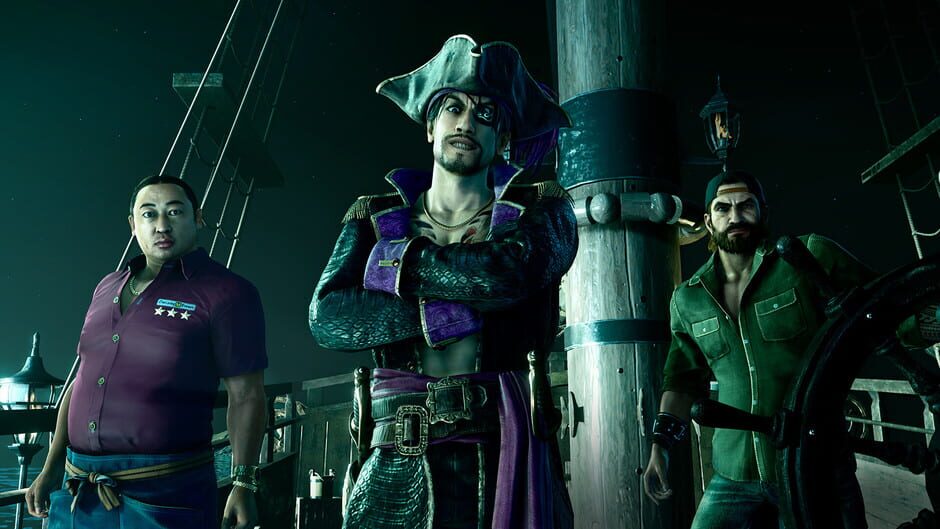
Rescued by Noah Rich, a young resident of the island, Majima quickly finds himself confronted by pirates sailing the waters around Hawaii. After taking control of a ship, he decides to head out to sea in search of clues about his past while also giving Noah the chance to discover the world beyond his island.
The game retains the series' real-time action combat used in entries centered on Kiryu and Majima, rather than the turn-based battles of Ichiban Kasuga's main adventures. Majima has access to two combat styles that can be switched between depending on the enemies and the situation.
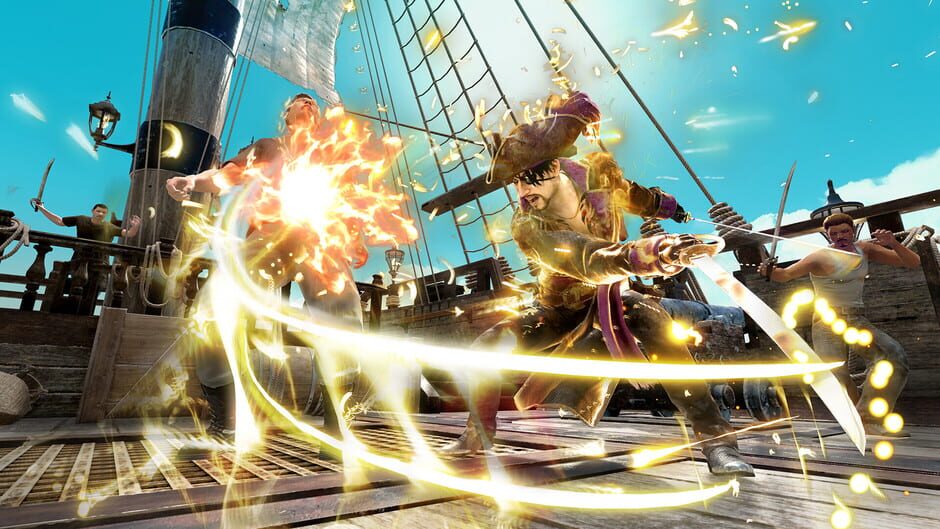
The Mad Dog style returns to the martial identity associated with Majima across several previous games. Fast and aggressive, it combines punches, kicks and dagger attacks. It also allows certain enemies to be launched into the air and followed up with aerial attacks.
When his Madness Gauge is sufficiently filled, Majima can push this style further by summoning doubles that temporarily fight alongside him. Heat Actions also make use of the environment, improvised weapons and different contextual situations to trigger spectacular attacks.
The Sea Dog style instead embraces the full pirate arsenal. Majima wields two cutlasses and can use several secondary weapons, including a pistol, a chain hook and blades that can be thrown at enemies before returning to him.
The hook also allows Majima to quickly close the distance to opponents and is occasionally used during exploration. Sea Dog has its own Heat Actions and can make use of various Dark Instruments, supernatural treasures capable of summoning powerful creatures or special effects when the Madness Gauge is used.
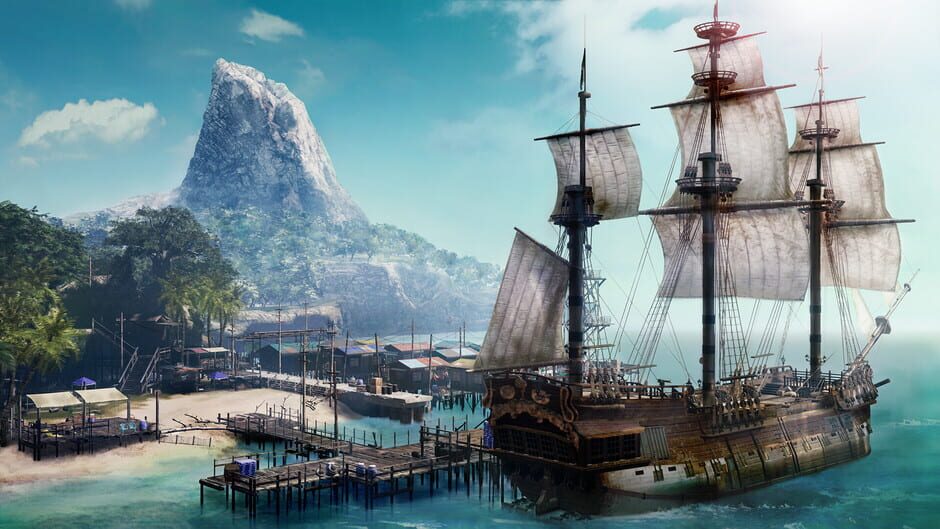
The adventure is not limited to the streets of Hawaii. Majima becomes captain of the Goromaru, his own pirate ship, which he can use to explore different maritime areas, search for treasure and engage rival crews encountered along the way.
Naval battles begin directly at sea. The player controls the Goromaru, avoids enemy fire and uses its own cannons to damage opposing vessels. Majima can also perform certain actions directly from the deck, including helping with repairs or using weapons against enemies.
Once an enemy ship has been sufficiently weakened, it becomes possible to board it. Combat then shifts from ship-to-ship warfare to a group battle on the deck, with Majima fighting alongside members of his crew.
Building the Goro Pirates therefore forms a parallel progression system alongside Majima himself. More than one hundred characters can be recruited throughout the adventure. Some specialize in offense, others have support or recovery abilities, and their position within the crew affects both naval battles and boarding actions.
Crew members can gain experience and improve their abilities. Majima can also raise morale by speaking with them, giving them items or organizing meals and parties aboard the ship.
The Goromaru has its own upgrade system as well. Cannons, armor and other equipment can be improved, while its appearance can be customized with various decorative elements. Some naval weapons go far beyond traditional artillery and match the deliberately excessive tone of the adventure.
Sailing leads to several regions with their own environmental conditions. Volcanic areas, cold climates and dangerous maritime phenomena can sometimes force the player to alter course or prepare the ship more thoroughly before an expedition.
Treasure islands can also be explored. They contain resources, enemies and specific obstacles, and contribute to the search for the many treasures scattered around Hawaii.
The Pirates' Coliseum in Madlantis expands the naval side of the game even further. This arena offers several formats of sea battle, ranging from duels between two crews to much more chaotic confrontations involving multiple ships.
The reputation of the Goro Pirates increases by winning these battles, discovering treasures, completing challenges or capturing wanted criminals. Raising the pirate rank gradually unlocks new possibilities for both the crew and the Goromaru.
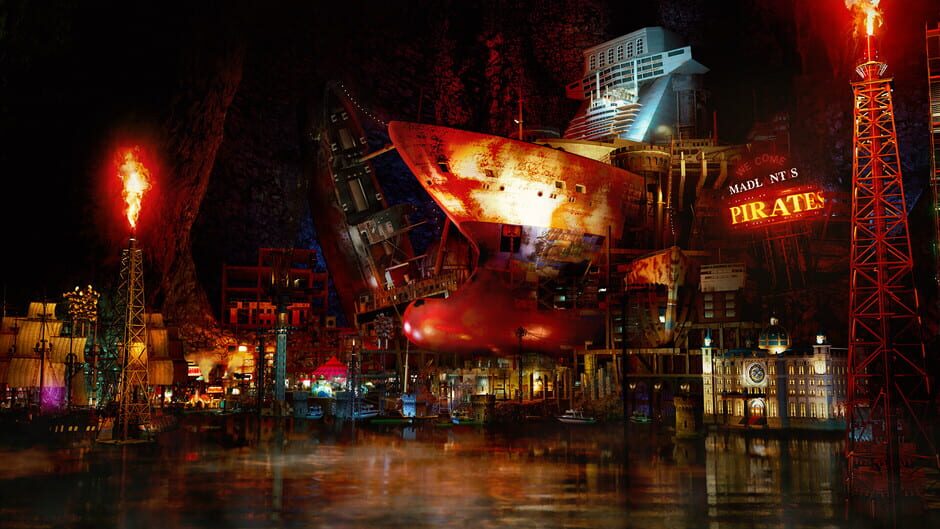
On land, the adventure is divided across several locations. Rich Island serves as the starting point and Noah's home. Nele Island, already connected to the events of Infinite Wealth, notably hosts former yakuza involved in operations taking place there. Madlantis functions as a vast criminal haven dedicated to pirates, gambling and naval combat.
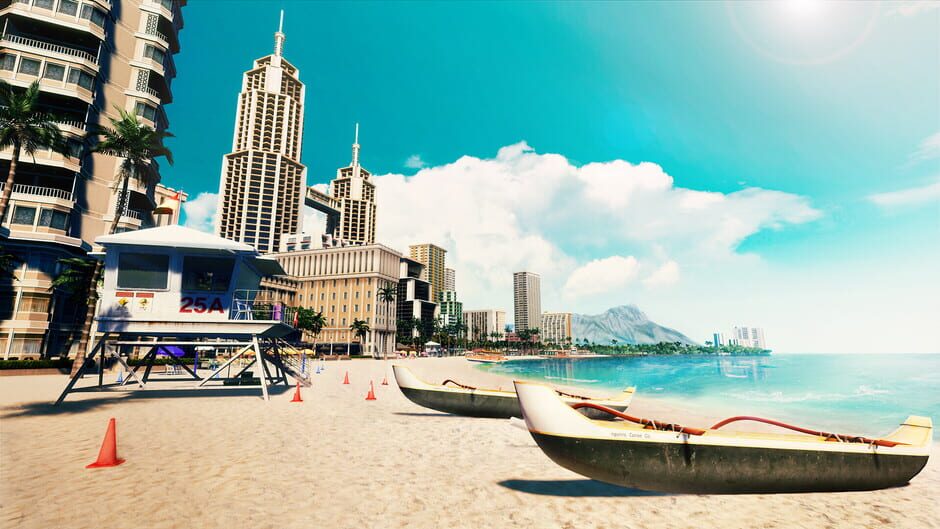
Honolulu also returns as the main urban environment. Majima can find shops, restaurants, side activities, encounters and characters characteristic of the series throughout the city.
Exploration notably makes use of the chain hook, which can reach certain difficult areas or retrieve various objects. Resources found on land and at sea are also used to craft equipment and cook meals that provide different effects.
The side content retains the abundance traditionally associated with the series. Karaoke, Dragon Kart, Crazy Delivery, arcade activities, Master System games and various encounters accompany the substories and allow players to freely alternate between the main story, life on land and maritime expeditions.
Key points
- An adventure entirely centered on Goro Majima.
- A story set several months after Like a Dragon: Infinite Wealth.
- Majima begins the adventure with amnesia on Rich Island.
- A quest combining the search for his memories with the hunt for a legendary treasure.
- Real-time combat, rather than turn-based battles.
- Two combat styles: Mad Dog and Sea Dog.
- Mad Dog combines speed, dagger attacks, aerial moves and summoned doubles.
- Sea Dog uses two cutlasses and several secondary pirate weapons.
- Heat Actions and a Madness Gauge specific to both styles.
- Majima becomes captain of the Goromaru.
- Free exploration of several maritime zones around Hawaii.
- Naval battles combining cannons, maneuvering and ship upgrades.
- The ability to board enemy ships and continue fighting on their decks.
- More than 100 recruitable crew members.
- Management, training and morale systems for the Goro Pirates.
- Customization and upgrading of the Goromaru.
- Treasure islands, bounties and challenges to discover at sea.
- The Pirates' Coliseum in Madlantis offers several naval battle formats.
- Rich Island, Nele Island, Madlantis and Honolulu serve as the main exploration areas.
- Numerous substories and side activities typical of the series.
Conclusion
Like a Dragon: Pirate Yakuza in Hawaii turns Goro Majima into a captain without abandoning the series' action foundations. The Mad Dog and Sea Dog styles preserve fast-paced combat while offering two different approaches, combining Majima's familiar fighting identity with an arsenal built around his new pirate role.
Sailing forms a second complete pillar of the adventure. Recruiting a crew, upgrading the Goromaru, searching for treasure, fighting other ships and then boarding them turns maritime travel into much more than a simple way of moving between locations.
The game also retains the characteristic structure of Like a Dragon, where criminal intrigue, side activities and eccentric characters coexist. The maritime setting simply gives this formula a new scale, alternating between Honolulu and the Hawaiian islands with expeditions across the open sea.
Majima's amnesia therefore serves as the starting point for an adventure that can temporarily separate him from his yakuza past while preserving his personality, fighting style and the excess that has accompanied him throughout the series.
Good to know
Like a Dragon: Pirate Yakuza in Hawaii was developed by Ryu Ga Gotoku Studio and published by SEGA.
The game was released on February 21, 2025 for PlayStation 4, PlayStation 5, Xbox One, Xbox Series X|S and Windows PC/Steam.
It is a real-time action-adventure game. The main campaign is built around Goro Majima and does not use the turn-based combat system featured in Yakuza: Like a Dragon and Like a Dragon: Infinite Wealth.
The story takes place approximately six months after the events of Like a Dragon: Infinite Wealth and reuses several locations and elements introduced in that game, notably Hawaii and Nele Island.
Hidenari Ugaki returns as the Japanese voice of Goro Majima.
The Goromaru can be extensively customized, both visually and in terms of weaponry. The crew includes more than 100 recruitable characters, including several familiar faces from earlier entries.
The Pirates' Coliseum notably allows players to take part in naval battles under different rules, including confrontations involving multiple crews at the same time.
Several activities from Infinite Wealth return in adapted form, including Crazy Delivery and Sicko Snap, while Dragon Kart makes its appearance in Hawaii. The game also includes karaoke, arcades and several Master System titles.
A Deluxe Edition adds extra crew members, costumes, Goromaru customization elements and additional karaoke songs. These remain separate from the core systems of the base game.
This entry focuses on the main campaign and core mechanics of the standard game, without treating characters, items or customization options reserved for additional content as foundational elements.