





Overview
Kurokawa is a French publishing house specializing in manga, created in September 2005 within the Editis group.
Its launch was directly connected to the group’s desire to develop a structured manga activity at a time when the French market was experiencing strong growth in the early 2000s.
The project was entrusted to Grégoire Hellot, a journalist specializing in Japanese culture and video games, fluent in Japanese and already possessing an in-depth knowledge of the Japanese publishing market.
The name Kurokawa, which can be translated as “black river” in Japanese, is also a reference to the publishing environment in which the house was initially developed, notably around Fleuve and Univers Poche.
From its launch, Kurokawa chose a title capable of immediately defining its ambitions: Fullmetal Alchemist by Hiromu Arakawa.
The series, published in Japan by Square Enix, quickly became the founding work of the French publishing house.
It supported Kurokawa’s growth for several years and remains one of the major titles in its back catalogue today through different editions.
The first months also saw the arrival of Satan 666 by Seishi Kishimoto and Kimi Wa Pet by Yayoi Ogawa.
These works already demonstrated a desire not to limit the catalogue to a single demographic category.
Kurokawa gradually developed identified collections around shōnen, shōjo and seinen, joined by humorous titles, children’s works and several more specialized lines.
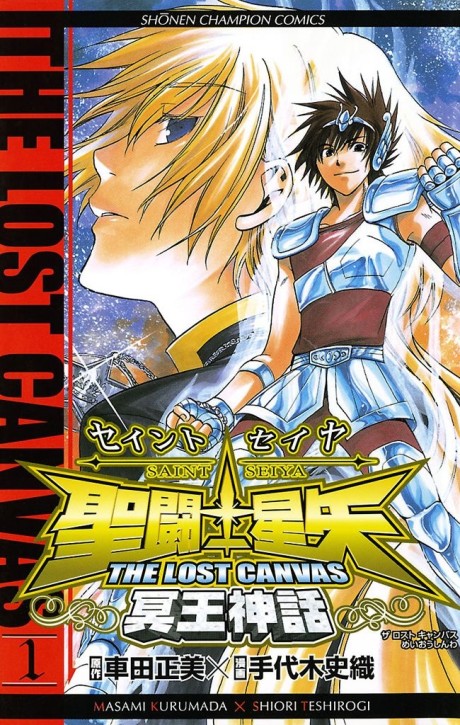
This organization allows the publishing house to release works as different as Fullmetal Alchemist, Soul Eater, Ippo, Vinland Saga, Pokémon – La Grande Aventure, Saint Seiya – The Lost Canvas, Les Vacances de Jésus et Bouddha, Magi, One-Punch Man, Spy x Family, Oshi no Ko and the different manga connected to the Pokémon universe.
Its activity mainly relies on the acquisition of Japanese licenses.
Kurokawa negotiates with Japanese publishers and rights holders in order to translate, adapt and publish their works on the French-speaking market.
The publishing house therefore becomes the French publisher of these manga without replacing their original publisher.
Fullmetal Alchemist remains a work by Hiromu Arakawa published in Japan by Square Enix.
One-Punch Man is published in Japan within the Shueisha environment.
Spy x Family is a work by Tatsuya Endo also published in Japan by Shueisha.
Vinland Saga belongs to Kodansha in Japan.
Kurokawa’s role is therefore to build their French editions: rights acquisition, translation, adaptation, lettering, production, publication and promotion.
This distinction is essential when precisely tracing the international circulation of a manga.
From its beginnings, Kurokawa developed a policy aimed at offering a controlled number of series rather than multiplying licenses.
The publishing house notably looks for works capable of remaining in bookstores over the long term and places particular importance on the way they are presented to French readers.
This approach can be seen in the development of its back catalogue.
Series completed several years ago continue to be offered through original editions, reissues, collected editions, Perfect Editions or new editorial operations.
Fullmetal Alchemist is the clearest example.
After the original French edition, Kurokawa notably published a Perfect Edition, allowing the work to be introduced again to a new generation.
The same heritage approach gradually concerns other series in the catalogue.
Children’s publishing is also an important area.
The Pokémon license allows Kurokawa to reach sometimes very young readers through different manga adaptations of the franchise.
Pokémon – La Grande Aventure and its many cycles accompany several generations of video games and extend one of the world’s most popular Japanese universes into comics.
This activity demonstrates Kurokawa’s ability to publish manga connected to a pre-existing property while maintaining the editorial logic of a serialized work.
The publishing house simultaneously develops works aimed at older readers.
Vinland Saga by Makoto Yukimura builds a historical narrative around the Viking world.
Les Vacances de Jésus et Bouddha by Hikaru Nakamura uses comedy to imagine the contemporary cohabitation of two religious figures.
Ippo develops the training and career of a boxer across several dozen volumes.
The seinen catalogue can therefore combine historical adventure, humor, sport, thriller and social reflection.
One of the most visible changes in scale occurred in 2016 with the French publication of One-Punch Man, created by ONE and drawn by Yusuke Murata.
The series quickly became a commercial phenomenon for Kurokawa.
A few years later, Editis stated that the first fifteen volumes had surpassed 4.2 million copies sold in three and a half years.
One-Punch Man gave the publishing house another very large franchise at a time when the French manga market was entering a new phase of growth.
In 2020, Spy x Family by Tatsuya Endo joined the catalogue in turn.
The series combines espionage, action and family comedy around the Forger family.
Its French success, later strengthened by the animated adaptation, made it one of the publishing house’s major titles during the 2020s.
Kurokawa simultaneously continued working with creators historically associated with its catalogue.
Its relationship with Hiromu Arakawa extends far beyond Fullmetal Alchemist.
The publishing house also publishes several other works by the creator, including Silver Spoon and Tsugai – Daemons of the Shadow Realm.
This continuity allows Kurokawa to build its identity not only around series, but also around lasting editorial relationships with certain creators and Japanese publishers.
The publishing house does not remain entirely confined to manga in the strict sense.
In 2018, it launched Kuropop, a collection devoted more broadly to Japanese popular culture.
Books connected to lifestyles, cultural phenomena or different Japanese universes can therefore join its catalogue.
In 2019, Kurokawa also created Kuro Savoir.
This collection uses manga to adapt or present works and ideas from philosophy, literature, economics and the humanities.
Creators and thinkers such as Marx, Nietzsche, Schopenhauer and various literary classics can therefore be approached through Japanese graphic adaptations.
This diversification does not, however, turn Kurokawa into a general publishing house.
The core of its activity remains clearly identified with French publishing of Japanese creations.
In 2025, Editis’s professional information still stated that Kurokawa does not accept manuscripts and publishes titles of Japanese origin.
This orientation notably distinguishes it from French publishers that directly develop original manga with French creators.
Kurokawa’s history is also linked to the successive transformations of the group to which it belongs.
The publishing house was initially developed within the environment of Univers Poche, an Editis structure that brought together several major paperback publishing brands.
In 2021, Editis reorganized its activities.
Manga and comics took a larger place within its illustrated publishing division, and Kurokawa was placed under the responsibility of the Edi8 environment.
This development accompanied the group’s desire to strengthen its presence in graphic publishing.
In 2022, Editis launched Kotoon, a publishing house devoted to print editions of webtoons.
Kurokawa and Kotoon nevertheless remain two different brands.
The former is historically specialized in Japanese manga.
The latter develops works originating mainly from the webtoon ecosystem.
In December 2024, a new management structure was announced.
Aurélie Denoize became director of Kurokawa and Kotoon.
She had known the publishing house since its creation, having notably handled its marketing.
Adeline Laborie became editorial director.
Grégoire Hellot, who originated the catalogue and many of the choices that shaped Kurokawa since 2005, continued his activity as collection director.
This organization marks a gradual transition without breaking with the historical identity of the publishing house.
In 2025, Kurokawa celebrated its twentieth anniversary.
The anniversary illustrates the transformation of the market in which it was born.
Manga has gone from a still specialized sector to one of the central components of comics publishing in France.
Kurokawa accompanied this evolution by preserving several of its earliest works while renewing its catalogue with new generations of successes.
In 2026, the publishing house remains a distinct editorial entity within Editis.
It continues to publish Japanese manga for different audiences, maintain its back catalogue, offer special editions and occasionally extend its activity to books connected to Japanese culture.
Its identity ultimately rests on a fairly clear continuity: selecting Japanese works capable of reaching a broad French readership, supporting them over time and maintaining a catalogue where popular series and more singular titles can coexist.
History
2004-2005: Editis prepares its entry into the manga market
At the beginning of the 2000s, the French manga market was growing rapidly.
Major Japanese series already had a significant audience and several specialized or general publishers were developing their catalogues.
Within Editis, Jean-Claude Dubost, then head of Univers Poche, wanted to create a structure devoted to this sector.
The group was notably looking for someone capable of communicating directly with Japanese partners.
Grégoire Hellot was recruited in this context.
A journalist specializing in video games and Japanese culture, he was fluent in Japanese and had direct knowledge of the country’s cultural industry.
The Kurokawa project was built around this expertise.
September 2005: Kurokawa launches with Fullmetal Alchemist
Kurokawa was officially launched in September 2005.
The choice of its first major title was decisive.
Fullmetal Alchemist by Hiromu Arakawa was then a rapidly growing series in Japan and already benefited from major visibility thanks to its animated adaptation.
Kurokawa obtained the French license from Square Enix.
The series immediately became the main driving force behind the new publishing house.
It was joined by Satan 666 by Seishi Kishimoto and Kimi Wa Pet by Yayoi Ogawa.
These first titles already established several lines: action and adventure, works aimed at older readers and female-oriented manga.
Fullmetal Alchemist becomes the founding work
The French success of Fullmetal Alchemist quickly went beyond its role as a launch series.
The adventures of Edward and Alphonse Elric supported Kurokawa’s establishment on the market for several years.
The publishing house worked extensively on the series’ visibility in bookstores and the media.
The work then remained durably available after its conclusion.
The publication of a Perfect Edition notably allowed it to be offered to a new generation of readers while placing greater emphasis on format and production.
Fullmetal Alchemist thus became both a historical commercial success and a heritage element of the catalogue.
Rapidly diversifying the catalogue
Kurokawa did not want to depend on a single series.
During its early years, the publishing house developed several licenses originating from different Japanese publishers.
Soul Eater by Atsushi Ohkubo brought a new action and fantasy universe.
Ippo by George Morikawa introduced an extremely long-running sports series.
Saint Seiya – The Lost Canvas renewed a franchise already deeply familiar to French readers.
Vinland Saga by Makoto Yukimura developed a much more adult historical narrative.
Les Vacances de Jésus et Bouddha explored comedy.
The catalogue therefore began combining mainstream works, children’s titles and series aimed at more specialized readers.
Pokémon durably establishes children’s publishing
The publication of manga connected to Pokémon opened another important area.
The franchise already possessed immense popularity through video games, animation and merchandise.
Kurokawa developed different manga series covering several generations of the universe.
Pokémon – La Grande Aventure became one of the main collections within this catalogue.
Its story arcs evolved alongside the regions, characters and creatures introduced across different generations of games.
This continuity makes Pokémon one of Kurokawa’s longest-lasting licenses.
It also allows the publishing house to maintain a direct relationship with child readers who can later discover other series in the catalogue.
Building an editorial policy around a controlled number of series
Kurokawa adopted relatively early a strategy of not endlessly multiplying new releases.
The publishing house seeks to maintain sufficient visibility for each series.
This approach involves cover design, bookstore promotion, commercial operations and media presence.
In the mid-2000s, Kurokawa notably applied to manga some promotional methods from the group’s mainstream publishing activity: displays, advertising campaigns, multi-volume operations and promotional items.
The objective was to expand the audience beyond readers already familiar with specialized stores and media.
2008-2010: navigating a more difficult market
After the strong growth of the early 2000s, the French manga market experienced a less dynamic period around 2008-2009.
Kurokawa nevertheless maintained its desire to broaden its readership.
The publishing house notably looked for titles capable of attracting adult readers or people who did not usually read manga.
This strategy explains the presence of very different series within the same catalogue.
Kurokawa does not seek to build an identity focused solely on combat or adventure.
Vinland Saga builds a historical back catalogue
Among the series able to establish themselves over the long term is Vinland Saga by Makoto Yukimura.
The work develops a vast narrative around the Viking world, war, slavery, violence and the search for another way of living.
Its French publication extends over many years.
The animated adaptation later gave it renewed international visibility.
The title gradually became one of the major representatives of seinen in the Kurokawa catalogue.
Its recognition at the Angoulême Festival in 2025 further underlined the position acquired by the work in France.
Les Vacances de Jésus et Bouddha broadens the readership
With Les Vacances de Jésus et Bouddha by Hikaru Nakamura, Kurokawa also demonstrated its ability to support much less conventional proposals.
The premise imagines Jesus and Buddha sharing an apartment in contemporary Japan during their vacation on Earth.
The contrast between religious references and everyday life creates a comedy that found an audience well beyond regular action-shōnen readers.
Kurokawa uses this type of series to gradually broaden its image.
2016: One-Punch Man changes the scale of the catalogue
In 2016, Kurokawa published One-Punch Man in France, created by ONE and drawn by Yusuke Murata.
The manga plays with the codes of superheroes and combat stories through Saitama, a character who has become so powerful that he defeats his opponents with a single punch.
Its French success was very rapid.
Within a few years, several million copies were sold.
One-Punch Man became one of the most important series in Kurokawa’s commercial history after Fullmetal Alchemist.
It also allowed the publishing house to occupy a particularly visible position during the renewed growth of the French manga market.
2018: Kuropop moves beyond traditional manga
In 2018, Kurokawa launched Kuropop.
The collection takes a broader interest in Japanese popular culture.
It can therefore include books that do not necessarily correspond to the traditional format of a manga series.
La Magie du rangement by Marie Kondo was notably among the titles highlighted when this diversification was launched.
Kuropop demonstrates that knowledge of the Japanese market can be used beyond comics alone.
2019: Kuro Savoir uses manga to communicate ideas
In 2019, the publishing house created Kuro Savoir.
The collection is based on manga adapted from philosophical, literary, economic or humanities works.
It allows readers to discover in graphic form texts and concepts associated notably with Marx, Nietzsche and Schopenhauer, as well as several literary classics.
In another way, the project reflects Kurokawa’s historical desire to reach readers who do not necessarily read the same types of manga.
2020: Spy x Family becomes a new major license
In 2020, Kurokawa published Spy x Family by Tatsuya Endo in France.
The series originated in Japan on Shonen Jump+ at Shueisha.
It follows the creation of a fake family unknowingly bringing together a spy, an assassin and a telepathic child.
Its combination of comedy, espionage, action and family relationships allows it to reach a particularly broad readership.
The animated adaptation later greatly strengthened its popularity.
Spy x Family became one of Kurokawa’s new pillars during the 2020s and received several special operations and collector’s editions.
A lasting relationship with Hiromu Arakawa
As new franchises emerged, Kurokawa maintained a particularly strong relationship with Hiromu Arakawa.
After Fullmetal Alchemist, the publishing house notably released Silver Spoon – La Cuillère d’argent, a story set in an agricultural high school.
It later reunited with the creator through The Heroic Legend of Arslân, a drawn adaptation of a work by Yoshiki Tanaka.
Then came Tsugai – Daemons of the Shadow Realm, the creator’s new series.
This continuity directly connects the publishing house’s beginnings to its contemporary catalogue.
Oshi no Ko and renewal during the 2020s
Kurokawa simultaneously continued searching for new series capable of renewing its readership.
Oshi no Ko notably joined its catalogue and developed a story around the Japanese entertainment industry, idols, fame and its mechanisms.
Like Spy x Family, the series later benefited from significant exposure thanks to its animated adaptation.
The publishing house thus continues to combine titles established for sometimes more than fifteen years with new licenses originating from contemporary Japanese platforms and magazines.
2021: Editis reorganizes its manga and illustrated publishing activities
In November 2021, Editis announced the reorganization of several activities.
Manga and comics were to occupy a larger place within the illustrated publishing division.
Grégoire Hellot then became director of Kurokawa under the responsibility of Vincent Barbare, president of Edi8.
The publishing house therefore left the historical organization of Univers Poche to join an environment more focused on illustrated publishing.
This development did not change its brand or catalogue.
It mainly changed its position within the group’s structure.
2022: Kotoon complements Editis’s graphic publishing activity
In 2022, Editis created Kotoon, a publishing house devoted to print editions of webtoons.
The group presented this new structure as having been developed in the wake of Kurokawa.
The two publishing houses nevertheless respond to different editorial traditions.
Kurokawa remains focused on manga and Japanese creations.
Kotoon focuses on webtoons.
Their economic proximity should therefore not lead to their catalogues being merged.
2024: a new management team
On December 1, 2024, Aurélie Denoize took over the management of Kurokawa and Kotoon.
She had known Kurokawa since its creation through her historical work in the marketing of several publishing houses within the group.
Adeline Laborie became editorial director.
Grégoire Hellot retained a central role as collection director and remained directly associated with the construction of the catalogue.
The new organization therefore strengthens the publishing house without breaking with the team and editorial culture developed since 2005.
2025: Kurokawa celebrates twenty years
In 2025, Kurokawa celebrated its twentieth anniversary.
The event made it possible to compare several generations of the catalogue.
Fullmetal Alchemist, its founding title, continues to be read.
One-Punch Man and Spy x Family represent successes that appeared much later.
Pokémon maintains a constantly renewed audience.
Vinland Saga continues to receive recognition.
New series simultaneously prepare the next generation.
These twenty years above all illustrate the transformation of a publishing house created within a still specialized market into a publisher operating in a sector that has become central to French comics publishing.
Kurokawa today
In 2026, Kurokawa is an active publishing house within the Editis group, in the Edi8 editorial environment.
Its catalogue remains specialized in Japanese works.
The publishing house does not operate as a platform freely accepting French manga projects: Editis’s professional information states that Kurokawa does not accept manuscripts and currently publishes titles of Japanese origin.
Management is handled by Aurélie Denoize, accompanied by Adeline Laborie as editorial director and Grégoire Hellot as collection director.
The catalogue continues to be distributed through the Editis ecosystem and its Lisez platform.
Kurokawa therefore remains clearly identifiable as a specialized publishing house whose main role is to select, adapt and publish Japanese works in French, while developing their presence over the long term.
What sets it apart
Having launched directly with a founding work
Many publishing houses need several years to find the title that defines their first period.
Kurokawa encountered this situation from its launch.
Fullmetal Alchemist accompanied almost the entire initial construction of the brand.
The series gave the young publishing house immediate visibility, while also setting a level of expectation for the translation, production and promotion of subsequent titles.
Twenty years later, it remains important enough to continue being republished.
This continuity gives the catalogue a particularly identifiable point of origin.
Maintaining a relatively controlled number of series
Kurokawa historically built its activity around a deliberately more limited selection than certain catalogues based on a very rapid multiplication of licenses.
This principle does not prevent the catalogue from becoming substantial over the years.
Rather, it aims to give enough space to selected series for them to find their audience.
This approach supports back-catalogue work and explains the prolonged presence of many works after the end of their initial publication.
Bringing together several generations of readers
Pokémon can be an entry point for young readers.
Fullmetal Alchemist has accompanied readers since the 2000s.
One-Punch Man strongly marked the second half of the 2010s.
Spy x Family and Oshi no Ko represent a more recent generation.
Vinland Saga addresses another type of audience.
The catalogue therefore does not rely on a single age group.
This combination allows Kurokawa to retain older readers while continuously renewing its audience.
Building lasting relationships with certain Japanese creators
The repeated presence of Hiromu Arakawa is particularly significant.
Fullmetal Alchemist launched the publishing house.
Silver Spoon later developed a completely different universe.
The Heroic Legend of Arslân and then Tsugai further extended this relationship.
The publishing house also published several works by Tetsuya Fukuchi, Seishi Kishimoto and other creators who returned several times within its catalogue.
This continuity shows that selection does not focus only on isolated titles: relationships built with Japanese publishers and creators can continue from one work to another.
Expanding manga beyond action shōnen
Fullmetal Alchemist and One-Punch Man occupy a highly visible position, but they do not summarize Kurokawa.
Vinland Saga develops historical storytelling.
Les Vacances de Jésus et Bouddha is built around unusual comedy.
Kimi Wa Pet belongs to another tradition of female-oriented manga.
Ippo is a sports manga.
The Pokémon series focus more strongly on children.
This diversity allows Kurokawa to maintain an identity specializing in manga without reducing it to a single narrative genre.
Using the strength of a general publishing group to promote a specialized sector
Kurokawa was created within a major publishing group and benefits from structures capable of handling distribution, marketing and bookseller relations on a large scale.
From its earliest years, the publishing house therefore applied certain methods from general publishing to manga.
Displays, advertising campaigns, national operations and partnerships complement the tools traditionally used in specialized media.
This capacity contributes to bringing certain series beyond the circle of readers already familiar with manga.
Keeping the back catalogue alive through new editions
A completed series is not necessarily considered inactive.
Kurokawa develops Perfect Editions, box sets, collector’s editions and reissues to bring certain works back into circulation in a new form.
Fullmetal Alchemist and Soul Eater notably illustrate this approach.
These editions make it possible to reach both readers who already own the works and those discovering them several years after their first French publication.
Manga heritage therefore becomes an editorial activity in its own right.
Occasionally expanding the editorial line without losing its Japanese identity
Kuropop and Kuro Savoir show that Kurokawa can move beyond traditional serialized manga.
The first collection explores different aspects of Japanese popular culture.
The second uses manga as a medium for communicating philosophy, literature and knowledge.
These extensions nevertheless remain consistent with the identity of the publishing house.
Kurokawa does not become a general publisher detached from its origins.
Japan and its cultural productions remain the common thread.
Clearly distinguishing Kurokawa, Edi8 and Editis
Several levels currently coexist.
Kurokawa is the publishing house visible on the books.
Edi8 is the editorial and organizational environment in which it is currently integrated.
Editis is the broader group to which this structure belongs.
These levels should not be confused when attributing a work.
A manga carrying the Kurokawa logo should be linked to Kurokawa as its French publisher, not directly to the entire Editis catalogue.
Likewise, Kotoon remains a separate publishing house even though its management is currently shared with Kurokawa.
Good to know
- Kurokawa was created in September 2005 as a publishing house specializing in manga within the Editis environment, with Grégoire Hellot responsible for building its catalogue.
- The name Kurokawa means “black river” in Japanese, a reference to the publishing environment in which the brand was initially developed.
- Fullmetal Alchemist by Hiromu Arakawa is the founding title of the publishing house and immediately became its first major publishing phenomenon.
- The first series published in 2005 also included Satan 666 by Seishi Kishimoto and Kimi Wa Pet by Yayoi Ogawa.
- Over time, Kurokawa developed shōnen, shōjo, seinen and humor collections, joined notably by Kuropop and Kuro Savoir.
- Pokémon is one of the longest-lasting children’s licenses in the catalogue, with several series and story arcs connected to different generations of the franchise.
- One-Punch Man has been published in France by Kurokawa since 2016 and quickly became one of the publishing house’s main commercial successes.
- The Kuropop collection was launched in 2018 to expand the catalogue into different areas of Japanese popular culture.
- Kuro Savoir appeared in 2019 and notably offers manga adaptations connected to philosophy, literature and the humanities.
- Spy x Family joined the Kurokawa catalogue in 2020 and became one of its major series of the following decade.
- Since December 2024, Aurélie Denoize has managed Kurokawa and Kotoon, alongside Adeline Laborie as editorial director and Grégoire Hellot as collection director.
- In 2026, Kurokawa remains an active French publishing house within the Editis group, specializing in French editions of works of Japanese origin, with a catalogue combining major licenses, long-running backlist series, children’s publishing and collections devoted to Japanese culture.