















Overview
Capitol Records is an American record label founded in Los Angeles in 1942 by Johnny Mercer, Buddy DeSylva and Glenn Wallichs. The first major record company established on the West Coast of the United States, it became an influential name in the music industry through jazz, traditional pop and rock recordings, before expanding into hip-hop and contemporary pop. It is now owned by Universal Music Group.
Its history is closely connected to several major twentieth-century performers. Capitol worked with Nat King Cole and Frank Sinatra, whose albums In the Wee Small Hours (1955) and Come Fly with Me (1958) became defining recordings in the label's catalogue. From the 1960s onward, it also played a central role in distributing The Beatles' music in the United States and Canada.
The catalogue subsequently expanded with artists and groups including Beastie Boys, Red Hot Chili Peppers and Foo Fighters. Paul's Boutique (1989), Check Your Head (1992), The Colour and the Shape (1997) and Hello Nasty (1998) illustrate its involvement in emerging forms of rock and hip-hop.
Capitol is also associated with one of the music industry's most recognisable buildings: the Capitol Records Tower, opened in Hollywood in 1956 and home to historic recording studios.
History
1942-1955 — Foundation and early successes
Capitol Records was established in 1942 through a partnership between songwriter and singer Johnny Mercer, producer Buddy DeSylva and entrepreneur Glenn Wallichs, owner of the Wallichs Music City record store.
At the time, America's principal record companies were concentrated on the East Coast. Capitol distinguished itself by operating from Los Angeles, close to Hollywood's film studios and California's music scene.
Its early artists included Johnny Mercer, Jo Stafford, Stan Kenton and Nat King Cole. The latter became one of the label's most important performers, contributing substantially to its commercial expansion during the 1940s and 1950s.
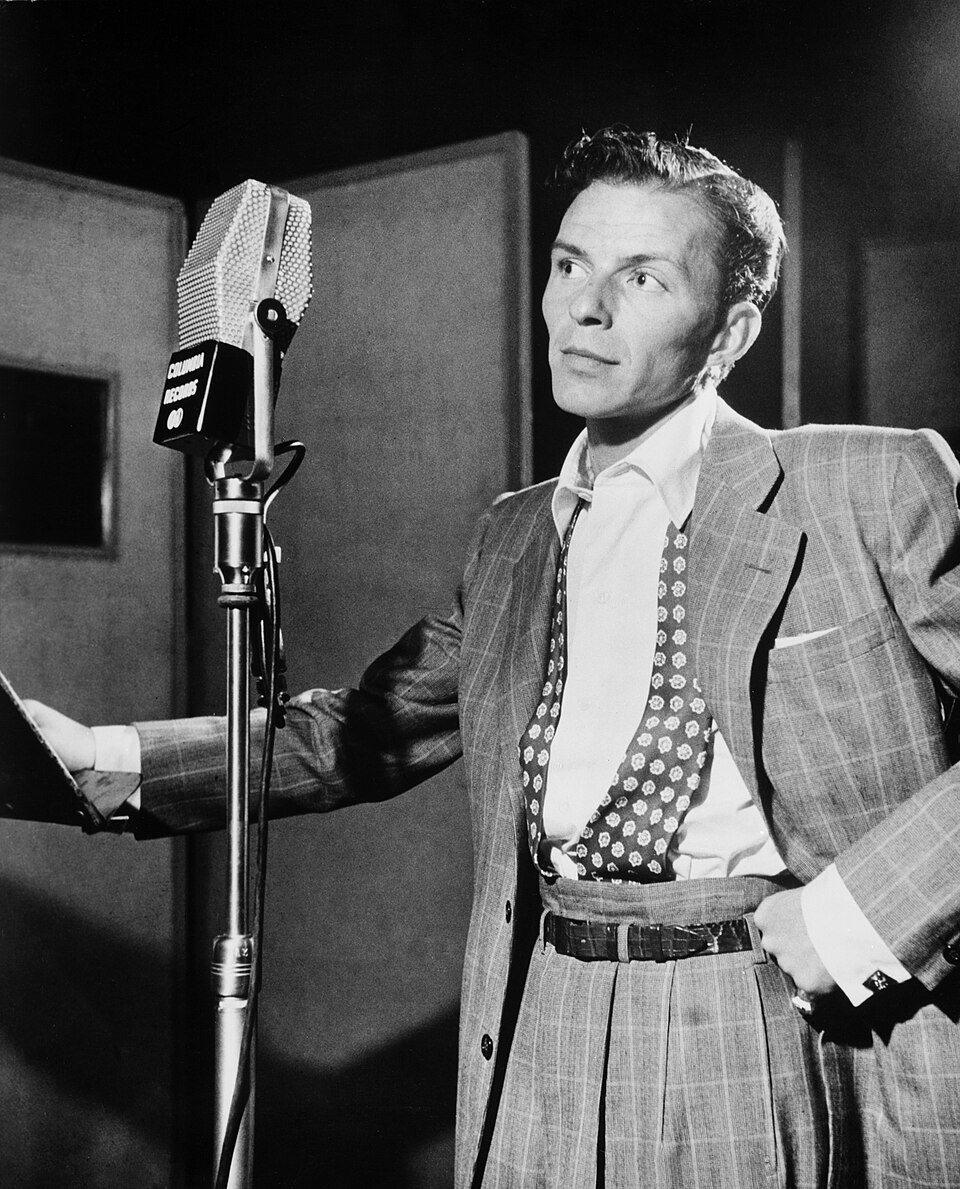
In 1953, Frank Sinatra joined Capitol after his time with Columbia Records. This partnership introduced a new creative period, particularly through his recordings with arranger Nelson Riddle.
In the Wee Small Hours (1955) represented a significant development, presenting songs about loneliness and romantic relationships within a notably cohesive musical atmosphere.
That same year, the British company EMI acquired a controlling interest in Capitol, which gradually became one of its principal American operations.
1956-1969 — Sinatra, Nat King Cole and Beatlemania
In 1956, Capitol opened its distinctive circular tower in Hollywood, designed by architect Welton Becket. The building housed offices and recording studios whose acoustics contributed to the label's reputation.
Frank Sinatra continued his Capitol period with albums including Close to You (1957), Come Fly with Me (1958) and Nice 'n' Easy (1960).
Nat King Cole also maintained an extensive recording career with Love Is the Thing (1957), Cole Español (1958), Ramblin' Rose (1962) and L-O-V-E (1964). His performances helped establish the label's international presence in popular music and vocal jazz.
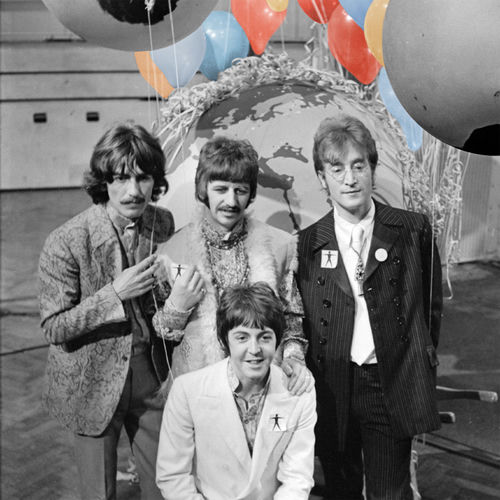
In the early 1960s, Capitol became a major force in distributing The Beatles' recordings across North America. The group recorded for Parlophone, an EMI label in the United Kingdom, while Capitol handled much of the American distribution.
Meet the Beatles! (1964), The Beatles' Second Album (1964), Beatles '65 (1964) and Beatles VI (1965) were among the albums Capitol released in the United States. These editions sometimes featured different track selections and covers from the original British albums.
In Canada, Capitol also released distinctive editions, including Twist and Shout and The Beatles' Long Tall Sally in 1964.
This period helped establish Capitol among the most important record labels in the American music industry.
1970-1988 — Rock and catalogue diversification
During the 1970s, Capitol expanded its activities across rock, popular music and various international repertoires.
The label worked with artists including Bob Seger and Steve Miller Band, alongside performers associated with the wider EMI organisation. American and European catalogues sometimes differed, as distribution arrangements depended on individual territories.
The growth of rock and popular music coincided with further changes in the recording industry. Capitol remained an important EMI brand while relying on the group's international infrastructure for distribution and promotion.
During the 1980s, the company adapted to the growth of compact discs and the increasing importance of music television. Its catalogue gradually expanded into alternative rock and new forms of urban music.
These developments prepared the following period, when Capitol would become closely associated with the expansion of American hip-hop.
1989-2011 — Beastie Boys, alternative rock and hip-hop
In 1989, Capitol released Beastie Boys' Paul's Boutique. Produced by the Dust Brothers, the album featured an elaborate use of sampling, combining numerous musical references with inventive hip-hop songwriting.
The partnership continued through Check Your Head (1992), Ill Communication (1994), Hello Nasty (1998) and To the 5 Boroughs (2004). The group increasingly explored connections between rap, funk, punk and live instrumentation.
Capitol's associated catalogue also included certain Red Hot Chili Peppers releases through EMI-related labels and editions, notably Mother's Milk (1989).
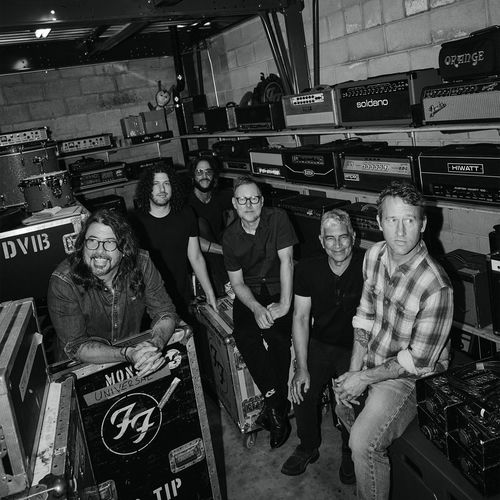
During the 1990s, the label expanded its alternative rock presence. Foo Fighters released The Colour and the Shape (1997), the second studio album by Dave Grohl's band.
Capitol also distributed hip-hop releases by Dilated Peoples, including The Platform (2000), Expansion Team (2001) and Neighborhood Watch (2004).
Throughout the 2000s, its catalogue continued to expand through international pop and rock. The label worked with Katy Perry, whose One of the Boys (2008) and Teenage Dream (2010) became major commercial successes.
In 2011, Beastie Boys released Hot Sauce Committee Part Two, their final studio album, concluding a long recording relationship with Capitol.
2012-2026 — Universal Music and a new organisation
In 2012, Universal Music Group completed its acquisition of EMI's recorded music operations. Capitol Records consequently became part of Universal, which progressively reorganised its American labels.
In 2013, Capitol Music Group was restructured around Capitol and several other record labels, including Blue Note and Astralwerks. The organisation developed its activities across pop, rock, jazz and electronic music.
Capitol continued working with international artists including Sam Smith, Katy Perry and Niall Horan, while maintaining extensive reissue programmes for its historic catalogue.
In 2024, Universal Music Group brought Interscope Geffen A&M and Capitol Music Group together under Interscope Capitol Labels Group, led by John Janick. Capitol Records retained its own identity within this organisation.
The label also expanded its partnerships with Asian music scenes. In 2025, Japanese group BABYMETAL signed a global agreement with Capitol for the release of METAL FORTH, an album combining metal, J-pop and collaborations with several international artists.
Capitol Records remains active, combining the preservation and commercial development of its historic catalogue with the production and distribution of new recordings.
Distinctive Features
A record label founded on the American West Coast
Unlike the major historic labels originally based in New York, Capitol developed in Los Angeles. This location enabled close relationships with California's film, entertainment and recording industries.
A central role in The Beatles' North American history
Capitol played a decisive role in distributing The Beatles' recordings in the United States. Its editions sometimes differed substantially from British albums in their track selections, running orders and cover artwork. Canadian editions also have their own distinct history.
Iconic studios and architecture
The Capitol Records Tower became an architectural symbol of the music industry. Its studios welcomed major performers, including Frank Sinatra, and contributed to the label's technical reputation for recording vocals and instrumental ensembles.
A catalogue spanning several generations
From Nat King Cole and Frank Sinatra to The Beatles, Beastie Boys, Foo Fighters and contemporary pop performers, Capitol has accompanied changes in popular music while maintaining a recognisable recording identity.
Key Facts
- Founded: 1942, in Los Angeles, California.
- Founders: Johnny Mercer, Buddy DeSylva and Glenn Wallichs.
- Historical distinction: the first major record label established on the American West Coast.
- Major early artists: Nat King Cole, Jo Stafford and Stan Kenton.
- Frank Sinatra: joined Capitol in 1953 and released In the Wee Small Hours in 1955.
- Acquisition: EMI became the majority shareholder in 1955.
- Capitol Records Tower: opened in Hollywood in 1956, designed by Welton Becket.
- The Beatles: distribution of numerous American and Canadian editions during the 1960s.
- Hip-hop: long-standing partnership with Beastie Boys beginning with Paul's Boutique (1989).
- Alternative rock: notably Foo Fighters and several releases associated with the EMI network.
- Integration into Universal Music Group: 2012.
- Restructuring: became part of Interscope Capitol Labels Group in 2024.
- Recent collaboration: BABYMETAL's METAL FORTH (2025).
- Status: active record label within Universal Music Group.