Charles Aznavour was a French singer, songwriter and actor of Armenian descent who became a major figure in French-language popular music. Known for his expressive performances and narrative lyrics, he developed a repertoire exploring love, the passage of time, memories and human relationships. Songs such as La Bohème, Hier encore, Je m'voyais déjà, Emmenez-moi and Comme ils disent contributed to his international recognition. Also active as a film actor, he maintained an artistic career spanning several decades and helped introduce French chanson to audiences around the world.
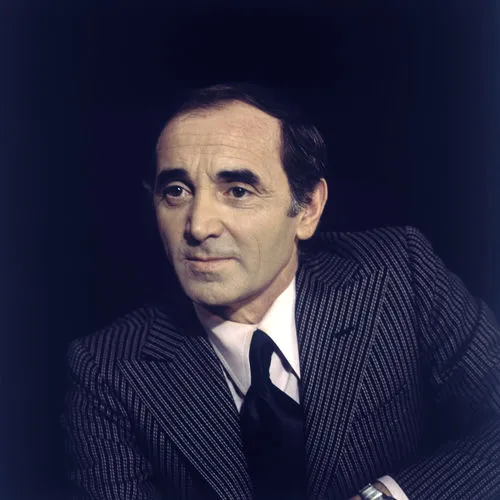
Charles Aznavour
A distinctive voice, words that tell life's stories and songs that endure through time.
Details
- Type
- Music
- Countries
- 🇫🇷 France
- Genres
- French-language chanson, Chanson à texte, French variété
- Albums
- 30
Synopsis
Charles Aznavour
Glossary terms: Album, Arrangement, Author / songwriter, Character, Composer, Development, Lyricist, Melody, Phrasing, Song, Theme
Trailer
Watch the trailer
Overview
Presentation
Charles Aznavour, born in Paris in 1924 to Armenian parents, was a French singer, songwriter and actor. Raised in a family of performers, he began acting on stage at an early age before forming a musical duo with pianist Pierre Roche in the 1940s. Their partnership took them to Quebec and the United States. Supported by Édith Piaf, for whom he also wrote songs, Aznavour gradually pursued a solo career. Despite difficult beginnings, he gained recognition with Sur ma vie before achieving a decisive breakthrough with Je m'voyais déjà in 1960.
The 1960s established him among the leading figures of French chanson. He released songs including Il faut savoir, Les Comédiens, La Mamma, Hier encore, For Me Formidable, La Bohème and Emmenez-moi. His compositions combined accessible melodies with lyrics exploring emotions, regrets and individual experiences. He regularly worked with composer Georges Garvarentz and other collaborators, including lyricist Jacques Plante, who wrote the words to La Bohème. International tours introduced his music to audiences speaking different languages.
During the 1970s, he continued exploring new subjects with Comme ils disent, a song portraying a gay character, and She, which became a major hit in the United Kingdom. Alongside his music career, he worked extensively in cinema, appearing in François Truffaut's Shoot the Piano Player and A Taxi for Tobruk. He continued recording and performing until the final years of his life. Encores, released in 2015, was his last studio album published during his lifetime. He died in 2018 at the age of 94.
Key Takeaways
Charles Aznavour's artistic identity was built around narrative songwriting. His lyrics portrayed characters, situations and emotions with particular attention to everyday details. His slightly husky voice and speech-like phrasing gave his performances a theatrical quality. His arrangements drew on French popular song, music hall traditions and orchestral styles.
His repertoire explored love, nostalgia, aging, ambition, loneliness and social issues. Beyond music, Aznavour maintained close ties to his Armenian heritage. Following the 1988 earthquake in Armenia, he helped organize a humanitarian response that included the collaborative charity song Pour toi Arménie.
Conclusion
Charles Aznavour holds a central place in the history of French-language popular music. His work combined poetic songwriting, theatrical interpretation and a wide range of subjects, alongside an international career spanning music, cinema and humanitarian activities.
Did You Know?
- Origins: Paris, France (1924–2018), in a family of Armenian descent.
- Early career: child actor and later a member of the Roche and Aznavour duo with Pierre Roche.
- Important collaboration: Édith Piaf, who supported his early career and artistic development.
- Signature songs: Je m'voyais déjà, La Bohème, Hier encore, Emmenez-moi, La Mamma, For Me Formidable and Comme ils disent.
- Notable recordings: Je m'voyais déjà (1961), La Bohème (1966), Entre deux rêves (1967) and Encores (2015).
- International success: She reached number one on the UK singles chart in 1974.
- Film career: appeared in Head Against the Wall, Shoot the Piano Player and A Taxi for Tobruk.
- Humanitarian work: helped establish Aznavour for Armenia following the 1988 earthquake.
- Recognition: received the title of National Hero of Armenia in 2004.
- Diplomatic role: served as Armenia's ambassador to Switzerland and permanent representative to UNESCO.
Link graph
Open in the full graphLoading the graph…
Only the strongest links are shown.
View the list ({count})
Discography
Discography (30)


Album
2009
Charles Aznavour & The Clayton-Hamilton Jazz Orchestra
- French-language chanson
- French variété