Origins
French-language chanson has a long history, closely connected to the French language, poetry and popular traditions. Long before the emergence of the music industry, songs accompanied celebrations, gatherings, political events and moments of everyday life.
During the Middle Ages, troubadours, trouvères and other traditions of sung poetry contributed to the development of repertoires combining storytelling, music and personal expression. These practices did not yet constitute modern French-language chanson, but they demonstrate the long-standing relationship between words and music.
Over the centuries, songs circulated through rural communities, cities, theaters and popular gatherings. Some used familiar melodies with newly written lyrics, while others were composed specifically for an event or performer.
Song also became a means of commenting on society. Satirical lyrics, political refrains and humorous narratives allowed performers to address subjects extending beyond simple entertainment.
During the 19th century, Pierre-Jean de Béranger helped popularize a form of literary and political song accessible to a broad audience. His compositions contributed to the development of a tradition in which lyrics occupied an essential place.
This emphasis on words would become one of the defining characteristics of modern French chanson. Performers were expected not only to sing a melody but also to tell a story, convey an emotion or communicate an idea.
Diction, phrasing and stage presence consequently became particularly important, sometimes more so than vocal virtuosity.
However, French-language chanson does not represent a single musical style. It encompasses traditions developed in several countries and regions where French is used as a language of artistic expression.
France played a decisive role in establishing its industry and principal institutions, but Belgium, Quebec, Switzerland and other French-speaking regions developed their own musical histories.
From the 19th century onward, with the rise of café-concerts and cabarets, modern chanson began to take a clearer shape as music intended for audiences attending performances and, later, listening to recordings.
Emergence and Early Musical Scenes
The 19th Century — Café-Concerts and Chansonniers
During the Second French Empire, café-concerts experienced significant growth in France.
These establishments allowed audiences to listen to songs while enjoying refreshments. Performances combined sentimental repertoires, comic refrains, socially conscious songs and variety entertainment.
In Paris, the Eldorado, the Alcazar and other venues contributed to the emergence of a genuine popular entertainment culture.
A performer's success depended as much on their ability to embody a character and tell a story as on the quality of their voice.
The emergence of an entertainment industry also raised questions about copyright and authors' rights.
In 1847, a dispute concerning payment for songs performed in a Parisian café-concert contributed to an important development in the protection of creators. The Société des auteurs, compositeurs et éditeurs de musique, or Sacem, was founded in 1851.
By the end of the century, the artistic cabarets of Montmartre had become essential creative spaces.
Le Chat Noir, which opened in 1881, brought together writers, musicians, illustrators and chansonniers. Satire, poetry, humor and social commentary flourished there.
Aristide Bruant developed a style of chanson characterized by Parisian slang, working-class characters and the everyday realities of poorer neighborhoods.
Yvette Guilbert also became a major personality of the café-concert scene through her precise and expressive interpretations of often ironic lyrics.
Paulus and Félix Mayol contributed to the extraordinary popularity of these performances.
Chanson was beginning to develop its own stars, performance venues and a repertoire that circulated beyond the neighborhoods where it had first been created.
1900–1930 — Music Hall and Realist Chanson
At the beginning of the 20th century, the development of records and recording technology profoundly transformed the circulation of songs.
Performers could now make their voices known without appearing on stage. Early records helped establish particular interpretations and build national careers.
Music hall also became a major entertainment institution.
Artists such as Mistinguett and Maurice Chevalier developed performances combining song, dance, theater and elaborate staging.
Joséphine Baker, an American artist who settled in France, contributed to the international reputation of Parisian music hall while introducing influences drawn from African American traditions.
Meanwhile, chanson réaliste, or realist chanson, emerged through narratives devoted to working-class neighborhoods, difficult relationships, poverty and tragic destinies.
Damia and Fréhel were among the great representatives of this tradition.
Their dramatic performances and their ability to embody the emotions of a song helped prepare the emergence of a new generation of major voices.
During the 1930s, jazz and swing influences also became increasingly prominent.
Jean Sablon helped modernize vocal performance, particularly through the use of the microphone and a more intimate approach to singing.
Charles Trenet profoundly renewed chanson through lighthearted melodies, imaginative lyrics and rhythms influenced by jazz.
His songs, including "Y'a d'la joie" and "La Mer," became major references in French popular music.
Chanson was no longer confined to cabaret traditions: it opened itself to new harmonies, orchestral arrangements and different approaches to singing.
The Golden Age
The 1940s–1950s — Édith Piaf and the Rise of Great Chanson
During and after the Second World War, French chanson underwent a period of profound transformation.
Édith Piaf became one of the most important figures in this development.
Emerging from the traditions of realist chanson, she developed an intensely emotional performance style in which every phrase seemed to convey a personal experience.
Songs such as "La Vie en rose," "L'Hymne à l'amour" and, later, "Non, je ne regrette rien" contributed to her international reputation.
Her influence also extended to artists she supported or encouraged, notably Yves Montand and Charles Aznavour.
Music hall continued to develop, while Parisian cabarets welcomed a new generation of performers.
On the Left Bank of the Seine, cafés and small venues became important creative spaces.
Juliette Gréco established herself through her interpretations of poetic and literary texts. Her repertoire demonstrated the close connections between chanson, theater, poetry and the intellectual circles of postwar France.
Chanson consequently took many forms, ranging from dramatic performances to more stripped-down compositions accompanied by piano or guitar.
The 1950s–1960s — Brassens, Brel, Ferré and Aznavour
The 1950s and 1960s are often considered one of the great periods of French-language singer-songwriter music.
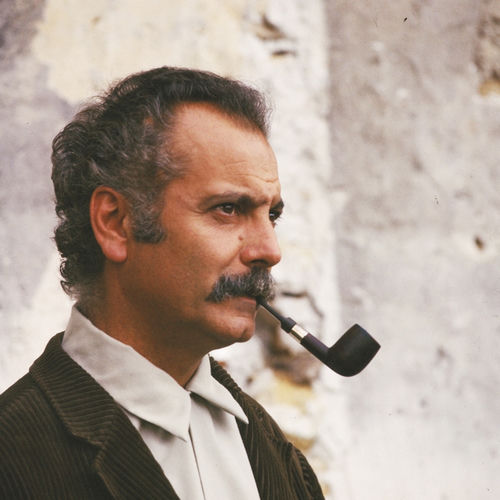
Georges Brassens established a distinctive style built around acoustic guitar, poetic writing and a particularly recognizable freedom of expression.
With "La Mauvaise Réputation," recorded in 1952, he developed an ironic approach to songwriting that questioned social conventions.
His earliest recordings, later collected in editions such as Volume 1 : La Mauvaise Réputation, launched a career characterized by humor, tenderness, provocation and a deep attachment to language.
Jacques Brel, originally from Belgium, developed a different conception of chanson.
His performances relied on extraordinary dramatic intensity, narrative songwriting and a stage presence that gave his lyrics an almost theatrical dimension.
"Quand on n'a que l'amour," released in 1956 and subsequently included on N°2 : Quand on n’a que l’amour, contributed to his first major success.
Songs such as "Ne me quitte pas," "Amsterdam" and "Ces gens-là" later revealed his ability to portray human passions, illusions and contradictions.
Léo Ferré combined poetry, rebellion and musical experimentation. His work helped strengthen the relationships between chanson, literature and artistic engagement.
Barbara developed a more intimate approach, carried by her voice, piano and deeply personal songwriting.
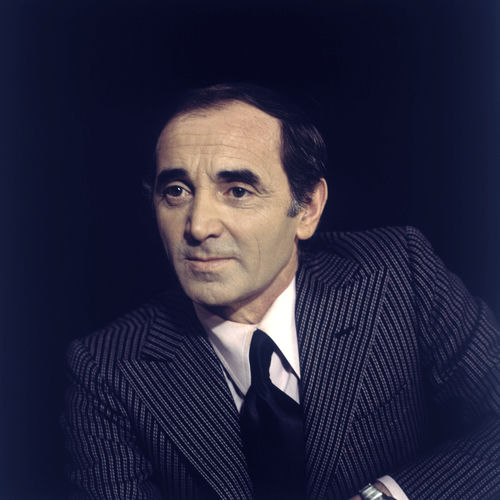
Charles Aznavour, meanwhile, became one of the major international figures of French-language chanson.
His compositions explored love, the passage of time, loneliness and human relationships. His sense of melody and ability to embody characters contributed to his popularity.
With "La Bohème," he created one of his most famous songs, while his repertoire circulated in numerous languages.
This generation also included Boris Vian, Serge Reggiani, Jean Ferrat, Anne Sylvestre and Georges Moustaki, who developed very different relationships with chanson.
Some emphasized poetry, while others favored satire, socially conscious songs or intimate narratives.
The diversity of their work reveals an essential characteristic of the genre: French-language chanson is not defined by mandatory instrumentation but by the encounter between songwriting and performance.
The 1960s–1970s — Chanson Meets Rock and Pop
Beginning in the 1960s, international musical influences profoundly transformed French-language chanson.
Rock 'n' roll and British pop became increasingly popular among younger generations.
Johnny Hallyday and Sylvie Vartan became important figures in this development, particularly through the yé-yé movement.
Françoise Hardy developed a more intimate aesthetic, combining melancholic songwriting, pop arrangements and personal sensitivity.
Serge Gainsbourg also renewed chanson by experimenting with jazz, pop, rock, reggae and different songwriting techniques.
His work demonstrated the possibility of combining a strong literary identity with musical forms far removed from traditional chanson.
Claude Nougaro, meanwhile, explored the relationships between the French language, jazz, rhythm and poetry.
From the 1970s onward, France Gall and Michel Berger helped renew French pop chanson through elaborate melodies and songwriting intended for a broad audience.
Véronique Sanson developed a personal approach to piano and composition, influenced by rock and American music.
French-language chanson increasingly expanded into more ambitious productions in which arrangements and studio techniques played a growing role.
The 1970s–1990s — A New Generation of Singer-Songwriters
The following decades witnessed the emergence of numerous artists who extended the legacy of the great songwriters while developing their own styles.
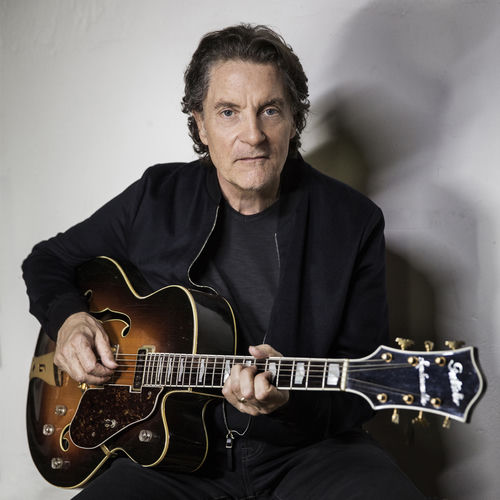
Francis Cabrel created a body of work centered on guitar, sensitive songwriting and influences drawn from folk, blues and French chanson.
His album Sarbacane, released in 1989, became an important milestone in his career.
He subsequently consolidated his position in French-language chanson with works such as Samedi soir sur la Terre, released in 1994.
Maxime Le Forestier developed a songwriting style influenced by folk and attentive to human relationships.
Renaud combined colloquial language, social satire and personal narratives, giving a voice to characters and communities rarely represented in commercial chanson.
Alain Souchon and Laurent Voulzy explored the relationships between melancholy, humor, pop and melodic sophistication.
Jean-Jacques Goldman became one of the most influential singer-songwriters in French-language popular music, both through his own recordings and his work for other performers.
Michel Sardou, Dalida and other major personalities simultaneously demonstrated the commercial power of French variety music.
French-language chanson now encompassed widely different aesthetics, ranging from acoustic accompaniment to large-scale orchestral and electronic productions.
Quebec and the Major French-Speaking Scenes
The history of French-language chanson extends far beyond France.
In Quebec, local popular traditions, narrative songs and North American influences contributed to the development of a distinctive musical scene.
Félix Leclerc played a decisive role in gaining recognition for Quebec chanson, particularly from the 1950s onward.
His poetic writing, guitar accompaniment and songs inspired by everyday life and the landscapes of Quebec helped establish a singer-songwriter tradition.
Gilles Vigneault developed a body of work in which language, territory and cultural identity occupied central positions.
Robert Charlebois renewed Quebec chanson by incorporating rock, electric sounds and a language more directly connected to contemporary society.
Raymond Lévesque, Pauline Julien and Diane Dufresne also participated in this history through very different artistic approaches.
Chanson accompanied Quebec's cultural and social transformations, particularly during the Quiet Revolution of the 1960s.
In August 1974, Félix Leclerc, Gilles Vigneault and Robert Charlebois performed together on the Plains of Abraham in Quebec City during the Superfrancofête.
Their concert became one of the major events in Quebec chanson history, symbolizing the meeting of several generations of artists.
In Belgium, Jacques Brel occupies a fundamental place, but he is far from the only representative of the country's French-language musical tradition.
Salvatore Adamo developed a melodic and sentimental style of chanson that achieved considerable international success.
Later, Maurane, Arno and Axelle Red helped renew Belgian musical scenes through influences ranging from soul to rock and pop.
In Switzerland, Stephan Eicher developed a personal body of work bringing together several languages and musical traditions.
These artistic journeys demonstrate that French-language chanson forms a space of cultural exchange in which every territory retains its own history.
Movements and Subgenres
Traditional and Popular Chanson
Traditional chanson encompasses repertoires transmitted primarily through collective memory and musical practice.
It includes narrative songs, dance tunes, regional songs and popular compositions.
These traditions represent an important heritage for modern chanson but should not be confused with the commercial productions developed since the 19th century.
Realist Chanson
Realist chanson emerged in the late 19th century and underwent significant development during the first decades of the 20th century.
It frequently portrayed poverty, difficult love affairs, loneliness and tragic destinies.
Aristide Bruant, Damia and Fréhel contributed to its formation, while Édith Piaf extended and transformed this heritage.
Dramatic interpretation and emotional identification with the characters were among its defining characteristics.
Literary Chanson and Singer-Songwriter Traditions
Chanson à texte, often understood as lyric-driven or literary chanson, places particular importance on words, their construction and their poetic or narrative meaning.
Georges Brassens, Jacques Brel, Léo Ferré and Barbara are among the major figures of this tradition.
The category does not correspond to a specific musical structure: it may include acoustic accompaniment, piano, orchestras or more experimental arrangements.
Singer-songwriter chanson extends this approach to creators who write and sometimes compose their own repertoire.
Socially Engaged Chanson
Socially engaged chanson addresses social, political and human questions through songwriting intended to encourage reflection.
Jean Ferrat, Anne Sylvestre, Renaud and other artists developed repertoires connected to collective concerns.
This tradition extends the long history of chansonniers and popular songs devoted to the events of their time.
It does not constitute an independent musical genre but rather a way of using song as a means of expression and commentary.
French Variety Music and Pop Chanson
French variety music encompasses productions intended for broad audiences, often characterized by accessible melodies and elaborate arrangements.
Beginning in the 1960s, it gradually incorporated influences from rock, soul, disco and international pop.
Charles Aznavour, France Gall, Michel Berger and Jean-Jacques Goldman illustrate different stages of this development.
The boundaries between variety music, singer-songwriter chanson and French-language pop remain flexible, with numerous artists moving between these categories.
Quebec Chanson
Quebec chanson possesses a distinctive history, shaped by the French-speaking traditions of North America and the transformations of Quebec society.
Félix Leclerc, Gilles Vigneault and Robert Charlebois contributed to its modern development.
Subsequent generations extended this heritage by incorporating rock, pop, folk and independent music.
Daniel Bélanger, Les Cowboys Fringants, Cœur de pirate and Pierre Lapointe illustrate different expressions of this scene.
Quebec chanson should therefore not be reduced to a variation of French chanson: it constitutes an artistic tradition with its own references and historical development.
French-Language Chanson and Urban Music
Beginning in the 1990s, rap and urban music profoundly renewed the relationships between rhythm, language and storytelling.
MC Solaar developed a lyrical approach based on wordplay, literary references and particular attention to phrasing.
IAM also helped establish French-language rap as a major space for storytelling and social commentary.
Later, Orelsan, Grand Corps Malade and Abd al Malik explored different relationships between rap, slam poetry, spoken word and chanson.
These movements have their own histories and should not be regarded merely as subgenres of traditional chanson.
Nevertheless, they contribute to the development of French-language musical creation, particularly through the importance given to lyrics and vocal performance.
New French Chanson and Independent Songwriting
From the 1990s and 2000s onward, a new generation of artists renewed chanson by combining songwriting traditions with rock, pop and experimentation.
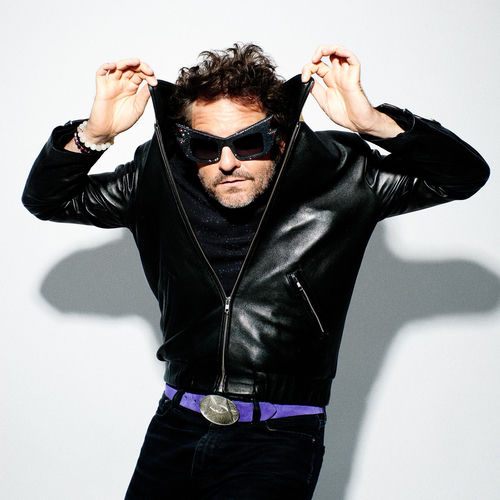
-M- developed an immediately recognizable artistic universe, combining guitar, funk, pop and theatrical staging.
His album Je dis aime, released in 1999, illustrates this meeting of instrumental virtuosity and creative freedom.
Tété pursued an approach influenced by folk, blues and chanson, while other artists favored more restrained or experimental arrangements.
This new French chanson did not form a homogeneous school. Instead, it represented a diversity of approaches that reinterpreted the legacy of earlier generations.
Contemporary French-Language Chanson
Since the 2010s, the boundaries between chanson, pop, electronic music, rap and R&B have become increasingly open.
Stromae, a Belgian artist, renewed French-language chanson by combining narrative songwriting, electronic rhythms and international influences.
His album Racine carrée, released in 2013, achieved enormous success, particularly through songs such as "Papaoutai" and "Formidable."
With Multitude, released in 2022, he continued his musical explorations by incorporating rhythmic influences from different traditions.
Angèle developed a French-language pop style combining accessible melodies, modern production and observations on human relationships and society. Her album Brol, released in 2018, accompanied her rise to international recognition.
Pomme created a more intimate musical universe influenced by chanson and folk, notably with Les Failles, released in 2019.
Clara Luciani and Juliette Armanet contributed in their own ways to renewing French pop chanson, the latter notably through Petite Amie, released in 2017.
Zaho de Sagazan developed an aesthetic combining dramatic chanson and electronic textures, illustrated by La Symphonie des éclairs, released in 2023.
These artists demonstrate that contemporary French-language chanson can no longer be defined by a single type of accompaniment or production.
Nevertheless, it retains something fundamental from its older traditions: the desire to express a distinctive voice through words.
Legacy and Influence Today
French-language chanson occupies a distinctive place in the history of popular music.
Its heritage rests first and foremost on the importance given to language. Word choice, sentence rhythm, poetic imagery and diction contribute directly to the musical identity of each work.
This relationship between lyrics and performance helps explain the diversity of styles that have developed over the decades.
Chanson has also maintained constant connections with literature, theater and poetry. Numerous writers and performers have transformed storytelling and poetic techniques into musical forms accessible to broad audiences.
The influence of Georges Brassens, Jacques Brel and Charles Aznavour can consequently be found among several generations of singer-songwriters.
Their songs continue to be covered, adapted and discovered in different countries, sometimes by artists who do not usually sing in French.
Geographical diversity represents another essential dimension of the genre.
Belgium and Quebec have developed particularly important musical scenes, while French-speaking artists from Switzerland, Africa, the Caribbean and other regions contribute to the international circulation of the French language in music.
This circulation does not mean that every French-language production belongs to the same musical genre.
African, Caribbean and European traditions have their own histories, and their encounters with chanson enrich a much broader cultural landscape.
Artists such as Gaël Faye, whose writing combines rap, storytelling and experiences connected to several territories, demonstrate how French-language expression can extend beyond traditional musical categories.
Tiken Jah Fakoly also illustrates the place of French in certain forms of African reggae, within a repertoire that also uses other languages and musical traditions.
French-language chanson consequently develops through a continuous dialogue with international musical cultures.
One of the most striking examples of its worldwide reach remains Céline Dion, a Quebec artist whose career developed through both French-language and English-language repertoires.
Her album D'eux, released in 1995 and created in collaboration with Jean-Jacques Goldman, represents one of the greatest international commercial successes of French-language music.
New generations continue this openness through music streaming platforms and digital networks.
Online distribution now allows artists from different French-speaking regions to reach international audiences without relying exclusively on the traditional recording and radio industries.
Meanwhile, festivals, concert venues and cultural institutions continue preserving older repertoires and supporting emerging creators.
The history of French-language chanson therefore cannot be summarized as a succession of stars or a single national aesthetic.
It brings together popular traditions, literary forms, musical innovations and cultural exchanges between several societies.
From the chansonniers of Montmartre to Stromae's electronic productions, from the great voices of the postwar period to contemporary independent artists, it has constantly renewed its means of expression.
More than a precisely defined musical style, French-language chanson represents a creative space in which language itself becomes musical material.
Its history remains that of voices telling stories, questioning society, expressing emotions and passing on human experiences from generation to generation.