


Overview
Founded in Japan in 1988, Arc System Works has become one of the most recognizable studios in Japanese fighting games. Its identity was primarily built around Guilty Gear, created under the direction of Daisuke Ishiwatari, and later BlazBlue. These two series established a distinctive way of approaching the genre: fast and technical combat systems, strongly differentiated characters, striking visual universes and a constant closeness to Japanese animation.
This specialization, however, represents only part of its activity. Arc System Works has developed and published games for several decades, working both on its own intellectual properties and those of other companies, with experience spanning many generations of consoles, arcade machines, mobile devices and PC. The company now handles part of its own publishing, localization and commercial activities through structures in North America, Europe and Asia.
Fighting games nevertheless remain the field where its contribution is most identifiable. From the 2010s onward, Arc System Works notably developed a visual approach capable of using three-dimensional characters while creating the impression of watching hand-drawn 2D animation. Brought to prominence with Guilty Gear Xrd, this method became one of its signatures and later contributed to the visual identity of productions such as Dragon Ball FighterZ, Granblue Fantasy Versus and Guilty Gear -Strive-.
This evolution does not rely simply on a graphical filter. Modeling, animation, lighting, camera angles, expressions and character deformation are all crafted to reproduce the visual choices of drawn animation. Arc System Works itself describes this approach as a combination of 2D and 3D technologies based on its own toon-shading techniques.
The studio has also learned to apply its expertise to properties it does not own. Persona 4 Arena, developed with Atlus, translates the Persona universe into a fighting game; Dragon Ball FighterZ adapts the dynamics of the Dragon Ball manga and anime; Granblue Fantasy Versus transforms the characters and codes of Granblue Fantasy into an accessible fighting system without simply reproducing those of Guilty Gear.
This ability to work with external universes coexists with a catalogue whose scope has gradually expanded. Arc System Works notably owns properties originating from the former Technōs Japan catalogue, including Double Dragon and Kunio-kun / River City, while also publishing games developed by other studios.
The company today is therefore simultaneously a studio, IP holder, development partner and publisher. Within PANACHES CULTURE, its classification as studio_jeu nevertheless preserves its main historical identity: that of a company born from game development whose international reputation remains closely associated with its creative and technical expertise.
History
1988: from work for other companies to its own productions
Arc System Works was established in 1988 under the leadership of Minoru Kidooka. The company began in a Japanese industry where a significant part of production was divided between publishers visible to the public and technical studios working for them.
During its early years, the team therefore contributed to the development and adaptation of games for various companies. This period allowed it to gain experience across several machines and types of productions before its own catalogue gradually became more identifiable.
The company adopted the name Arc System Works in the early 1990s and began publishing some of its own productions as well in the middle of the decade.
This evolution was still far removed from the image the studio would later acquire. Arc System Works developed different genres and worked on a variety of commissions and licenses. But the arrival of a young creator at the company would gradually provide it with a property capable of defining a large part of its future.
Guilty Gear: building an identity
In 1998, Arc System Works released the first Guilty Gear on PlayStation.
Created by Daisuke Ishiwatari, the project already brought together several characteristics that would remain strongly associated with the series: manga-inspired aesthetics, highly individualized characters, music heavily influenced by rock and metal, and a combat system favoring fast and offensive play.
Ishiwatari himself played an unusually broad role in creating the universe. Direction, character design, scenario and music all contributed to an artistic coherence that quickly distinguished Guilty Gear from a purely technical exercise in fighting game design.
The first game provided the foundation, but it was with Guilty Gear X, released in arcades in 2000, followed by Guilty Gear X2, that the series truly consolidated its position. The new entries expanded their systems, enriched their character rosters and became more deeply rooted in arcade and competitive culture.
Arc System Works then learned to work within a form of game where the smallest differences could profoundly alter the experience. Attack range, animation speed, the ability to cancel an action, meter consumption or recovery time all became parameters that had to allow each character to feel distinct without destroying the overall balance.
This expertise did not mean the studio abandoned other genres. It continued producing different games, but Guilty Gear gradually gave it an international identity that few of its earlier works had achieved.
BlazBlue: creating a second major fighting series
In 2008, Arc System Works launched BlazBlue: Calamity Trigger in arcades.
The new series was directed by Toshimichi Mori and was not simply a variation of Guilty Gear. It had its own characters, its own universe and a system centered notably around the Drive mechanic, which assigned a specific ability to each fighter.
The development of BlazBlue allowed the studio to demonstrate that its fighting game expertise did not depend exclusively on a single franchise. For several years, both series evolved in parallel and allowed Arc System Works to experiment with different ways of building its characters, mechanics and universes.
BlazBlue also accompanied the transition to high definition. Detailed sprites, effects and backgrounds helped preserve the importance of 2D artwork at a time when a growing part of the industry was adopting 3D.
This period strengthened the studio’s reputation among fighting game audiences, but it also created a technical and artistic problem: constantly increasing the resolution and complexity of frame-by-frame drawn animation became especially expensive.
The solution Arc System Works developed to address this problem would profoundly transform its visual identity.
Guilty Gear Xrd: using 3D to recover the feel of drawing
With Guilty Gear Xrd -SIGN-, released in arcades in 2014 and later on consoles, Arc System Works radically changed the visual production of its historical series.
Characters were no longer built primarily from 2D sprites. They became three-dimensional models, but the goal was not to achieve realistic rendering.
On the contrary, the teams sought to make their 3D nature disappear.
Modeling, textures, outlines, shadows and animations were all crafted to recreate the visual reading of hand-drawn animation. Movements did not always aim for the continuous fluidity traditionally associated with 3D: certain poses were deliberately held, volumes could be distorted depending on the camera angle and various details were adjusted frame by frame in order to preserve the intended drawing.
This process created a hybrid aesthetic that quickly became associated with the Arc System Works name. The company describes it as a technology combining 2D and 3D through its own toon-shading work.
The change was decisive because it allowed the studio to benefit from the possibilities of 3D — camera movement, perspective changes, volumetric environments — without abandoning the animation aesthetic that formed an important part of its identity.
This research did not remain limited to Guilty Gear.
Transforming external licenses without erasing their identity
Arc System Works had long developed games based on properties owned by other companies, but its reputation in fighting games gradually allowed it to occupy a particular position: adapting an existing universe to its systems while seeking to preserve its original identity.
Persona 4 Arena, developed with Atlus and released in the early 2010s, is an important example. The game takes the characters, narrative and aesthetics of Persona 4 and turns them into fighters, each with a logic adapted to versus play.
This expertise became much more visible with Dragon Ball FighterZ, developed by Arc System Works and published by Bandai Namco Entertainment in 2018.
The game benefits from the technical experience gained with Guilty Gear Xrd. Characters use 3D models, but poses, expressions, effects, framing and camera changes regularly seek to recover the intensity of scenes from the anime and manga.
The result placed Arc System Works in front of a much broader audience than that of its historical properties alone. Above all, the studio demonstrated that it could put its technical identity at the service of another work without turning Dragon Ball into a simple visual variation of Guilty Gear.
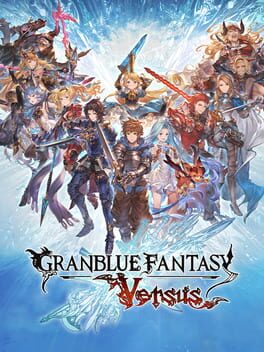
This logic can also be seen in Granblue Fantasy Versus, developed for Cygames and released from 2020 onward. The system is deliberately adapted for an audience that may know Granblue Fantasy without being a fighting game specialist. More accessible controls coexist with mechanics that allow for deeper technical progression.
The studio has also worked on other collaborations and adaptations, including DNF Duel. These productions gradually built a second side to its identity: Arc System Works is no longer only the creator of two major versus series, but also a specialist to whom other IP holders can entrust their transition into fighting games.
Guilty Gear -Strive-: rethinking a historic series
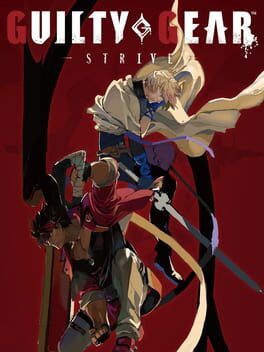
Released in 2021, Guilty Gear -Strive- continues the visual research of Xrd while questioning some of the design principles accumulated by the series.
The goal is not to simplify Guilty Gear to the point of erasing what distinguishes it, but to make its interactions more immediately understandable to a wider audience.
Animations, impacts and camera movements in particular make actions much easier to read visually. The Wall Break system transforms the relationship with the edges of the arena, while various adjustments reduce some historical layers while preserving the speed and freedom characteristic of the franchise.
The evolution also concerns online play. Guilty Gear -Strive- adopts rollback netcode designed to reduce the perceptible impact of latency during remote matches, a technology that has become particularly important for modern fighting games.
The title then moves into long-term operation, with new seasons, characters and balance adjustments. In 2026, Arc System Works continues to update Guilty Gear -Strive-, confirming the shift from a model based primarily on new complete versions toward a game capable of evolving over several years.
From specialized studio to international developer-publisher
Alongside its development work, Arc System Works gradually expanded its publishing activities.
In 2015, the company acquired the rights to several properties from Technōs Japan, including Double Dragon and Kunio-kun, known internationally through several River City games. This acquisition added to its catalogue series whose history largely predates that of Guilty Gear.
Arc System Works does not necessarily develop every new entry itself. The company can act as IP holder, producer or publisher while entrusting development to other studios. The distinction is important: games based on a property owned or published by Arc System Works do not automatically become internal studio productions.
Its international development followed the same progression.
Arc System Works America began operations in 2017 to directly handle publishing, marketing, localization, licensing and support for the North American market. A European company was then established in France in 2024, followed by Arc System Works Asia, which began operations as a Seoul-based subsidiary in 2025 after several years of regional activity as a branch.
This organization now gives Arc System Works a presence that extends far beyond its Yokohama development studio.
The company nevertheless remains directly active in creation. Its recent catalogue includes projects developed internally beyond Guilty Gear alone, while its publishing activity also includes productions made by external teams.
Arc System Works has therefore become a company with multiple functions, but its evolution retains a remarkable continuity: a large part of its recognition still rests on the way it combines combat design, animation and technology.
What sets it apart
Designing characters as gameplay systems
One of the strongest characteristics of Arc System Works fighting games is the desire to give characters genuinely different ways of functioning.
In Guilty Gear, choosing a fighter does not simply mean selecting a different speed or a new move list. Some characters control space from a distance, others rely on unusual movement, specific resources, summons or conditions that profoundly alter how they are played.
BlazBlue also pushes this idea through the Drive system, built around an ability unique to each character.
This approach increases balancing complexity but allows the choice of fighter to determine a genuine way of understanding the game.
Arc System Works later learned to adjust this philosophy depending on the project. Dragon Ball FighterZ favors a more common structure allowing many characters to function in teams of three, while Granblue Fantasy Versus seeks more immediately accessible handling.
The studio therefore does not systematically reproduce the same system: it instead retains expertise in building a fighting game around the needs of a universe and its audience.
Turning 3D into a form of 2D animation
Arc System Works’ visual contribution is probably its most immediately recognizable signature.
With the Guilty Gear Xrd generation, the studio did not simply apply cel shading to conventional 3D models. The entire production process was designed to control the way those models appear from the camera.
Volumes can be adjusted depending on poses, animations emphasize certain key drawings, shadows are tightly controlled and camera transitions are conceived like animation shots.
The result gives 3D a particular freedom: the camera can rotate around a character or abruptly change perspective while preserving a reading close to drawn animation.
Arc System Works officially uses the expression custom toon shading to describe part of this technology combining 2D and 3D expertise.
This method has had an influence beyond the studio’s own productions. The work around Guilty Gear Xrd has been widely studied by artists and developers seeking to reproduce an animation aesthetic in three-dimensional environments.
Adapting rather than simply dressing up a license
Arc System Works’ collaborations also demonstrate a particular ability to handle external licenses.
The studio does not simply place the characters of a property into the existing Guilty Gear system. It seeks to determine what must be preserved for the universe to remain recognizable.
In Dragon Ball FighterZ, this comes through speed, spectacular attacks, camera changes and team construction reminiscent of the series’ group battles.
In Granblue Fantasy Versus, the problem is different. The original work comes from an RPG aimed at a much broader audience than competitive fighting games. Controls and mechanics are therefore designed to allow a more accessible first approach while retaining depth.
This adaptation has now become a genuine studio skill: understanding an existing property and determining how its codes can become game mechanics rather than remain merely graphical references.
Maintaining a close connection with fighting game culture
Arc System Works does not treat its versus games simply as productions to finish and then replace.
The company maintains an ongoing relationship with the competitive community, notably through the ARC World Tour, specialized events and its presence at major international tournaments.
This proximity directly influences development. Games receive balance adjustments, new characters and technical evolution over several years.
The importance given to online play also contributes to this continuity. Arc System Works has worked on remote fighting systems across several generations of machines and presents this expertise as one of its long-standing technical areas.
With Guilty Gear -Strive-, online quality becomes even more central through rollback netcode and the game’s gradual expansion to new platforms.
Fighting games therefore appear less as a succession of isolated products than as an environment requiring an ongoing relationship between developers, players and the competitive scene.
A company capable of developing and publishing without confusing the two roles
Arc System Works ultimately has a broader structure than its image as a versus specialist might suggest.
The company develops its own games, creates and operates intellectual properties, works for other IP holders and also publishes productions made by external studios.
Its catalogue around Double Dragon and River City particularly illustrates this distinction. Arc System Works owns these properties, but can entrust their development to other teams. Being the owner or publisher of a game therefore does not automatically mean being its developer.
Its American, European and Asian subsidiaries reinforce this activity by handling publishing, localization, marketing, licensing and relationships with different markets.
This combination gives Arc System Works much greater autonomy today than in its early years, while still allowing the studio to preserve a highly identifiable creative identity within a broader range of activities.
Good to know
- Arc System Works was founded in May 1988 and now has its headquarters and main development studio in Yokohama, Japan.
- Guilty Gear, created by Daisuke Ishiwatari, appeared in 1998 and became the studio’s historic franchise.
- BlazBlue: Calamity Trigger debuted in arcades in 2008 and gave Arc System Works a second major original fighting game series.
- With Guilty Gear Xrd, the studio generalized an approach using 3D models designed to preserve the appearance and rhythm of 2D animation.
- Arc System Works developed Dragon Ball FighterZ, published in 2018 by Bandai Namco Entertainment, applying its visual and technical expertise to the Dragon Ball universe.
- The studio also developed fighting games tied to other properties, notably Persona 4 Arena and Granblue Fantasy Versus.
- Arc System Works acquired in 2015 the rights to several properties originating from Technōs Japan, including Double Dragon and Kunio-kun / River City.
- Guilty Gear -Strive-, launched in 2021, continues the studio’s visual research while rethinking several foundations of the combat system and online play.
- Arc System Works America was established in 2017, followed by Arc System Works Europe in France in 2024 and Arc System Works Asia in Seoul in 2025.
- Arc System Works remains in 2026 both a developer and publisher, with internal productions and a publishing catalogue extending far beyond fighting games alone.