Overview
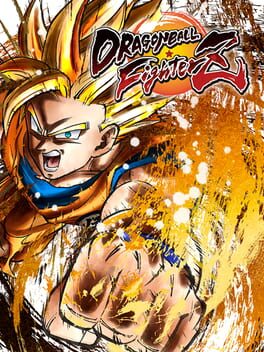
Developed by Arc System Works and published by Bandai Namco Entertainment, Dragon Ball FighterZ is a video game released on January 26, 2018 for PlayStation 5, PlayStation 4, Xbox Series, Xbox One, Nintendo Switch and PC. The genres associated with this entry are action, science fiction, fantasy and fighting, with both single-player and multiplayer modes.
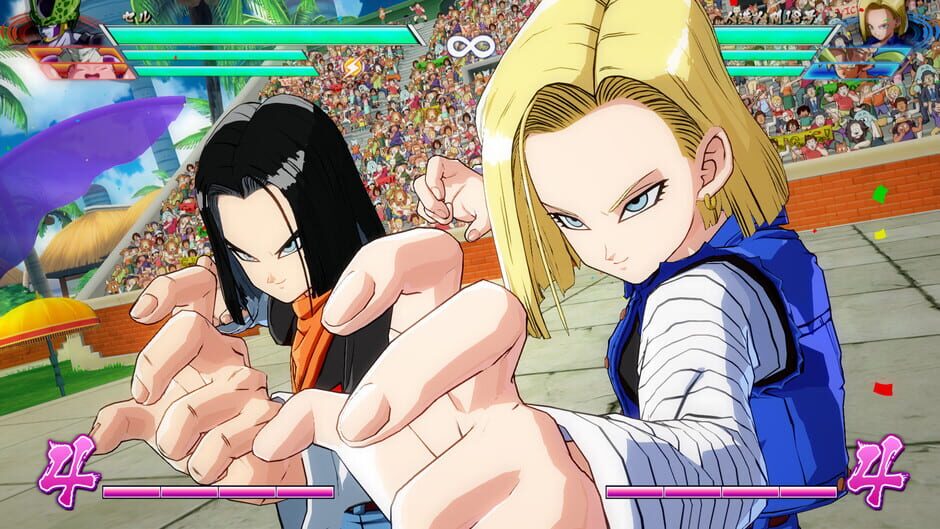
The game uses a two-dimensional fighting structure with teams of three characters. Each player builds a team before the match and can switch between fighters during battle, with the objective of defeating all three members of the opposing team.
Characters waiting in reserve do not remain completely outside the fight. The Z Assist system allows them to be called in temporarily to perform an attack, while Z Change replaces the active fighter with one of their partners. Tagging and assists therefore become a central part of building offensive sequences and combos.
This structure makes it possible to combine several playstyles within the same team. One character’s attacks can be extended through the intervention of a partner, while switching fighters can also preserve a weakened character or change the rhythm of the battle.
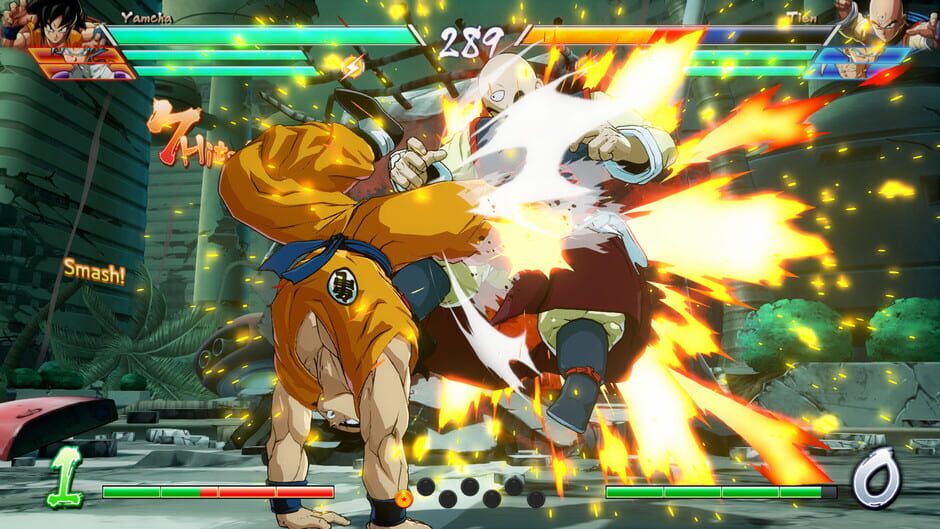
The combat system aims to remain accessible in its basic controls while allowing more complex sequences. Attack strings can be performed relatively easily, but mastering the game also depends on positioning, finding openings in an opponent’s defense, assists, movement and combo optimization.
The Super Dash is one of the characteristic tools of this mobility. It allows the player to rush quickly toward an opponent, including in the air, and directly contributes to the aerial confrontations that play an important role in the rhythm of battles.
Attacks can indeed continue above the ground through jumps, pursuits and aerial sequences. This verticality reproduces part of the mobility associated with Dragon Ball battles while integrating it into the rules of a 2D fighting game.
The Ki gauge fills during battles and allows the use of different actions as well as the fighters’ most powerful techniques. Managing it therefore influences offensive choices, particularly when the player wants to extend a combo or trigger a special attack.
The Sparking! system provides a resource that can be used once per battle. Activating it pushes the opponent back, restores part of the recoverable health and temporarily strengthens certain abilities of the active character. Its use can therefore alter the course of a round, particularly when only a few fighters remain on a team.
Dragon Ball FighterZ also includes several tools that make it possible to vary offensive and defensive approaches. Teleports, throws, counters and other combat mechanics complement normal and special attacks to create situations where offense, defense and mobility remain closely connected.
The game includes an original story mode that notably introduces Android 21, a character created under the supervision of Akira Toriyama. This mode forms one of the single-player components alongside training options and different battles against artificial intelligence.
Multiplayer notably includes ranked matches, battles launched from an interactive lobby and Party Matches that can bring together several participants. The three-character team system therefore serves both traditional competitive battles and different multiplayer variants.
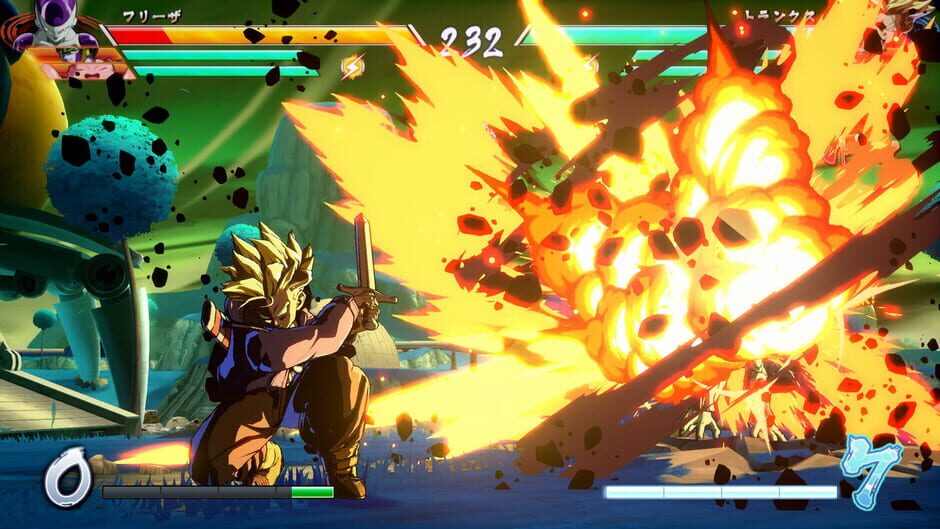
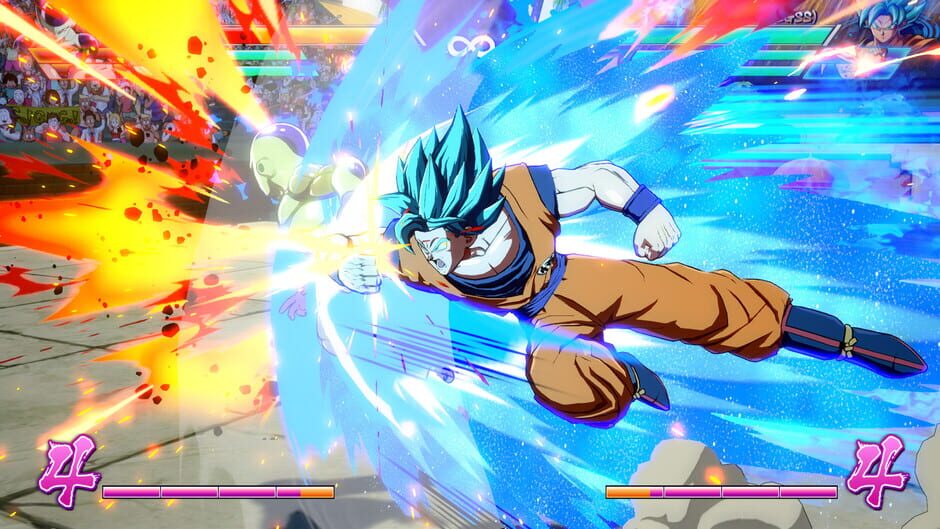
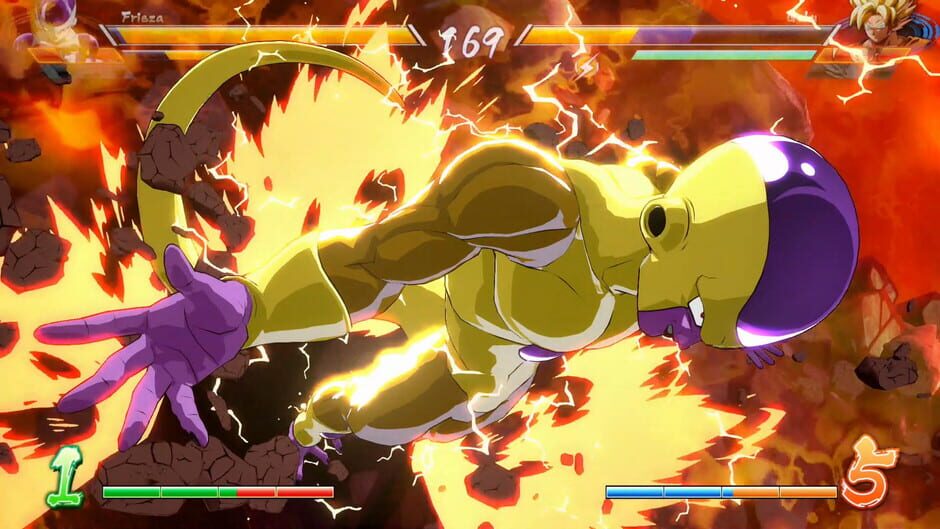
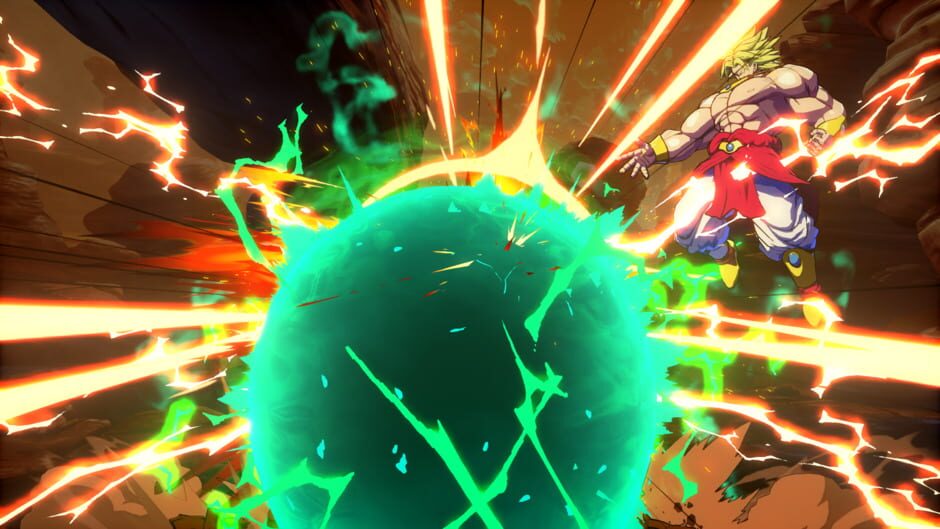
The visual identity is another important part of the game. Arc System Works uses 3D characters and environments rendered to reproduce the appearance of two-dimensional animation, with framing, poses and visual effects directly inspired by Dragon Ball’s staging.
Battles also make use of destructible arenas, aerial sequences and cinematic scenes that recreate certain situations or iconic attacks from the series. These camera changes notably appear during special techniques and certain battle conclusions.
Dragon Ball FighterZ uses Unreal Engine 4. The engine supports this combination of three-dimensional models, stylized animation and visual effects designed to bring the rendering closer to an animated episode while preserving the readability required by a fighting game.
The overall experience is therefore built around a formula where the 3v3 system, assists and mobility serve both the depth of the fighting mechanics and the representation of the battles characteristic of Dragon Ball.
Key takeaways
- Dragon Ball FighterZ is built around three-character team battles, with fighter switching and assists.
- Z Assist allows a partner to be called in temporarily, while Z Change is used to switch the active character.
- The system combines ground combos, aerial battles, Super Dash, special techniques and Ki management.
- Sparking! is a resource that can be used once per battle to temporarily strengthen the active character.
- The game includes single-player and multiplayer modes, including an original story mode and online ranked matches.
- The 3D models, animations, framing and visual effects are designed to reproduce the appearance and staging of the Dragon Ball anime.
Conclusion
Dragon Ball FighterZ builds its combat system around teams of three characters whose abilities can be combined through tags and assists. Team composition therefore directly influences offensive possibilities and the management of each battle.
Aerial mobility, Super Dash, combos and the Ki gauge give battles a rhythm directly connected to Dragon Ball confrontations, while systems such as Sparking! add further possibilities for shifting the balance of a match.
This structure allows the game to offer accessible controls while leaving greater depth in the mastery of characters, assists, combinations and defensive situations.
Dragon Ball FighterZ therefore combines 3v3 fighting mechanics with anime-inspired staging to translate Dragon Ball battles into a system designed for both single-player play and confrontations between players.
Good to know
- Dragon Ball FighterZ was released on January 26, 2018.
- The game was developed by Arc System Works and published by Bandai Namco Entertainment.
- It is available on PlayStation 5, PlayStation 4, Xbox Series, Xbox One, Nintendo Switch and PC.
- The genres listed in this entry are action, science fiction, fantasy and fighting.
- It features Single player and Multiplayer modes.
- The game uses Unreal Engine 4.
- Its combat system is primarily built around teams of three fighters with tags and assists.