Overview
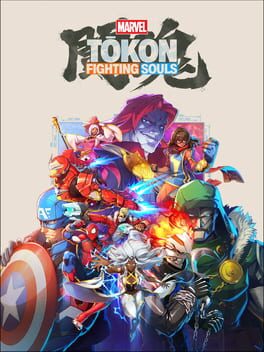
Developed by Arc System Works and published by Sony Interactive Entertainment, Marvel Tokon: Fighting Souls is a video game released on August 6, 2026. The platforms listed in this entry are PlayStation 5 and PC. The associated genres are action and fighting. The specified game modes are Single player, Multiplayer and Split screen, and the engine listed is Unreal Engine 5.
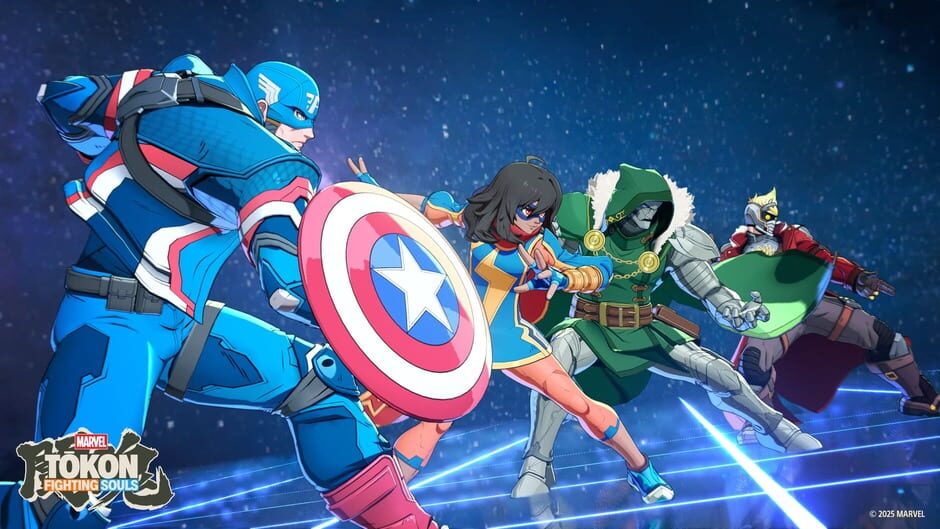
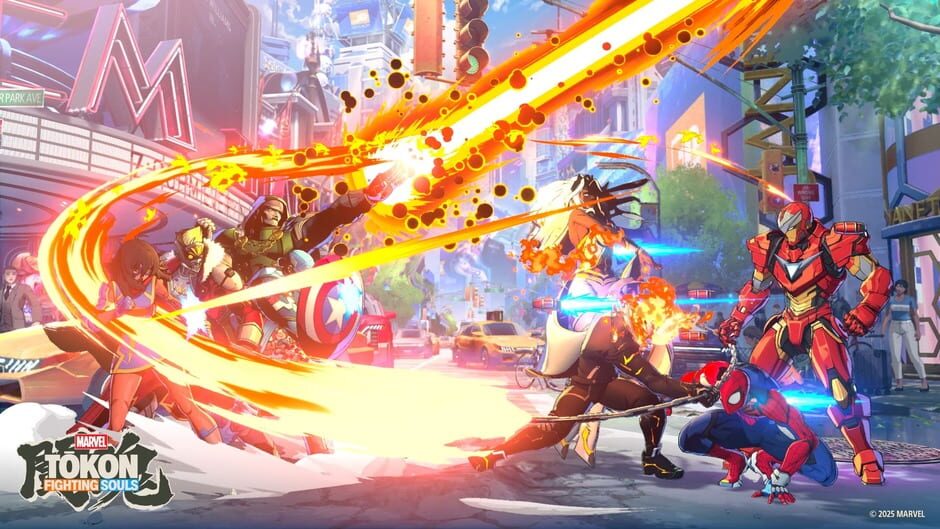
The game takes the form of a 4v4 team fighting game built around characters from the Marvel universe and reinterpreted through Arc System Works’ visual direction. Each team includes four fighters, but its structure differs from tag fighters in which the player must necessarily master several characters equally.
The four members of a team notably share a single health bar. At the beginning of a fight, the player controls their main character while their partners gradually become involved through the different team mechanics.
The Assemble Assist system allows a teammate to be called in during combat. The character summoned depends on the directional input associated with the command, making it possible to precisely select one of the three available partners.
Assists are not limited to adding a single attack. After certain interventions, a window allows the player to directly take control of the summoned partner, creating a transition between assistance and character switching without interrupting the pace of the exchange.
The game also allows direct switching between team members. The 4v4 structure therefore makes it possible to build sequences in which several characters intervene successively or simultaneously, sometimes bringing a large number of fighters onto the screen.
Controls are based on light, medium and heavy attacks, joined by Skills, character-specific abilities and different actions linked to the Assemble system. Simple sequences can be performed by repeatedly pressing the same attack button before continuing into a Skill, Super Skill or Ultimate Skill.
Two methods can be used to execute certain techniques. Quick Skills use simplified commands, while Command Inputs rely on more traditional directional fighting-game inputs and notably provide greater damage and meter generation.
This dual approach allows the same system to support both immediately accessible controls and more technical sequences. More advanced combo routes can combine several attack strengths, a Skill, an Assemble Rush and then an additional attack.
Defense also operates on several levels. In addition to standard guarding, the Assemble Counter provides a defensive move capable of automatically triggering a counterattack if the opponent strikes during its activation.
The Crossover, meanwhile, uses a partner to interrupt enemy pressure while the controlled character is defending. Team mechanics therefore contribute both to offensive sequences and defensive possibilities.
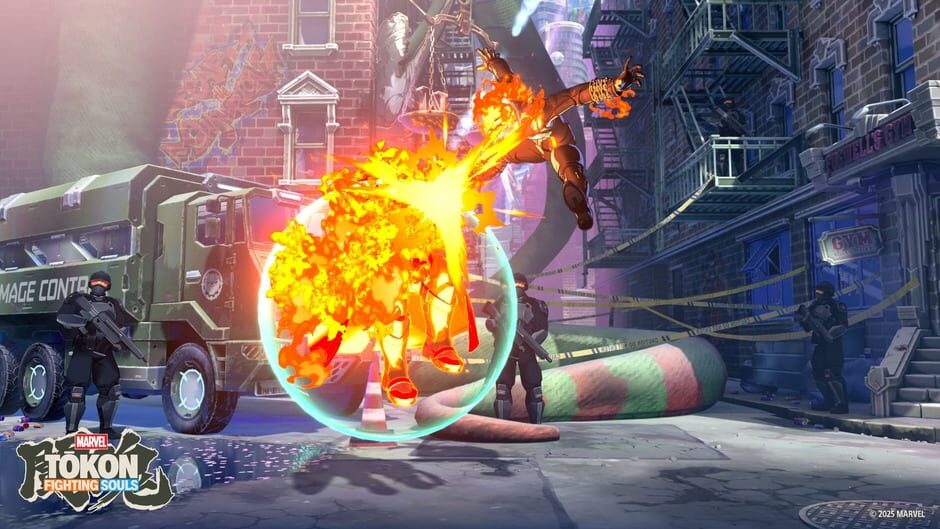
Arenas directly influence how battles unfold. Several stages contain multiple connected zones, and certain attacks or sequences can trigger a transition to another part of the environment. These changes are not purely visual and can alter the situation during the fight.
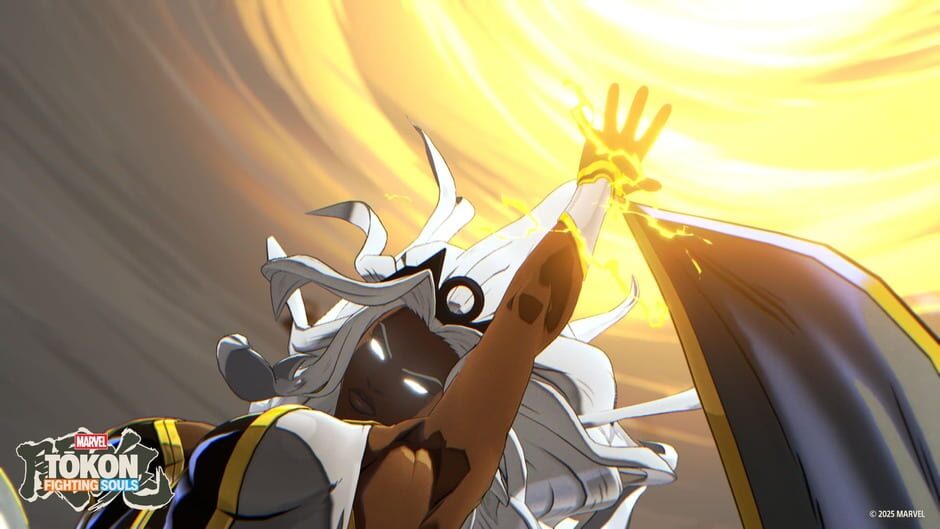
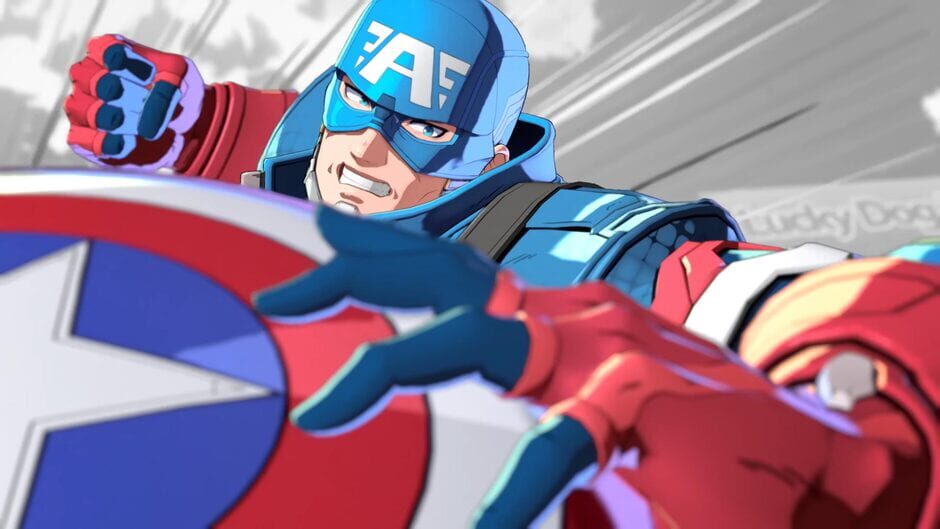
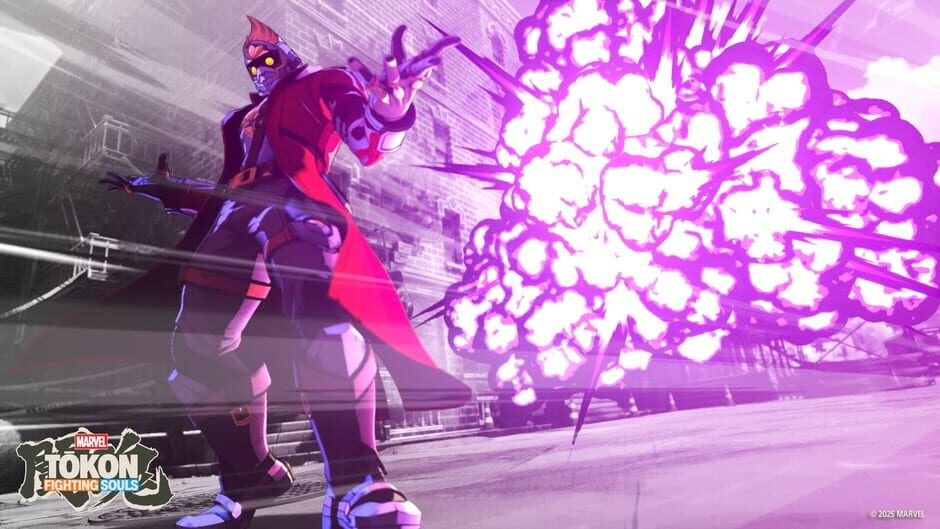
Characters have movements and abilities designed around their Marvel powers. Their mobility, range and offensive possibilities therefore vary significantly, from close-combat fighters to characters using projectiles, magic, gadgets or aerial movement.
The game’s structure also includes an Episode Mode dedicated to its story. It uses a motion-comic presentation combining influences from American comics and Japanese manga, then connects these narrative sequences to battles.
For competitive play, Casual Match and Ranked Match modes allow players to face others online. A Versus Mode also makes it possible to play locally against another player or fight the CPU.
The game also includes a Training Mode dedicated to learning and experimentation, as well as Startup Battle, which gradually introduces individual controls and then the collective mechanics linked to the Assemble system.
An Open Lobby serves as a meeting point between online matches. Players can use avatars there, communicate through different social features and then join arcade cabinets to start new battles.
MARVEL TŌKON: Fighting Souls therefore structures its system around movement between the four members of a team. Assists, character switching, collective defensive actions and arena transitions extend traditional fighting-game mechanics by giving partners an active role without requiring players to permanently control all four fighters.
Key takeaways
- MARVEL TŌKON: Fighting Souls is a 4v4 team fighting game featuring characters from the Marvel universe.
- The four fighters on a team share a single health bar.
- The Assemble Assist system allows different partners to be called in and, in certain situations, directly controlled afterward.
- Controls combine light, medium and heavy attacks, Skills, Super Skills, Ultimate Skills and team actions.
- Techniques can use simplified Quick Skills or more traditional Command Inputs.
- Defense notably includes Assemble Counter and Crossover, integrating team mechanics into counterattacks and interruptions.
- Several arenas contain multiple zones between which the fight can move.
- The game notably includes Episode Mode, Casual Match, Ranked Match, Versus Mode, Training Mode, Startup Battle and Open Lobby.
Conclusion
MARVEL TŌKON: Fighting Souls builds its combat system around teams of four characters sharing a single health bar and able to intervene through assists or character switching.
The Assemble mechanics extend this structure into combos and defense, while simplified and traditional inputs offer two ways to access character techniques.
Transitions between different arena zones add another component to battles, alongside the differences in mobility, range and abilities specific to the selected heroes and villains.
Episode Mode, local play, online modes, training and the lobby complete this structure around a system in which team composition and the use of all four members play a central role.
Good to know
- Marvel Tokon: Fighting Souls was released on August 6, 2026.
- The game was developed by Arc System Works and published by Sony Interactive Entertainment.
- The platforms listed in this entry are PlayStation 5 and PC.
- The associated genres are action and fighting.
- The specified game modes are Single player, Multiplayer and Split screen.
- The engine listed in this entry is Unreal Engine 5.
- Battles are built around teams of four fighters sharing a single health bar.
- The Assemble system integrates partners into assists, character switching, combos and defensive actions.