Dale Carnegie : How to Stop Worrying and Start Living
Dale Carnegie proposes concrete methods to reduce anxiety, analyse problems in hindsight and act on what depends on oneself. Examples illustrate each principle.
- Essay
- Self-help

PANACHES Culture · Works
Discover films, animation, series, anime, documentaries, live, manga, BD, comics, books, games, music, then explore their associated studios, tools and articles.
33 works
Dale Carnegie proposes concrete methods to reduce anxiety, analyse problems in hindsight and act on what depends on oneself. Examples illustrate each principle.
Our relationships with others are crucial to our quality of life!Easy contact is a powerful engine of success: to be sought for its human qualities, to create sympathy, to pass on its ideas, to motivate, to correct without ruining a working relationship... It learns! This book, useful for all ages and in all trades, will give you all the advice to develop quality human relations, necessary for professional and perso…
To overcome the fear that bothers a group, to be listened to, to appreciate, to be able to captivate its listeners, is learnt. To train to communicate well, the Carnegie methods remain the most effective.
Do you want to increase your personal and professional success?In this practical and concrete guide, with principles that are easy to implement, you will learn to:• identify your leadership skills,• build relationships of trust,•communicate more effectively,• motivate others,•work as a team,•create a leadership dynamic,•get more respect and success.Go to action!Apply these simple but fundamental techniques, they wil…
"An exciting journey to the country of emotions to discover unexplored feelings. The traditional conception of intelligence neglects an essential part of human behavior: emotional reactions. IQ is not the only criterion; there is another form of intelligence, emotional intelligence, which can be stimulated and developed from childhood. Refusing to listen to emotions can lead to general instability, while self-contro…
"A few years ago, with "Emotional intelligence", Daniel Goleman made us discover the prominent role of emotions. Today, it is on the crucial importance of attention and the priority to give him that he insists. Daniel Goleman gives the keys to train his brain to remain attentive, in the same way that one maintains his muscles by an adequate gymnastics. An intelligent practice of development that can both make us mor…
In his world best seller, "Emotional Intelligence", Daniel Goleman defended a revolutionary thesis: success depends less on the intellectual quotient than on the ability to understand, master and cultivate the emotions that are within us. Today he extends his field of research to the field of our relations with others. He makes us penetrate the arcanes of neurosciences in a clear and living way. Feeding many example…
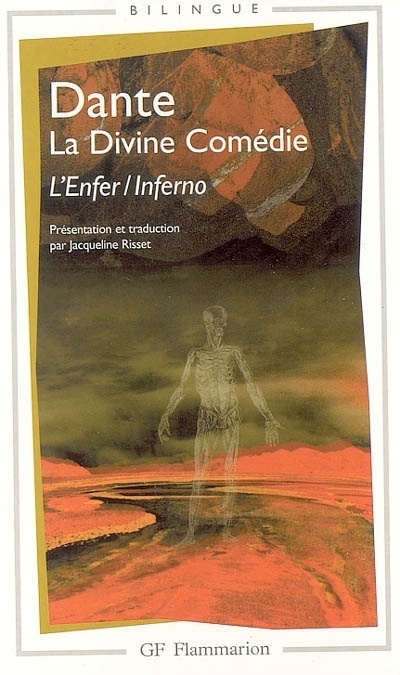
On the occasion of Dante's 700th anniversary and the new translation of the Divine Comedy by Daniele Robert, a new edition of this iconic text with the drawings of Miquel Barcelo is published. This three-volume edition takes over the structure of Dante Alighieri's text.
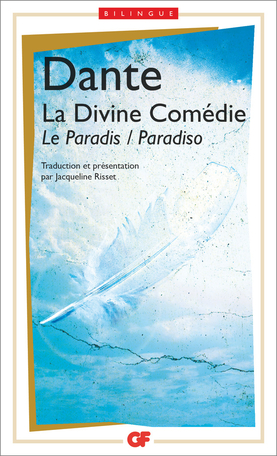
The heart of the great project is Paradise. The long poem that we call Divine Comedy was conceived according to Paradise, itself composed to the praise of a woman, Beatrice, here transfigured into a higher fullness. The Paradise of Dante, like Hell or Purgatory, surprises: no placid rest, but the incessant movement, the flight of lights. Paradise, dances with flames, is dazzling and dangerous. The heavenly traveller…
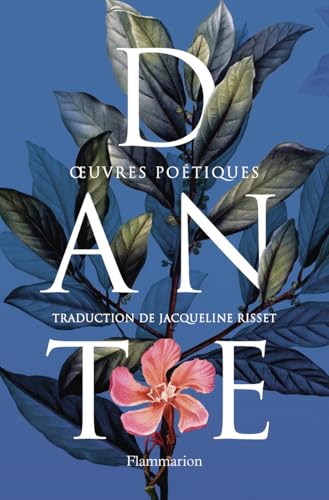
The Divine Comedy, written between 1307 and 1321, could not have seen the light without the Rimes. There are the precursor themes of Comedy: love, the quest for bliss, but also the political quarrels of the time. Beatrice also made an appearance there. Written throughout the life of Dante's adult, these poems give a new and more accessible view of The Divine Comedy: they reveal the stylistic firstfruits, but also an…
When Virgile and Dante, at the dawn of Easter Sunday of the year 1300, land on the beach of the Anti-purgatory, after having crossed the infernal circles and reparcouru, through a dark casing, all the space of the center of the earth on its surface, the impression of happiness is intense, almost paradise... On the contrary, the narratives of imaginary journeys of the same era describe purgatory which are kinds of he…
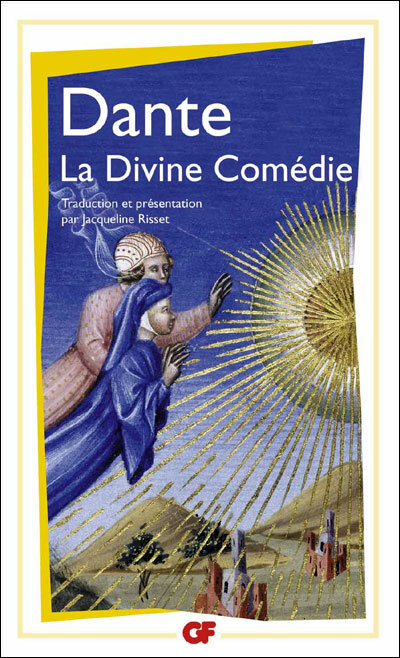
A journey among the dead, a political picture of Italy, from Antiquity to the 14th century, a theology manual, a petition against corruption of the powerful and the decadence of the popes, The Divine Comedy is also a fabulous novel of adventures, which, through its visions of horror and ecstasy, marked painters, poets, novelists and filmmakers to this day. To allow for a quick readability, this new octasyllable vers…
"Of all my books, it is this one I prefer," wrote David Copperfield's author. In this initiatory novel, populated by colourful characters, Dickens traces the journey of a young boy driven from the family home by the cruelty of his father-in-law, and offers a striking picture of the English society of the early nineteenth century. Admired by the greatest writers, from Charlotte Brontë to Sigmund Freud, passing throug…
How can we distinguish truth from falsehood and build knowledge on solid foundations? In Discourse on the Method, René Descartes begins with a conviction: reason is naturally shared by all human beings, but using it properly requires a rigorous method. Through an account of his intellectual journey, he questions received knowledge and proposes four rules for guiding thought with order and discernment. This investiga…
How can we be certain that we know the truth when our senses, reasoning, and beliefs may deceive us? In Meditations on First Philosophy, René Descartes seeks to establish solid foundations for knowledge by subjecting his former certainties to methodical doubt. He examines the reasons for questioning sensory perceptions and received opinions until he discovers a first truth that cannot be denied: the existence of the…
In Principles of Philosophy, first published in Latin in 1644 under the title Principia philosophiae, René Descartes brings together the foundations of his philosophical and scientific system. Building on the reflections developed in Discourse on the Method and Meditations on First Philosophy, he presents the principles of human knowledge before examining the nature of matter, the laws of motion, and the organizatio…
How can we direct our thinking correctly in order to attain certain knowledge? In Rules for the Direction of the Mind, René Descartes seeks to establish a rational method capable of guiding the intellect in its search for truth. He distinguishes two fundamental operations, intuition and deduction, and explains how to break down difficulties, organize reasoning, and verify the connections between its successive steps…
How can we understand human emotions and learn to control them without suppressing them? In The Passions of the Soul, the last work published during his lifetime, René Descartes explores the relationships between the body, the mind, and human feelings. Drawing on his understanding of human physiology, he examines the mechanisms that produce the passions and their effects on our thoughts and behavior. This scientific…
How can we attain certain knowledge without blindly accepting received teachings? In The Search for Truth, René Descartes presents the foundations of his philosophy through a dialogue between three characters: Eudoxus, who advocates reason free from prejudice; Polyander, a man without formal philosophical training; and Epistemon, who represents traditional learning. Their conversation confronts the authority of book…
How does the human body function, and to what extent can its activities be explained through the laws of nature alone? In Treatise on Man, René Descartes develops a mechanistic conception of living organisms by imagining an artificial machine whose organization reproduces that of the human body. Through this thought experiment, he examines digestion, blood circulation, respiration, muscular movement, and the functio…
"Erotikos" is the original title of this dialogue, which is a philosophical discussion on love: can we reconcile love and marriage? In Thespies, Plutarch, young bride, meets his friends to discuss the subject of love and relations between men and women. They end up making the apologies of the god Eros.
Written in 1746, without author's name, and immediately condemned to fire by the Paris Parliament, the Philosophical Thoughts take part in Christianity, and beyond all revealed religions: or faith is compatible with human reason and religions must accept doubt and criticism and reform themselves to join "natural religion"; or it is not, and how to admit then that God demand men to sacrifice their reason for him? Thi…
The Thoughts on the Interpretation of Nature are an emblematic work of the spirit of the Enlightenment. Written in the margins of the publication of the Encyclopaedia in 1753, they measure the epistemological and metaphysical upheavals that accompany the birth of the new experimental sciences of life and earth. The discovery of fossils and the analysis of the layers that make up the earth's globe, for example, contr…
We know that Diderot assumed his role as a moralist and that he praised Greuze, among other things, because his painting educated and edited the viewer, giving him lessons of virtue. Although he fears that beauty as goodness often hurts, little is already necessary, in the Treaty of Beau, that Diderot associates the beautiful, except with the useful and the true, at least to the good (the Holy Trinity of the moral c…
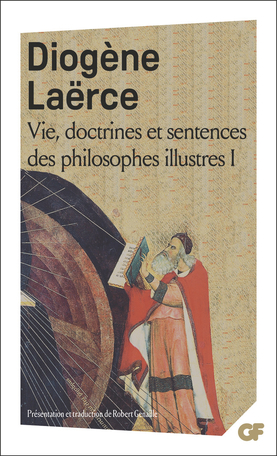
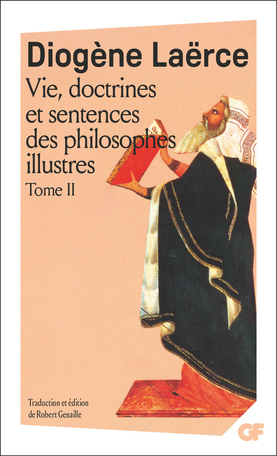
What difference between cyrenaics and epicureans? Did Pythagoras really let himself be killed for refusing to walk on beans? What are the definitions of happiness and wisdom according to Aristippe, Zeno, Epicurus and Pyrrhon? From the founders of philosophy to the cynical philosophers, to the stoicians and pythagoricians, Diogene Laërce, of which we know little, except that he would have been born between 200 and 50…
"Alexander met him one day and said to him, "I am the great king Alexander.""Diogene then came and said, "I'm Diogene, the dog.""They asked him why he was called a dog: "Because I caress those who give me, I bark against those who don't give me, and I bite those who are wicked." The keeper said to him, "Yesterday, a man was hanged there.""I cleanse him," Diogen said. »
Four's story before meeting Tris During the choice ceremony, a young altruist stands against his family and his faction: he joins the bold. He chooses a new destiny, and becomes Four. But what he discovers endangers his future, and that of society as a whole. Will he have to stand up against his new faction?
In a world where you can only belong to one faction out of 5, a young girl brings chaos. In a post-apocalyptic Chicago, society is divided into 5 factions: the Selfless, the Bold, the Sincere, the Erudite and the Fraternal. Each is dedicated to the worship of a virtue in the hope of creating a perfect civilization. Children grow up in the faction where they were born. At 16 they must choose what theirs will be, f…
Abandoning a city of fire and blood, Tris is on the run. Thanks to her Divergent abilities, she managed to escape the Erudite program which manipulated and launched the Dauntless soldiers to attack the Altruists. In three days, Tris lost her faction, her friends, her parents. However, she does not have the right to give up. Only she can stand against the Scholars. With her brother Caleb and her boyfriend Tobia…
What if a revelation, like a choice, could change everything? What if love and loyalty forced you to do things you never would have done? The faction-based society that Tris Prior believed in is now destroyed, fractured by violence and battles for power, marked by loss and betrayal. So when Tris is offered the chance to explore the world beyond the boundaries she's always known, she's ready. Perhaps Tris and Tobias …
When Alexandre Dumas stomped the legend of Robin des bois... "They say I'm the most skilled archer in the Sherwood Forest; I wanted to take the opportunity to prove to myself that they're telling the truth." In the Sherwood forest, a modest forester and his wife were entrusted to an orphan. Fifteen years later, the one named Robin Hood is a valiant young man; skilled archer, he saves two unknowns from a murderer. …
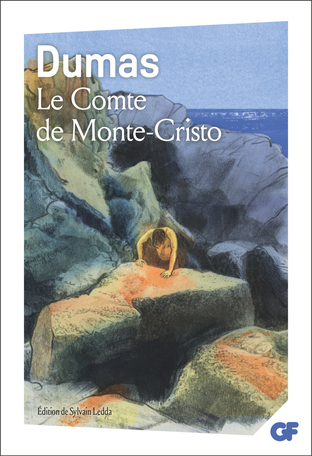
Rare are the novels that hold the reader awake until the first lights of dawn; few are the heroes who are hard to leave as they charm us and fascinate us; few are stories that possess a strength of magnetation as they lastingly mark the individual and collective imagination. Accused of a bonapartist plot, the young sailor Edmond Dantès is imprisoned in the jails of the castle d'If. He spends fourteen years there, ru…
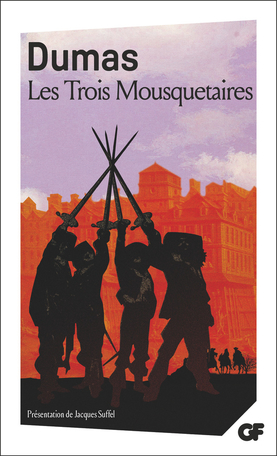
The adventures of d'Artagnan and his three famous acolytes, Athos, Porthos and Aramis, are above all valour and panache, an overflow of energy and boldness, romance and comedy that sometimes turn into tragedy when, at the turn of a page, the silhouette of the disturbing one is drawn up. Milady... Generations of readers have been subjugated by Les Trois Musquetaires, where Dumas, with incomparable dramatic power, mix…