







Overview
Xbox Game Studios is the video game development and publishing branch that grew out of the organization created by Microsoft in 2000 under the name Microsoft Games. Its history is closely tied to Xbox, but the two entities are not the same. Xbox today refers to a much broader ecosystem encompassing consoles, services, platforms and several production organizations, while Xbox Game Studios represents a specific network of studios and publishing activities within Microsoft Gaming.
This distinction became increasingly important as Microsoft expanded its video game business. Teams such as Rare, Turn 10 Studios, Halo Studios, The Coalition, Mojang Studios, Playground Games, Obsidian Entertainment, inXile Entertainment and World’s Edge were created, acquired or integrated into Xbox Game Studios over time. They nevertheless retain very different specializations and production cultures.
Xbox Game Studios is therefore not an auteur studio with a single creative method. Its role is to bring together and support teams capable of producing a racing game such as Forza Motorsport, an open-world adventure such as Forza Horizon, shooters such as Halo or Gears, role-playing games from studios like Obsidian and inXile, or a multiplatform creative phenomenon such as Minecraft.
This diversity existed even before the first Xbox. Microsoft had long published games on PC and collaborated around properties such as Age of Empires, Flight Simulator and MechWarrior. The creation of Microsoft Games in 2000 brought these activities together more clearly as the company prepared to enter the console market.
The first Xbox then profoundly changed the organization’s function. Microsoft now needed games capable of defining its own platform, while also building a network of partners and internal studios. The acquisition of Bungie before the release of Halo: Combat Evolved, the acquisition of Rare in 2002, the creation of Turn 10 and collaborations with numerous developers all contributed to this construction.
Over successive generations, this mission expanded. Xbox Game Studios no longer exists solely to produce games intended to support a console. PC once again became central, certain franchises remained available on competing platforms, and Microsoft developed a broader distribution strategy around its games. This evolution is particularly visible with Minecraft, which remained available across many platforms after Mojang was acquired in 2014.
Xbox Game Studios should therefore be understood less as a uniform catalogue than as a structure designed to sustain several development cultures within the same publishing organization.
History
2000: bringing Microsoft’s gaming activities together
Microsoft had a video game history before Xbox. The company published games on PC and gradually developed an internal group dedicated to the sector, with productions such as Microsoft Flight Simulator and relationships with several specialized developers.
In March 2000, these activities were reorganized into a division known as Microsoft Games. This transformation took place at the same time as the public announcement of the Xbox project. The new organization then had to pursue two missions that would quickly become inseparable: continuing to develop and publish games for Windows while preparing the catalogue for Microsoft’s future console.
This origin explains why Xbox Game Studios cannot historically be reduced to Xbox consoles. PC was part of its activity even before the first console was released, and several of its important properties came from this culture.
At the same time, Microsoft looked for teams capable of building the gaming identity of its new platform. One of the most important decisions came in 2000 with the acquisition of Bungie, then in the middle of developing Halo. The project, previously presented for other platforms, became closely associated with Xbox.
When Xbox launched in North America in 2001, Halo: Combat Evolved became one of its most defining games. The title was not only a success for Bungie: it showed Microsoft the importance of owning properties capable of being immediately associated with its hardware.
The organization adopted the name Microsoft Game Studios in 2001. Its role already went beyond managing internal teams. Microsoft also published productions made by independent studios and built partnerships intended to support both Xbox and Windows.
Building the first major Xbox identities
The early years of Xbox required Microsoft Game Studios to build a broader portfolio quickly.
Rare, acquired in 2002, brought extensive experience in console development and a catalogue of established properties. The studio did not simply become an execution team: it retained its own identity, later leading to projects such as Viva Piñata and Sea of Thieves.
Microsoft also founded Turn 10 Studios, whose work on Forza Motorsport gradually established a new pillar for Xbox. The automotive franchise later evolved into two complementary branches when Playground Games developed Forza Horizon.
Halo followed its own particular evolution. After several productions, Bungie regained its independence. Microsoft nevertheless retained ownership of the franchise and created a team dedicated to its continuation, first known as 343 Industries and later renamed Halo Studios. This transition illustrates an important characteristic of Xbox Game Studios: a property can outlive the team that historically defined it.
The same period saw the development of Gears of War, initially created by Epic Games and published by Microsoft. Microsoft later acquired the rights to the franchise in 2014 and entrusted its continuation to the studio that would become The Coalition.
The network was therefore built through several different mechanisms: studio acquisitions, creation of internal teams, publishing partnerships and acquisition of properties. Not every franchise associated with Xbox was created in the same way or by teams that had always belonged to Microsoft.
From Microsoft Game Studios to Microsoft Studios
The arrival of the Xbox 360 in 2005 gave Microsoft a stronger position in the console market, but the internal organization continued to evolve.
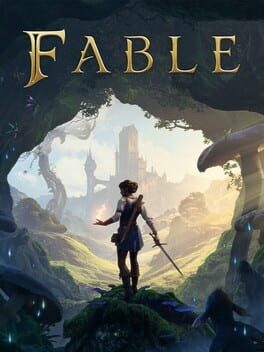
The catalogue relied on series such as Halo, Forza, Fable and Gears of War, alongside numerous partnerships with external developers. This strategy allowed Microsoft to offer very different productions without having to own every team that created them.
In 2011, Microsoft Game Studios became Microsoft Studios. The change accompanied the expansion of Microsoft’s gaming activities beyond the traditional model directly linking a development team to a specific console.
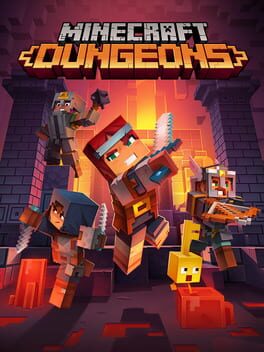
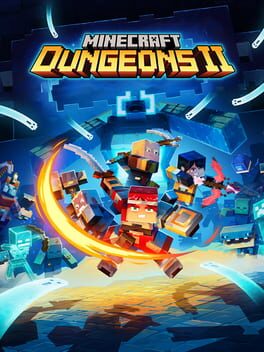
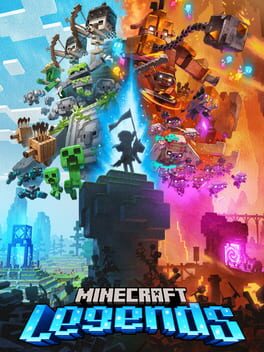
An important step came in 2014 with the acquisition of Mojang and Minecraft. Unlike a traditional exclusivity strategy, Microsoft announced that Minecraft would continue to exist on platforms where its community was already established, including PlayStation, iOS and Android.
This decision introduced a logic that would become far more visible later: owning a studio or property did not necessarily mean restricting all of its games to Xbox hardware.
Minecraft also changed the scale of the portfolio. Xbox did not merely acquire a successful game, but an universe used across PC, consoles and mobile devices, supported by an international community and capable of hosting many different productions.
2018-2019: rebuilding a network of studios
The second half of the 2010s marked another major shift. Microsoft decided it needed to significantly strengthen its ability to produce its own games.
In 2018, the company announced a major expansion of Microsoft Studios. Playground Games joined Microsoft, while the acquisitions of Ninja Theory, Undead Labs and Compulsion Games were announced. Microsoft also created The Initiative in Santa Monica.
A few months later, Obsidian Entertainment and inXile Entertainment also joined the organization. In 2019, the acquisition of Double Fine Productions continued this movement.
These teams were not chosen because they all produced the same type of game. Obsidian and inXile had strong role-playing traditions. Playground was closely associated with open worlds and Forza Horizon. Ninja Theory developed productions centered on action, storytelling and character performance. Double Fine had a tradition of projects strongly shaped by their creators.
The expansion therefore followed a logic of complementarity rather than uniformity.
In February 2019, Microsoft Studios officially became Xbox Game Studios. The change reflected the evolution of the Xbox brand itself, which was increasingly presented as a gaming identity extending beyond the console alone. PC, services and other devices took on a growing role within this vision.
An organization larger than the Xbox console
At the beginning of the 2020s, Microsoft accelerated its investment in video games even further, but a new distinction became necessary.
The acquisition of ZeniMax Media brought Bethesda, id Software, Arkane, MachineGames and other teams under Microsoft’s control. The acquisition of Activision Blizzard in 2023 then added Activision, Blizzard Entertainment and King.
These operations considerably expanded the broader Xbox and Microsoft Gaming organization, but they did not mean that all of these studios automatically became Xbox Game Studios. Bethesda and its publishing structures retained their own organization, as did Activision and Blizzard.
Xbox Game Studios therefore represents a specific level within an organization that has become much larger.
This distinction also helps explain why Microsoft games now appear in very different contexts. Some are developed directly by an Xbox Game Studios team. Others come from Bethesda or Blizzard. Still others are created by external partners and published by Xbox.
The relationship with platforms also evolved. PC became systematically associated with a large proportion of new Xbox productions, while some games were gradually distributed on other consoles. This strategy changed the historic function of the internal catalogue: it no longer existed only to persuade players to buy a particular machine, but also to extend the presence of Xbox properties to a wider audience.
2026: adjusting a network that had become very large
After several years of expansion, Xbox began a major restructuring of its activities in 2026. Microsoft announced workforce reductions and a review of its studio portfolio, with several teams expected to leave or change their relationship with Xbox.
For Xbox Game Studios, this period represented a break from the phase of rapid acquisitions that began in 2018. The question was no longer only how to increase the number of owned studios, but also which structures genuinely matched the model Microsoft wanted to maintain.
This evolution did not change the fundamental function of Xbox Game Studios. The organization continued to combine internal development and publishing, but within an environment where Microsoft Gaming now contained several branches and where the very idea of an “Xbox game” was becoming less tied to a single platform.
The network therefore remains in transformation. Its composition can change, while its properties and partnerships increasingly extend beyond the historical boundaries of the console.
What sets it apart
A network of studios rather than a single creative identity
The first distinctive feature of Xbox Game Studios is the deliberate absence of a shared artistic formula.
Rare does not develop games like Obsidian Entertainment. Turn 10 does not have the same expertise as Halo Studios. Mojang does not operate like The Coalition or Playground Games.
This diversity makes the idea of a recognizable “Xbox Game Studios style” far less relevant than it would be for an auteur studio defined by a particular visual direction or gameplay mechanic.
The coherence instead lies in the structure: Microsoft brings together teams with specialized expertise and provides them with a framework for funding, publishing, distribution and technology.
This organization also allows several franchises to follow very different trajectories. Forza can alternate between Motorsport and Horizon. Halo can evolve through a team created specifically around the property. Minecraft can continue to exist on almost every major platform. Obsidian’s productions, meanwhile, can retain an identity strongly associated with role-playing games.
The individual studio therefore remains an important unit within the network.
Creating properties that give a platform its identity
Xbox Game Studios developed at the same time that Microsoft needed to build an identity for its consoles.
Halo represents the founding example. Its presence at the launch of the first Xbox strongly helped define the new machine and demonstrated that a platform needed games capable of immediately giving it a recognizable face.
Forza later became another property directly associated with Xbox, first through Forza Motorsport and then Forza Horizon. Gears of War in turn contributed to the identity of the Xbox 360 generation.
These franchises were not all created by internal studios from the beginning, but Microsoft gradually organized their continuity through rights acquisitions, the creation of specialized teams or the integration of long-standing partners.
The role of Xbox Game Studios therefore involves not only developing games, but also maintaining properties capable of surviving several hardware generations and different team configurations.
Evolving the very idea of exclusivity
Another major transformation concerns the relationship between ownership and platform.
Historically, internal productions were a central argument for selling an Xbox console. This logic remains important, but it has gradually become more flexible.
The acquisition of Mojang in 2014 provides an early example. Microsoft chose to keep Minecraft on competing platforms where it already existed. The goal was increasingly to grow the property’s community rather than use the game purely as hardware exclusivity.
The major return of PC within the Xbox strategy reinforced this evolution. Xbox Game Studios productions were progressively designed for Windows alongside consoles. Some properties were later brought to other platforms.
The value of the network therefore no longer rests solely on the existence of a catalogue locked to one machine. It increasingly depends on the ability to own, develop, publish and distribute games and universes across a growing range of devices.
This change brings Xbox Game Studios closer to its paradoxical origin: the organization was born from PC publishing activities before becoming an essential instrument of Microsoft’s console strategy, and then gradually returned to a broader multiplatform approach.
Combining internal studios and external publishing
Xbox Game Studios does not only produce games made by teams owned by Microsoft.
Since the early days of the first Xbox, Microsoft has collaborated with external developers to expand its catalogue. This activity allows the Xbox brand to be associated with productions whose creative teams remain independent.
This boundary explains why the publisher’s identity cannot be reconstructed solely from a list of its studios. Part of its role lies precisely in the ability to identify, fund, support and publish projects coming from outside the organization.
The model has produced different kinds of relationships. Some collaborations remain temporary. Others last for many years. Some eventually lead to the acquisition of the developer, as happened with Playground Games after a long relationship around Forza Horizon.
Xbox Game Studios therefore operates both as an internal development network and as a publishing organization, two functions that have existed since the origins of Microsoft Games but whose balance has changed over time.
Good to know
- Xbox Game Studios was created in 2000 under the name Microsoft Games, building on Microsoft’s internal video game activities.
- The organization became Microsoft Game Studios in 2001, then Microsoft Studios in 2011.
- Bungie joined Microsoft in 2000 while Halo was in development; Halo: Combat Evolved then accompanied the launch of the first Xbox in 2001.
- Rare was acquired in 2002 and became one of the historic studios within the Xbox network.
- Microsoft created Turn 10 Studios to develop the Forza Motorsport series.
- Mojang joined Microsoft in 2014, while Minecraft continued to be developed across several platforms competing with Xbox.
- Microsoft significantly expanded its network in 2018 and 2019, notably with Playground Games, Obsidian Entertainment, inXile Entertainment and several other teams.
- Microsoft Studios officially became Xbox Game Studios in 2019.
- Xbox Game Studios should not be confused with the broader Microsoft Gaming organization: Bethesda/ZeniMax, Activision and Blizzard belong to the same group but retain distinct structures.
- In 2026, Xbox began restructuring its portfolio after several years of rapid expansion, once again changing the composition of its studio network.