
Presentation
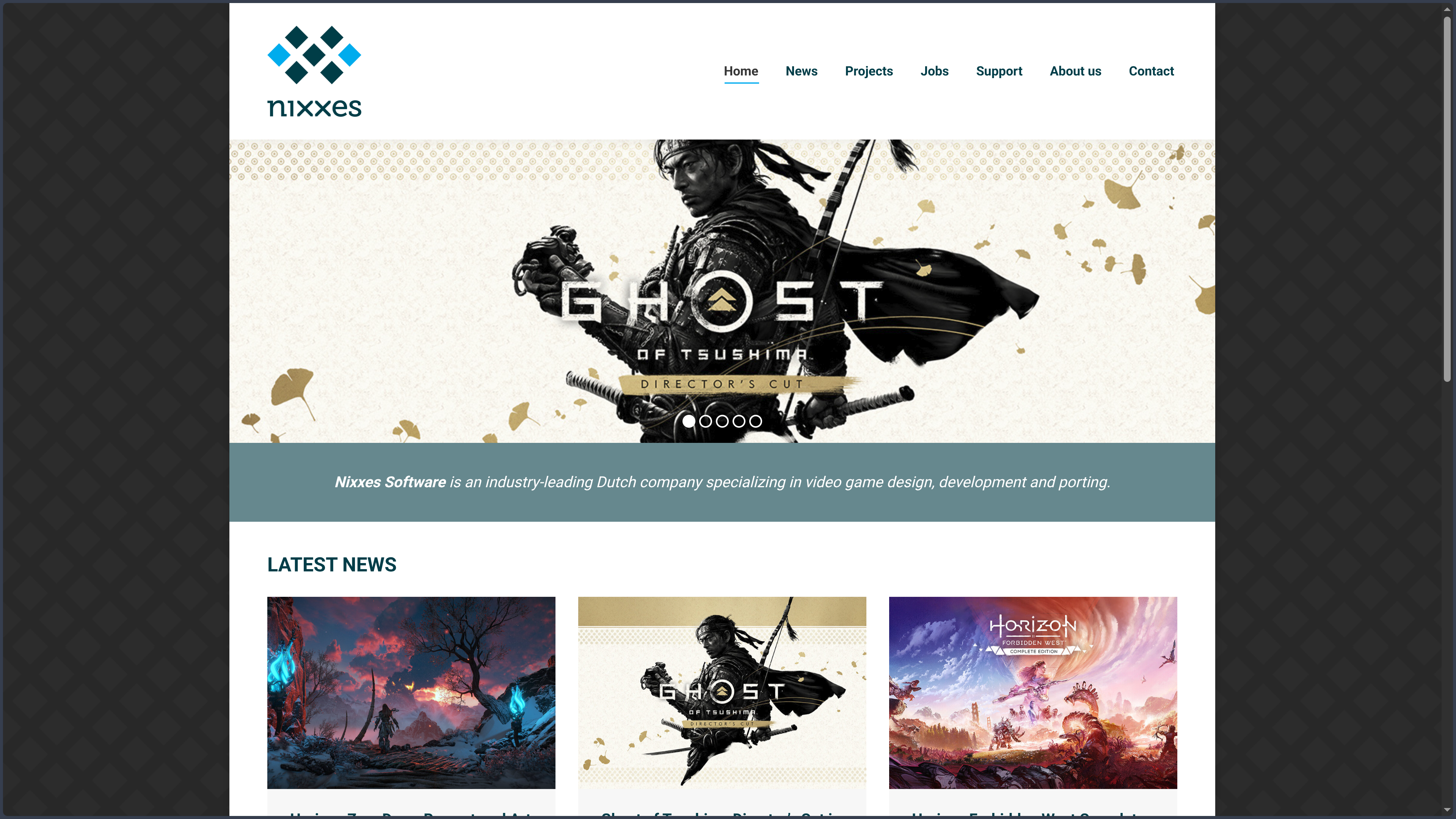
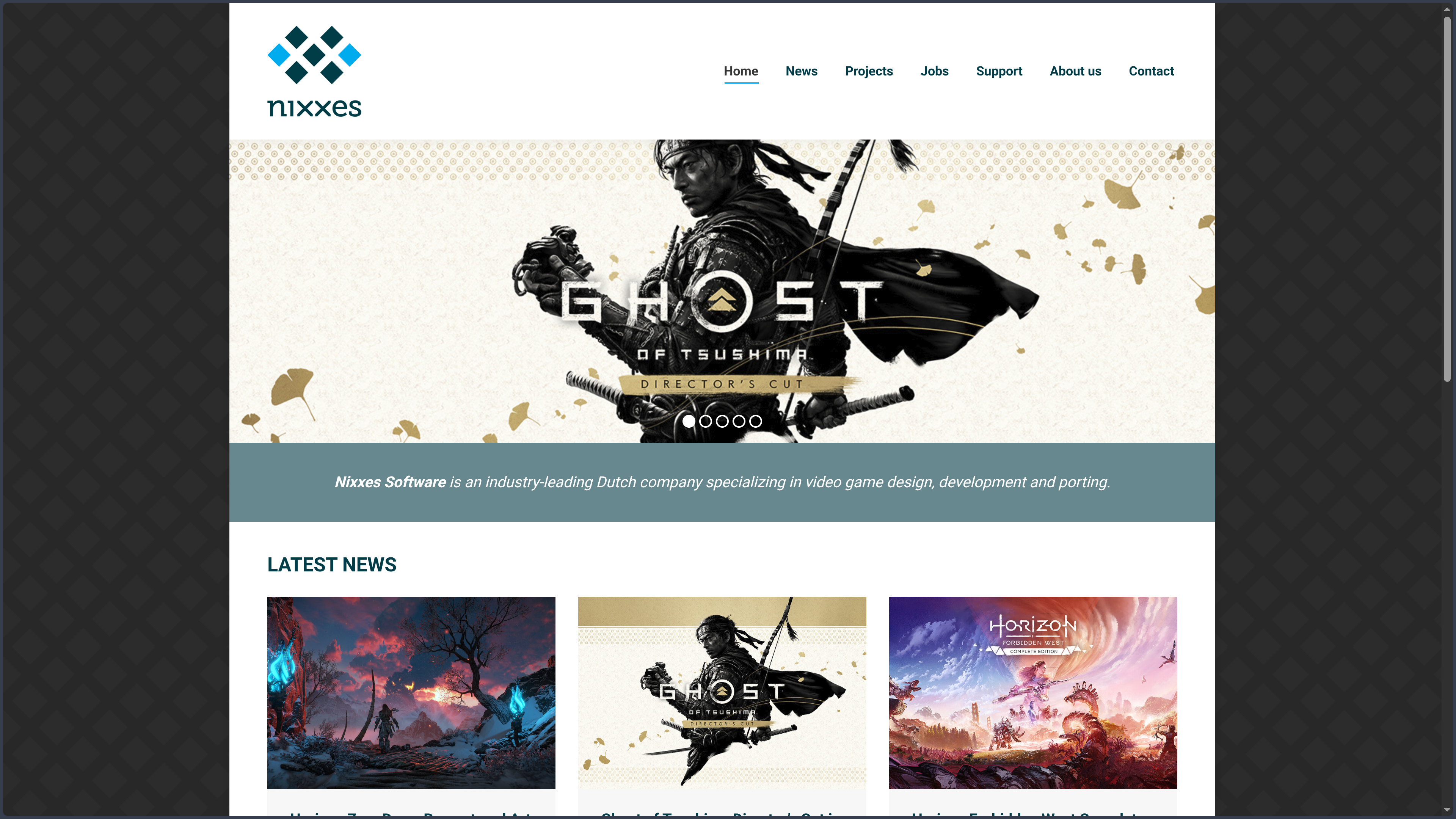
Nixxes Software is the kind of studio you may come across for years without necessarily remembering its name.
You play Tomb Raider, Deus Ex, Marvel's Spider-Man, Horizon Forbidden West, or Ghost of Tsushima. The logo appears in the credits, behind the team that imagined the game, then disappears.
This is precisely the space in which Nixxes has built its identity.
Founded in 1999 in Utrecht, the Netherlands, by Jurjen Katsman, the studio specialized very early in technical development, conversions between platforms, and optimization. Its craft is often summarized by the word "porting," as if it were enough to move a game from one machine to another.
The reality is much more complex.
Switching platforms can require adapting memory, rendering, controls, performance, or the interface, while understanding an engine the team did not itself design. On PC, the problem becomes even larger: the same work has to run on thousands of possible configurations, different screens, and very different power levels.
Nixxes therefore does not simply copy a game.
It translates it technically without making it lose its identity.
This skill allowed it to work for years with the Eidos and Square Enix ecosystem, notably around Tomb Raider and Deus Ex. In 2021, Sony Interactive Entertainment acquired the studio just as PlayStation was beginning to significantly accelerate the arrival of its productions on PC.
Since then, Nixxes has accompanied several major conversions and gradually broadened its activity toward co-development, art, and design, notably with Horizon Zero Dawn Remastered.
Its history therefore is not told through an in-house franchise.
It is told through a more discreet skill: enter the work of another studio, understand what must survive the change of machine or generation, then intervene without erasing the original author.
History
1999: building an identity behind the scenes
Nixxes Software was founded in 1999 in Utrecht.
From its first years, the studio chose a different path from that of many development teams. It did not primarily seek to create a great original property; it developed expertise able to serve others' productions.
This orientation quickly brought it closer to franchises from the Eidos ecosystem.
The principle was already there: when a game has to run on another machine, Nixxes must enter a technology it did not design, understand its constraints, and modify enough things for the new version to work without feeling like a different work.
Porting thus became a real craft.
Eidos, Crystal Dynamics, and learning other people's technologies
During the 2000s and 2010s, Nixxes worked extensively with Crystal Dynamics, Eidos-Montréal, and other teams linked to Eidos then Square Enix.
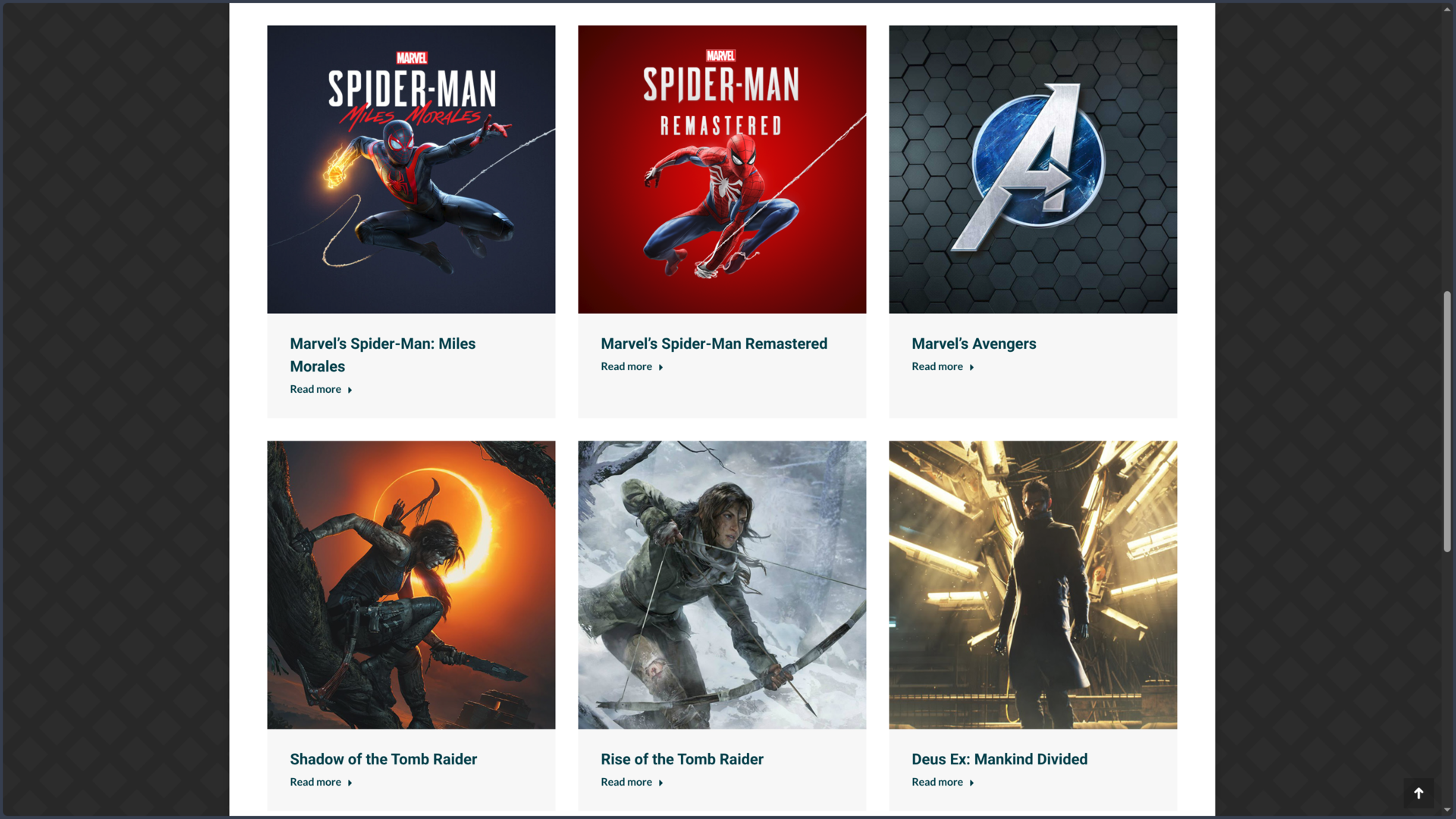
The relationship around Tomb Raider was particularly structuring. Nixxes worked on several versions of the franchise, notably Tomb Raider, Rise of the Tomb Raider, and Shadow of the Tomb Raider.
This continuity shows that the studio's skill does not rely solely on knowledge of a platform.
You also have to know the habits of the original team, its engine, its tools, and the way it builds its games.
Nixxes thus developed an adaptable technical culture: its expertise consisted less of protecting an in-house technology than of quickly understanding those of others.
Its interventions could take several forms: full conversion, technical adaptation, optimization, or direct contribution to certain parts of the production.
The constant is not the contract.
It is the ability to enter an already advanced project and become familiar enough with it to modify it without breaking it.
2021: Sony buys a skill, not a franchise
On July 1, 2021, Sony Interactive Entertainment announced the acquisition of Nixxes Software.
The takeover is revealing.
Sony did not acquire a major intellectual property that could become a new PlayStation series. It integrated a team with more than twenty years of experience in conversions, optimization, and technical collaboration.
Nixxes joined PlayStation Studios Technology, Creative & Services.
Its historical role therefore did not disappear.
It changed ecosystem.
The studio that had worked for years with Eidos and Square Enix became an internal capability able to help the various PlayStation teams.
PC becomes a central ground
The acquisition came at a time when Sony was developing its PC presence much more strongly.
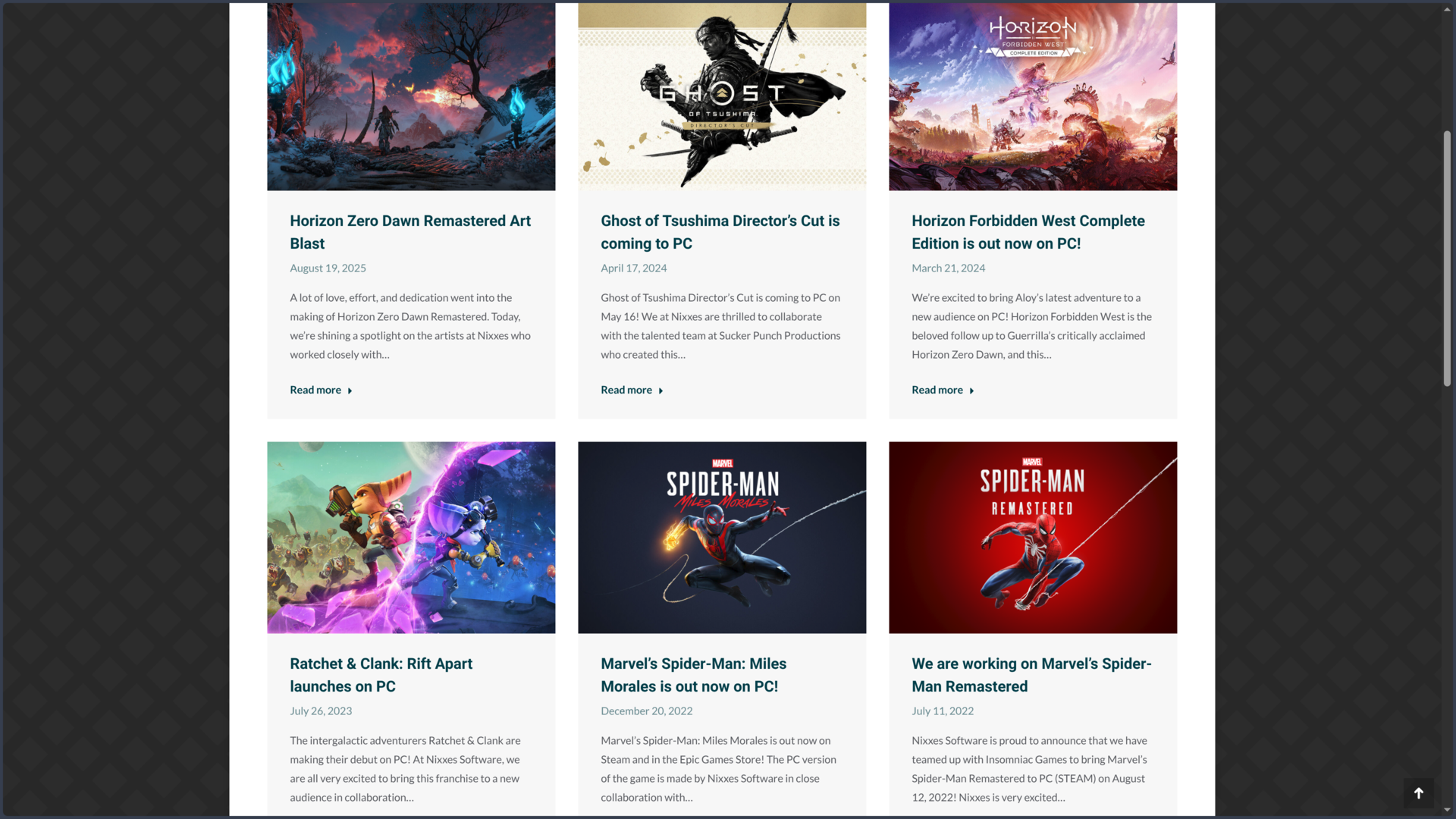
Nixxes worked with Insomniac on Marvel's Spider-Man Remastered then Miles Morales, before working on other productions from the PlayStation catalog, notably Ratchet & Clank: Rift Apart, Horizon Forbidden West Complete Edition, and Ghost of Tsushima Director's Cut.
These games use different technologies and were not originally designed around the same constraints.
On PC, another difficulty is added: the target machine is no longer unique.
Modest and powerful configurations must be planned for, several resolutions, different frame rates, various screen formats, keyboard-mouse, controllers, and many graphics options.
A successful PC version is therefore not simply a console version that agrees to start under Windows.
It must be adapted to the habits and possibilities of its new environment.
From porting to remaster and co-development
With Horizon Zero Dawn Remastered, Nixxes' role evolved further.
The team no longer just worked on moving a game to another machine. It also participated in its modernization with Guerrilla, notably on artistic elements.
The question becomes different.
It is no longer just about asking: "how do we make this work elsewhere?"
It is also about asking: "how do we make it evolve without losing what it was?"
A more modern lighting can change a mood. A more detailed face can seem less faithful to the memory of the character. A denser environment can lose readability.
These decisions bring Nixxes closer to co-development and extend its activity toward art and design.
The studio thus remains faithful to its historical position between two states of the same work: two platforms, two generations, or two levels of technology.
The difference is that it now intervenes earlier and more directly in the transformation.
What Sets It Apart
Translating rather than copying
The best image of Nixxes' craft is probably that of translation.
The meaning must survive.
The form may have to change.
A PC adaptation sometimes requires modifying options, controls, rendering, or technical behavior so that the game works in an environment very different from the one it was designed for.
Fidelity therefore does not always consist of exactly reproducing the original version.
It consists of preserving its intent despite new constraints.
Understanding technologies the studio did not create
Many teams develop their expertise around an in-house engine used across several projects.
Nixxes has almost the opposite problem.
Crystal Dynamics, Eidos-Montréal, Insomniac, Guerrilla, or Sucker Punch do not work the same way. Each collaboration therefore forces the studio to learn new tools and new conventions.
This ability to learn is probably one of its most important skills.
Nixxes cannot simply apply the same recipe everywhere.
Its craft often begins with understanding the technical language of another studio well enough to then modify it properly.
Designing a version able to adapt
Scalability is central to a modern PC conversion.
The same game has to be able to run on very different power levels without losing its coherence. A modest configuration must be able to reduce some parameters; a more powerful machine must be able to exploit its additional resources.
To this are added the specific expectations of PC: screen formats, frame rates, graphics options, peripherals, and reconfigurable controls.
This work looks less spectacular than a new character or a new world.
For the player, however, it can directly determine whether the experience feels fluid, coherent, and truly adapted to his machine.
Sometimes succeeding by becoming invisible
Nixxes' work has a paradox.
When a port works perfectly, the player usually talks about the game.
When it works poorly, he immediately talks about the conversion.
Success therefore often consists of preserving the original studio's signature well enough for the intermediary to almost disappear.
The evolution toward remaster and co-development now makes this contribution more visible, but the logic remains close: Nixxes does not seek to become the author of the works it accompanies.
It seeks to let them survive change without making the seam too visible.
Good to Know
- Nixxes Software was founded in 1999 in Utrecht, the Netherlands, by Jurjen Katsman.
- The studio has historically specialized in platform conversions, optimization, and technical development.
- Nixxes maintained a long relationship with the former Eidos / Square Enix ecosystem, notably around Tomb Raider and Deus Ex.
- The studio worked for several years with Crystal Dynamics and Eidos-Montréal.
- Sony Interactive Entertainment acquired Nixxes on July 1, 2021.
- The studio then joined PlayStation Studios Technology, Creative & Services.
- Since its acquisition, Nixxes has participated in several PC versions of PlayStation productions, including Marvel's Spider-Man Remastered, Horizon Forbidden West Complete Edition, and Ghost of Tsushima Director's Cut.
- Its current activity also extends to art, design, and co-development.
- Horizon Zero Dawn Remastered marks an important step in this evolution toward the direct modernization of a work.