Presentation
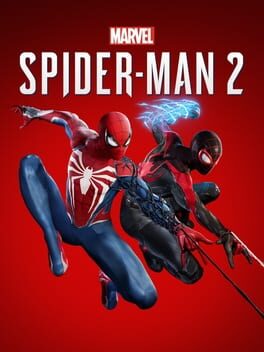
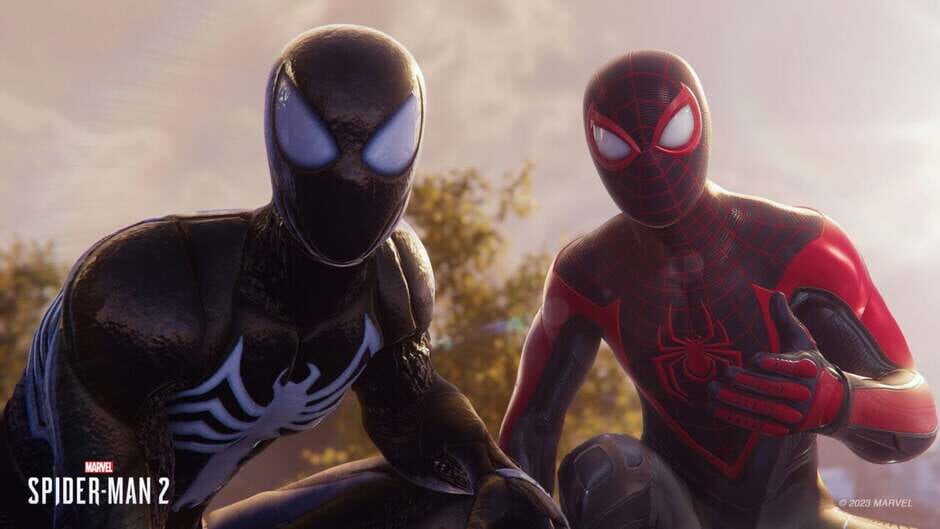
Marvel's Spider-Man had placed Peter Parker at the center of New York, while Miles Morales told the birth of a second Spider-Man. Marvel's Spider-Man 2 finally brings these two trajectories together in a single adventure.
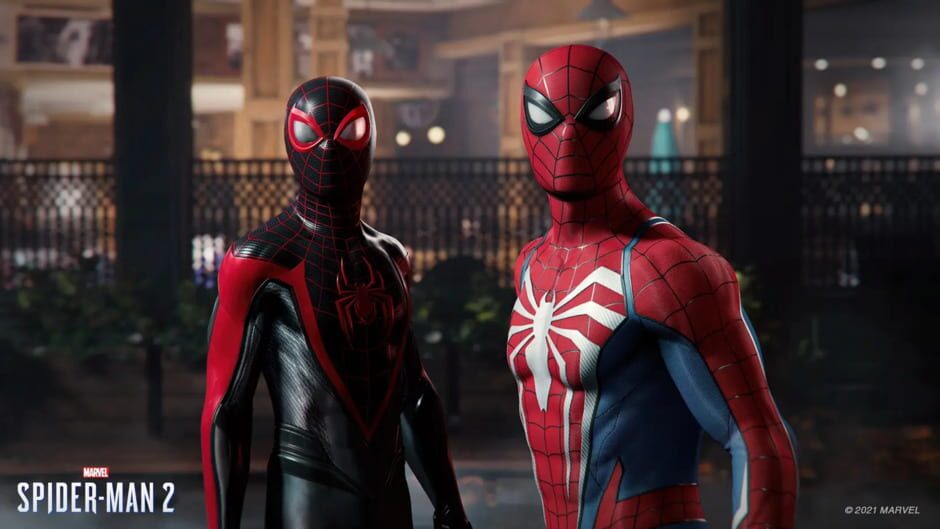
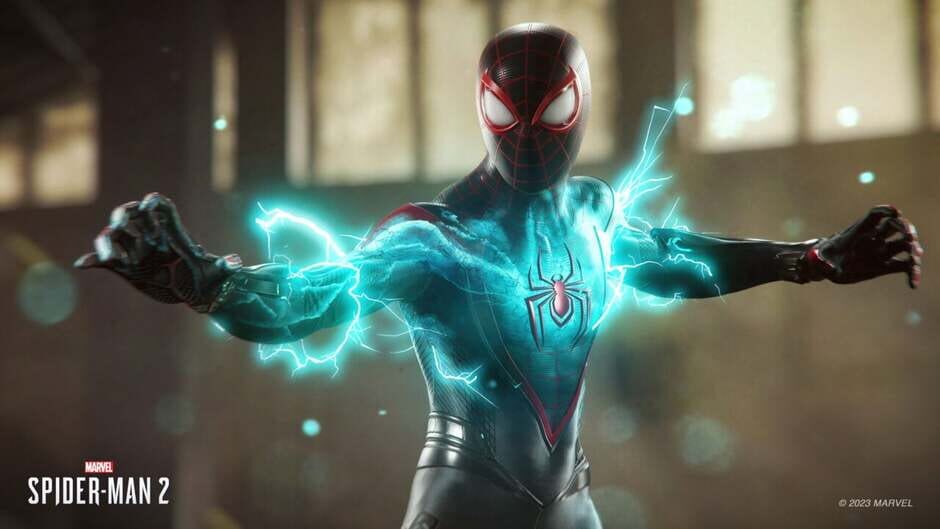
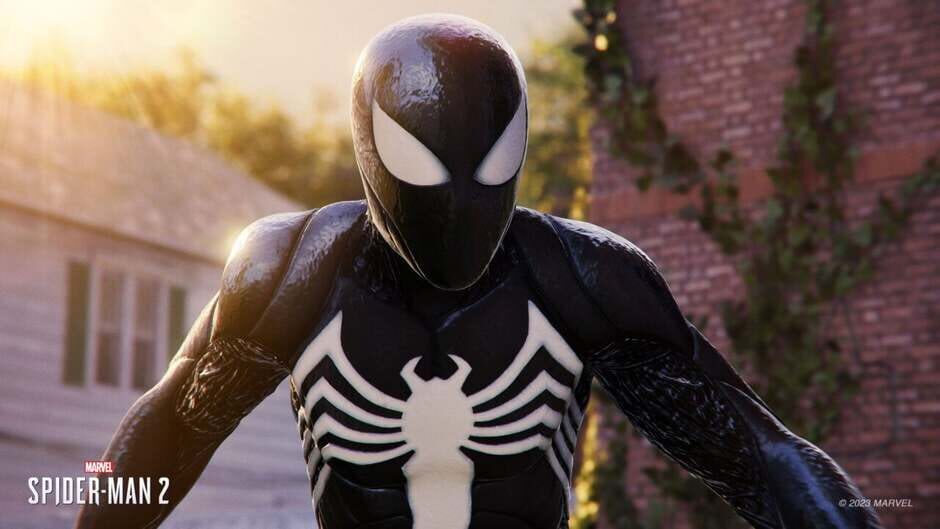
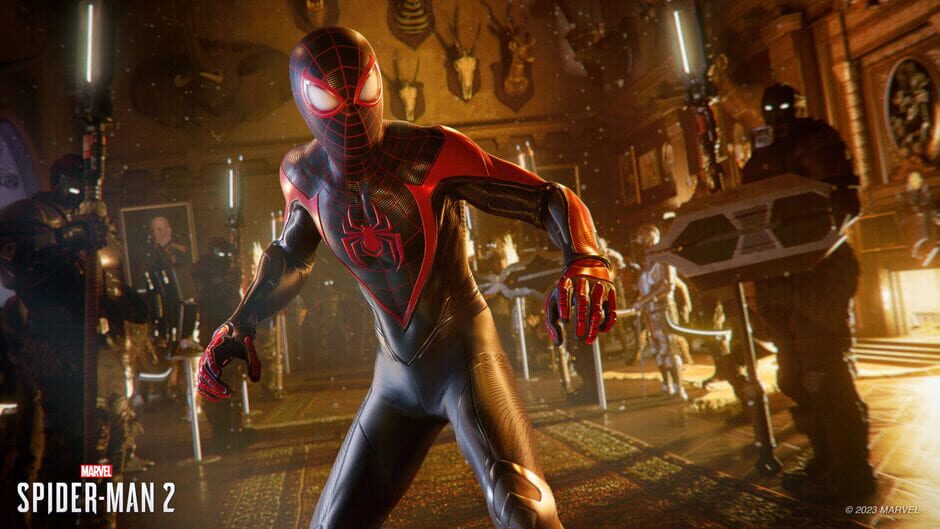
Peter and Miles can be controlled during the story and each keeps his own identity. Miles continues to develop his bioelectric abilities, while Peter gains new possibilities linked notably to the symbiote. Part of their progression remains shared, but Insomniac clearly seeks to avoid the impression of controlling two variants of the same character.
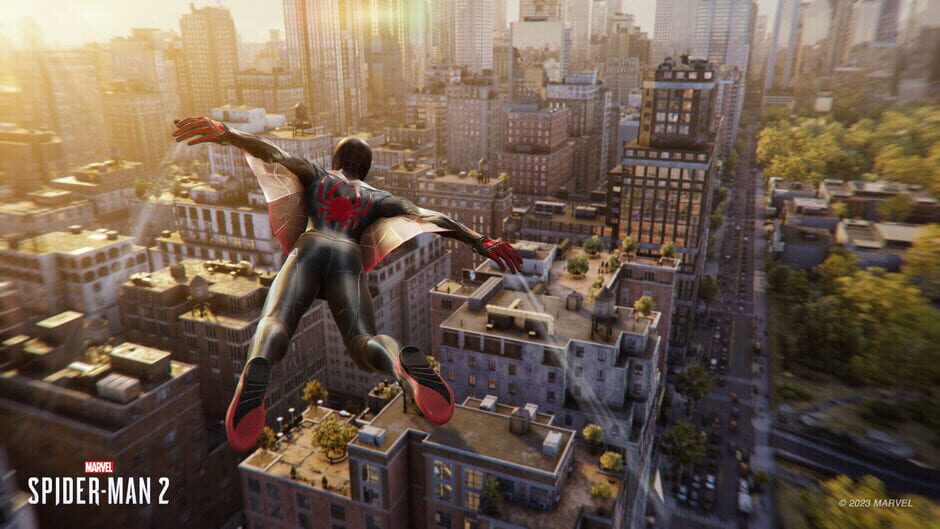
This duality accompanies the expansion of New York. Manhattan remains at the heart of the experience, but Brooklyn and Queens extend the map toward less vertical areas. Movement evolves accordingly: web swinging remains essential, while the Web Wings allow gliding and keeping more speed between buildings.
Movement thus becomes an even more central part of the game's identity. Crossing the city is not only about linking two missions. Falls, propulsions, swinging, and gliding form a continuous mechanic that lets the open space remain pleasant to travel without relying solely on fast travel.
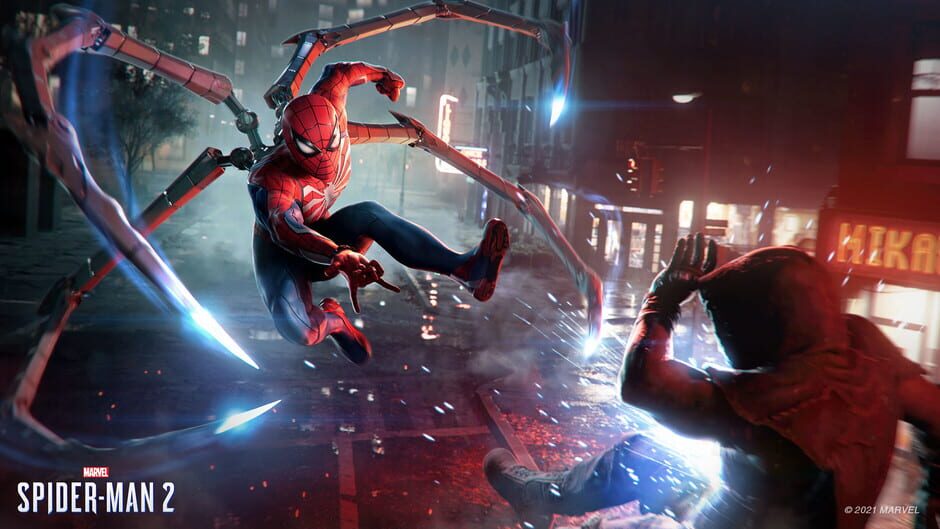
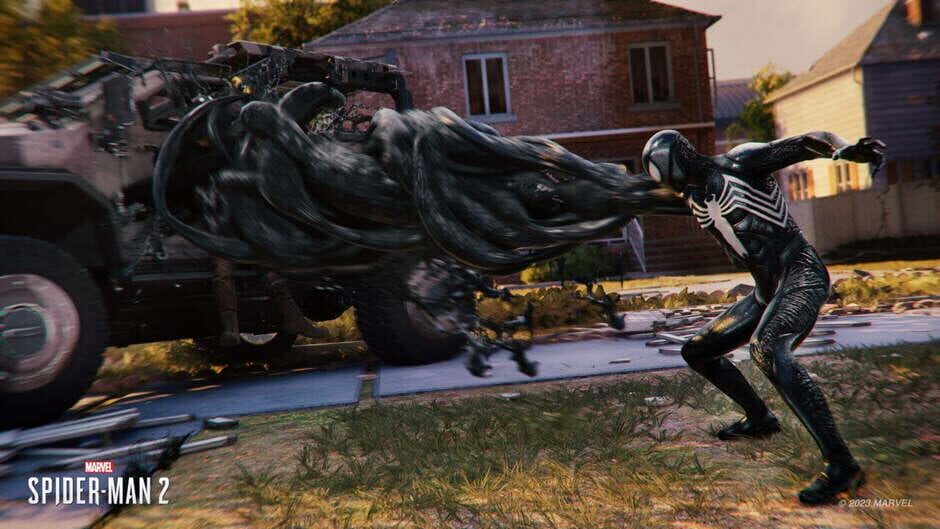
Combat also benefits from the presence of the two heroes. The symbiote's abilities give Peter much more brutal strength, while Miles retains his own mobility and energy. This difference also supports the story: Peter's new power is not only a way to make the fights more spectacular, it gradually becomes something to be wary of.
Marvel's Spider-Man 2 therefore does not try to rebuild Insomniac's formula entirely. It broadens it around a simple idea: two Spider-Men can protect the same city while having very different ways of crossing it, fighting, and taking on the role.
Key Takeaways
- Peter Parker and Miles Morales now share the lead role, with their own missions and abilities.
- New York expands with Brooklyn and Queens, offering environments less dominated by skyscrapers.
- The Web Wings considerably enrich movement by adding gliding to traditional swinging.
- The two Spider-Men have distinct combat styles, notably thanks to the symbiote for Peter and Miles's bioelectric powers.
- The story uses this duality to talk about responsibility, legacy, and power, rather than simply placing two heroes side by side.
Conclusion
Marvel's Spider-Man 2 confirms something Insomniac had already understood: in a Spider-Man game, crossing the city is almost as important as what you do once you arrive.
Swinging already had that rare quality of turning movement into pleasure rather than downtime. The Web Wings could have broken this balance by making the web less important. They instead work as a new punctuation: gaining height, gliding, diving back between buildings, then regaining momentum creates an almost continuous motion.
The expansion of New York thus finds a real justification. Brooklyn and Queens do not only serve to display a larger map; their architecture forces the game to change the way Spider-Man moves. Space and mechanics evolve together.
The presence of Peter and Miles produces a comparable effect in combat. The two heroes share enough rules for switching from one to the other to feel natural, but their powers give a different rhythm to the fights. The symbiote makes Peter particularly aggressive, which intelligently supports a story where power becomes precisely something he cannot accept without wariness.
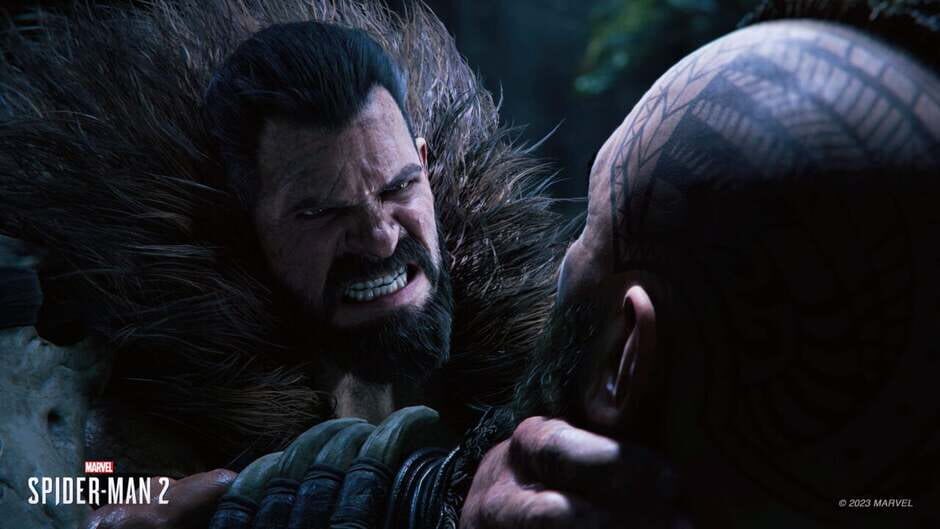
This ambition, however, forces the game to juggle many things. Peter, Miles, their loved ones, Kraven, the symbiote, and the many side stories sometimes compete for limited time. Some trajectories would have benefited from more breathing room, while several open world activities remain very close to those already encountered in the previous episodes.
Insomniac therefore does not revolutionize its formula. It does something more discreet: it speeds it up, broadens it, and now spreads its weight between two heroes.
The main success then comes less from the quantity of novelties than from this feeling that Peter and Miles truly inhabit the same New York without losing their identity. They bear the same symbol, but the game works precisely because it understands that this does not mean they have to become the same Spider-Man.
Good to Know
- Marvel's Spider-Man 2 was released on October 20, 2023 on PlayStation 5.
- The game is developed by Insomniac Games and published by Sony Interactive Entertainment.
- The story directly continues the events of Marvel's Spider-Man and Marvel's Spider-Man: Miles Morales.
- Peter Parker and Miles Morales are both playable within the same adventure.
- Brooklyn and Queens join Manhattan in this new version of New York.
- A PC version was released in January 2025.