
Presentation
At first glance, Spyro, Ratchet & Clank, Resistance, Sunset Overdrive, and Marvel's Spider-Man seem to belong to completely different studios.
A purple dragon, a mechanic Lombax, an alien invasion, an apocalypse turned into a playground, then Spider-Man crossing Manhattan on a web: the universes radically change.
Yet several constants appear when placing them in the history of Insomniac Games.
The studio loves movement, tools immediately fun to use, and environments designed around the particular abilities of the character. At Insomniac, running, gliding, grinding, or swinging is often not just a way to get to the next mission.
Movement itself is part of the fun.
Founded in 1994 by Ted Price, Insomniac began with Disruptor, a sci-fi FPS. It then created Spyro the Dragon in 1998, Ratchet & Clank in 2002, and Resistance: Fall of Man in 2006.
These series built a long relationship with PlayStation without immediately trapping the studio in that ecosystem. Insomniac remained independent for more than twenty years and notably developed Sunset Overdrive for Xbox One in 2014.
This project became an essential step.
Sunset City was designed as a terrain where rails, cables, cars, and facades constantly make you want to stay in motion. Four years later, Marvel's Spider-Man let Insomniac bring together several decades of learning around a hero whose entire identity already rested on an extraordinary way of crossing the city.
In 2019, Sony Interactive Entertainment finally acquired the studio.
The operation formalized an old relationship rather than creating a new identity.
Insomniac had already learned to change genre, character, and sometimes platform without losing certain reflexes: turn movement into an activity, tools into a source of personality, and the world into a space built for the hero's abilities.
History
1994-1998: Disruptor then Spyro
Insomniac Games was founded in 1994 by Ted Price.
Its first game, Disruptor, was a sci-fi FPS published on the original PlayStation.
This start seems very far from the rest of its career, but it already shows an interest that will constantly return: weapons and abilities must have a clear enough identity to make you want to try them.
With Spyro the Dragon in 1998, the studio completely changed tone.
Environments became colorful, exploration took a central place, and movement gained real playful value.
Gliding was not just used to cross a gap.
The ability changed the way the player looked at space.
A distant platform became a possibility.
A height became a starting point.
Insomniac thus began to build an idea that would span several decades: a world becomes more interesting when the way to cross it is already fun.
2002: Ratchet & Clank adds expressive tools
Ratchet & Clank began in 2002.
The series brought together platforming, sci-fi, humor, and above all an arsenal whose weapons often seek to be memorable for their behavior as much as for their damage.
A new weapon can modify a group of enemies, create an absurd situation, or simply make you want to test it to see what it produces.
The tool becomes a small game design idea.
This philosophy completes that of Spyro.
Movement must be pleasant.
Abilities must be too.
Ratchet & Clank became one of Insomniac's most enduring franchises and let it keep this culture across several PlayStation generations.
2006: Resistance changes tone without erasing reflexes
With Resistance: Fall of Man in 2006, Insomniac adopted a much darker universe.
The aesthetic change is radical.
Yet the culture of inventive weapons remains visible.
The studio showed that part of its identity can survive an important change of audience, tone, and genre.
This period is essential because it prevents summing up Insomniac as a colorful or family-friendly aesthetic.
What returns is not necessarily the appearance.
It is the way of building the experience.
2014: Sunset Overdrive turns the city into a toy
Sunset Overdrive was released on Xbox One in 2014.
The project matters on two levels.
First, it reminds us that Insomniac was still independent and could work outside PlayStation.
Above all, it pushes its taste for movement extremely far.
Rails, cables, cars, walls, and buildings become supports allowing the player to maintain momentum. The city is no longer just a setting filled with objectives.
It becomes a traversal system.
The player can take pleasure in moving even when not trying to accomplish a specific mission.
This idea directly prepares one of the greatest turning points in the studio's history.
2018: Spider-Man synthesizes twenty years of learning
Marvel's Spider-Man was released in 2018 on PlayStation 4.
The project looks new, but much of its foundations come from older experiences.
Spyro had taught the studio to make space pleasant to cross.
Ratchet & Clank had reinforced its culture of expressive gadgets.
Sunset Overdrive had turned an entire city into a movement terrain.
Spider-Man brings these ideas together around a hero whose fantasy precisely depends on mobility.
Manhattan must be credible.
But above all, you must want to cross it.
Swinging between buildings becomes an activity pleasant enough for the player to travel the city without an immediate objective.
The open world stops being a distance between two missions.
It becomes part of the game.
2019: Sony formalizes an old relationship
Sony Interactive Entertainment acquired Insomniac Games in 2019.
The operation came after more than twenty years of collaboration.
Insomniac became a member of PlayStation Studios without having to rebuild its identity around Sony: this culture already existed.
After the acquisition, the studio continued to keep several lines alive.
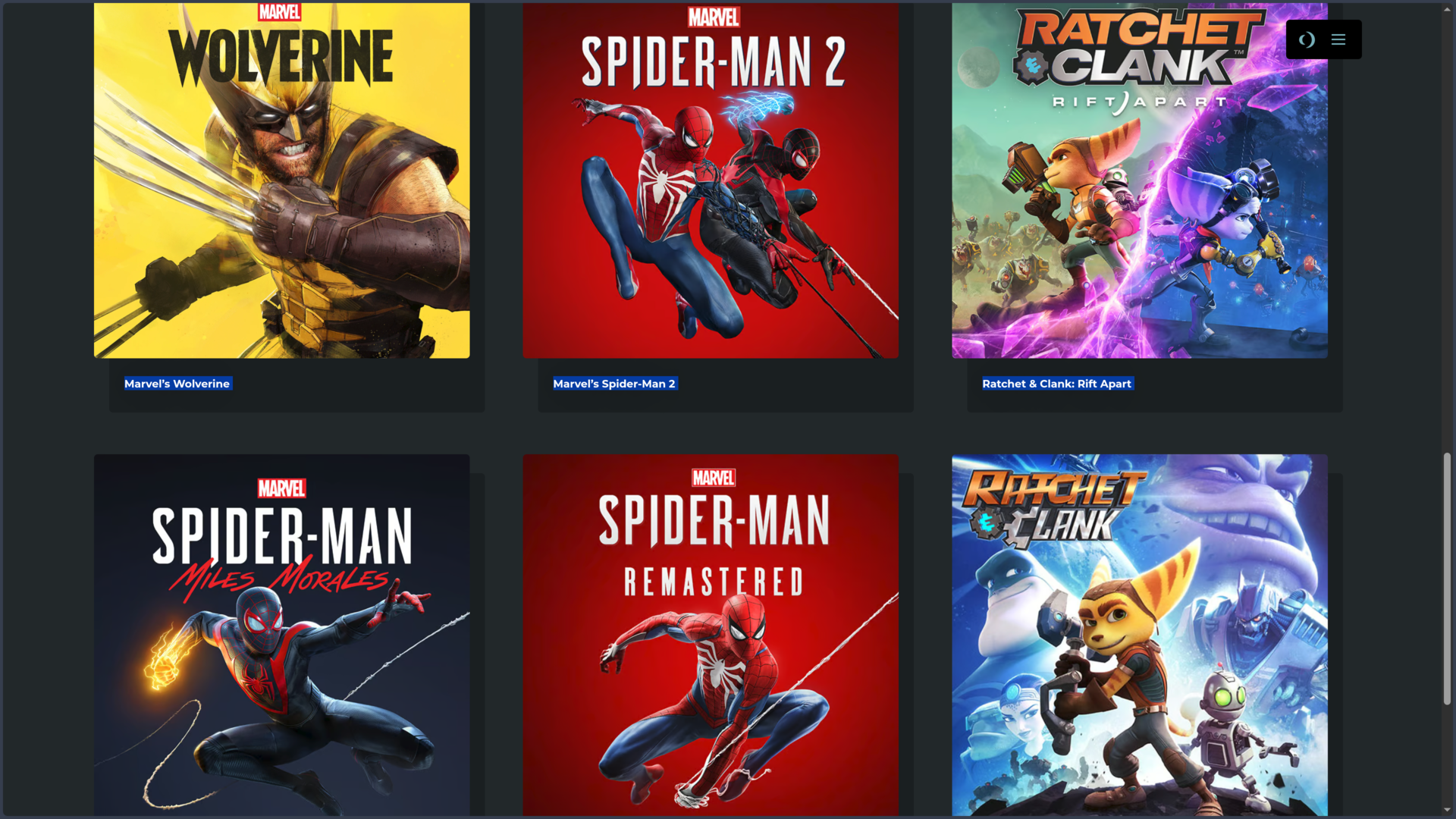
Marvel's Spider-Man: Miles Morales continued the Marvel universe with a hero whose abilities and animations must produce a different feeling.
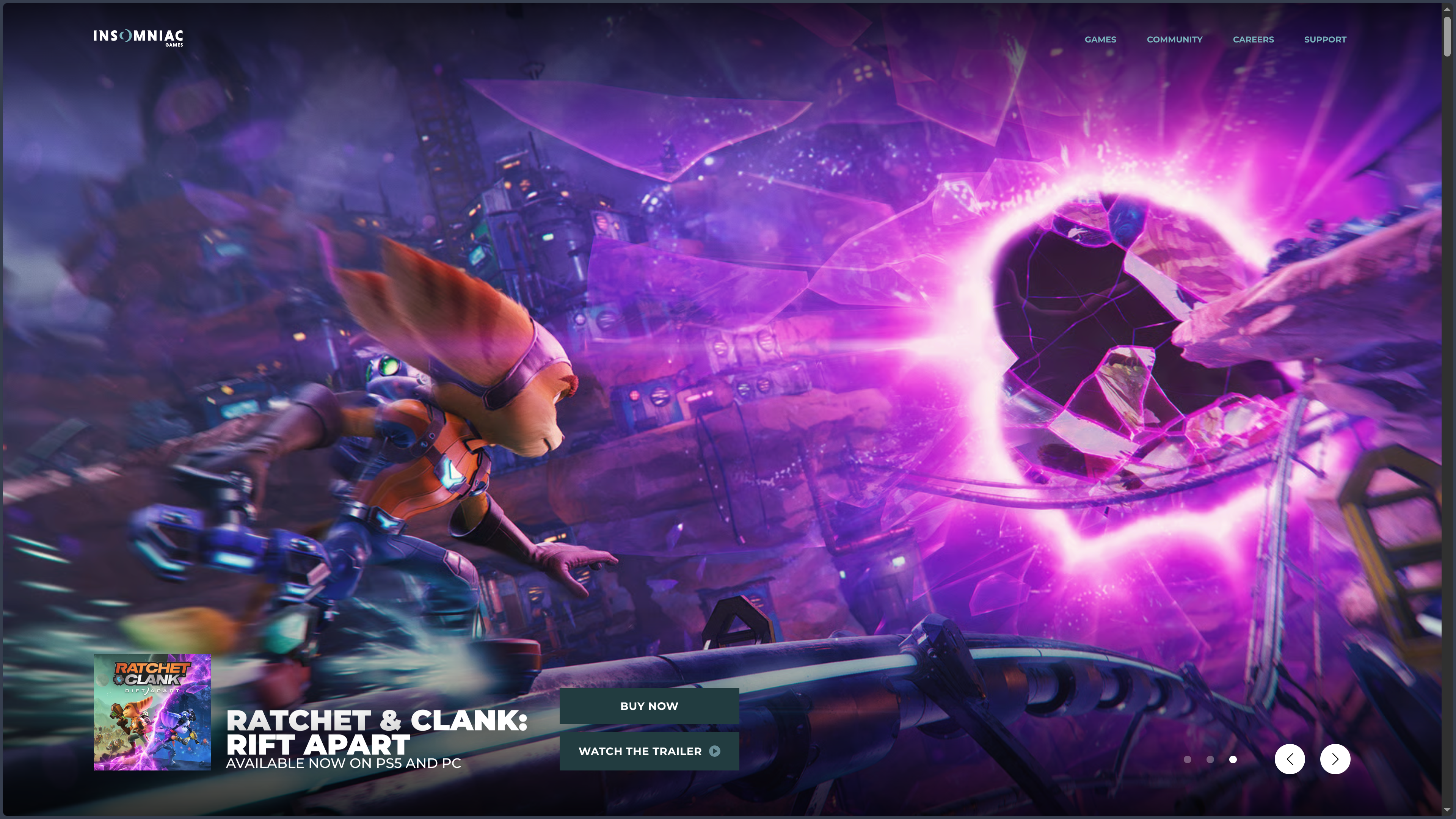
Ratchet & Clank: Rift Apart brought back a historical franchise while using the new technical possibilities of PlayStation 5.
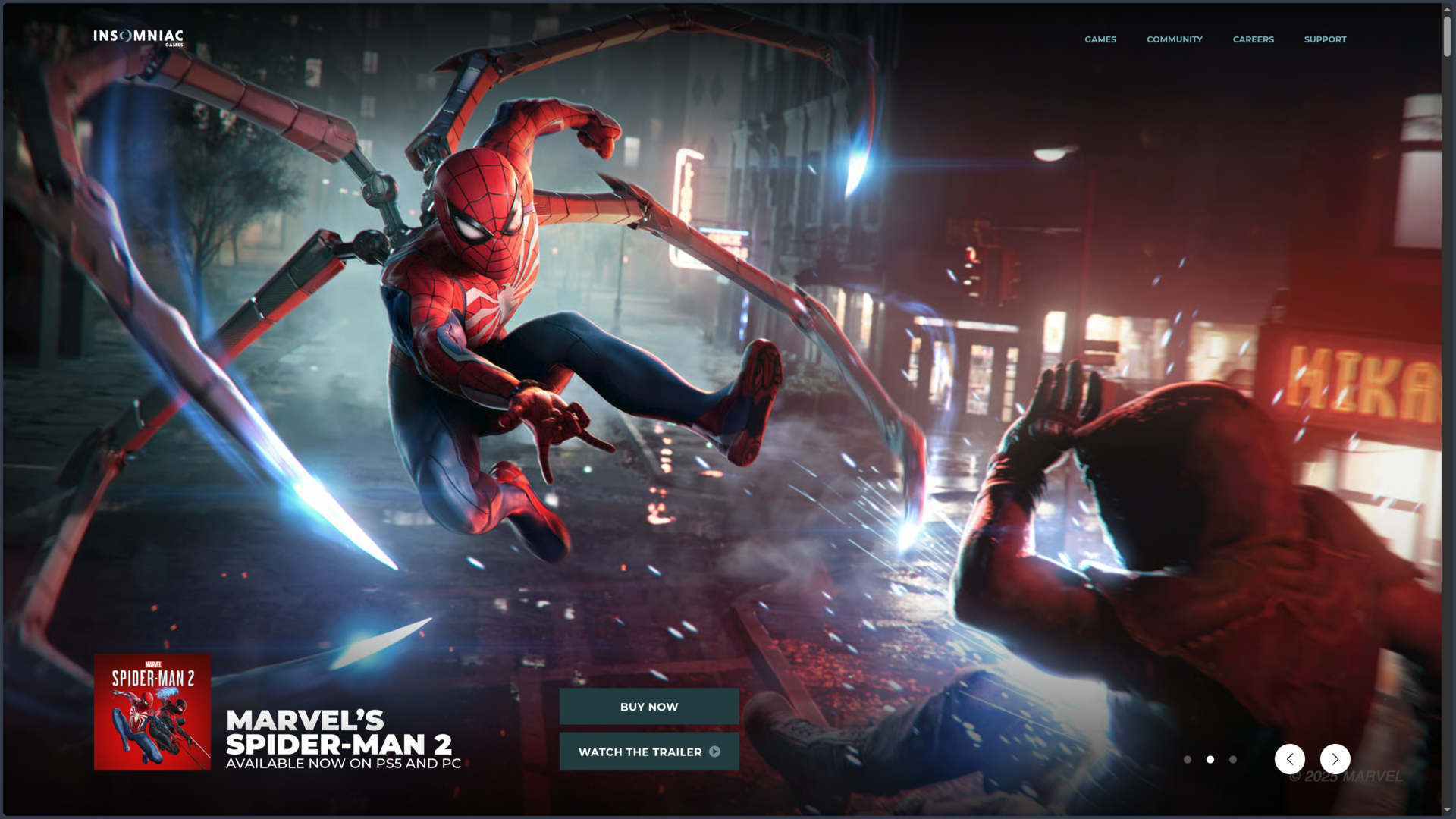
Marvel's Spider-Man 2 further broadened the universe and movement possibilities.
What matters is not the detail of each production.
It is Insomniac's ability to make several franchises coexist without imposing exactly the same form on them.
2025: a new generation of leadership
For more than thirty years, Insomniac has been strongly associated with Ted Price.
In 2025, he left the direction of the studio.
Chad Dezern, Jen Huang, and Ryan Schneider then became co-Studio Heads.
The change is important because this time it touches the organization itself rather than a franchise.
Insomniac must continue to preserve a culture of collaboration, rapid transformation, and multi-project production without relying on the figure who had accompanied its entire modern history.
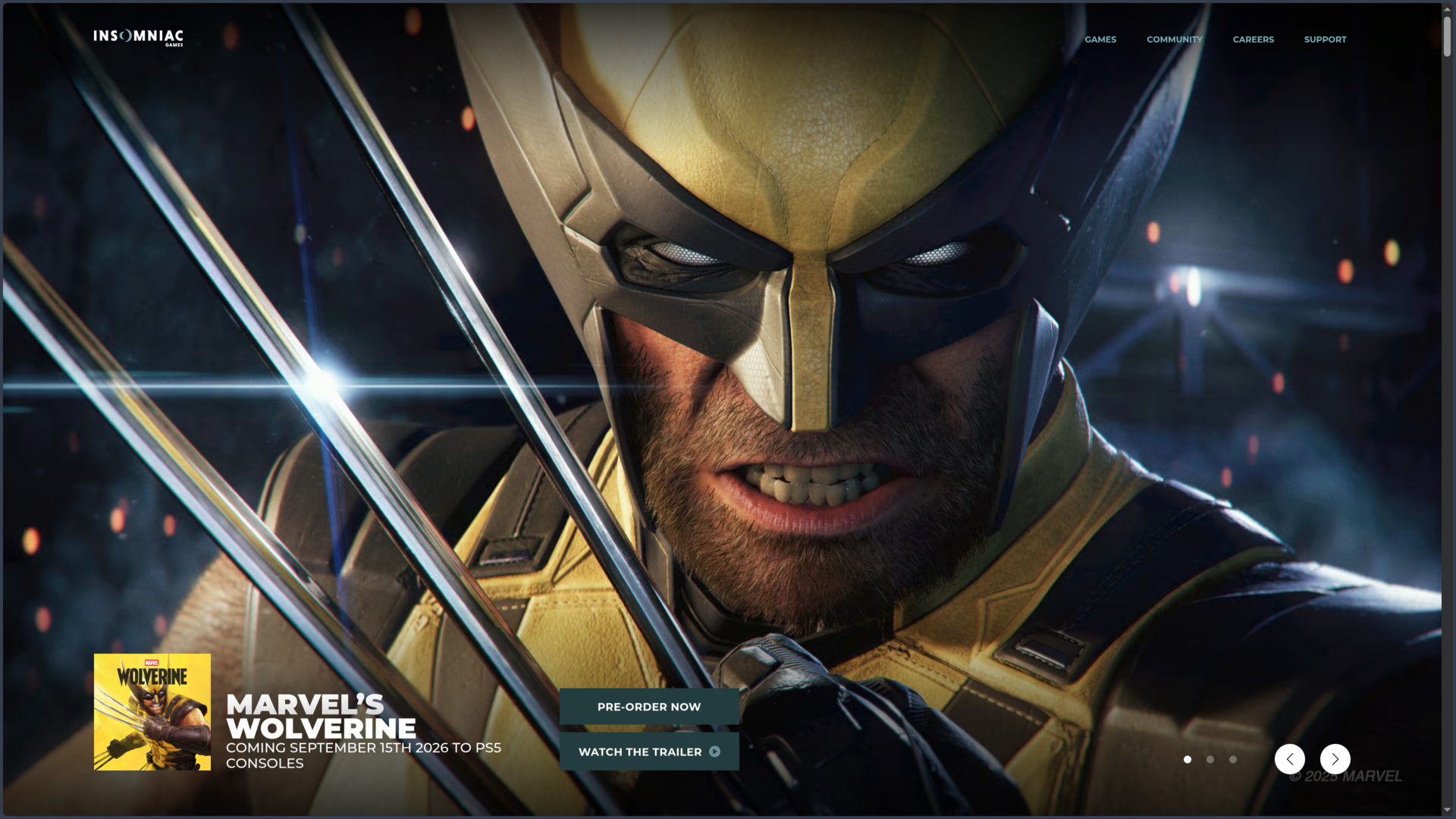
The studio is also continuing its work on the Marvel universe, notably with Marvel's Wolverine.
The challenge remains consistent with its past: changing hero, tone, and leadership team without losing the ability to make every project immediately pleasant to handle.
What Sets It Apart
Movement and world are designed together
Movement is probably Insomniac's strongest constant.
Spyro glides.
Ratchet & Clank uses grind rails and wild weapons.
Sunset Overdrive turns the city into a network of trajectories.
Spider-Man makes Manhattan a huge movement machine.
But good traversal is not enough.
The environment must be designed to give it opportunities to express itself.
Sunset City works because it multiplies rails, rebounds, and exploitable surfaces.
New York works because the facades, heights, and spaces let you constantly build a trajectory.
Insomniac therefore does not design the character and the world separately.
The world must give the character constant reasons to use what makes it unique.
Tools must be fun before being optimal
The same philosophy appears in weapons and gadgets.
In Ratchet & Clank, a memorable weapon is not necessarily the one with the best stat.
It offers an interaction, an effect, or an idea that makes you want to try it.
This logic also crosses Resistance or Sunset Overdrive.
The tool becomes a source of personality.
The player can then ask not only what is most efficient, but what will be most fun to use in this situation.
An identity that survives the change of hero
Spyro, Ratchet, Nathan Hale, Spider-Man, or Wolverine have almost nothing in common.
Yet the studio remains recognizable.
Fluidity, spectacle, movement, expressive gadgets, and attention to the hero's particular fantasy come back in different forms.
This coherence shows that a studio identity does not need to depend on a constant graphic universe.
It can lie in how to translate a character's abilities into playable experience.
Turning a function into personality
Insomniac highlights a culture of creative ownership, encouraging team members to propose details likely to give more personality to the project.
This philosophy fits its games well.
A necessary animation can become fun.
A functional weapon can become absurd.
Movement can become pleasant enough to exist independently of the objective.
The studio seems to regularly look for the moment when a function stops being simply correct and becomes memorable.
This is probably what best links productions that, on paper, should have almost nothing in common.
Good to Know
- Insomniac Games was founded in 1994 by Ted Price.
- Disruptor is the first game developed by the studio.
- Spyro the Dragon was released in 1998 and installed one of Insomniac's first major identities.
- Ratchet & Clank began in 2002 and became one of its most enduring franchises.
- Resistance: Fall of Man appeared in 2006 and accompanied the launch of PlayStation 3.
- Insomniac remained independent for more than twenty years despite its proximity to PlayStation and notably developed Sunset Overdrive for Xbox One in 2014.
- Marvel's Spider-Man was released in 2018 and synthesizes several decades of learning around movement and gadgets.
- Sony Interactive Entertainment acquired Insomniac Games in 2019.
- Ted Price left the studio's direction in 2025; Chad Dezern, Jen Huang, and Ryan Schneider became co-Studio Heads.
- Marvel's Wolverine belongs to the studio's next announced period around its Marvel productions.