Presentation
Marvel’s Spider-Man avoids retelling the character’s origin. Peter Parker is 23 years old, has worn the mask for eight years and already understands his abilities. This allows Insomniac to begin with an experienced Spider-Man whose personal and criminal history is already well established.
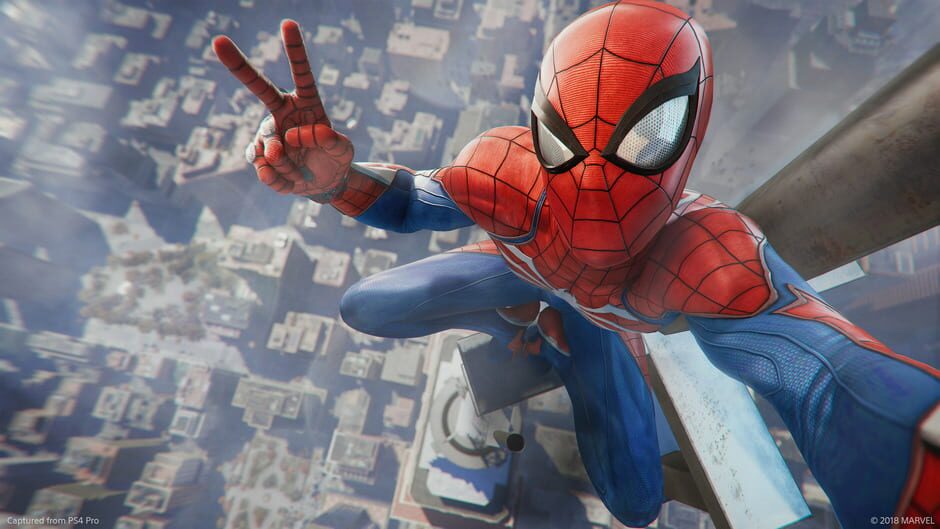
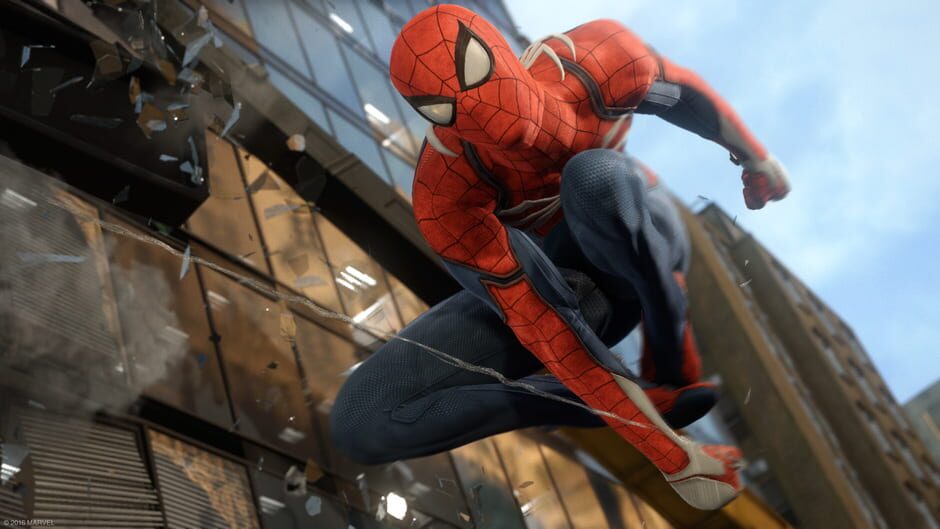
Traversal is one of the game’s greatest strengths. Manhattan is designed around web-swinging through tall buildings, dives, regained momentum and rapid launches toward specific points. Walls and rooftops naturally extend this movement. The system remains accessible while being fluid enough to make crossing the city enjoyable beyond simply reaching the next mission.
That quality of movement also supports an open world built from relatively familiar activities. Crimes, challenges, photography locations, laboratories and objects connected to Peter’s past are spread throughout Manhattan. Their structure can become repetitive, but Spider-Man’s mobility makes these detours more enjoyable than they would be with more conventional traversal.
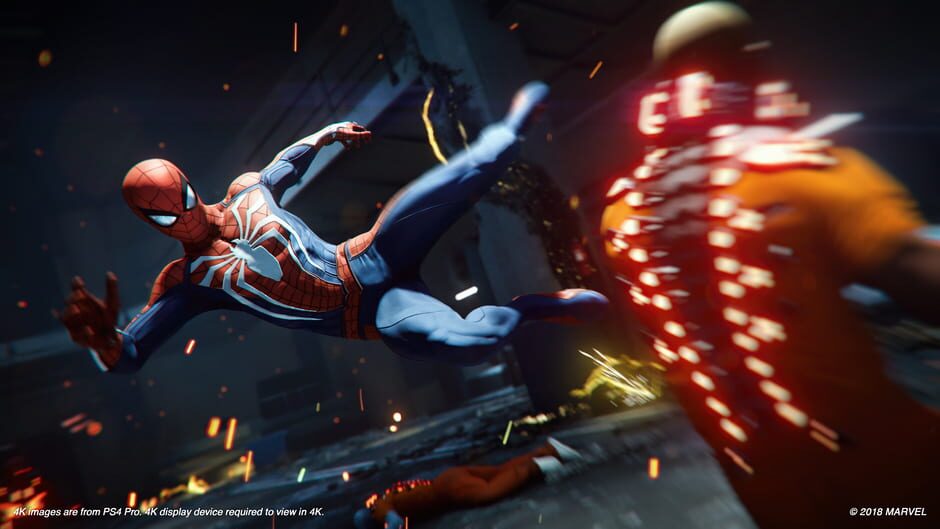
Combat directly extends that sense of speed. Peter can combine dodges, aerial attacks, throws, webs, gadgets and environmental interactions while rapidly moving between opponents. Spider-Sense warns of incoming attacks, while different enemy types require varied responses, particularly against shields, firearms or opponents that must be disarmed or launched into the air.
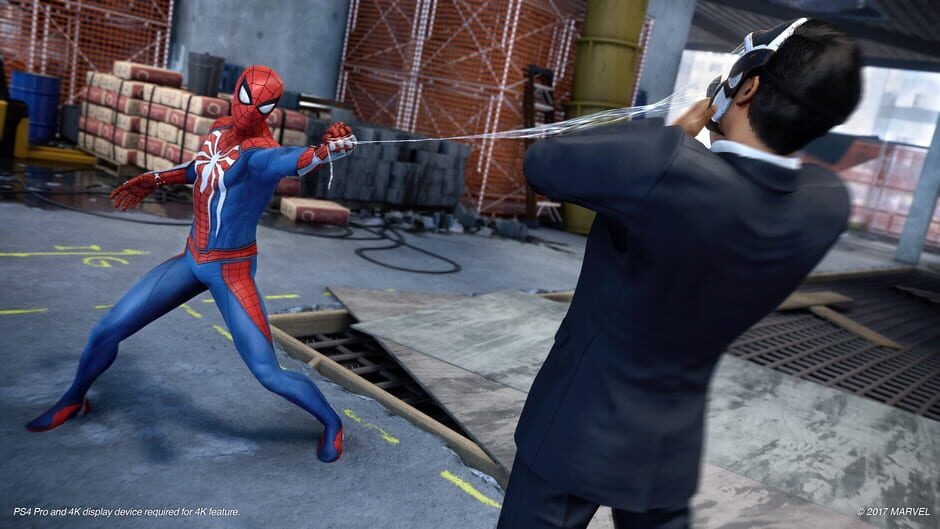
The environment plays an important role in fights. Objects can be pulled with webs and thrown, enemies can be pinned to surfaces, and verticality allows Spider-Man to leave the ground before returning to the center of the encounter. Gadgets provide additional crowd-control options, although the game rarely forces players to use everything available.
Stealth provides a quieter alternative. Spider-Man can observe groups from above, isolate targets and silently neutralize enemies with webs or gadgets. This side of the game is less developed than direct combat and several situations eventually encourage open confrontation, but it makes effective use of the character’s mobility and vertical movement.
Progression gradually expands these systems through skills, gadget upgrades and numerous suits drawn from different eras of Spider-Man’s history. Several suit powers can later be equipped independently of their original costume, allowing visual customization and abilities to become increasingly separate.
The story nevertheless gives Peter Parker without the mask an essential role. His work with Otto Octavius shows both his scientific ability and his desire to use technology to improve people’s lives. Their relationship becomes increasingly important precisely because it begins through collaboration, respect and a shared ambition.
Mary Jane also has an active role. Now a journalist, she conducts her own investigations and becomes playable during several sequences. These sections focus more on observation and stealth and offer a different perspective, although their rigidity can contrast sharply with Spider-Man’s freedom of movement.
Miles Morales receives specific playable sequences as well, showing the consequences of the crisis from street level. Mechanically simpler, these moments mainly remind the player that New York’s disasters affect people who cannot cross the city in minutes or directly confront its criminals.
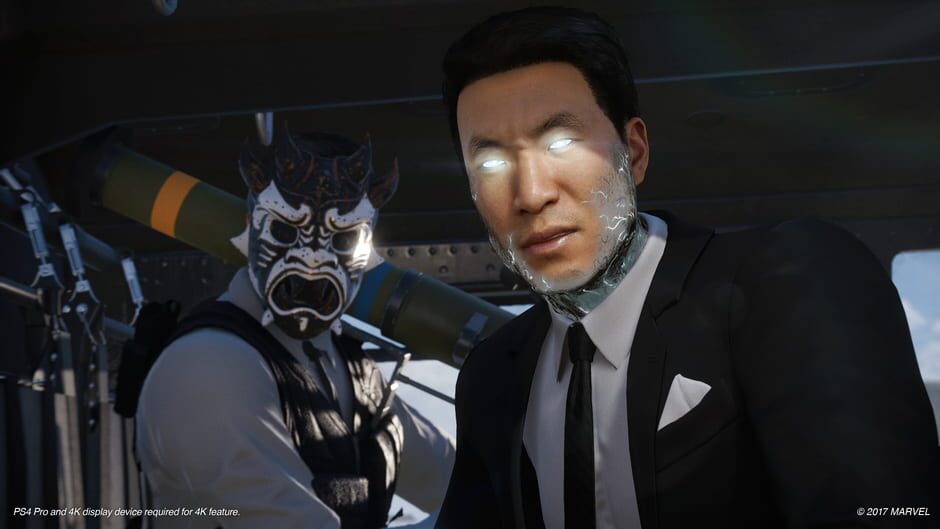
Mister Negative effectively connects several parts of the story through his identity as Martin Li and his ties to Peter’s personal life. The plot later expands to include other familiar Spider-Man villains and a much larger crisis while retaining its focus on Peter’s responsibilities.
This continuity between the hero and the man gives the game much of its coherence. Peter is already highly capable when he puts on the suit; his main challenge comes from trying to manage the people, obligations and consequences that remain when the mask comes off.
What to remember
- A 23-year-old Peter Parker with eight years of experience as Spider-Man.
- An open Manhattan where web-swinging is a central gameplay mechanic rather than simple transportation.
- Fast, acrobatic combat combining dodges, aerial attacks, gadgets, webs and environmental interactions.
- Stealth based on verticality, observation and silent takedowns.
- An original story beginning with Mister Negative and the Demons before expanding into a much larger crisis.
- A major focus on Peter Parker, his scientific work and his relationships with Otto Octavius, Mary Jane, Aunt May and Miles Morales.
- A continuity independent from the films that freely reinterprets characters and elements from Spider-Man history.
Conclusion
Marvel’s Spider-Man is especially successful at translating the character’s mobility into gameplay. Web-swinging gives Manhattan an immediate identity and remains enjoyable enough for traversal to become an important part of the experience. Combat follows the same principle of constant movement and expands it through gadgets, environmental interactions and verticality.
The open world still relies on several familiar structures, and some side activities become repetitive. Playable sequences involving Mary Jane or Miles provide useful perspectives for the story, but their more restrictive design can interrupt the rhythm after the freedom offered by Spider-Man.
The story compensates for these limitations by giving Peter Parker a substantial role. Otto Octavius, Mary Jane, Aunt May, Miles and Martin Li are not merely characters surrounding the main plot; their relationships with Peter gradually determine how personal the wider crisis becomes.
This allows the game to focus on a Spider-Man who no longer needs to learn how to use his powers. Experience does not solve the problems created by time, relationships or the consequences of his choices. Insomniac therefore creates a convincing adaptation by combining the immediate pleasure of being Spider-Man with a credible depiction of the responsibilities that continue to shape Peter Parker.
Good to know
- Marvel’s Spider-Man was developed by Insomniac Games in collaboration with Marvel Games and published by Sony Interactive Entertainment.
- The original game was released on September 7, 2018, for PlayStation 4.
- Peter Parker is 23 years old and has already been Spider-Man for eight years when the story begins.
- The game tells an original story independent of the various Spider-Man film adaptations.
- Manhattan is the main open world, combining locations inspired by real New York with elements from the Marvel universe.
- Marvel’s Spider-Man Remastered was later developed for PlayStation 5 and subsequently released on PC.
- The story continues in Marvel’s Spider-Man: Miles Morales and Marvel’s Spider-Man 2.