PANACHES Culture · Works

Book — PANACHES Culture

Discover films, animation, series, anime, documentaries, live, manga, BD, comics, books, games, music, then explore their associated studios, tools and articles.

11 works

Baudelaire : Artificial Paradises
Book

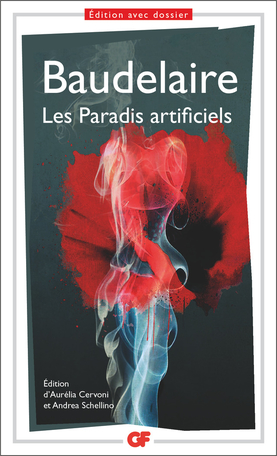
Baudelaire : Artificial Paradises

"What is a paradise that is bought at the price of its eternal salvation?" In The Artificial Paradises (1860), which consists of two parts, The Poem of Hashish and A Digger of Opium, Baudelaire philosopher on the effects of hashish and translates, with a tragic glow, the Confessions of an English digger by Thomas De Quincey, published forty years earlier. As in his poetic work, the author of the Flowers of Evil exp…

  • Poetry
🇫🇷 France
Baudelaire : Beyond Romanticism
Book

Baudelaire : Beyond Romanticism

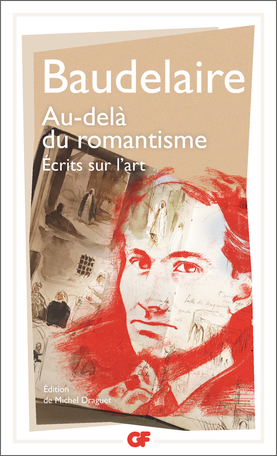
Baudelaire critique d'art never ceases to be a poet: "It will happen often," he writes, "to appreciate a painting only by the sum of ideas or dreams that it will bring into my mind."In other words, he describes as he wanders, with a keen perception that only makes possible a perfect availability to the contemplated work. It is in this capacity that he encenses Delacroix, "painter essentially literary", and mocks the…

  • Essay
🇫🇷 France
Baudelaire : Paris Spleen
Book

Baudelaire : Paris Spleen

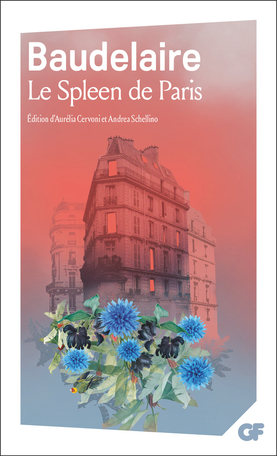
Published posthumously in 1869, Le Spleen de Paris, also known as Petits poèmes en prose, was conceived as a "during" at Les Fleurs du Mal. Baudelaire experienced a "poetic, musical prose without rhythm and rhyme, sufficiently flexible and struck enough to adapt to the lyrical movements of the soul, to the undulations of dreaming, to the sombresauts of consciousness". Exploring the meanderings of the city and the da…

  • Poetry
🇫🇷 France
Baudelaire : Romantic Art
Book

Baudelaire : Romantic Art

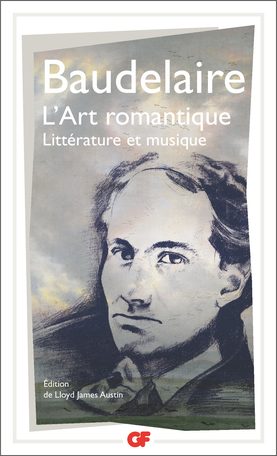
"Romanticism," says Baudelaire, "is a grace, heavenly or infernal, to whom we owe eternal stigmas."These stigmatizations are evident in the work of many of the writers studied by Baudelaire throughout his twenty years of militant criticism. Activist criticism, indeed, and the part of controversy is great there. Criticism of current events, too, because it is about his contemporaries that the lucid and prophetic glan…

  • Essay
🇫🇷 France
Baudelaire : The Flowers of Evil
Book 1958

Baudelaire : The Flowers of Evil

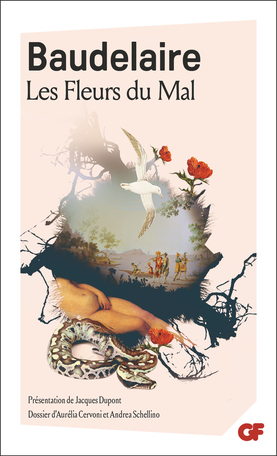
"This book, whose title: Flowers of Evil, – says all, is clothed [...] with sinister and cold beauty; it was made with fury and patience. Moreover, proof of its positive value is in all the evil that is said of it. The book puts people in fury," wrote Baudelaire to his mother, on July 9, 1857. In 1861 the second version of the collection appeared. The poems that compose it are the crucible of "magic operations", une…

  • Biography
  • Poetry
🇫🇷 France
Being in full consciousness
Book

Being in full consciousness

"The man who lives in the full consciousness understands, acts. The man who is unconscious, not vigilant, mechanical, robotized, reacts. And when you act immediately, in full consciousness, by observing with attention, your intelligence is sharpened. You begin to be luminous, to radiate." "Living in full consciousness is living by being in the present moment, attentive, aware of yourself and aware of everything that…

  • Self-help
  • Philosophy
🇮🇳 India
Blaise Pascal: Man Is a Thinking Reed
Book

Blaise Pascal: Man Is a Thinking Reed

What gives human beings their greatness when they remain so fragile before the immensity of the universe? In Man Is a Thinking Reed, a selection of fragments from the Pensées, Blaise Pascal explores the contradictions of the human condition. Capable of reasoning, acquiring knowledge, and becoming aware of their own existence, human beings nevertheless remain subject to error, passion, and death. Pascal examines this…

  • Philosophy
🇫🇷 France
Blaise Pascal: On the Art of Persuasion
Book

Blaise Pascal: On the Art of Persuasion

Why do some ideas convince us through their logic, while others win our agreement because they appeal to us? In On the Art of Persuasion, Blaise Pascal examines the mechanisms through which human beings accept an opinion or recognize a truth. He distinguishes two paths to persuasion: the understanding, which responds to rational proofs, and the will, which is influenced by desires and inclinations. This investigatio…

  • Philosophy
🇫🇷 France
Blaise Pascal: On the Geometrical Spirit
Book 1728

Blaise Pascal: On the Geometrical Spirit

How can we distinguish truth from error and construct rigorous reasoning? In On the Geometrical Spirit, Blaise Pascal examines the principles that make it possible to demonstrate a proposition with clarity and certainty. Taking geometry as his model, he explores the role of definitions, axioms, and the logical progression of proofs. He shows, however, that not everything can be defined or demonstrated, since all kno…

  • Philosophy
🇫🇷 France
Blaise Pascal: Thoughts
Book 1670

Blaise Pascal: Thoughts

What does it mean to be human, and how can we give meaning to our existence? In Pensées, Blaise Pascal explores the contradictions of the human condition, divided between greatness and wretchedness, reason and passion, the desire for happiness and the awareness of death. He examines the illusions governing human behavior, the need for diversion, the limits of knowledge, and the difficulties involved in seeking truth…

  • Philosophy
🇫🇷 France
Blaise Pascal: Three Discourses on the Condition of the Great
Book

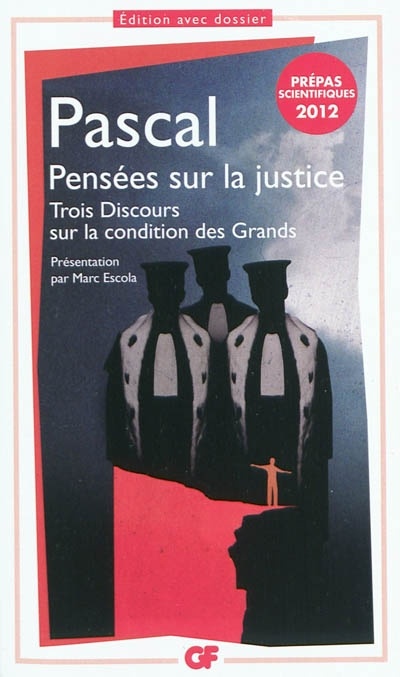
Blaise Pascal: Three Discourses on the Condition of the Great

Do birth, wealth, and power make one human being superior to another? In Three Discourses on the Condition of the Great, Blaise Pascal examines the foundations of social hierarchies and the duties of those who occupy privileged positions. Through three lessons addressed to a young aristocrat, he argues that distinctions of rank rest on human conventions rather than natural superiority. He contrasts established great…

  • Philosophy