Presentation
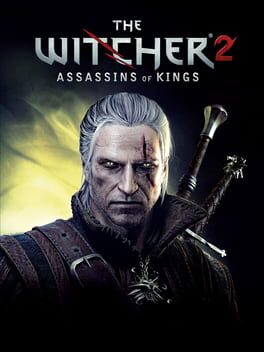
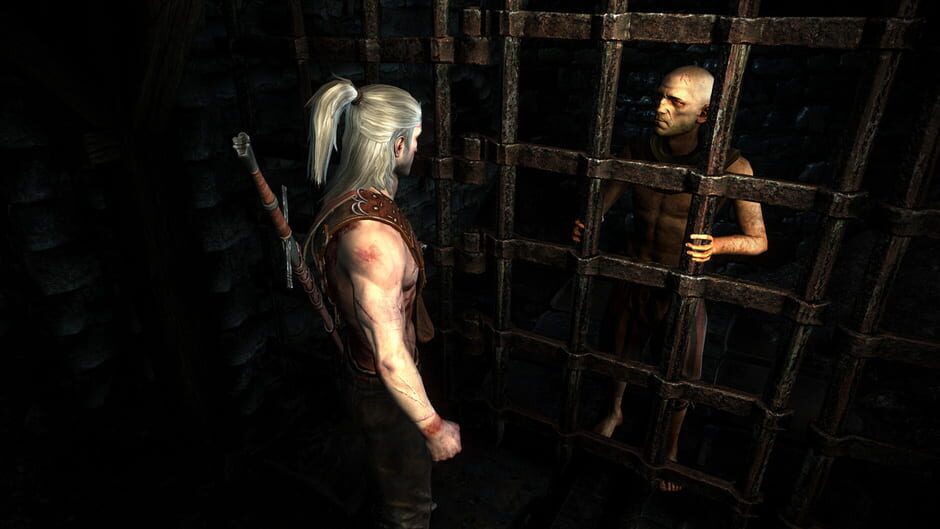
The Witcher 2 places Geralt in a particularly uncomfortable position for a witcher: at the center of politics.
Monsters are still present, contracts still exist and both swords remain essential, but the main stakes now come from kings, armies, mages and factions trying to exploit the instability of the Northern Kingdoms. Foltest’s murder is only the starting point of a story where every alliance has its own interests and truths rarely arrive in perfectly neutral form.
This direction gives considerable weight to dialogue and decision-making. The game does not simply ask players to choose between a conciliatory answer and an aggressive one. Some decisions genuinely alter the path Geralt follows. The choice between Roche and Iorveth is the most spectacular example: a significant portion of the adventure changes depending on the side chosen, with different locations, characters and events.
This branching goes beyond the illusion of choice. Following one path necessarily means not immediately seeing part of the other. Two players can finish The Witcher 2 having understood the same overall stakes while experiencing noticeably different parts of the conflict. This structure reinforces the idea that Geralt never observes the situation from an omniscient perspective: he acts with the information available wherever his choices have taken him.
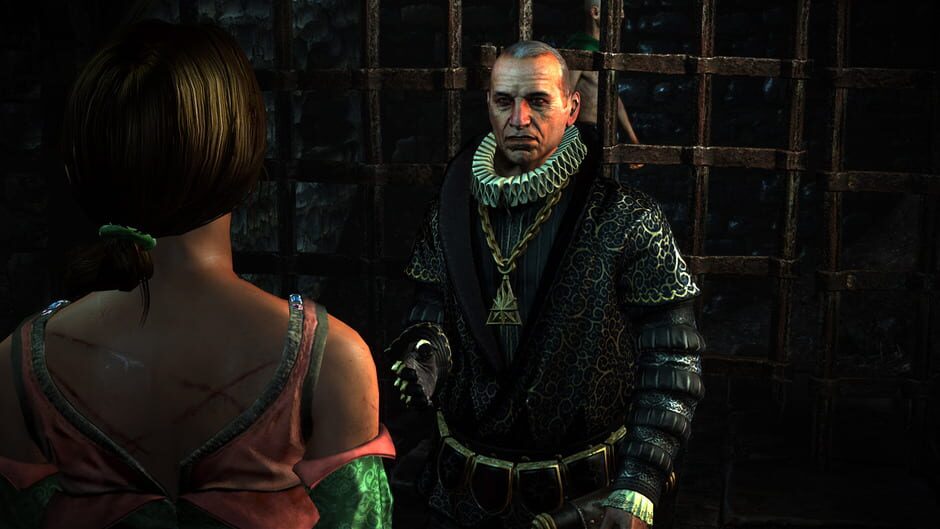
The game also refuses to present its sides as simple oppositions between good and evil. Tensions between humans and non-humans, the Scoia’tael resistance, the ambitions of kingdoms and the interests of mages create a landscape where a legitimate cause can lead to methods that are difficult to defend. Geralt may attempt to maintain a degree of neutrality, but events regularly make that position impossible.
Combat abandons the rhythmic system of the first The Witcher in favor of much more direct action. Geralt still uses a steel sword against ordinary opponents and a silver sword against monsters, but the player now has greater control over attacks, dodges, parries and movement.
Signs complement this arsenal. Aard can notably push or destabilize opponents, Igni produces a fire attack, Quen provides temporary protection, Yrden can immobilize a target and Axii exploits mental influence. Their use does not replace swordplay: they primarily provide the tools needed to control encounters that can become dangerous very quickly.
Preparation therefore retains an importance closely tied to the witcher profession. Potions, oils, bombs and traps allow difficult fights to be anticipated when the nature of the threat is known. Potions in particular must be consumed during meditation rather than at the last second in the middle of a duel, encouraging players to think before entering a dangerous situation.
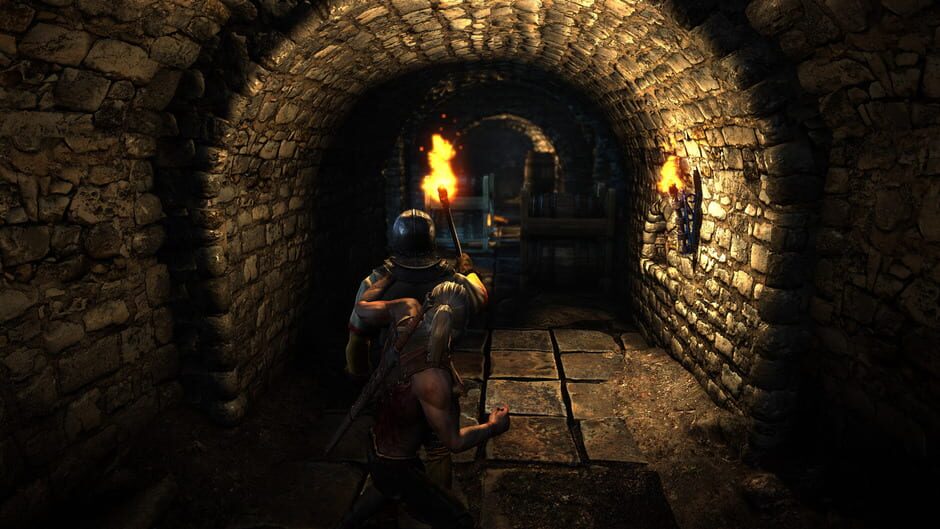
This demanding approach is especially noticeable early in the adventure. Geralt possesses abilities beyond those of an ordinary human, but several opponents can quickly surround him and punish careless attacks. Knowing how to dodge, isolate a target, use the right Sign at the right moment or prepare suitable equipment matters more than simply chaining attacks together.
Progression later allows Geralt to specialize in several directions, notably swordsmanship, alchemy and Signs. Development does not completely change the nature of the character — Geralt remains an experienced witcher — but it allows players to strengthen the methods that best suit their way of playing.
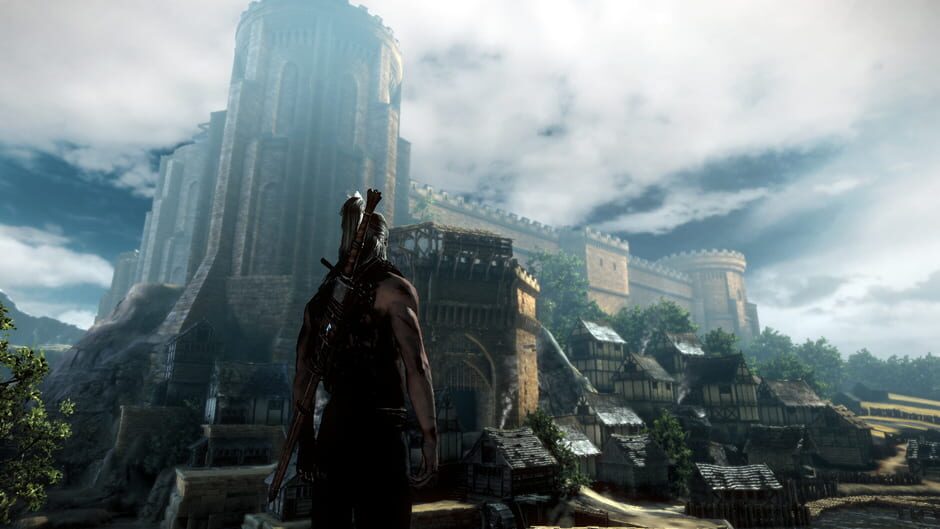
The environments also move away from the structure more heavily centered around Vizima in the first game. Flotsam and its forests, territories scarred by war and later the city of Loc Muinne give each part of the adventure a distinct identity. The game is not a continuous open world: it favors several dense areas directly tied to different stages of the story.
This concentration serves the political intrigue especially well. A city is not merely a new map to explore; it has authorities, tensions and populations directly involved in the conflict. Side quests often contribute to this understanding by showing how decisions made by the powerful affect those living beneath them.
Amid this crisis, Geralt is also pursuing something much more personal. His amnesia, present since the first game, begins to crack. Fragments of memory return and gradually reconnect the witcher with people and events from his past. The investigation into the kingslayers therefore runs parallel to another search: understanding who he was before he lost his memory.
What to remember
- A dark fantasy action RPG in which Geralt is accused of murdering King Foltest and seeks to identify the true kingslayers.
- A strongly political storyline involving the Northern Kingdoms, Scoia’tael, mages and struggles for power.
- Choices capable of deeply changing the course of the adventure, notably through two major paths connected to Vernon Roche and Iorveth.
- Real-time combat combining swords, dodges, parries, Signs, bombs, traps and alchemical preparation.
- Progression that allows different aspects of Geralt’s witcher abilities to be strengthened.
- Distinct, dense areas rather than a continuous open world, each directly tied to the conflicts of the story.
- A narrative that also continues Geralt’s gradual recovery of his lost memories.
Conclusion
The Witcher 2: Assassins of Kings understands very early that the most interesting consequences of a choice are not necessarily the ones that can be measured immediately.
Supporting someone means hearing their version of events, meeting their allies and discovering the reasons that make their cause defensible. But it also means abandoning another perspective. The game builds part of its narrative strength around that absence: Geralt cannot be everywhere and understand everything before making a decision.
This structure suits its universe especially well. Characters speak of loyalty, freedom, order or justice, but each uses those words from a different position. The witcher may try to find the least harmful option; the game often refuses to guarantee that such an option truly exists.
Combat demands a comparable form of preparation. Entering a confrontation without understanding the threat can be brutal, while a potion, trap or appropriate Sign can completely change the situation. The experience rewards not so much haste as the ability to observe before acting.
Some elements may feel more rigid today, particularly the opening hours of combat and certain transitions between areas. But the density of the narrative and the genuine scale of its branching remain remarkable: replaying the adventure while following another alliance does not simply mean selecting a few different dialogue options.
Geralt searches for an assassin in order to clear his name, but the investigation ultimately places him before decisions affecting entire kingdoms. That is precisely where The Witcher 2 finds its singularity: placing a professional accustomed to choosing between two swords in front of political problems for which no blade can identify the correct target quite so easily.
Good to know
- The Witcher 2: Assassins of Kings was developed by Polish studio CD PROJEKT RED.
- The game was originally released on PC on May 17, 2011.
- It is the second main entry in the video game trilogy centered on Geralt of Rivia.
- The adventure begins while Geralt is serving as bodyguard to King Foltest of Temeria before being accused of his murder.
- Vernon Roche and Iorveth are at the heart of a major decision capable of steering the story into two substantially different paths.
- The combat system combines real-time encounters, witcher Signs, alchemy, traps and preparation before certain confrontations.
- The game uses REDengine, an engine developed by CD PROJEKT RED.