Presentation
Metaphor: ReFantazio takes several principles developed by Atlus in its previous RPGs and relocates them within an entirely new fantasy setting. The school-life routine of Persona disappears in favor of a traveling election campaign: the protagonist has around six months to cross Euchronia, complete missions, strengthen support and advance in the competition for the throne.
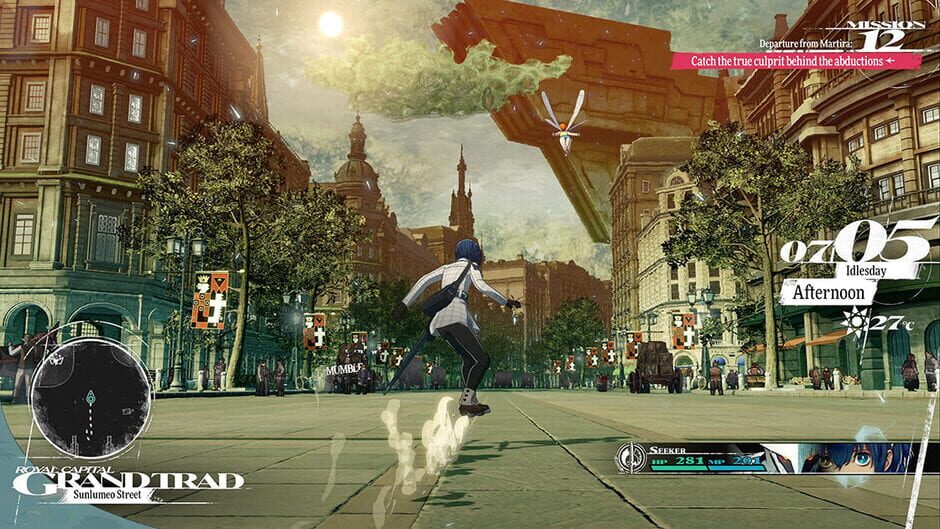
The calendar structures much of the experience. Certain main dungeons must be completed before a deadline, while free days can be spent on side quests, relationships with Followers, developing Royal Virtues or exploring new territories. Travel itself can consume time, forcing the player to think about the order of destinations.
The Gauntlet Runner turns these journeys into meaningful stages of the adventure. This enormous machine serves as a mobile base between cities. During travel, the protagonist can speak with companions, read, cook or perform different activities useful for progression. The calendar therefore remains important even when the group is far from major urban centers.
Social bonds take the form of Followers. Strohl, Hulkenberg, Heismay and several characters encountered outside the party have their own stories. Deepening a relationship helps reveal their convictions while also unlocking new benefits connected to Archetypes or exploration.
Royal Virtues represent another side of personal progression. Courage, Wisdom, Tolerance, Eloquence and Imagination increase depending on the activities chosen. Certain levels become necessary to continue relationships or access specific opportunities, giving decisions made outside dungeons a direct influence on the development of the group.
Archetypes form the core of the class system. When a character manages to confront their own fears, they can awaken a heroic incarnation such as Seeker, Warrior, Knight, Mage, Healer or Thief. Unlike a system where every fighter has a permanently fixed role, several members of the party can study different Archetypes.
This freedom allows the composition of the team to change considerably. A character naturally associated with physical combat can learn magical abilities, while another can temporarily take on a defensive or support role. Archetype lineages gradually develop into more advanced forms, encouraging the player to plan the specializations needed to reach them.
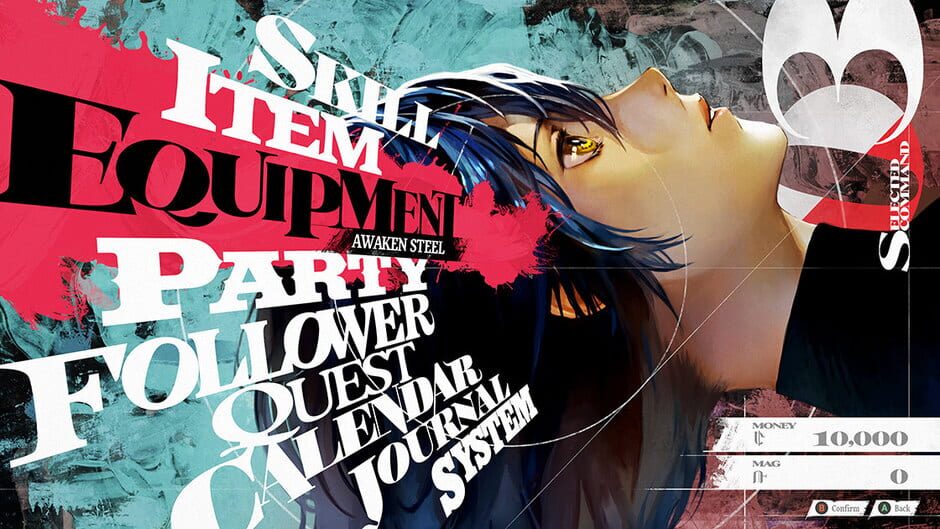
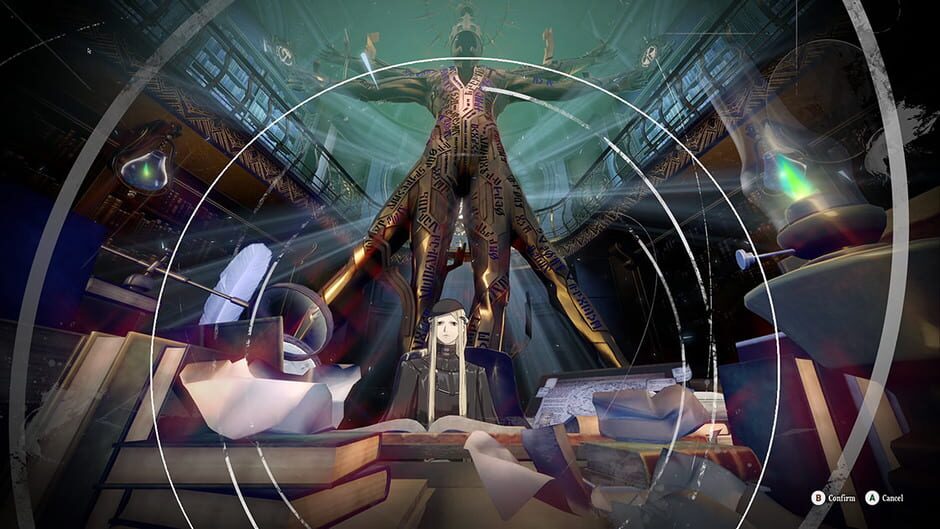
Akademeia, a mysterious space overseen by More, serves as the center of this progression. The protagonist can study awakened Archetypes there, invest the resources needed for their development and organize certain inherited skills. Part of the preparation therefore consists of distributing experience between classes rather than simply raising each character’s overall level.
Inherited skills strengthen this flexibility. An ability learned with one Archetype can, under certain conditions, be equipped while a character uses another class. Party building therefore depends not only on the selected Archetype but also on the abilities retained from previously studied paths.
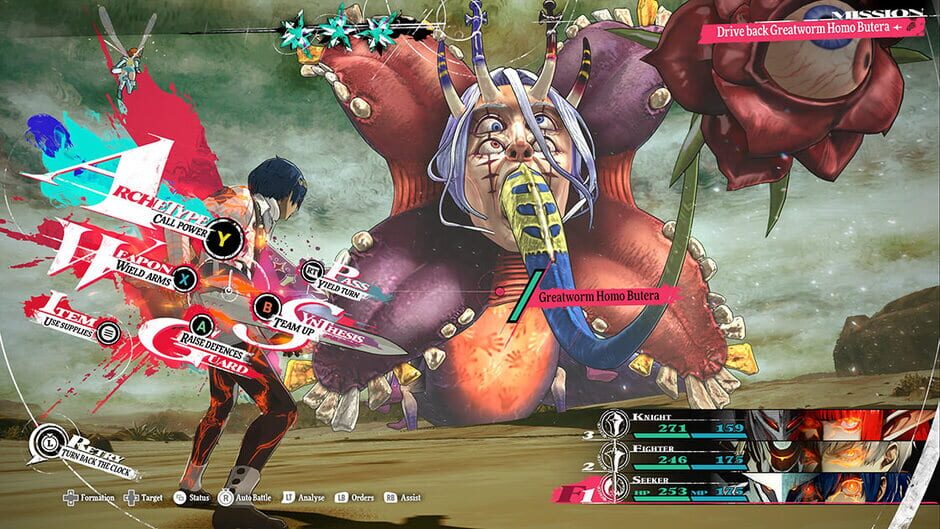
Important battles use a turn-based system where action economy matters as much as raw damage. Exploiting a weakness or achieving certain favorable results allows more actions to be preserved, while a poorly chosen attack can reduce the group’s available opportunities. Identifying enemy resistances and preparing Archetypes correctly becomes especially important against bosses.
Characters can be placed in front or back rows, adding a positioning choice to party composition. Some attacks also benefit from Synthesis skills, combined techniques whose requirements depend on the Archetypes present in the group. They can produce powerful effects but consume a significant share of available actions.
The game adds a real-time action layer on top of these turn-based battles. Enemies that are clearly weaker can be eliminated directly in the environment, speeding up exploration of areas already mastered. Against a more dangerous opponent, attacking correctly before engagement can allow the squad battle to begin from an advantageous position; a poor approach can instead give the enemy the upper hand.
This combination avoids forcing every minor encounter into a complete battle transition. It does not replace the strategic core, however: important enemies still require careful management of Archetypes, weaknesses, resources and turn economy.
Main dungeons accompany the major stages of the story, but Euchronia also contains numerous side missions and optional areas. Bounties, Follower quests and requests encountered in cities can lead to new dungeons, provide equipment or develop local stories.
The journey mainly serves to show the differences between the kingdom’s regions. Grand Trad concentrates political and religious power, while Martira, Brilehaven and Virga Island present other cultures and other forms of tension. The different tribes are not simply fantasy decoration: their power relationships, the prejudice they face and their traditions are regularly placed at the center of the situations encountered.
This political dimension is especially embodied by Louis and Forden. Louis defends a vision of merit that rejects certain traditional hierarchies but accepts extreme brutality, while Sanctifex Forden represents the institutional weight of the Sanctist Church. The protagonist must build his own position between forces that are each capable of attracting a large part of the population.
The “humans” occupy a singular place in this fantasy. They do not refer to the ordinary peoples of Euchronia but to grotesque creatures among the most dangerous beings in the world. This inversion supports a story in which anxiety, fear of others and collective constructions gradually become as important as the political struggle itself.
The art direction supports this identity without abandoning the strong stylization associated with Atlus productions. Shigenori Soejima handles the character design, while Shoji Meguro develops a soundtrack that moves away from the jazz or pop of certain Persona games in favor of a more solemn tone, notably through chanted vocals and orchestration suited to the journey.
What to remember
- A political fantasy RPG set in the United Kingdom of Euchronia after the assassination of its ruler.
- The protagonist, a member of the Elda tribe, enters the royal election while trying to save the crown prince from a curse.
- A campaign lasting around six months where travel, dungeons, quests, relationships and activities all use a calendar.
- Archetypes function as interchangeable and evolving classes that can be studied by different members of the party.
- Followers develop their own stories, and their progression helps unlock or strengthen possibilities linked to Archetypes.
- Combat combines real-time elimination of weaker enemies with strategic turn-based battles against greater threats.
- The Gauntlet Runner serves as a mobile base and turns travel between regions into an active part of the adventure.
- The story uses the election, the different tribes and the creatures called “humans” to explore discrimination, anxiety, political power and the construction of a collective ideal.
Conclusion
Metaphor: ReFantazio uses an architecture familiar to Persona players without simply transferring it into a medieval setting. The calendar, relationships and personal progression are reorganized around a political journey. Available days no longer separate school life from a supernatural world: they determine how a candidate for the throne discovers the country he claims he wants to govern.
Archetypes reinforce this autonomy. Where an RPG party often assigns a fixed role to each companion, this system allows the group’s functions to be reshaped regularly. Classes, inherited skills and Synthesis provide enough freedom to experiment while preserving the importance of the strengths and weaknesses characteristic of Atlus combat.
The journey creates another essential difference. Traveling across Euchronia constantly confronts the protagonist’s political project with local realities. Discrimination between tribes, poverty, religion and fear are not confined to candidate speeches; they appear in towns, relationships with Followers and situations the party must address.
Louis gives this confrontation particular force because his project also contains a critique of the existing kingdom. His rejection of certain hierarchies can resonate with a dissatisfied population even though the methods he accepts would create a society profoundly different from the one the protagonist seeks to build. The election therefore does not simply oppose a generous hero against conservatives who refuse any change.
This articulation between travel, strategy and politics ultimately gives Metaphor: ReFantazio its own place within Atlus’s catalogue. Its systems clearly inherit decades of RPG design from the studio, but they are reorganized around a question suited to this world: how can an ideal become a collective project when it must convince people who do not share the same fears, injustices or vision of the future?
Good to know
- Metaphor: ReFantazio was developed by Studio Zero and published by Atlus and Sega.
- The game was released on October 11, 2024, for PlayStation 4, PlayStation 5, Xbox Series X|S, Windows and PC via Steam.
- Katsura Hashino serves as director, Shigenori Soejima as character designer and Shoji Meguro as composer; all three previously worked together on several Persona games.
- It is an exclusively single-player RPG.
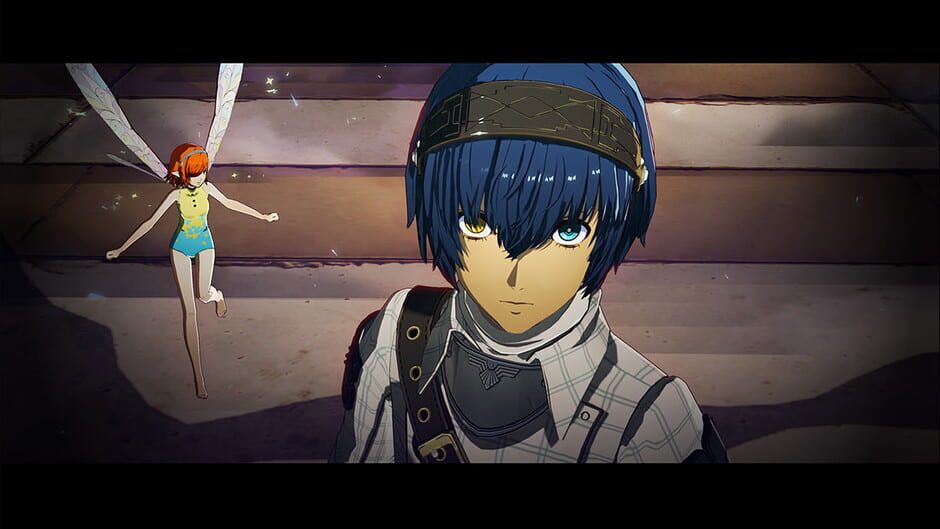
- The protagonist belongs to the Elda tribe and travels with the fairy Gallica in an attempt to break the curse affecting the prince of Euchronia.
- The journey connected to the royal tournament covers around six months and uses a calendar that limits the time available for major activities.
- The combat system distinguishes real-time Fast Battles from turn-based Squad Battles.
- A Nintendo Switch 2 version is officially scheduled for November 12, 2026.