Synopsis
In Lumière, everyone grows up with a certainty no one should have to carry: knowing roughly at what age their generation will disappear.
Once a year, a mysterious entity known as the Paintress awakens before the city and writes a number on her immense Monolith. When that number matches your age, the Gommage takes you. Bodies dissolve, an entire generation vanishes, and Lumière somehow carries on knowing that the following year, the number will fall again.
This year, the Paintress will write 33.
For decades, the city has sent expeditions to the Continent in an attempt to reach the Paintress and end the cycle. None has returned victorious. Yet they did not leave nothing behind: journals, weapons, camps and discoveries remain, sometimes giving the next expedition enough knowledge to travel a little farther.
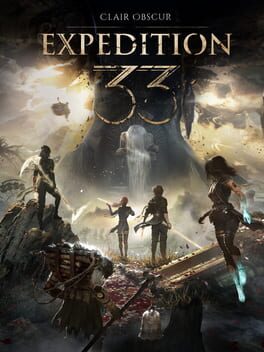
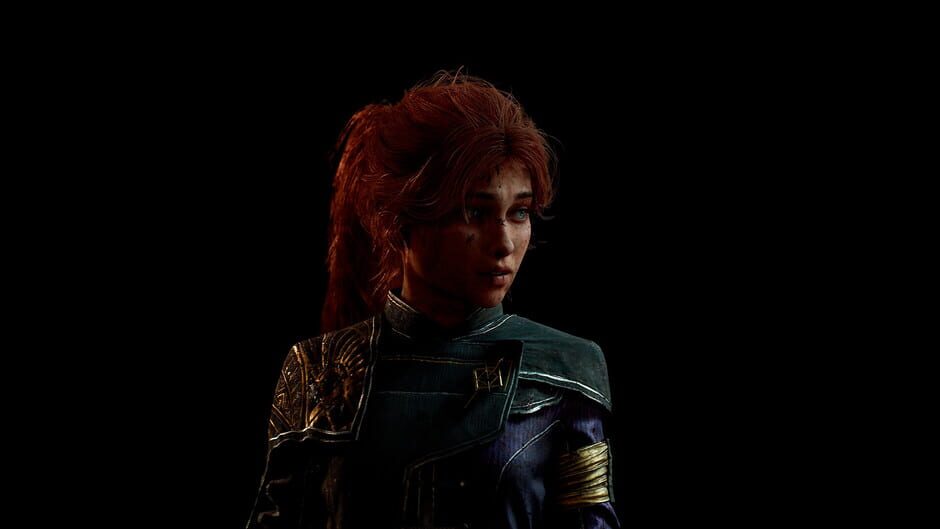
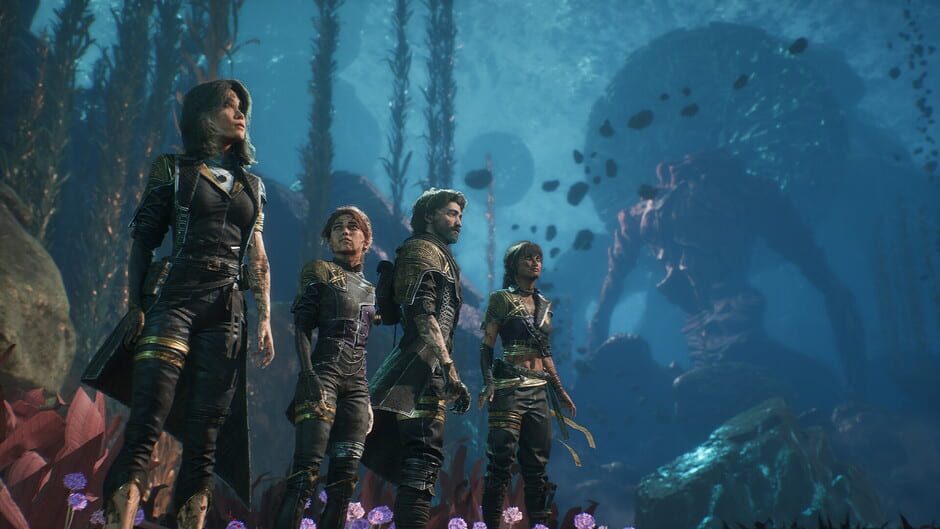
It is from this inheritance of failure that Expedition 33 departs. Among its members are Gustave, an engineer with only one year left to live, Maelle, his young adoptive sister, the researcher Lune, the warrior Sciel, and several companions encountered along the way. Their mission is simple to state: reach the Paintress and kill her before she can paint again.
The Continent, however, is nothing like the world Lumière imagined from the opposite shore. The remnants of previous expeditions tell incomplete stories, impossible creatures inhabit landscapes where European architecture seems to have passed through a dream, and every discovery weakens the group's certainties a little further. Gradually, another question joins their mission: what does Lumière truly understand about the Gommage, the Paintress and the world in which it is trying to survive?
Overview
Living with an expiration date
Clair Obscur: Expedition 33 begins with a simple and cruel idea: turning age into a collective countdown. The Gommage is not merely a threat designed to launch the adventure. Sandfall Interactive imagines an entire society that has organized itself around this annual disappearance.
The people of Lumière know their generation will have less time than the one before it. Families live with that deadline, ceremonies accompany the departed, and each expedition repeats a ritual already undertaken by dozens of groups. In that context, “Expedition 33” is hardly a heroic name: it is first and foremost a number, another attempt following many failures.
This idea of transmission runs throughout the game. An expedition can die without having failed completely if its discoveries allow those who follow to go farther. The past is therefore not only told through dialogue or archives: it physically exists within the journey, through the traces left by those who came before.
A transformed France rather than a recreated one
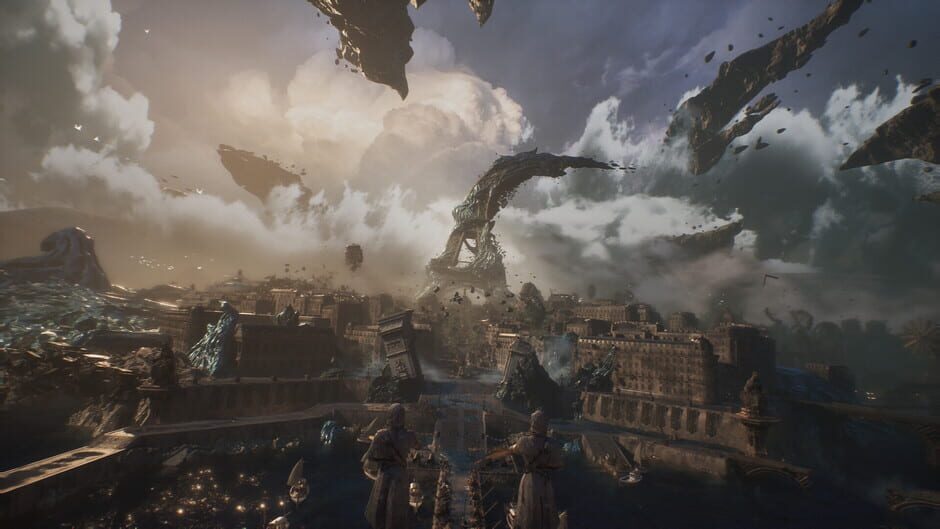
Visually, Sandfall chooses a far more extravagant world than its subject might suggest. The French Belle Époque, Art Deco, European architecture, painting and deliberately surreal fantasy blend into landscapes that never attempt to faithfully reconstruct a historical period.
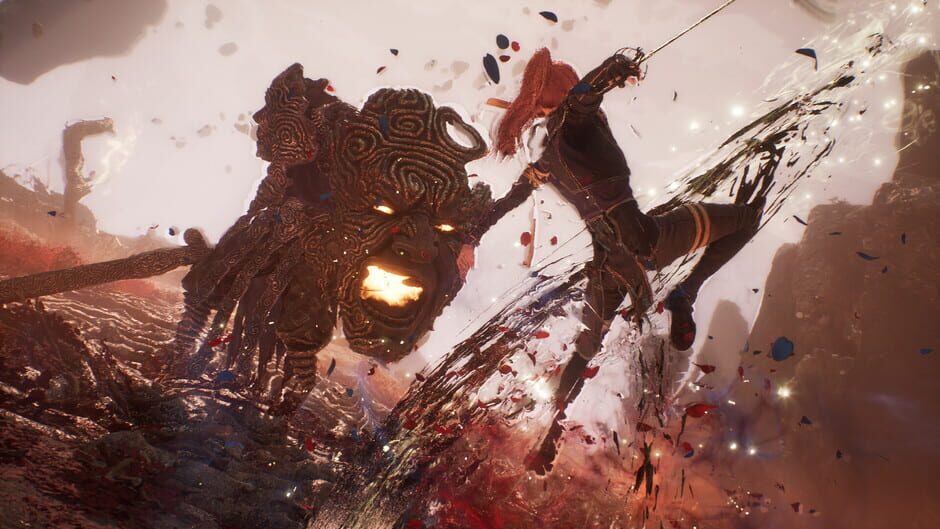
The Continent feels more like a memory of France passed through several layers of paint and dream. Statues become monumental, ruins seem to float outside reality, and some creatures appear to come as much from a theater stage as from a fantasy bestiary.
This direction allows the game to possess a French identity without turning every environment into a postcard. The inspiration appears through shapes, clothing, names, colors, music and the way beauty and melancholy almost constantly coexist.
Turn-based combat that refuses to wait
Beneath that European identity lies an RPG strongly shaped by Japanese traditions. Sandfall cites Final Fantasy, Persona and Lost Odyssey among its references, while certain timing and parry principles owe more to action games, with Sekiro frequently mentioned among the influences.
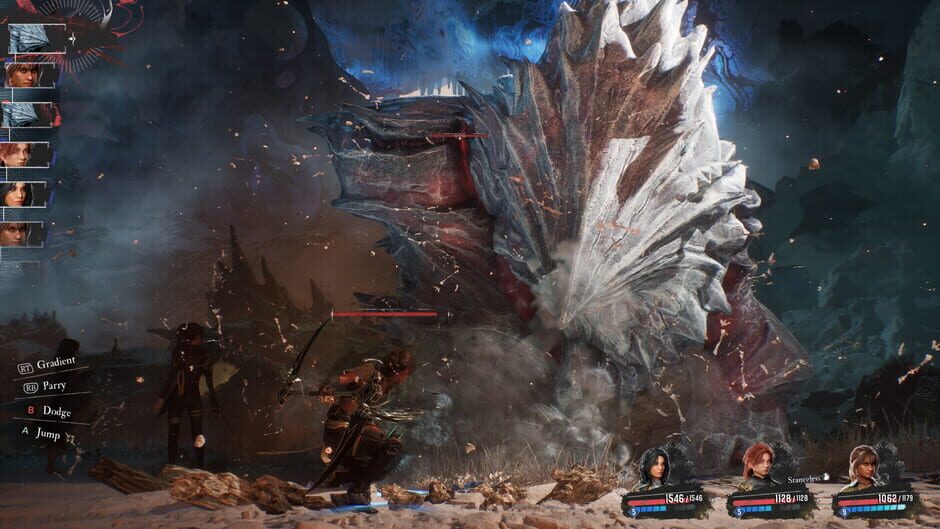
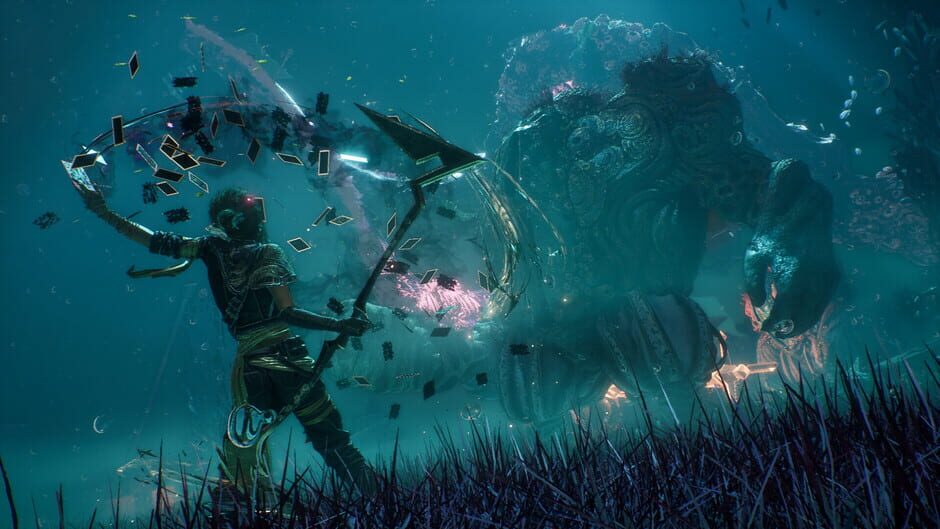
Expedition 33 retains the foundations of turn-based combat: skill choices, action points, party composition, character progression and synergy building. The difference appears when the enemy acts. The player does not put down the controller and wait for the animation to end; they continue watching in order to dodge, parry, jump or sometimes counterattack.
This mechanic profoundly changes the relationship between statistics and mastery. A well-built character can still be punished by misreading an animation, while a player who understands the timing can survive situations that would normally appear unfavorable. Strategy remains central, but it now has to share the space with execution.
The party's attacks follow the same philosophy. Some skills become more effective when an input is performed at the right moment, while free aiming allows precise targeting of weak points. The system therefore keeps the clarity of turn-based combat while maintaining constant tension during encounters.
Characters built as mechanics
Customization quickly becomes as important as timing. Every party member has their own resources, states, skills and conditions for effectiveness. Switching characters is therefore not simply a matter of choosing another spell list: it means understanding a new combat logic.
Pictos and Luminas expand that construction even further. The former provide bonuses and allow passive abilities to be learned; once acquired, Luminas can be reused more freely to create increasingly specialized combinations.
This is where the system gains much of its depth. A secondary ability can alter action-point generation, reinforce a specific state or turn a defensive mechanic into an offensive tool. As the adventure progresses, the question becomes less “which equipment has the best numbers?” and more “which mechanics can I make work together?”
A directed journey
Despite the richness of its systems, Clair Obscur is not an open world. The Continent has an overworld map, several explorable areas and optional activities, but its environments mainly follow linear or semi-open progression.
This structure sometimes limits exploration, especially when the art direction makes a ruin or building just beyond the path look irresistible. In return, it gives Sandfall much tighter control over the pace of the journey and keeps the characters at the center of the experience.
In a game where everyone is literally walking toward a deadline, that choice is not insignificant.
Key takeaways
- Expedition 33 leaves Lumière to try to stop the Gommage. Its members seek to reach the Paintress before another generation disappears.
- Combat combines turn-based decisions with real-time reactions. Skills, action points and party building remain strategic, but dodges, parries and counterattacks depend on timing.
- Sandfall openly draws from several JRPG influences, including Final Fantasy, Persona and Lost Odyssey, alongside action-game references such as Sekiro.
- Each character has their own mechanics. Party members genuinely require different resources, synergies and approaches to play.
- Pictos and Luminas are central to buildcrafting. They allow passive abilities to be combined and characters to become increasingly specialized.
- The visual identity blends Belle Époque, Art Deco, painting and surreal fantasy without attempting historical reconstruction.
- The game is not an open world. It offers an overworld map and several explorable areas, but progression remains largely structured.
- The adventure is entirely single-player. Six characters can join the party and three fight at the same time.
- The story goes far beyond the confrontation with the Paintress. Grief, memory, family and transmission shape the journey just as much as the central mission.
PANACHES review
When the enemy's turn finally becomes interesting
The best idea in Clair Obscur: Expedition 33 may be to look at a very old convention of turn-based RPGs and ask why it should remain untouchable. Traditionally, when the enemy acts, the player watches the result of decisions already made. Sandfall instead turns that period into an actual phase of play.
You have to read a stance, recognize the start of an attack, learn a deliberately misleading delay and choose between dodging and parrying. A good defense can prevent damage, but it can also create an offensive opportunity or alter how the following turn unfolds.
This mechanic could easily have become a decorative QTE inserted between two menus. It works because it genuinely contributes to the combat economy. Expedition 33 does not replace statistics with reflexes, nor does it disguise an action game as an RPG: it creates a constant conversation between preparation and execution.
That distinction allows for several playstyles. Someone who masters the timing can take more risks; another player can compensate with a stronger party, better resource management or more efficient synergies. The system therefore does not simply ask whether you can parry. It asks how well each layer supports the others.
Building rather than simply equipping
The same intelligence appears in the characters. Gustave, Maelle, Lune, Sciel, Verso and Monoco are not merely variations on warrior, mage or support. Each has a distinct enough logic that switching party members requires reconsidering how a turn is prepared and executed.
Pictos and Luminas then push customization into something much more open. At first, it is natural to choose whatever offers the best statistics. Later, interactions often become more interesting than the numbers themselves.
That is a very specific RPG pleasure: looking at an apparently modest ability and suddenly realizing it could become the foundation of an entire build. When several mechanics begin reinforcing one another, Clair Obscur gives the player the satisfying feeling of having discovered a slightly unreasonable combination — even when the developers obviously knew it was there.
The system is not always perfectly balanced, but it encourages experimentation. And for an RPG, that desire often matters more than perfect symmetry between every option.
A French identity that never becomes a travel brochure
It would still be reductive to talk only about combat. Much of the game's personality comes from the way Sandfall transforms its French influences.
It is not about mechanically stacking immediately recognizable symbols. France appears more through architectural silhouettes, clothing, names, pictorial references, music and a particular way of combining beauty, melancholy and theatricality.
The result can be spectacular without feeling generic. One region may resemble a painting beginning to distort; another adopts almost theatrical staging; some creatures feel less like biological organisms than beings drawn according to a completely different artistic logic.
This aesthetic directly supports the game's themes. Clair Obscur tells the story of people condemned to disappear inside a world that may never have looked more beautiful. Expeditions die, but leave journals behind. Characters vanish, but pass something on. Songs, objects and memories sometimes outlive the people who created them.
Transmission becomes the quiet link between the story, the world and even the way Sandfall embraces its own influences.
A beautiful world you sometimes wish you could touch more
The art direction also creates one of the game's main frustrations. Some environments appear far more open than they actually are. An enormous structure catches the eye, a ruin looks as though it could be circled, a building seems accessible; a few meters later, the level design reminds you that the intended route lies elsewhere.
The areas offer branches, hidden items, merchants and optional encounters, but their architecture remains more conventional than their appearance might suggest. There is therefore sometimes a gap between what the scenery promises and what exploration allows.
That limitation has a positive side, however. Clair Obscur keeps moving. The story is not constantly interrupted by a map saturated with icons or by an obligation to clear dozens of activities before returning to the main narrative. The game accepts the need to choose what it wants to show and, just as importantly, what it does not want to become.
That concentration directly benefits the party.
Letting the characters breathe
Gustave, Maelle, Lune, Sciel, Verso, Monoco and Esquie are not simply components of a combat team. Their interactions allow the game to shift tone regularly without losing its identity.
Clair Obscur can confront grief directly and become funny only a few minutes later. A violent scene can be followed by a much quieter conversation. This alternation recalls the JRPGs Sandfall openly cites as inspiration: the central catastrophe can be enormous without preventing the characters from existing outside it.
The music of Lorien Testard plays an essential role in that balance. Choirs, strings, piano and voices do not merely amplify important scenes; they help define places and characters. Some regions remain memorable almost as much for their musical themes as for their architecture.
That importance given to music connects with another characteristic of the game: its sincerity. Clair Obscur enjoys large emotions and does not constantly try to protect them with an ironic remark. It accepts crying characters, declarations, silences, sacrifices and symbolic imagery.
That confidence sometimes produces scenes that are more emphatic than necessary. But it also allows the game to attempt something many contemporary works approach more cautiously: genuinely trying to move the player, even at the risk of occasionally lacking subtlety.
What Sandfall's success actually says
Clair Obscur's trajectory could easily be turned into a comfortable little legend: a young French studio arrives with its first game and teaches larger productions how things should be done. It is an appealing story, but far too simple.
Team size guarantees neither quality nor originality. What Sandfall demonstrates more convincingly is the value of a clearly defined scope. The studio did not attempt to simultaneously build a gigantic open world, a multiplayer game, a systemic simulation and a narrative RPG.
It chose a group of characters, an aesthetic, a combat system and a story, then concentrated its resources on those elements. The influences are visible and openly acknowledged: Final Fantasy, Persona, Lost Odyssey, Sekiro and other works had already opened part of the path.
Clair Obscur does not try to erase that history. It uses it as a starting point.
That is probably where its most interesting singularity lies. Originality does not always mean creating without influence; it can also emerge from what a work chooses to do with what it has inherited.
Expedition 33 looks back at several decades of RPG history and adds its own layer. Not to cover what came before, but to take part in the conversation.
Good to know
Production
- Clair Obscur: Expedition 33 was released on April 24, 2025 for PC, PlayStation 5 and Xbox Series X|S.
- It is the first game from Sandfall Interactive, an independent French studio founded in 2020 and based in Montpellier.
- The game was developed by Sandfall Interactive and published by Kepler Interactive.
- It uses Unreal Engine 5. Sandfall notably relied on Blueprint, Sequencer, MetaHuman, MetaHuman Animator, Lumen, Nanite and World Partition.
- The cinematics use motion capture, including facial performances through MetaHuman Animator.
- The original score was composed by Lorien Testard.
- Both the French and English versions feature full voice acting.
Systems and influences
- Sandfall describes the combat system as Reactive Turn Based: core decisions remain turn-based, but the player continues interacting during enemy attacks.
- The studio cites Persona, Final Fantasy, Lost Odyssey and Sekiro among its video game influences.
- The team also cites the French novel La Horde du Contrevent among the inspirations for the world and story.
- The visual identity combines French Belle Époque, Art Deco and fantasy without attempting to historically reproduce France from that period.
- The game is not an open world. It has an overworld map and several explorable areas, but these remain primarily structured as levels.
- Six characters can join the party and three fight simultaneously.
After release
- In December 2025, Sandfall released the free Thank You Update, adding a new playable area, new endgame boss encounters, new music, a Photo Mode and several quality-of-life improvements.
- The update notably includes Verso's Drafts, with new equipment, weapons, Luminas and customization elements.
- Support continued in 2026. Patch 1.5.6, released on June 30, 2026, notably added Arabic localization, bringing the number of supported text languages to twenty.
- On April 24, 2026, for the game's first anniversary, Sandfall announced that Clair Obscur: Expedition 33 had surpassed 8 million copies sold.
- At The Game Awards 2025, Clair Obscur: Expedition 33 notably won Game of the Year, Best Game Direction, Best Narrative, Best Art Direction, Best Score and Music, Best Performance for Jennifer English, Best Independent Game, Best Debut Indie Game and Best RPG.
- At the BAFTA Games Awards 2026, it won Best Game, Debut Game and Performer in a Leading Role for Jennifer English as Maelle.
- Sandfall continues to release fixes and improvements in 2026, but no new narrative expansion has officially been announced as of the verification date; the entry therefore retains
statut_parution: completed.