Presentation
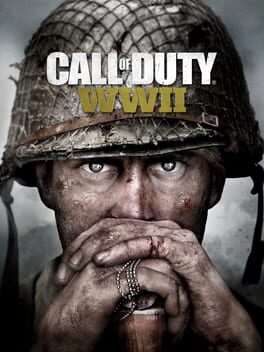
With Call of Duty: WWII, Sledgehammer Games brings the series back to the historical period that defined its earliest entries. After several installments focused on modern or futuristic warfare, the 2017 game returns to the Second World War and chooses the Western Front as the main setting for its campaign.
The story mainly follows Ronald “Red” Daniels, a young recruit in the U.S. 1st Infantry Division. D-Day serves as his first true encounter with combat and immediately establishes the campaign’s perspective: the game is less interested in portraying an exceptional super-soldier than in following a man who remains dependent on the unit around him.
That emphasis on the squad structures much of the campaign. Zussman represents Daniels’ strongest personal bond, while Turner and Pierson embody two very different approaches to authority. Their relationships accompany the military operations and provide a human continuity to a campaign that regularly changes location.
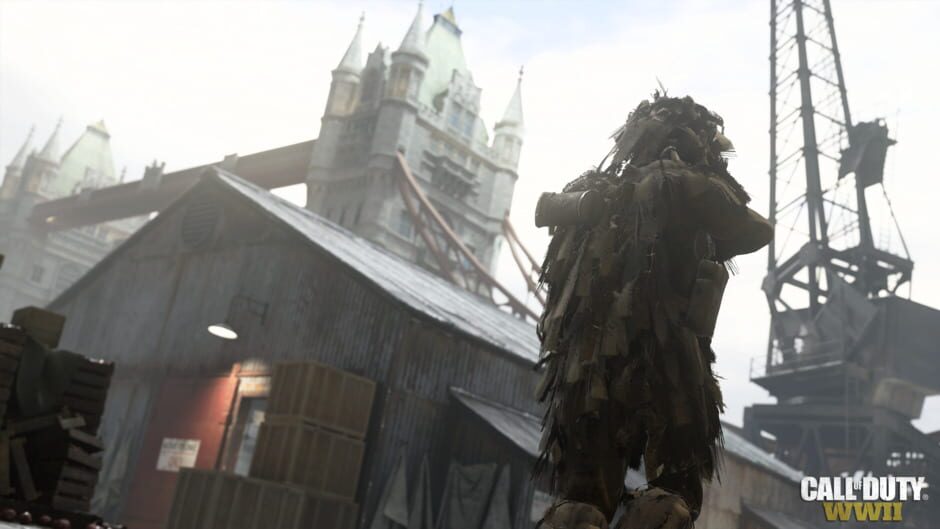
The journey passes through several iconic episodes of the war in Western Europe. After Normandy, the advance leads through Paris, the Hürtgen Forest, the Ardennes and eventually Germany. The game takes considerable dramatic freedom with these events, but uses them as recognizable historical landmarks for the squad’s progression.
The campaign follows the tightly directed structure traditionally associated with Call of Duty. Missions alternate between infantry assaults, defensive positions, infiltration, vehicle sequences and more spectacular set pieces. Progression is generally linear and leaves little room for exploration, but this control allows the game to move quickly between situations and maintain a steady pace.
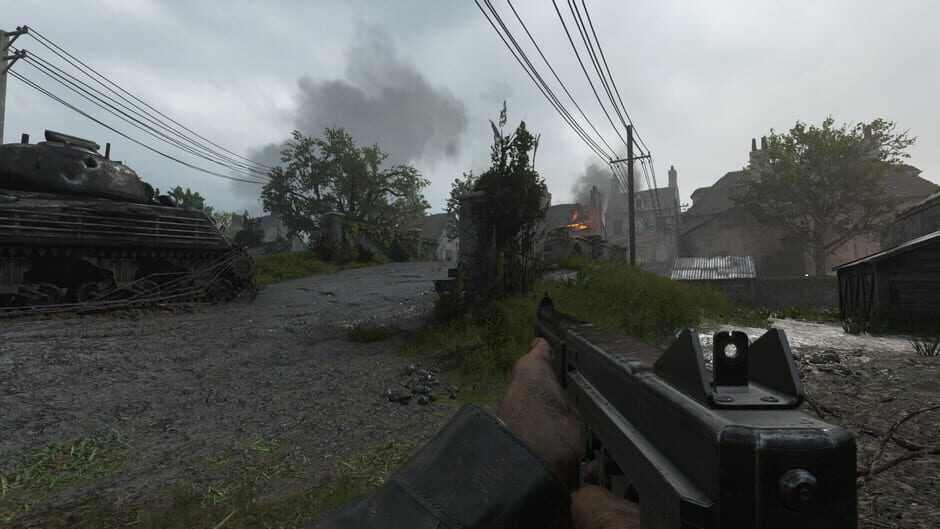
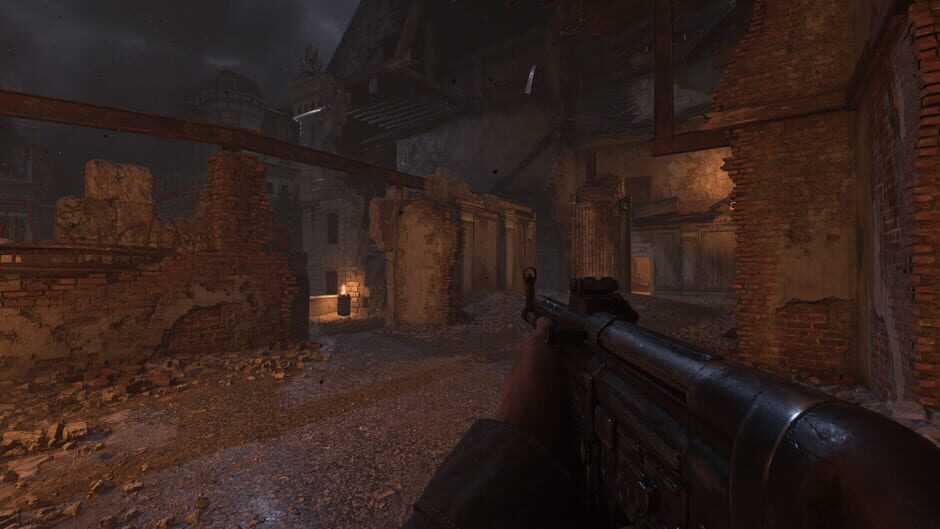
The return to the Second World War significantly changes the feel compared with the futuristic entries that immediately preceded it. Movement returns to an entirely grounded model, the weaponry matches the historical setting and combat abandons the advanced mobility systems that had defined several previous installments.
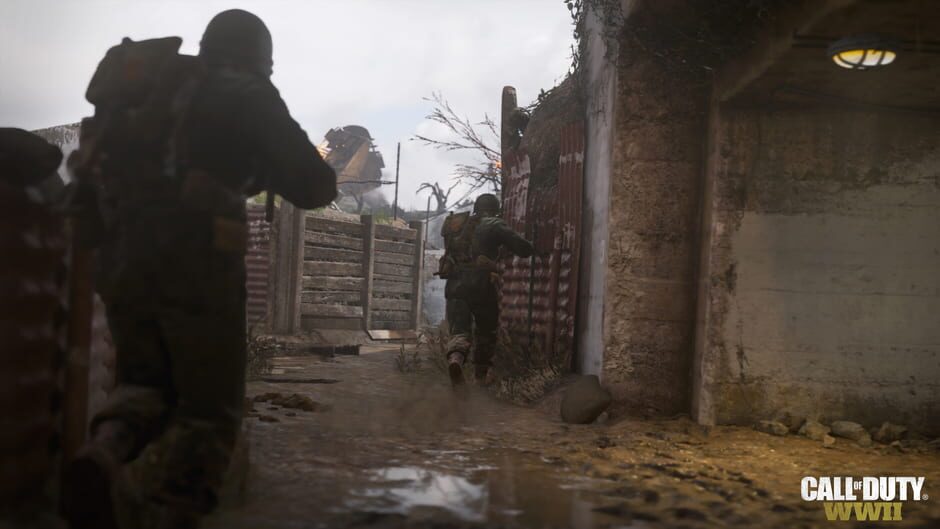
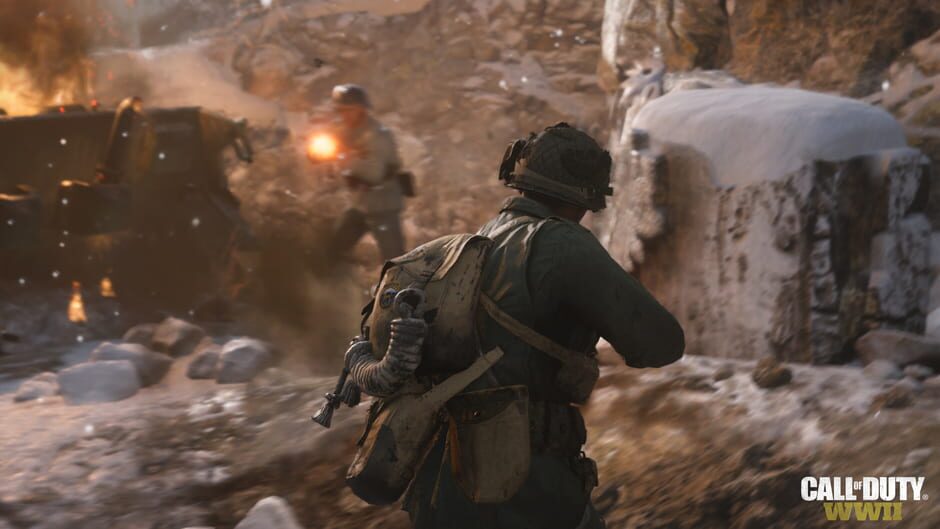
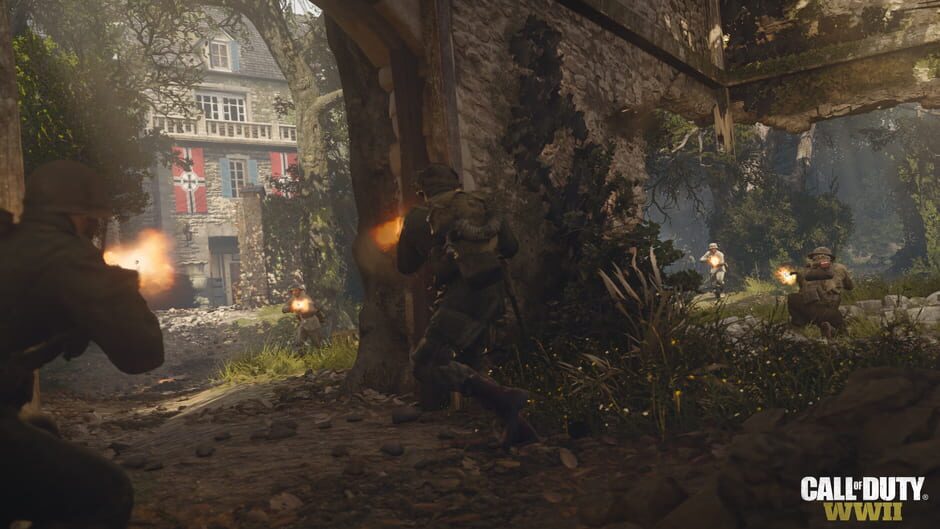
This desire to portray a more physical kind of war also shapes the battlefields. Mud, ruins, forests, villages and fortified positions replace the technological environments of the futuristic games. The visual direction favors cold or earthy tones and a heavier depiction of violence in order to reinforce the sense of an exhausting conflict.
The campaign is not limited entirely to an American perspective. Certain sequences introduce other participants in the war, notably Rousseau from the French Resistance and Crowley of the British Special Operations Executive. Their presence briefly broadens the view of the Allied advance without displacing Daniels and his squad from the center of the story.
The writing focuses more heavily on camaraderie than on geopolitical analysis. The relationships between Daniels, Zussman, Turner and Pierson receive more attention than the wider causes and complexity of the conflict itself. This makes the campaign easy to follow and gives emotional weight to several personal events, but it also relies on a deliberately traditional story of soldiers advancing together through war.
Multiplayer follows the same return to more conventional combat. The futuristic movement systems disappear in favor of sprinting, positioning, period firearms and equipment. The Divisions system initially organizes customization around different military specializations and partly replaces the classic class structure.
War is one of the main additions. This mode pits two teams against each other across a sequence of scripted objectives, such as attacking or defending positions, building structures or escorting an advance through the map. Victory depends more on completing those objectives than on individual kill counts, giving matches a different structure from traditional competitive modes.
Headquarters introduces another unusual idea for the series at the time. This social space allows players to gather between matches, access different activities and manage multiplayer progression within a shared environment. Its functionality evolved after launch, but the concept marked an attempt to make the community itself more visible inside the game.
The third major pillar is Nazi Zombies. Entirely separate from the historical campaign, this cooperative mode follows a team searching for artworks stolen during the war before discovering experiments involving an undead army in the German village of Mittelburg. Sledgehammer adopts a more overt horror aesthetic than several previous versions of Zombies, with darker environments and a strong focus on exploration and secrets.
These three components give Call of Duty: WWII noticeably different identities. The campaign emphasizes military narrative and camaraderie, multiplayer returns to fast grounded competition, while Nazi Zombies embraces a completely separate horror universe. Their main connection is the shared use of the Second World War as a visual and material framework.
What to remember
- A return to the Second World War for Call of Duty after several entries focused on modern or futuristic conflicts.
- A campaign centered mainly on Ronald “Red” Daniels, a young soldier in the U.S. 1st Infantry Division.
- A journey from the Normandy landings to the Allied advance into Germany, including Paris, the Hürtgen Forest and the Battle of the Bulge.
- A story that gives major importance to Daniels’ squad, particularly Zussman, Turner and Pierson.
- Multiplayer returns to entirely grounded movement, supported by the Divisions system and the objective-based War mode.
- Headquarters serves as a social space connecting players with several multiplayer functions.
- A cooperative Nazi Zombies mode independent from the campaign, built around a horror story set in Germany.
Conclusion
Call of Duty: WWII is built around a clear desire to reconnect with part of the series’ historical identity. Its return to the European front and fully grounded combat comes after several entries that had progressively expanded futuristic movement and technology. Sledgehammer Games therefore chooses a more familiar framework, but places it inside a production shaped by the cinematic staging the franchise had developed over the years.
The campaign works best through the continuity of its squad. Daniels, Zussman, Turner and Pierson provide a human thread across the different battles and give the story direction despite the frequent changes in location. The approach remains highly traditional and the tightly scripted progression offers little freedom, but it fits the game’s ambition to tell a war story centered on camaraderie and the effect of combat on a group of soldiers.
Multiplayer experiments more through War and Headquarters. The former builds matches around successive objectives, while the latter tries to give the community space a more tangible presence. These ideas accompany a return to simpler movement and firefights without the futuristic abilities of the immediately preceding games.
Nazi Zombies completes the package with a much looser relationship to history. Its horror aesthetic and independent storyline allow the game to preserve the cooperative Zombies tradition while developing an identity suited to this particular entry.
Call of Duty: WWII therefore does not attempt to reinvent the series entirely. Its main interest lies in the way it adapts modern Call of Duty mechanics to a historical setting that had gradually disappeared from the franchise. The result remains highly cinematic and sometimes conventional, but it gives the game a clearly distinct identity within the series’ 2010s era.
Good to know
- Call of Duty: WWII was developed by Sledgehammer Games and published by Activision.
- The game was released on November 3, 2017, for PlayStation 4, Xbox One and PC.
- The campaign mainly follows Private Ronald “Red” Daniels of the U.S. 1st Infantry Division.
- The story begins with the Normandy landings and follows the Allied advance across Europe into Germany.
- The game’s three major components are the campaign, multiplayer and the cooperative Nazi Zombies mode.
- Multiplayer introduced War, Divisions and Headquarters.
- Four downloadable content packs later added new multiplayer maps, new War operations and additional Nazi Zombies chapters.