


Overview
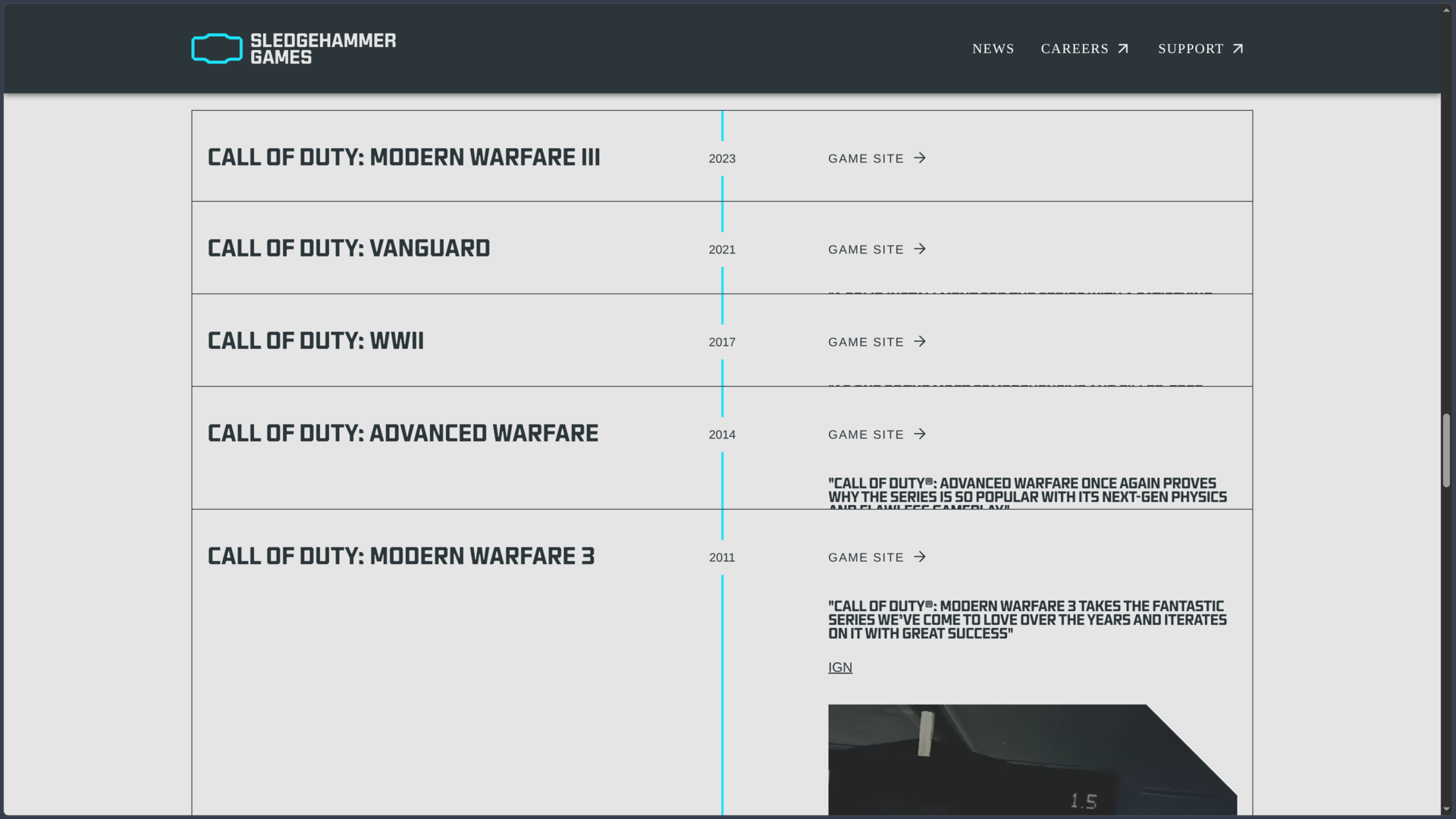
Founded in 2009 in California by Glen Schofield and Michael Condrey, two former Visceral Games executives who notably worked on Dead Space, Sledgehammer Games is an American development studio whose history is almost entirely linked to Call of Duty.
Unlike many studios that first build themselves around an original property before joining a major publisher, Sledgehammer was created directly within Activision. Only a few months after its creation, the team was asked to collaborate with Infinity Ward on Call of Duty: Modern Warfare 3, released in 2011. This first assignment immediately placed the studio within an organization where several teams had to coordinate technologies, campaigns, multiplayer modes and production schedules around the same franchise.
Sledgehammer then became a true lead studio for Call of Duty. Advanced Warfare, released in 2014, was the first installment whose development it fully led within the new three-year production cycle introduced by Activision. The game allowed the studio to develop its own interpretation of the series with a military future dominated by exoskeletons and much more vertical mobility.
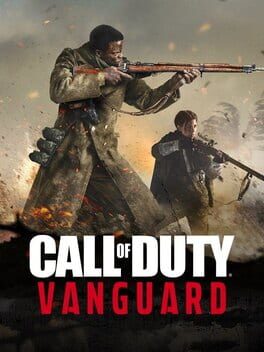
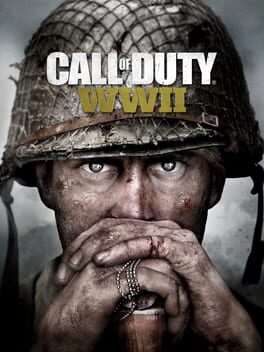
With Call of Duty: WWII in 2017, Sledgehammer radically changed context and brought the series back to the Second World War. The studio later returned to this period with Vanguard in 2021 before joining the contemporary universe of the new Modern Warfare series with Modern Warfare III in 2023.
This trajectory reveals an important distinction: Sledgehammer does not own Call of Duty and does not publish its games. Activision remains the publisher, while the development of an installment involves several studios. Even when it serves as lead developer, Sledgehammer works with teams such as Infinity Ward, Treyarch, Raven Software, Beenox, High Moon Studios or Demonware depending on the needs of the project.
Its identity must therefore be understood within this shared production system. Sledgehammer can lead an entire installment, co-develop a production, reuse shared technologies, maintain a game after launch or build a new interpretation of mechanics established across several generations of Call of Duty.
The studio has also transformed into an international organization. Its historic presence in the San Francisco Bay Area has been joined by teams in Melbourne, Toronto and Guildford. These offices do not function as completely independent studios each with their own franchise: they are part of the same Sledgehammer Games organization and collaborate on its productions.
Since Microsoft’s acquisition of Activision Blizzard in 2023, Sledgehammer has indirectly belonged to Microsoft Gaming, while remaining integrated into Activision’s organization.
In 2026, Sledgehammer Games remains active and continues to present itself as a studio specializing in the creation of Call of Duty experiences for consoles and PC. Its official website still highlights Modern Warfare III as its most recently publicly released production.
History
2009: creating a new studio within Activision
Sledgehammer Games was created in 2009 in Foster City, California.
Its founders, Glen Schofield and Michael Condrey, came from Visceral Games, where they had notably participated in the direction of Dead Space.
Activision officially announced in November 2009 that they would lead a new studio wholly owned by the publisher.
Sledgehammer therefore did not begin as an independent company that later sought a partner.
From its creation, the studio was part of Activision’s development organization.
This situation gave it access to an already enormous franchise, but also required it to find its place within a system where several studios contributed to the same release schedule.
Modern Warfare 3: learning large-scale co-development
The first released production to feature a major contribution from Sledgehammer was Call of Duty: Modern Warfare 3 in 2011.
The context was particular.
Sledgehammer worked in close partnership with Infinity Ward, the historic studio behind the Modern Warfare series.
The collaboration covered several components of the game rather than following a simple division where each team would independently produce one section.
For a still-recent studio, this production represented an immediate entry into AAA development involving cinematic campaigns, competitive multiplayer, cooperative modes, numerous platforms and major technical constraints.
This experience became fundamental for what followed.
Sledgehammer gained direct knowledge of the systems and production rhythm of Call of Duty, but still had to demonstrate that it could lead an installment itself.
Advanced Warfare: becoming a lead studio
That stage arrived with Call of Duty: Advanced Warfare, released in 2014.
Activision was then introducing a three-year development cycle for its main Call of Duty studios, and Sledgehammer became the first new lead developer integrated into this organization in several years.
The studio chose to move the series into a military future where soldiers used exoskeletons.
These devices directly changed movement.
Boosted jumps, dodges, bursts of acceleration and vertical movement altered the rhythm of multiplayer, which had historically been built around mobility much closer to the ground.
This direction gave Sledgehammer a more visible identity within the franchise.
The team was no longer simply contributing to an installment designed alongside another studio: it could offer its own answer to the question of what Call of Duty should become.
Advanced Warfare therefore established several elements that would remain associated with Sledgehammer: an interest in transformations of mobility, the importance of military spectacle and a willingness to alter some of the series’ habits while retaining its characteristic shooting rhythm.
WWII: returning to Call of Duty’s historical origins
After the future setting of Advanced Warfare, Sledgehammer chose an almost opposite direction with Call of Duty: WWII, released in 2017.
The series returned to the Second World War, the period that had served as the setting for the first Call of Duty games.
This change also affected gameplay.
Multiplayer abandoned the advanced movement linked to exoskeletons in favor of more traditional mobility.
The studio also developed War, a mode built around successive objectives in which two teams advance or defend across different stages of a battle.
The campaign follows American soldiers across the European front, while a Zombies mode offers an independent storyline.
With WWII, Sledgehammer demonstrated that it did not seek to impose a single visual or historical identity on all of its productions.
Its role was instead to adapt the foundations of Call of Duty to a specific direction.
After using the future to transform mobility, the studio used a historical setting this time to return to a more grounded form of combat.
Leadership change and rebuilding the studio
After Call of Duty: WWII, Sledgehammer went through an important period of internal transformation.
Glen Schofield and Michael Condrey gradually left the studio’s operational leadership.
As it entered its second decade, Sledgehammer presented this period as the beginning of a new chapter.
Aaron Halon, who had been with the studio since its early years, became Studio Head, while Andrew Wilson took the role of Chief Operating Officer.
The change did not call into question the studio’s specialization around Call of Duty, but accompanied an evolution of its culture and organization.
Sledgehammer also began looking for more talent outside California.
This internationalization would become one of the main structural changes of its second decade.
Melbourne, Toronto and Guildford: becoming an international team
In 2019, Sledgehammer expanded its presence in Australia with a location in Melbourne.
A team was then opened in Toronto in 2021.
That same year, the studio announced a new location in Guildford, in the United Kingdom.
These developments transformed Sledgehammer into a team distributed across several regions.
Its official website currently presents four main locations: San Mateo in California, Melbourne in Australia, Toronto in Canada and Guildford in the United Kingdom.
This evolution responds to the needs of a production such as Call of Duty, where the amount of content and development cycles require numerous disciplines: design, programming, animation, art, audio, interface, production and online technologies.
Geographic expansion also provides access to different talent pools while keeping the teams within the same studio identity.
Vanguard: returning to the Second World War on another scale
Sledgehammer returned as lead studio with Call of Duty: Vanguard, released in 2021.
The game returned to the Second World War, but adopted a structure different from that of WWII.
The campaign follows several characters from different fronts and builds its story around the formation of an international special forces unit.
Sledgehammer therefore uses the same historical context again while seeking another way to represent it.
The project also illustrates the evolution of the Call of Duty production model.
Even when Sledgehammer leads the game, several other teams within the Activision ecosystem contribute to different components.
The studio is no longer simply a Californian team responsible for one installment every three years: it is part of an international development network in which technologies, game modes, content and services can circulate across several productions.
Modern Warfare III: returning to a series built by another studio
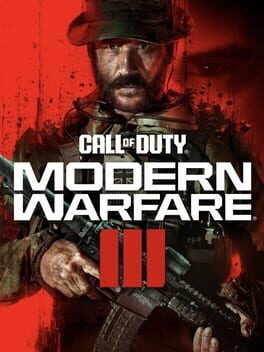
In 2023, Sledgehammer led the development of Call of Duty: Modern Warfare III.
The context in some ways recalled its beginnings.
The studio returned to the Modern Warfare universe, but this time as lead developer of a sequel directly connected to Infinity Ward’s Modern Warfare II.
Activision officially described the development as being led by Sledgehammer Games in partnership with Infinity Ward.
This organization imposed an unusual degree of continuity for the studio.
Sledgehammer was neither creating a new historical period as it had with WWII, nor a distinct future as with Advanced Warfare.
It had to extend a structure, characters, weapons and systems established by the previous installment.
This continuity was notably reflected in the Carry Forward system, which allowed a significant amount of content from Modern Warfare II to carry over into Modern Warfare III.
The campaign also introduced Open Combat Missions, designed to provide greater freedom in the approach to certain objectives.
Development of the Zombies mode was led by Treyarch in collaboration with Sledgehammer, while several other studios provided support.
Modern Warfare III therefore represents particularly well how contemporary Call of Duty operates: an identifiable lead studio, but a production built through a much broader network.
Since 2023: Sledgehammer within Microsoft Gaming
On October 13, 2023, Microsoft completed its acquisition of Activision Blizzard.
Sledgehammer Games therefore indirectly joined Microsoft Gaming alongside the other Activision, Blizzard and King teams.
The acquisition changed the studio’s ultimate owner but not its immediate identity.
Sledgehammer continued to be presented as an Activision team specializing in Call of Duty.
Its official website continues to highlight its international locations and the experience it has accumulated on the franchise since 2009.
In 2026, no new main production after Modern Warfare III is publicly highlighted on the studio’s website.
Sledgehammer nevertheless remains active and continues recruiting.
What sets it apart
A studio built almost entirely around a single franchise
Sledgehammer has an unusual trajectory.
Since its creation, its published history has been almost entirely linked to Call of Duty.
The studio did not alternate between a long series of independent properties before gradually becoming associated with the franchise.
It was born directly within the Activision ecosystem and developed its expertise around the needs of this series.
This specialization gives it an in-depth understanding of systems that each installment must preserve while continuing to evolve them: weapon feel, combat rhythm, multiplayer readability, spectacular campaigns, progression and regular content renewal.
The studio’s identity should therefore be sought less in a universe of its own than in the way it reinterprets a shared structure.
Moving from co-development to leading complete installments
Sledgehammer’s history also illustrates several possible levels of collaboration on a major franchise.
With Modern Warfare 3 in 2011, the studio worked closely with Infinity Ward.
With Advanced Warfare, it became lead developer.
With Modern Warfare III, it once again led an installment while working with Infinity Ward and numerous other teams.
This ability to change roles is an important part of its expertise.
Sledgehammer must be able to understand systems created by other studios, extend them when continuity is necessary and develop its own proposals when a project gives it more freedom.
Changing mobility without losing Call of Duty’s rhythm
Advanced Warfare is the clearest example of how Sledgehammer can intervene in the mechanical foundations of the series.
The exoskeleton is not merely a narrative element.
It changes movement and therefore the way maps are built, opponents are anticipated and space is occupied.
With WWII, the studio then makes the opposite move and returns to more traditional grounded combat.
This ability to work with very different rhythms without leaving the broader Call of Duty framework demonstrates the flexibility sought by the team.
Adapting its identity to several military periods
Sledgehammer’s main productions cover very different settings.
Advanced Warfare imagines a future dominated by advanced military technologies.
WWII returns to the European front of the Second World War.
Vanguard explores several theaters of the same conflict.
Modern Warfare III places the studio within a fictional contemporary war.
Sledgehammer therefore does not have one preferred historical period that defines all its work.
Its work focuses more on how to build a coherent Call of Duty experience from the chosen context.
Weapons, mobility, environments, sound, storytelling and multiplayer must be adapted without losing the characteristics immediately associated with the franchise.
Production conceived as a network of studios
Sledgehammer also helps illustrate the evolution of modern AAA development.
The credits of a contemporary Call of Duty extend far beyond the lead studio.
For Modern Warfare III, Sledgehammer leads development in partnership with Infinity Ward, while Treyarch leads the work on Zombies and Beenox, Raven Software, High Moon Studios, Demonware and several central teams provide different forms of support.
The studio must therefore be able not only to create but also to coordinate.
Its expansion into Melbourne, Toronto and Guildford further reinforces this dimension.
Sledgehammer Games is now less a single location than an international team that itself participates in a broader production network.
Good to know
- Sledgehammer Games was founded in 2009 in California by Glen Schofield and Michael Condrey, former Visceral Games executives.
- The studio was created directly as an Activision development subsidiary and had no period of independence before joining the publisher.
- Its first major released production was Call of Duty: Modern Warfare 3 in 2011, co-developed with Infinity Ward.
- Call of Duty: Advanced Warfare, released in 2014, was its first franchise installment developed as lead studio.
- Advanced Warfare accompanied the introduction of the three-year development cycle for Call of Duty and introduced movement heavily transformed by exoskeletons.
- Call of Duty: WWII was released in 2017 and returned the series to the Second World War and gameplay more focused on grounded movement.
- Aaron Halon, a long-standing member of the studio, is currently its Studio Head.
- Sledgehammer has teams in San Mateo, Melbourne, Toronto and Guildford.
- Call of Duty: Vanguard, released in 2021, was led by Sledgehammer and returned to the Second World War across several fronts.
- Call of Duty: Modern Warfare III, released in 2023, was developed under the leadership of Sledgehammer Games in partnership with Infinity Ward.
- Activision remains the publisher of the Call of Duty games developed by Sledgehammer: the studio should therefore not be confused with the publishing entity.
- Since the completion of Microsoft’s acquisition of Activision Blizzard in October 2023, Sledgehammer has indirectly belonged to Microsoft Gaming while remaining integrated into Activision.