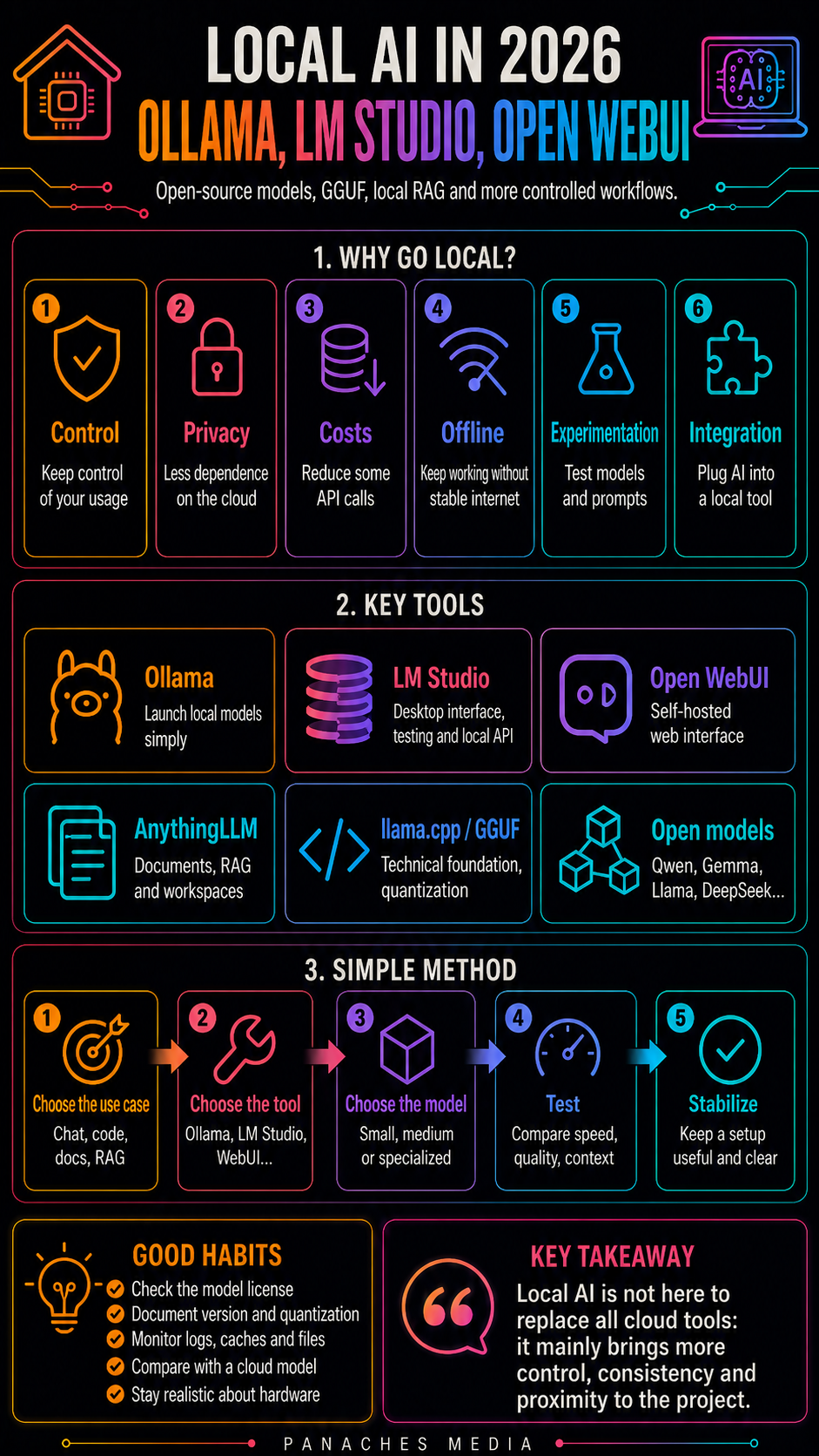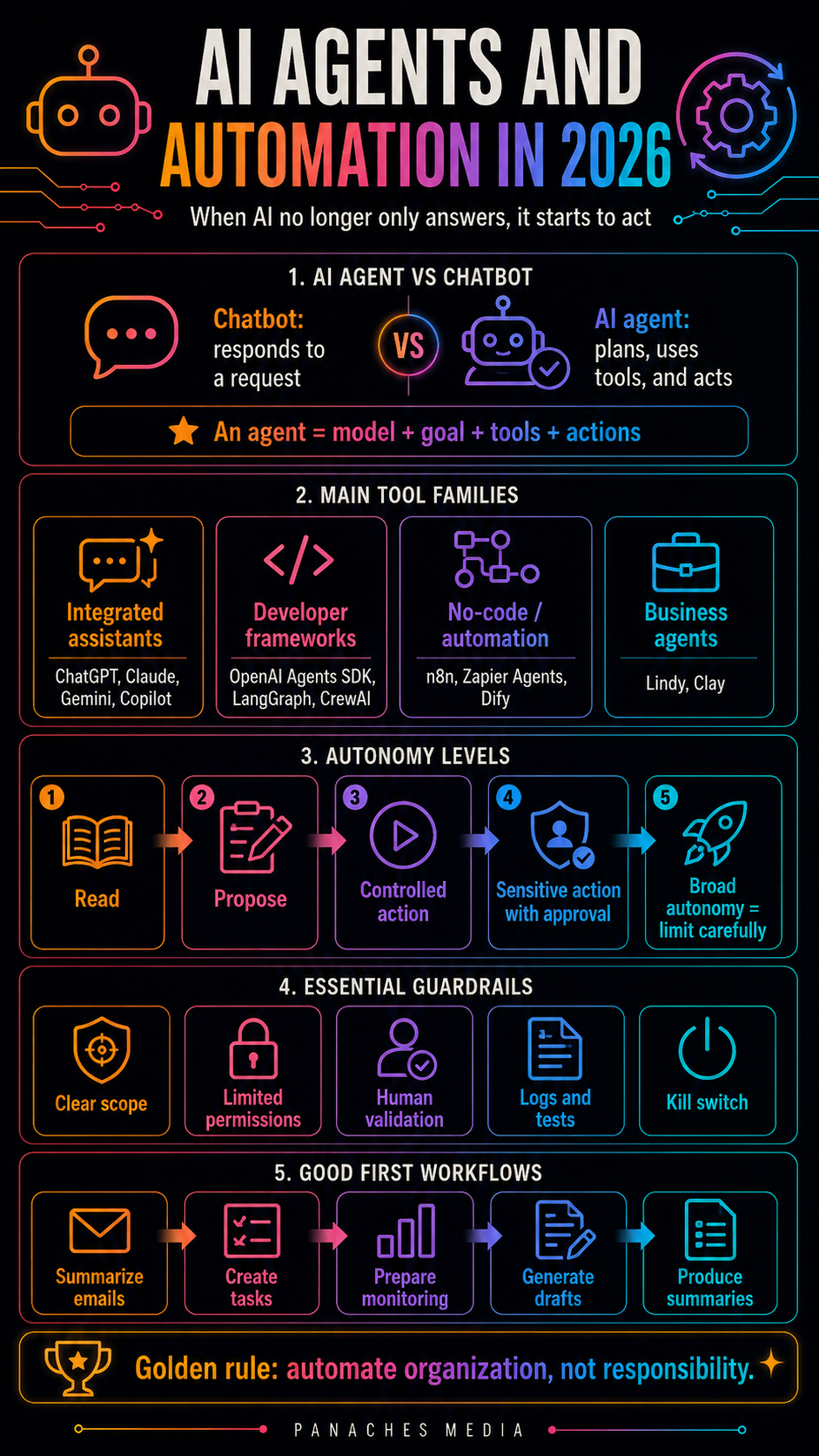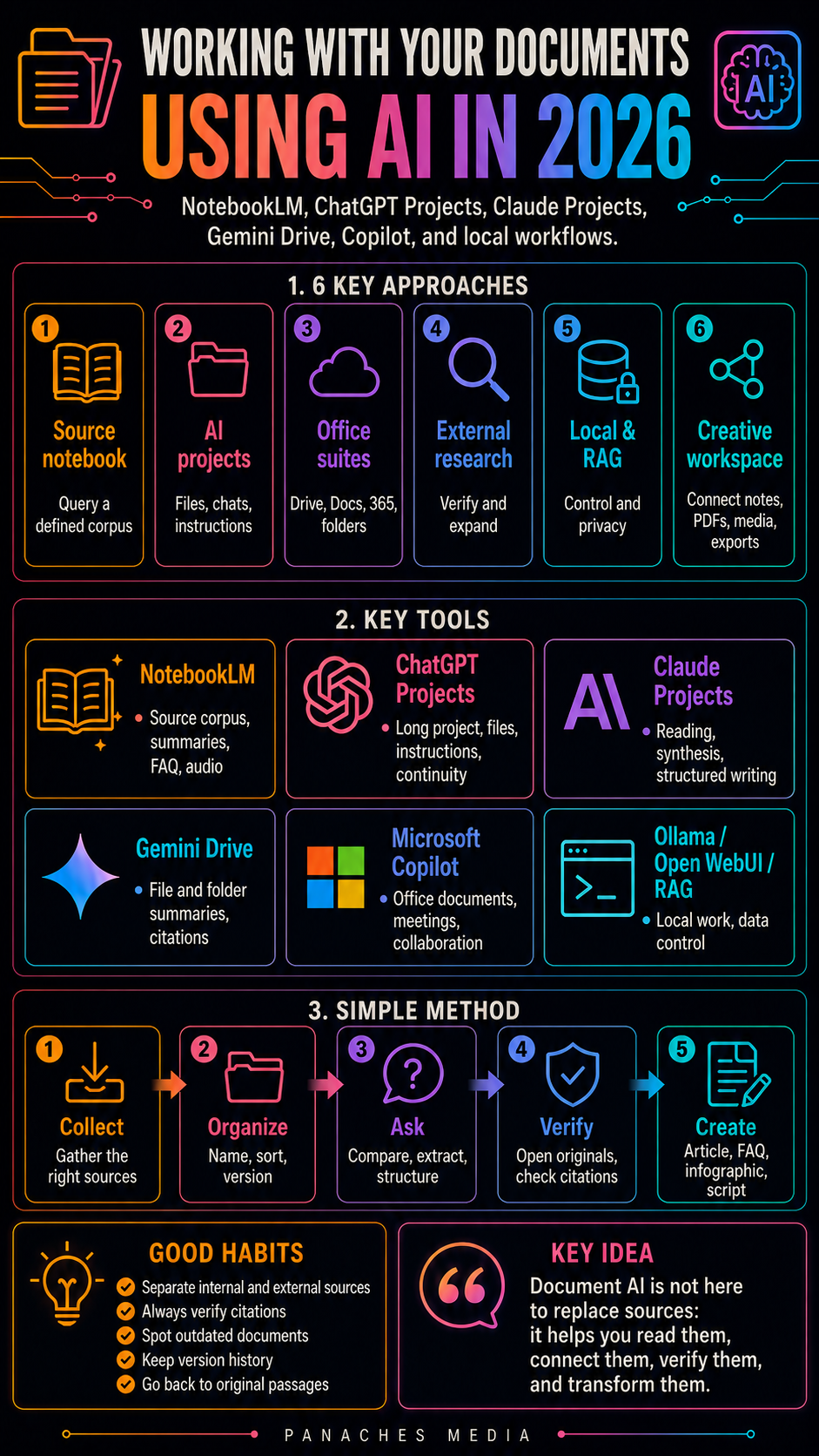
Not every task requires the same artificial intelligence.
A quick summary, a rephrasing, writing support, document analysis or code generation do not involve the same needs. Sometimes, a lightweight model is more than enough. Sometimes, a more complex task requires a more powerful model, slower and more demanding for the machine.
This is why Panaches does not try to impose a single AI engine.
Ambre AI is based on a logic of choice: choosing the model adapted to the task, the document, the available power and the expected level of quality.
A fast model can be perfect for clarifying a note, extracting the main ideas or rephrasing a paragraph.
A more ambitious model becomes useful for analyzing a long text, explaining a complex concept, structuring a project or supporting a development task.
The right model depends on the right use
Not every request deserves the same level of power.
For a simple rephrasing, a short summary or a quick clarification, using a very heavy model may be unnecessary. It consumes more resources, can take more time and does not always bring a better answer.
Conversely, for a long analysis, a complex decision, a technical explanation or delicate coding work, a model that is too light may lack depth, precision or stability.
The right choice is therefore not a matter of prestige.
It is a matter of fit.
Avoiding two classic traps
This approach avoids two common traps.
The first is using a model that is too heavy for a simple request.
The second is expecting from a lightweight model a level of quality it cannot always provide.
In both cases, the user loses time: either because the machine works too hard for a small task, or because the answer needs to be corrected, relaunched, rephrased or checked too often.
Choosing the right model also means protecting your attention.
Adjustable AI, not a black box
In a creative workspace, the right model is not necessarily “the most powerful” one.
It is the one that correctly answers the need of the moment.
Panaches defends this idea: the user should be able to keep control over the engine, the context and the result.
AI then becomes an adjustable tool, not a black box imposed on every use.
You can choose a fast response when you need to move forward. A deeper model when you need to understand. A lighter approach when the task is simple. A more demanding approach when the project requires it.
Keeping control of your work
This logic connects with Ambre AI’s central idea: supporting the work without taking over the work.
The user remains responsible for their choices, sources, models and level of expectation.
AI does not become a single system that decides in their place. It becomes a palette of tools that can be adapted depending on the moment.
And this is often where AI becomes truly useful: when it stops trying to be spectacular and simply becomes well placed.
Key takeaways
Not every task requires the same AI model.
A lightweight model can be enough for summarizing, rephrasing or clarifying quickly.
A more powerful model becomes useful for analyzing, structuring, explaining or supporting more complex tasks.
In Panaches, Ambre AI follows this logic of choice: adapting the engine to the real work, the context, the available power and the expected level of quality.
The right model is not always the most impressive one.
It is the one that truly helps, at the right moment.