Origins
Funk emerged in the United States during the mid-1960s within African American communities. Drawing from rhythm and blues, soul, gospel and jazz, it profoundly transformed the organization of popular music by placing rhythm at the center of composition.
Where soul often emphasizes melody and vocal expression, funk gives decisive importance to the groove: the interaction between instruments that creates a continuous pulse, immediately felt by the body.
Bass, drums, guitar, keyboards and horns no longer simply accompany the singer. Every instrument contributes to a collective rhythmic construction based on short patterns, repetition and displaced accents.
This approach has much older roots.
Blues and rhythm and blues developed repetitive structures and rhythms designed for dancing. Gospel contributed exchanges between soloists and choirs, while jazz encouraged improvisation and instrumental independence.
New Orleans also played an important role in this history. Its brass band traditions, syncopated rhythms and exchanges between African American and Caribbean music helped shape several elements that funk would later reinterpret.
The word funky was already used in jazz and blues vocabulary before funk emerged as a distinct genre. It could suggest an expressive, earthy and strongly rhythmic style of performance.
From the 1960s onward, this sensibility gradually became the foundation of a musical language in its own right.
Funk developed a particular relationship with the first beat of the measure, often described by the English expression the one.
This emphasis does not mean that every instrument plays simultaneously on every first beat. Instead, it provides an anchor for a complex rhythmic organization built from syncopation, silence and complementary instrumental patterns.
The guitar frequently uses short, muted chords. Bass develops independent melodic lines, while drums establish a precise pulse enriched by variations on the bass drum, snare and hi-hat.
Horns themselves become rhythmic instruments, entering through accents or repeated phrases.
Repetition is therefore not a sign of simplicity. It allows musicians to create subtle variations within a stable pattern.
This approach to composition also transforms the place of dance. Funk does not treat movement as a mere consequence of music: it makes it one of music's principal purposes.
By the end of the 1960s, several artists had transformed these principles into an identifiable musical movement.
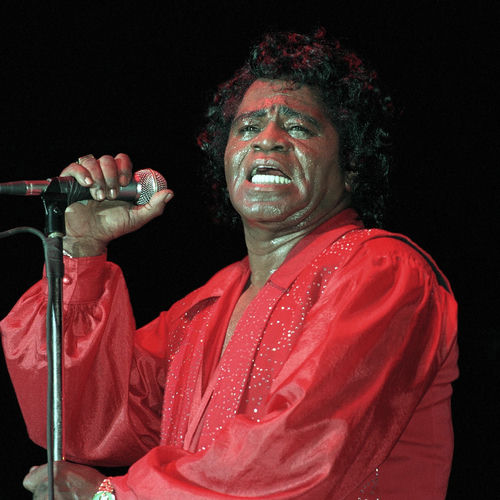
James Brown played a decisive role in this evolution, but funk also emerged from the collective work of his musicians and innovations developed simultaneously within other African American music scenes.
Emergence and Early Musical Scenes
The 1960s — James Brown Revolutionizes Rhythm
James Brown began his career in rhythm and blues and soul before developing a musical approach that would contribute directly to the birth of funk.
With "Papa's Got a Brand New Bag," released in 1965, he moved toward a more rhythm-centered musical language, characterized by repetitive riffs and particularly energetic instrumentation.
"Cold Sweat," released in 1967, marked another important step.
The composition relied on exceptionally precise interaction between bass, drums, guitar and horns. Harmonic progression became less important than the development of the groove.
This evolution was not the work of James Brown alone.
Guitarist Jimmy Nolen helped define a technique based on short chords, muted attacks and repetitive rhythmic patterns.
Saxophonist Maceo Parker and trombonist Fred Wesley contributed to the construction of horn arrangements whose interventions became genuine percussive elements.
Drummers Clyde Stubblefield and Jabo Starks also played essential roles.
Their performances used complex rhythmic variations, with accents and silences that gave each track its own distinctive identity.
Decades later, their recordings would contribute to the development of hip-hop through the reuse of their rhythms in new productions.
In 1970, "Funky Drummer" and "Get Up (I Feel Like Being a) Sex Machine" became fundamental references for this evolution.
James Brown further strengthened this aesthetic with his band The J.B.'s, which helped establish a particularly direct and powerful form of funk.
Compositions could extend over several minutes without significantly changing their harmonic structure. Their appeal instead rested on collective energy, improvisation, vocal interventions and instrumental variations.
With funk, rhythm ceased to be merely a supporting element: it became the principal driving force of the music.
San Francisco — Sly and the Family Stone Expand the Boundaries
In the late 1960s, Sly and the Family Stone developed another conception of funk.
Founded around singer and multi-instrumentalist Sly Stone, the group combined soul, psychedelic rock, gospel and funk rhythms.
Its lineup, bringing together Black and white musicians, women and men, occupied a distinctive position within the American musical landscape of the period.
With "Dance to the Music," released in 1967 and popularized in 1968, the group developed a collective aesthetic in which instruments and voices entered successively to build the track.
The album Stand!, released in 1969, established this approach through compositions combining festive energy with social concerns.
Bassist Larry Graham played an important role in the evolution of electric bass.
His use of percussive techniques, particularly slap playing, helped expand the instrument's expressive possibilities.
Funk could now be associated with a particularly prominent bass line, capable of rivaling the drums in constructing the rhythm.
But Sly and the Family Stone were not limited to dance music.
With There’s a Riot Goin’ On, released in 1971, the group explored darker atmospheres, slower rhythms and less conventional production textures.
This evolution demonstrated that funk could also become introspective, experimental and politically charged.
New Orleans — The Meters and Minimalist Groove
Another major tradition developed in New Orleans around The Meters.
The group, which included Art Neville, George Porter Jr. and Zigaboo Modeliste, created a particularly recognizable aesthetic.
Unlike large ensembles favoring spectacular arrangements, The Meters often developed instrumental funk built around simple patterns and exceptionally precise interaction.
"Cissy Strut," released in 1969, became one of the emblematic recordings of this approach.
Guitar, bass, organ and drums intertwined without trying to fill every moment of the sonic space.
Silences and rhythmic shifts became just as important as the notes being played.
The album Rejuvenation, released in 1974, illustrated the richness of this New Orleans tradition, in which funk interacted with local rhythms and Caribbean influences.
The music of The Meters would exert an important influence on funk bands, drummers and hip-hop producers.
By the late 1960s, the genre already possessed several distinct expressions: the energetic orchestral funk of James Brown, the psychedelic experimentation of Sly Stone and the instrumental grooves of New Orleans.
The Golden Age
The 1970s — The Great Expansion of Funk
During the 1970s, funk became one of the principal expressions of African American popular music.
Its success rested on dance, but also on particularly significant instrumental creativity.
James Brown continued his experimentation with The Payback, released in 1973.
The album developed extended tracks built around repetitive grooves and exceptional instrumental precision.
Bass, guitar and drum parts formed almost independent structures that came together to create a collective pulse.
This approach would have a lasting influence on funk musicians, as well as hip-hop producers who would later reuse these recordings.
Meanwhile, the genre expanded across numerous American cities.
Kool & the Gang developed instrumental music informed by jazz and soul. The album Wild and Peaceful, released in 1973, accompanied the group's rise, notably with "Jungle Boogie."
Ohio Players achieved great popularity with compositions built around prominent bass lines, horn arrangements and expressive vocals.
Their album Fire, released in 1974, became one of the landmark recordings of the period.
War combined funk, rock, soul and Latin influences, developing a collective aesthetic in which percussion occupied a central place.
Tower of Power distinguished itself through an exceptionally precise horn section, combined with powerful grooves and sophisticated arrangements.
The Isley Brothers also incorporated funk into their productions, while The Bar-Kays continued certain instrumental traditions developed around Memphis.
Funk thus became a genuine musical family that could be instrumental, vocal, orchestral or experimental.
Parliament-Funkadelic — Funk Becomes an Entire Universe
George Clinton played a fundamental role in the development of 1970s funk.
After beginning his career in vocal groups, he gradually developed a collection of ensembles united by a shared artistic vision.
Parliament and Funkadelic became the two principal expressions of this universe, generally known as P-Funk.
Funkadelic initially favored an aesthetic strongly influenced by psychedelic rock, distorted guitars and experimentation.
The album Maggot Brain, released in 1971, illustrated this direction, particularly through Eddie Hazel's guitar playing.
Parliament gradually developed an approach more strongly based on funk arrangements, horns, keyboards and compositions designed for dancing.
With Mothership Connection, released in 1975, George Clinton created a musical and visual universe shaped by science fiction, humor and an imaginative reinterpretation of African American identity.
Concerts became particularly elaborate spectacles combining costumes, characters and extravagant staging.
Bassist Bootsy Collins, who had previously worked within James Brown's musical circle, contributed strongly to P-Funk's rhythmic identity.
Keyboardist Bernie Worrell simultaneously developed synthesizer sounds that would become essential to the genre's evolution.
Bootsy Collins also continued his explorations within Bootsy's Rubber Band.
With One Nation Under a Groove, released by Funkadelic in 1978, the collective affirmed a vision of funk as a shared culture and a space of freedom.
P-Funk therefore transformed the genre by moving beyond the framework of individual songs.
It offered a coherent universe in which music, visual creation, characters and popular imagination contributed to a single artistic vision.
Soul, Funk and Disco — Boundaries in Motion
During the 1970s, the boundaries between soul and funk became increasingly flexible.
Stevie Wonder developed compositions that gave major importance to keyboards, synthesizers and rhythmic structures.
His albums Innervisions, released in 1973, and Songs in the Key of Life, released in 1976, demonstrated his ability to combine funk, soul, pop and experimentation.
Curtis Mayfield also explored funk rhythms in his compositions while retaining a songwriting style deeply rooted in soul.
Isaac Hayes contributed to this transformation through his orchestral arrangements and extended compositions, notably on Hot Buttered Soul, released in 1969.
Earth, Wind & Fire, meanwhile, developed music bringing together funk, soul, jazz and African influences.
Their productions were distinguished by vocal harmonies, horns and particularly elaborate rhythmic structures.
From the mid-1970s onward, disco experienced tremendous growth.
The two genres shared a strong relationship with dance, but their underlying principles were not identical.
Funk often favored syncopation and instrumental interaction, while many disco productions relied on a steady pulse and arrangements designed for the dance floor.
The group Chic, formed around guitarist Nile Rodgers and bassist Bernard Edwards, helped bring the two aesthetics closer together.
Their music combined sophisticated instrumental groove with structures particularly suited to disco.
These encounters did not erase the identities of the genres. Rather, they demonstrated that musicians could use a shared rhythmic language in very different contexts.
Jazz-Funk — Improvisation Meets Dance
Jazz also underwent important transformations during the 1970s.
Several musicians explored the possibilities of electric instruments and rhythms drawn from funk.
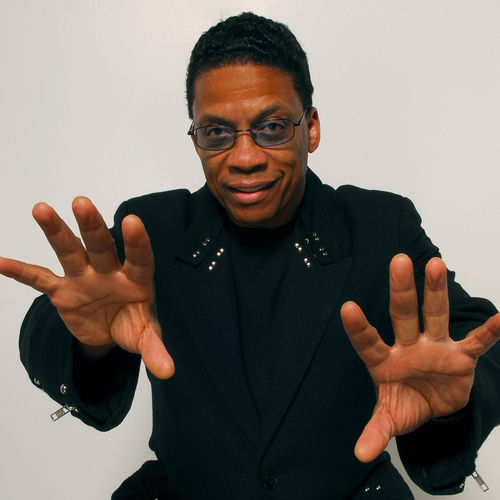
Herbie Hancock played a particularly important role in this evolution.
Following his experimentation in modern jazz and fusion, he released Head Hunters in 1973.
The album combined jazz improvisation, electric bass, funk drumming and electronic keyboards.
The track "Chameleon" became a major reference thanks to its synthesized bass line and a structure that gave musicians considerable freedom.
Donald Byrd and Roy Ayers also contributed to the development of music situated between jazz, soul and funk.
These approaches did not eliminate jazz traditions.
They offered another way of organizing improvisation, incorporating it into repetitive rhythms and arrangements more directly oriented toward dance.
Jazz-funk would become an important influence on instrumental scenes, hip-hop and electronic music.
Funk and Africa — Transatlantic Exchanges
Funk also maintained important relationships with several African music scenes.
In Nigeria, Fela Kuti developed Afrobeat from the late 1960s onward, combining highlife, jazz, African American influences and West African rhythmic traditions.
Drummer Tony Allen played an essential role in shaping this music, characterized by complex polyrhythms and extended compositions.
The funk of James Brown and the innovations of Sly Stone formed part of the international influences on this movement.
However, Afrobeat possesses its own history and should not be considered simply an African variation of American funk.
These encounters instead illustrate a transatlantic musical exchange in which artists reinterpreted different traditions to create new musical languages.
The 1980s — Synthesizers and Electro-Funk
From the late 1970s onward, electronic instruments profoundly transformed funk.
Synthesizers, drum machines and sequencers made it possible to create grooves that no longer depended exclusively on traditional instrumental ensembles.
Rick James contributed to this evolution by combining funk, rock and contemporary production.
His album Street Songs, released in 1981, achieved great success, notably through "Super Freak."
The group Zapp developed an aesthetic strongly shaped by electronics and synthesized bass lines.
Its singer and multi-instrumentalist Roger Troutman popularized a distinctive use of the talk box, a device that allows the sound of an instrument to be modulated through movements of the mouth.
"More Bounce to the Ounce," released in 1980, became a major reference for this evolution.
Cameo and The Gap Band also contributed to the development of electronic funk, which became particularly popular during the 1980s.
Machines transformed the possibilities of production without eliminating groove.
The repetition of sequences, synthetic textures and vocal effects became new creative tools.
Prince — Funk Crosses the Boundaries of Pop and Rock
Prince represents one of the major figures of modern funk.
From the late 1970s onward, he developed music combining funk, soul, rock, pop and electronic sounds.
His approach relied on exceptional instrumental versatility and a highly personal use of studio technologies.
The album 1999, released in 1982, illustrated this transformation.
Drum machines, synthesizers and guitars formed productions in which groove remained central, even when arrangements moved away from traditional funk.
Prince contributed to the development of the Minneapolis sound, an aesthetic bringing funk and electronic pop into dialogue.
His productions demonstrated that funk could preserve its rhythmic identity while incorporating melodic structures closer to pop songwriting and rock sounds.
This ability to transcend musical boundaries would exert an important influence on subsequent generations.
Movements and Subgenres
Traditional Funk and Deep Funk
Traditional funk relies primarily on interaction between bass, drums, guitar and horns.
It emphasizes repetitive patterns, syncopation and rhythmic accents.
James Brown and The Meters are among the principal references for this aesthetic.
The term deep funk is often used to describe particularly raw recordings built around intense instrumental grooves and relatively direct production.
P-Funk and Psychedelic Funk
P-Funk developed around George Clinton, Parliament and Funkadelic during the 1970s.
It combined funk rhythms, psychedelic rock, synthesizers and vocal experimentation.
Its productions were also distinguished by their visual universe, theatricality and imagery inspired by science fiction.
It represents one of the most distinctive forms in funk history.
Jazz-Funk
Jazz-funk brings jazz improvisation and harmonies together with funk's repetitive rhythms.
It places considerable importance on electric keyboards, bass and instrumental ensembles.
Herbie Hancock is among its principal references, notably with Head Hunters.
Guitarist John Scofield would also continue the exchanges between jazz and groove, as illustrated by his album A Go Go, released in 1998.
Funk-Rock and Funk Metal
Funk-rock combines funk's syncopated rhythms with the energy and guitars of rock.
Red Hot Chili Peppers played a major role in popularizing this style during the 1980s and 1990s.
The album Blood Sugar Sex Magik, released in 1991, illustrated the meeting of bass grooves, rock guitar and rap-influenced vocal performance.
Funk metal developed a heavier aesthetic, combining these rhythmic principles with metal sounds.
Rage Against the Machine also contributed to these exchanges through music bringing together rock, funk and rap.
Electro-Funk and Boogie
Electro-funk developed primarily from the late 1970s and throughout the 1980s.
It incorporated drum machines, synthesizers, sequencers and vocal effects.
Zapp and Cameo were among the major references for this transformation.
Boogie, closely related to post-disco and electronic R&B, retained funk influences while developing its own production characteristics.
Funk and Hip-Hop
Funk exerted a fundamental influence on the development of hip-hop.
From the 1970s onward, DJs used instrumental passages from funk records to extend rhythmic sections intended for dancers.
Grandmaster Flash and Afrika Bambaataa participated in the evolution of this musical culture, in which breaks became essential elements.
Hip-hop producers would subsequently make extensive use of samples from funk tracks.
During the 1990s, Dr. Dre contributed to the development of G-funk, a West Coast rap aesthetic strongly influenced by Parliament-Funkadelic and Zapp's electronic productions.
His album The Chronic, released in 1992, helped popularize this musical language.
Snoop Dogg also became one of the important figures of this evolution.
G-funk belongs to the history of hip-hop, but it represents one of the clearest examples of funk's lasting influence on another genre.
Acid Jazz and Nu-Funk
From the late 1980s and throughout the 1990s, acid jazz combined influences from jazz, soul, funk and club music.
Jamiroquai became one of the major figures of this aesthetic, notably with Travelling Without Moving, released in 1996.
The Brand New Heavies also contributed to this meeting between live instrumentation and the legacy of 1970s African American music.
The term nu-funk was subsequently used for various contemporary productions that revisit the genre's classic grooves through electronic techniques and sampling.
Legacy and Influence Today
Funk occupies an essential place in the evolution of modern popular music.
Its influence rests above all on a transformation of rhythmic language.
By placing bass, drums and instrumental interaction at the center of composition, it renewed the ways songs, improvisations and dance-oriented productions were organized.
This innovation can be found in disco, hip-hop, contemporary R&B, rock, pop and numerous forms of electronic music.
The legacy of James Brown's drummers is particularly significant.
Drum breaks recorded during the late 1960s and early 1970s became essential material for hip-hop producers.
The reuse of these recordings in new works helped transmit funk sounds to several generations of listeners.
Groups such as Jurassic 5 continued this relationship with the earlier rhythms of hip-hop, while artists such as DJ Shadow and The Herbaliser explored the possibilities of sampling and instrumental production.
Gramatik and Smokey Joe & The Kid also illustrated contemporary encounters between electronic beats, groove and funk heritage.
These musical approaches do not necessarily constitute funk in the historical sense, but they demonstrate the widespread adoption of its rhythmic techniques.
Funk Around the World
Funk did not remain confined to the United States.
Its rhythms and instruments circulated through numerous international scenes, where they encountered other musical traditions.
In France, the genre developed its own history through nightclubs, specialized radio stations, DJs and instrumental groups.
During the late 1980s and throughout the 1990s, FFF helped develop a particularly energetic form of French funk, combining groove, rock and African American influences.
Malka Family also participated in this period, notably through concerts characterized by the importance of horns, collective arrangements and staging.
These groups helped establish funk within a French musical culture that went beyond simply reproducing American models.
The genre's influence can also be found in numerous African, Latin American and European productions, where musicians adapted its rhythmic structures to their own repertoires.
The Return of Instrumental Funk
Since the 1990s, several artists have helped maintain interest in instrumental ensembles and grooves performed live.
Neo-soul contributed to this continuity by revisiting the traditions of funk, soul and jazz.
D'Angelo notably developed a highly personal conception of rhythm on Voodoo, released in 2000, an album characterized by flexible grooves and particularly elaborate instrumental interaction.
The boundaries with hip-hop also remained important.
OutKast combined funk, soul and rap in an approach that moved beyond traditional categories.
Meanwhile, certain musicians emphasized instrumental exploration and improvisation.
Vulfpeck developed funk based on minimalist arrangements and exceptional collective precision.
Thundercat explored the connections between electric bass, jazz, funk and contemporary production.
Lettuce also continued a tradition of instrumental funk informed by jazz and major American ensembles.
These approaches demonstrate that the genre continues to exist independently of its presence in commercial charts.
Funk's Revival in Contemporary Pop
From the 2010s onward, several international productions brought the sounds of 1970s and 1980s funk back to the forefront.
Daft Punk contributed to this movement with Random Access Memories, released in 2013.
The French duo particularly emphasized collaboration with instrumentalists and musicians drawn from funk, disco and pop traditions, while retaining a personal approach to electronic production.
In 2014, Mark Ronson released "Uptown Funk" featuring Bruno Mars, an international hit that drew extensively from the sounds of 1980s electronic funk.
Bruno Mars continued this approach with 24K Magic, released in 2016.
The album revisited several characteristics of funk, R&B and pop from previous decades, adapting them to contemporary production methods.
His collaboration with Anderson .Paak as Silk Sonic subsequently resulted in An Evening with Silk Sonic, released in 2021.
The project notably revived the vocal arrangements, rhythms and certain instrumental techniques associated with 1970s soul and funk.
These productions did not constitute a simple return to the past.
They demonstrated how contemporary artists could reinterpret older references to create new works intended for different audiences.
A Living Legacy
Funk does not possess a single sonic identity.
It can be built around a dry, repetitive guitar, a powerful bass line, spectacular horns or electronic synthesizers.
It can accompany dancing, support a political message, encourage improvisation or become a space for musical experimentation.
Its different forms demonstrate a remarkable ability to absorb technical innovations without losing their fundamental principle: the collective construction of groove.
The history of funk is also that of studio musicians, bassists, drummers and arrangers who helped transform the functioning of popular music.
Their innovations sometimes exerted an influence as important as the songs themselves.
From James Brown's bands to George Clinton's experiments, from Herbie Hancock's keyboards to Prince's productions and then to new generations of musicians, funk has continually renewed its language.
Its legacy is therefore not measured solely through its landmark albums or greatest hits.
It can be found in the ways instruments communicate, rhythms intertwine and music organizes movement.
More than fifty years after establishing itself as a distinct genre, funk remains one of the most influential traditions in contemporary popular music.
A history in which groove is not simply an accompaniment: it is the very heart of musical creation.