
Overview
Traveller’s Tales is a British video game development studio founded in 1989 by Jon Burton and Andy Ingram. Based in Knutsford, England, it forms the historical origin of what is now known as TT Games.
Its history did not begin with LEGO.
During the 1990s, Traveller’s Tales developed both original creations and licensed games. Leander and later Puggsy were among its early productions, before the studio gradually specialized in adaptations of major popular properties.
This direction led it to work with very different universes.
Toy Story, released in 1995, notably marked an important collaboration with Disney and accompanied Pixar’s film directly. The studio also worked with Sega on Sonic 3D and Sonic R, then developed games over the years connected to A Bug’s Life, Toy Story 2, Finding Nemo, The Chronicles of Narnia and other productions aimed at family audiences.
This experience with licensed properties gradually became a genuine specialty.
Traveller’s Tales learned how to take already familiar characters, respect their identity while adapting them to the constraints of video games, and design experiences accessible enough to reach a wider audience than experienced players alone.
The decisive change came in 2005 with LEGO Star Wars: The Video Game.
The project combined the Star Wars universe with the visual identity of LEGO bricks in an action-adventure game built around exploration, simple combat, puzzles, local cooperation and above all visual humor capable of retelling the films without reproducing their tone exactly.
The success exceeded expectations.
LEGO Star Wars demonstrated that a family-oriented adaptation could appeal to both children and adults when it had enough personality and gameplay freedom. This formula then became the new foundation of Traveller’s Tales.
That same year, the studio moved closer to Giant Interactive, the publisher involved with LEGO Star Wars. The two companies formed TT Games, with Traveller’s Tales becoming its main development arm while TT Games Publishing handled publishing.
From then on, LEGO productions became central.
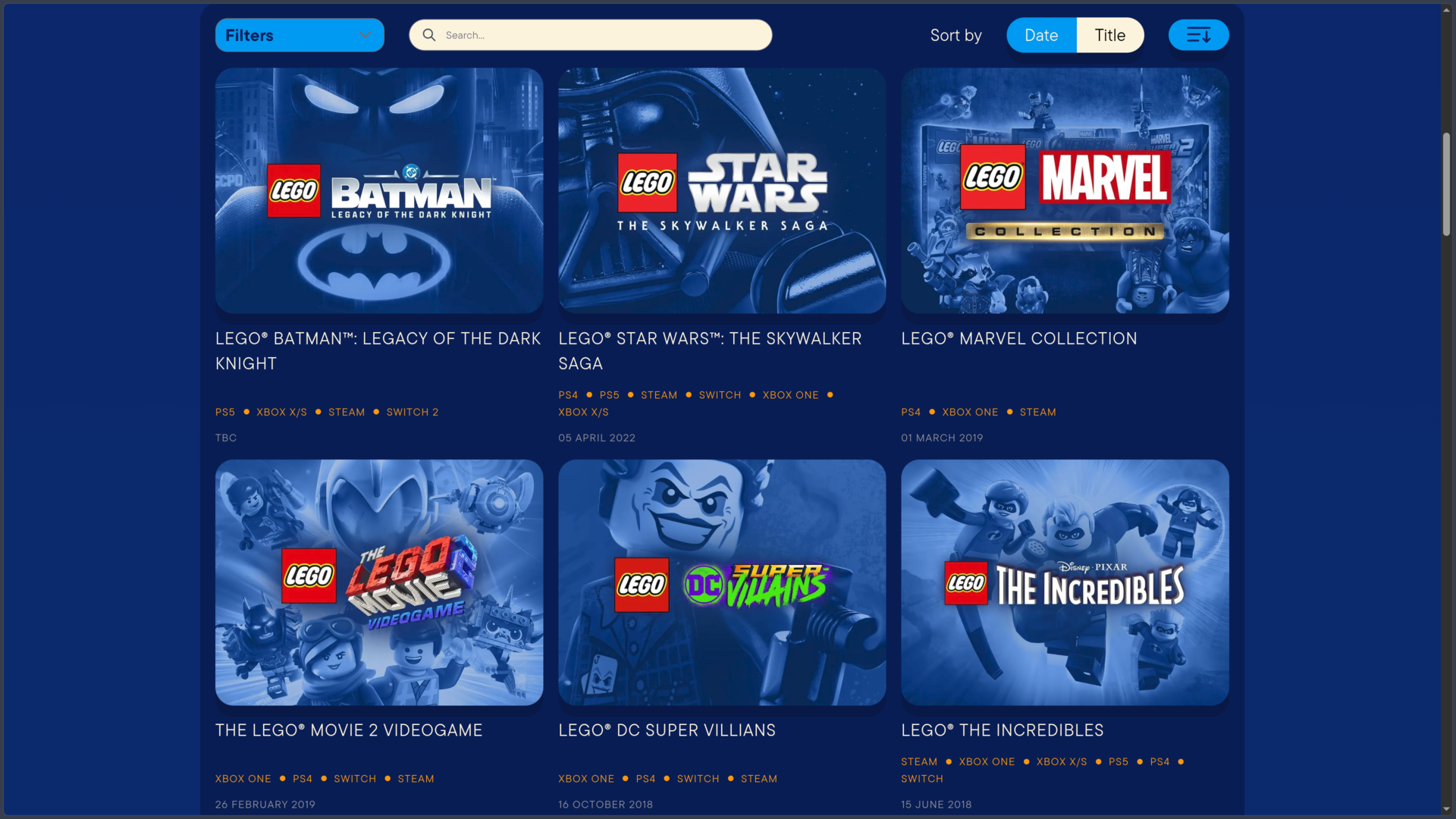
LEGO Star Wars II, LEGO Indiana Jones, LEGO Batman, LEGO Harry Potter, LEGO Pirates of the Caribbean, LEGO The Lord of the Rings, LEGO Marvel Super Heroes, LEGO Jurassic World and LEGO DC Super-Villains gradually transformed the original formula.
The principle remained recognizable: major popular universes, large character rosters, cooperation, collecting, destruction and rebuilding of LEGO objects, humor and accessibility.
But the games also became increasingly large in scope.
The earliest titles still relied heavily on a sequence of levels. Later productions introduced more open areas, more playable characters, more side activities and greater freedom of exploration.
LEGO Marvel Super Heroes became one of TT Games’ biggest successes, while LEGO Star Wars: The Skywalker Saga, released in 2022, represented a much deeper reconstruction of the formula.
The game moved away from much of the technical structure inherited from earlier entries to offer larger areas, a new camera, more developed combat and more than 300 playable characters.
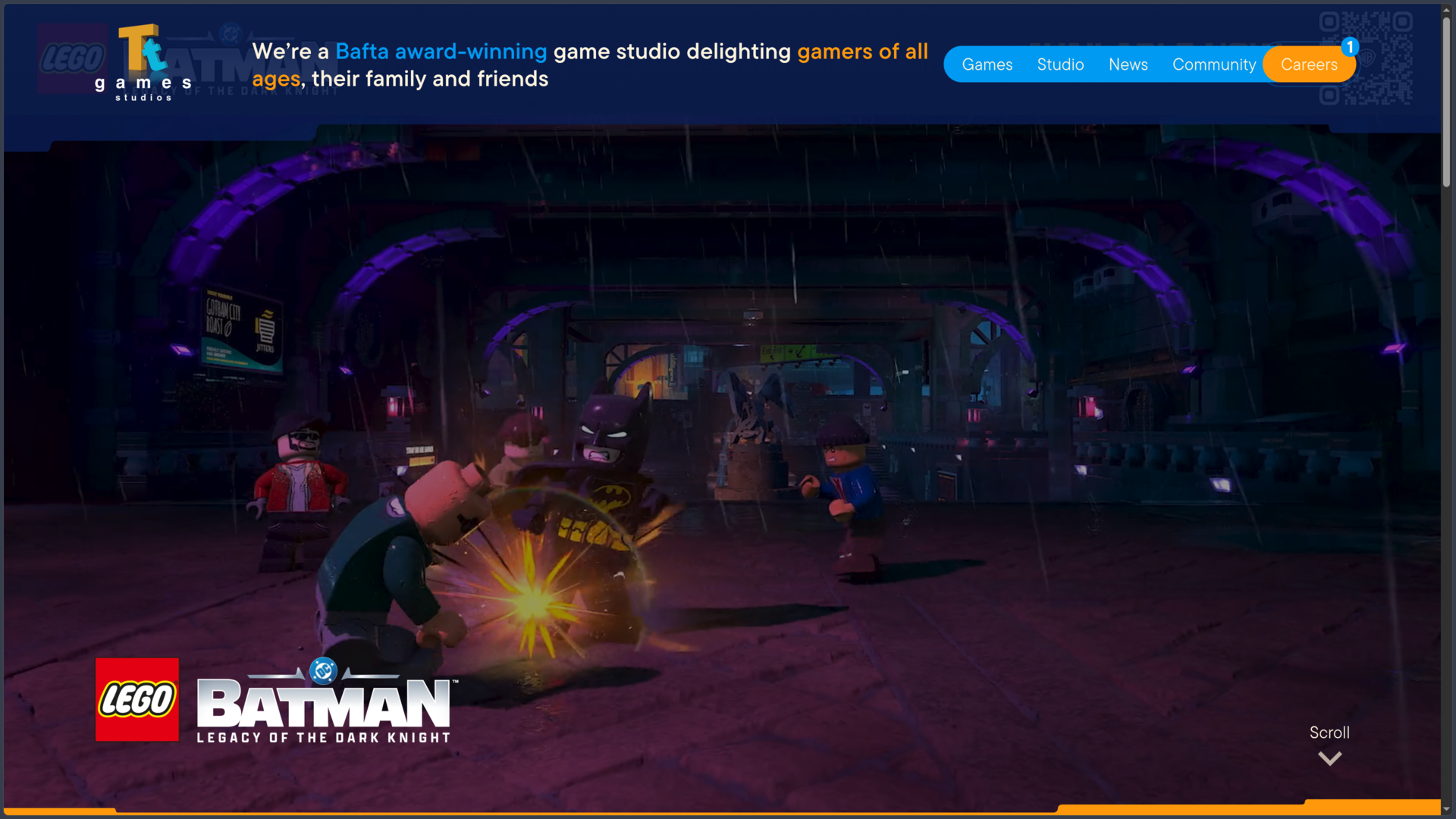
This evolution continued with LEGO Batman: Legacy of the Dark Knight, released in 2026. The game returns to Batman in an open-world adventure inspired by several decades of films, television series, comics and games while retaining the characteristic humor of TT Games’ LEGO productions.
The current place of the Traveller’s Tales name nevertheless requires some distinction.
Since the creation of TT Games in 2005, followed by its acquisition by Warner Bros. in 2007, public communication has gradually used TT Games more often as the overall identity. The official website now presents the whole studio as founded in 1989, directly integrating Traveller’s Tales’ history into that of TT Games.
Traveller’s Tales therefore remains the historical and creative foundation of this structure, even though the TT Games name is now much more visible to the public.
History
1989-1994 — A small independent British studio
Traveller’s Tales was founded in 1989 by Jon Burton and Andy Ingram.
The studio began with a small structure and worked on its own projects.
Leander, released in 1991, was among its first major productions. This platform game was later adapted for Mega Drive under the title The Legend of Galahad.
In 1993 came Puggsy, another platform game that placed greater emphasis on using objects and solving situations.
The same period also saw Traveller’s Tales begin working on licensed properties with titles such as Bram Stoker’s Dracula.
This coexistence between original creations and adaptations quickly became a characteristic of its catalogue.
1995-2004 — Disney, Sonic and specialization in licensed games
In 1995, Traveller’s Tales developed Toy Story.
The game accompanied the film’s release and placed the studio in a much more direct relationship with major family cinema licenses.
Other collaborations followed.
For Sega, Traveller’s Tales developed Sonic 3D and then Sonic R, two projects that allowed it to work with one of video gaming’s most important mascots.
The studio simultaneously developed several film adaptations and properties aimed at a broad audience.
This period forged a skill that would become essential later: quickly understanding the identity of an existing universe and translating it into mechanics immediate enough to work for very different players.
Traveller’s Tales thus gradually became a specialist in licensed games, at a time when this type of production had a highly variable reputation for quality.
2005 — LEGO Star Wars completely changes the studio
The real turning point came with LEGO Star Wars: The Video Game.
The project was developed by Traveller’s Tales with Giant Interactive, which at the time held publishing rights related to LEGO games.
The concept seemed simple: retell Star Wars using LEGO characters and environments.
But Traveller’s Tales built a much stronger formula around that idea.
Characters had different abilities, environments could be destroyed and rebuilt, cooperation allowed two people to play together, and famous scenes from the films were reinterpreted through almost entirely visual humor.
The game became a major success.
Most importantly, it showed that the combination of LEGO + major license + family cooperation could become a genuine game identity rather than a simple merchandising operation.
Following this success, Traveller’s Tales and Giant Interactive came together to form TT Games.
Traveller’s Tales became the main development studio within this new structure.
2006-2007 — Turning LEGO into a series
LEGO Star Wars II: The Original Trilogy arrived in 2006.
The second game refined the formula and confirmed that it could work beyond a single title.
Traveller’s Tales then began considering other universes capable of being adapted according to the same principles.
Character creation, collecting, cooperative play and the possibility of replaying levels with new abilities became recurring elements.
In 2007, another major change occurred when Warner Bros. acquired TT Games.
Traveller’s Tales thus joined a group that itself owned numerous audiovisual properties and a growing video game business.
This acquisition naturally made it easier to develop new collaborations around major licenses.
2008-2015 — LEGO becomes a shared language for many universes
From LEGO Indiana Jones and LEGO Batman in 2008 onward, the formula definitively moved beyond Star Wars.
Traveller’s Tales demonstrated that it could be applied to very different universes.
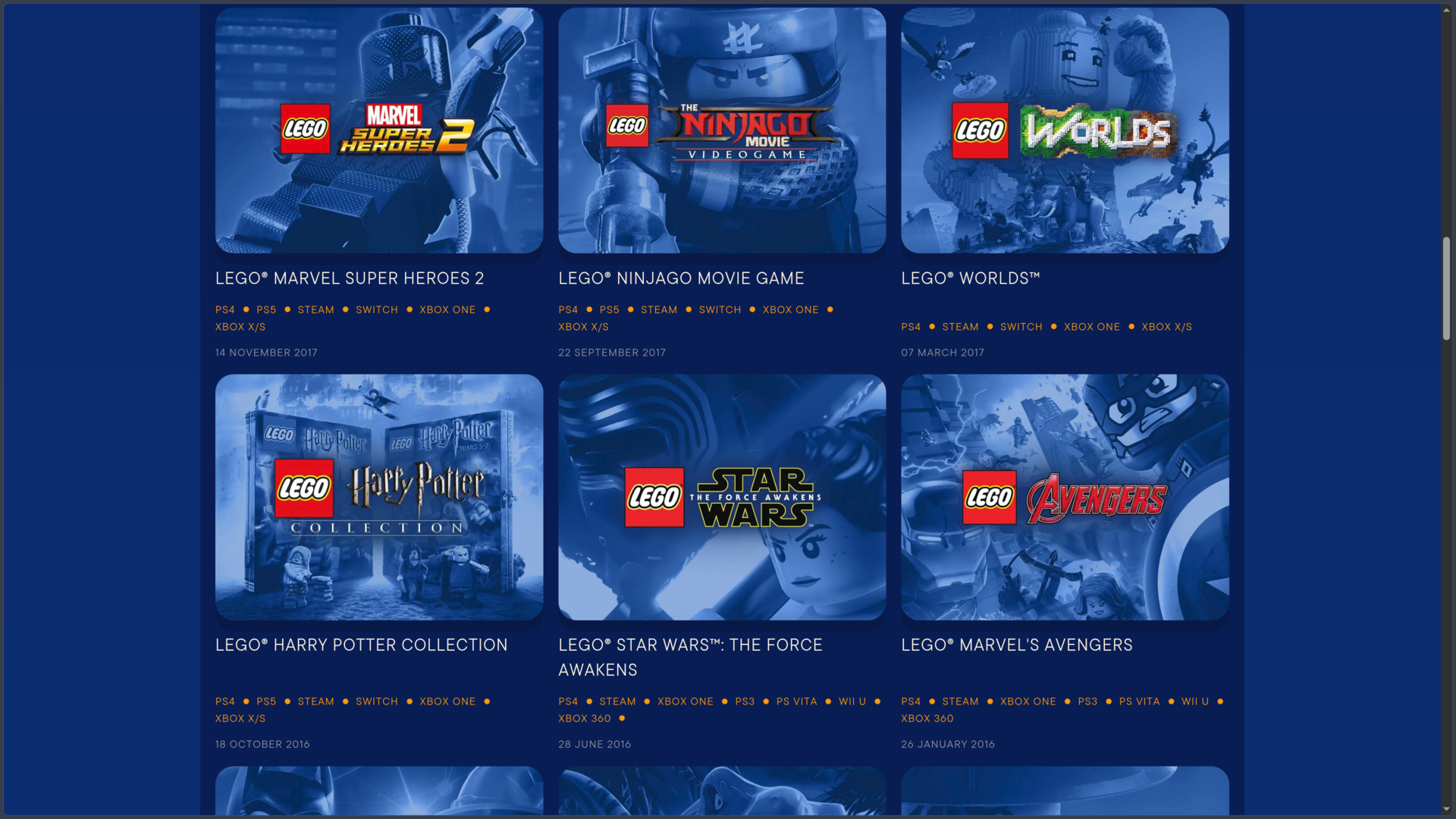
Harry Potter, Pirates of the Caribbean, The Lord of the Rings, The Hobbit, Jurassic World and Marvel heroes gradually joined the catalogue.
The studio did not attempt to reproduce every license realistically.
Instead, it filtered them through a shared language: LEGO characters, environmental destruction, building, puzzles, cooperation and humor.
This approach offered an important advantage.
A child could discover Batman or Star Wars through the game, while an adult already familiar with the original works could recognize the references and comic reinterpretations.
In 2013, LEGO Marvel Super Heroes became one of the most important productions in the studio’s history and confirmed the effectiveness of this model on a very large scale.
2015-2022 — Increasingly ambitious games
Over the years, TT Games productions became increasingly ambitious.
Open areas became more prominent, character rosters grew and worlds were used less simply as transitions between levels.
LEGO Dimensions pushed the crossover logic even further by bringing numerous universes together within the same production, accompanied by physical figures.
Other games simultaneously continued the Batman, Marvel, DC and Star Wars lines.
But the accumulation of games built on a similar technical foundation also began to reveal the limits of the formula.
For LEGO Star Wars: The Skywalker Saga, Traveller’s Tales and TT Games therefore undertook a much more significant overhaul.
Released in April 2022, the game covers all nine main Star Wars films and features more than 300 playable characters.
The camera, combat, environments and progression were substantially redesigned.
The Skywalker Saga therefore became less a simple compilation of earlier LEGO Star Wars games than a complete reinterpretation of their formula.
2023-2026 — Rethinking LEGO Batman
After The Skywalker Saga, TT Games focused on another major project.
LEGO Batman: Legacy of the Dark Knight was released on May 22, 2026 for PlayStation 5, Xbox Series X|S and PC, followed by Nintendo Switch 2 on September 18.
The game returns to Batman but adopts a different ambition from the earlier LEGO Batman titles.
Rather than following a single adaptation, it builds a story inspired by numerous versions of the character across films, television series, comics and video games.
Gotham becomes an open environment where Batman can move on foot, glide or use different vehicles, while the combat system gains greater depth.
The project summarizes Traveller’s Tales’ evolution quite well.
The foundation remains immediately accessible and full of humor, but the structure now seeks to offer greater depth to players who have followed the studio’s productions for many years.
In 2026, the TT Games name dominates official communication, but the history claimed by the studio still begins in 1989 with Traveller’s Tales.
More than thirty-five years of development therefore connect the small British platform games of its early years with today’s large-scale LEGO productions.
What sets it apart
Turning adaptation into a genuine specialty
Traveller’s Tales worked with licenses long before LEGO.
Disney, Pixar, Sega and various film productions taught it how to develop within universes it had not created.
This experience became central with LEGO.
The studio does not simply seek to reproduce the events of a film or comic. It has to find what can become fun once transformed into a game.
This skill explains why universes as different as Star Wars, Batman, Harry Potter and Jurassic Park can work according to a shared philosophy without becoming completely identical.
Turning LEGO into a gameplay language
In Traveller’s Tales games, LEGO is not only a visual appearance.
The bricks provide a logic for the mechanics.
Environments can be broken apart, their pieces collected and then used to build something else. Characters have abilities linked to their role, and levels encourage players to return with different heroes to access new areas.
Building, destruction and recombination therefore become gameplay principles directly connected to the original toy.
Designing for children without excluding adults
The success of LEGO Star Wars largely rests on this balance.
The controls remain accessible, local cooperation allows people to play together and failure is rarely heavily punished.
But the references, secrets, collecting and humor are numerous enough to maintain the interest of adult players.
This desire to design family games rather than simply “games for children” became one of TT Games’ most enduring characteristics.
Evolving an extremely recognizable formula
The longevity of the LEGO games is both a strength and a challenge.
For many years, Traveller’s Tales could gradually enrich a structure that players understood immediately.
But such a recognizable formula also risks becoming repetitive.
Recent projects such as The Skywalker Saga and then Legacy of the Dark Knight therefore seek to preserve the historical DNA — cooperation, humor, large character rosters and exploration — while reworking combat, camera design and world structure more deeply.
The studio’s current challenge is no longer to invent LEGO games, but to continue renewing them after more than twenty years of existence.
Good to know
- Traveller’s Tales was founded in 1989 in England by Jon Burton and Andy Ingram.
- Its early productions include Leander and Puggsy, before the studio increasingly specialized in licensed games.
- The studio notably worked on Toy Story, Sonic 3D and Sonic R before its LEGO period.
- LEGO Star Wars: The Video Game, released in 2005, was the major turning point in its history and established the formula that would later define TT Games.
- In 2005, Traveller’s Tales and publisher Giant Interactive joined together to form TT Games, with Traveller’s Tales serving as its main historical development arm.
- Warner Bros. acquired TT Games in 2007, integrating the studio into its video game business.
- LEGO Marvel Super Heroes became one of the studio’s biggest successes, while LEGO Star Wars: The Skywalker Saga represented a major overhaul of its formula in 2022.
- In 2026, official communication mainly uses the TT Games name; its latest major title, LEGO Batman: Legacy of the Dark Knight, was released in May 2026 and later on Nintendo Switch 2 in September.