Overview
Founded in 2009 by Amir Rao and Gavin Simon, Supergiant Games is an independent American studio based in San Francisco. The company began in much more modest surroundings, however: its founders left Electronic Arts and started working in the living room of a house in San Jose on what would become Bastion.
This origin has had a lasting influence on how the studio operates. Supergiant does not seek to multiply productions simultaneously or grow into an organization made up of several autonomous teams. It develops one major project at a time, maintains a deliberately small structure and finances each new stage through the success of its previous productions.
This human continuity is one of its most unusual traits. The seven members who created Bastion continued working together on Transistor, Pyre, Hades and then Hades II. The team gradually expanded, reaching around twenty-five people during the development of Hades II, but without abandoning the principle of a stable creative core.
Supergiant’s games are nevertheless very different from one another. Bastion is an action RPG built around reactive narration. Transistor combines real-time action and tactical planning in a science-fiction universe. Pyre combines RPG elements, group storytelling and ritual competitions. Hades adopts the structure of a rogue-like to tell a story that continues progressing through failure. Hades II directly revisits the universe of a previous game for the first time while developing new systems and a new protagonist.
Behind this diversity lies a coherent method. Supergiant regularly seeks to make gameplay, storytelling, music, performance and art direction function as a single whole. A mechanic does not exist only to create difficulty or reward: it can also reveal a character, change a relationship or alter the way the world responds to the player.
The studio also gives sound a particularly important role. The music of Darren Korb, recurring voice performances and the integration of songs into the universe directly contribute to the identity of its games. The narration of Bastion, the voice contained within the Transistor, the songs of Pyre or the pieces associated with characters in Hades do not function as simple accompaniment outside the gameplay.
Supergiant has also gradually moved closer to self-publishing. Bastion originally benefited from publishing support from Warner Bros. Interactive Entertainment for its Xbox Live Arcade release, but the studio later published productions such as Transistor and Pyre itself. This independence allows it to retain control of its properties and choose its own production pace.
With Hades, however, the company profoundly evolved its method by opening development to the public for the first time through Early Access. Player feedback then became an organized component of the creative process. This approach was reused and expanded for Hades II.
Released in version 1.0 in September 2025, Hades II also represents a symbolic break: after four games set in independent universes, Supergiant created its first true sequel. The studio thus showed that its desire to continually explore new ideas could now coexist with the decision to return to an already established world.
History
2009: building a studio around a small team
Supergiant Games was founded in 2009 by Amir Rao and Gavin Simon, two former Electronic Arts employees who had notably worked on the Command & Conquer franchise.
The beginnings were deliberately modest. The founders set up their workspace in the living room of a house in San Jose and began developing their first game.
Over the course of production, the team grew to seven people.
This small size was not merely a financial constraint. It encouraged an organization in which the main disciplines could remain in constant contact. Design, programming, writing, illustration, audio and production developed in parallel around a single project.
The initial goal was not to immediately build a large organization, but to make one game successful enough to be able to create another.
This logic would become fundamental to Supergiant: the success of the previous project makes the next one possible.
Bastion: establishing an identity with the first game
The studio’s first game, Bastion, was initially released on July 20, 2011 on Xbox Live Arcade before arriving on PC shortly afterward.
The project takes the form of an isometric action RPG. The player explores a world fragmented by a catastrophe called the Calamity, while the environments appear to rebuild themselves beneath their feet.
One of its most remarkable elements is its reactive narrator.
The voice does not merely intervene during cutscenes or between levels. It can directly comment on some of the player’s actions, discoveries or behaviors.
This idea immediately brings gameplay and storytelling closer together. The narrative seems to observe the player and adapt to what they accomplish.
The art direction also contributes strongly to the identity of Bastion. Painted environments, colors and suspended landscapes contrast with the theme of a destroyed world.
The music composed by Darren Korb and the vocal performances also become inseparable from the experience.
Bastion allows the studio to find an audience large enough to continue operating without radically changing its model.
Supergiant therefore does not turn this success into the immediate multiplication of projects.
The seven members of the team continue together toward a second game.
Transistor: changing universes without losing the method
Transistor was released on May 20, 2014 on PlayStation 4 and PC.
The change is immediately visible.
The fragmented fantasy world of Bastion gives way to Cloudbank, a science-fiction city shaped by a particularly stylized digital and architectural aesthetic.
The gameplay also evolves.
The character Red can fight directly in real time, but can also use a system that temporarily suspends the action in order to plan a sequence of movements and attacks.
Supergiant therefore combines the immediacy of action with tactical thinking.
The modularity of the system reinforces this approach. The different functions recovered during the game can be used as primary abilities, upgrades or passive effects depending on how they are installed.
A single resource therefore has several potential uses.
This design encourages experimentation without requiring an immense number of independent systems.
Above all, the studio demonstrates that it does not simply want to produce Bastion 2. It reuses some of its skills — storytelling, action, music, illustration — while rebuilding a different structure around them.
Supergiant also publishes Transistor itself, strengthening its autonomy.
Pyre: turning consequences into a narrative engine
After Transistor, the team spends around three years working on Pyre, released on July 25, 2017.
The studio’s third game takes a new direction.
The player leads a group of exiles seeking to regain their freedom through ritual competitions called the Rites.
These confrontations resemble a fantasy sport more than traditional RPG combat. Participants must carry an orb toward the opposing pyre while using the unique abilities of each character.
But the true particularity of Pyre appears in its relationship with failure.
Losing a confrontation does not generally trigger a game over or the loading of a previous save.
The story continues.
The results of the Rites can alter the fate of the characters and the composition of the group.
This idea becomes important in Supergiant’s evolution: defeat can generate narrative instead of interrupting it.
The studio also experiments with storytelling that depends heavily on which members are still present in the group. Freeing certain characters sometimes means continuing the adventure without them.
The player must therefore balance individual success, collective strategy and narrative attachment.
Pyre remains very different from the previous games, but several elements already anticipate Hades: accepting consequences, building storytelling around repeated structures and evolving relationships across attempts.
After Pyre: looking for a structure capable of reacting to repetition
Supergiant begins working on its next project less than a month after the release of Pyre.
This time, the team decides to explore a genre built directly around repetition: the rogue-like.
The choice responds to several experiences accumulated across its previous projects.
Bastion had experimented with reactive narration.
Transistor had developed combinations of abilities capable of transforming play style.
Pyre had demonstrated that failure could become a narrative stage rather than simply a negative state.
The new project seeks to bring these ideas together in a structure where dying and starting again are expected events.
Supergiant also decides for the first time not to create its mythology entirely from scratch.
The studio turns to Greek mythology.
This setting provides a vast number of already familiar characters and relationships, while remaining contradictory and fragmented enough to allow reinterpretation.
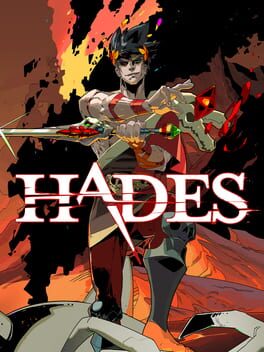
Hades’ son, Zagreus, becomes the center of the project.
2018-2020: Hades and learning through Early Access
Hades first appears publicly in December 2018 when it launches in Early Access.
For Supergiant, the decision represents a major change in method.
The previous games had been developed mainly internally before release. Hades, by contrast, is designed from the outset as a project intended to evolve publicly.
The studio regularly publishes new versions, adds characters, weapons, areas, events and dialogue, then adjusts its systems based on its own observations and player feedback.
This approach is particularly well suited to the chosen genre.
Players repeat many attempts and can therefore provide data and impressions on balance, variety or interactions between powers.
But the value of this structure goes beyond balance.
Above all, Supergiant seeks to solve a narrative problem: how do you tell a story in a game where the protagonist repeatedly dies and starts over?
The answer is to integrate death into the narrative.
When Zagreus returns to the House of Hades, the characters remember his previous attempts. New dialogue appears depending on encounters, victories, defeats, weapons used or the evolution of relationships.
Repetition therefore does not reset the story.
It creates new situations.
This structure allows the studio to bring gameplay and storytelling together in a particularly direct way.
Version 1.0 of Hades was released on September 17, 2020 on PC and Nintendo Switch after nearly two years of Early Access.
The game became the studio’s greatest success up to that point and considerably expanded its audience.
Hades: connecting mechanical progression and relationships
The success of Hades notably comes from the way several dimensions evolve simultaneously.
Each attempt allows the player to test different combinations of powers granted by the gods of Olympus.
The weapons have several aspects and can profoundly alter the rhythm of combat.
But progression is not limited to the character’s effectiveness.
Returning to the House of Hades also allows the player to speak with its inhabitants, offer resources, develop relationships and discover new parts of the story.
Narrative curiosity therefore becomes a reward comparable to a mechanical upgrade.
Even an attempt that ends quickly can trigger a new line of dialogue.
This logic reduces the boundary between “success” and “failure.”
The player can lose an attempt while still advancing a relationship, discovering information or unlocking a new possibility.
Supergiant thus applies on a much larger scale an idea already visible in Pyre: continuing to tell something when the player does not achieve their immediate objective.
2022: announcing a sequel for the first time
In December 2022, Supergiant announces Hades II.
The decision is a first in the studio’s history.
After Bastion, Supergiant had created Transistor.
After Transistor, it had developed Pyre.
After Pyre, it had designed Hades.
This time, the studio chooses to return directly to the same universe.
The main character, however, is no longer Zagreus.
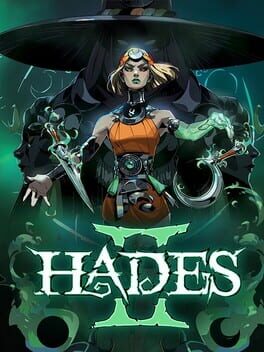
Melinoë, princess of the Underworld and another figure from ancient mythology, becomes the protagonist of a new story that notably develops the connections between the Underworld, the Olympian gods and witchcraft.
The studio explains that it wants to build a sequel capable of drawing on what was learned from the first game without simply reproducing it.
The development also becomes the largest in its history.
The team reaches around twenty-five people, joined by various external collaborators for voices, translations, illustrations and other specialized needs.
2024-2025: developing Hades II with players
Hades II enters Early Access on May 6, 2024 on Steam and Epic Games Store.
Supergiant therefore returns to the method experimented with on the first Hades, but with greater experience of the process.
The studio releases several major updates and gradually develops regions, characters, weapons, powers and narrative events.
The principle remains one of Early Access conceived as a genuine production phase rather than simply an early release.
Feedback is used to adjust systems once enough content already exists to properly represent the game’s intent.
Hades II greatly expands the structure of the first installment.
Melinoë uses new weapons and more prominent magic, while the adventure develops in several directions across a broader mythological world.
The narrative system continues to respond to repeated attempts, but with new relationships and new conflicts.
On September 25, 2025, after more than four and a half years of development including around a year and a half of Early Access, Supergiant officially releases version 1.0 of Hades II on PC, Nintendo Switch and Nintendo Switch 2.
The launch notably completes the main story and adds the final events and progression elements planned for this version.
2026: completing the rollout of Hades II
After the 1.0 release, Supergiant continues to devote part of its work to adapting the game to new platforms.
On April 14, 2026, Hades II arrives on PlayStation 5 and Xbox Series X|S.
These versions are accompanied by various improvements and a new patch also released on the other platforms.
This stage largely completes the rollout of the game following its Early Access period and initial launch on PC and Nintendo consoles.
Supergiant remains an independent and relatively small organization despite the considerable growth of its audience.
The studio does not turn the success of Hades and Hades II into multiple simultaneous productions.
Its principle remains the same as at the beginning of its history: one team gathered around a main project, with the idea that the success of one game should allow it to freely choose the next.
What sets it apart
A small team that stays together from one game to the next
The stability of the team is one of the most unusual characteristics of Supergiant Games.
The seven people who created Bastion continued working together on every subsequent game.
The studio has grown, but without replacing this core with an organization made up of numerous independent teams.
This continuity allows collaborators to accumulate a very precise understanding of how the others work.
Illustration, storytelling, design, programming and audio can therefore evolve with a shared understanding built across several productions.
Supergiant also considers the small size of its team a deliberate way of working.
Not developing several games simultaneously imposes limits.
The studio cannot pursue every idea, rapidly multiply sequels or immediately adapt each of its games to every platform.
But this constraint also protects a way of working in which the main creative leads remain directly involved in production.
Bringing mechanics and storytelling into dialogue
Supergiant’s games regularly seek to avoid a clear separation between moments when the player “plays” and moments when the story is told to them.
In Bastion, the narrator reacts to actions.
In Transistor, combat functions are also linked to individuals and the history of Cloudbank.
In Pyre, winning or losing the Rites directly changes the fate of characters.
In Hades, dying allows the player to return to new conversations.
The studio therefore does not merely seek to place a good story around a game system.
It tries to find a structure in which the player’s actions themselves create narrative opportunities.
This approach partly explains why Supergiant regularly changes genres.
Each new system allows the studio to explore another way of connecting action and narrative.
Turning repetition into progression
With Hades, and then Hades II, this exploration reaches its most visible form.
The rogue-like naturally relies on repetition.
The risk would be for each failure to cancel narrative progress.
Supergiant instead turns the return to the starting point into an essential phase of the game.
Characters remember.
Relationships evolve.
New dialogue appears.
Permanent systems progress.
A failed attempt can therefore remain productive.
This logic changes the perception of starting over: repeating an area does not necessarily mean experiencing exactly the same narrative situation again.
The structure also allows the studio to produce a very large amount of conditional dialogue and reactions that create the impression that the world is observing what the player accomplishes.
Art direction built collectively
Supergiant’s productions feature very different universes, but share an immediately recognizable artistic identity.
The illustrations of Jen Zee, the music of Darren Korb, the writing and creative direction, recurring voices and animation choices contribute to a continuity that goes beyond the universes themselves.
The studio does not, however, possess a single graphical style mechanically applied to every production.
The warm, painted colors of Bastion differ from the digital architecture of Transistor.
Pyre adopts a fantasy style almost illustrated like a book.
Hades revisits figures from Greek mythology through strongly defined silhouettes, bold colors and contemporary interpretations.
The continuity comes more from collaboration between the same creative sensibilities than from repetition of an aesthetic formula.
Sound as a component of the world
Music has a particularly important role at Supergiant.
Darren Korb has composed the soundtracks since Bastion, while several performers and collaborators regularly return from one project to another.
The compositions are adapted to the personality of each universe.
Bastion combines different acoustic and electronic influences.
Transistor adopts a more electronic and vocal tone.
Pyre integrates its songs into its world and characters.
Hades combines guitars, percussion and Mediterranean or mythological sounds, while Hades II develops a palette connected to witchcraft and its new regions.
The music can also evolve according to gameplay situations.
Songs, voices and arrangements therefore become narrative elements rather than simply a soundtrack placed behind the action.
Independence as a way to choose the next project
Supergiant has remained independent since its creation.
This independence does not mean a total absence of partners. Bastion, for example, benefited from support from Warner Bros. Interactive Entertainment for its initial commercial release.
Above all, it means that the studio retains control over its structure and creative decisions.
Over time, Supergiant has further developed its ability to publish its productions directly.
The success of each game then finances the next.
This organization creates a very simple form of dependence: a project must perform well enough for the team to stay together and begin another.
But it also avoids building a strategy around a schedule containing several simultaneous productions.
The studio’s history therefore shows growth based less on increasing the number of games than on gradually expanding what the same team is capable of creating.
Good to know
- Supergiant Games was founded in 2009 by Amir Rao and Gavin Simon after they left Electronic Arts.
- The studio began its activity in the living room of a house in San Jose before later moving to San Francisco.
- The seven members of the team who created Bastion continued working together on every subsequent game from the studio.
- Bastion, Supergiant’s first game, was initially released on July 20, 2011 on Xbox Live Arcade.
- Transistor was released on May 20, 2014 and was the studio’s second game as well as an important step in its self-publishing activity.
- Pyre, released on July 25, 2017, makes both victory and defeat elements capable of directly changing the story.
- Hades entered Early Access in December 2018 before the release of version 1.0 on September 17, 2020.
- Supergiant develops one major new project at a time and remains an independent company.
- Hades II is the first sequel in the studio’s history and entered Early Access on May 6, 2024.
- Version 1.0 of Hades II was released on September 25, 2025 on PC, Nintendo Switch and Nintendo Switch 2 after more than four and a half years of development.
- Hades II arrived on PlayStation 5 and Xbox Series X|S on April 14, 2026, completing its rollout across the main current platforms.
- During the development of Hades II, Supergiant had around twenty-five members, while retaining all seven original creators of Bastion on the team.