Presentation
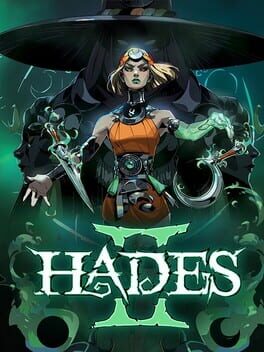
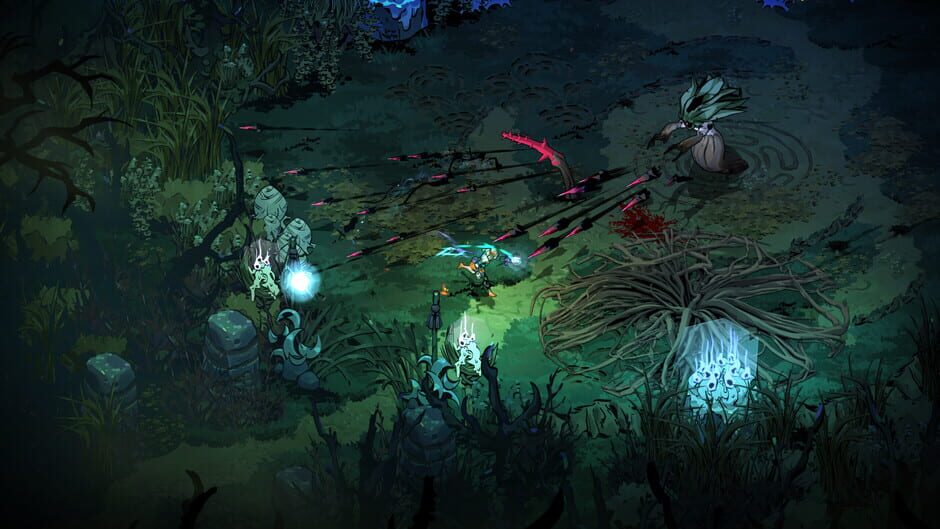
Hades II retains the fundamental principle of the first game: every death returns the character to a central location before another attempt begins. Supergiant does not simply replace Zagreus with Melinoë, however. Her powers, movement and surrounding systems immediately give combat a different rhythm.
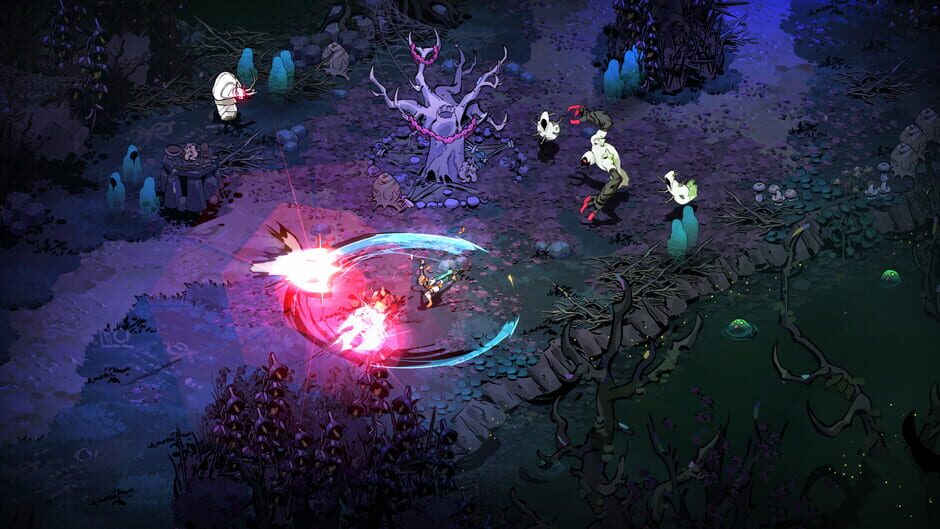
Melinoë still has an attack, special attack and area Cast, alongside dash and sprint. The major addition is Magick. By holding certain inputs, she channels this resource to transform actions into more powerful Omega techniques. A quick attack can become a charged strike, a special can extend its range and the Cast can gain new effects.
This mechanic encourages greater preparation and control of space. Melinoë can immobilize or slow groups with her Cast, create distance and then invest Magick into an Omega attack. Other builds favor much faster play with little channeling, leaving boons and weapons with a strong influence over the rhythm of each attempt.
The Nocturnal Arms replace Zagreus’s Infernal Arms. Staff, twin blades, torches, axe, skull and the Black Coat all offer very different ranges and behaviors. Their Aspects then modify certain properties deeply enough to build several distinct playstyles around the same weapon.
Olympian boons retain the principle of temporary builds. A god can modify the attack, special, sprint or Cast and add specific effects. Fire, freezing, lightning, critical hits, defense, delayed damage and other interactions gradually steer a run toward a particular combination.
Magic expands this construction further with Selene’s Hexes. These function as special powers charged during combat and can themselves be developed. The combination of boons, Omega techniques, Magick, Hexes and weapon properties gives Hades II more layers to manage than its predecessor.
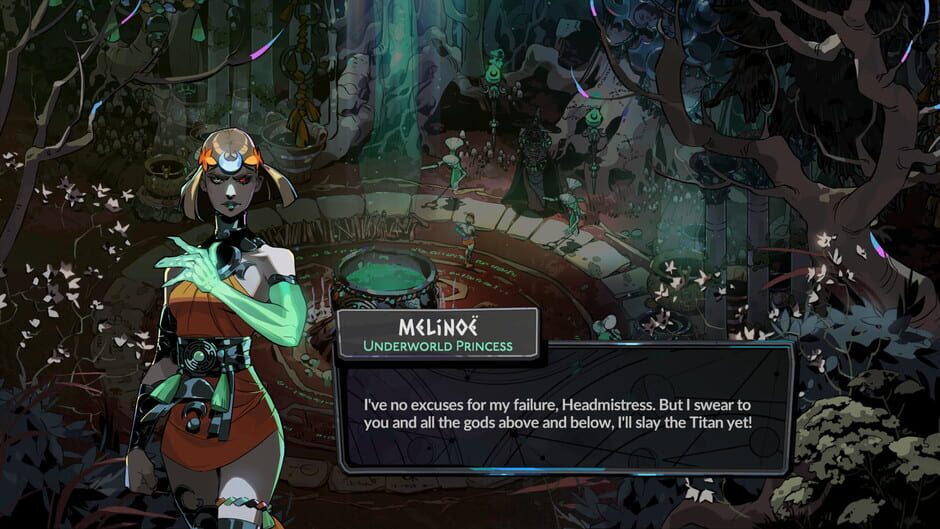
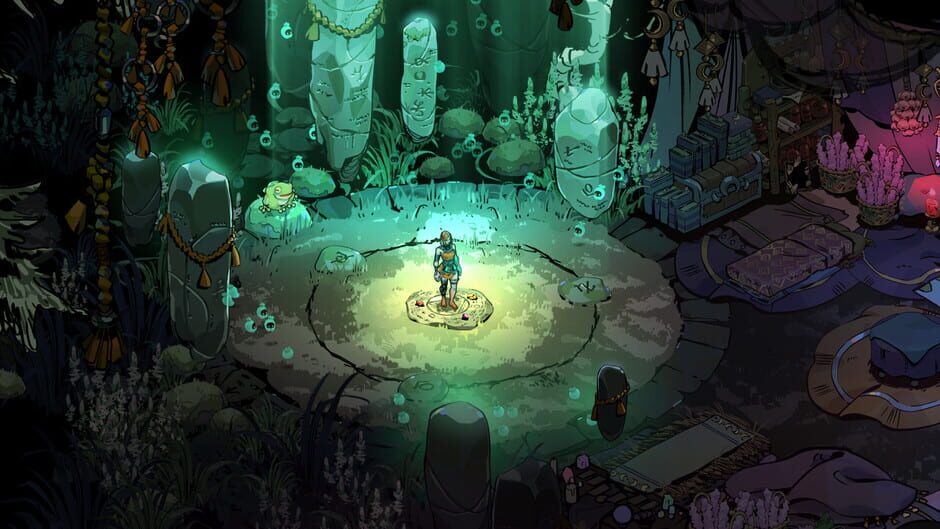
The Crossroads replaces the House of Hades as the center of the adventure. Melinoë returns there to meet Hecate and members of the resistance, develop relationships, prepare equipment and gradually transform the location. Returning after defeat also creates opportunities for new dialogue and changes among the characters.
The Altar of Ashes provides one of the main systems of permanent progression. Arcana Cards grant different advantages, but Melinoë can activate only a limited set according to her Grasp capacity. The player therefore builds a real deck of passive bonuses rather than simply purchasing every available upgrade.
Incantations give another purpose to resources gathered during attempts. Performed at Hecate’s cauldron, they can unlock new features, alter elements of the world, open systems or make certain resources easier to find. Witchcraft therefore extends directly into the progression of the hub.
Plants, minerals and other reagents consequently matter more than the currencies of the first game. Some resources are used for Incantations, others for Arcana or weapon upgrades. The game retains the immediate reward structure of a roguelike while adding a longer-term economy built around magical preparation.
Animal Familiars can accompany Melinoë during her runs. They provide different forms of assistance and develop their own relationships with her. Their presence reinforces the idea that preparing for a run depends on more than simply choosing a weapon and Keepsake before leaving.
The main structural evolution, however, comes from the two available directions. The Underworld route follows a descent toward Chronos, while the surface opens a parallel campaign connected to the war against Olympus. Environments, enemies and guardians differ between the two, giving the game far more variety than a simple new version of Zagreus’s escape.
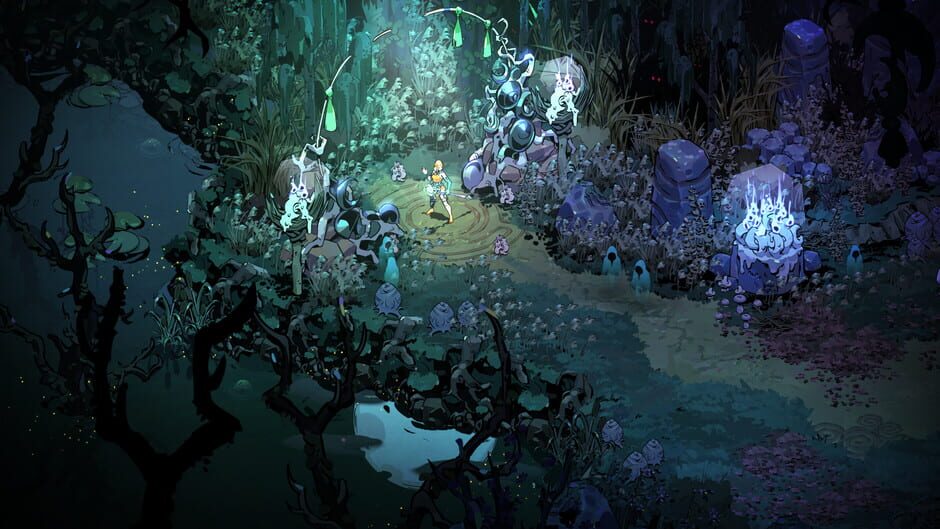
Erebus acts as the first underground region before Oceanus and its musical world dominated by Scylla and the Sirens. The Fields of Mourning open up the spaces more broadly, while Tartarus brings Melinoë into territory controlled by Chronos. On the surface, the journey passes through regions including Ephyra, the Rift of Thessaly and then the lands of Olympus.
This dual structure also allows the conflict to develop on two fronts. Underground, Melinoë seeks to free her family and reclaim the Underworld. On the surface, she joins a much larger divine war in which Olympus itself is at risk of falling. Both objectives advance in parallel rather than forming entirely separate campaigns.
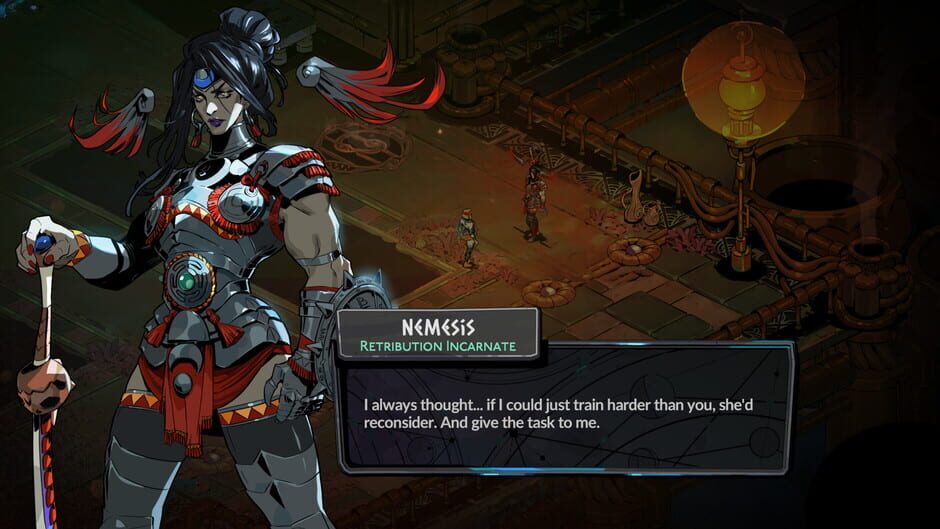
The characters contribute as much as the systems to this expansion. Hecate has a complex mentor relationship with Melinoë, Nemesis regularly acts as a rival, while Odysseus, Moros, Dora and the other inhabitants of the Crossroads develop their own stories. Encounters with Narcissus, Arachne, Circe and other mythological figures also give each route its own personality.
Supergiant therefore continues its method of reinterpreting Greek mythology. Witchcraft naturally brings Hecate, Circe, Medea and other figures associated with magic into the setting, while Chronos creates a family conflict different from the one between Zagreus and Hades. This time the family is not merely divided by internal tension: it has been physically scattered by war.
The difficulty system also reworks the idea of the Pact of Punishment through the Oath of the Unseen. Vows can strengthen or alter the conditions of a run in order to increase the challenge and obtain associated rewards. God Mode remains available in parallel to make progression more accessible without removing the game’s fundamental loop.
What to remember
- A direct sequel to Hades centered on Melinoë, daughter of Hades and Persephone and sister of Zagreus.
- Chronos, Titan of Time, has seized the Underworld while also waging war against the gods of Olympus.
- A two-route structure: descend toward Chronos through the Underworld or climb toward the surface to help defend Olympus.
- Six Nocturnal Arms and different Aspects support numerous combat styles.
- Magick powers Omega techniques, charged and stronger versions of several of Melinoë’s actions.
- Olympian boons, Hexes, Arcana, Keepsakes and Familiars greatly expand the possibilities for building each run.
- Incantations performed at the Crossroads use gathered resources to unlock or transform several permanent systems.
- Defeats and victories continue to develop the characters and the story, whose true conclusion is built into the repetition of the roguelike structure.
Conclusion
Hades II keeps the loop that made its predecessor so effective while changing enough of its components to avoid feeling like a simple expansion. Melinoë shares Zagreus’s immortality and need to begin again, but her witchcraft introduces Magick management, Omega techniques and stronger control of space, giving combat a different personality.
Permanent progression is also more developed. Arcana requires the player to choose active bonuses, Incantations gradually transform the Crossroads and parts of the world, while Familiars, weapons and relationships multiply the ways a run can be prepared. The number of systems increases without removing the importance of decisions made during an attempt.
The existence of two routes changes the scale of the adventure most of all. Zagreus was trying to leave the Underworld; Melinoë must both reclaim it and defend the world above. This opposition between descending toward Chronos and climbing toward Olympus justifies the larger scope of the sequel and gives each direction its own characters, environments and encounters.
The story uses this structure to explore another family confronted with time. Melinoë grew up away from her parents and brother, with an image of them constructed almost entirely from what Hecate and others could tell her. Her relationship with Hades, Persephone and Zagreus is therefore not that of a child trying to escape a family, but of a woman raised with the belief that one day she would have to save it.
Supergiant therefore succeeds in extending Hades without undoing what the first game accomplished. The old relationships still exist, but Chronos places them in a new situation and witchcraft opens another part of Greek mythology. The result retains the link between fast combat, repetition and storytelling while giving Melinoë enough tools, goals and relationships of her own for her adventure to stand outside Zagreus’s shadow.
Good to know
- Hades II was developed and published by Supergiant Games and is the first sequel ever created by the studio.
- Melinoë is the princess of the Underworld, daughter of Hades and Persephone and sister of Zagreus; she is trained in witchcraft by Hecate.
- The game first entered Early Access on Steam and the Epic Games Store on May 6, 2024.
- The complete 1.0 version was released on September 25, 2025, for PC, Nintendo Switch and Nintendo Switch 2, including the true conclusion of the story.
- PlayStation 5 and Xbox Series X|S versions were released on April 14, 2026.
- Hades II remains exclusively single-player, like its predecessor.
- The complete version includes six Nocturnal Arms; Xinth, the Black Coat, was the sixth and final main weapon added during development.
- Darren Korb’s soundtrack runs close to four hours and also includes orchestral pieces co-composed with Austin Wintory.