
Presentation
Founded in London in 2004, Rocksteady Studios is primarily associated with the Batman: Arkham series, but its significance in video game history comes less from the simple success of a comic-book adaptation than from the way the studio transformed Batman's characteristics into coherent interactive systems. Close-quarters combat, stealth, environmental observation, gadget use and traversal progressively became different facets of the same goal: allowing the player to embody the character. This approach, established with Batman: Arkham Asylum in 2009, subsequently structured Arkham City and Arkham Knight.
Rocksteady did not begin with Batman. The studio was founded by Sefton Hill and Jamie Walker, two former Argonaut Games developers, and first created Urban Chaos: Riot Response, released in 2006. After this initial project, the team worked on several prototypes using Unreal Engine 3. Eidos, which at the time held the rights needed to develop a Batman game, noticed this work and asked Rocksteady to propose its own interpretation of the character. This opportunity led to the development of Arkham Asylum and rapidly transformed the scale of the studio.
The success of this project brought Rocksteady into a lasting relationship with Warner Bros. Interactive Entertainment, which acquired a majority stake in the studio in 2010. Rocksteady is now part of Warner Bros. Games and remains based in London, where its facilities include spaces dedicated to audio, motion capture and photogrammetry. This integration allowed the studio to spend most of its history working with DC properties while preserving an identity strongly tied to its own design methods.
This continuity experienced an important break during the 2020s. Sefton Hill and Jamie Walker left the studio at the end of 2022 after eighteen years at its head, while Rocksteady was preparing Suicide Squad: Kill the Justice League. Released in 2024, the project remained within the universe established by the Arkham games but adopted a cooperative structure, progression model and content strategy very different from the studio's previous productions. The experience therefore marks a new period in Rocksteady's history while also revealing the difficulties encountered when moving far away from the principles that had shaped its reputation.
History
From its London beginnings to the Batman opportunity
Rocksteady Studios was founded in December 2004 by Sefton Hill and Jamie Walker. The studio quickly began work on Urban Chaos: Riot Response, a first-person shooter developed for PlayStation 2 and Xbox. Published by Eidos in 2006, it became the team's first commercial production and remains quite different from the games that would later define its identity.
After its release, Rocksteady began experimenting with Unreal Engine 3 while preparing prototypes for the new generation of consoles. Sefton Hill later explained that Eidos was particularly impressed by the level of detail and quality of the prototype presented by the team. When the publisher gained the opportunity to produce a Batman game, it therefore asked Rocksteady what the studio would do with the character. The answer was not simply to reproduce a film or place Batman inside an already established genre: the team sought to identify the characteristics that would allow players to directly experience his different abilities.
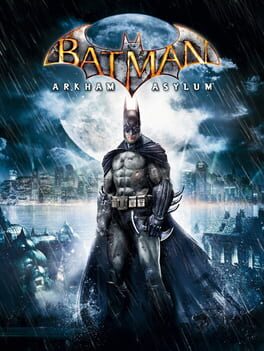
This approach became Batman: Arkham Asylum, released in 2009. The relatively contained environment of the asylum allowed the studio to bring several forms of interaction together within a coherent space. Batman needed to be able to fight several opponents in close combat, eliminate armed enemies discreetly, analyze his surroundings, use gadgets and progressively reach new areas. The character therefore became the starting point for the systems rather than simply being placed on top of them.
The success of Arkham Asylum transformed Rocksteady's position. In February 2010, Warner Bros. Home Entertainment announced the acquisition of a majority stake in the studio. From that point onward, the London developer became much more directly integrated into the ecosystem surrounding DC and Batman, a relationship that would structure most of its subsequent productions.
Expanding the world without abandoning Arkham's principles
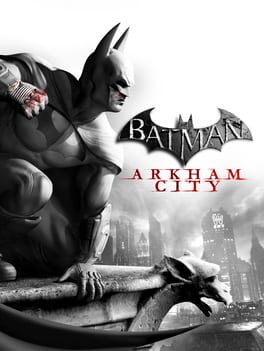
With Batman: Arkham City in 2011, Rocksteady did not simply seek to produce a larger version of Arkham Asylum. The move toward an open section of Gotham required the team to rethink what Batman should be able to do within that space. Sefton Hill explained that the city was built around the character's abilities: it needed to allow him to gain height, glide between buildings, identify situations from a distance and freely decide where to intervene next.
This approach accompanied a highly iterative design philosophy. Rocksteady did not claim to use one single method across every discipline. Levels, narrative, encounters and core mechanics could be designed through different processes, while the controls were adjusted throughout almost the entire production. The objective was to make a large number of possibilities accessible without forcing players to struggle with an interface that had become overly complex.
Arkham City also expanded the narrative structure with more activities that could be approached in different orders. The open world therefore did not completely erase the more directed logic of the first game; instead, it added a layer of freedom in which players could decide when to follow certain stories or explore other parts of the city. This gradual expansion of scale became one of the most visible principles of the Arkham period.
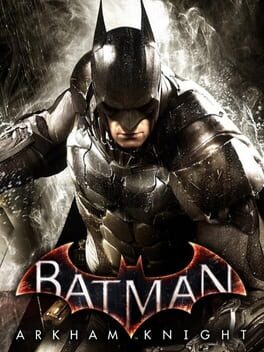
Batman: Arkham Knight, released in 2015, continued this expansion by giving the Batmobile a central role. Integrating the vehicle required more than creating a new mechanic: it influenced the construction of Gotham itself, whose streets and several environmental elements now had to support the vehicle's movement and interaction. The third main installment developed by Rocksteady therefore concluded a process that began within the enclosed space of Arkham Asylum and progressively expanded into a much broader representation of the city.
Rocksteady briefly returned to a much more intimate scale with Batman: Arkham VR in 2016. Virtual reality provided another way of exploring embodiment and placed greater emphasis on observation, physical presence and investigation than on the scale of combat encounters. The experience remained tied to Batman, but it showed that the studio could reinterpret certain aspects of its work when a new technical device changed the relationship between the player and the character.
A transition in leadership and production model
After this long period centered on Batman, Rocksteady began a much more different project with Suicide Squad: Kill the Justice League. The game remained part of the continuity of the Arkham universe but changed protagonists and, more importantly, structure. Action now revolved around a team of playable characters, cooperation between several participants and a progression model designed to support post-launch content.
Before the game's release, Rocksteady underwent an important leadership change. In October 2022, Warner Bros. Games announced that Sefton Hill and Jamie Walker would leave the studio at the end of the year. The two co-founders had led Rocksteady since 2004 and overseen all of its previous productions. Nathan Burlow, a founding team member who had served as director of production, became Studio Director, while Darius Sadeghian took the role of Studio Product Director. This transition ended the period in which the two founders had directly embodied the studio's continuity.
Suicide Squad: Kill the Justice League was released in February 2024. The project represented a genuine break with Rocksteady's previous productions: a design centered primarily on a solo adventure gave way to a cooperative shooter built around repeatable progression and seasons of content. Although certain elements of traversal, action and staging extended the studio's existing expertise, their overall organization served objectives very different from those of the Arkham trilogy.
This new direction did not become a lasting model. Warner Bros. Discovery publicly acknowledged that the game performed below expectations, with a significant impact on its video game business. Seasonal content ended with its final episode in January 2025, less than a year after the initial release. The game remains accessible, notably through the addition of an offline mode, but its service structure is no longer being extended with new seasons.
This period is important for understanding Rocksteady without reducing its current identity to a single failure. The studio continues to exist within Warner Bros. Games, and its official website still presents an active development operation in London. In 2026, its recruitment pages notably refer to production on a future AAA title without Rocksteady having publicly detailed the project. The period following Suicide Squad therefore remains too recent to define a new creative direction with the same clarity as the Arkham era.
What sets it apart
Building systems from the character
Rocksteady's most enduring contribution rests on an idea that is relatively simple in principle but demanding in execution: the mechanics should emerge from the identity of the character being controlled. During development of the Arkham games, the team did not begin solely from the need to create a combat system, stealth mode or investigation mechanic. It sought to determine what Batman could do and transform those capabilities into complementary actions available to the player.
This logic explains the coexistence of direct combat, so-called predator sequences, environmental analysis, gadgets and traversal abilities. Each represents a different facet of the character and allows the pace to change without the game ceasing to feel like the same Batman experience. Players can move from a situation where they physically dominate a group of opponents to another in which armed enemies require the use of height, the environment and surprise.
This construction also allowed Rocksteady to make numerous actions immediately available without turning the controls into a difficult catalogue to memorize. Sefton Hill described the interface as one of the most iterative areas of development, precisely because every additional gadget or ability needed to find a place corresponding to its importance and to how quickly players needed to access it.
Movement and continuity of action
Fluidity is another persistent characteristic of the Arkham period. The combat system developed for Arkham Asylum allows the character to quickly chain attacks, counters and movements between several opponents. This FreeFlow logic does not rely solely on the number of moves available: it seeks to maintain continuous, readable motion within a group.
Its influence later extended beyond Rocksteady's own games. Developers still working on other Batman productions in 2026 describe the FreeFlow system as an element whose influence remains visible in modern action games. This legacy comes particularly from the way it combines animation, enemy positioning, anticipation and relatively simple controls to create a feeling of mastery without requiring players to perform excessively complicated combinations.
The same search for continuity can be found in traversal. With Arkham City, the move from an enclosed environment to an open city required Batman to move naturally between buildings and situations. Rocksteady therefore does not treat combat, exploration and traversal as entirely separate components: the different layers are intended to allow players to shift activities without constantly breaking their connection with the character.
Making the environment evolve with the abilities
The progression from Arkham Asylum to Arkham City and then Arkham Knight illustrates a particular way of approaching increases in scale. Rocksteady does not begin by deciding that a game needs a larger map before determining how to fill it. Changes to the environment respond to the new possibilities given to the character.
In Arkham City, the verticality and density of the buildings give purpose to gliding, observation points and movement across rooftops. For Arkham Knight, the arrival of the Batmobile required part of the urban architecture to be redesigned so that the vehicle could become a genuinely usable part of the game rather than a decorative presence.
This relationship between abilities and environment helps explain why Rocksteady's three major Arkham games can increase considerably in scale while preserving a clear lineage. Each production adds new possibilities, but those possibilities in turn change how Gotham needs to be constructed. The environment therefore becomes an extension of the character's tools.
A production history focused on few projects
Rocksteady also has a relatively unusual history because of the small number of games it has developed across more than twenty years of existence. Its main catalogue consists of Urban Chaos: Riot Response, three major Arkham games, Arkham VR and Suicide Squad: Kill the Justice League. This concentration has long allowed the team to spend several years on each major production rather than multiplying releases.
The Arkham period demonstrates the advantages of this continuity: systems introduced in 2009 could be reused, modified and expanded across several successive productions, while a significant portion of the team accumulated shared experience around the same property. The departure of the two co-founders in 2022 and the change of model represented by Suicide Squad partially interrupted this continuity and opened a period in which Rocksteady has to redefine how it uses that accumulated expertise.
The studio's current facilities nevertheless extend a highly integrated production culture. Rocksteady has dedicated resources in London for motion capture, audio and photogrammetry, allowing it to bring several disciplines involved in the creation of its AAA productions closer together. This infrastructure does not define its identity on its own, but it supports a search for coherence between animation, performance, environment and interaction that was already visible in its earlier games.
Good to know
- Rocksteady Studios was founded in London in December 2004 by Sefton Hill and Jamie Walker.
- Its first game was Urban Chaos: Riot Response, released in 2006.
- Batman: Arkham Asylum, released in 2009, was the project that transformed the studio's scale and reputation.
- Warner Bros. acquired a majority stake in Rocksteady in 2010; the studio is now part of the Warner Bros. Games development network.
- Rocksteady directly developed Arkham Asylum, Arkham City and Arkham Knight; Batman: Arkham Origins was developed by WB Games Montréal and is therefore not one of the London studio's productions.
- Batman: Arkham VR, released in 2016, was the studio's first production specifically designed for virtual reality.
- Co-founders Sefton Hill and Jamie Walker left Rocksteady at the end of 2022, after leading the studio since its creation.
- Suicide Squad: Kill the Justice League was released in February 2024 and was Rocksteady's first major project centered on a cooperative and seasonal structure.
- The final seasonal episode of Suicide Squad was released in January 2025; the game remains accessible after the end of new seasonal content.
- In 2026, Rocksteady remains an active Warner Bros. Games studio based in London, with internal facilities dedicated notably to audio, motion capture and photogrammetry.