Presentation
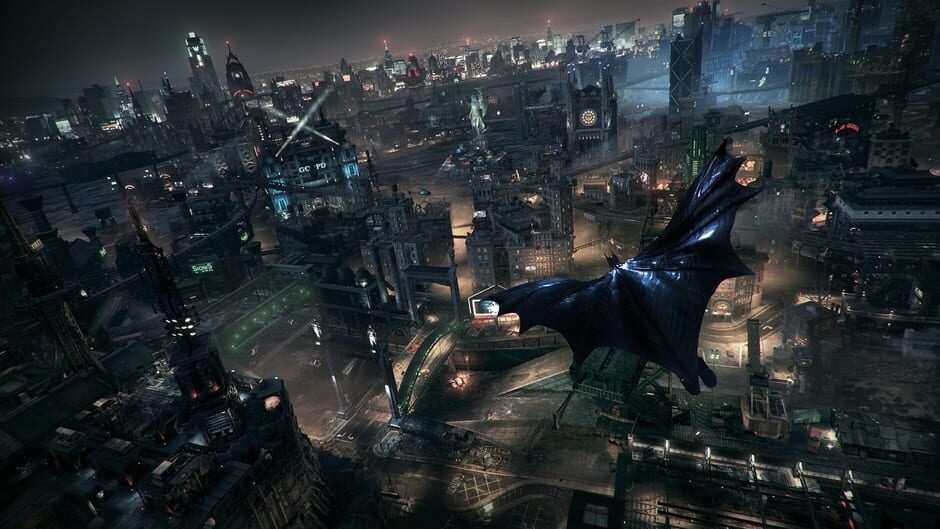
Batman: Arkham Knight expands Rocksteady’s formula across a Gotham considerably larger than the environments of the previous games. The playable area covers several islands combining commercial districts, industrial sectors, skyscrapers, docks, tunnels and wide streets. The grapnel and gliding remain central to traversal, with improved mobility allowing Batman to cover long distances through a combination of dives, speed and rapid gains in altitude.
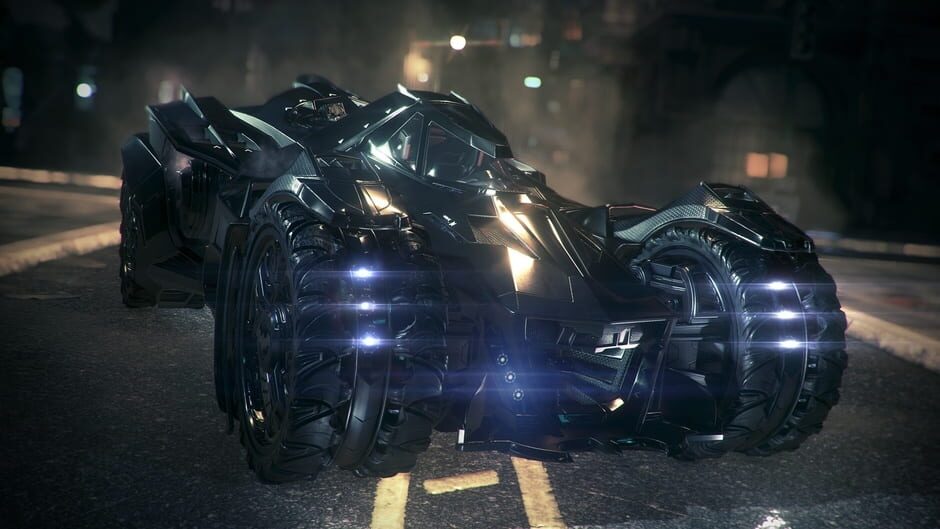
The major new feature is the fully drivable Batmobile. Batman can call it directly from the streets and use it to move quickly between Gotham’s different areas. The transition between vehicle and traditional traversal is particularly smooth, with Batman able to eject at high speed and immediately continue through the air. This integration makes the Batmobile a constant part of exploration rather than a vehicle reserved for isolated scripted sequences.
The vehicle also includes a combat mode designed mainly for encounters with the Arkham Knight’s mechanized forces. Drones and armored vehicles introduce battles very different from the traditional combat of the series. The Batmobile is also used in environmental challenges through its winch and other systems, allowing it to move objects, power mechanisms and open new routes.
This emphasis on the vehicle is one of the game’s most distinctive choices. Its use for traversal and some puzzles fits naturally into the wider experience, while the frequency of vehicular battles changes the traditional rhythm of the series much more substantially.
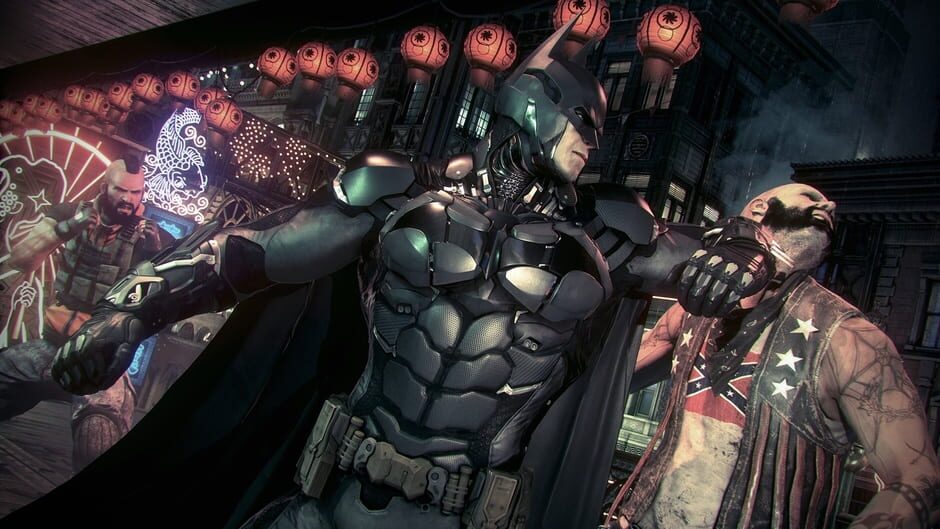
On foot, Arkham Knight offers the most developed version of FreeFlow Combat in Rocksteady’s trilogy. Enemy groups combine more behaviors and equipment, including shields, firearms, electrified weapons and opponents requiring specific responses. Batman has an equally broad set of options, with gadgets, throws and environmental attacks integrated into combos without interrupting their fluidity.
Some sequences also allow Batman to fight alongside Robin, Nightwing or Catwoman. The player can switch between characters and perform combined takedowns. These moments are relatively limited, but they give Batman’s allies a stronger physical presence and show that several of them can operate directly beside him.
Predator encounters become more complex thanks to the Arkham Knight’s soldiers. Unlike the criminal groups faced in earlier games, this militia has been trained specifically to fight Batman. Some soldiers monitor elevated positions, use drones or carry equipment capable of disrupting Detective Mode. The player must therefore vary tactics more frequently and avoid relying too heavily on a single method.
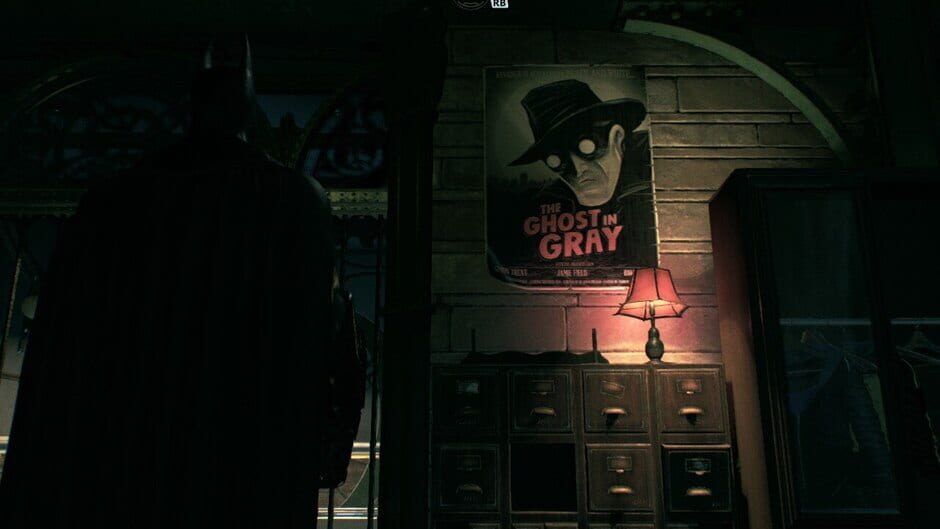
Detective Mode remains important during investigations. Batman examines crime scenes, analyzes traces and sometimes uses reconstruction systems to determine how events unfolded. The open world also provides more room for this aspect of the character through numerous side cases. Penguin’s gunrunning operation, Two-Face’s robberies, Firefly’s return, Riddler challenges and other investigations develop alongside the main story, often across several stages.
The Riddler makes particularly extensive use of the Batmobile in his new trials. Races, mechanisms and physical puzzles join the traditional trophies, while Catwoman becomes directly involved in the confrontation. These activities show Rocksteady’s determination to incorporate the vehicle into several parts of the game, although their number can also make its presence feel especially dominant.
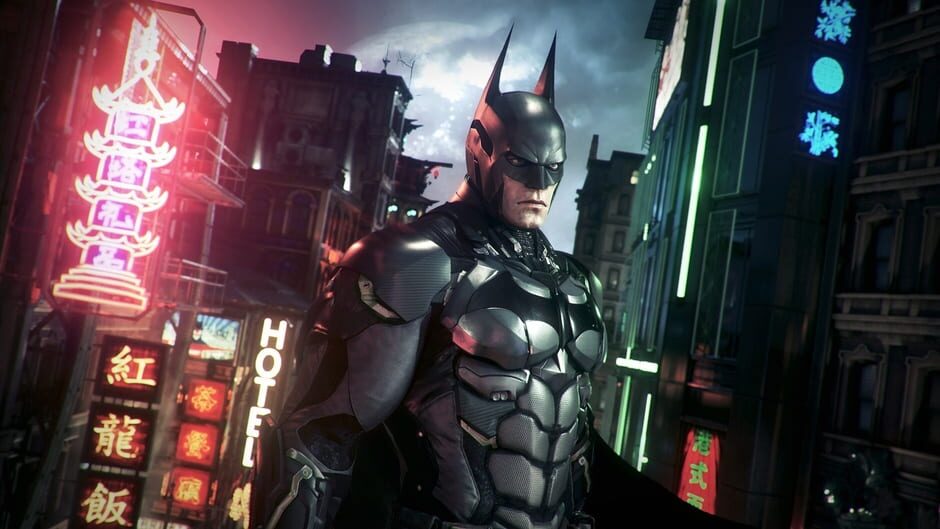
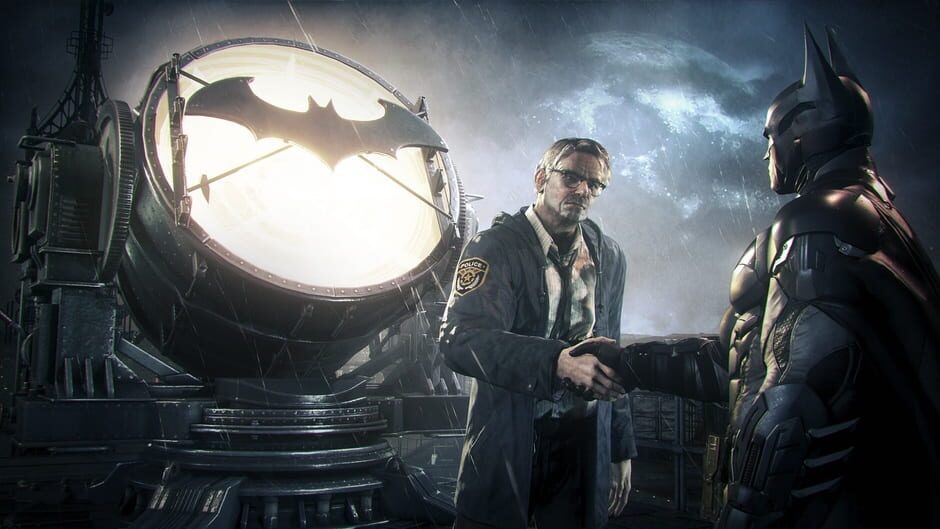
Gotham itself has an unusual atmosphere for an open world. Rain, illuminated signs, towers and deserted streets create a spectacular city that has lost most of its everyday life because of the evacuation. Criminals and militia forces largely occupy the public spaces, while the GCPD headquarters becomes one of the few protected locations. Its cells gradually fill as Batman captures different criminals, providing a visible record of the progress made throughout the night.
The final adventure also places considerable emphasis on Bruce Wayne’s psychological state. Scarecrow wants to destroy the image of a Batman who appears immune to fear, while the Arkham Knight knows his methods well enough to exploit his habits. Batman’s relationship with his allies becomes increasingly difficult as his desire to protect them leads him to control their actions or keep them at a distance. The story gradually moves beyond the immediate defense of Gotham and examines the limits of his belief that he must carry the city’s burden alone.
What to remember
- The conclusion of Rocksteady’s main Batman: Arkham trilogy following Arkham Asylum and Arkham City.
- A much larger Gotham spread across several islands and explored through both gliding and the Batmobile.
- Scarecrow as the main threat, supported by the Arkham Knight and an army specifically trained to fight Batman.
- A fully playable Batmobile used for traversal, vehicle combat, certain puzzles and exploration sequences.
- The most developed version of FreeFlow Combat in the trilogy, alongside more demanding predator encounters involving militia technology.
- Numerous side cases involving Gotham criminals and Batman’s investigative abilities.
- A story strongly focused on fear, Bruce Wayne’s limits and his difficulty accepting help from his allies.
Conclusion
Batman: Arkham Knight pushes almost every part of Rocksteady’s formula to a larger scale. Gotham offers greater freedom, traversal becomes even more fluid, FreeFlow reaches its richest form and predator encounters place Batman against better prepared opponents. Side cases and investigations also give the open world a purpose beyond simply connecting the main missions.
The Batmobile represents the most significant and controversial evolution of that formula. Its integration into traversal works especially well, and some puzzles make clever use of its abilities. Vehicle combat occupies a much larger role, however, and can become repetitive enough to alter the balance between the series’ traditional gameplay elements.
Gotham creates a similar tension. Its architecture, verticality and weather produce an impressive environment, but the evacuation deliberately turns it into a city inhabited mainly by criminals and military forces. The choice suits the crisis unfolding during the story, although it limits the sense of finally experiencing Gotham as a living city.
The game’s strongest achievement comes from the way this larger scale supports a much more personal story. Scarecrow and the Arkham Knight are not interested only in controlling Gotham; they know enough about Batman to attack his convictions, his methods and his relationship with those around him. Rocksteady therefore concludes the trilogy by expanding both Batman’s capabilities and the vulnerabilities of Bruce Wayne, giving Arkham Knight a fitting conclusion despite some more divisive gameplay choices.
Good to know
- Batman: Arkham Knight was developed by Rocksteady Studios and published by Warner Bros. Interactive Entertainment.
- The game was released on June 23, 2015, for PlayStation 4, Xbox One and PC.
- It concludes Rocksteady’s main trilogy following Batman: Arkham Asylum and Batman: Arkham City.
- Scarecrow returns as one of the main antagonists and joins forces with the mysterious Arkham Knight, commander of a large military force.
- The game introduces a fully drivable Batmobile used for traversal, vehicle battles and several puzzles.
- Batman can occasionally fight alongside Robin, Nightwing and Catwoman in sequences that allow the player to alternate between characters.
- Kevin Conroy returns as Batman in the original voice cast.