Presentation
Batman: Arkham Asylum turns confinement into one of its greatest strengths. The adventure takes place almost entirely on Arkham Island, where medical buildings, cells, gardens, outdoor courtyards, underground areas and high-security sectors form a coherent whole. The player regularly returns to previously explored locations, but newly acquired gadgets gradually change how those places can be approached.
Explosive Gel opens certain fragile surfaces, the grapnel provides access to elevated areas, the Line Launcher crosses previously inaccessible spaces and the Cryptographic Sequencer unlocks different electronic systems. These tools do more than solve isolated obstacles: they change the way familiar locations are understood and encourage the player to pay attention to Arkham’s architecture rather than simply follow a route.
That density directly supports the game’s pacing. The asylum changes over the course of the night, some sectors become more dangerous and the consequences of the Joker’s plan gradually transform the institution. Arkham develops a genuine presence as its corridors become familiar without ever feeling completely safe.
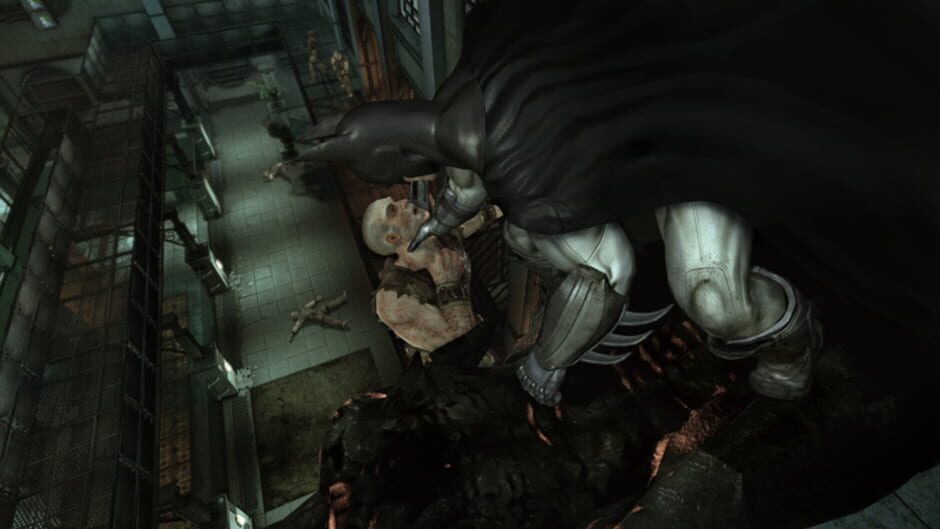
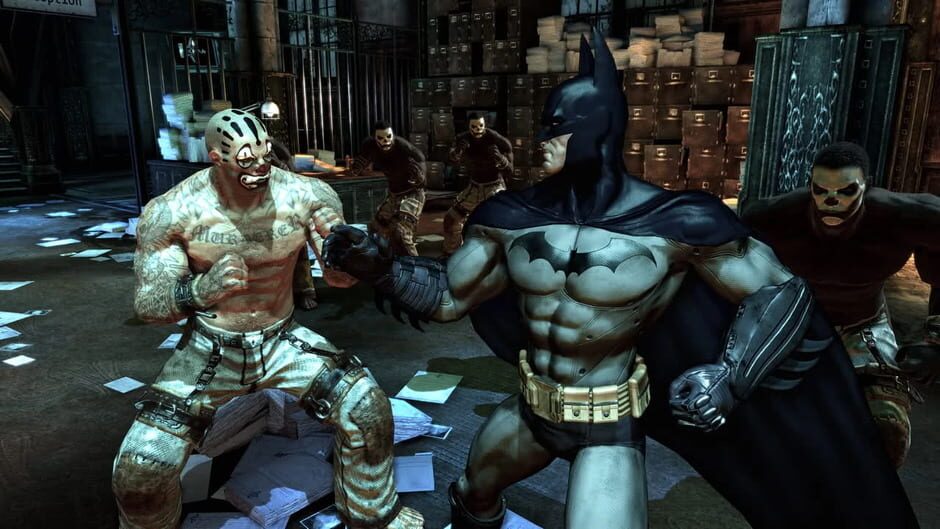
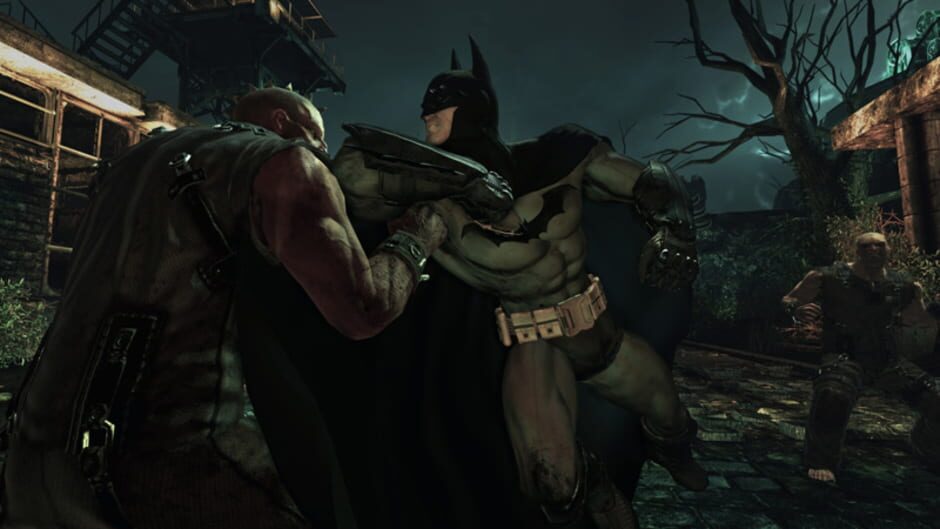
FreeFlow Combat forms the other major foundation of the experience. The system emphasizes fluid movement and awareness of the entire group. Batman can rapidly move from one opponent to another, counter an attack, evade and resume his combo without breaking momentum. The controls remain accessible, but encounters become more interesting when several enemies attack simultaneously or attempt to retrieve weapons. The player must then monitor the entire scene and adjust priorities.
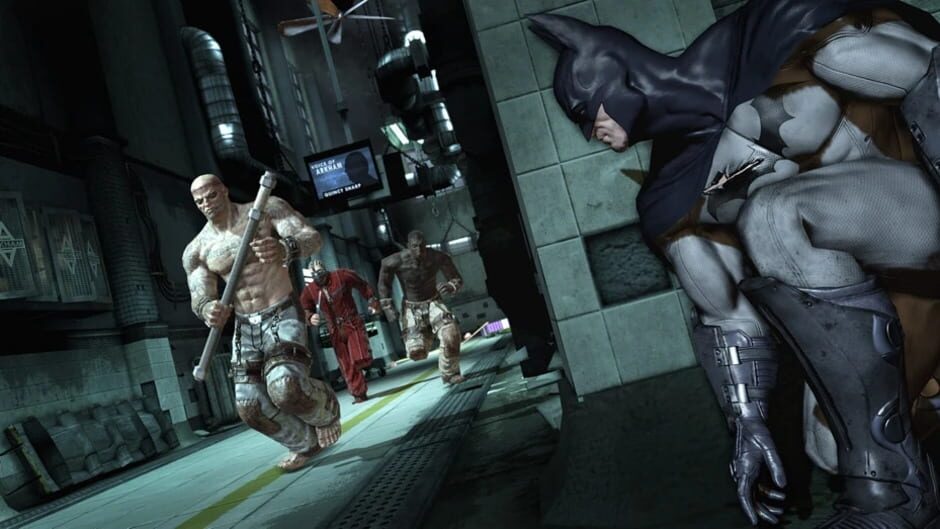
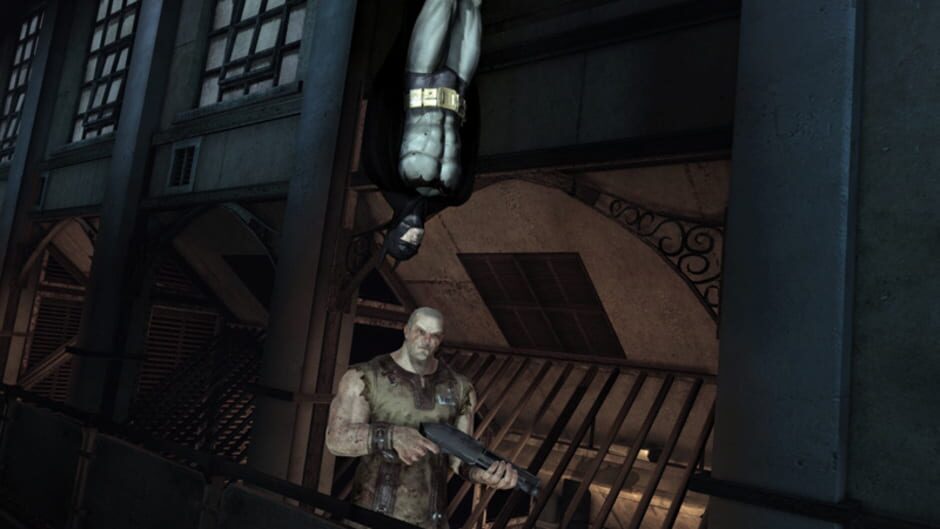
The situation changes once firearms appear. Predator sequences make direct confrontation far more dangerous and require Batman to use elevated positions, gargoyles, ventilation shafts and blind spots. He can isolate an opponent, create a diversion or gradually redirect a group’s attention before striking. The behavior of surviving enemies changes as their numbers fall: they become more nervous, group together or watch the places from which Batman might attack. Fear becomes part of the strategy without making the character invulnerable.
Detective Mode naturally complements these approaches. It allows Batman to analyze the environment, identify important elements and follow different clues during several investigations. These sequences remain guided, but they give his observational abilities a tangible role and prevent the character from being defined by physical power alone.
The gadgets create continuity between combat, stealth, investigation and exploration. A Batarang can briefly disable an enemy or create a distraction, while Explosive Gel can open a passage or prepare a trap. This versatility makes Batman’s equipment genuinely useful in shaping an approach rather than functioning as a simple inventory.
The major villains also provide important variations. Scarecrow directly disrupts Batman’s perception and introduces sequences that explore his fears and trauma. The Riddler is mainly present through trophies and riddles scattered across the environment, often requiring careful observation or particular gadgets. Patient interview recordings further develop several criminals and strengthen the identity of this version of the Batman universe.
The whole experience works because these systems remain closely connected to the character. Combat expresses his training, predator sequences rely on his ability to control a space, Detective Mode emphasizes his intelligence and the gadgets extend his capacity to adapt. Arkham Asylum does not attempt to represent every possible aspect of Batman; it selects several essential ones and makes them work together within an environment designed to test them constantly.
What to remember
- An adventure centered on a single night during which the Joker takes control of Arkham Asylum.
- A dense interconnected environment renewed through gadgets and repeated visits to previously explored areas.
- FreeFlow Combat, built around fluid combinations and control of multiple opponents.
- Predator sequences where Batman uses height, stealth, the environment and fear against armed enemies.
- Detective Mode and several investigative sequences that give real importance to his observational abilities.
- A rogues’ gallery including the Joker, Harley Quinn, Scarecrow, Poison Ivy, Bane and Killer Croc.
- Riddles, trophies and recordings that enrich Arkham without distracting from the main story.
Conclusion
Batman: Arkham Asylum retains a particularly strong identity because it remains focused on a limited environment. The asylum gradually becomes a place the player understands, recognizes and learns to exploit. Familiarity never removes the tension, because the condition of its different areas changes throughout the night and new gadgets regularly provide different ways to approach places already visited.
This structure also gives Batman’s different abilities considerable coherence. Combat highlights his physical mastery, predator sequences completely change his behavior in the presence of firearms, while investigations and riddles reinforce his role as a detective. None of these systems is exceptionally complex in isolation, but together they create a convincing interpretation of the character.
Some limitations are more apparent in retrospect. Several boss encounters are less inventive than the sequences surrounding them, some large enemy types rely on similar patterns and Detective Mode is useful enough to encourage players to leave it active more often than necessary, diminishing the impact of the visual design.
These weaknesses do not undermine what matters most. Rocksteady created an experience where Batman is recognizable as much in the way he studies a room as in the way he fights. Arkham’s contained scale directly supports that achievement, offering enough variety to sustain the adventure while preserving a density and coherence that later entries would pursue across much larger worlds.
Good to know
- Batman: Arkham Asylum was developed by Rocksteady Studios and is the studio’s first game in the Batman: Arkham series.
- The game was released in 2009 on PlayStation 3 and Xbox 360, followed by PC.
- The adventure takes place mainly on Arkham Island and inside the asylum’s different buildings over the course of a single night.
- The story was notably written by Paul Dini, a writer closely associated with Batman’s animated universe.
- Kevin Conroy voices Batman, Mark Hamill voices the Joker and Arleen Sorkin voices Harley Quinn in the original version.
- FreeFlow Combat, predator sequences, Detective Mode and gadgets establish several foundations that would be expanded in later entries.
- The game was followed by Batman: Arkham City and then Batman: Arkham Knight in Rocksteady’s main trilogy.