









Overview
RCA Victor is an American record label whose origins date to 1929, when the Radio Corporation of America (RCA) acquired the Victor Talking Machine Company. Inheriting the legacy of a pioneering sound recording company, it played an important role in the development of recorded music, from record production to technological innovations that transformed listening habits.
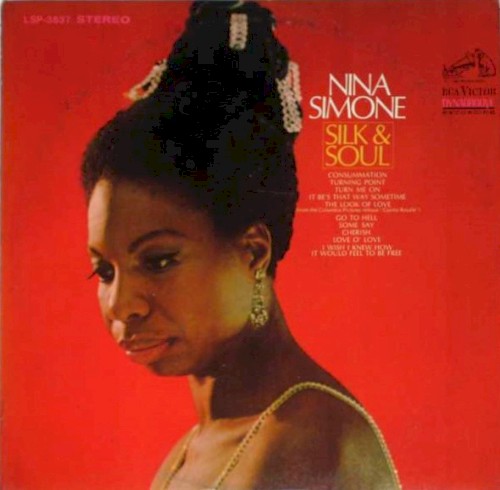
Its historical catalogue spans numerous genres, including classical music, jazz, blues, folk, calypso, gospel, rock and roll and traditional popular music. Among its best-known artists are Elvis Presley, Harry Belafonte, Sonny Rollins, Nina Simone and several major orchestral ensembles. Albums such as Elvis Presley (1956), Calypso (1956), Elvis Is Back! (1960) and Silk & Soul (1967) illustrate the diversity of its recordings.
RCA Victor is also associated with two significant advances in the recording industry: the commercial introduction of the 45 rpm record in 1949 and the development of stereophonic recordings, particularly through the classical Living Stereo series.
The distinction between RCA Victor and RCA Records evolved over the decades. RCA Victor represents a historic identity within the wider RCA catalogue, whose brands were progressively reorganised. Its name remains associated with archival recordings and various releases now belonging to Sony Music Entertainment's recorded music heritage.
History
1929-1948 — Victor's legacy and the establishment of RCA Victor
The label's origins reach back to the Victor Talking Machine Company, founded in 1901 by Eldridge R. Johnson. The American company manufactured phonographs and developed an extensive record catalogue, particularly in classical and popular music.
In 1929, the Radio Corporation of America acquired Victor. The acquisition combined RCA's broadcasting and electronics businesses with Victor's recording expertise. The RCA Victor name became increasingly established and began appearing directly on record labels in 1946.
The brand retained Victor's famous emblem: Nipper, the dog listening to a phonograph, associated with the His Master's Voice image. It continued developing orchestral recordings, popular performers and productions intended for new home entertainment equipment.
During the 1930s and 1940s, RCA Victor accompanied advances in electrical recording and sound reproduction. Its activities helped establish records as cultural products available to an increasingly broad audience.
1949-1959 — The 45 rpm record, Elvis Presley and Harry Belafonte
In 1949, RCA Victor introduced the seven-inch 45 rpm vinyl record. Designed particularly for individual songs, the format competed with the 33⅓ rpm long-playing record introduced by Columbia in 1948. It would become one of the principal formats for distributing singles.
In 1955, RCA acquired Elvis Presley's recording contract from Sun Records. The following year, Elvis Presley and Elvis accompanied the growing popularity of rock and roll, while the singer's earliest major hits achieved international recognition.
Harry Belafonte was another defining artist of this period. His album Calypso (1956), featuring Day-O (The Banana Boat Song), brought Caribbean musical influences to a broad American audience. It became one of the first albums to sell more than one million copies.
The label also released Porgy and Bess (1959), performed by Harry Belafonte and Lena Horne, while expanding its catalogue of folk, vocal jazz and traditional music.
Meanwhile, RCA Victor continued researching high-fidelity sound and stereophonic recording. Classical sessions recorded from 1954 onward formed the foundation of the prestigious Living Stereo series, associated with conductors including Fritz Reiner, Charles Munch and Arthur Fiedler.
1960-1975 — Jazz, soul and new directions in rock
In the early 1960s, RCA Victor continued its collaboration with Elvis Presley, releasing albums including Elvis Is Back! (1960), Something for Everybody (1961) and Pot Luck (1962). The singer also developed an extensive catalogue of soundtracks and religious recordings.
Harry Belafonte continued exploring American and Caribbean musical traditions with Swing Dat Hammer (1960), Jump Up Calypso (1961) and The Midnight Special (1962).
Jazz remained another important part of the label's identity. Sonny Rollins recorded several albums for RCA Victor, including The Bridge (1962) and The Standard Sonny Rollins, recorded in 1964 and released in 1965 in certain editions.
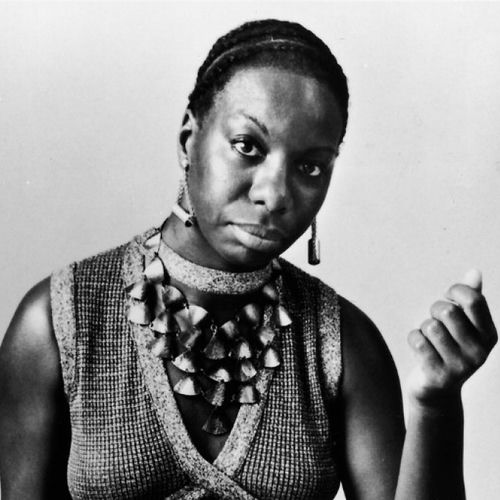
In 1967, Nina Simone joined the RCA Victor catalogue with Nina Simone Sings the Blues and Silk & Soul. Her recordings combined jazz, blues, soul and socially engaged songwriting during a period shaped by the American civil rights movement.
By the late 1960s, the RCA Records brand was becoming increasingly prominent in the marketing of new releases. RCA Victor nevertheless remained visible on certain editions and within various specialised repertoires.
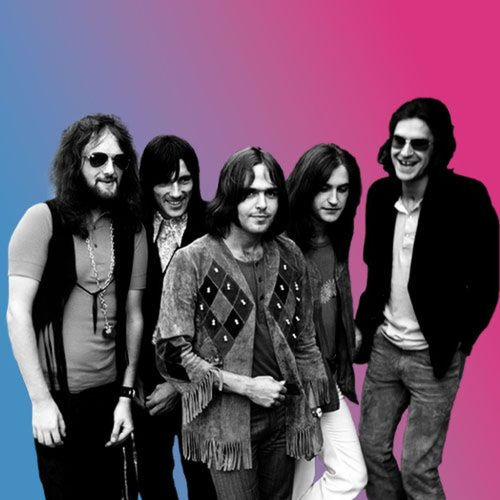
In the early 1970s, The Kinks entered a new recording period with RCA. Albums such as Muswell Hillbillies (1971), Everybody's in Show-Biz (1972) and Preservation Act 1 (1973) appeared under the RCA Victor name on certain American editions.
This development accompanied the expansion of the historical catalogue into rock music and increasingly ambitious narrative projects.
Since the 1980s — Recorded music heritage and reissues
Over the following decades, the various recording brands originating from RCA underwent several corporate reorganisations. In 1986, the recording business became part of Bertelsmann, before joining Sony BMG in 2004. In 2008, Sony acquired full ownership of the business.
The RCA Victor name remained associated with historical catalogues and certain classical, jazz, blues and world music releases. Recording rights and the labels appearing on individual editions varied between territories and periods.
Classical reissues occupy an important place within this heritage. The Living Stereo series, now managed through Sony Classical, has made recordings by Fritz Reiner, Charles Munch, Arthur Rubinstein, Jascha Heifetz and other major twentieth-century musicians available to new generations.
The wider RCA catalogue also includes international editions by artists such as Cesária Évora. Her album Voz d'Amor (2003) circulated under different labels associated with BMG, RCA, Bluebird and Lusafrica, depending on the market.
Today, RCA Victor remains a historic identity within the recorded music heritage managed by Sony Music. Its presence in catalogues and reissues reflects the continuing availability of these recordings, without being identical to the principal contemporary operations of RCA Records.
Distinctive Features
A major legacy in the recording industry
RCA Victor brings together the histories of the Victor Talking Machine Company and the Radio Corporation of America. Its identity is closely connected to the beginnings of commercial recording, phonographs and the expansion of the record market during the twentieth century.
Important contributions to recording formats and sound quality
The introduction of the 45 rpm record in 1949 fundamentally changed the distribution of popular music. The label's work on high-fidelity and stereophonic recordings, particularly through Living Stereo, forms another essential part of its technological legacy.
A catalogue spanning popular music and distinguished performances
Elvis Presley, Harry Belafonte, Sonny Rollins and Nina Simone illustrate RCA Victor's musical diversity. The label supported the development of rock and roll alongside the wider distribution of calypso, jazz, soul and classical music.
A historical identity distinct from RCA Records
RCA Victor and RCA Records share a common corporate history. The use of their names and logos evolved according to period, musical genre and territory. This distinction is important when identifying historical album editions.
Key Facts
- Established: 1929, following RCA's acquisition of the Victor Talking Machine Company.
- Origins: Victor Talking Machine Company, founded in 1901 by Eldridge R. Johnson.
- Visual identity: Nipper, the dog associated with His Master's Voice.
- Major innovation: introduction of the 45 rpm vinyl record in 1949.
- Rock and roll: Elvis Presley joined RCA in 1955.
- Historic success: Harry Belafonte's Calypso (1956).
- Jazz: recordings by Sonny Rollins and numerous orchestral ensembles.
- Soul and blues: Nina Simone's albums beginning in 1967.
- Classical music: the Living Stereo series, developed from recordings made as early as 1954.
- British rock: albums by The Kinks released under RCA Victor during the 1970s.
- Recorded music heritage: catalogues and reissues now associated with Sony Music Entertainment.