


Overview
Pixar Animation Studios is an American animation studio officially founded in 1986, although its roots go back to the Lucasfilm computer division created in the late 1970s.
Its history developed at the intersection of two ambitions long considered difficult to combine: creating digital technologies capable of transforming image production and using those tools to tell stories deeply centered on characters.
Figures such as Ed Catmull, Alvy Ray Smith, John Lasseter and Steve Jobs played decisive roles in that transformation.
Pixar began as a technology company developing the Pixar Image Computer, graphics software and rendering tools.
Its short films quickly demonstrated, however, that computer-generated imagery could serve purposes far beyond technical demonstrations.
Luxo Jr., directed by John Lasseter in 1986, managed to give personality and emotion to two simple desk lamps.
Two years later, Tin Toy became the first computer-animated film to win an Academy Award.
After several years of research, short films and commercials, Pixar partnered with Disney on an unprecedented project.
In 1995, Toy Story became the first feature film created entirely with computer animation.
The film transformed both Pixar and the animation industry.
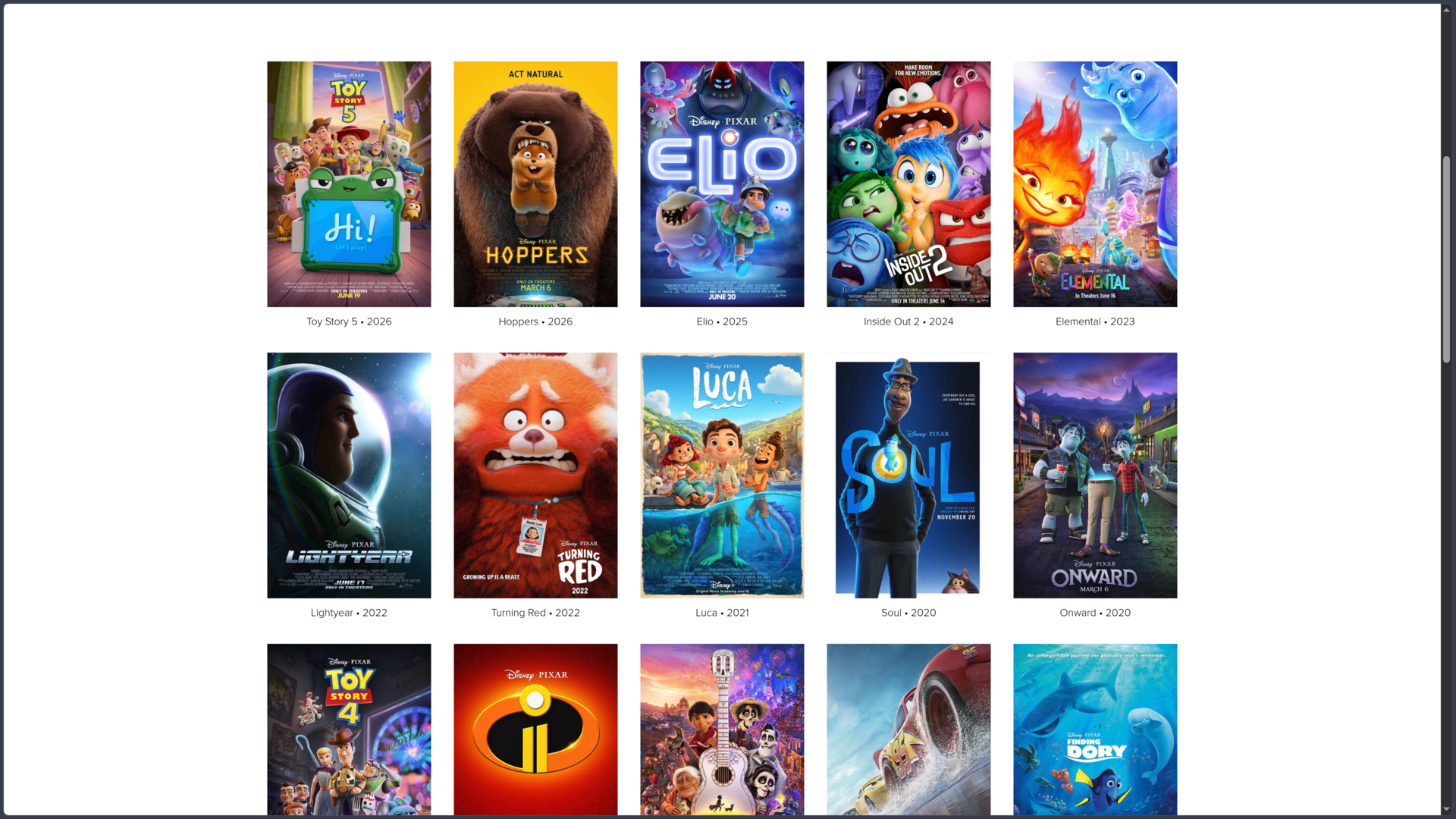
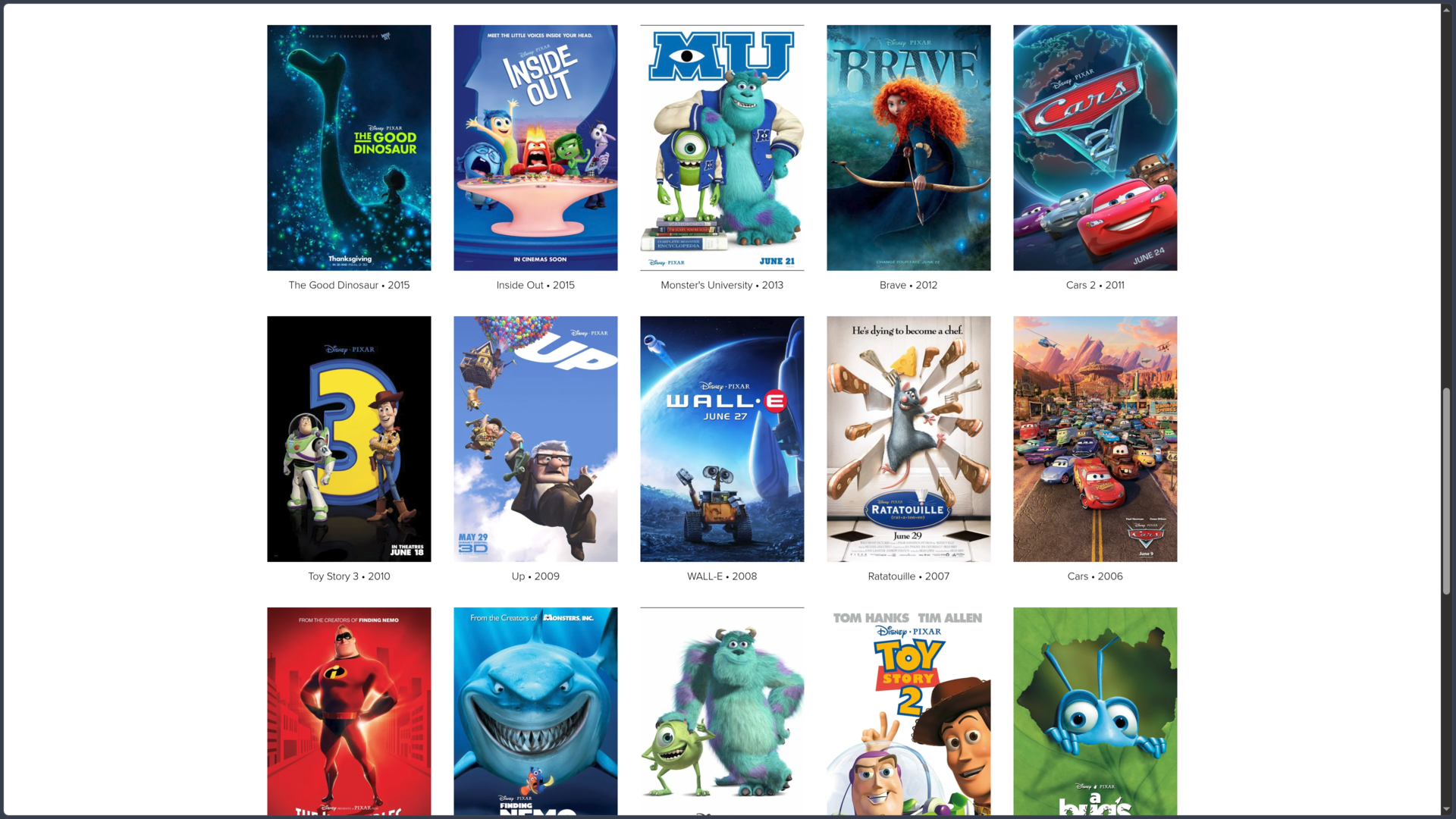
The studio then developed an extraordinary succession of original creations and franchises: Toy Story, A Bug’s Life, Monsters, Inc., Finding Nemo, The Incredibles, Cars, Ratatouille, WALL-E, Up, Brave, Inside Out, Coco, Soul, Luca, Turning Red and Elemental.
Its influence extends far beyond its films.
Pixar also developed technologies that became important across the industry, including RenderMan and Universal Scene Description, while continuously evolving its own internal production systems.
In 2006, after a long production and distribution relationship with Disney, The Walt Disney Company acquired Pixar.
The studio kept its identity, its Emeryville campus and substantial creative autonomy while becoming part of Disney.
In 2026, forty years after its official creation, Pixar remains one of the most influential animation studios in the world.
History
1979 — Roots at Lucasfilm
Pixar’s story begins before the Pixar name existed.
In 1979, George Lucas hired computer scientist Ed Catmull to lead Lucasfilm’s Computer Division.
Catmull had already spent several years pursuing one of his major goals: finding effective ways to use computers to create images for cinema.
The division was tasked with developing several new technologies for the film industry, including digital editing, digital sound, laser film printing and computer-generated imagery.
Alvy Ray Smith later joined the team and led computer-graphics research.
The group gradually brought together engineers, researchers and artists convinced that computers could become genuine filmmaking tools.
The first digital images
In the early 1980s, the team contributed to several important experiments.
It notably created the Genesis Effect sequence for Star Trek II: The Wrath of Khan.
The sequence shows a planet transforming through imagery generated entirely by computer.
The group also contributed work to Young Sherlock Holmes, whose animated stained-glass knight became an important step in integrating a digital character into live-action footage.
These experiments progressively demonstrated that computers could move beyond abstract graphics and become part of cinematic language itself.
John Lasseter and character animation
In the early 1980s, John Lasseter, a former Disney animator, began working with the group.
His arrival added an essential dimension.
The engineers could create impressive digital imagery, but Lasseter wanted to use the technology to create genuine characters.
In 1984, the team presented The Adventures of André & Wally B.
The short film featured flexible characters, elaborate textures and motion effects still rare in computer-generated imagery.
It became one of the first convincing demonstrations of character animation created by the team that would become Pixar.
1986 — Pixar becomes an independent company
In the mid-1980s, George Lucas decided to sell the computer division.
Steve Jobs, who had recently left Apple, acquired the group.
On February 3, 1986, Pixar officially became an independent company.
Around forty people worked at the company at the time.
Jobs became one of its principal financiers and leaders, while Ed Catmull continued developing its technological and creative activities.
At this stage, Pixar was not yet primarily a film studio.
The company notably tried to commercialize the Pixar Image Computer, a specialized machine designed for digital-image processing.
1986 — Luxo Jr.
That same year, John Lasseter directed Luxo Jr.
The short film features two desk lamps, one large and one small, interacting with a ball.
Despite having no faces or dialogue, the two objects display immediately understandable personalities.
That simplicity is precisely the film’s strength.
Pixar demonstrated that a computer could create emotion through movement and staging.
The smaller lamp later became the studio’s symbol and replaced the “I” in the Pixar logo.
An early collaboration with Disney
Beginning in 1986, Pixar also started working with Disney on the Computer Animation Production System, generally known as CAPS.
The digital system was designed to modernize parts of traditional animation production, particularly coloring and compositing.
Disney therefore became one of Pixar’s first major clients after the company’s creation.
This technological collaboration preceded the film partnership that would eventually lead to Toy Story by several years.
1987-1988 — RenderMan and Tin Toy
Pixar continued its research through Red’s Dream and later Tin Toy.
At the same time, the company developed its own tools.
Its internal animation system began taking shape, while the rendering technology that would become RenderMan developed into one of its most important technical achievements.
In 1988, Tin Toy told the story of a toy encountering a particularly intimidating baby.
The film later won the Academy Award for Best Animated Short Film.
It became the first computer-animated film to win an Oscar.
The award considerably strengthened Pixar’s artistic credibility.
1989 — RenderMan becomes commercial software
In 1989, Pixar released the first commercial version of RenderMan.
The software calculates images from information describing the objects, materials, lighting and cameras within a digital scene.
RenderMan soon expanded far beyond Pixar productions.
It would be used on numerous animated and visual-effects films throughout the industry.
That same year, Pixar also began producing commercials.
This work helped finance part of the company’s activity while allowing its artists to rapidly refine their production methods.
Andrew Stanton and Pete Docter
In the early 1990s, Pixar hired several creators who would later play major roles in its history.
Andrew Stanton and Pete Docter notably joined the studio.
They initially worked on commercials and short projects.
These productions allowed young teams to develop their ability to shape an idea, tell a story quickly and operate within real production schedules.
Much of Pixar’s future feature-film creative team began taking shape during this period.
1991 — The Disney agreement
In 1991, Disney and Pixar announced an agreement to make and distribute at least one computer-animated feature film.
The project would become Toy Story.
The ambition was enormous.
No studio had yet produced a feature film animated entirely through computer-generated imagery.
The technology therefore had to evolve alongside the film itself.
Pixar quickly understood, however, that technical achievement alone would not be enough.
The movie first had to work as a story.
Woody and Buzz
The development of Toy Story went through numerous transformations.
The teams imagined a world in which toys come alive whenever humans are not watching.
Two characters gradually structured the story: Woody, a cowboy convinced that he is Andy’s favorite toy, and Buzz Lightyear, a new space toy who believes he is an actual space ranger.
Their rivalry gradually becomes a friendship.
This emphasis on relationships between characters would define much of Pixar’s later storytelling approach.
1995 — Toy Story
On November 22, 1995, Toy Story opened in the United States.
It was the first feature film created entirely through computer animation.
The technical achievement was spectacular, but the film was also praised for its characters, humor and screenplay.
Toy Story became a worldwide success.
It earned more than $360 million at the box office and immediately established Pixar among the major animation studios.
John Lasseter received a Special Achievement Academy Award for his role in creating the first fully computer-animated feature film.
1995 — Pixar goes public
Only days after the release of Toy Story, Pixar launched its initial public offering.
The IPO took place on November 28, 1995.
The financial success was considerable.
Pixar went from a technology company repeatedly threatened by financial difficulties to a studio with the resources necessary to consider a genuine slate of feature films.
Steve Jobs, who had financed the company for years, saw his investment take on an entirely new scale.
1997 — A new agreement with Disney
Following the success of Toy Story, Pixar and Disney strengthened their partnership.
In 1997, the two companies reached a new agreement covering several feature films over roughly a decade.
Pixar produced the films while Disney handled financing and distribution responsibilities according to the terms of the arrangement.
The partnership would result in a succession of successes that profoundly transformed American animation.
1998 — A Bug’s Life
A Bug’s Life was released in 1998.
The film takes place in an ant colony threatened by grasshoppers.
It allowed Pixar to tackle technical challenges very different from those of Toy Story, particularly the depiction of vast natural environments and large numbers of characters.
More importantly, the film confirmed that the studio’s success did not depend only on Woody and Buzz.
Pixar could create new worlds capable of finding their own audiences.
1999 — Toy Story 2
Toy Story 2 was released in 1999.
Originally conceived as a direct-to-video production, the project grew in ambition and ultimately became a full theatrical feature.
The film explores Woody’s fear of being abandoned as his owner grows older.
This reflection on time and separation significantly deepened the universe of the first film.
Toy Story 2 became a major critical and commercial success.
Emeryville
At the end of the 1990s, Pixar began construction of a new campus in Emeryville, California.
The studio moved there in the early 2000s.
The campus architecture was designed to encourage encounters between artists, engineers, directors and other teams.
Its main building gradually became one of the symbols of Pixar’s internal culture.
The studio remains based in Emeryville today.
2001 — Monsters, Inc.
In 2001, Monsters, Inc. explored a world in which monsters use children’s screams as a source of energy.
The film notably introduced Sulley and Mike Wazowski.
Technically, Sulley’s fur presented a major challenge for the teams.
Narratively, Pixar once again used a fantastic concept to tell a simple emotional story, this time centered on Sulley’s relationship with the young Boo.
The film’s success confirmed the studio’s ability to rapidly create new properties.
2003 — Finding Nemo
In 2003, Finding Nemo took Pixar into an underwater environment.
Directed by Andrew Stanton, the film follows Marlin, an overprotective clownfish who crosses the ocean searching for his son Nemo.
Artists had to develop new methods for representing water, underwater movement, lighting and varied marine environments.
The film became a huge critical and commercial success.
It won the Academy Award for Best Animated Feature.
Nemo, Dory and several supporting characters quickly became iconic.
2004 — The Incredibles
With The Incredibles, Pixar entrusted a feature film for the first time to a director who came from outside the studio: Brad Bird.
The film follows a family of superheroes forced to live ordinary lives.
Its spectacular action is combined with themes of family, responsibility and identity.
The production also allowed Pixar to make major advances in animating human characters, clothing and particularly complex action sequences.
Tensions with Disney
Despite their shared success, relations between Pixar and Disney gradually became more difficult in the early 2000s.
The two companies debated how profits, rights and control over future films should be divided.
Steve Jobs began considering the possibility that Pixar might seek another distributor.
The situation changed significantly when Bob Iger became chief executive of The Walt Disney Company in 2005.
A new phase of negotiations began.
2006 — Cars
In 2006, Pixar released Cars, directed by John Lasseter.
The film imagines a world populated entirely by vehicles and follows race car Lightning McQueen.
Its success quickly expanded far beyond cinema.
Cars became one of Pixar’s most important properties in merchandise, attractions and broader franchise extensions.
The same year also marked a major transformation in the studio’s future.
2006 — Disney acquires Pixar
On January 24, 2006, Disney announced its intention to acquire Pixar for approximately $7.4 billion in stock.
The transaction was completed on May 5, 2006.
Pixar then became a company owned by The Walt Disney Company.
The agreement nevertheless preserved its identity and its Emeryville location.
Ed Catmull became president of Pixar and Walt Disney Animation Studios, while John Lasseter became Chief Creative Officer of both animation studios.
Steve Jobs, Pixar’s largest shareholder at the time, joined Disney’s board of directors and became one of the company’s largest individual shareholders.
Two distinct studios
The acquisition did not merge Pixar and Walt Disney Animation Studios into a single creative entity.
The two studios retained separate teams, cultures and productions.
This distinction played an important role in Pixar’s identity.
The studio could benefit from Disney’s distribution power and broader ecosystem while maintaining its own creative processes.
The Disney·Pixar branding nevertheless became closely associated with the studio’s releases.
2007 — Ratatouille
In 2007, Ratatouille, directed by Brad Bird, told the story of Remy, a rat passionate about cooking who dreams of becoming a chef in Paris.
The idea is deliberately improbable.
The film nevertheless turns it into a story about creativity, talent and the possibility of overcoming expectations tied to one’s origins.
Ratatouille won the Academy Award for Best Animated Feature.
It also became one of the clearest examples of Pixar’s ability to build a film around an unusual concept.
2008 — WALL-E
In 2008, WALL-E, directed by Andrew Stanton, pushed experimentation even further.
Much of the film’s opening uses very little dialogue.
The small robot tasked with cleaning an abandoned Earth expresses emotion primarily through movement, sound and behavior.
The film combines romance, science fiction and environmental themes.
WALL-E won the Academy Award for Best Animated Feature and established itself as one of the studio’s most distinctive works.
2009 — Up
In 2009, Up became the first animated film to open the Cannes Film Festival.
The film follows Carl Fredricksen, an elderly man who attaches thousands of balloons to his house to travel to South America, accompanied unintentionally by young Russell.
Its famous opening sequence tells the story of Carl and Ellie’s entire life together in only a few minutes.
Up also became one of the rare animated films nominated for the Academy Award for Best Picture.
2010 — Toy Story 3
Toy Story 3 was released in 2010, fifteen years after the original.
Andy is now preparing to leave home for college.
The toys must accept the end of an era and consider their own future.
The film turns the real aging of the Toy Story audience into part of its narrative.
It won the Academy Award for Best Animated Feature and became a major worldwide success.
2012 — Brave and a new generation of tools
In 2012, Pixar released Brave.
The film follows Merida, a Scottish princess determined to choose her own destiny.
Brave also marked a major internal technological transition.
Pixar gradually moved away from its old Menv animation system, used since the 1980s, toward a new platform called Presto.
The studio thus renewed its tools while preserving its philosophy of combining art and technology.
2015 — Inside Out
In 2015, Inside Out proposed directly representing the emotions of a young girl named Riley.
Joy, Sadness, Fear, Anger and Disgust became characters living inside her mind.
Directed by Pete Docter, the film uses a complex concept to explore childhood, memories and the role of different emotions.
Its critical and commercial success confirmed Pixar’s ability to transform abstract ideas into accessible stories.
The film won the Academy Award for Best Animated Feature.
2017 — Coco
In 2017, Coco explored Mexican culture and traditions surrounding Día de Muertos.
Young Miguel dreams of becoming a musician despite his family’s ban on music.
His journey into the Land of the Dead allows the film to explore memory, family and transmission between generations.
Coco became a major success, particularly in Mexico.
It also won the Academy Award for Best Animated Feature.
2018 — A change in creative leadership
In 2018, Pete Docter officially became Chief Creative Officer of Pixar.
Director of Monsters, Inc., Up and Inside Out, he had been part of the studio since 1990.
His appointment opened a new period in Pixar’s creative organization.
The studio progressively sought to develop a new generation of filmmakers and diversify the voices behind its productions.
2018 — Incredibles 2
That same year, Incredibles 2 brought the Parr family back fourteen years after the original film.
Its commercial success was enormous.
The film surpassed $1.2 billion at the worldwide box office.
It also demonstrated the strength of Pixar’s catalog, now capable of alternating between original creations and sequels awaited for many years.
2019 — Toy Story 4 and Ed Catmull’s departure
Toy Story 4 was released in 2019.
The film continued Woody’s story after Andy’s departure and introduced Forky.
It won the Academy Award for Best Animated Feature.
That same year, Ed Catmull fully retired from Pixar after several decades spent building and leading the studio.
His departure marked the end of a generation directly connected to Pixar’s technological origins.
SparkShorts
Pixar also launched SparkShorts, a program allowing new creative voices to make short films with smaller teams and lighter production methods.
Works such as Purl, Kitbull, Float and Out allowed the studio to experiment with new styles and subjects.
The program also played a role in identifying future directors and creative leaders.
2020 — Onward and the pandemic
Onward was released in March 2020, only days before the Covid-19 pandemic caused widespread theater closures.
Pixar had to adapt its organization rapidly.
Teams began working remotely while several weeks of production still remained on Soul.
Despite these exceptional circumstances, the film was completed on schedule.
2020 — Soul
Soul, directed by Pete Docter and co-directed by Kemp Powers, was ultimately released on Disney+ in December 2020.
The film follows Joe Gardner, a music teacher and jazz pianist whose life changes just as he believes he is finally reaching his dream.
Soul explores vocation, passion and the meaning found in an ordinary life.
It won the Academy Award for Best Animated Feature.
2021-2022 — Luca, Turning Red and Disney+
The following period saw several Pixar films released directly on Disney+ in many territories.
Luca arrived in 2021.
Turning Red, directed by Domee Shi, followed in 2022.
These productions developed more intimate worlds closely connected to childhood, friendship, families and the personal experiences of their directors.
The release strategy also raised questions about Pixar’s place in theaters.
Lightyear
In 2022, Pixar returned to theaters with Lightyear.
The film reinterprets Buzz Lightyear not as the Toy Story toy, but as the science-fiction hero who inspired that toy within the franchise’s universe.
This deliberately different approach divided audiences more than several previous Pixar productions.
It nevertheless illustrated the studio’s willingness to explore familiar properties from new angles.
2023 — Elemental
In 2023, Elemental, directed by Peter Sohn, introduced a city where residents associated with fire, water, air and earth coexist.
The film centers especially on the relationship between Ember and Wade.
After a relatively modest box-office opening, it showed strong staying power over the following weeks.
The project also had an important personal dimension for Peter Sohn, inspired in part by his family’s immigrant experience.
OpenUSD and Pixar technology
Technology remained a central part of the studio’s identity.
Pixar notably developed Universal Scene Description, generally abbreviated as USD or OpenUSD.
The technology allows different software tools and teams to share data describing complex 3D scenes more effectively.
In 2023, Pixar joined Adobe, Apple, Autodesk and NVIDIA to create the Alliance for OpenUSD, intended to support the standardization and development of the technology.
In 2024, the Academy recognized the work behind its creation with a Science and Engineering Award.
2024 — Inside Out 2
In 2024, Pixar returned to Riley’s mind with Inside Out 2.
Adolescence introduced new emotions, including Anxiety.
The film became a worldwide phenomenon.
It passed the billion-dollar mark by a wide margin and became Pixar’s biggest commercial success at that time.
Its triumph also confirmed the strength of the studio’s major established properties.
Pixar television series
Pixar progressively expanded into longer formats for Disney+.
In December 2024, Dream Productions expanded the Inside Out universe as a limited series.
In 2025, Win or Lose became Pixar’s first original long-form series.
It follows different members of a softball team during the week leading up to an important game, with each episode adopting a different point of view.
Pixar thus began exploring serialized storytelling more extensively alongside its feature films.
2025 — Elio
In 2025, Pixar released Elio.
The film follows a young boy fascinated by space who dreams of being abducted by aliens and accidentally finds himself presented as Earth’s representative to an intergalactic community.
Directed by Madeline Sharafian, Domee Shi and Adrian Molina, the film allowed the studio to return to an original science-fiction world after several years alternating between new creations and franchises.
RenderMan 27
In 2025, Pixar also continued developing RenderMan with version 27.
This generation placed significantly greater emphasis on the XPU engine, capable of using CPUs and graphics processors together for final-frame rendering.
Nearly four decades after its earliest versions, RenderMan therefore remained an active production and research tool.
Technology continued to be deeply connected to the studio’s culture.
2026 — Hoppers
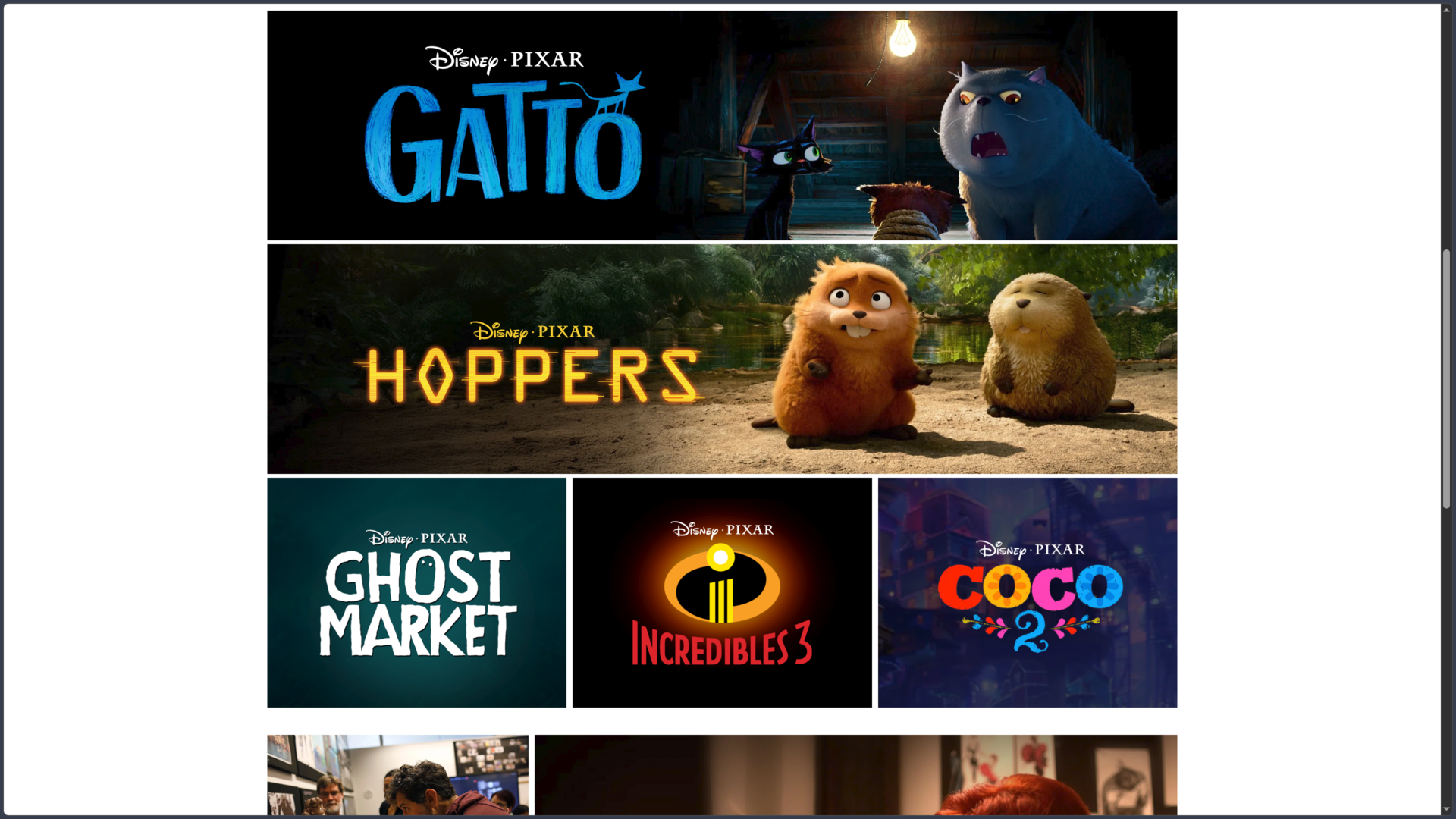
In March 2026, Pixar released Hoppers, directed by Daniel Chong.
The film follows Mabel, a young animal enthusiast who uses technology allowing her consciousness to be transferred into a robotic beaver so she can communicate with wildlife.
The project combines comedy, technology and observation of the natural world.
It illustrates Pixar’s desire to continue developing original universes alongside its established franchises.
2026 — Toy Story 5
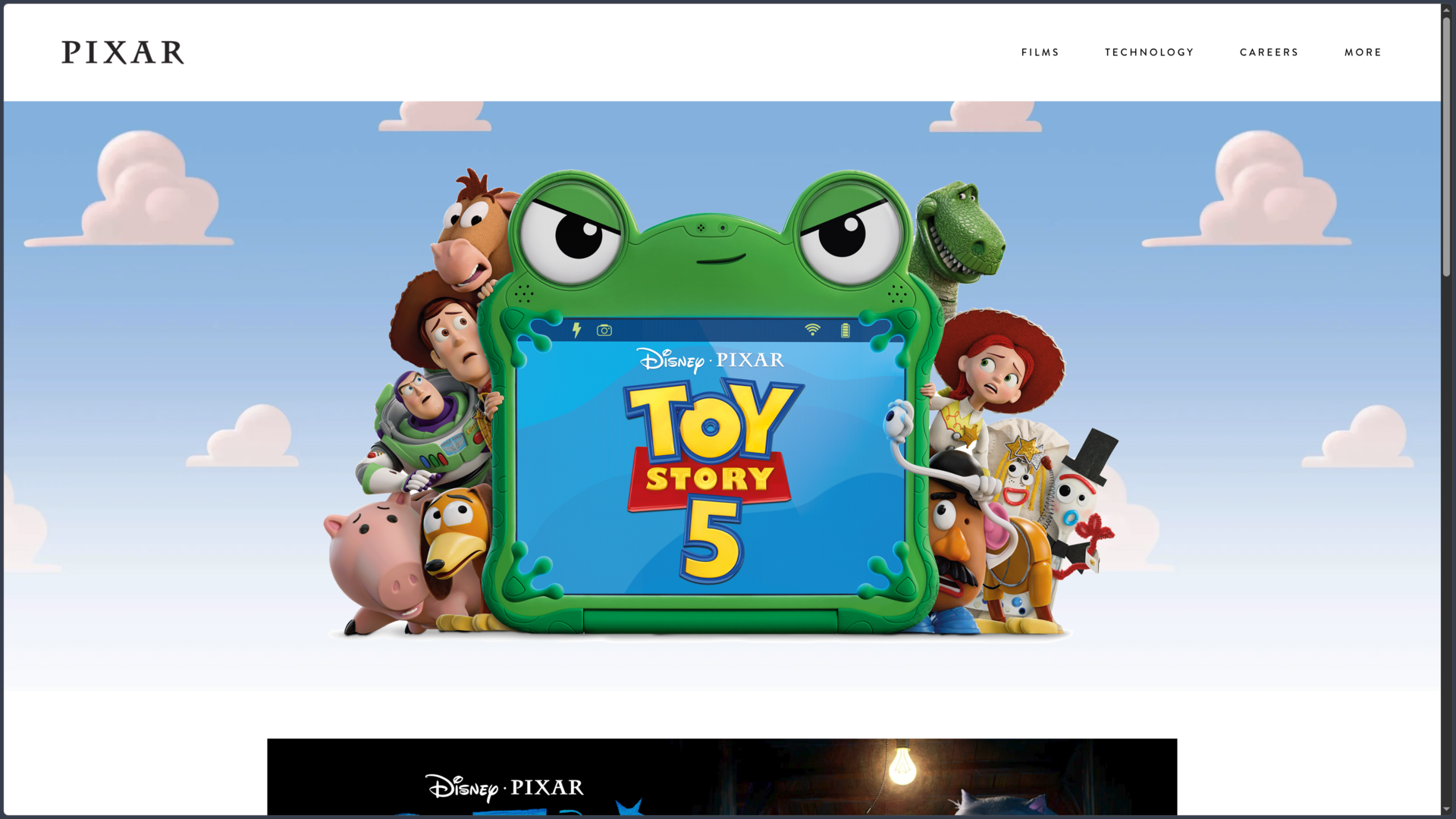
On June 19, 2026, Pixar returned to the franchise that launched its feature-film history with Toy Story 5.
Directed by Andrew Stanton with Kenna Harris, the film confronts the toys with a new question: what place remains for them when children increasingly devote their attention to screens?
Woody, Buzz, Jessie and their companions therefore find themselves facing Lilypad, a tablet that has become a new focus of Bonnie’s attention.
The film opened strongly and went on to surpass $1.1 billion at the worldwide box office.
More than thirty years after the first Toy Story, the franchise once again demonstrated that it remains one of Pixar’s central pillars.
2026 — Forty years of Pixar
The year 2026 also marks 40 years of Pixar as an independent company.
The studio has traveled an extraordinary distance since the roughly forty employees of 1986.
It evolved from selling specialized computers and graphics software into creating some of the most famous animated films in history.
Its culture nevertheless retains the same fundamental principle: artists and technologists work together rather than treating technology and storytelling as separate activities.
Renewed leadership
In 2026, Jim Morris serves as president of Pixar Animation Studios.
Pete Docter remains Chief Creative Officer.
Around them, directors and creative leaders from several generations contribute to the studio’s development, including Andrew Stanton, Domee Shi and Peter Sohn.
Pixar therefore prepares its future by combining historic franchises, new creations and the continuous evolution of its technology.
What sets it apart
The meeting of art and technology
Pixar was born from a group of researchers and engineers before becoming a film studio.
That origin remains fundamental.
The studio does not consider technology simply as a tool purchased from outside suppliers, but as a creative field in its own right.
RenderMan, internal animation systems and OpenUSD all reflect this culture.
The goal, however, remains to place these innovations at the service of artists and storytelling.
Toy Story and a historic breakthrough
Toy Story is not merely Pixar’s first major success.
It represents an important milestone in animation history.
By demonstrating that a feature film produced entirely through computer-generated imagery could succeed technically, artistically and commercially, Pixar helped transform the entire industry.
The widespread adoption of 3D animation over the following decades owes a great deal to this achievement.
Simple ideas behind extraordinary worlds
Pixar films often begin with concepts that are immediately understandable.
What do toys do when humans leave the room?
What if monsters scare children in order to generate energy?
What happens inside our minds when we feel an emotion?
What becomes of a robot left alone on Earth?
These ideas then serve as starting points for stories centered on universal relationships and experiences: friendship, family, fear of losing someone, aging, vocation, memory and transmission.
Imperfect characters
Pixar rarely favors heroes who are already complete.
Woody is jealous of Buzz.
Marlin must learn to let Nemo grow up.
Mr. Incredible remains trapped in nostalgia.
Lightning McQueen initially cares only about winning.
Joy rejects sadness.
Miguel must understand his family’s history.
These flaws give the characters genuine internal journeys and allow the stories to resonate beyond their fantastic settings.
A culture of short films
Short films play an essential role in Pixar’s history.
Luxo Jr., Tin Toy, Geri’s Game, For the Birds, Piper and Bao provide opportunities to experiment with technologies, visual styles and new forms of storytelling.
They also serve as training grounds for new directors.
This tradition predates Toy Story itself and remains one of the studio’s most distinctive characteristics.
Tools used beyond Pixar
Pixar’s technical influence extends far beyond its own films.
RenderMan has been used for decades in animation and visual effects.
OpenUSD has become an important technology for exchanging and organizing complex 3D scenes.
The studio therefore directly contributes to the development of tools that can be used by other creators and companies.
A distinct identity within Disney
Since 2006, Pixar has belonged to The Walt Disney Company.
The studio nevertheless maintains an identity separate from Walt Disney Animation Studios.
It has its own campus, teams, creative leadership and history.
This distinction allows Disney to operate two major animation studios with different approaches rather than combining them into a single creative structure.
Good to know
- Pixar Animation Studios was officially founded on February 3, 1986.
- Its origins go back to 1979, when George Lucas hired Ed Catmull to lead Lucasfilm’s Computer Division.
- Alvy Ray Smith later joined the division and played an important role in computer-graphics development.
- The future Pixar team contributed to the Genesis Effect sequence in Star Trek II: The Wrath of Khan.
- John Lasseter joined the team before Pixar’s official creation and helped develop computer-generated character animation.
- Steve Jobs acquired Lucasfilm’s Computer Division in 1986 and turned it into an independent company.
- Pixar had around 40 employees at the time.
- Luxo Jr. was released in 1986, and the small lamp later became the studio’s emblem.
- Pixar began collaborating with Disney in 1986 on the digital CAPS system.
- Tin Toy became the first computer-animated film to win an Academy Award.
- The first commercial version of RenderMan was released in 1989.
- Andrew Stanton and Pete Docter joined Pixar in the early 1990s.
- Disney and Pixar reached an agreement in 1991 to develop a computer-animated feature film.
- Toy Story was released on November 22, 1995.
- It was the first fully computer-animated feature film.
- Pixar launched its initial public offering on November 28, 1995.
- A Bug’s Life was released in 1998.
- Toy Story 2 was released in 1999.
- Pixar moved to its Emeryville, California campus in the early 2000s.
- Monsters, Inc. was released in 2001.
- Finding Nemo was released in 2003 and won the Academy Award for Best Animated Feature.
- The Incredibles was released in 2004.
- Cars was released in 2006 and became a major franchise beyond cinema.
- Disney announced the acquisition of Pixar in January 2006 for approximately $7.4 billion in stock.
- The acquisition was completed on May 5, 2006.
- Pixar and Walt Disney Animation Studios remain creatively distinct studios.
- Ratatouille was released in 2007.
- WALL-E was released in 2008.
- Up became the first animated film to open the Cannes Film Festival in 2009.
- Toy Story 3 was released in 2010 and won the Academy Award for Best Animated Feature.
- Brave introduced Pixar’s new internal Presto animation system in 2012.
- Inside Out was released in 2015.
- Coco was released in 2017 and became an especially major success in Mexico.
- Pete Docter became Pixar’s Chief Creative Officer in 2018.
- Incredibles 2 surpassed $1.2 billion at the worldwide box office.
- Ed Catmull retired from Pixar in 2019.
- The SparkShorts program provides an experimental space for new creative voices.
- Soul was completed remotely during the 2020 pandemic and released on Disney+.
- Luca was released in 2021 and Turning Red in 2022.
- Pixar became a founding member of the Alliance for OpenUSD created in 2023.
- Inside Out 2 became Pixar’s biggest commercial success at that time in 2024.
- Win or Lose, released in 2025, became the studio’s first original long-form series.
- Elio was released in 2025.
- RenderMan 27 introduced another major stage in the development of the XPU rendering engine.
- Hoppers was released in March 2026.
- Toy Story 5 was released on June 19, 2026 and surpassed $1.1 billion at the worldwide box office.
- Pixar celebrates its 40th anniversary in 2026.
- In 2026, Jim Morris is president of Pixar Animation Studios and Pete Docter is its Chief Creative Officer.
- Pixar remains part of The Walt Disney Company while maintaining its own creative identity and Emeryville campus.