







Overview
Illumination is an American animation studio founded in 2007 by producer Chris Meledandri.
From its creation, the company built a close relationship with Universal Pictures, which became its exclusive financing and distribution partner.
Illumination progressively developed a model different from that of many major American animation studios.
Creative development and overall production leadership are managed from the United States, while an essential part of its feature-film production is carried out in Paris by Illumination Studios Paris.
This Franco-American organization became one of the studio’s defining characteristics.
Its first feature film, Despicable Me, was released in 2010.
The film introduced Gru, a supervillain dreaming of stealing the Moon, as well as three young girls who gradually transform his life. But it also introduced the Minions, small yellow creatures whose visual comedy and largely incomprehensible language quickly expanded far beyond the film itself.
The success immediately established Illumination as a major new player in animation.
The studio then built several franchises: Despicable Me, Minions, The Secret Life of Pets and Sing, while also adapting Dr. Seuss properties through The Lorax and The Grinch.
Beginning in 2023, its collaboration with Nintendo opened a new dimension with The Super Mario Bros. Movie, a worldwide blockbuster followed in 2026 by The Super Mario Galaxy Movie.
Illumination stands out through productions generally built around instantly recognizable characters, highly visual comedy, family stories accessible to international audiences and especially strong franchise management.
By 2026, its films had generated more than $10 billion in cumulative worldwide box-office revenue, making it one of the leading players in contemporary commercial animation.
History
2007 — Chris Meledandri founds Illumination
Chris Meledandri founded Illumination in 2007.
Before creating the company, he had gained significant experience in animated filmmaking, notably at 20th Century Fox Animation.
When launching his own company, his goal was not simply to reproduce the operating model of the major established studios.
Illumination was designed to remain relatively flexible, develop concepts with strong international potential and maintain careful control over production costs.
That same year, Universal Pictures reached an agreement with the new studio.
The relationship immediately became structural.
Universal notably provided financing and global distribution power, while Illumination retained strong creative responsibility over its productions.
This organization would remain central throughout the studio’s history.
A leaner model
Illumination developed around a distinctive economic philosophy.
Rather than systematically trying to produce the most expensive animated films in the industry, the company sought to focus its resources on characters, stories, comedy and production efficiency.
Chris Meledandri favored concepts that were easy to understand but distinctive enough to reach worldwide audiences.
The studio also operated with a relatively compact American structure compared with the enormous in-house production departments of historic majors.
A large part of the actual image production would instead take place in France.
The partnership with Mac Guff
For its first major project, Illumination worked with French studio Mac Guff, based in Paris.
Mac Guff already possessed extensive experience in digital imagery, animation and visual effects.
The collaboration proved decisive.
Paris-based artists and technicians handled the production of Despicable Me, establishing a relationship that quickly grew beyond a one-off service arrangement.
The connection between American and French teams gradually became one of the pillars of the Illumination model.
2010 — Despicable Me
In 2010, Illumination released its first feature film, Despicable Me.
Directed by Pierre Coffin and Chris Renaud, the film follows Gru, a supervillain preparing an extravagant plan to steal the Moon.
To achieve his goal, Gru adopts three young girls, Margo, Edith and Agnes.
What begins as manipulation gradually becomes a genuine family relationship.
The film therefore combines comedy, science fiction, eccentric characters and a story about fatherhood.
Its success exceeded expectations for the debut film of a new studio.
Illumination immediately had a universe capable of expanding across multiple productions.
The birth of the Minions
Despicable Me also introduced the Minions.
Gru’s small yellow assistants were originally supporting characters.
Their chaotic behavior, simple silhouettes, physical comedy and language mixing sounds and expressions from several languages nevertheless made them instantly recognizable.
Pierre Coffin also became one of the characteristic voices behind the characters.
The Minions quickly escaped the narrative boundaries of Gru’s story.
They appeared in short films, games, merchandise, attractions and promotional campaigns.
Few animated characters created during the 2010s achieved comparable cultural visibility.
2011 — Hop
Illumination’s second feature film was Hop, released in 2011.
Unlike Despicable Me, it mixed computer animation with live-action footage.
The story imagines the Easter Bunny’s son refusing to inherit the family business because he dreams of becoming a drummer.
The production showed that Illumination initially considered several forms of family entertainment and did not yet intend to focus exclusively on fully animated feature films.
The success of Despicable Me, however, progressively shaped the studio’s identity around animation.
2011 — A permanent Paris production structure
The partnership with Mac Guff became important enough to change scale.
In 2011, Mac Guff’s animation division was integrated into a new structure dedicated to Illumination productions.
It became known as Illumination Mac Guff.
The studio remained based in Paris and brought together artists, animators, engineers and technicians responsible for producing the feature films.
Mac Guff’s historic visual-effects activities continued on their own path.
The operation gave Illumination a stable production infrastructure in France.
Illumination Studios Paris
Illumination Mac Guff later became Illumination Studios Paris.
The Paris studio now serves as the principal production center for Illumination feature films.
This structure creates a particularly distinctive identity.
Creative direction and development remain closely connected to the American teams, while animation production relies heavily on French expertise.
Illumination is therefore an American studio with an industrial identity deeply connected to Paris.
2012 — The Lorax
In 2012, Illumination adapted The Lorax, based on the work of Dr. Seuss.
The film follows a young boy living in a city where nature has almost disappeared and discovering the story of the Lorax, protector of the trees.
The project allowed the studio to explore a property already familiar to American audiences while developing its own colorful visual approach.
The film achieved strong commercial success.
It also opened a lasting relationship between Illumination and the world of Dr. Seuss.
2013 — Despicable Me 2
Despicable Me 2 was released in 2013.
Gru is no longer the solitary supervillain of the first film.
Now a father, he is recruited by a secret organization tasked with fighting new criminals.
The film notably introduces Lucy Wilde, who gradually becomes a major member of the family.
Its commercial success exceeded that of the first film.
The production also received an Academy Award nomination for Best Animated Feature.
The franchise definitively became the core of Illumination’s business.
The Minions become increasingly important
In Despicable Me 2, the Minions take on an even larger role.
Their popularity leads to a rapid expansion of merchandise and promotional appearances.
Their language, goggles, overalls and yellow color form an instantly recognizable visual identity.
Universal also begins expanding their presence in its theme parks.
The Minions progressively become a brand almost as important as Despicable Me itself.
2015 — Minions
In 2015, the Minions received their own feature film.
Minions follows their search for a master to serve before they eventually meet Gru.
Kevin, Stuart and Bob notably set out to find a new supervillain and encounter Scarlet Overkill.
The film became a massive worldwide hit.
It surpassed one billion dollars at the global box office.
Illumination therefore demonstrated that supporting characters could carry an independent franchise.
The studio now controlled one of the most powerful properties in global family entertainment.
2016 — The Secret Life of Pets
In 2016, Illumination launched The Secret Life of Pets.
Its premise is built around an instantly understandable question: what do pets do when their owners leave the house?
The film notably follows Max, a New York dog whose life is disrupted when his owner adopts another dog, Duke.
Illumination again found a formula that would become characteristic of the studio: beginning with a simple idea that could be understood immediately across different cultures.
The film became one of the year’s major animated successes.
A new franchise had been created.
2016 — Sing
That same year, Sing, written and directed by Garth Jennings, imagined a world populated by animals in which koala Buster Moon tries to save his theater through a singing competition.
The film makes extensive use of popular music.
Behind that musical dimension, however, every contestant has an individual story involving stage fright, family difficulties, artistic ambitions or the desire to escape an imposed life.
The success of Sing added another major property to Illumination’s catalog.
A studio built around franchises
Within only a few years, Illumination had therefore built several universes capable of continuing over time.
Despicable Me, Minions, The Secret Life of Pets and Sing each featured instantly recognizable characters.
This strategy allowed the studio to avoid depending on a single series.
Illumination would subsequently alternate between sequels, spin-offs, new creations and adaptations.
Audience recognition itself became an important part of its commercial power.
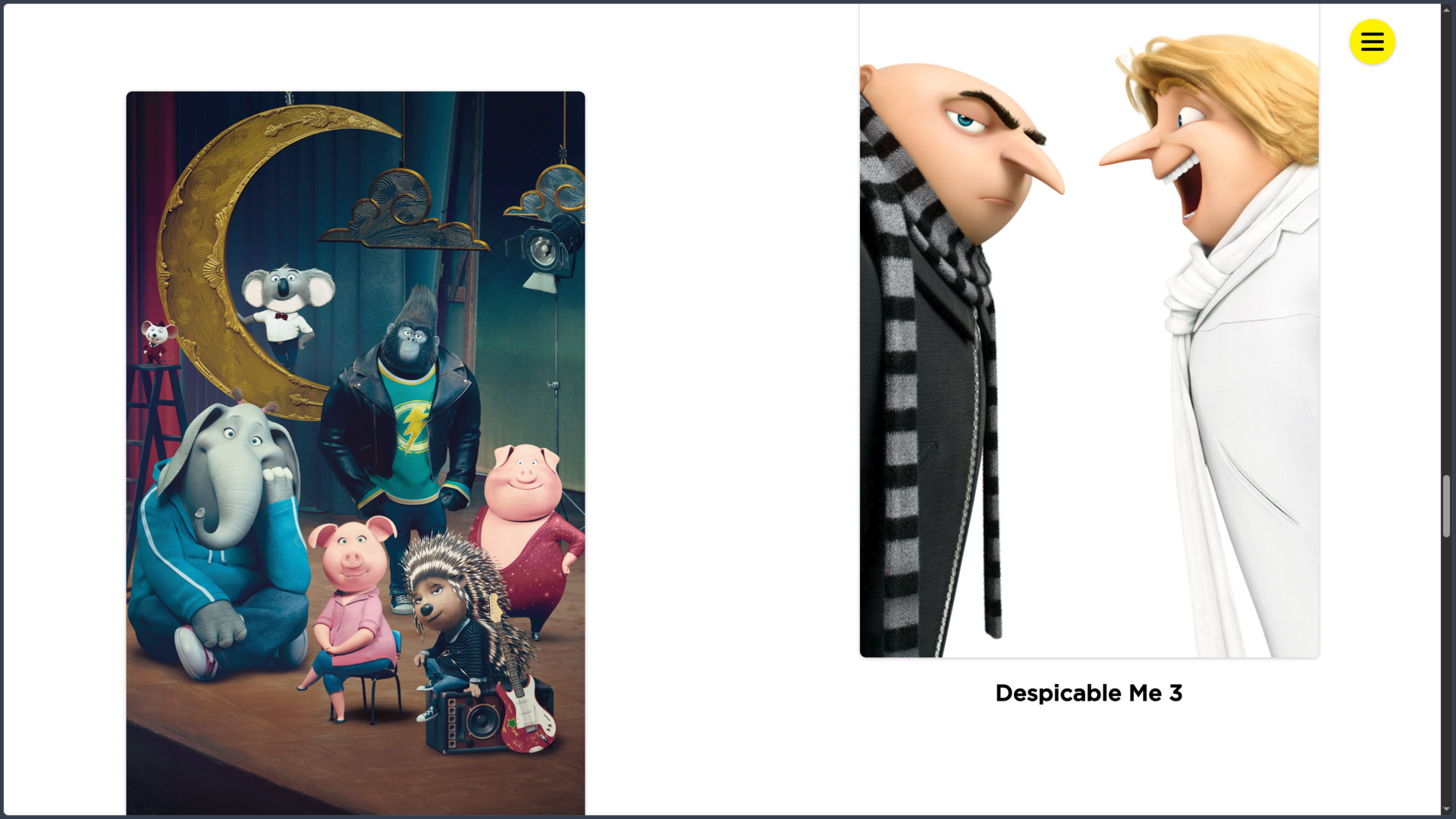
2017 — Despicable Me 3
Despicable Me 3 was released in 2017.
The film introduces Dru, Gru’s twin brother, as well as villain Balthazar Bratt.
The franchise reached another commercial milestone.
The film also passed one billion dollars at the worldwide box office.
The series therefore confirmed a rare level of longevity in contemporary animation.
Gru, his family and the Minions could evolve separately while still belonging to the same universe.
2018 — The Grinch
In 2018, Illumination returned to Dr. Seuss with The Grinch.
Benedict Cumberbatch voices the character in the original English version.
The studio reinterprets the famous Christmas story centered on the Grinch, a solitary creature determined to prevent the residents of Whoville from celebrating the holidays.
The adaptation adopts the colorful, rounded visual style associated with Illumination.
The film achieved strong international success and became another demonstration of the studio’s ability to reinterpret characters already deeply established in popular culture.
2019 — The Secret Life of Pets 2
The Secret Life of Pets 2 was released in 2019.
The sequel develops several parallel stories around the animals introduced in the first film.
It notably deepens Max’s evolution as his family changes.
The franchise retains its physical comedy and exaggerated observation of pet behavior.
Although its impact was smaller than that of the original, the universe remained one of Illumination’s important properties.
2020 — Production during the pandemic
Like the rest of the animation industry, Illumination had to adapt its operations during the Covid-19 pandemic.
The digital nature of its production allowed teams to continue working, but coordination between the United States and Paris had to evolve quickly.
Several release schedules were changed.
The period notably delayed Minions: The Rise of Gru, which had originally been expected earlier.
The film ultimately reached theaters in 2022.
2021 — Sing 2
Sing 2 was released at the end of 2021.
Buster Moon and his troupe now attempt to stage a far more ambitious show in the major city of Redshore City.
The story notably introduces Clay Calloway, a former rock star who has withdrawn from public life.
Like the first film, the production combines popular songs, comedy and personal journeys.
The sequel consolidated Sing as one of Illumination’s principal franchises.
2022 — Minions: The Rise of Gru
In 2022, Minions: The Rise of Gru revisited Gru as a child in the 1970s.
The film shows his first steps toward the supervillain career he dreams of pursuing.
The Minions remain at the center of the action, including Kevin, Stuart, Bob and Otto.
Its release became a particularly visible cultural phenomenon among younger audiences.
The film’s success again brought the franchise close to the billion-dollar mark at the worldwide box office.
Despicable Me becomes a gigantic franchise
Across its main films and Minions spin-offs, the Despicable Me universe became Illumination’s central property.
By 2026, the franchise had generated several billion dollars worldwide and ranked among the most important animated franchises in cinema history.
Its success does not rely only on films.
Games, attractions, clothing, toys, food products and experiences in Universal parks constantly extend the presence of the characters.
The Minions therefore became a worldwide brand in their own right.
2023 — The Super Mario Bros. Movie
In 2023, Illumination entered a property of a very different scale with The Super Mario Bros. Movie.
The film was developed with Nintendo.
Chris Meledandri produced the project alongside Shigeru Miyamoto, creator of Mario and a historic figure at Nintendo.
The film was directed by Aaron Horvath and Michael Jelenic.
It brought Mario, Luigi, Peach, Bowser, Toad and many elements from the games into an animated feature designed to remain closely aligned with Nintendo’s visual identity.
A worldwide phenomenon
The Super Mario Bros. Movie became a massive success.
The film surpassed $1.3 billion in worldwide box-office revenue.
It became one of the biggest commercial successes in animation history and one of the highest-grossing video-game adaptations ever made.
For Illumination, the result had major strategic significance.
The studio demonstrated that it could not only build its own characters, but also adapt a huge outside property without erasing the identity of its original creator.
The partnership with Nintendo
The collaboration between Illumination and Nintendo relies on direct involvement from both companies.
Chris Meledandri and Shigeru Miyamoto jointly participate in production.
This structure combines Illumination’s filmmaking experience with Nintendo’s exceptionally detailed knowledge of its characters.
The success of the first film naturally led to further collaboration.
Mario became another major part of Illumination’s production catalog.
2023 — Migration
At the end of 2023, Illumination also released an original film with Migration.
The story follows the Mallard family, ducks who leave their New England pond to travel toward Jamaica.
Father Mack initially prefers the safety of their familiar life, while Pam wants their children to discover the wider world.
The journey gradually changes the family’s relationship with risk, each other and the unknown.
The screenplay was written by Mike White.
Migration showed that Illumination continued developing original creations alongside its major franchises.
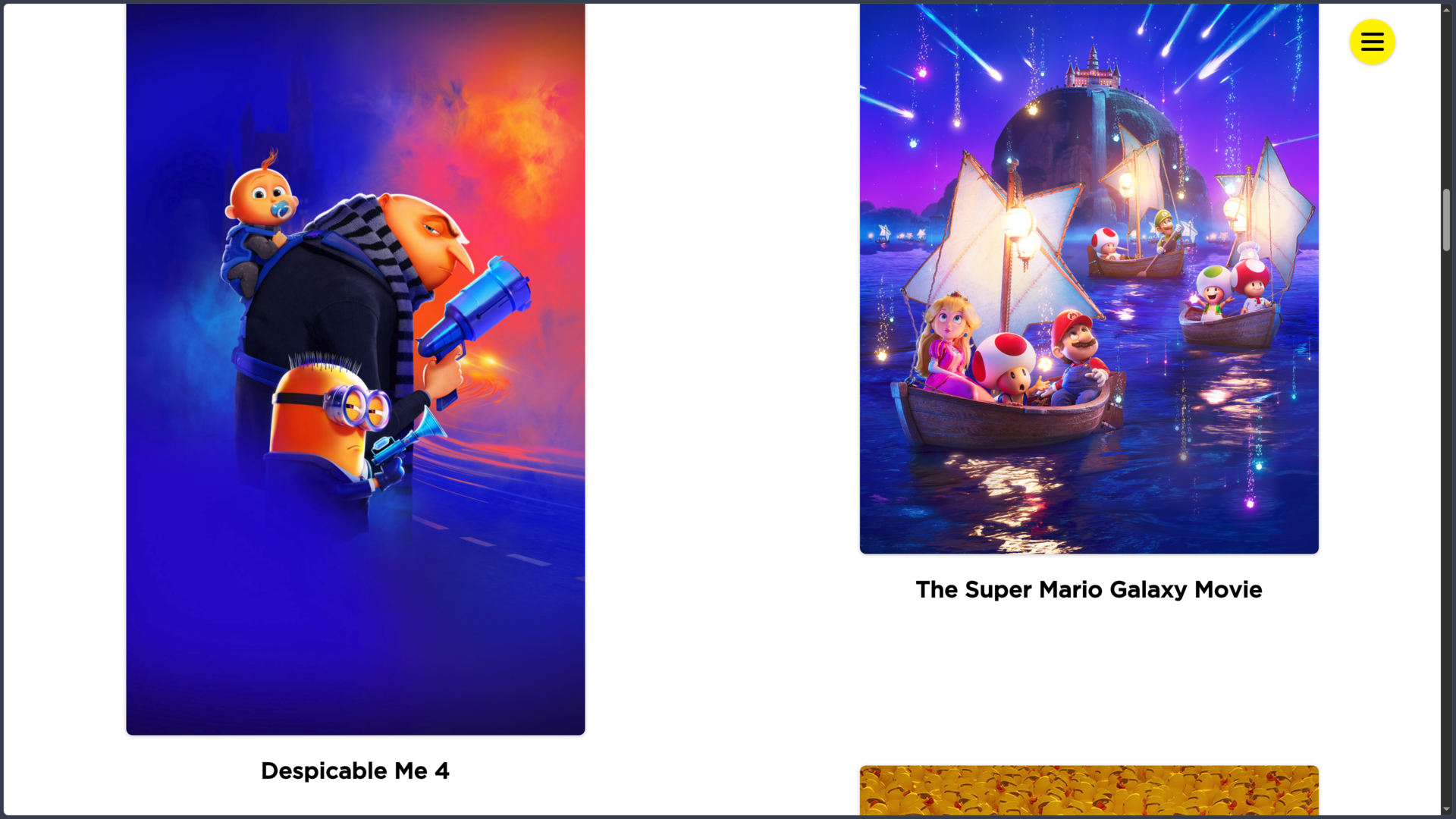
2024 — Despicable Me 4
In 2024, Despicable Me 4 brought back Gru, Lucy, Margo, Edith, Agnes and the Minions.
The family also welcomes Gru Jr.
The film introduces a new adversary, Maxime Le Mal, forcing the characters to temporarily abandon their usual life.
Chris Renaud, co-director of the original Despicable Me, returned to direct.
The film became another worldwide success and confirmed the franchise’s exceptional durability nearly fifteen years after its debut.
More than $10 billion
The succession of Illumination hits gradually reached a remarkable scale.
The studio’s films collectively surpassed $10 billion in worldwide box-office revenue.
The achievement is especially notable for a company founded only in 2007 and operating with a much smaller catalog than Disney or century-old Hollywood studios.
Its concentration on a limited number of extremely popular properties is one of the central reasons behind that success.
The Minions in Universal theme parks
Illumination’s relationship with Universal also allows its characters to extend beyond cinema.
Despicable Me Minion Mayhem attractions appeared in several Universal parks.
Entire areas dedicated to the Minions were later developed, including shops, restaurants and new attractions.
This integration progressively turned Illumination characters into permanent parts of the Universal ecosystem.
The studio therefore became more than a film producer: its properties support a much broader entertainment network.
2026 — The Super Mario Galaxy Movie
In April 2026, Illumination and Nintendo continued their collaboration with The Super Mario Galaxy Movie.
Aaron Horvath and Michael Jelenic returned as directors, while Chris Meledandri and Shigeru Miyamoto again served as producers.
The film greatly expanded the universe introduced in 2023 with a cosmic adventure inspired notably by the imagery of the Super Mario Galaxy series.
Universal Pictures once again handled worldwide distribution.
Its success was immediate.
Another billion-dollar Mario film
In June 2026, The Super Mario Galaxy Movie surpassed $1 billion at the worldwide box office.
It became the first film released in 2026 to cross that threshold.
The two Super Mario films produced by Illumination therefore exceeded two billion dollars combined.
The partnership between Nintendo, Illumination and Universal established itself as one of the most important collaborations in contemporary animation.
Mario also became one of the most commercially significant properties in Illumination’s history.
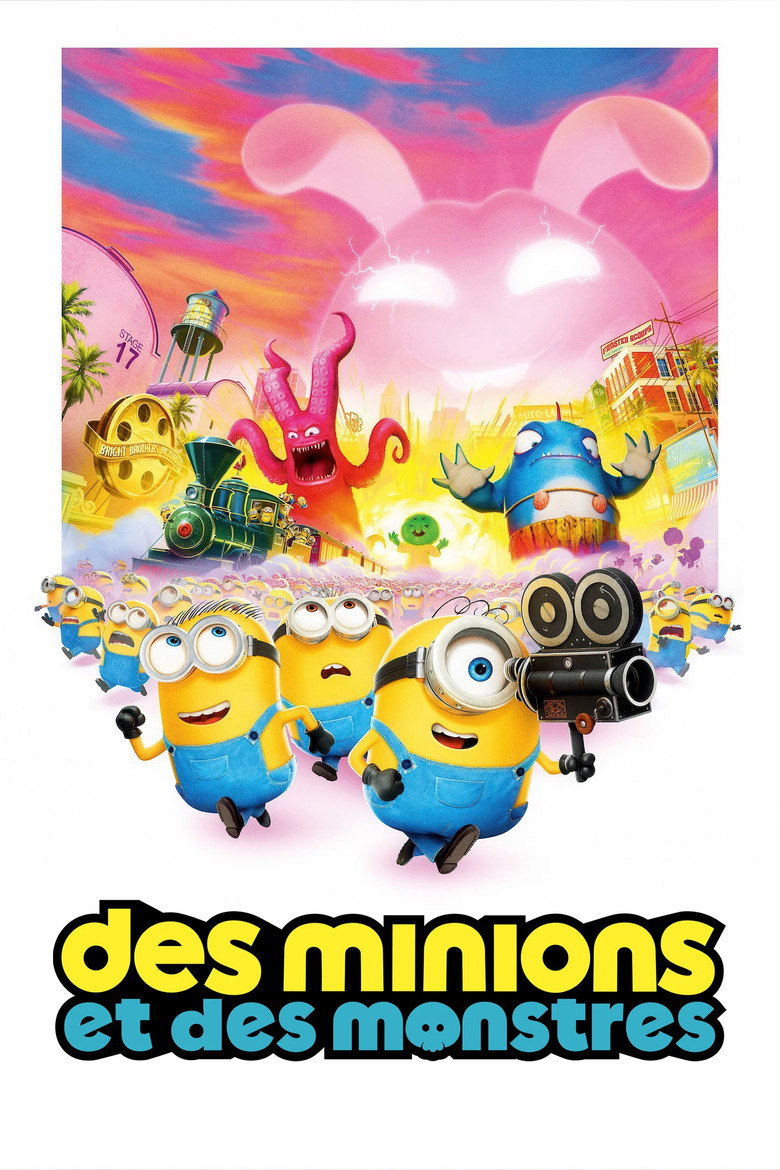
2026 — Minions & Monsters
Illumination also continued expanding its historic universe with Minions & Monsters in 2026.
The film notably introduces new Minions, James and Henry, in a story connected to the early days of Hollywood.
The characters discover filmmaking, briefly become stars and then attempt to make their own monster movie.
The project allows Pierre Coffin to return to directing a feature connected to the Minions.
He also continues providing the distinctive voices of the characters he has accompanied since their creation.
The film also secured a significant place at the worldwide box office in 2026.
2026 — Illumination continues to expand
In 2026, Illumination remains led by founder and CEO Chris Meledandri.
The studio is based in Santa Monica, California, while Illumination Studios Paris serves as its principal feature-animation production center.
Its exclusive financing and distribution partnership with Universal Pictures remains central to its operating model.
In less than twenty years, Illumination has created several characters that became instantly recognizable around the world.
The studio now develops its historic franchises, its collaboration with Nintendo and new properties in parallel.
What sets it apart
A Franco-American model
Illumination’s organization is particularly distinctive.
Development and overall studio leadership are based in the United States.
A large part of the actual film production, however, relies on Illumination Studios Paris.
This structure therefore combines Hollywood production with French expertise in computer animation.
The collaboration that began with Despicable Me became a permanent characteristic of the studio’s identity.
Instantly recognizable characters
Illumination places particular importance on silhouette, behavior and visual readability.
The Minions are the clearest example.
Only a few elements are needed to identify them: yellow skin, overalls, goggles, simple proportions and absurd language.
Gru, Max, Buster Moon and the principal characters of Sing also rely on highly readable visual identities.
This simplicity makes them easy to recognize among international audiences.
Visual comedy
A large part of Illumination’s humor does not depend solely on dialogue.
Falls, gestures, exaggerated reactions and absurd situations play essential roles.
The Minions can therefore work with audiences speaking very different languages.
This visual dimension sometimes recalls the tradition of cartoons and physical comedy.
It contributes strongly to the films’ worldwide accessibility.
Easy-to-understand concepts
The studio’s productions often begin with ideas that can be summarized very simply.
A supervillain adopts three children.
What do pets do when their owners are away?
Animals enter a singing competition.
A family of ducks decides to migrate.
This immediate clarity does not mean the films lack emotional themes, but it makes them easier to present and understand for very broad audiences.
Tight budget management
Illumination has historically distinguished itself through its ability to produce animated feature films with controlled budgets compared with several of its major American competitors.
This financial discipline lowers the level of box-office revenue needed for a film to become profitable.
It also encourages a relatively consistent release schedule.
The model contributes significantly to the company’s economic success.
Turning supporting characters into franchises
The Minions initially appeared as supporting characters in Despicable Me.
Their popularity later transformed them into stars of their own films.
Illumination therefore quickly identifies characters capable of existing outside their original stories.
This flexibility gives the studio more ways to expand its universes without depending exclusively on direct sequels.
Adapting properties with strong identities
With Dr. Seuss and especially Nintendo, Illumination has shown that it can work with highly recognizable pre-existing universes.
The case of Super Mario is particularly important.
Rather than radically reinventing the characters, the films retain much of the visual style, sounds, environments and references associated with the games.
This approach helps reassure audiences already deeply attached to the original property.
Universal as a long-term partner
Illumination’s relationship with Universal Pictures has existed since the studio’s creation.
Universal exclusively finances and distributes its films.
This continuity gives Illumination access to worldwide infrastructure without requiring it to build a distribution network comparable to that of a major studio.
In return, Illumination’s franchises strengthen Universal’s family catalog and also feed its theme parks and merchandising activities.
Good to know
- Illumination was founded in 2007 by producer Chris Meledandri.
- Chris Meledandri remains the studio’s founder and CEO in 2026.
- Universal Pictures entered into an agreement with Illumination in 2007.
- Illumination has an exclusive financing and distribution partnership with Universal Pictures.
- Illumination is headquartered in Santa Monica, California.
- Its principal production studio, Illumination Studios Paris, is based in Paris.
- Despicable Me was Illumination’s first feature film, released in 2010.
- The film was directed by Pierre Coffin and Chris Renaud.
- Despicable Me introduced Gru, Margo, Edith, Agnes and the Minions.
- Production on the first film was carried out with French studio Mac Guff.
- Hop, released in 2011, combines animation and live action.
- In 2011, Mac Guff’s animation division was integrated into the structure that became Illumination Mac Guff.
- That structure is now known as Illumination Studios Paris.
- The Lorax was released in 2012.
- Despicable Me 2 was released in 2013 and received an Academy Award nomination for Best Animated Feature.
- Minions was released in 2015 and surpassed $1 billion at the worldwide box office.
- The Secret Life of Pets was released in 2016.
- Sing was also released in 2016.
- Despicable Me 3 was released in 2017 and also surpassed $1 billion worldwide.
- The Grinch was released in 2018.
- The Secret Life of Pets 2 was released in 2019.
- Sing 2 was released in 2021.
- Minions: The Rise of Gru was released in 2022.
- The Despicable Me / Minions universe became one of the most important animated franchises in cinema history.
- The Minions also appear in several Universal theme parks through attractions, themed areas and merchandise.
- The Super Mario Bros. Movie was released in 2023.
- The film was produced by Chris Meledandri and Shigeru Miyamoto.
- It was developed in collaboration with Nintendo.
- The Super Mario Bros. Movie surpassed $1.3 billion in worldwide box-office revenue.
- Migration was released in 2023 from a screenplay by Mike White.
- Despicable Me 4 was released in 2024.
- Illumination films collectively surpassed $10 billion in worldwide box-office revenue.
- The Super Mario Galaxy Movie was released in April 2026.
- The film again brought together Illumination, Nintendo and Universal Pictures.
- The Super Mario Galaxy Movie surpassed $1 billion worldwide in 2026.
- The two Super Mario films produced by Illumination surpassed $2 billion in combined worldwide box-office revenue.
- Minions & Monsters was released in 2026 and continued the Despicable Me / Minions franchise.
- Pierre Coffin directed Minions & Monsters and continued providing voices for the Minions.
- In 2026, Illumination remains based in the United States with its principal animation-production center in Paris.
- The studio continues developing its own franchises alongside its film collaboration with Nintendo.