
Overview

Before making a video game, Ember Lab already knew how to create a gaze.

A silhouette.

An expression.

A light.

A camera movement.

A few seconds capable of making a character understandable before they even speak.

During its first years, the studio did not develop games.

It worked in animation and digital content.

Commercials.

Short films.

Characters.

Computer-generated imagery.

Then a fairly logical question appeared.

What happens when the character you animate stops following the camera…

…and the player decides where to go?

That is probably where the video game history of Ember Lab truly begins.

Founded in 2009 in California by brothers Mike and Josh Grier, the studio first built its expertise around cinema and animation.

It notably worked for clients such as Coca-Cola, Hisense and MLB.

It created narrative projects.

Experimented with characters.

Combined technology with art direction.

Then, gradually, video games stopped being merely a parallel passion.

They became the natural continuation of the work.

The transition can be seen particularly clearly through two projects.

Dust, a short film released in 2014.

Then Majora’s Mask – Terrible Fate, a fan film based on The Legend of Zelda, in 2016.

In both cases, Ember Lab demonstrated its ability to create cinematic worlds with a relatively small team.

But the problem remained the same.

The audience watched.

It did not touch.

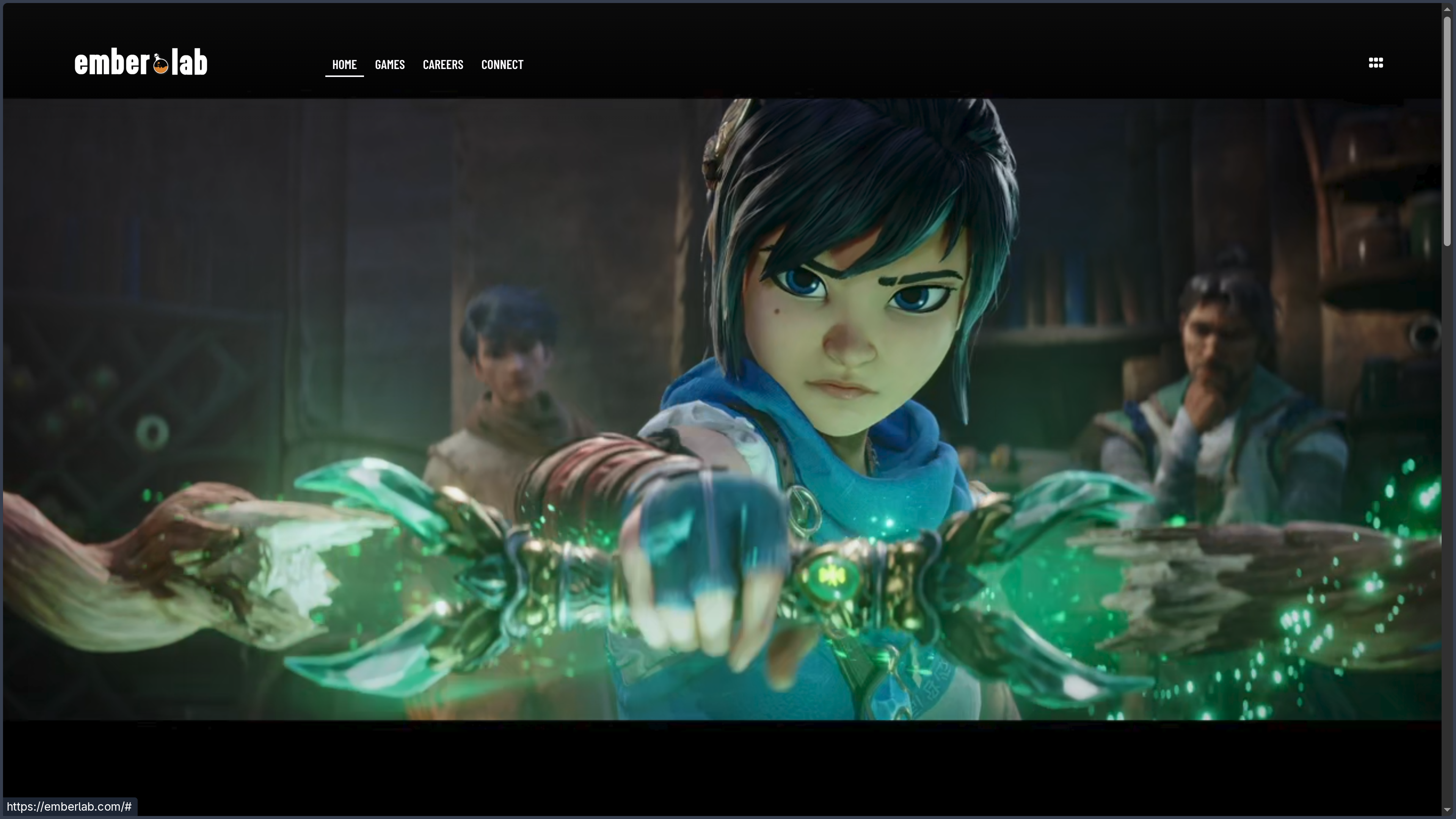
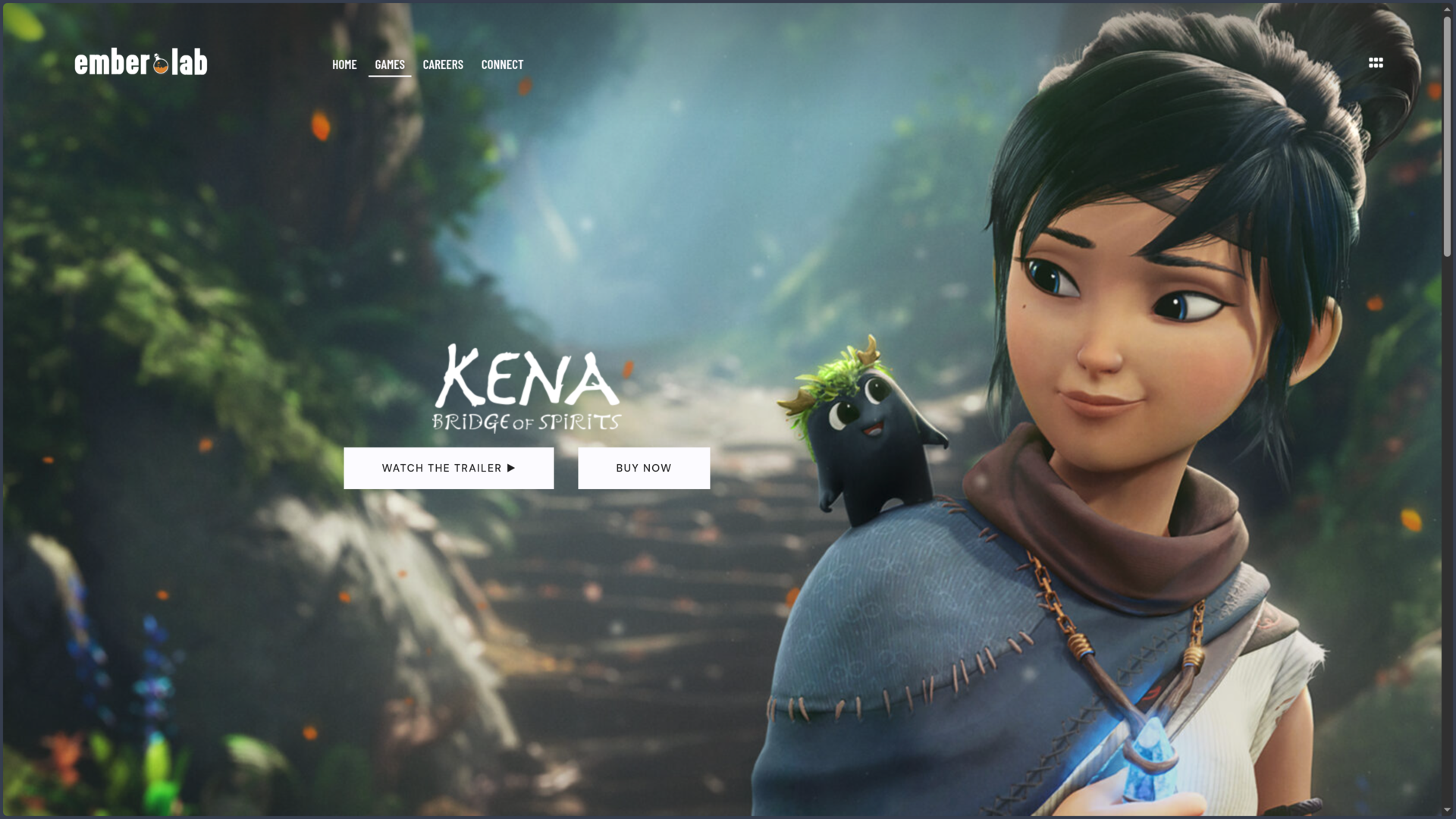
With Kena: Bridge of Spirits, everything changed.

The character still had to look beautiful while walking.

But now:

she had to respond.

The environment still had to create emotion.

But now:

it had to be explored.

A creature could still be adorable.

But now:

it had to help solve a puzzle, move an object or fight an enemy.

Cinema became system.

Animation became gameplay.

And Ember Lab discovered that a beautiful image was no longer enough once someone was holding a controller.

That transition is what makes the studio particularly interesting.

Many game developers gradually learn how to tell stories cinematically.

Ember Lab followed almost the opposite path.

It already knew how to stage a scene. It had to learn how to let the player enter it.

Ember Lab’s challenge was not to make video games more cinematic. It was to understand what remains of cinema when the viewer becomes an actor.

History

2009: two brothers and an animation studio

Ember Lab was founded in 2009 by Mike and Josh Grier.

The studio established itself in California.

At the time, it did not yet present itself as a video game developer.

Its activity was centered around:

animation;

digital content;

commercials;

character-focused projects.

This origin matters enormously.

Because Ember Lab did not discover video games by starting with:

an engine;

statistics;

a progression loop;

a combat system.

It arrived with another vocabulary.

Character.

Framing.

Movement.

Lighting.

Emotion.

Silhouette.

Rhythm.

The question was not yet:

“Does this feel good to play?”

It was closer to:

“Does this image tell us something?”

A few years later, both questions would have to coexist.

Working for others before creating its own world

During this first period, Ember Lab notably produced content for companies such as The Coca-Cola Company, Hisense and MLB.

Commercial work imposes a particular discipline.

A project has:

a client;

a message;

a deadline;

a direction;

technical constraints;

a limited number of seconds to produce an effect.

That is not exactly the same as developing a game for several years.

But many skills transfer directly.

Quickly establish a visual identity.

Understand a brief.

Make different disciplines work together:

artists;

animators;

technicians;

directors.

And above all:

produce a coherent image from very different professions.

That ability remains central to the studio’s philosophy.

Ember Lab would later explain that inside the studio, the boundaries between:

technology;

design;

art;

story

tend to disappear in favor of the final experience.

The studio therefore did not simply change industries.

It carried a collaborative method from one medium into another.

2014: Dust

In 2014, Ember Lab created the short film Dust.

The film explores a science-fiction world touched by fantasy, populated by creatures and built around a strong visual identity.

The project received various distinctions and allowed the studio to demonstrate something important:

it did not only know how to create commercial content.

It could also build an original world.

A character.

An atmosphere.

A mythology.

Effects.

A story.

Even in a relatively short format, Dust brings Ember Lab closer to what it would later do with Kena.

Not necessarily through its universe.

But through its ambition.

Create a world dense enough to suggest that it continues beyond the frame.

In a film, that illusion is enough.

In a game, one day you actually have to build what lies beyond the frame.

2016: Majora’s Mask – Terrible Fate

Two years later, Ember Lab attracted a great deal of attention with Majora’s Mask – Terrible Fate.

The fan film revisits the world of The Legend of Zelda: Majora’s Mask and notably imagines the origins of Skull Kid.

The project is particularly revealing.

Ember Lab does not own Zelda.

It does not try to redefine the franchise.

Instead, it shows what the studio already knows how to do:

take a universe loaded with emotion;

understand its atmosphere;

then create a few minutes capable of extending that feeling through its own visual language.

The film circulates widely online.

And it also reveals something to the team itself.

Its passion for video games is not separate from its creative work.

The two worlds can meet.

The fan film as a bridge

The Grier brothers would later explain that their passion for video games goes back to childhood.

Their family moved regularly because of their father’s work.

Games became a kind of anchor.

A familiar place that could travel with them.

That personal relationship helps explain why moving into game development was not simply an economic decision.

After Terrible Fate, making an actual game became almost a natural continuation.

But there is a huge difference between:

making a film inspired by a game

and

making the game itself.

In the first case, the team controls everything.

In the second:

the player arrives.

And the player does not care about your storyboard.

Kena begins to take shape

The project that would become Kena: Bridge of Spirits grows out of this transition.

Ember Lab wants to create an original experience.

Not another adaptation.

Not an interactive fan film.

Its own world.

Its own character.

Its own rules.

The studio begins building Kena as a young Spirit Guide, able to help spirits that cannot move on from the world.

Around her gradually appears an environment overtaken by vegetation.

A forgotten village.

Corruption.

Spirits.

And small black creatures:

the Rot.

Visually, everything immediately feels like Ember Lab.

But the project now has to solve something much more difficult.

How do you turn this image into a game?

A heroine must now work in every direction

Kena’s design illustrates the studio’s transition particularly well.

The first concepts for the character are created by Wanchana “Vic” Intrasombat, a collaborator already involved in some of Ember Lab’s commercial projects.

Early versions portray a younger heroine.

But as the gameplay and story evolve, the team realizes she needs greater experience.

Kena is not merely a silhouette.

She has a function.

Spirit Guide.

She needs to be able to help other characters.

Fight.

Explore.

Act.

Her design therefore evolves alongside her responsibilities.

It is a fundamental lesson of video games.

In a film, a character can primarily be designed around what the story wants to show.

In a game, their appearance must also respond to what the player needs to be able to do with them.

Animation meets game design

This transformation can even be seen in the studio’s organization.

Some members of Ember Lab come from disciplines such as:

animation;

lighting;

shading;

3D.

Then their roles evolve during development.

An artist may begin working on:

enemies;

behaviors;

combat;

artificial intelligence.

Professional boundaries become more porous.

That is particularly logical in a small team.

The luxury of saying:

“That problem belongs exclusively to the department next door”

is harder to maintain when the department next door is probably sitting a few meters away.

Developing Kena forces Ember Lab to learn a different relationship with imagery.

An attack animation does not only need to look good.

It needs to be:

readable;

timed correctly;

interruptible or not;

consistent with hitboxes;

understandable to the player.

Movement becomes information.

The Rot: mascots have to work too

The Rot illustrate this philosophy even better.

Visually, they immediately accomplish their mission.

Small creatures.

Expressive eyes.

Simple silhouettes.

Charming animations.

Catastrophically high potential for ridiculous hats.

They could perfectly well have remained simple mascots.

But Ember Lab also gives them a systemic function.

The player collects them.

Strengthens their abilities.

Uses them in the environment.

Involves them in certain puzzles.

Mobilizes them in combat.

Their emotional existence and mechanical existence are connected.

That matters.

Because a charming character becomes even more memorable when it does not only live in cutscenes.

The player builds a relationship with it by using it.

The Rot are therefore not merely the most obvious merchandising opportunity in the universe.

They form a living interface between Kena, the player and the world.

The visuals must not slow down the combat

Kena: Bridge of Spirits contains an interesting contrast.

Its appearance could suggest an extremely gentle adventure.

Colorful forests.

Adorable creatures.

Expressive animation.

Contemplative music.

Then combat begins.

And the game genuinely asks for:

dodging;

parrying;

archery;

bombs;

positioning;

reading attacks;

managing the Rot;

reactivity.

Ember Lab therefore does not turn its first game into an interactive film.

Instead, the studio tries to create a real action-adventure game.

That decision matters for its identity.

Animation provides the visual language. It does not replace game design.

Unreal Engine 4 as a foundation

Kena: Bridge of Spirits is developed with Unreal Engine 4.

For a team coming from animation, using an established engine provides an important foundation.

The studio does not need to build its entire rendering and production technology from scratch.

It can focus more resources on:

characters;

environments;

animation;

combat;

project-specific tools.

But an engine obviously does not make a game.

Owning a brush does not solve the painting.

The team still has to learn:

level design;

interactive camera work;

progression;

combat;

saving;

interface;

performance;

multiple platforms.

The move into video games is therefore not a simple export of 3D files.

It is a new discipline.

2020: Kena appears during the PS5 presentation

On June 11, 2020, Kena: Bridge of Spirits is revealed during PlayStation’s event dedicated to the future of gaming on PS5.

For a small team developing its first game:

the stage is enormous.

The trailer immediately attracts attention because of its art direction.

Many people discover Ember Lab at that moment.

And many naturally assume the studio already has a long history in video games.

It does not.

Kena is its first game.

The project is the culmination of years spent working on:

animation;

characters;

films;

digital content.

But now the studio has to deliver a complete experience.

A trailer can seduce for two minutes.

A game has to hold together for hours.

Remaining independent with a much larger project

Ember Lab also emphasizes an important point during this period.

The studio remains independent.

It collaborates with Sony around the PlayStation launch and notably benefits from its support.

But Ember Lab retains its identity and ownership.

The team also works with an international network of artists and developers to bring the project to completion.

This configuration is increasingly common in modern video game development.

A studio can remain relatively compact at the center.

Then surround itself with partners.

The real company becomes larger than the number of people physically sitting in one office.

September 21, 2021: the first game

On September 21, 2021, Kena: Bridge of Spirits is released on PlayStation 4, PlayStation 5 and PC.

For Ember Lab, the date marks a change in identity.

The studio is no longer simply:

an animation studio developing a game.

It genuinely becomes:

a video game studio.

The result clearly retains its roots.

Cinematic animation.

Expressive characters.

Strongly composed environments.

The importance of music and atmosphere.

But the experience also depends on:

exploration;

puzzles;

combat;

progression;

bosses;

collecting the Rot.

The studio has therefore succeeded at the hardest part of the transition.

Not making images that look like a game.

Making a game capable of preserving the quality of those images.

A world about grief and moving on

Behind its warm appearance, Kena also develops darker themes.

The spirits she encounters are trapped.

Something prevents them from moving forward.

Kena must understand their stories.

Sometimes face what they have become.

Then help them find a form of peace.

Death.

Loss.

Memory.

Attachment.

Corruption.

Acceptance.

The contrast with the Rot is important.

The small creatures bring:

humor;

tenderness;

lightness.

But they live in a universe where disappearance and grief occupy a central place.

Ember Lab therefore avoids reducing its aesthetic to something simply “cute.”

Gentleness sometimes exists precisely to make sadness more perceptible.

A first game that earns immediate recognition

Kena: Bridge of Spirits receives several awards.

At The Game Awards 2021, the title notably wins:

Best Independent Game.

And:

Best Debut Indie Game.

For a first game, the symbolism is strong.

Only a few years earlier, Ember Lab was still mainly creating films and animated content.

It has now been rewarded for entering a completely different industry.

That success does not mean the transition is finished.

But it confirms that it worked.

Beauty is not enough

The reception of Kena also reveals something interesting.

The art direction immediately attracts attention.

But discussions around the game also focus on:

difficulty;

combat;

bosses;

exploration;

pacing;

systems.

That is probably good news for Ember Lab.

Because a studio coming from animation could easily remain trapped inside a reputation for:

“beautiful visuals.”

Kena demonstrates that the team is looking for something more.

It wants the image to be the doorway.

Not the only argument.

A beautiful character that does not respond properly to controls is still a bad video game character.

The studio must therefore continue developing its interactive expertise with the same level of ambition as its visual expertise.

2022: Kena continues after release

One year after launch, Ember Lab releases a major Anniversary Update.

It notably adds:

New Game+;

Spirit Guide Trials;

outfits;

Charmstones;

new abilities;

new hats for the Rot;

photo mode improvements;

accessibility options.

The game also arrives on Steam on September 27, 2022.

This period shows that Ember Lab does not treat its first game as an object to be abandoned immediately after release.

The team continues to:

fix;

balance;

add;

adapt.

Moving into video games also means this.

A completed film does not usually receive patch 2.03 because the main character got stuck behind a rock.

A game does.

Welcome to another industry.

2024: Kena arrives on Xbox

On August 15, 2024, Kena: Bridge of Spirits arrives on Xbox One and Xbox Series X|S.

The move is interesting.

The game had initially built much of its visibility around PlayStation and PC.

With this release, Ember Lab gradually extends its universe to another audience.

The company itself appears as developer and publisher on the Xbox store.

That autonomy matters.

Ember Lab does not only have the ability to create Kena.

It also retains control of an intellectual property capable of moving between platforms over time.

An original property changes the fate of a studio

This may be one of the most important decisions in Ember Lab’s entire history.

After spending years working on:

brands;

client commissions;

a Zelda fan film,

the studio finally creates:

its own universe.

Kena.

The Rot.

The Spirit Guides.

The locations.

The mythology.

That difference changes everything.

A commercial project can build a studio’s expertise.

An original property can build its future.

Because Ember Lab can now:

continue the universe;

modify it;

bring it to other machines;

introduce new characters;

tell a new story.

Success no longer benefits only the studio’s reputation.

It also increases the cultural value of something it owns.

2026: Kena becomes portable

On March 26, 2026, Kena: Bridge of Spirits arrives on Nintendo Switch 2.

Almost five years after its original release, Ember Lab’s first game continues moving between platforms.

PlayStation.

PC.

Xbox.

Then Nintendo Switch 2.

That trajectory tells us two things.

First:

the game has a commercial life much longer than its original launch window.

Second:

Ember Lab succeeded in turning its first title into a property durable enough to continue finding new audiences several years later.

The small studio that presented Kena on the PlayStation stage in 2020 now has a game available across the main modern ecosystems.

But Ember Lab no longer wants only to port the same game

The next question becomes obvious.

After Kena:

what?

For a while, Ember Lab remains cautious.

In 2021, the studio was still explaining that it did not know whether it would develop a sequel.

It simply discussed the possibilities offered by the universe.

A few years later, the answer becomes much clearer.

Kena was not a one-off adventure.

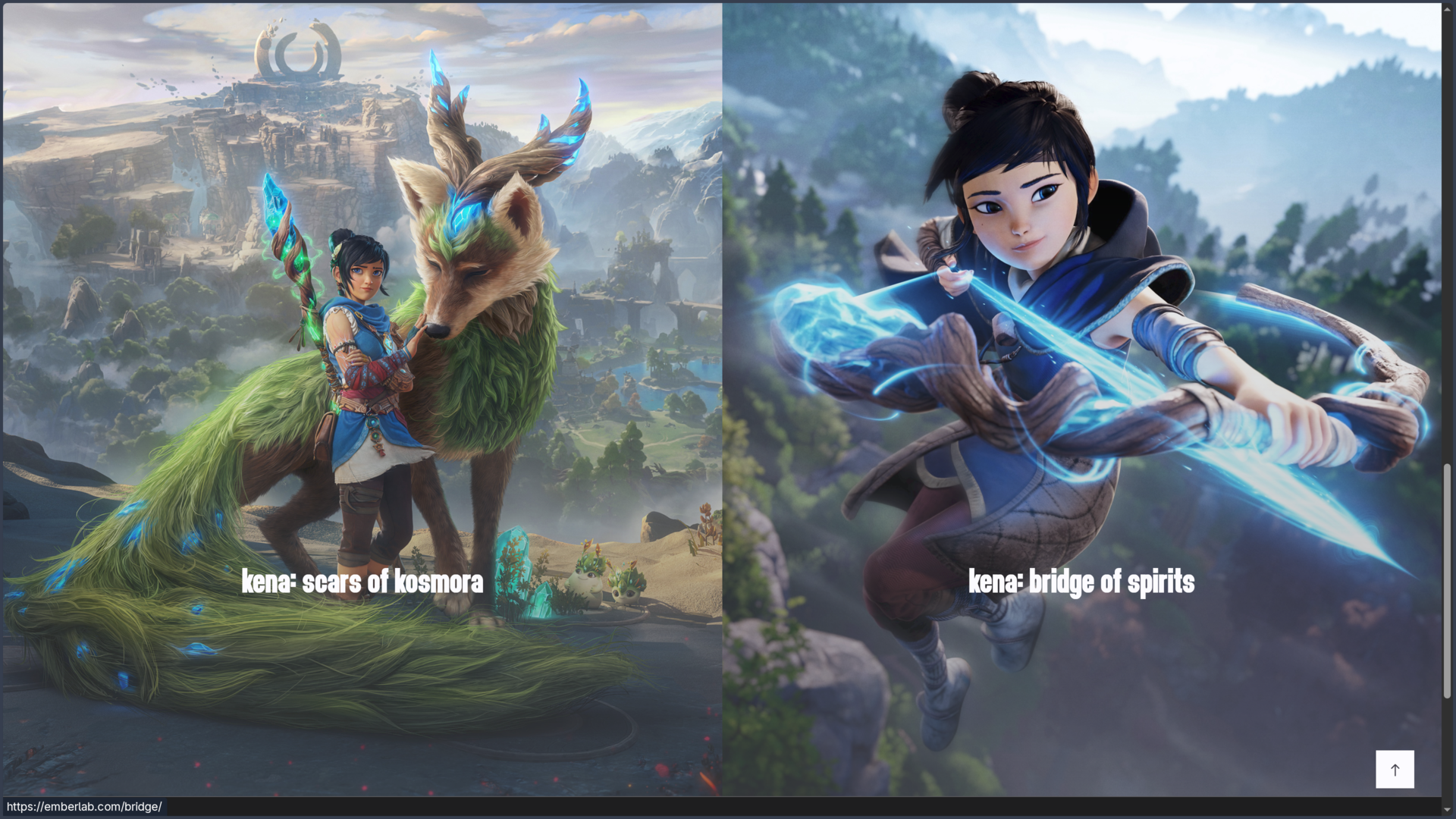
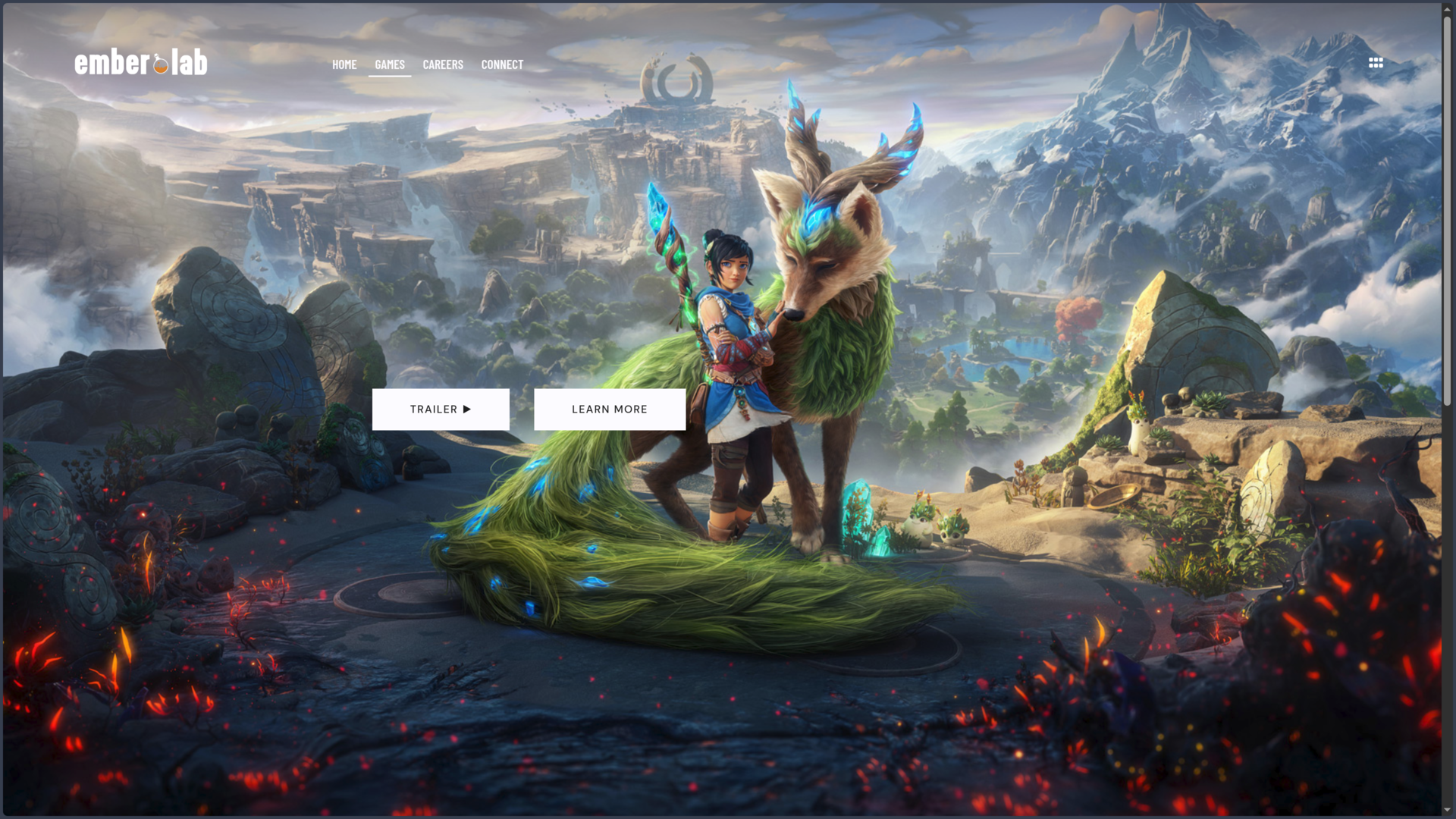
Kena: Scars of Kosmora

In 2026, Ember Lab’s official website highlights its current project:

Kena: Scars of Kosmora.

This time, Kena is no longer the Spirit Guide still finding her footing in the first game.

She has become experienced.

The story brings her to the mysterious island of Kosmora.

She is searching for a cure to an affliction affecting her and hoping to reconnect with a friend from her past.

But the corruption of the island destroys her staff.

A serious problem when that object is literally a central part of your profession.

Kena must then learn an ancient and dangerous form of Spirit Guiding practiced on Kosmora.

A practice connected to manipulating the elements.

The game also introduces new spirit companions whose powers contribute to:

puzzles;

exploration;

combat.

The continuity with the first game is clear.

But Ember Lab is not simply rebuilding the same village with different textures.

From learning to deepening

The first Kena had to accomplish several things at once.

Create the universe.

Introduce Kena.

Introduce the Rot.

Teach Ember Lab how to make a game.

Build technology.

Develop a combat system.

Find a structure.

Create a community.

Scars of Kosmora arrives in a different situation.

The studio now knows its character.

It knows its pipeline.

It has experience completing an entire production.

It also knows what worked and what needs to evolve.

The second project can therefore ask a different question.

No longer:

Can Ember Lab make a game?

But:

What kind of game studio does Ember Lab want to become?

That is probably a much more interesting stage.

Kosmora expands the idea of the Spirit Guide

The new project also appears to deepen Kena’s role itself.

In Bridge of Spirits, Spirit Guiding already provided a narrative and mechanical structure.

In Scars of Kosmora, Ember Lab introduces another tradition of Spirit Guiding.

Older.

More dangerous.

Connected to the elements.

This idea allows the universe to develop without simply increasing Kena’s statistics.

She discovers that her own knowledge is not universal.

Another culture possesses:

other methods;

other dangers;

other relationships with spirits.

That is an interesting direction for a sequel.

Let the character grow by expanding the world around her rather than simply giving her +20% attack power.

The broken staff as a design problem

The fact that Kena’s staff is broken at the beginning of the adventure is also revealing.

In the first game, the object carries much of her identity.

Tool.

Weapon.

Bow.

Connection point for several abilities.

Destroying it means removing something the player already knows.

It is a classic but effective technique.

A sequel has a particular problem:

the player already knows their tools.

How do you recreate the pleasure of discovery?

One solution is to literally break the old certainty.

Then force Kena to learn something else.

The story therefore creates a mechanical problem.

And the mechanical problem creates a new story.

Still an independent studio

In August 2026, Ember Lab continues to describe itself as an independent studio.

That detail matters.

The first Kena could easily have turned the team into an acquisition target.

Yet the studio is still operating under its own name.

Its website continues to recruit.

Its universe still belongs to it.

And its second major project directly continues its first original property.

Independence does not mean working alone, of course.

A modern game involves:

partners;

contractors;

platform holders;

distributors;

international collaborators.

But the creative center remains Ember Lab.

Fifteen years to become what its name did not yet describe

Ember Lab’s history ultimately has a rather elegant structure.

2009:

animation studio.

2014:

original short film.

2016:

widely noticed fan film.

2020:

reveal of a first game.

2021:

Kena: Bridge of Spirits.

2022:

expansion and Steam.

2024:

Xbox.

2026:

Nintendo Switch 2 and a new Kena project.

This is not the story of a game studio that simply grew.

It is the story of a team that changed medium without throwing away what it already knew how to do.

Animation was not a first career to forget.

It became the foundation of a second one.

What sets it apart

The image comes before the game — but must eventually obey it

The most obvious characteristic of Ember Lab comes from its past.

The studio deeply understands:

animation;

composition;

lighting;

character design;

staging.

That gives it an advantage.

An Ember Lab image often has a clear intention.

But this expertise also creates a trap.

Video games cannot function like a succession of locked shots.

The player can look elsewhere.

Go backward.

Run in the wrong direction.

Spend ten minutes making the character jump against a rock for reasons even they no longer understand.

Composition therefore needs to survive freedom.

That is where the studio becomes interesting.

How do you keep a director’s sensitivity in a medium where you no longer completely control the camera or pacing?

Kena is its first answer.

Animation does more than make things beautiful

At Ember Lab, animation fulfills several roles.

It gives Kena personality.

It makes the Rot endearing.

It brings spirits to life.

But in combat, it also becomes:

anticipation;

information;

rhythm;

feedback.

The player needs to understand:

when the enemy attacks;

where the hit is coming from;

when to dodge;

when to parry;

when to respond.

An animation that is too slow can make the game feel sluggish.

One that is too fast can make the attack unreadable.

A beautiful animation with poor timing can become frustrating.

Moving into video games therefore forces Ember Lab to apply its expertise to a new function.

The image no longer only has to create emotion. It has to enable a decision.

Characters have a function before becoming a brand

The Rot are an excellent example.

They are immediately recognizable.

They can wear hats.

They are extremely easy to turn into:

figures;

plush toys;

illustrations;

icons.

But their success also comes from their integration into the game.

Collecting Rot increases the player’s possibilities.

They participate in environmental interactions.

Combat.

Certain puzzles.

Progression.

Their presence is therefore not a decorative layer added after the design.

It exists inside the system.

A good video game mascot should not only be photogenic.

It needs a reason to exist when nobody is taking a screenshot.

The contrast between gentleness and grief

Kena’s universe has a rather particular tone.

Visually:

warmth;

nature;

colors;

small creatures;

gentle animation.

Thematically:

death;

loss;

attachment;

regret;

the inability to move on;

corruption.

That contrast prevents the world from becoming too uniform.

The Rot bring lightness.

But Kena essentially works with the consequences left behind by lives that cannot end properly.

The game can therefore be welcoming without being empty.

Emotional without being constantly dark.

That search for balance is one of the studio’s most interesting signatures.

A small team forces disciplines to mix

Ember Lab emphasizes a highly collaborative culture.

Technology.

Design.

Art.

Story.

The boundaries mix.

This kind of organization has advantages.

A visual idea can quickly become a mechanic.

A gameplay problem can be solved through animation.

An artist can contribute to a design discussion.

A technology can change the staging.

In a much larger structure, every change may need to travel through several departments before reaching somewhere useful.

In a compact team, the distance is shorter.

That does not make development easy.

It simply makes certain conversations more direct.

The studio does not try to hide its cinematic roots

A studio coming from cinema could try to prove that it is now a “real” game developer by rejecting its past.

Ember Lab does the opposite.

It uses it.

Cinematic characters.

Composed worlds.

Important animation.

Music.

Staging.

The studio does not seem to treat this background as something it needs to move beyond.

The question is instead:

how do we make it interactive?

That distinction matters.

Ember Lab did not become a video game studio despite its animation background.

It became a video game studio because of that background.

Gameplay must stop the image from becoming a cage

Kena: Bridge of Spirits is not a traditional open-world game.

It offers a structured narrative experience with exploration zones and a certain degree of freedom.

That choice fits the studio well.

A huge fully open world would have multiplied the difficulties for a first project.

Ember Lab prefers to control enough of the experience to preserve:

pacing;

composition;

progression;

narrative.

Without turning the player into a spectator.

The compromise is interesting.

The team preserves part of its staging culture.

But leaves enough room for exploration to genuinely exist.

Creating its own property instead of remaining a specialist in other people’s worlds

Before Kena, Ember Lab worked with brands and made a fan film based on Zelda.

It could have become an excellent animation studio specializing in other people’s properties.

Instead, it eventually chooses a much riskier road.

Create:

Kena;

the Rot;

the Spirit Guides;

its own world.

That is probably the biggest gamble in its history.

An original property does not come with an existing audience.

Nobody has been waiting for Kena for twenty years.

Nobody has childhood memories involving the Rot.

Everything has to be created.

But if it works:

the memory that gets created now belongs to the studio.

A first game does not need to become enormous

Kena also has an interesting scale.

Ember Lab estimated a playtime of around 10 to 15 hours depending on play style.

It is not a two-hundred-hour world.

It does not try to become a permanent occupation.

The game tells an adventure.

It has a beginning.

A progression.

An ending.

For a first project, controlling that scale matters.

Creative ambition is not necessarily measured in square kilometers.

Sometimes:

knowing what not to build is as much a part of game design as deciding what to build.

Kena shows that a new IP can still appear almost out of nowhere

Before 2020, Kena had no public history.

No 1990s animated series.

No comic book.

No historical license.

No reboot.

No remake.

The character appears.

Then a few years later:

game;

community;

awards;

versions on several platforms;

sequel.

In an industry where large investments often push publishers toward already established brands, Ember Lab’s journey is a useful reminder.

Every old franchise was once a franchise nobody knew.

New ones still need to be given a first chance.

Scars of Kosmora now has to prove that Kena can become a universe

Kena: Bridge of Spirits proved that Ember Lab could make a game.

Kena: Scars of Kosmora has to answer another question.

Was Kena simply the protagonist of one very good first adventure?

Or is there enough material to build a lasting universe?

Kosmora already offers one possible answer.

New island.

New cultures.

Another form of Spirit Guiding.

New companions.

New elemental abilities.

A connection with Kena’s past.

The studio expands its world horizontally instead of merely rebuilding the old one.

The sequel therefore becomes a test of identity.

Not only for Kena.

For Ember Lab itself.

Technology, art and story are treated as one conversation

The studio’s website summarizes its philosophy through a particularly revealing idea.

The boundaries between:

technology;

design;

art;

story

tend to disappear.

That is probably the best way to understand Ember Lab.

A technical tool influences the image.

The image influences the character.

The character influences the story.

The story requires a mechanic.

The mechanic requires an animation.

And the animation returns to technology.

The pipeline looks less like a straight line than a loop.

That is exactly what allows the studio to carry its animation past into video games.

It does not completely separate disciplines.

It searches for the moment when they begin producing the same feeling.

Good to know

  • Ember Lab was founded in 2009 in California by brothers Mike and Josh Grier.
  • The studio is independent and currently describes itself as a California-based game development studio.
  • Ember Lab began as an animation and digital content studio before moving into game development.
  • Its earlier work included commercials and character-focused content for clients such as The Coca-Cola Company, Hisense and MLB.
  • Dust, created in 2014, is one of the notable original narrative projects from the studio’s animation period.
  • In 2016, Ember Lab created Majora’s Mask – Terrible Fate, a fan film inspired by The Legend of Zelda: Majora’s Mask.
  • The Grier brothers have explained that their lifelong passion for video games and the experience of Terrible Fate helped make the move into game development feel natural for the team.
  • Kena: Bridge of Spirits is Ember Lab’s first video game.
  • The game was revealed on June 11, 2020 during PlayStation’s PS5-focused event.
  • Kena: Bridge of Spirits was released on September 21, 2021 on PlayStation 4, PlayStation 5 and PC.
  • Kena is a young Spirit Guide tasked with helping spirits that are unable to move on.
  • The Rot are small spirit companions that players collect and use to expand their abilities, solve certain situations and interact with the environment.
  • Kena: Bridge of Spirits was developed with Unreal Engine 4.
  • The studio has explained that Kena is not technically an open-world game, but a narrative adventure built around exploration zones and route choices.
  • Ember Lab estimated the main adventure at approximately 10 to 15 hours depending on play style.
  • Kena: Bridge of Spirits won Best Independent Game and Best Debut Indie Game at The Game Awards 2021.
  • The Anniversary Update was released on September 27, 2022 and notably added New Game+, Spirit Guide Trials, outfits, Charmstones, new abilities and accessibility improvements.
  • Kena: Bridge of Spirits also arrived on Steam on September 27, 2022.
  • The game was released on Xbox One and Xbox Series X|S on August 15, 2024.
  • Ember Lab is listed as both developer and publisher of Kena on Xbox.
  • Kena: Bridge of Spirits was released on Nintendo Switch 2 on March 26, 2026 in Europe.
  • Nintendo also lists Ember Lab as developer and publisher of the Switch 2 version.
  • As of August 2026, Ember Lab remains active and continues recruiting.
  • The project currently highlighted by the studio is Kena: Scars of Kosmora.
  • Kena: Scars of Kosmora directly continues the universe of Kena: Bridge of Spirits, with Kena now presented as an experienced Spirit Guide.
  • The adventure takes place on the mysterious island of Kosmora, where Kena notably seeks a cure for an affliction and hopes to reconnect with a friend from her past.
  • Kosmora’s corruption destroys Kena’s staff, forcing her to adopt an ancient local form of Spirit Guiding connected to elemental manipulation.
  • The new game introduces new spirit companions whose powers are used for puzzles and combat.
  • Kena: Scars of Kosmora is currently announced for PlayStation 5 and PC.
  • As of August 2026, Ember Lab’s official website does not yet provide a release date for Kena: Scars of Kosmora.