




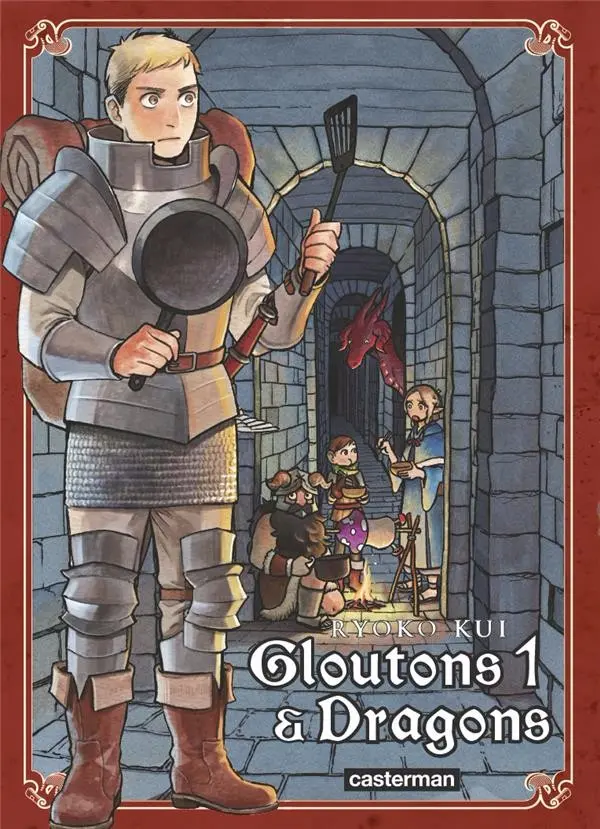
Overview
Casterman is a Belgian publishing house whose history begins in Tournai at the end of the 18th century.
Few European publishers still active today can claim such a long continuity.
Its origins go back to Donat Casterman, who obtained authorization in 1777 to open a bookstore in Tournai. The year 1780 is traditionally retained as the establishment of Casterman’s activity as a publishing house and printing company, before successive generations of the family developed the business for nearly two centuries.
Comics, which now define a large part of its public identity, arrived much later.
Casterman initially published religious, educational and children’s books. At the same time, the house developed a major printing activity and gradually expanded its presence beyond Belgium.
The decisive turning point came in the 1930s with Hergé.
From 1934, Casterman became the album publisher of The Adventures of Tintin, beginning in this new publishing relationship with Les Cigares du Pharaon.
The collaboration profoundly transformed the publishing house.
Tintin albums achieved international distribution and Casterman also accompanied their material evolution. From the 1940s onward, previously published adventures were reworked to gradually adopt color and the album format that would become one of the standards of Franco-Belgian comics.
Tintin remains one of the emblematic works of the Casterman catalogue today.
But reducing the publishing house to Hergé’s character would erase a large part of its history.
Casterman gradually built a catalogue bringing together adventure comics, children’s publishing, adult comics, graphic novels and manga.
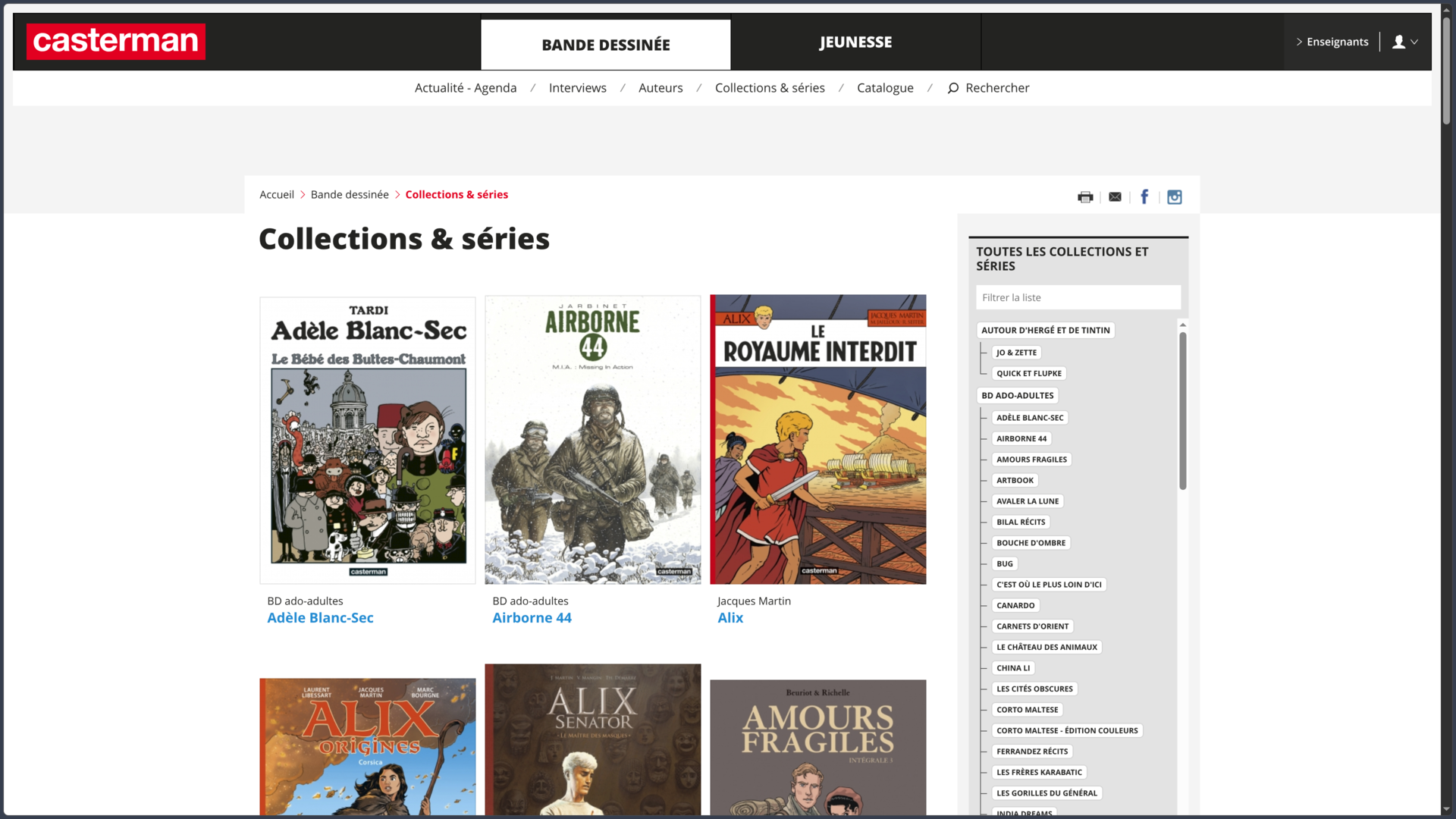
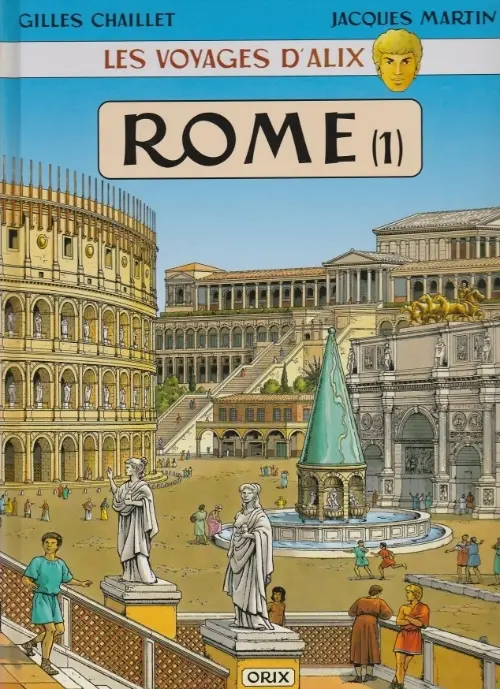
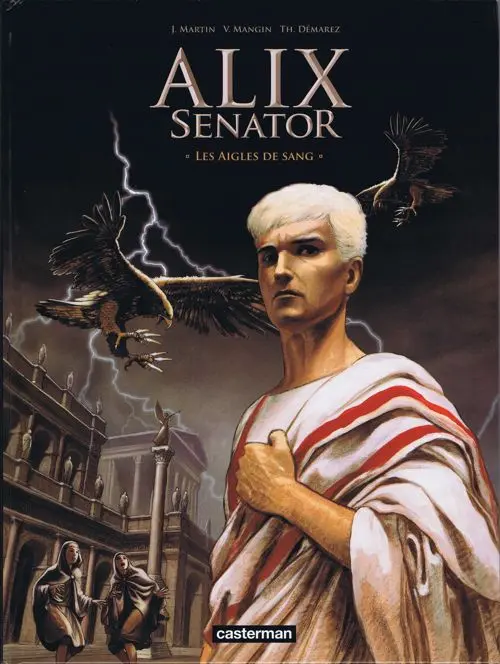
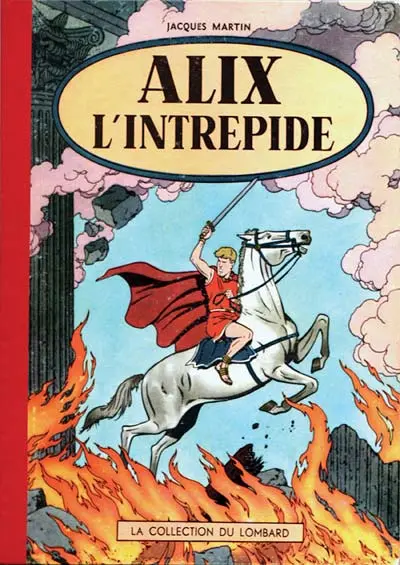
The creative environment of Jacques Martin occupies an important place with Alix and Lefranc, while children’s publishing found one of its great icons in Martine, created in 1954 by Gilbert Delahaye and Marcel Marlier.
In the 1970s, the house underwent another major transformation.
It developed comics aimed more directly at adults and welcomed creators able to move beyond the traditional format of the children’s series.
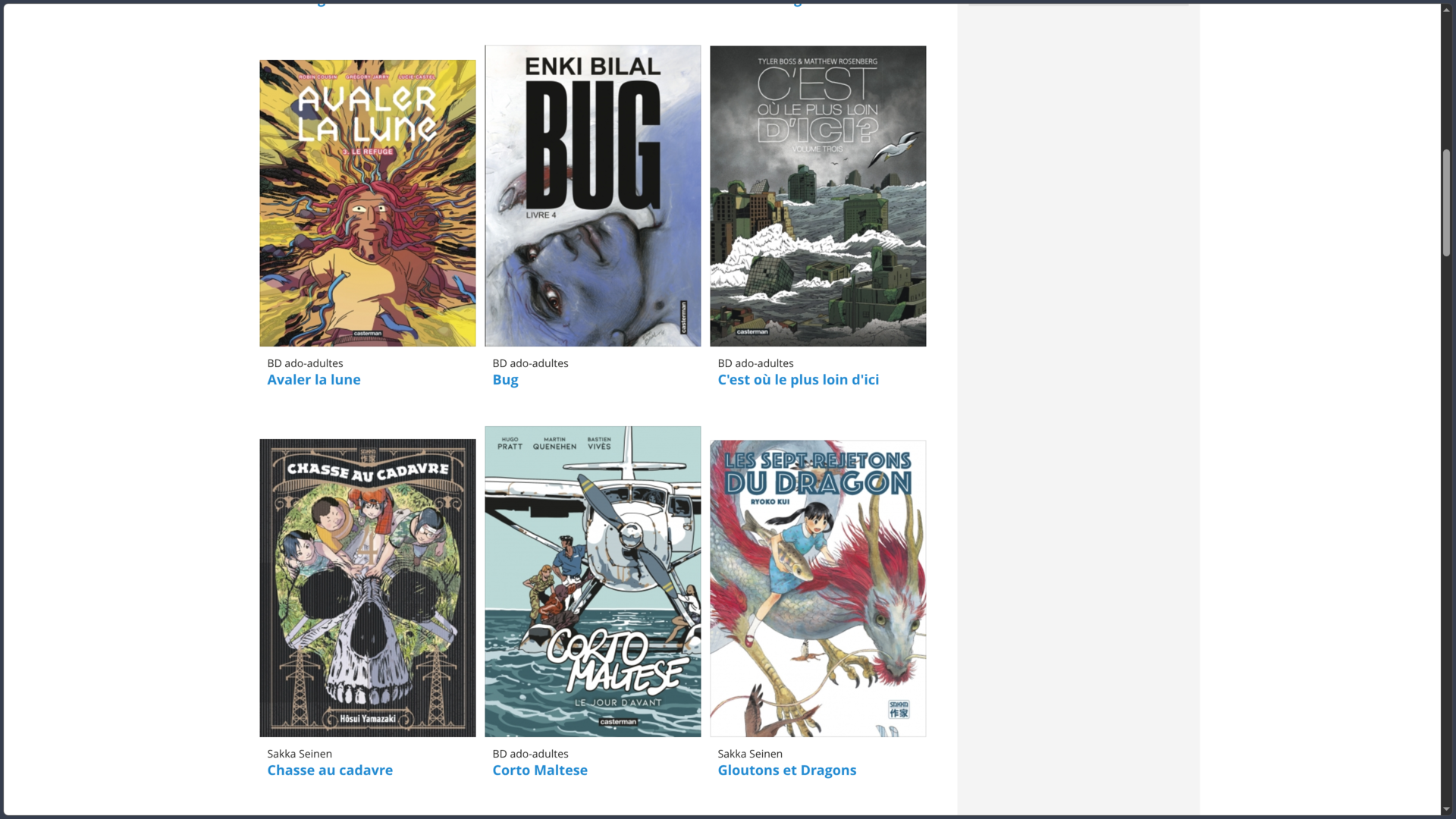
Hugo Pratt and Corto Maltese took on a central role.
Jacques Tardi notably began publishing Les Aventures extraordinaires d’Adèle Blanc-Sec in 1976.
Then, in 1978, Casterman launched the magazine (À suivre) under the direction of Jean-Paul Mougin.
The magazine became one of the major places of renewal in French-language comics.
Hugo Pratt, Jacques Tardi, Didier Comès, François Schuiten, Benoît Peeters, François Boucq, Benoît Sokal, José Muñoz, Carlos Sampayo and many other creators developed stories there that moved away from the traditional adventure-album model.
This period strongly contributed to the recognition of comics conceived as an adult narrative form close to the novel.
Works such as Les Cités obscures by François Schuiten and Benoît Peeters emerged in this environment, with the first album, Les Murailles de Samaris, appearing in 1983.
Casterman simultaneously continued developing its children’s publishing activity.
Martine became an international phenomenon.
Ernest et Célestine, created by Gabrielle Vincent in the 1980s, developed another relationship with the illustrated book, much more intimate and based on watercolor.
Over the decades, the catalogue also welcomed numerous picture books, early readers, nonfiction titles and series aimed at different age groups.
From the 1990s and 2000s onward, Casterman also became more directly interested in Japanese comics.
The publishing house released several works by Jirô Taniguchi, including L’Homme qui marche and later Quartier lointain, published in French in 2002 within the Écritures collection.
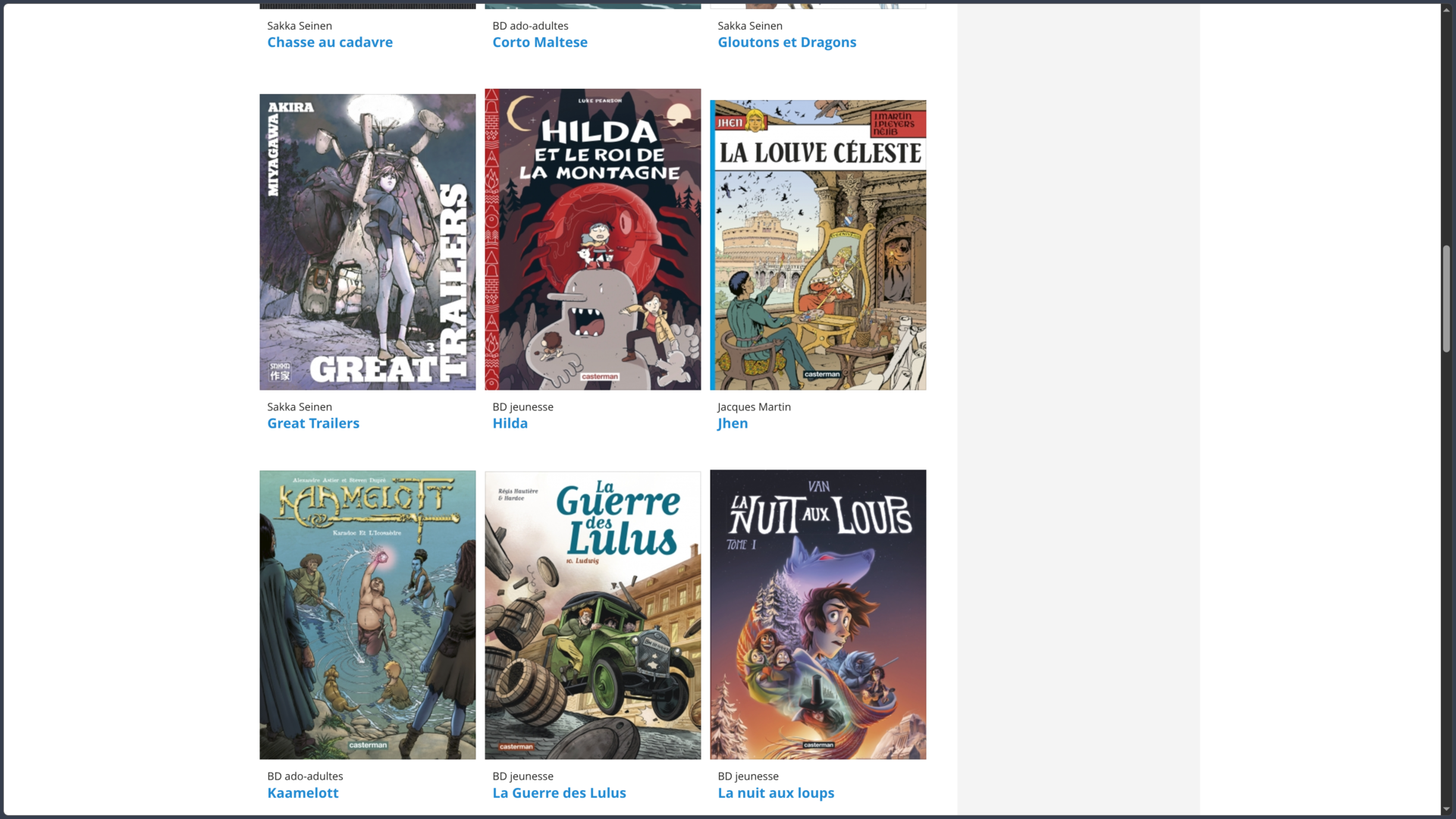
In 2004, it further structured this activity by launching Sakka, a collection devoted to manga and initially particularly oriented toward auteur works and stories aimed at adult readers.
The catalogue has since expanded toward different forms of manga while retaining this presence of less standardized works.
Casterman’s ownership history also evolved.
After more than two centuries connected to the founding family, its publishing and printing activities were separated at the end of the 1990s.
In 1999, Casterman’s publishing activity was acquired by Flammarion.
In 2012, the Gallimard group in turn acquired the Flammarion group, bringing Casterman into the organization now known as Madrigall.
Casterman nevertheless remains a clearly identified publishing house.
Madrigall presents it separately from Gallimard, Flammarion, J’ai Lu, Sarbacane and its other houses.
This distinction is essential for PANACHES CULTURE: a work published by Flammarion or Gallimard is not a Casterman publication simply because the houses belong to the same group.
Casterman also remains a Belgian entity, with a company and headquarters in Brussels, even though a significant part of its editorial and commercial activities is also organized in France.
Its recent catalogue continues to bring together heritage and creation.
Works by Tintin, Corto Maltese, Alix, Adèle Blanc-Sec and Les Cités obscures remain available, sometimes in several editions or through new continuations, while the house publishes new comics, new creators, manga and a broad children’s catalogue.
This continuity is ultimately one of Casterman’s defining characteristics: a publishing house born before modern comics, which became one of its historical publishers and then managed to move successively through the children’s album, Franco-Belgian comics, adult comics, graphic novels and manga without abandoning its historical backlist.
History
1777-1780: Donat Casterman establishes himself in Tournai
Casterman’s origins predate the birth of modern comics by more than a century.
In 1777, Donat Casterman obtained authorization to open a bookstore in Tournai.
The activity developed quickly.
Donat Casterman became a bookseller, bookbinder, printer and then publisher.
The publishing house’s tradition retains 1780 as the founding date of the Casterman company.
This difference explains the two dates found in historical sources: 1777 corresponds to the opening of the bookstore, while 1780 marks the establishment of the activity that would give rise to the publishing house and printing company.
For PANACHES CULTURE, which references the publishing house here, 1780 is therefore the retained date.
The 19th century: a family publishing and printing house
The company was then passed down within the Casterman family.
During the 19th century, it simultaneously developed publishing, printing, binding and book distribution.
The catalogue was still very far from the one later associated with Tintin or Corto Maltese.
Religious, educational, school and children’s books occupied an important place.
Casterman also benefited from Tournai’s position within an area where Belgian and French publications circulated naturally.
From the middle of the 19th century onward, the publishing house also developed a presence in Paris.
This dual presence gradually facilitated its access to the French market while maintaining its industrial and family roots in Tournai.
For more than a century, Casterman was therefore as much a book company as a publisher in the contemporary sense of the term.
1934: Tintin transforms Casterman’s history
The decisive change came with Hergé.
Tintin’s adventures were first published in Le Petit Vingtième, the children’s supplement of the Belgian newspaper Le Vingtième Siècle.
In 1934, Casterman took charge of publishing the character’s adventures in album form beginning with Les Cigares du Pharaon.
This collaboration changed the scale of the publishing house.
Tintin was no longer only a character published in the Belgian press.
The album gradually became the lasting format for his adventures and facilitated their circulation across different countries.
Casterman accompanied this evolution throughout Hergé’s career.
The 1940s: color and standardization of the album
From 1942, part of the early Tintin albums was reworked.
The adventures originally published in black and white and in longer forms were gradually adapted to a color format.
This transformation helped establish a model that became extremely influential in Franco-Belgian publishing: the hardcover color album of around sixty pages.
The work did not consist merely of coloring the old pages.
Hergé redrew, condensed and reorganized certain stories.
Casterman therefore became directly associated with the creation of the classic Tintin editions that would circulate for decades.
The series’ international success gave the publishing house a level of visibility none of its earlier productions had achieved.
Building a genuine comics catalogue
Tintin opened the way for other adventure series.
Casterman gradually developed a much broader comics catalogue.
Jacques Martin, who also worked within the environment of the Journal de Tintin, became one of the major creators associated with the publishing house.
Alix developed large-scale adventures set in Antiquity.
Lefranc transferred part of this adventure-story culture into a contemporary setting.
Series such as Petzi also joined the catalogue.
The house therefore began building a heritage no longer dependent on a single work, even though Tintin remained its most emblematic title.
1954: Martine becomes the other international phenomenon
In 1954, Casterman published the first adventures of Martine, created by Gilbert Delahaye as writer and Marcel Marlier as illustrator.
The character existed in a completely different register from Tintin.
The albums depict everyday life, childhood, leisure activities, family, travel and animals through Marcel Marlier’s particularly detailed illustrations.
The series became a major international success.
It was translated into numerous languages and published in dozens of countries.
Casterman now had two publishing phenomena capable of reaching very different generations of readers: adventure with Tintin and the illustrated children’s book with Martine.
The 1970s: opening the catalogue to adult comics
From the 1970s onward, Casterman undertook another transformation.
Franco-Belgian comics were changing.
Some creators and readers no longer wanted to be limited to stories mainly intended for children or teenagers.
Casterman therefore began welcoming works that were more adult, longer and sometimes much more personal.
Hugo Pratt played a decisive role in this evolution.
His character Corto Maltese, a wandering sailor moving through adventure, history, politics and mythology, brought a very different approach to storytelling into the catalogue.
The treatment of time, dialogue, silence and historical references took on particular importance.
Casterman thus found one of the creators around whom a new editorial identity could be built.
1976: Jacques Tardi and Adèle Blanc-Sec
In 1976, Casterman published Adèle et la Bête, the first album in Les Aventures extraordinaires d’Adèle Blanc-Sec by Jacques Tardi.
The series mainly takes place in early 20th-century Paris.
Tardi mixes adventure, fantasy, satire, popular serial fiction, science and historical reconstruction.
Adèle Blanc-Sec became one of the creator’s most recognizable characters.
The relationship between Tardi and Casterman would extend far beyond this single series.
The creator would publish numerous stories, adaptations and works with the publishing house, notably dealing with war, French society and the work of Léo Malet.
He became one of the essential creators in the editorial renewal then taking shape.
1978: (À suivre) changes the scale of adult comics
In 1978, Casterman launched the monthly magazine (À suivre).
The magazine was directed by Jean-Paul Mougin.
Its ambition was clear: to create a space in which comics could develop long-form stories without being confined to the traditional album format or the conventions of children’s series.
From its earliest issues, Jacques Tardi and Hugo Pratt occupied a central place.
Around them also appeared or developed Didier Comès, François Schuiten, Benoît Peeters, François Boucq, Benoît Sokal, José Muñoz, Carlos Sampayo, Jean-Claude Forest, Loustal and many other creators.
The magazine became one of the main centers of adult French-language comics.
Bringing the novel into comics
The project of (À suivre) was not simply to offer more pages.
The magazine defended a conception of comics capable of reaching the scope and narrative freedom of the novel.
Creators could develop longer stories, less heroic characters, ambiguous universes and political, historical or intimate subjects.
This evolution directly contributed to the development of what would gradually be called the graphic novel, even though the term and the publishing traditions associated with it obviously cannot be reduced to Casterman alone.
For nineteen years, until 1997, (À suivre) accompanied a major part of the transformation of European comics.
1983: Les Cités obscures develops another kind of universe
In 1983, François Schuiten and Benoît Peeters published Les Murailles de Samaris, the first major entry in Les Cités obscures.
The series gradually builds a parallel universe made up of cities, each with its own architecture, history and organization.
The albums do not simply function as successive episodes of a traditional adventure.
They may change character, location, graphic form and sometimes even medium.
Architecture, urban planning, utopia, politics and the relationship between reality and fiction become central elements.
Les Cités obscures perfectly illustrates part of the legacy of (À suivre): allowing creators to build works whose form evolves with the project.
Ernest et Célestine: another approach to children’s publishing
In the 1980s, Casterman also welcomed Ernest et Célestine by Gabrielle Vincent.
The series depicts a bear and a little mouse through stories centered on affection, everyday difficulties, trust and the relationship between the two characters.
Gabrielle Vincent’s watercolors give the albums an identity very different from the extremely precise illustrations of Martine.
This coexistence illustrates the breadth of the children’s catalogue.
Casterman can preserve a heritage character like Martine while also publishing works based on a much freer graphic sensitivity.
Ernest et Célestine in turn became an international work, notably adapted for cinema and television.
1997: the end of (À suivre)
In 1997, (À suivre) ceased publication after 239 issues.
The comics market had changed profoundly since 1978.
The model of large serialization magazines gradually lost importance in favor of direct publication in albums and books.
The disappearance of the magazine did not, however, mean the end of its influence.
A large part of the creators and principles it had helped establish remained present in the Casterman catalogue.
The publishing house now possessed a strong identity in auteur comics and long-form storytelling alongside its major heritage series.
1999: Casterman joins Flammarion
At the end of the 1990s, the family company underwent a major structural transformation.
Its publishing and printing activities were separated.
In 1999, the French group Flammarion acquired Casterman Édition.
The printing business remained separate from the publishing activity.
This operation ended more than two centuries of direct family control over the publishing house.
Casterman nevertheless retained its name, catalogue and Belgian identity.
Its publishing activity continued notably from Brussels and Paris.
Manga gradually enters Casterman
Casterman began publishing manga in the 1990s.
Its approach nevertheless differed from that of publishing houses then building their growth mainly around major popular shōnen series.
The publisher was particularly interested in creators whose works could resonate with its graphic-novel catalogue.
Jirô Taniguchi became especially important.
Casterman published several of his works and helped introduce his work to an audience that did not necessarily consider itself a manga readership.
Quartier lointain, published in French in 2002 within the Écritures collection, became one of the most emblematic examples of this meeting between manga and European auteur comics.
2004: Sakka structures the manga activity
In 2004, Casterman launched Sakka.
The name means “author” in Japanese.
The collection, initially directed by Frédéric Boilet, particularly sought to publish manga aimed at adult readers and works far removed from the market’s most standardized series.
Its early creators notably included Satoshi Kon, Kiriko Nananan, Kan Takahama and Daisuke Igarashi.
The catalogue later evolved and opened to more directly mainstream series.
Skip Beat!, for example, still appears among the series published under the Sakka banner.
Casterman nevertheless retains an approach to manga in which the creator, graphic diversity and editorial care occupy an important place.
2012: the acquisition of Flammarion brings Casterman into Gallimard
In 2012, the Gallimard group acquired Flammarion.
Casterman was among the publishing houses included in the operation.
The house therefore joined the publishing organization that took the form of the Madrigall group.
This new organization changed the ownership of the company but did not transform Casterman into a Gallimard collection.
The brand and publishing house remained distinct.
Casterman retained its own editorial teams, creators, series and directions.
Casterman today
In 2026, Casterman remains an active publishing house within the Madrigall group.
The group presents it as one of its houses in its own right, separately from Gallimard, Flammarion, J’ai Lu and Sarbacane.
The company Éditions Casterman S.A. still has its headquarters in Belgium, in Brussels.
The current catalogue continues to operate around two particularly visible major areas: comics and children’s publishing.
The heritage backlist remains considerable.
Tintin, Corto Maltese, Alix, Adèle Blanc-Sec, Les Cités obscures, the works of Tardi and many other titles continue to be distributed, reissued or extended.
Children’s publishing retains Martine, Ernest et Célestine as well as many other series and creations.
Manga remains present through Sakka.
Casterman also publishes new comics and contemporary graphic novels, continuing a policy based less on defending a single genre than on bringing together works belonging to very different traditions.
What sets it apart
A publishing history more than a century older than comics
Casterman has a characteristic almost impossible for a modern publisher to reproduce: its history begins long before the appearance of the medium with which its name is now mainly associated.
More than a century and a half separates Donat Casterman’s bookstore from the first Tintin publications.
The publishing house successively moved through religious books, school publishing, children’s books, industrial printing and then comics.
This duration explains the importance of backlist and editorial transmission in its identity.
Casterman was not created to exploit an already established comics market.
It transformed alongside it.
Helping establish the modern Franco-Belgian album format
The relationship with Hergé goes beyond simply publishing a successful series.
The work carried out around the Tintin albums contributed to the diffusion of a format that became emblematic of Franco-Belgian comics.
Color, hardcover albums, standardized pagination and international distribution created an extremely influential model.
Casterman was therefore directly associated with a phase during which comics moved from press publication and early album editions toward a structured publishing industry built around long-lasting collections.
Going through several publishing revolutions without erasing the previous ones
Casterman’s history does not rest on a single transformation.
Tintin develops the adventure album.
Martine permanently establishes the publishing house in children’s books.
Corto Maltese and Tardi open a more adult territory.
(À suivre) transforms the relationship with long-form storytelling.
Écritures and graphic novels extend this direction.
Taniguchi and Sakka open the catalogue further toward manga.
Each new territory is added to the previous one rather than replacing it entirely.
This layering explains the unusual diversity of the current catalogue.
Making adult comics a structured editorial project
With (À suivre), Casterman did not merely occasionally welcome albums intended for adults.
The publishing house created a regular, identifiable space built around a genuine editorial ambition.
Tardi, Pratt, Comès, Schuiten, Peeters, Sokal, Boucq and others could develop stories requiring more space and freedom.
The magazine therefore helped move the boundaries between series, serial fiction, novels and comics.
Its influence extends far beyond the titles still in the Casterman catalogue today.
Maintaining long relationships with creators and universes
Casterman has several examples of publishing relationships extending across multiple decades.
Hergé and Tintin are obviously the most famous case.
But Jacques Martin, Hugo Pratt, Jacques Tardi, François Schuiten and Benoît Peeters, Gabrielle Vincent and Jirô Taniguchi demonstrate different ways of building a catalogue around personal works.
This duration allows the publishing house to work not only on new releases but also on reissues, collected editions, restoration of backlist titles and transmission to new readers.
Bringing heritage and creation together without confusing them
The weight of Tintin could transform Casterman into a simple heritage manager.
That is not how the publishing house operates.
Its historical catalogue remains essential, but it coexists with new comics, contemporary children’s works and manga.
The challenge is therefore twofold.
Casterman must preserve works, some of which are nearly a century old, while continuing to operate as a publisher of new creation.
This coexistence distinguishes a living backlist from a simple archive catalogue.
Connecting European comics and manga through an auteur approach
Casterman’s approach to manga historically developed in a way that is quite consistent with its adult-comics tradition.
The works of Jirô Taniguchi can be read by audiences coming from both manga and European graphic novels.
The Sakka collection was subsequently created with a similar desire to highlight creators and works sometimes far removed from the most commercial Japanese productions.
The catalogue has since broadened, but this origin explains why manga at Casterman is not simply a department added to the rest of the publishing house.
It extends an older reflection on the forms of drawn storytelling.
Remaining a Belgian publishing house within a French group
Casterman now belongs to Madrigall, but its historical and legal identity remains Belgian.
The publishing house was born in Tournai.
Its industrial history is deeply connected to the city.
The current company retains its headquarters in Brussels.
Its successive integration into Flammarion and then the Gallimard group therefore does not erase this origin.
For PANACHES CULTURE, the hierarchy must remain precise: Casterman is the publishing house; Madrigall is the group to which it belongs.
A Gallimard, Flammarion or J’ai Lu work should not be linked to Casterman, and vice versa.
Good to know
- Casterman traces its origins to Tournai, where Donat Casterman obtained authorization to open a bookstore in 1777; 1780 is traditionally retained as the founding date of the publishing and printing activity.
- The publishing house is therefore Belgian, even though its historical and commercial development has long had a strong French dimension.
- Casterman became the album publisher of The Adventures of Tintin in 1934, with Les Cigares du Pharaon, then accompanied the transformation of the early albums into their color editions.
- Martine, created by Gilbert Delahaye and Marcel Marlier, has been published by Casterman since 1954 and became one of the major international successes of its children’s catalogue.
- Jacques Tardi published the first Adèle Blanc-Sec album at Casterman in 1976 and became one of the major creators associated with the house.
- Casterman launched (À suivre) in 1978; the magazine notably welcomed Hugo Pratt, Tardi, Comès, Schuiten, Peeters, Boucq and Sokal and profoundly influenced adult comics until it ended in 1997.
- Corto Maltese, Alix, Les Cités obscures, Adèle Blanc-Sec and numerous works by Tardi are among the major heritage bodies of work still associated with the publishing house.
- Casterman’s children’s catalogue also includes Ernest et Célestine by Gabrielle Vincent, alongside Martine and many more recent creations.
- Casterman has published manga since the 1990s and launched the Sakka collection in 2004, initially conceived around auteur manga and adult readers.
- Quartier lointain by Jirô Taniguchi was published by Casterman in 2002 within the Écritures collection and became one of the major examples of dialogue between manga and graphic novels in its catalogue.
- Flammarion acquired Casterman’s publishing activity in 1999; the acquisition of the Flammarion group by Gallimard in 2012 subsequently brought Casterman into the organization now known as Madrigall.
- In 2026, Casterman remains a distinct and active publishing house within Madrigall, headquartered in Belgium and with catalogues notably devoted to comics, children’s publishing and manga.