




Overview
Blue Sky Studios was an American computer-animation studio founded in 1987 by Chris Wedge, Michael Ferraro, Carl Ludwig, Eugene Troubetzkoy, David Brown and Alison Brown.
Its founders largely came from Mathematical Applications Group, Inc., better known as MAGI, one of the pioneering companies in computer imagery that notably contributed to the visual effects of TRON in the early 1980s.
Blue Sky therefore began as a company deeply connected to technological research.
Its teams developed their own animation and rendering software, CGI Studio, with particular work on ray tracing to simulate light, reflections and materials more naturally.
During its first years, the studio did not yet produce feature films.
It created commercials, animated logos, digital sequences and visual effects for various clients.
This work gradually allowed it to refine both its technology and its approach to character animation.
In 1997, Blue Sky entered the 20th Century Fox ecosystem.
The studio then contributed visual effects to several films before demonstrating its artistic ambitions with the short film Bunny, directed by Chris Wedge.
The film won the Academy Award for Best Animated Short Film in 1999.
This recognition played an essential role in Blue Sky’s transition toward feature filmmaking.
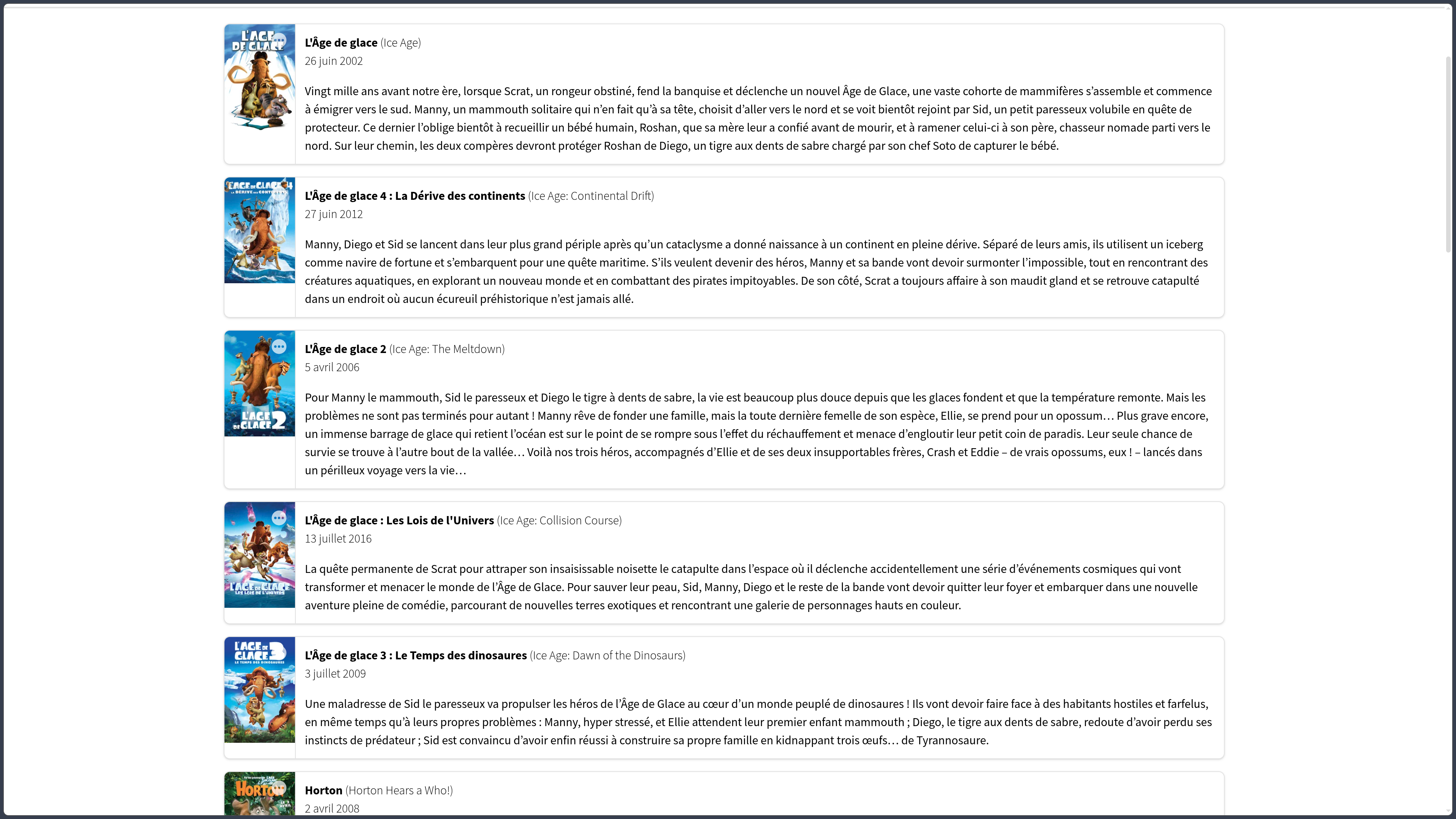
In 2002, Ice Age became its first feature film.
The adventure of Manny, Sid, Diego and Scrat became a worldwide success and immediately established Blue Sky as a credible competitor to Pixar and DreamWorks Animation.
The franchise became the studio’s primary commercial engine.
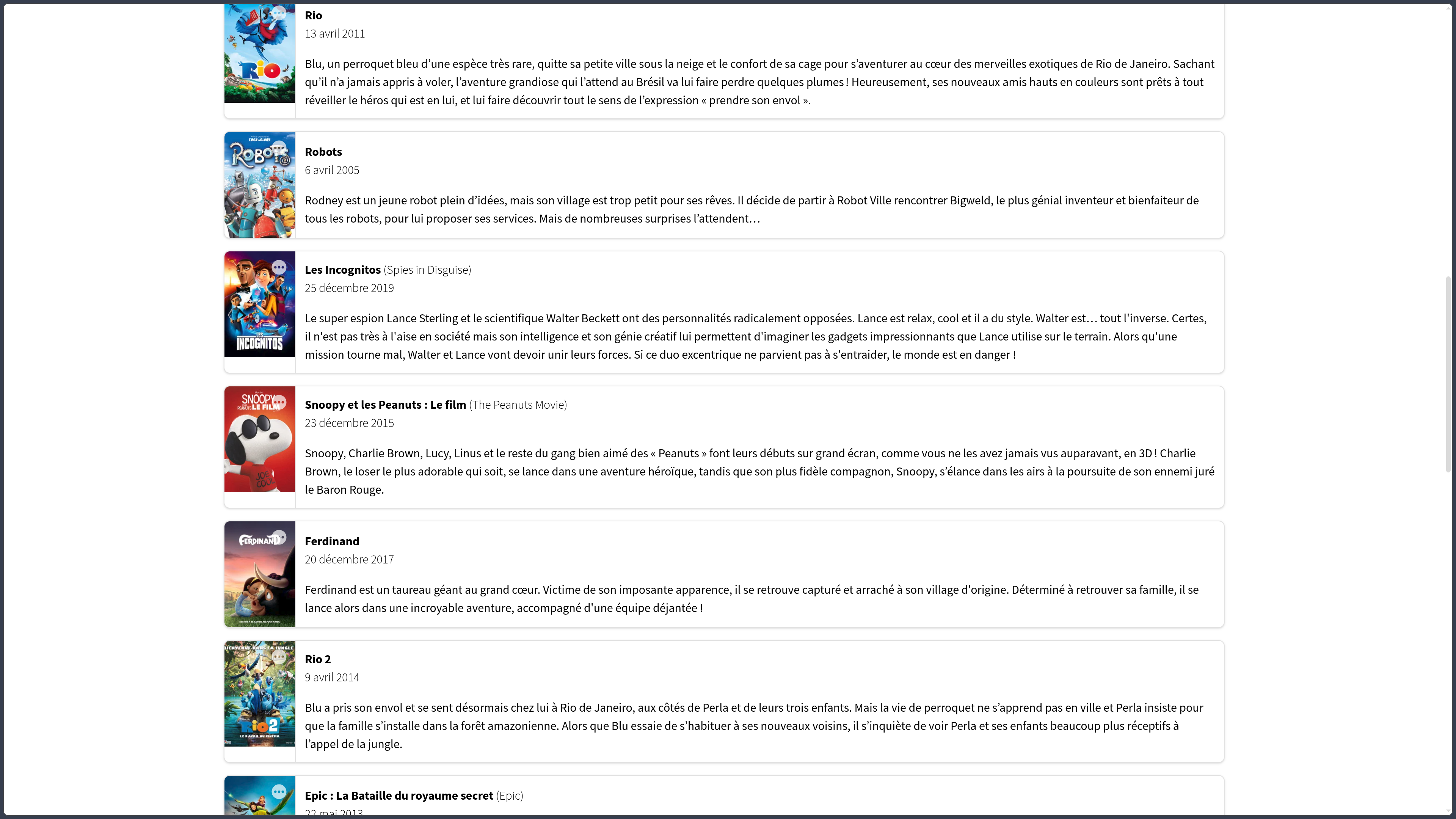
Blue Sky then developed very different worlds through Robots, Horton Hears a Who!, Rio, Epic, The Peanuts Movie, Ferdinand and Spies in Disguise.
The studio also built a second major franchise with Rio, driven by the colorful world imagined by Carlos Saldanha.
In total, Blue Sky produced 13 feature films between 2002 and 2019.
When The Walt Disney Company acquired a large portion of 21st Century Fox in 2019, Blue Sky joined Disney’s studio portfolio alongside Walt Disney Animation Studios and Pixar.
That situation lasted only a short time.
In February 2021, Disney announced Blue Sky’s closure in an economic context heavily affected by the Covid-19 pandemic.
The studio ceased operations in April 2021.
Its closure ended thirty-four years of activity, but its films, technologies and several of its characters remained part of the 20th Century and Disney heritage.
History
The roots at MAGI
Blue Sky’s story began before the studio itself existed.
During the 1970s and early 1980s, several of its future founders worked at MAGI, a company specializing in mathematical applications and computer imagery.
MAGI notably developed SynthaVision, a system capable of producing three-dimensional imagery at a time when the field remained highly experimental.
The company later contributed to TRON, released in 1982.
The Disney film became one of the earliest major Hollywood features to make extensive use of computer-generated imagery.
That experience brought technology, cinema and animation together within the team that would later create Blue Sky.
1987 — Blue Sky Studios is founded
After MAGI declined, six former employees decided to continue working together.
Chris Wedge, Michael Ferraro, Carl Ludwig, Eugene Troubetzkoy, David Brown and Alison Brown founded Blue Sky Studios in February 1987.
The company was initially very small.
Its founders brought complementary skills in animation, programming, engineering, production and business development.
Their ambition was to create new methods capable of producing more realistic digital imagery while turning those tools into a genuine artistic language.
CGI Studio
Blue Sky developed its own software system, CGI Studio.
A central part of its work focused on ray tracing.
Unlike rendering methods requiring numerous manual adjustments to simulate lighting, ray tracing seeks to mathematically reproduce the behavior of light.
The engineers particularly studied how light travels through or reflects off materials such as glass, water and ice.
This approach became one of Blue Sky’s technical signatures.
Long before its feature films, the studio therefore built its identity around collaboration between artists and engineers.
Difficult beginnings
The early years remained financially challenging.
Computer imagery was expensive to render and the market was still limited.
Blue Sky worked mainly on commercials and commissioned projects.
Each production nevertheless allowed the team to improve its tools.
The studio gradually developed a reputation for the quality of its lighting, rendering and computer animation.
Advertising and visual effects
During the 1990s, Blue Sky produced extensive imagery for advertising.
This activity became its main testing ground.
The studio also worked on feature films.
It notably contributed animation for the insects in Joe’s Apartment in 1996.
After moving closer to Fox, Blue Sky worked on several films using digital effects, including Alien Resurrection, A Simple Wish, Mouse Hunt, Star Trek: Insurrection and Fight Club.
This period formed a transition between visual-effects company and future animated-feature studio.
1997 — Blue Sky joins Fox
In 1997, visual-effects company VIFX, associated with 20th Century Fox, acquired a majority stake in Blue Sky.
The two companies were temporarily combined under the name Blue Sky/VIFX.
The deal gave Blue Sky much more direct access to the Hollywood industry.
When VIFX was later sold to Rhythm & Hues in 1999, Fox retained Blue Sky.
That decision proved decisive.
The studio gradually moved away from service work to focus on animated feature films.
1998 — Bunny
In 1998, Chris Wedge directed Bunny.
The short follows an elderly rabbit whose evening is disturbed by a moth.
Blue Sky used the project to demonstrate its technical abilities, especially in rendering light and materials.
But Bunny was not simply a technological demonstration.
Its melancholic atmosphere and storytelling showed that the studio also wanted to use computer imagery to convey emotion.
In 1999, Chris Wedge received the Academy Award for Best Animated Short Film for Bunny.
The award significantly strengthened Blue Sky’s credibility.
Toward feature films
By the late 1990s, the visual-effects market had become difficult.
Fox briefly approached Blue Sky’s future with caution.
Chris Wedge, producer Lori Forte and animation executive Chris Meledandri then championed a feature-film project centered on prehistoric animals.
The idea became Ice Age.
For Blue Sky, the challenge was enormous.
The studio had to move from teams working on relatively short sequences or commercials to an organization capable of producing more than an hour of coherent animation.
2002 — Ice Age
Ice Age was released in 2002, directed by Chris Wedge and Carlos Saldanha.
The film follows Manny, a solitary mammoth, Sid, an extremely talkative sloth, and Diego, a saber-toothed tiger.
The three animals must return a human baby to its family during migrations caused by the arrival of the ice age.
Running parallel to the main story is Scrat, a small squirrel obsessively pursuing an acorn.
The character has only a secondary role in the main plot, but his visual comedy immediately became one of the film’s signatures.
A decisive success
Ice Age became a major success.
The film earned more than $380 million worldwide.
For a studio that had never before produced a feature film, the result was decisive.
Blue Sky became one of the few studios in the early 2000s capable of establishing a lasting position in the computer-animation market dominated by Pixar and DreamWorks.
The film also received an Academy Award nomination for Best Animated Feature.
Most importantly, it launched a franchise that would accompany Blue Sky throughout its history.
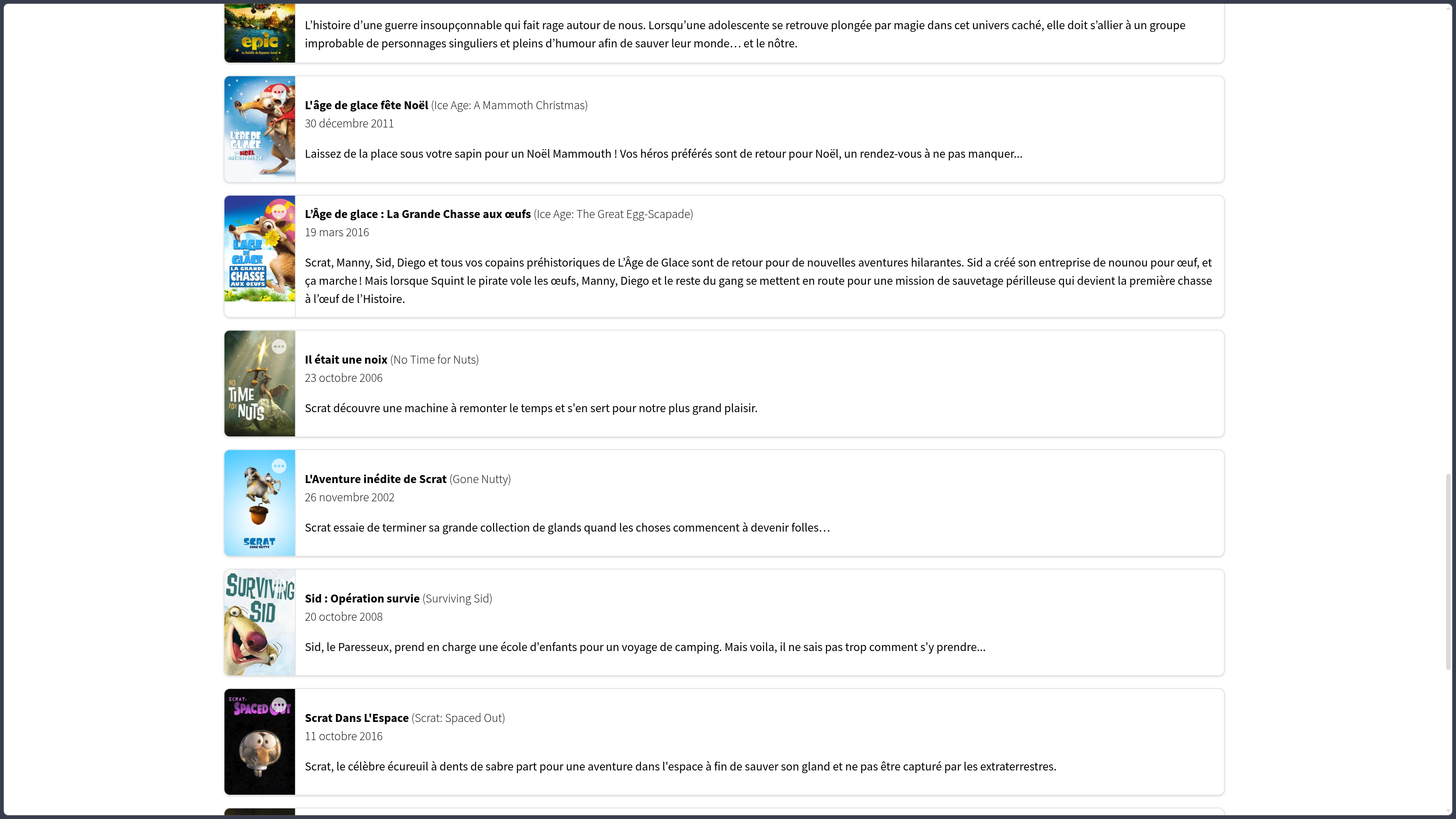
Scrat becomes the studio’s unofficial mascot
Scrat quickly gained popularity far beyond the size of his role in the story.
His endless attempts to obtain or protect his acorn became a recurring joke.
The character works almost entirely through physical animation, without real dialogue.
He therefore allowed animators to reconnect with a form of comedy close to classic cartoons and slapstick.
Blue Sky used him in several short films and film openings.
Scrat gradually became the character most immediately associated with the studio.
2005 — Robots
After the success of Ice Age, Blue Sky developed an entirely different world with Robots in 2005.
Directed by Chris Wedge and Carlos Saldanha, the film imagines a world inhabited entirely by machines.
Young inventor Rodney Copperbottom dreams of meeting his idol Bigweld and travels to Robot City.
The production allowed Blue Sky to make particular use of its expertise in metallic surfaces, reflections, mechanisms and complex environments.
The world of Robots is filled with wheels, gears, pipes and impossible constructions.
The film confirmed that the studio could create something very different from the prehistoric world that had made it famous.
2006 — Ice Age: The Meltdown
Blue Sky returned to its first franchise in 2006 with Ice Age: The Meltdown.
Carlos Saldanha took sole directing responsibility.
Manny, Sid and Diego must leave their valley when melting ice threatens it.
The film notably introduces Ellie, a mammoth who believes she is an opossum, as well as Crash and Eddie.
The sequel significantly expanded the scale of the franchise.
Its international success confirmed that Ice Age could become a long-running series.
2008 — Horton Hears a Who!
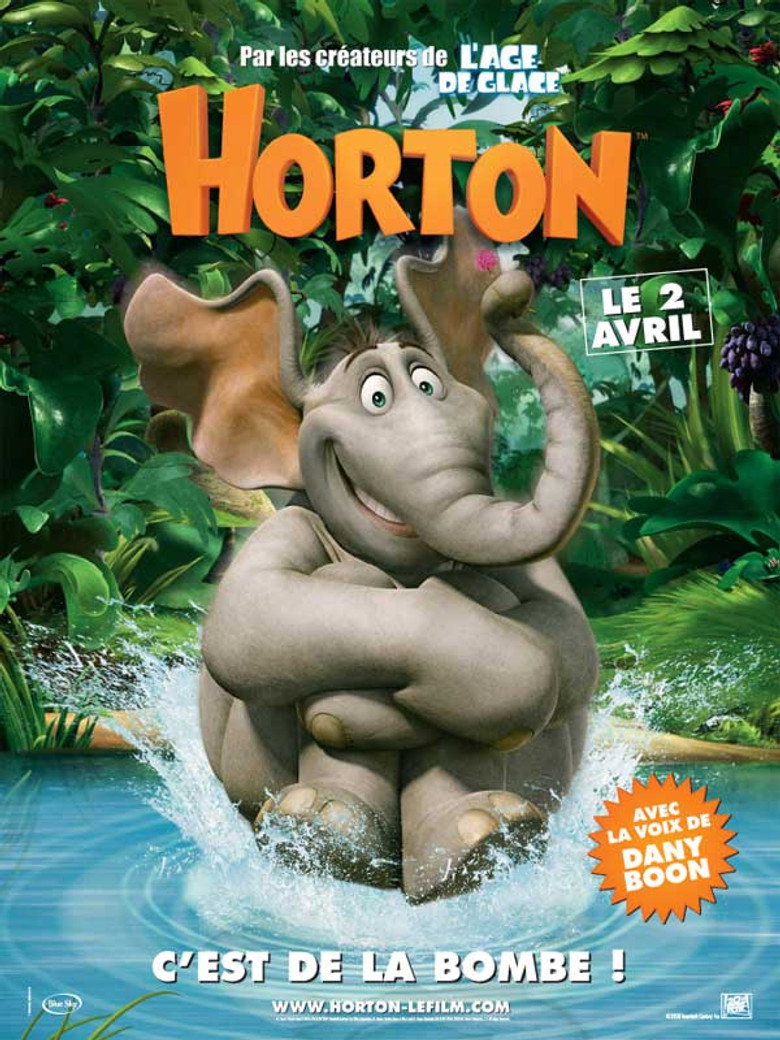
In 2008, Blue Sky adapted Dr. Seuss with Horton Hears a Who!.
The film follows Horton, an elephant who discovers that an entire microscopic world exists on a speck of dust.
Directed by Jimmy Hayward and Steve Martino, the production had to adapt the highly distinctive look of Dr. Seuss’ illustrations into 3D animation.
The studio sought to preserve the exaggerated shapes and graphic energy of the source material rather than simply turning them into realistic characters.
The film became one of the better-received animated adaptations of Dr. Seuss’ work.
2009 — The move to Greenwich
At the beginning of 2009, Blue Sky left its facilities in White Plains, New York, for a new studio in Greenwich, Connecticut.
The company then employed more than 300 people.
The new location provided more room for a company that had become a genuine feature-animation studio.
Blue Sky remained headquartered in Greenwich until its closure.
2009 — Ice Age: Dawn of the Dinosaurs
That same year, Ice Age: Dawn of the Dinosaurs was released.
Manny and his companions discover a vast underground world inhabited by dinosaurs.
The film notably introduces Buck, a one-eyed adventurous weasel who would become a recurring character in the franchise.
The third installment greatly expanded the spectacle and became a huge international hit.
By that point, Ice Age was clearly one of 20th Century Fox’s major franchises.
2011 — Rio
In 2011, Carlos Saldanha directed Rio.
The film was especially personal for the Brazilian filmmaker.
It follows Blu, a blue macaw raised in the United States and taken to Rio de Janeiro to meet Jewel, the last known female of his species.
The city, music, carnival and Brazilian culture play central roles.
The film developed a visual identity very different from Ice Age.
Bright colors, vegetation, birds and aerial movement allowed Blue Sky to explore new possibilities.
A second major franchise
Rio became a major international success.
Blu, Jewel and their companions gave the studio a second property capable of continuing across multiple films.
The soundtrack and musical sequences played a much larger role than in Blue Sky’s previous productions.
For Carlos Saldanha, the film also offered an opportunity to showcase his home country in a major Hollywood animated production.
2012 — Ice Age: Continental Drift
Ice Age: Continental Drift was released in 2012.
This fourth adventure uses continental drift as its spectacular starting point.
Manny is separated from his family and crosses the ocean on a piece of ice with Sid and Diego.
The franchise introduces new characters and further develops the families already established.
Its international success remained extremely strong.
Ice Age continued to be Blue Sky’s main commercial pillar.
2013 — Epic
In 2013, Chris Wedge returned to directing with Epic.
The film was inspired by the work of writer and illustrator William Joyce.
A teenage girl discovers a miniature world hidden deep inside a forest and becomes caught in a conflict between forces of growth and destruction.
The production particularly highlights natural environments, shifts in scale and fast movement through vegetation.
Epic became one of the studio’s most visually ambitious projects.
2014 — Rio 2
Rio 2 was released in 2014.
Blu, Jewel and their children leave Rio for the Amazon after other blue macaws are discovered.
The film further develops themes of family, identity and belonging already present in the original.
The Amazon setting also gave the animation teams opportunities to create a wide variety of birds, plants and landscapes.
The sequel confirmed Rio as Blue Sky’s second major original franchise.
2015 — The Peanuts Movie
In 2015, Blue Sky tackled a particularly delicate legacy with The Peanuts Movie.
The characters created by Charles M. Schulz, including Charlie Brown, Snoopy, Lucy, Linus and Woodstock, possess an instantly recognizable graphic style.
The challenge was therefore to use 3D tools without losing the simplicity of the original drawings.
Blue Sky developed a hybrid approach that gave the characters volume while reproducing poses, expressions and movements directly inspired by the comic strip and earlier animated productions.
The result received especially positive attention for its respect for Schulz’s work.
2016 — Ice Age: Collision Course
In 2016, Ice Age: Collision Course became the fifth main feature in the franchise.
Scrat’s adventures this time trigger a series of cosmic events threatening Earth.
Manny, Sid, Diego and their families must find a way to prevent disaster.
The film pushes the series toward much more extravagant fantasy than the earlier installments.
It became the final Ice Age feature directly produced by Blue Sky.
2017 — Ferdinand
Ferdinand was released in 2017, directed by Carlos Saldanha.
Adapted from the book by Munro Leaf and Robert Lawson, the film follows a huge bull who refuses to fight despite the expectations placed on him.
The character prefers flowers and peace to the arena.
The production therefore develops a story about rejecting imposed roles and defining one’s own identity.
Ferdinand received an Academy Award nomination for Best Animated Feature.
It was also the final feature directed by Carlos Saldanha at Blue Sky.
2019 — Disney acquires 21st Century Fox
On March 20, 2019, The Walt Disney Company completed the acquisition of a large portion of 21st Century Fox.
Blue Sky Studios was among the assets transferred.
The studio therefore joined a group that already owned two major feature-animation studios: Walt Disney Animation Studios and Pixar Animation Studios.
Blue Sky initially retained its identity and operations.
Disney still presented it as one of the studios within its film portfolio.
New leadership
Following the acquisition, several leadership changes took place.
In 2019, Andrew Millstein, former president of Walt Disney Animation Studios, notably joined Blue Sky as co-president.
The studio continued work on several projects in development.
Its next feature film, already well advanced before the acquisition, remained scheduled for release at the end of the year.
2019 — Spies in Disguise
Spies in Disguise was released on December 25, 2019.
Directed by Nick Bruno and Troy Quane, the film follows spy Lance Sterling and young scientist Walter Beckett.
An experiment accidentally transforms Sterling into a pigeon.
The production combines espionage, technology and physical comedy.
It also explores the idea that conflicts can be solved in ways other than violence.
Spies in Disguise became the thirteenth and final feature film released under the Blue Sky Studios name.
It was also the only Blue Sky feature released while the studio was already owned by Disney.
Nimona
Blue Sky was also developing an adaptation of Nimona, based on the work by ND Stevenson.
The project had been in development for several years and was intended to become one of the studio’s next feature films.
When the closure was announced in 2021, the film was already far into production.
The Blue Sky version could not be completed within the studio.
The project nevertheless survived its closure: Annapurna Pictures later revived it and DNEG Animation completed production before its release on Netflix in 2023.
Nimona therefore retains part of the work and legacy of its development at Blue Sky, but the finished film is not considered a fourteenth feature officially completed and produced by the studio.
2020 — A situation transformed by the pandemic
The year 2020 profoundly disrupted the film industry.
The Covid-19 pandemic led to theater closures, release delays and major difficulties across several Disney businesses.
Blue Sky found itself in a particular position.
Following the Fox acquisition, Disney already owned Walt Disney Animation Studios and Pixar as major in-house feature-animation studios.
Maintaining a third operation of similar scale became more difficult in this economic environment.
2021 — Disney announces the closure
On February 9, 2021, Disney announced its decision to close Blue Sky Studios.
The company cited the economic realities of the period following the impact of the pandemic on its businesses.
Around 450 employees were affected.
Disney said it would explore opportunities to place some of them within its other operations.
The decision abruptly ended a studio that still had several projects in development.
April 2021 — The end of Blue Sky Studios
Blue Sky permanently ceased operations in April 2021.
April 10 is generally regarded as the studio’s final day of operation.
After thirty-four years, the company created by six computer-imagery specialists therefore disappeared as a production unit.
Its films and properties remained part of the assets owned by Disney through the structures inherited from 20th Century Fox.
Ice Age after Blue Sky
The studio’s closure did not mean the end of the Ice Age franchise.
Disney and 20th Century continued to exploit the property.
However, productions made after Blue Sky’s closure should not automatically be considered Blue Sky films.
The historic studio and the intellectual property had become separate things.
The five main feature films released between 2002 and 2016 remain the ones directly produced by Blue Sky.
2022 — Ice Age: Scrat Tales
One final production created by Blue Sky teams appeared after the studio had closed.
Ice Age: Scrat Tales was released on Disney+ in April 2022.
The six-short series follows Scrat facing a new challenge: fatherhood.
The project had been produced before the studio’s closure.
It therefore became the final official Blue Sky production to be released.
Scrat’s final farewell
After the closure, a small group of Blue Sky artists also created a very short farewell animation.
In it, Scrat finally manages to grab his acorn.
And this time, nothing interrupts him.
He simply eats it before walking away.
The gesture took on particular symbolic meaning for the teams and the audience.
After twenty years spent chasing the same goal on screen, Scrat finally gets what he wanted at the moment his studio disappears.
What sets it apart
A studio born from technology
Blue Sky was not originally created as a traditional film-production company.
Its founders came from computer-imagery research, engineering and computer animation.
That background deeply shaped the way the studio operated.
Blue Sky developed its own tools instead of relying solely on existing solutions.
Its rendering technology therefore became an important part of its identity.
Particular attention to light
Blue Sky’s research into ray tracing allowed the studio to develop sophisticated lighting and rendering techniques very early.
Glass, metal, ice, fur and other materials became areas of experimentation.
This expertise is visible in productions as different as Ice Age, Robots and Rio.
Technology was never entirely separated from staging, however: it had to reinforce the clarity and personality of each world.
Highly expressive animation
Blue Sky characters often rely on strongly exaggerated expressions and movement.
Scrat is the clearest example.
Much of his humor works without dialogue.
His reactions, bursts of speed, falls and physical distortions directly recall the principles of classic cartoons and slapstick comedy.
This energy can also be found to varying degrees in Sid, Blu and many supporting characters across the studio’s films.
Very different visual worlds
Blue Sky did not develop a single visual style applied to every film.
The ice and natural landscapes of Ice Age differ greatly from the mechanical city of Robots.
Rio relies on tropical color and aerial animation.
Epic plays with miniature scale and forest environments.
The Peanuts Movie, by contrast, attempts to preserve Charles M. Schulz’s extremely simple graphic language.
This adaptability became one of the studio’s artistic strengths.
Ice Age as the backbone
The Ice Age franchise occupies an unmatched place in Blue Sky’s history.
It transformed the studio with its very first feature.
It then financed much of its development and allowed Blue Sky to launch other projects.
Manny, Sid, Diego and especially Scrat became inseparable from the studio’s identity.
But Blue Sky never limited itself entirely to the series and continued to develop different original projects and adaptations.
A distinctive place alongside Pixar and DreamWorks
In the early 2000s, the American computer-animated feature market was strongly dominated by Pixar and DreamWorks Animation.
The success of Ice Age allowed Blue Sky to emerge as an important third player.
The studio never had the size or release pace of its main competitors.
Its more compact position nevertheless allowed it to gradually build its own catalog and creative culture.
A strong East Coast identity
Unlike most major American animation studios based in California, Blue Sky spent most of its history in the New York region and later in Connecticut.
That location contributed to a culture distinct from the traditional Hollywood model.
The move from White Plains to Greenwich in 2009 accompanied the studio’s growth while preserving its East Coast identity.
Good to know
- Blue Sky Studios was founded in February 1987.
- Its six founders were Chris Wedge, Michael Ferraro, Carl Ludwig, Eugene Troubetzkoy, David Brown and Alison Brown.
- Several of the founders had previously worked at MAGI.
- MAGI contributed computer imagery to TRON in 1982.
- Blue Sky developed its own animation and rendering system, CGI Studio.
- The studio worked extensively with ray tracing technologies.
- Its earliest activities focused mainly on advertising and visual effects.
- Blue Sky contributed animation to Joe’s Apartment in 1996.
- In 1997, VIFX, associated with 20th Century Fox, acquired a majority stake in Blue Sky.
- Blue Sky then worked on visual effects for several Fox films.
- Bunny, directed by Chris Wedge, was released in 1998.
- Bunny won the Academy Award for Best Animated Short Film in 1999.
- Fox retained Blue Sky when VIFX was sold in 1999.
- The studio gradually shifted toward animated feature films.
- Ice Age, released in 2002, was its first feature.
- The film was directed by Chris Wedge and Carlos Saldanha.
- Ice Age earned more than $380 million worldwide.
- The film received an Academy Award nomination for Best Animated Feature.
- Scrat gradually became Blue Sky’s unofficial mascot.
- Robots was released in 2005.
- Ice Age: The Meltdown was released in 2006.
- Horton Hears a Who! was released in 2008.
- In 2009, Blue Sky moved from White Plains to Greenwich, Connecticut.
- Ice Age: Dawn of the Dinosaurs was released in 2009.
- Rio was released in 2011 under the direction of Carlos Saldanha.
- Rio became the studio’s second major original franchise.
- Ice Age: Continental Drift was released in 2012.
- Epic was released in 2013.
- Rio 2 was released in 2014.
- The Peanuts Movie was released in 2015 and adapted the characters created by Charles M. Schulz.
- Ice Age: Collision Course was released in 2016.
- It was the fifth and final Ice Age feature directly produced by Blue Sky.
- Ferdinand was released in 2017.
- Ferdinand received an Academy Award nomination for Best Animated Feature.
- The Walt Disney Company completed its acquisition of most of 21st Century Fox on March 20, 2019.
- Blue Sky Studios then joined Disney’s studio portfolio.
- Spies in Disguise was released on December 25, 2019.
- It became the thirteenth and final Blue Sky Studios feature film.
- Blue Sky therefore produced 13 feature films between 2002 and 2019.
- The studio was working on Nimona when it closed.
- Blue Sky’s version of Nimona was not completed by the studio.
- The project was later revived by Annapurna Pictures and completed by DNEG Animation before its Netflix release in 2023.
- Disney announced the closure of Blue Sky Studios on February 9, 2021.
- The decision came amid the difficult economic conditions caused by the Covid-19 pandemic.
- Around 450 employees were affected by the closure.
- Blue Sky Studios ceased operations in April 2021.
- April 10, 2021 is generally regarded as its final day of operation.
- Its films and principal properties remain within the Disney and 20th Century ecosystem.
- Ice Age: Scrat Tales, produced before the closure, was released on Disney+ in April 2022.
- It became the final official Blue Sky production to be released.
- A final farewell animation created by studio artists shows Scrat finally succeeding in eating his acorn.