Ray Charles was an American singer, pianist, songwriter and bandleader who became a founding figure of soul music and a major interpreter of rhythm and blues, jazz and country. Known for his expressive voice and piano playing, he helped establish soul by combining gospel and blues. Songs including I Got a Woman, What'd I Say, Georgia on My Mind, Hit the Road Jack and I Can't Stop Loving You marked his career. With Modern Sounds in Country and Western Music, he crossed musical boundaries and brought together several American popular music traditions.
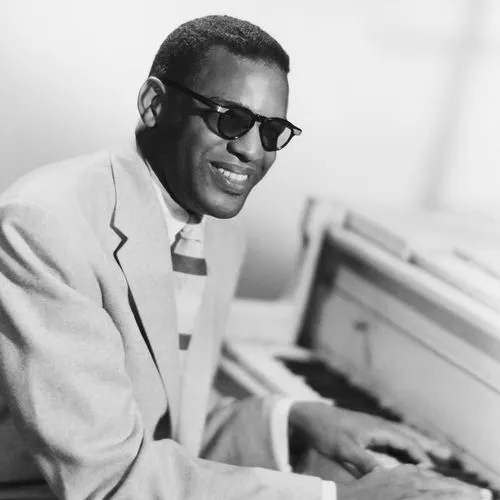
Ray Charles
A piano, a powerful voice and the many traditions of American music brought together.
Details
- Type
- Music
- Countries
- 🇺🇸 United States
- Genres
- Jazz, Blues, Country, Soul, Rhythm and blues, Classic soul
- Albums
- 12
Synopsis
Ray Charles
Glossary terms: Accompaniment, Album, Arrangement, Artistic approach, Biopic, Blues, Composer, Composition, Country, Fundamental, Gospel, Harmony, Identity, Interpretation, Interpretation, Interpretation, Jazz, Large orchestra, Melody, Organ, Piano, Rock, Score, Song, Soul, Springing, Swing, Variation
Trailer
Watch the trailer
Overview
Presentation
Ray Charles, born Ray Charles Robinson in Albany, Georgia, in 1930, was an American singer, pianist, songwriter and bandleader. He grew up in Greenville, Florida, where he discovered gospel, blues and country music. Having lost his sight during childhood, he studied music at the Florida School for the Deaf and the Blind in St. Augustine, learning piano and how to read musical scores in Braille. After performing with various ensembles, he moved to Seattle in the late 1940s and began recording under the name Ray Charles. His early singing was influenced by Nat King Cole and Charles Brown.
During the 1950s, Charles developed a distinctive musical identity by combining rhythm and blues with gospel vocal traditions. I Got a Woman (1954), Hallelujah I Love Her So and Drown in My Own Tears contributed to the emergence of soul music. In 1959, What'd I Say, built around an electric piano riff and call-and-response exchanges with his backing singers, became a major hit. He also explored instrumental jazz, particularly with vibraphonist Milt Jackson on Soul Brothers. Albums such as The Genius of Ray Charles and The Genius Sings the Blues demonstrated his interest in big-band arrangements and blues traditions.
In the early 1960s, he expanded his repertoire with Georgia on My Mind, Hit the Road Jack and Unchain My Heart. In 1962, Modern Sounds in Country and Western Music marked another turning point: Charles reinterpreted country songs through arrangements drawing on soul, jazz and large orchestras. I Can't Stop Loving You became an international success, followed by a second volume released the same year. He continued exploring different styles through Crying Time, A Message from the People and, during the 1980s, Friendship, which featured several country musicians.
Ray Charles remained active until the final years of his life. He collaborated with Willie Nelson on Seven Spanish Angels and recorded duets with artists from different generations. His final project, Genius Loves Company, was released in 2004 after his death and featured performers including Norah Jones, B.B. King, Elton John and Van Morrison. He died that same year in Beverly Hills, California.
Key Takeaways
Ray Charles's musical identity was based on bringing together traditions that had often been treated as separate. He combined the expressiveness of gospel, blues structures, jazz swing and country melodies. His vocal style featured changes in intensity, powerful inflections and constant exchanges with instrumentalists and backing singers, particularly the Raelettes.
His piano playing combined rhythmic accompaniment, improvisation and jazz harmonies. Charles refused to limit himself to a single genre: he transformed existing compositions through his arrangements and interpretations while also writing part of his repertoire. This artistic freedom contributed to the development of modern soul and the expansion of rhythm and blues toward wider audiences.
Conclusion
Ray Charles holds a fundamental place in the history of American popular music. By combining gospel, blues, jazz, soul and country within a unified artistic approach, he helped transform musical composition and performance. His work forms an important connection between several major musical movements of the twentieth century.
Did You Know?
- Birth name: Ray Charles Robinson.
- Origins: Albany, Georgia, United States (1930–2004); raised in Greenville, Florida.
- Nicknames: The Genius and Genius of Soul.
- Instruments: piano, electric piano, organ, saxophone and vocals.
- Musical education: studied at the Florida School for the Deaf and the Blind in St. Augustine, where he learned to read musical notation in Braille.
- Signature songs: I Got a Woman, What'd I Say, Georgia on My Mind, Hit the Road Jack, Unchain My Heart, I Can't Stop Loving You and Crying Time.
- Landmark albums: The Genius of Ray Charles (1959), The Genius Sings the Blues (1961), Modern Sounds in Country and Western Music (1962), A Message from the People (1972), Friendship (1984) and Genius Loves Company (2004).
- Collaborations: Milt Jackson, Betty Carter, Willie Nelson, B.B. King, Norah Jones and Van Morrison.
- Country music: Modern Sounds in Country and Western Music helped introduce country songs to new audiences.
- Georgia on My Mind: originally composed by Hoagy Carmichael; Charles's interpretation became one of the song's best-known recordings.
- Cinema: the biographical film Ray (2004), directed by Taylor Hackford, portrayed part of his life with Jamie Foxx in the leading role.
- Recognition: 17 Grammy Awards in total and induction into the Rock & Roll Hall of Fame in 1986.
- Country recognition: posthumously inducted into the Country Music Hall of Fame in 2021.
Link graph
Open in the full graphLoading the graph…
Only the strongest links are shown.
View the list ({count})
Discography
Discography (12)


