Origins
Country music has its roots in the rural musical traditions of the southern and southeastern United States. Long before the name identified a commercial genre, different communities shared songs, ballads, and dances passed down from generation to generation.
Repertoires brought by European populations, particularly British and Irish ballads, encountered African American musical traditions, religious songs, blues, and local instrumental practices.
The fiddle, long used at rural dances and celebrations, became one of the characteristic instruments of these ensembles. The guitar gradually gained popularity, while the banjo provided an essential rhythmic dimension.
The history of the banjo reveals the diversity of country's origins. Developed by enslaved Africans and their descendants in the Americas, this instrument has deep African roots. Its integration into southern string bands demonstrates the constant exchanges between Black and white musicians.
In Appalachia, string bands performed dance tunes, traditional ballads, and popular compositions. In Texas and the Southwest, cowboy traditions, Mexican music, and dance repertoires contributed to other musical forms that would gradually become part of the country music landscape.
There was therefore no single place where this music suddenly appeared. Its formation resulted from multiple regional traditions practiced long before the recording industry brought them together under a common category.
Songs told stories of romantic relationships, family, work, travel, religion, departures, and the difficulties of everyday life. Some were tragic, while others were humorous or intended for dancing.
This emphasis on storytelling would become one of country's defining characteristics. Melodies and instrumental accompaniment often served a narrative, expressed in direct and accessible language.
At the beginning of the 20th century, advances in sound recording and the development of radio transformed these local traditions into a commercial musical movement.
Modern country emerged from the encounter between popular musical heritage and a new industry capable of distributing songs throughout the United States.
Emergence and Early Musical Scenes
The 1920s — The First Rural Music Recordings
During the 1920s, American record companies began recording musicians from rural regions of the South.
In 1923, Fiddlin' John Carson made recordings in Atlanta that became some of the earliest commercial successes of this music. His fiddle playing and repertoire illustrated the popular traditions that were beginning to attract the recording industry's attention.
Vernon Dalhart subsequently achieved considerable success with "The Wreck of the Old 97," recorded in 1924.
Record companies notably used the expression hillbilly music to market these repertoires. The term, associated with an often stereotypical representation of rural populations, would gradually be replaced by country and western and later country music.
Radio played an equally important role. In Nashville, station WSM launched a traditional music program in November 1925 that would become the Grand Ole Opry.
This program helped establish Nashville as a major center of country music. Musicians could now reach audiences far larger than those attending local celebrations and gatherings.
Among the show's early performers, Uncle Dave Macon popularized a spectacular approach to banjo playing and traditional singing.
African American musician DeFord Bailey also became one of the Grand Ole Opry's first major personalities. A harmonica virtuoso, he illustrates an essential dimension of country history that has often been underrepresented in popular accounts of the genre.
1927 — The Bristol Sessions
The summer of 1927 marked a decisive stage in the commercial development of country music.
Producer Ralph Peer organized a series of recording sessions in Bristol, on the border between Tennessee and Virginia, bringing together musicians from local traditions.
These sessions helped introduce two fundamental figures to a wider audience: Jimmie Rodgers and The Carter Family.
Jimmie Rodgers developed a highly personal approach combining narrative singing, guitar, blues influences, and yodeling. His recordings achieved enormous success and helped establish the image of the solo country singer.
The Carter Family brought together A. P. Carter, Sara Carter, and Maybelle Carter. Their repertoire combined traditional songs, religious hymns, and popular compositions.
The group's vocal harmonies became a reference point, while Maybelle Carter developed a characteristic guitar technique in which the melody was played on the lower strings, accompanied by a steady rhythm.
The group's history also demonstrates the exchanges between musical traditions. African American guitarist Lesley Riddle notably participated in the collection of songs and influenced certain instrumental practices within the family.
The Bristol Sessions are often described as the "Big Bang" of country music. This expression emphasizes their commercial importance but does not mean the genre was born in 1927: its traditions and earliest recordings already existed.
Above all, these sessions marked the consolidation of a music market that would experience spectacular growth.
The 1930s — Cowboys, Radio and Western Swing
During the Great Depression, radio and cinema became essential means of distributing country music.
Gene Autry popularized the image of the singing cowboy through his films and songs. Themes associated with the American West attracted considerable audiences and helped shape country's cultural imagery.
In Texas and Oklahoma, another movement developed around dance music.
Bob Wills and Milton Brown were among the pioneers of western swing, a musical form combining string band traditions with jazz, blues, swing, and various regional influences.
With his Texas Playboys, Bob Wills developed particularly energetic music that could incorporate fiddles, guitars, wind instruments, and a rhythm section.
Country was therefore never exclusively acoustic or melancholic music. From its earliest decades, it also possessed a festive, orchestral, and experimental dimension.
The Golden Age
The 1940s–1950s — Honky-Tonk, Bluegrass and Great Voices
After the Second World War, country music entered another period of transformation.
Honky-tonks, popular establishments combining dancing and live music, encouraged the emergence of a more direct and powerful sound.
Ernest Tubb helped popularize this style, particularly through electric guitar and songs about human relationships and life's difficulties.
Hank Williams became one of the major figures of postwar country. His compositions, including "Your Cheatin' Heart" and "I'm So Lonesome I Could Cry," combined simple melodies with particularly intense emotional expression.
His influence extended far beyond country music and shaped several generations of songwriters.
Kitty Wells helped transform the place of women in country with "It Wasn't God Who Made Honky Tonk Angels," a major hit in 1952 that challenged portrayals of women found in certain popular songs.
Another important branch developed around Bill Monroe.
With his Blue Grass Boys, Monroe created fast, virtuosic acoustic music. The arrival of banjo player Earl Scruggs in 1945, alongside guitarist and singer Lester Flatt, helped establish the defining characteristics of modern bluegrass.
This aesthetic emphasized string instruments, vocal harmonies, and instrumental solos. It would gradually become a distinct movement while maintaining deep connections with country music.
The 1950s — Johnny Cash and the Encounter with Rock
During the 1950s, the relationships between country, blues, and rhythm and blues became increasingly important.
In Memphis, Elvis Presley contributed to the emergence of rockabilly by combining elements of country with the energy and rhythms of African American musical traditions.
His interpretation of "Blue Moon of Kentucky," a song by Bill Monroe, illustrates these exchanges between styles.
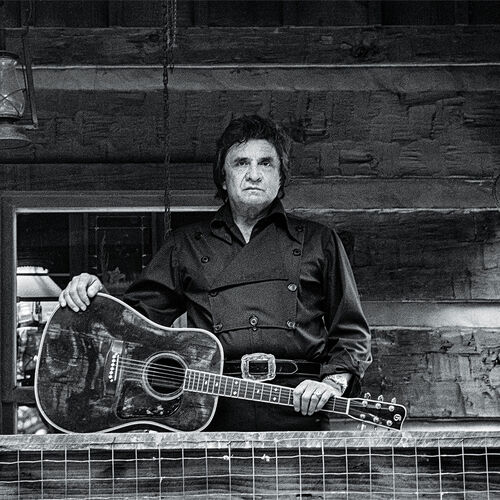
Johnny Cash simultaneously became one of the great personalities of American music.
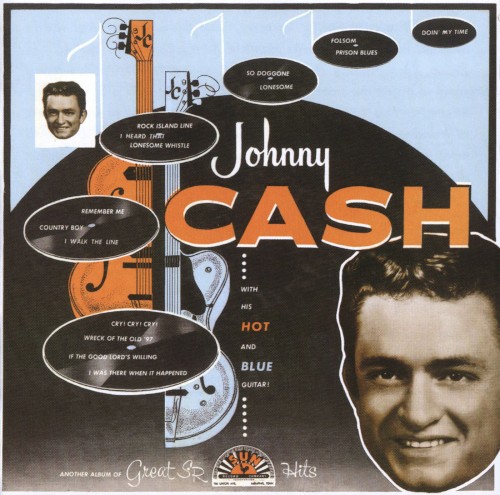
His debut album Johnny Cash With His Hot and Blue Guitar, released in 1957, demonstrated his stripped-down style, built around a deep voice, a characteristic rhythmic pulse, and accessible storytelling.
Cash gradually developed a repertoire exploring work, faith, loneliness, justice, and the human condition.
His career would extend far beyond the boundaries of country music, particularly through collaborations and interpretations of songs from other traditions.
Rockabilly and rock 'n' roll thus helped renew country's popularity, even though their commercial development eventually followed different directions.
The 1950s–1960s — The Nashville Sound
By the late 1950s, Nashville had become the principal industrial center of American country music.
Producers Chet Atkins and Owen Bradley developed an aesthetic intended to reach a wider audience.
The Nashville Sound used more polished arrangements, backing vocals, piano, and sometimes orchestral strings, reducing the prominence of instruments traditionally associated with rural country music.
Jim Reeves and Patsy Cline became two important representatives of this approach.
Patsy Cline notably achieved major success with "I Fall to Pieces" and "Crazy." Her expressive voice and sophisticated arrangements helped bring country and pop closer together.
However, this transformation sparked debates between defenders of a more traditional sound and producers seeking to expand the genre's commercial reach.
Female singers gained increasing prominence during this period. Loretta Lynn wrote and performed songs addressing married life, social realities, and women's experiences with a new degree of frankness.
George Jones established a particularly expressive vocal style, while Tammy Wynette became one of country's major figures in the late 1960s.
Country music also continued opening itself to performers from other musical backgrounds.
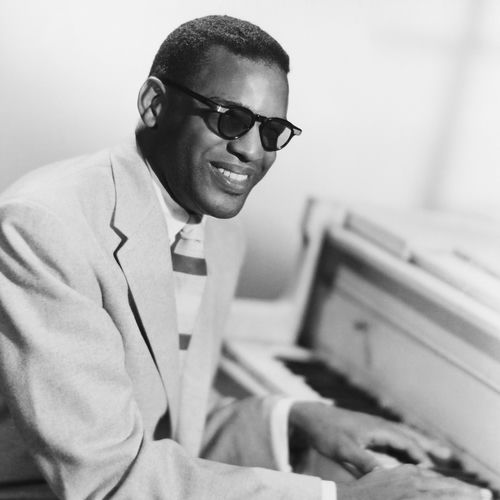
In 1962, Ray Charles released Modern Sounds in Country and Western Music, an album on which he reinterpreted country songs with arrangements drawing on soul, jazz, and orchestral pop.
The success of this approach, continued that same year with Modern Sounds in Country and Western Music, Volume 2, demonstrated the musical closeness of traditions that the recording industry had often separated.
The 1960s — The Bakersfield Sound and New Identities
In California, the city of Bakersfield became the center of another important development.
Buck Owens and Merle Haggard created a more direct musical approach, characterized by electric guitars, pronounced rhythms, and the heritage of honky-tonk.
The Bakersfield Sound offered an alternative to the more orchestral arrangements of the Nashville Sound.
This period also saw the rise of Charley Pride, an African American singer who became one of country's major stars.
His success highlights the importance of Black artists in the genre's history, despite the obstacles they frequently encountered within its industry.
Country thus diversified across several geographical and aesthetic centers, without being confined to a single singing style or approach to arrangement.
The 1970s — Outlaw Country and Country Rock
During the 1970s, some country artists sought greater independence from the production methods dominating Nashville.
Willie Nelson and Waylon Jennings became the leading figures of outlaw country, a movement demanding greater freedom in the choice of songs, musicians, and recording conditions.
The album Honky Tonk Heroes, released by Waylon Jennings in 1973, illustrated this desire for artistic independence.
Willie Nelson achieved major success with Red Headed Stranger, released in 1975, a narrative work whose deliberately sparse arrangements contrasted with certain Nashville productions.
In 1976, the compilation Wanted! The Outlaws, featuring Nelson, Jennings, Jessi Colter, and other performers, helped popularize the movement.
Meanwhile, Dolly Parton established herself as one of country's greatest figures. Her songwriting, voice, and ability to move between country traditions and popular music allowed her to develop a particularly influential career.
Emmylou Harris also contributed to renewing the genre by combining vocal traditions, older repertoires, and collaborations with musicians from different backgrounds.
Kris Kristofferson developed a narrative and introspective songwriting style that helped bring country closer to the singer-songwriter tradition.
This decade was also marked by the development of country rock.
Gram Parsons and The Byrds contributed to this transformation, particularly with the album Sweetheart of the Rodeo, released in 1968.
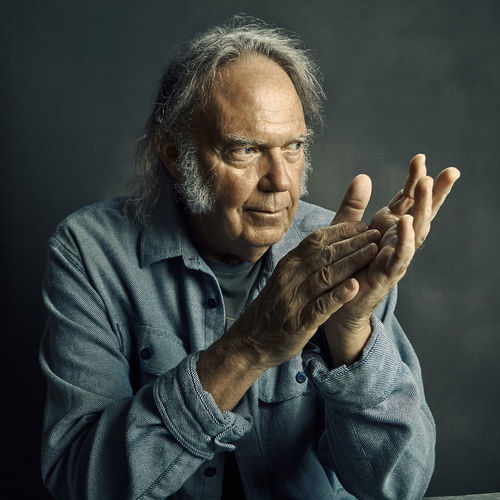
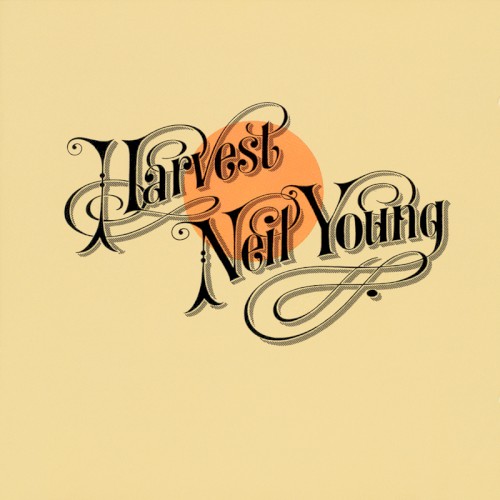
Neil Young extended these exchanges between folk, rock, and country, notably with Harvest, released in 1972.
Linda Ronstadt also helped introduce country songs and sounds to a wider audience.
These encounters demonstrate that country music has never developed independently from other forms of American popular music.
The 1980s–1990s — International Success
During the 1980s, a new generation renewed country's traditions.
George Strait and Randy Travis helped popularize an aesthetic closer to honky-tonk and classic country sounds, while Reba McEntire established herself as one of the genre's leading voices.
Alan Jackson subsequently helped continue this traditional approach during the 1990s.
Meanwhile, Garth Brooks transformed the commercial scale of country concerts. His album No Fences, released in 1990, accompanied a period in which the genre reached an enormous audience.
Shania Twain contributed to its international expansion through an aesthetic combining country, pop, and contemporary production. Her album Come On Over, released in 1997, became one of the major commercial successes of this development.
The Chicks also achieved widespread popularity by combining vocal harmonies, acoustic instruments, and modern sensibilities.
Alison Krauss, meanwhile, helped maintain a particularly strong connection between country, bluegrass, and acoustic traditions.
Country had now established itself as a major music industry capable of accommodating approaches ranging from its most traditional forms to productions closely related to pop.
Movements and Subgenres
Traditional Country and Old-Time Music
Traditional country preserves the heritage of American rural music, particularly ballads, religious songs, and dance repertoires.
Acoustic ensembles frequently use fiddle, guitar, banjo, mandolin, and double bass.
Jimmie Rodgers and The Carter Family are among its principal historical references, while old-time music practices continue preserving numerous older repertoires.
Western Swing
Western swing emerged in the American Southwest during the 1930s.
It combines country dance music, jazz, blues, and regional influences. Large ensembles may incorporate fiddles, electric guitars, steel guitar, and wind instruments.
Bob Wills remains one of its most representative figures.
Honky-Tonk
Honky-tonk developed particularly during the 1940s and 1950s.
Its amplified instrumentation, steady rhythm, and songs about human relationships made it especially suited to bars and dance halls.
Ernest Tubb, Hank Williams, and George Jones contributed to its identity and popularity.
Bluegrass
Developed primarily during the 1940s around Bill Monroe, bluegrass emphasizes acoustic instruments and collective virtuosity.
Mandolin, guitar, fiddle, double bass, and banjo play essential roles.
It now possesses its own history and musical scenes, although it retains common roots with country.
Nashville Sound and Country Pop
The Nashville Sound emerged in the late 1950s, incorporating sophisticated arrangements and influences from popular music.
Patsy Cline and Jim Reeves were among its leading voices.
Country pop extended this desire to reach mainstream audiences but took very different forms across the decades.
Bakersfield Sound
Developed primarily in California during the 1950s and 1960s, the Bakersfield Sound emphasized sharp electric guitars and a pronounced rhythm section.
Buck Owens and Merle Haggard became its principal representatives.
This movement helped preserve a more direct aesthetic in the face of increasingly orchestral arrangements.
Outlaw Country
Outlaw country developed during the 1970s around musicians seeking greater artistic independence.
Willie Nelson and Waylon Jennings became its emblematic figures.
Beyond a particular sound, the movement represented a different approach to musical creation and production.
Country Rock and Americana
Country rock brings country music closer to folk and the electric instrumentation of rock.
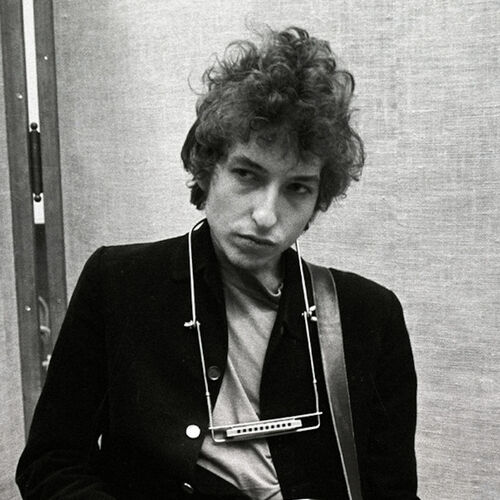
Bob Dylan, Neil Young, and several American groups participated in these exchanges beginning in the 1960s.
Americana, a term that gradually became institutionalized toward the end of the 20th century, encompasses artists drawing on country, folk, blues, bluegrass, and other American musical traditions.
Its boundaries remain deliberately open.
Alternative Country and Alt-Country
From the 1980s, and particularly during the 1990s, certain musicians combined country with the aesthetics of independent rock and punk.
Uncle Tupelo helped define this new sensibility, while Lucinda Williams developed a personal songwriting style blending country, blues, and rock.
Her album Car Wheels on a Gravel Road, released in 1998, became a major reference for this approach.
The movement often favored less polished sounds and greater freedom in arrangements and songwriting.
Contemporary Country
Since the 2000s, country has continued evolving between acoustic traditions, pop production, rock, and hip-hop influences.
Taylor Swift began her career in country with her debut album Taylor Swift, released in 2006, before gradually developing a more pronounced pop aesthetic.
Chris Stapleton helped renew interest in country music strongly influenced by blues and soul. His album Traveller, released in 2015, became one of the important references of this development.
Kacey Musgraves developed a personal approach to country pop, notably with Golden Hour, released in 2018.
Sturgill Simpson and Tyler Childers contributed to the vitality of scenes emphasizing songwriting, organic arrangements, and regional traditions.
Artists such as Luke Combs and Zach Bryan also illustrate the coexistence of very different forms of contemporary country, ranging from mainstream productions to more stripped-down songs.
The genre continues welcoming new generations without being confined to a single aesthetic.
Legacy and Influence Today
Country occupies a fundamental place in the history of American popular music.
It contributed to the emergence of rockabilly and rock 'n' roll while maintaining lasting connections with blues, folk, gospel, and soul.
Its influence rests particularly on the importance of storytelling. Country songs frequently emphasize characters, situations, and immediately recognizable emotions.
This narrative tradition has shaped numerous songwriters, including artists working outside the genre.
The relationships between country and African American music also represent an essential dimension of its history. Early musicians shared repertoires and instrumental techniques, even when commercial classifications within the recording industry later contributed to separating them.
Recognition of these exchanges has received renewed attention in recent years.
Rhiannon Giddens has notably contributed to rediscovering the African American heritage of the banjo and American string band traditions.
The history of Linda Martell, one of the first Black female singers to achieve significant visibility in commercial country music, also highlights the difficulties certain artists encountered in accessing its institutions.
In 2024, Beyoncé released Cowboy Carter, an album exploring several American musical traditions and bringing renewed attention to the relationships between country, blues, gospel, and Black popular music.
The album received the Grammy Award for Best Country Album in 2025, as well as Album of the Year, marking a new stage in discussions surrounding the genre's boundaries and identity.
Other artists, such as Mickey Guyton, have also contributed to broadening representation within contemporary country.
Meanwhile, Sierra Ferrell and new generations of musicians have renewed interest in acoustic traditions, vintage arrangements, and popular musical repertoires.
Country also continues to occupy an important place in festivals, radio, concerts, and music streaming platforms. Its influence has long extended far beyond the borders of the United States.
Its history is now preserved and studied by numerous institutions, notably the Country Music Hall of Fame and Museum in Nashville, which documents its artists, instruments, and transformations.
From the earliest string bands to large-scale contemporary productions, country has never stopped reinventing itself.
It remains a music of transmission and creation, capable of connecting ancient roots with new concerns.
Above all, its history demonstrates that no musical genre develops in isolation. Country emerged from encounters between communities, traditions, and instruments before transforming through its relationships with blues, jazz, rock, and pop.
More than a century after its earliest recording successes, it continues to tell human stories through songs in which melody, voice, and lyrics occupy a central place.