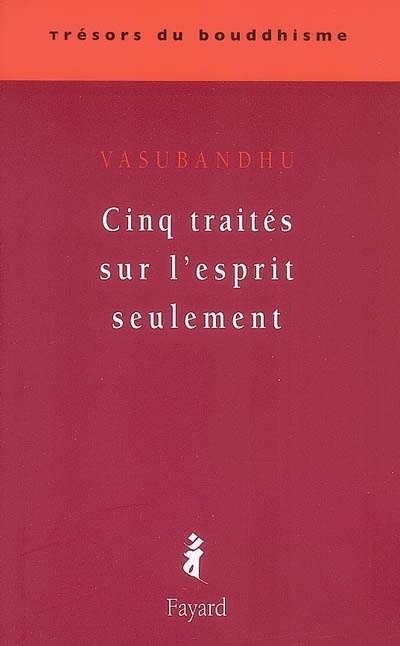
Vasubandhu : Five treatises on the mind only
These five major texts present the yogācāra analysis of consciousness, representations and experience. Vasubandhu shows how mental constructions shape the lived world and can be transformed.
- Philosophy
PANACHES Culture · Works
Discover films, animation, series, anime, documentaries, live, manga, BD, comics, books, games, music, then explore their associated studios, tools and articles.
18 works
These five major texts present the yogācāra analysis of consciousness, representations and experience. Vasubandhu shows how mental constructions shape the lived world and can be transformed.
In this unsung treatise from his moral works, Plutarch gives a vibrant praise to women at a time when they were confined to the role of wives and mothers, and reduced to silence. Written at the beginning of the 2nd century AD, Vertus of women completes in a way the famous parallel Lives, since he reports the memorable acts of twenty-seven women who have illustrated themselves, individually or collectively, by their …
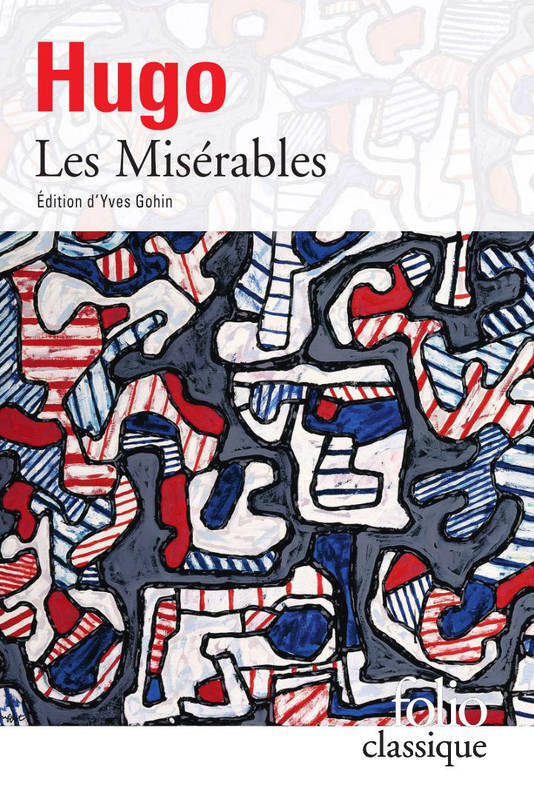
The crowd of unfortunate people against whom the malice of fate and the malignity of man are being carried out, Hugo has been able to paint it in aspects as atrocious as they are grandiose in paintings, most of which are now classic. It is Jean Valjean, this harsh fellow who can, with a stroke of his kidneys, lift up a stuffed cart, this acrobate with spectacular escapes, this former forçat who is perhaps a saint..…
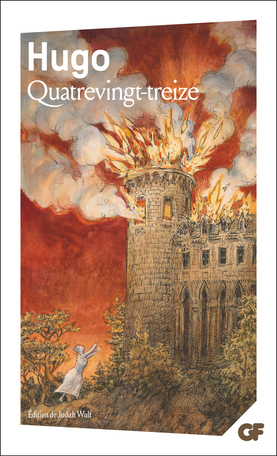
The Marquis de Lantenac, an old aristocrat with austere morals, is the soul of the vendean insurrection; Cimourdain, a descendant of the people, shows the intractable stoicism of the delegates of the Convention; Gauvain, nephew of the Marquis and adopted son of Cimourdan, is a nobleman who has joined the ranks of the people. Through the history of these three men condemned to face each other, the bloody events of th…
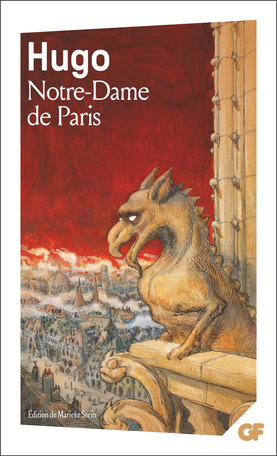
Paris, 1482. Around the beautiful bohemian Esmeralda, whose dance resonates on the parvis of Notre-Dame, climb three contenders ready to conquer her: Phoebus, noble captain, Claude Frollo, priest without faith, and the famous Quasimodo, bossu with great heart... Overlooking the novel, the invigorating cathedral, Babel, also a place of refuge and terror, sees the people rushing around, an actor of history on the marc…
Les Contemplations is a collection of poetry written by Victor Hugo, published in 1856. It consists of 158 poems gathered in six books. Most of these poems were written between 1841 and 1855, but the oldest poems in this collection date back to 1830. The Contemplations is a collection of memory, love, joy, but also death, mourning and even some mystical faith. The memory, above all, takes a prominent place there, s…
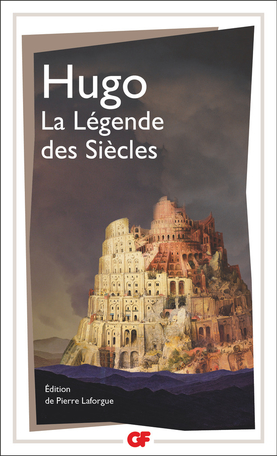
When the publisher Hetzel orders Hugo from the "Little Epics", he does not know that the poet will build a literary monument, The Legend of the Century, whose ambition is, no more or less, to trace the history of humanity. The result is a lyrical fresco, epic and satirical at the same time, which, from the exploits of wandering knights to the crimes of the worst tyrants, from the first times of the world to one beyo…
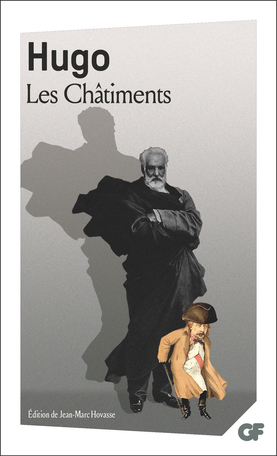
Ten days after the coup d'état of December 2, 1851, Victor Hugo was in exile, driven out of his country. He renounced the comfort of his bourgeois life, his seat as a deputy and his academician chair to engage in a relentless struggle against Emperor Napoleon III, whom he renamed "Napoléon le petit". On the island of Jersey, he composes his Chastisements, a political weapon that makes the poet the spokesman for the …
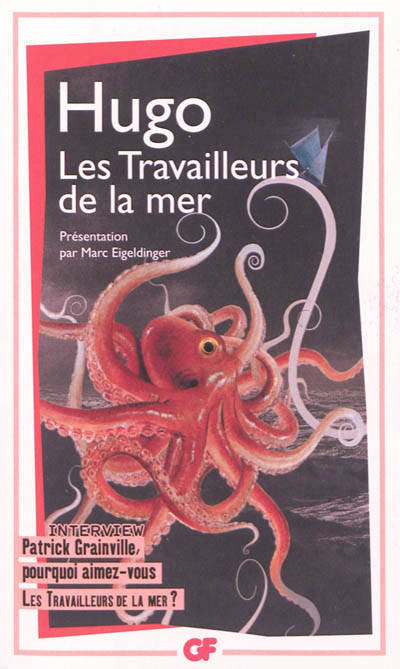
Mess Lethierry owns the Durande, a steamer sunk by the criminal machination of his captain, the Sieur Clubin. Mad of rage at the idea that the revolutionary engine of his steamer is permanently lost, Lethierry promises his niece, Déruchette, to the one who will recover the machine of the wreck stuck between rocks off Guernsey. Gilliatt, as robust as dreamer, but especially emulated by Déruchette accepts the challeng…
Année fleeing Troy in flames with his father on his shoulders, the journey on the raging sea, the passion and sacrifice of Didon, the descent to Hell... The images of Eneid, powerful and tragic, haunt our culture. This epic where history unites with legend, where divinities, nymphs, oracles mingle with the vicissitudes of men, is not only the sublime account of the foundation of Rome. A vast river of language leadin…
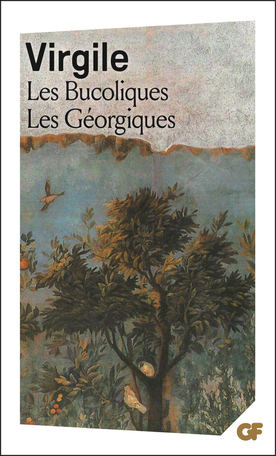
In a perfect, elegant, refined form, Virgile has composed his first great work, Les Bucolices. There is enough sensitivity and talent in these ten short poems to ensure that, with this one work, Virgil deserves to be placed in the top of the Latin poets. Virgile wants to fight, with the Georgics, against the abandonment of the countryside, too often abandoned for the distant wars; he tries to honor the work of the f…
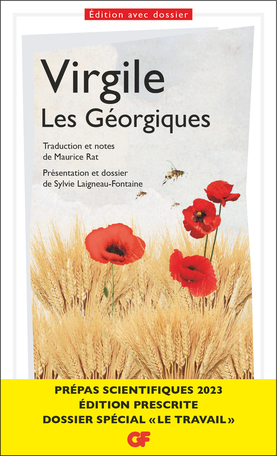
We are in 29 B.C.E.: Octave, the future emperor, has just gained control of the world thanks to his victory over Antoine and Cleopatra, and Virgile publishes his Georgics, dedicated to Mécène, a close friend of Octave. The content of the four songs, as announced in the first verses, leaves waiting for a treaty of agriculture. Virgile therefore seems to support Octavian's efforts in favour of Italian agriculture and …
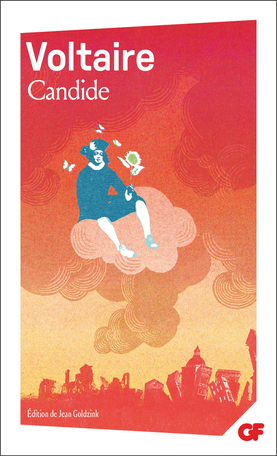
In our time, Candide is Voltaire's most famous work. It was not always this way. Even for mortals like Voltaire, less condemned to oblivion than the rest of us, we don't really choose our destiny. That’s how it is, we spend our lives making mistakes, we fight against chimeras, we are deceived, flouted, betrayed, we hope, we are disappointed, and we end our lives by returning to the starting point. That way, we proba…
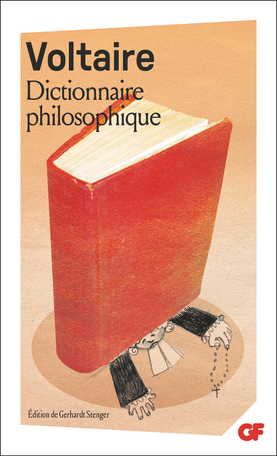
On February 28, 1766, the Chevalier de La Barre, an eighteen-year-old young man accused of having kept his hat on and singing impious songs as a procession passed, was condemned to have his tongue cut out, his hand cut off, and to be burned slowly. On his pyre, as a symbol, a copy of the Philosophical Dictionary is also burned. This shows the role of Voltaire and his “diabolical Dictionary” in the fight of the Enlig…
Compared to the work of Diderot, Montesquieu and Rousseau, the philosophical work of Voltaire does not seem to carry much weight. We know Voltaire as a storyteller, poet, playwright, historian, politician... what about Voltaire as a philosopher? The texts brought together in this volume, from his first polemical work – the famous Philosophical Letters – to his latest writings on God, less known, invite us to discove…
Voltaire "undertook to bring together, in the form of a dictionary, all the ideas, all the views which offered themselves to him on the various objects of his reflections, that is to say on the almost complete universality of human knowledge. In this collection, modestly entitled Questions à des amateurs sur l'Encyclopédie, he speaks in turn about theology and grammar, physics and literature; he discusses sometimes …
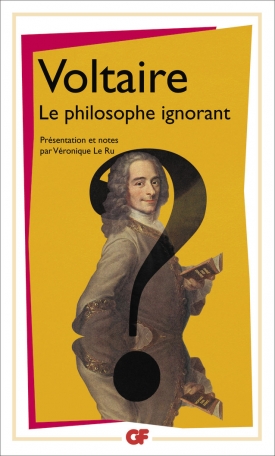
Voltaire was 72 years old in 1766 when The Ignorant Philosopher was published, a mischievous invitation to a journey around the world of philosophy. Mocking Descartes, Spinoza and Leibniz – the will is no more free than it is blue or square, he opposes the first –, praising the analyzes of Pierre Bayle and John Locke, Voltaire criticizes above all the systematic spirit of philosophers, which lies in wait for the fai…
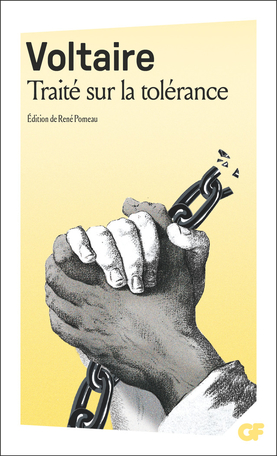
A philosophical essay published in 1763 then completed in 1765, the “Treatise on Tolerance” is based on the death sentence in 1762 of the Protestant Jean Calas. Unjustly accused of having killed his son who wanted to convert to Catholicism, he was tried and condemned without evidence by thirteen judges in Toulouse. Denouncing the fanatical religious character which animated this trial, Voltaire first exposes the sit…